
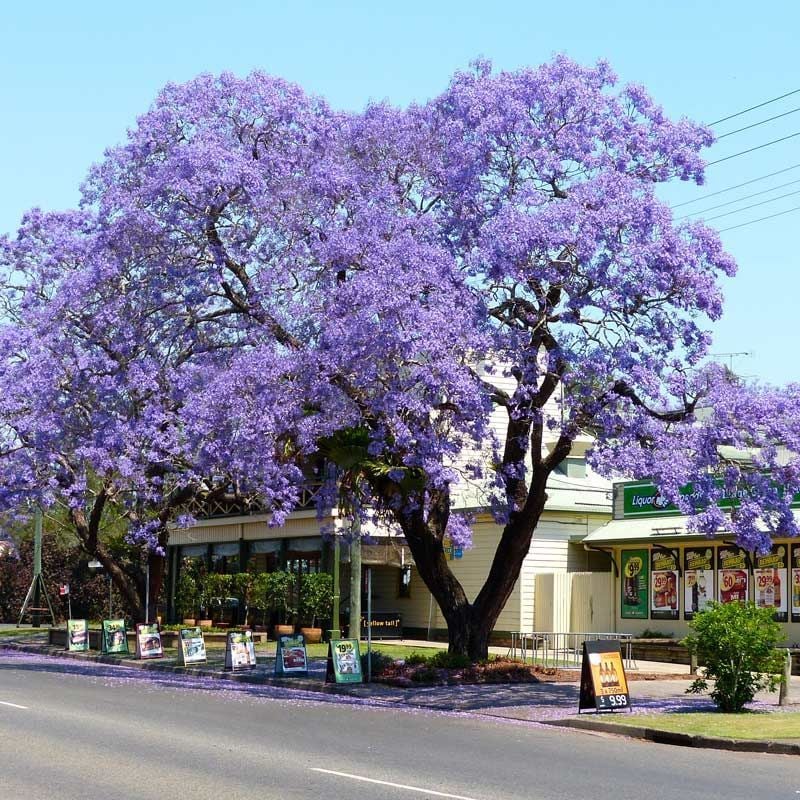
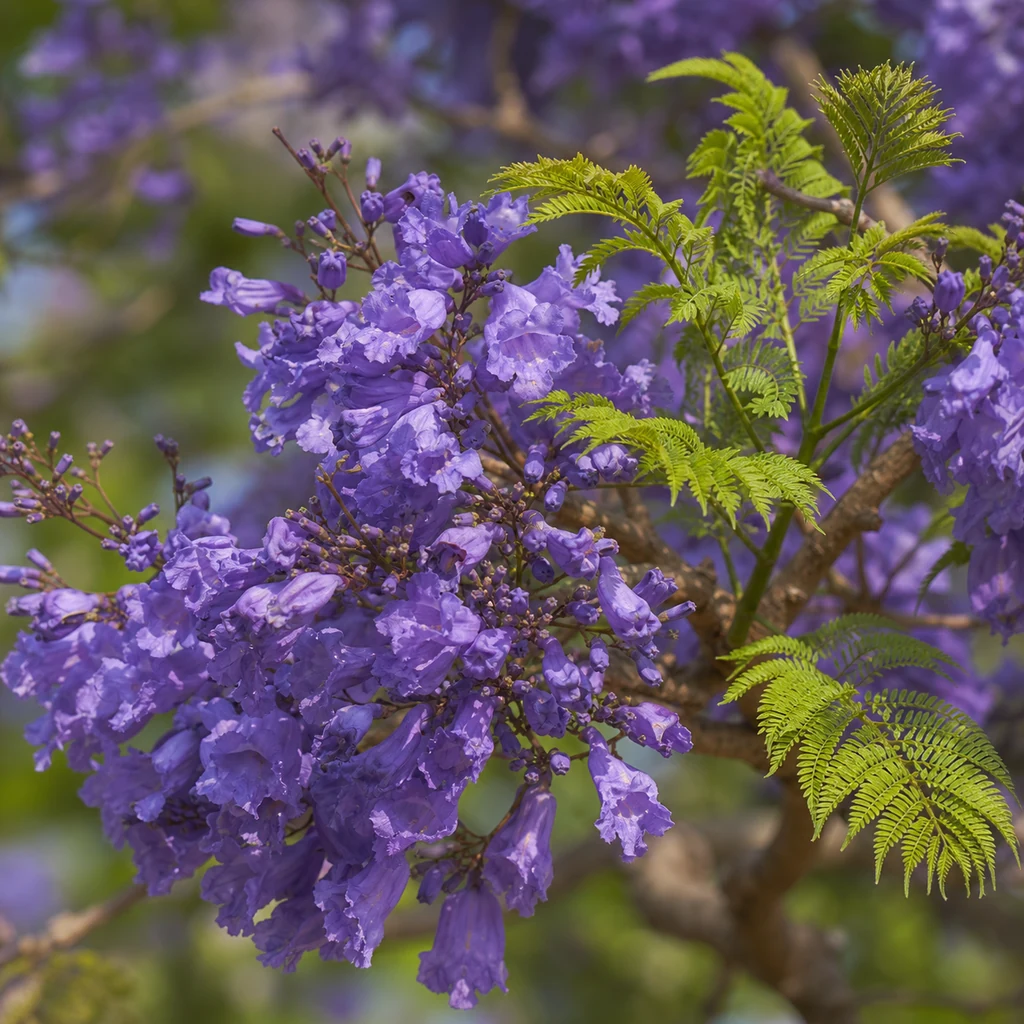
A purple flower tree can become the unforgettable focal point of a warm-climate garden, and the jacaranda tree is one of the most famous examples. Jacaranda mimosifolia is loved for its dramatic purple-blue spring flowers, airy branching, and finely cut fernlike leaves that bring light shade after the bloom show has passed.
This guide focuses on jacaranda as the classic purple flowering tree: where it grows best, when to plant it, how to care for it, what to plant underneath it, and what to consider before adding one to your landscape.
What Is the Purple Flower Tree Called?
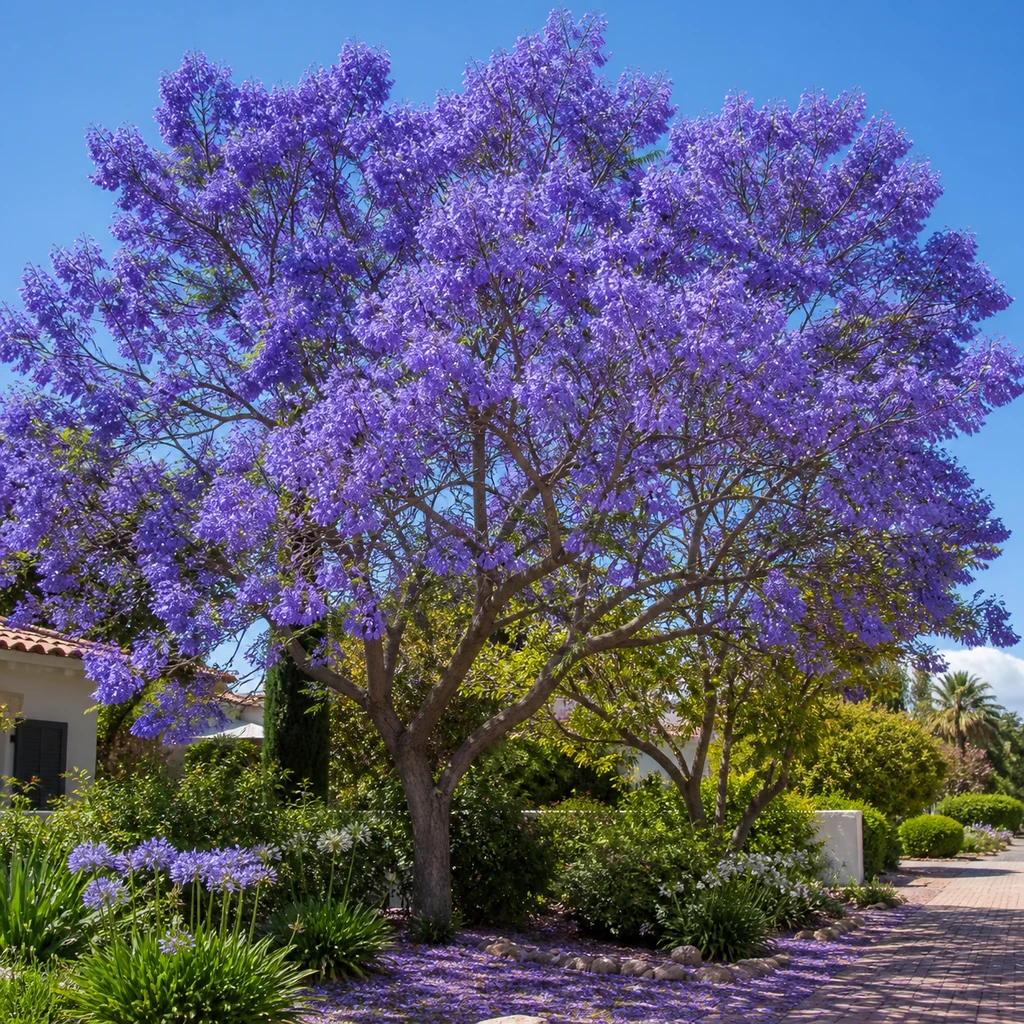
When people talk about a purple flower tree, they are often thinking of jacaranda. Jacaranda trees are known for loose clusters of tubular purple-blue flowers that appear in mid to late spring in many warm regions. The flowers may cover bare or nearly bare branches before the fernlike leaves fully emerge.
Quick jacaranda profile
- Botanical name: Jacaranda mimosifolia
- Common name: Jacaranda, purple flower tree
- Plant type: Deciduous or semi-evergreen flowering tree
- Bloom time: Spring to early summer, depending on climate
- Flower color: Purple-blue to lavender
- Best climate: Warm, frost-free or nearly frost-free regions
- Best light: Full sun
Why Gardeners Love Jacaranda Trees
Jacaranda is not a subtle tree when it blooms. A mature tree can create a cloud of purple flowers that draws attention from across the street. After flowering, the delicate foliage creates a soft canopy that casts filtered shade rather than deep darkness.
Main benefits
- Spectacular purple-blue spring flowers.
- Light, fernlike foliage that gives graceful shade.
- Strong focal point for warm-climate gardens.
- Works well near patios, lawns, and open planting beds.
- Creates space for partial-shade companion planting underneath.
Best Climate and Location
Jacaranda trees grow best in warm climates with plenty of sun. They are commonly seen in places such as Southern California and other mild regions where winter cold is limited. Young trees can be more sensitive to frost, so climate matters.
Choose a planting site with
- Full sun for strong flowering.
- Good air circulation.
- Well-drained soil.
- Enough room for mature height and spread.
- Distance from tight walkways if fallen flowers may become slippery or messy.
- Space away from structures if the tree will become large.
Jacarandas enjoy heat and sun, but they still need thoughtful placement. Give the tree room to develop an attractive canopy rather than squeezing it into a narrow corner.
When to Plant a Jacaranda Tree
Container-grown jacarandas may be available at nurseries during much of the year in warm climates, but the best planting time is usually winter in the mildest areas or early spring before strong heat arrives. This gives the roots time to establish before summer.
If your climate has occasional frost, wait until the coldest weather has passed before planting a young tree. Newly planted trees are more vulnerable than established ones.
How to Plant a Purple Flower Tree
Planting correctly helps a jacaranda establish a strong root system and stable structure.
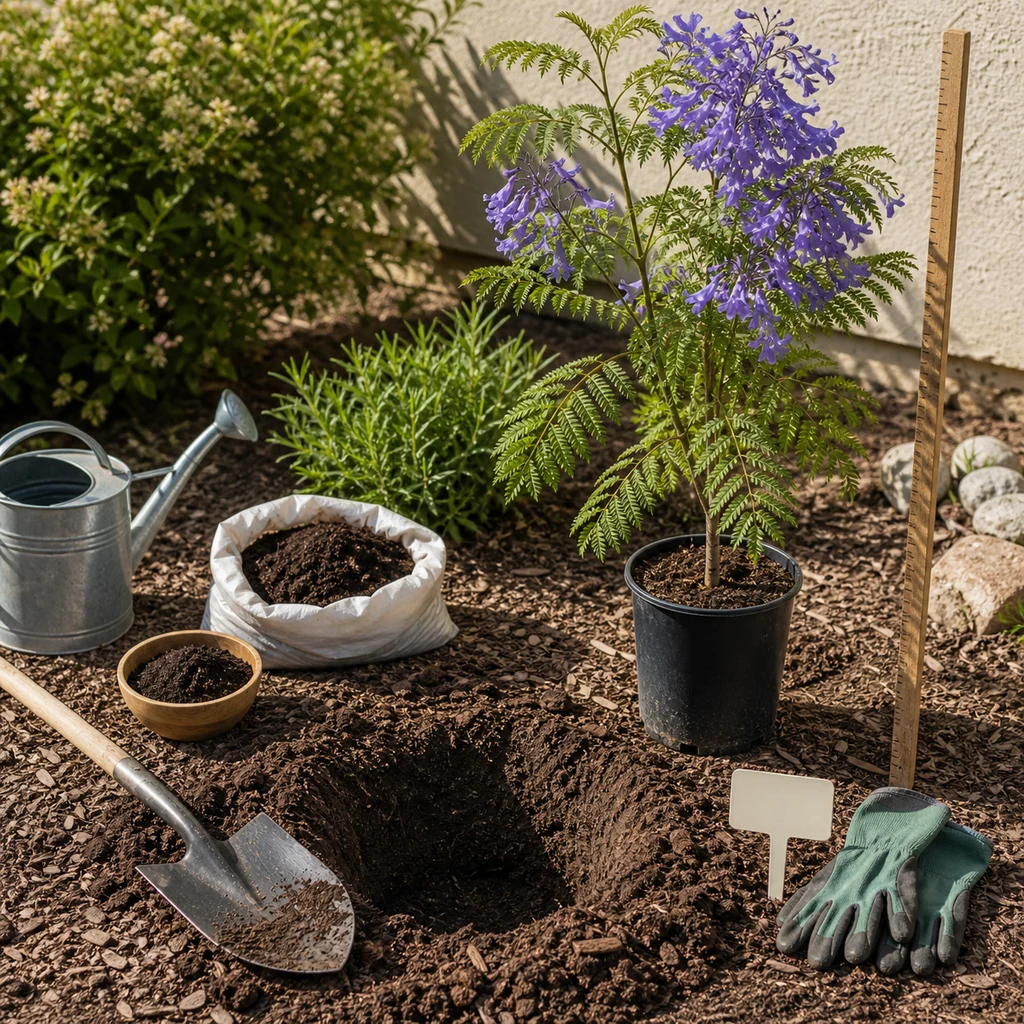
Planting steps
- Choose a sunny, well-drained site with enough space.
- Dig a hole about twice as wide as the root ball and slightly shallower than its height.
- Set the tree so the root flare sits slightly above surrounding soil level.
- Backfill with native soil, adding compost only if the soil is very poor.
- Water deeply to settle soil around the roots.
- Add mulch in a wide ring, keeping it away from the trunk.
- Stake only if needed, and allow some movement so the trunk strengthens.
Avoid planting too deeply. Trees often struggle when the root flare is buried under soil or mulch.
Watering and Feeding
New jacaranda trees need regular watering while they establish. Once mature, they usually prefer deep, infrequent watering rather than constant shallow watering.
Watering tips
- Water newly planted trees regularly during the first year or two.
- Let the soil dry slightly between deep waterings.
- Increase water during long dry spells.
- Avoid overwatering, which can encourage weak, lanky growth.
Jacarandas generally do not need heavy fertilizer. If growth is weak and soil is poor, use compost or a balanced tree fertilizer lightly according to local recommendations.
Pruning and Maintenance
Jacaranda trees usually need only light pruning. The goal is to guide structure when young and remove problem branches when needed.
Pruning tips
- Prune young trees to develop a strong central structure.
- Remove dead, damaged, crossing, or awkward branches.
- Avoid heavy topping, which can ruin the natural shape.
- Prune after flowering or during the appropriate dormant window for your climate.
The flower drop can be beautiful but messy. Avoid planting directly over surfaces where fallen blooms may stain, become slippery, or require constant cleanup.
Companion Planting Under Jacaranda
Jacaranda foliage creates filtered shade, which can be useful for underplanting. Choose plants that tolerate partial shade and can handle some competition from tree roots.
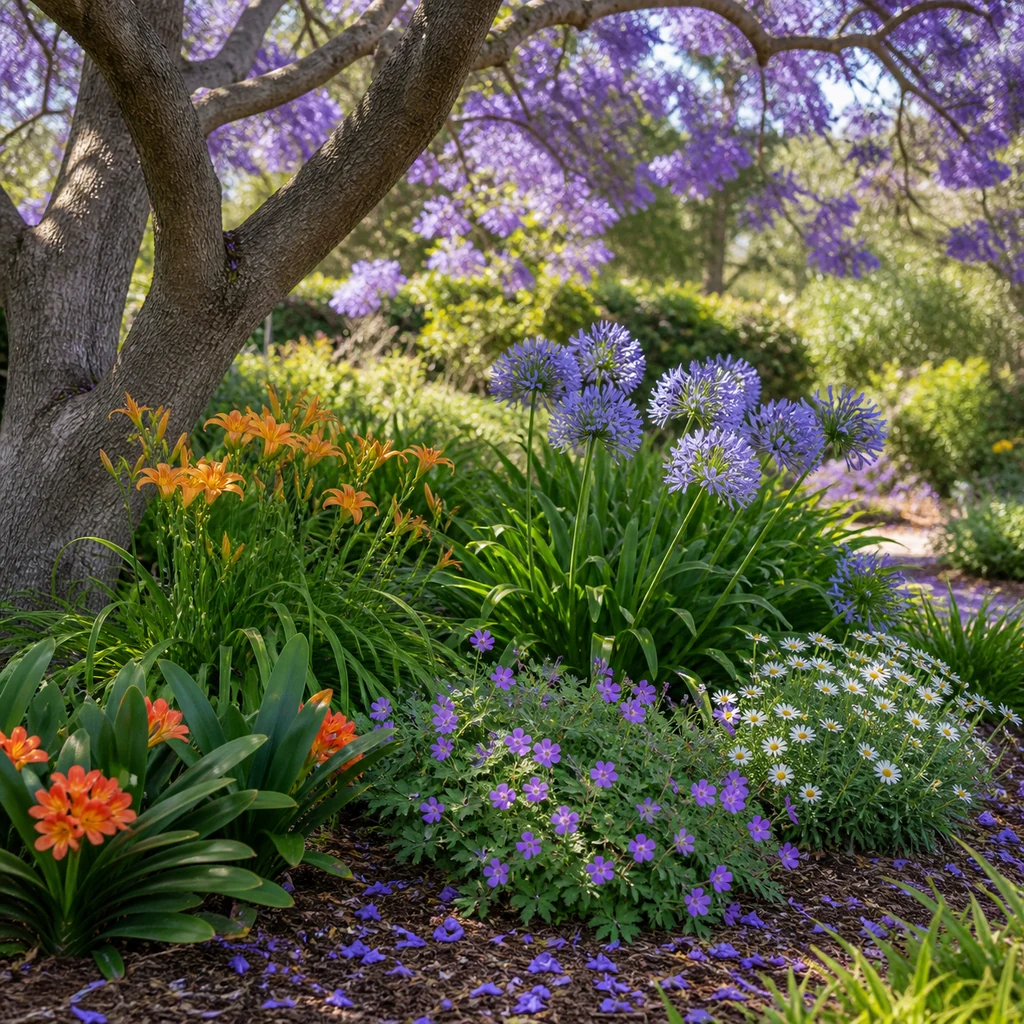
Good companion plants
- Cranesbill geranium
- Daylily
- Lily of the Nile
- Clivia in mild shade
- Fortnight lily
- Santa Barbara daisy
- Wallflower in brighter areas
Keep underplanting simple around young trees so roots do not face too much competition during establishment.
Purple Flower Tree Care Checklist
- Choose a warm, sunny planting site.
- Make sure soil drains well.
- Plant with the root flare slightly above soil level.
- Water deeply during establishment.
- Mulch widely but keep mulch away from the trunk.
- Prune lightly to guide structure.
- Avoid heavy fertilizer that encourages weak growth.
- Plan for fallen flowers and seasonal cleanup.
- Protect young trees from frost where needed.
Common Mistakes to Avoid
Planting in too much shade
Jacaranda flowers best in full sun. Too much shade can reduce bloom and create weak growth.
Choosing a cramped location
A jacaranda needs space to become a graceful tree. Avoid tight spots near walls, narrow paths, or overhead limitations.
Overwatering established trees
Deep, occasional watering is better than constant shallow watering once the tree is established.
Ignoring flower drop
The purple flowers are beautiful, but they fall. Think carefully before planting over driveways, pools, or slippery hardscape.
FAQ
What is the most popular purple flower tree?
Jacaranda is one of the most popular and recognizable purple flowering trees, especially in warm climates.
When do jacaranda trees bloom?
They often bloom in spring to early summer, depending on climate and local weather.
Do jacaranda trees need full sun?
Yes. Full sun helps produce the strongest flowering and healthiest growth.
Can jacaranda grow in cold climates?
Jacaranda is best for warm climates. Cold winters and frost can damage young trees, so it is not ideal for cold regions.
Are jacaranda trees messy?
They can be seasonal messy because flowers, leaves, and seed pods drop. Plant them where cleanup will not become a major problem.
Final Thoughts
A jacaranda is a standout purple flower tree for warm-climate gardens. Give it full sun, well-drained soil, enough space, and deep watering while it establishes. With thoughtful placement and light care, it can become one of the most beautiful flowering trees in the landscape.