
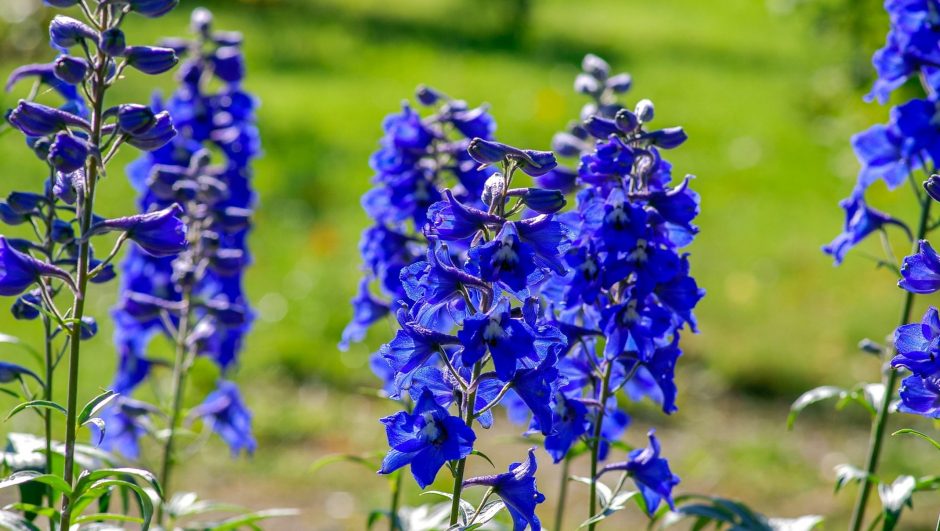
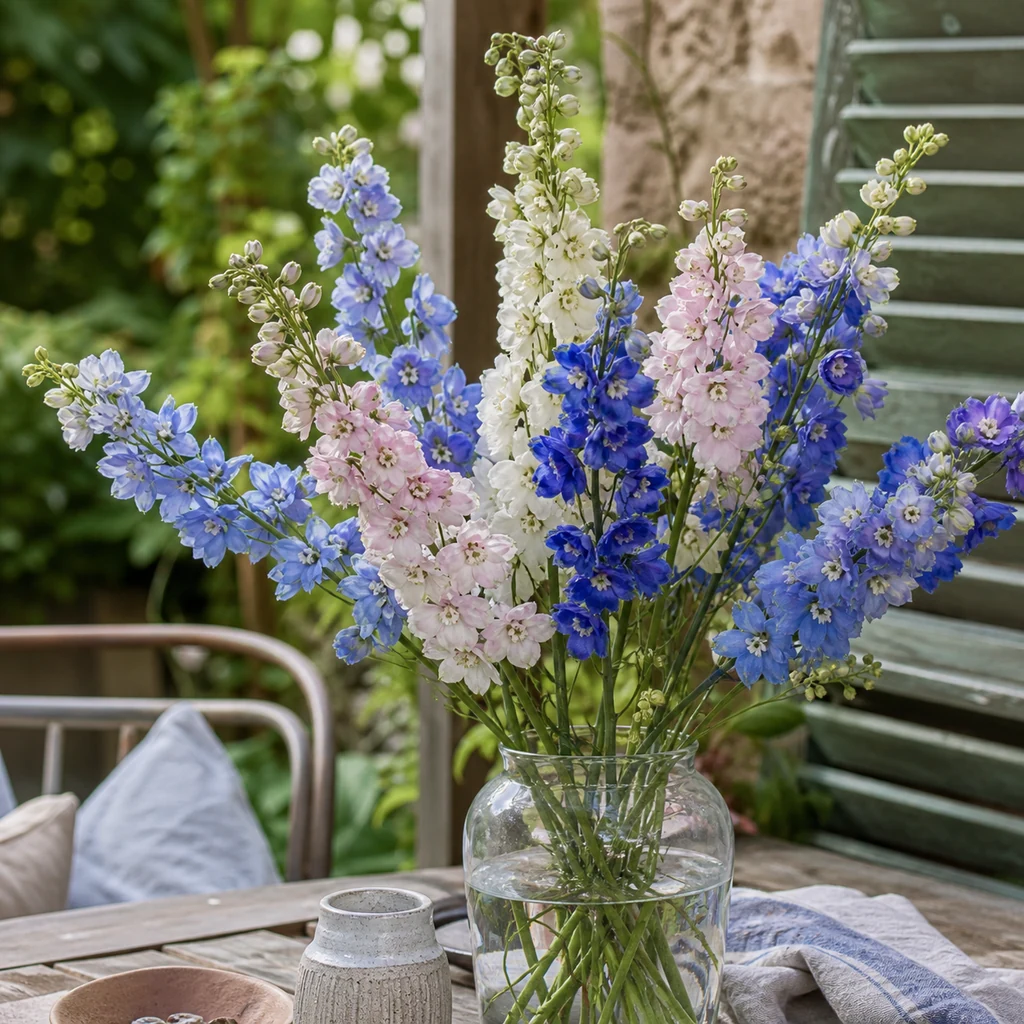
Delphinium flowers bring the kind of vertical color that can change the whole mood of a flower border. Their tall spires, cool blue tones, and cottage-garden shape make them especially useful behind roses, peonies, salvias, foxgloves, and other summer perennials. Blue is the color most gardeners associate with delphiniums, but modern hybrids also bloom in white, lavender, purple, pink, and occasional red shades.
The secret to growing delphiniums well is understanding what they like before you plant them. They are not difficult in the right conditions, but they do ask for rich soil, steady moisture, good drainage, and protection from strong wind. In hot, humid climates they may behave more like short-lived perennials, while gardeners in cooler summer regions often enjoy stronger, longer-lasting plants.
What Are Delphinium Flowers?
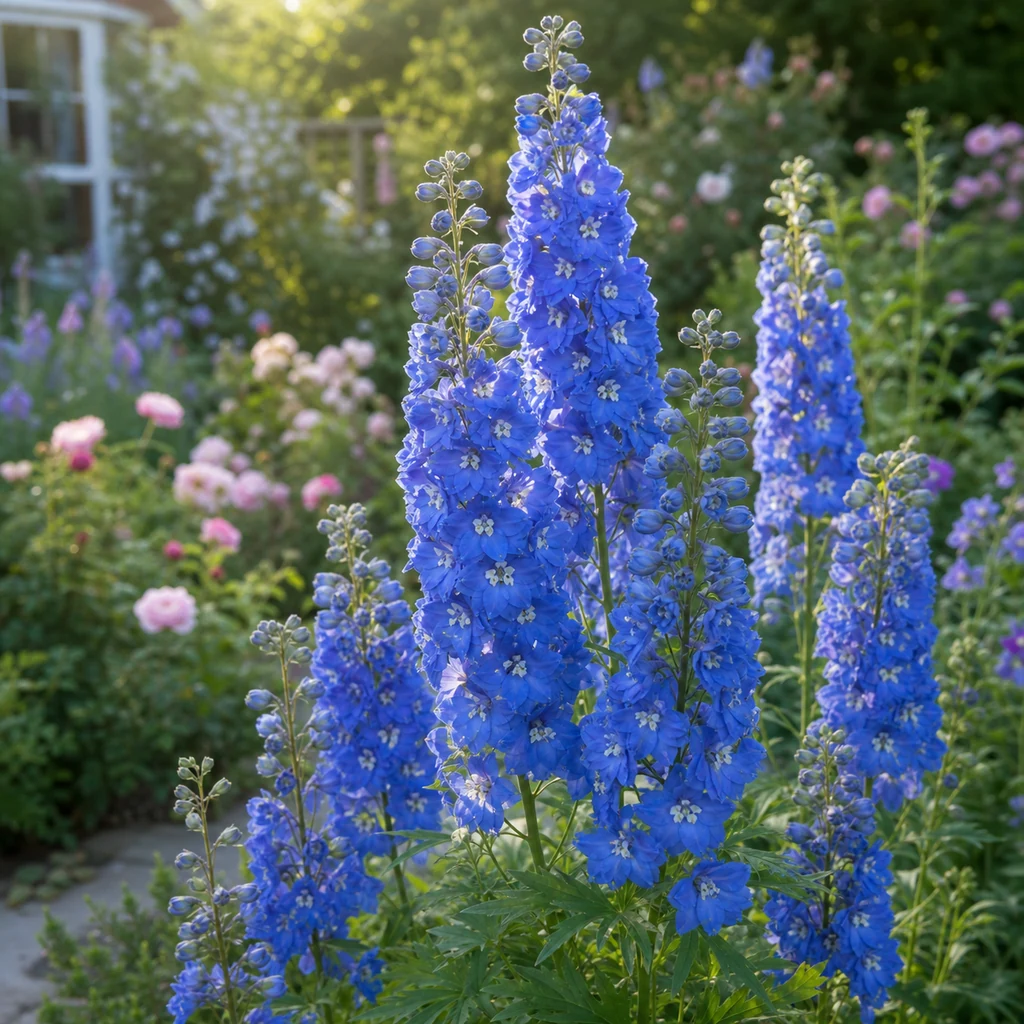
Delphiniums are flowering plants in the buttercup family, grown for their upright spikes of densely packed blooms. Gardeners often use the name delphinium for perennial types and larkspur for annual relatives, although the naming can vary by region and plant group. The classic perennial garden delphiniums are usually hybrids selected for strong stems, large flower spikes, and rich color.
These plants are loved because they do something few perennials can do: they create height without looking heavy. A single clump can rise above lower border plants and make the garden feel layered. They are also excellent cut flowers when harvested at the right stage, and the blooms are attractive in fresh arrangements.
Delphiniums are best treated as premium border plants rather than background filler. Give them the best soil you have, place them where their height makes sense, and plan support before the stems are fully grown.
Best Delphinium Types For Gardens
There are many delphinium species and hybrids, but these are the groups home gardeners most often meet in nurseries and seed catalogs.
Belladonna Delphiniums
Belladonna delphiniums are usually bushier and more open than the very tall exhibition-style hybrids. They often grow about 3 to 4 feet tall, with airy flower clusters on branching stems. They are a good choice when you want the delphinium look without a very rigid, towering spike.
Popular blue selections are often valued for their clear color and lighter habit. Belladonna types can blend beautifully with roses, catmint, lady’s mantle, and ornamental grasses.
Elatum And Pacific Hybrid Delphiniums
Elatum types and Pacific hybrids are the dramatic delphiniums many gardeners picture first. They can produce tall, dense spikes in blue, violet, lavender, pink, white, and bicolor combinations. Some can reach 5 to 8 feet in ideal conditions, which is why support matters.
Shorter selections such as ‘Guardian Blue’, ‘Magic Fountains’, and other compact strains are often easier to manage in ordinary home gardens. They still give the strong delphinium effect, but they are less likely to flop in wind or rain.
Grandiflorum Delphiniums
Grandiflorum delphiniums, sometimes sold as Chinese delphinium, tend to be shorter and more relaxed. They may be grown as short-lived perennials, biennials, or annuals depending on the climate. Varieties such as ‘Blue Butterfly’ are useful near the front of the border or in containers because they stay much lower than the tall hybrids.
Where To Plant Delphiniums
Choose a site with full sun in cool climates. In areas with very hot summers, morning sun with light afternoon shade is often better. Delphiniums want enough light to build strong flower stems, but they dislike hot, dry stress.
Good air movement is helpful, but avoid an exposed, windy location. Tall delphiniums can snap or lean if planted where they catch every gust. A border near a fence, shrub line, or mixed perennial planting can give them some protection while still allowing airflow around the foliage.
Soil is the big factor. Delphiniums grow best in fertile, well-drained soil that stays evenly moist. Heavy clay should be improved with compost and organic matter before planting. Very sandy soil benefits from compost too, because it helps hold moisture around the roots. Aim for a near-neutral to slightly alkaline soil if possible.
How To Plant Delphinium Flowers
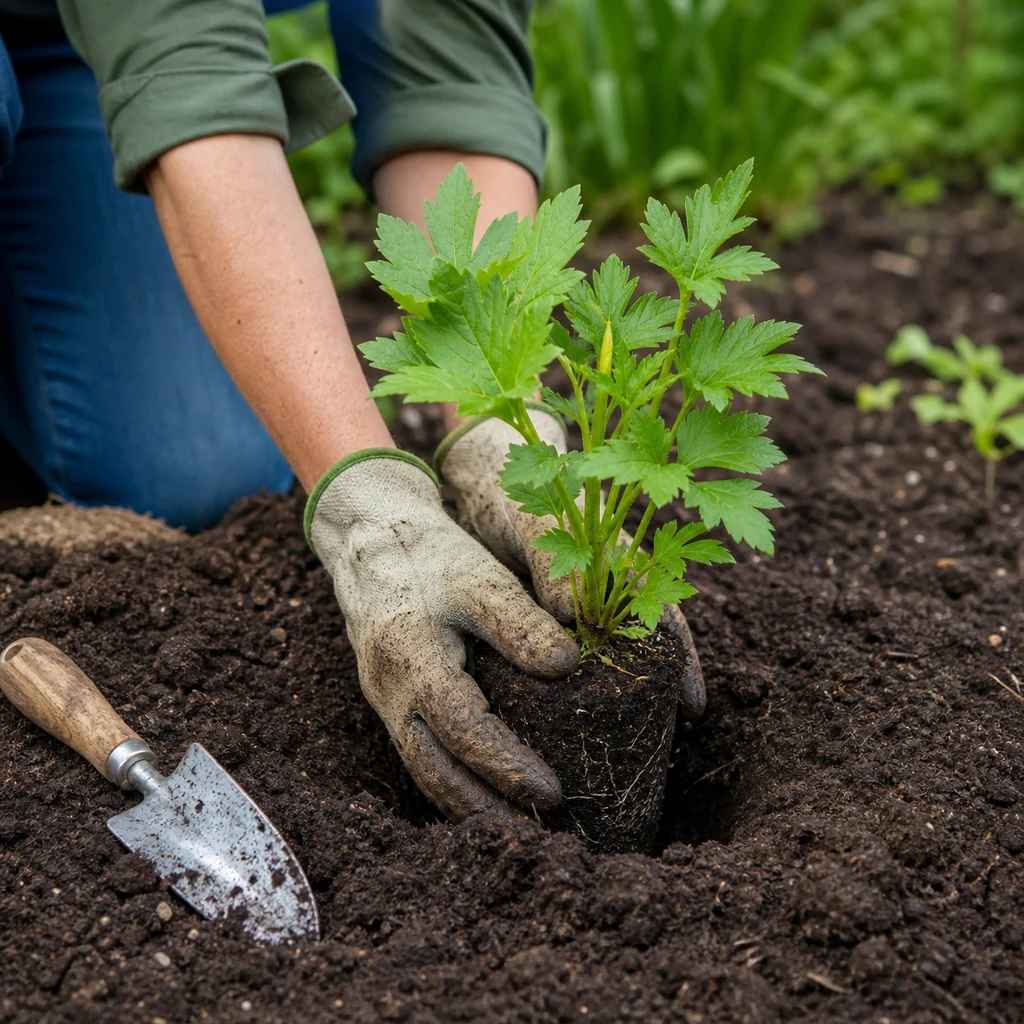
Plant nursery-grown delphiniums in spring after the worst frost has passed, or in early fall where winters are mild enough for roots to settle before cold weather. Space plants according to the mature size of the variety. Compact types may need about 18 inches, while tall hybrids often need 24 to 36 inches.
Before planting, loosen the soil deeply and mix in garden compost or well-rotted manure. Set the crown at the same level it was growing in the pot. Planting too deeply can encourage crown rot, especially in wet soil. Water well, then mulch lightly to keep the root zone cool and moist. Keep mulch slightly away from the crown so the base of the plant does not stay soggy.
If you are planting tall delphiniums, add stakes or supports early. It is much easier to guide new stems through supports than to rescue heavy flower spikes after they begin leaning.
Watering, Feeding, And Mulching
Delphiniums like consistent moisture, especially while stems are growing and flower spikes are forming. Water deeply when rainfall is lacking. Shallow, frequent watering encourages weak roots, while deep watering helps the plant handle warm weather more gracefully.
Feed in spring as new growth begins. A balanced organic fertilizer or a layer of compost around the plant is usually enough for healthy garden soil. In poor soil, a second light feeding as flower spikes develop can help. Avoid pushing too much fast nitrogen, because soft growth can be more prone to flopping and disease.
Mulch is useful because delphiniums prefer cool, moist soil. Use compost, shredded leaves, or another breathable organic mulch. Keep the mulch layer moderate rather than thick and wet around the crown.
Staking Delphinium Stems
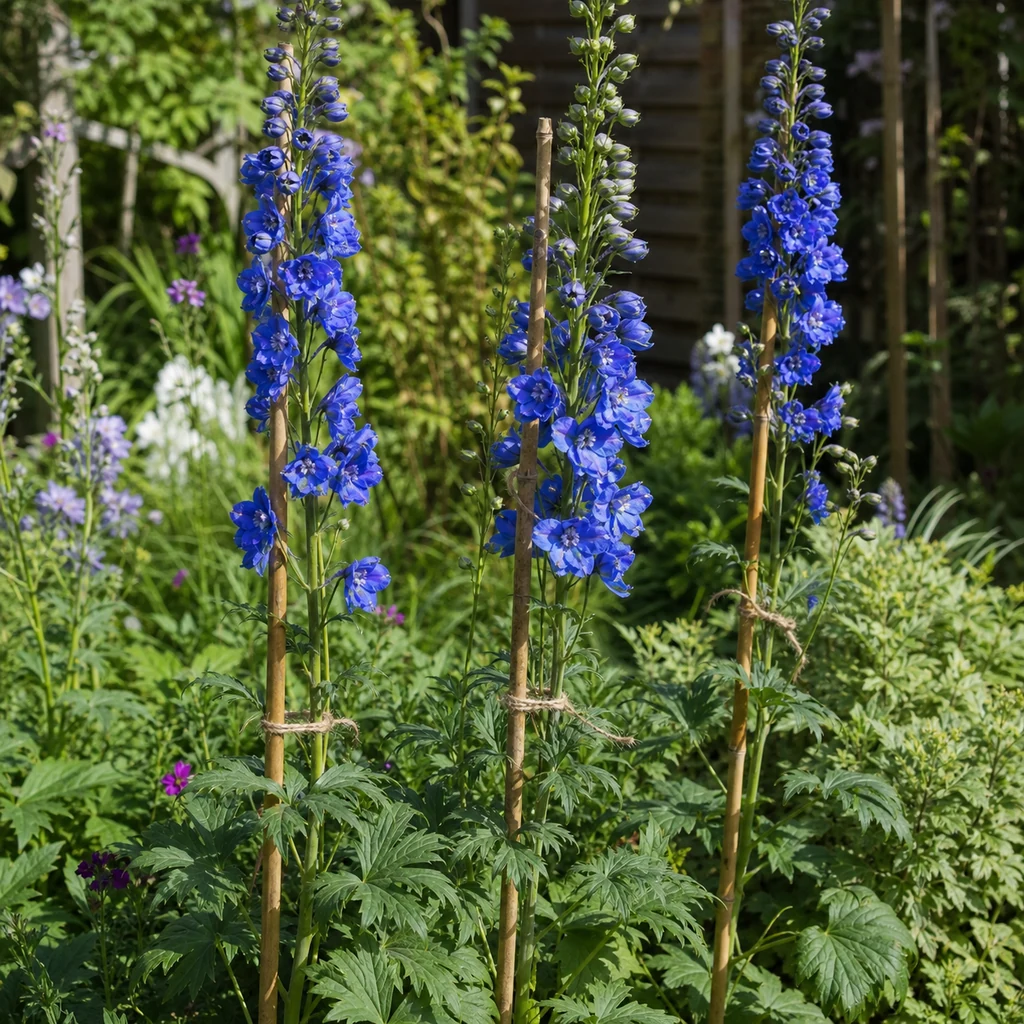
Most tall delphiniums need support. Even strong stems can bend after rain, wind, or the weight of a full flower spike. Stake early, when shoots are still young, and use soft ties that do not cut into the stems.
Bamboo canes, twiggy branches, grow-through supports, or metal plant rings can all work. The best support is visible enough to do its job but subtle enough that the flowers remain the focus. Tie stems loosely in a figure-eight pattern so the plant can move a little without rubbing hard against the stake.
Pruning And Deadheading
After the main flower spike fades, cut it back to a lower side shoot if one is present. If there is no side shoot, cut back to just above a healthy leaf. This keeps the plant tidy and may encourage a smaller second flush of flowers later in the season.
Do not let the plant go completely dry after the first bloom if you want a repeat performance. Water during dry periods and give a light compost top-dressing if the plant looks tired. In ideal conditions, some delphiniums will bloom again in late summer, although the second display is usually smaller than the first.
In fall, cut down dead stems after frost or after the foliage has fully declined. Remove diseased leaves from the garden rather than composting them. In cold areas, a light winter mulch can help protect crowns, but avoid covering them with a wet, heavy layer.
Growing Delphiniums In Pots
Compact delphiniums can grow well in containers, especially on sunny patios, balconies, and small-space gardens. Choose a deep pot with drainage holes. A container that is too small dries out quickly and makes tall stems unstable.
Use a high-quality potting mix blended with compost. Water containers regularly because potted delphiniums dry faster than plants in the ground. Feed lightly during active growth, and place the pot where it receives good sun without being baked by reflected heat from walls or pavement.
For pots, shorter varieties are usually the smarter choice. Grandiflorum types and compact elatum hybrids give color and height without becoming top-heavy.
Common Delphinium Problems
Slugs and snails: Young delphinium shoots are highly attractive to slugs. Check plants often in spring, keep debris away from crowns, and protect new growth early. The University of Minnesota Extension notes that larkspur and delphinium are among ornamentals that slugs may damage, especially in cool, moist conditions.
Powdery mildew and leaf spots: Crowded plants, poor airflow, and overhead watering can encourage fungal issues. Space plants well, water at soil level when possible, and remove badly affected foliage.
Crown rot: Wet, poorly drained soil is one of the fastest ways to lose a delphinium. Improve drainage before planting and keep mulch away from the crown.
Heat stress: In hot-summer regions, delphiniums may decline after blooming. Give afternoon shade, mulch the soil, and water deeply during dry spells. If they still behave like annuals in your climate, enjoy them as seasonal stars and replant as needed.
Flopping stems: This is usually caused by wind, heavy rain, too much soft growth, or late staking. Support tall varieties early and avoid overfeeding with nitrogen.
Are Delphiniums Poisonous?
Yes. Delphiniums should be treated as poisonous plants. The RHS advises that all parts of delphiniums are poisonous and that contact with foliage may irritate skin, so gloves are sensible when handling plants and seeds. North Carolina Extension also lists delphinium among plants with toxicity concerns. Keep plants away from children, pets, and grazing animals, and never use delphinium flowers as edible decoration.
This does not mean you cannot grow them. It simply means they belong in ornamental garden spaces where they will not be mistaken for edible flowers or herbs.
Delphinium Care Checklist
- Choose a sunny position, with afternoon shade in hot climates.
- Improve soil with compost before planting.
- Plant crowns level with the surrounding soil.
- Water deeply and keep soil evenly moist, not soggy.
- Stake tall varieties early in the season.
- Protect young spring shoots from slugs and snails.
- Deadhead faded flower spikes to encourage a possible second bloom.
- Wear gloves when handling plants, seeds, or cut stems.
Using Delphiniums In Garden Design
Delphiniums are natural back-of-border plants. Their vertical flower spikes look especially good behind rounded shrubs, mounding perennials, and lower flowers. Blue delphiniums pair beautifully with pale pink roses, white phlox, silver artemisia, lavender, catmint, and soft ornamental grasses.
For a more dramatic look, combine deep blue or violet delphiniums with burgundy foliage, dark purple salvia, or white lilies. In cottage gardens, repeat smaller groups of delphiniums through the border rather than planting one lonely specimen. Repetition makes the height feel intentional.
If you enjoy planning plant combinations, browse more ideas in the Garden Plants section and pair delphiniums with other long-blooming perennials.
Helpful Expert Sources
For additional plant-specific guidance, the RHS delphinium growing guide is useful for pruning, staking, and safety notes. The North Carolina Extension Gardener Plant Toolbox provides details on delphinium characteristics, pests, and toxicity. For slug prevention, see the University of Minnesota Extension slug guide.
Frequently Asked Questions
Do delphinium flowers come back every year?
Many delphiniums are perennials, but they can be short-lived, especially in hot, humid, or poorly drained gardens. In cool-summer regions with rich soil and steady moisture, they are more likely to return reliably.
Do delphiniums need full sun?
Delphiniums usually bloom best in full sun. In very warm climates, morning sun with light afternoon shade can reduce stress and help flowers last longer.
Why are my delphiniums falling over?
Tall delphiniums often fall because the flower spikes are heavy, the site is windy, or support was added too late. Stake them early, before the stems are fully extended.
Can delphiniums grow in containers?
Yes, especially compact varieties. Use a deep pot, excellent drainage, rich potting mix, and regular watering. Tall hybrids are harder to manage in containers because they become top-heavy.
Are delphinium flowers safe for pets?
No. Delphiniums should be considered toxic to pets and people if eaten. Grow them as ornamental plants only, and keep curious pets away from the foliage, seeds, and flowers.
Final Growing Tips
Delphinium flowers reward gardeners who prepare well. Give them fertile soil, consistent water, early support, and a spot that is bright but not brutally hot. Deadhead after the main bloom, watch for slugs in spring, and divide healthy clumps every few years if they begin to weaken.
They may ask for a little more attention than some perennials, but their tall blue spires are worth the effort. In the right place, delphiniums bring height, elegance, and a memorable summer color that few garden flowers can match.