
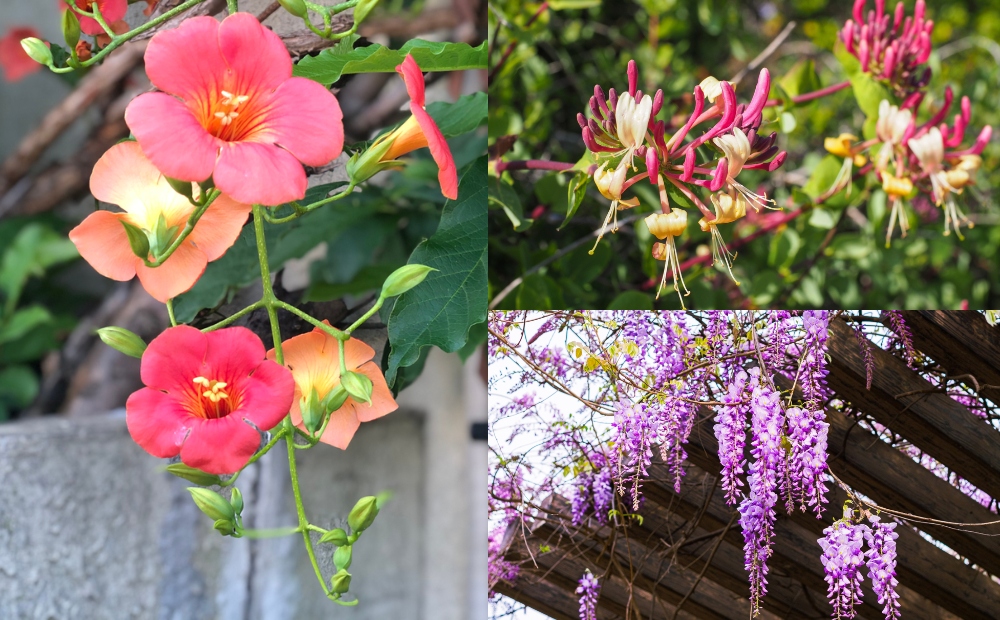
Climbing flowering vines are one of the fastest ways to add height, color, fragrance, privacy, and softness to a garden. They can turn a plain fence into a blooming backdrop, cover a pergola with shade, frame an entryway, or bring flowers to a balcony with the right container and support.
The best vine is not always the fastest grower. A good choice depends on your climate, sunlight, support structure, maintenance time, and whether you want fragrance, pollinator value, seasonal color, or evergreen coverage. This guide explains how to choose, plant, train, and care for climbing flowering vines so they look beautiful without becoming unmanageable.
How to Choose the Right Climbing Flowering Vine
Before choosing a vine, look at the space where it will grow. Some vines stay light and delicate, while others become heavy woody plants that need a very strong structure. A vine that is perfect for a pergola may be too aggressive for a small trellis.
Ask these questions first
- How much sun does the area receive? Many flowering vines bloom best in full sun, but some tolerate partial shade.
- What support will the vine climb? Trellis, arbor, pergola, fence, wall wires, obelisk, or container support.
- How large can the plant become? Check mature height and spread before planting.
- Do you want fragrance? Jasmine, honeysuckle, and sweet pea are popular fragrant choices.
- Do you want pollinators? Tubular and nectar-rich flowers can attract bees, butterflies, and hummingbirds.
- How much pruning are you willing to do? Fast-growing vines need more regular training.
Also check local guidance before planting. Some vines can be invasive in certain regions, even if they are well-behaved elsewhere.
Best Climbing Flowering Vines for Gardens
These vines are popular because they offer strong visual impact, fragrance, pollinator benefits, or long bloom seasons. Choose based on your climate and available support.
Wisteria
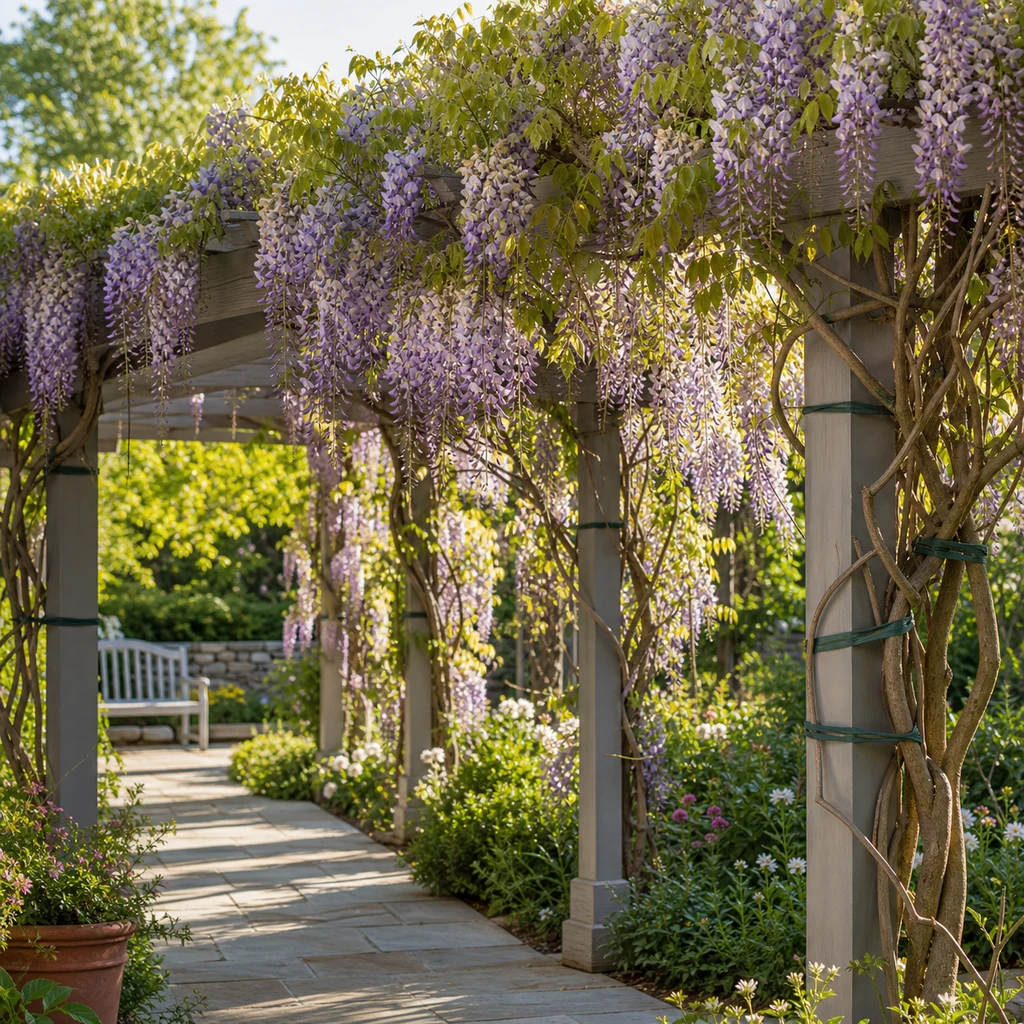
Wisteria is known for dramatic hanging flower clusters, usually in purple, blue, lavender, or white. It can be stunning over a pergola or arbor, but it becomes heavy and woody as it matures.
- Best for: Strong pergolas, arbors, and large structures.
- Light: Full sun for best flowering.
- Care note: Needs regular pruning and strong support.
Wisteria is beautiful, but it is not a casual plant for a weak fence. Give it room, structure, and consistent pruning.
Clematis
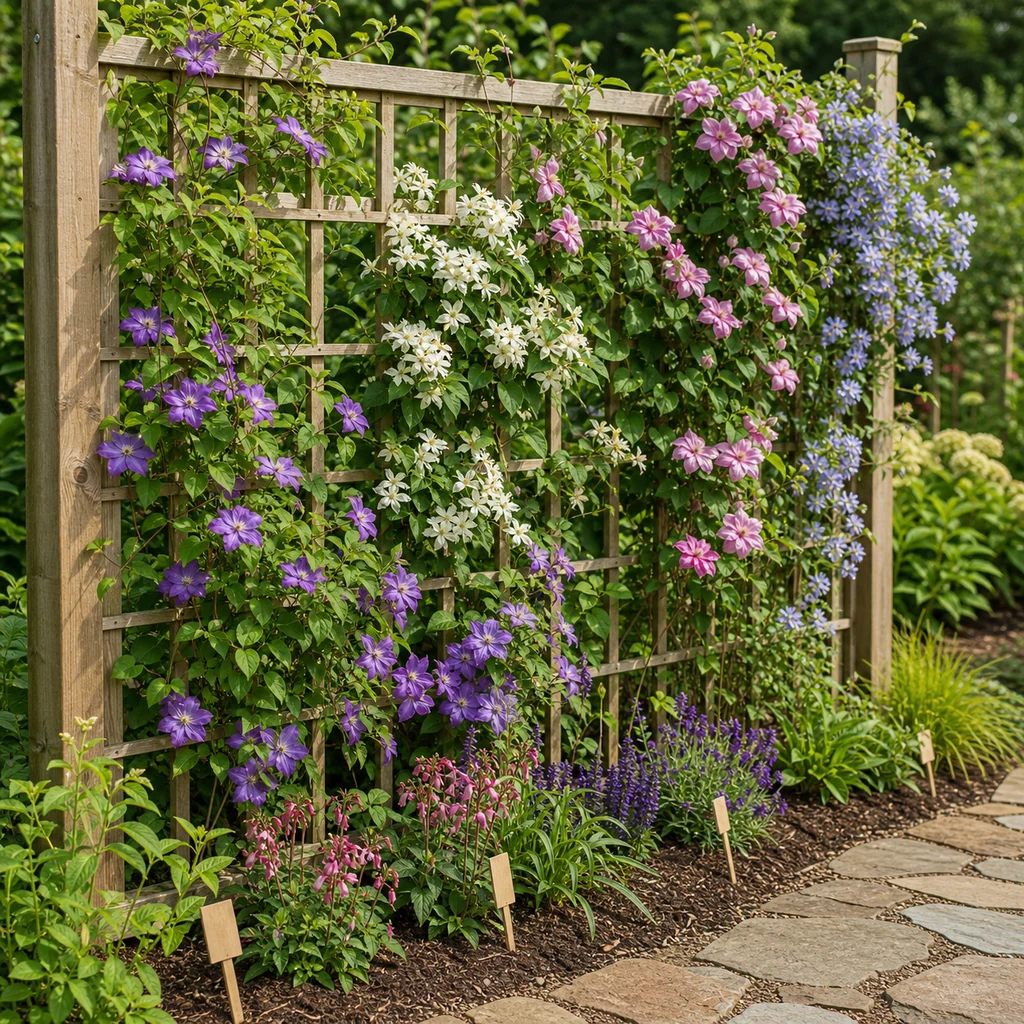
Clematis offers an enormous range of flower shapes, colors, and bloom times. It works well on trellises, fences, obelisks, and mixed plantings with shrubs or roses.
- Best for: Trellises, small garden structures, and layered borders.
- Light: Sun to part shade, depending on variety.
- Care note: Keep roots cool with mulch or companion planting.
Different clematis groups have different pruning needs, so keep the plant tag or variety name if possible.
Honeysuckle
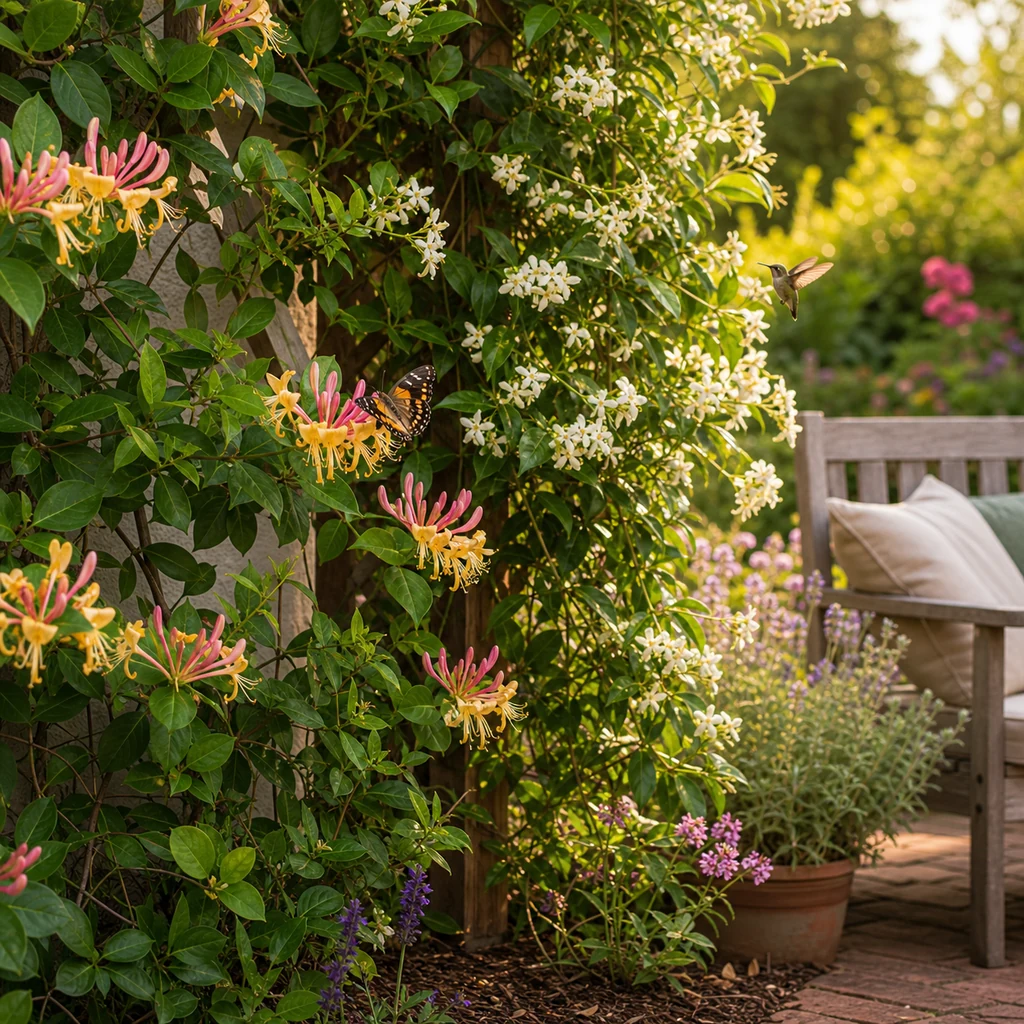
Honeysuckle is loved for its fragrance and tubular flowers that can attract pollinators. It works well along fences, trellises, and garden seating areas where the scent can be enjoyed.
- Best for: Wildlife-friendly gardens, fences, and patio edges.
- Light: Full sun to partial shade.
- Care note: Choose non-invasive varieties recommended for your region.
Prune after flowering or as needed to keep growth open and manageable.
Jasmine
Jasmine brings elegant flowers and a memorable fragrance. Some types are true jasmines, while others use jasmine as a common name, so check the botanical name and hardiness before planting.
- Best for: Patios, entryways, seating areas, and warm-climate gardens.
- Light: Full sun to light shade.
- Care note: Water regularly while establishing and train young stems early.
Plant fragrant vines where you will actually pass by or sit nearby. That placement makes the scent part of the garden experience.
Bougainvillea
Bougainvillea is a bold choice for warm climates, known for vibrant paper-like bracts in magenta, red, coral, orange, purple, and white. It loves heat and sun.
- Best for: Warm climates, sunny walls, large containers, and privacy screens.
- Light: Full sun.
- Care note: Needs excellent drainage and protection from cold.
Because bougainvillea can be thorny, avoid placing it too close to narrow walkways or children’s play areas.
Morning Glory
Morning glory is fast, colorful, and easy to grow from seed. It is often used for quick seasonal coverage on trellises, fences, and temporary supports.
- Best for: Annual color, quick coverage, cottage gardens, and simple trellises.
- Light: Full sun.
- Care note: Can self-seed; check local guidance before planting.
Morning glory works best when you want fast seasonal impact rather than a permanent woody vine.
Sweet Pea
Sweet peas are prized for delicate flowers and fragrance. They prefer cooler weather and are especially charming on small trellises, fences, and cutting garden supports.
- Best for: Spring color, cut flowers, cottage gardens, and small supports.
- Light: Full sun in cooler weather; afternoon shade in warmer areas.
- Care note: Keep soil evenly moist and pick flowers often to encourage more blooms.
Best Supports for Climbing Vines
The support matters as much as the plant. A vine needs something appropriate for its weight, climbing habit, and mature size.
Support options
- Trellis: Good for clematis, sweet pea, jasmine, and smaller vines.
- Arbor: Ideal for framing a path, gate, or entry.
- Pergola: Best for stronger vines that create shade and overhead flowers.
- Fence: Useful for coverage, privacy, and long horizontal growth.
- Wall wires: Helpful when growing vines against a wall without letting them damage surfaces.
- Obelisk: Good for containers, small beds, and decorative vertical accents.
Install the support before planting. This prevents root disturbance later and gives young vines a clear direction from the start.
How to Plant and Train Climbing Flowering Vines
Most climbing vines establish best when planted in prepared soil with good drainage and an immediate support system. The first season is about root growth and training, not just flowers.
Basic planting steps
- Choose a site with the correct sunlight for the vine.
- Install a sturdy support before planting.
- Improve the soil with compost if needed.
- Plant at the correct depth based on the plant tag.
- Water deeply after planting.
- Add mulch around the base, keeping it away from the stem.
- Gently tie young stems to the support with soft plant ties.
Train vines while stems are flexible. Waiting too long can make the plant harder to guide and more likely to tangle.
Growing Climbing Vines in Containers
Many climbing flowering vines can grow in containers if the pot is large enough, drainage is excellent, and the support is stable. This is a useful option for balconies, patios, rented spaces, or small gardens.
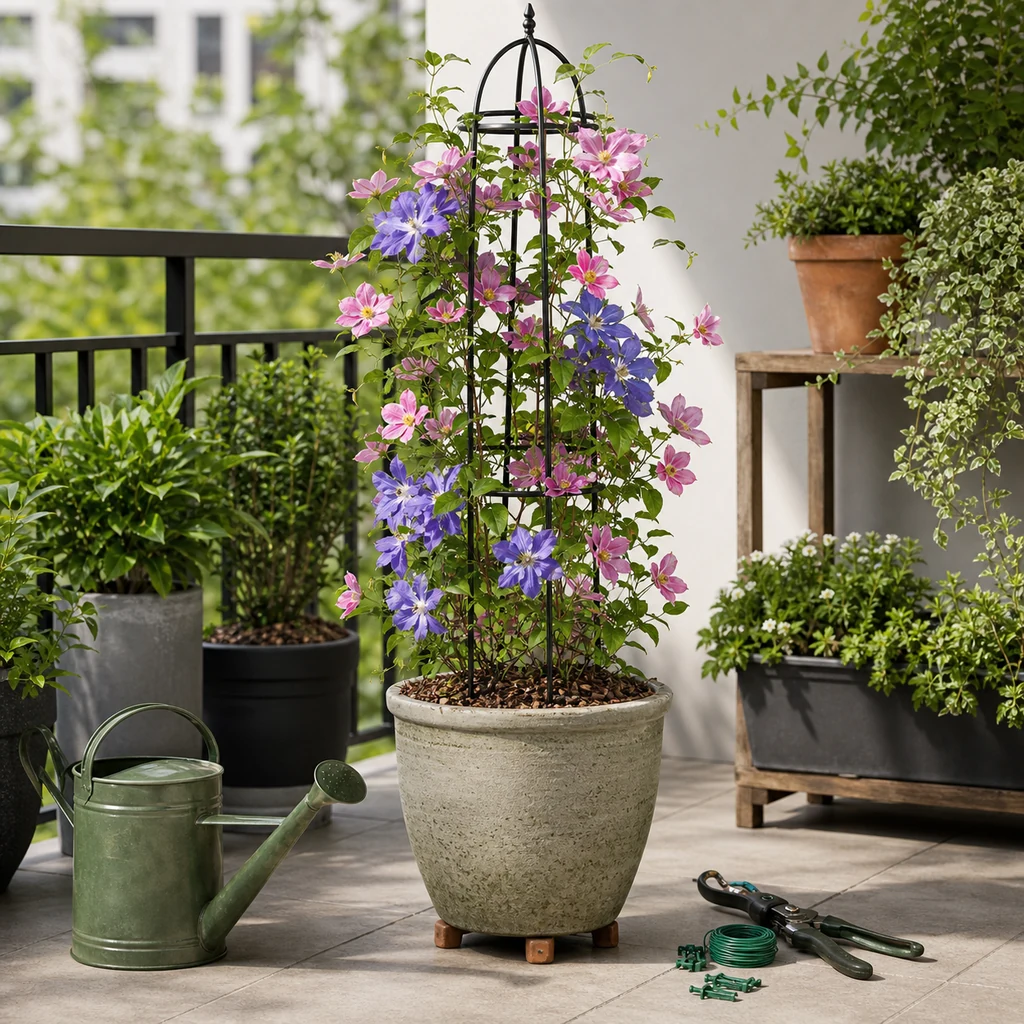
Container growing tips
- Use a large pot with drainage holes.
- Choose a compact or manageable vine variety.
- Use a trellis, obelisk, or tripod support anchored in the pot.
- Water more often than in-ground vines, especially in summer.
- Feed according to the plant’s needs, but avoid overfeeding leafy growth at the expense of flowers.
- Check whether the pot needs winter protection in your climate.
Container vines can dry out quickly. Mulch the top of the pot and check moisture regularly during hot weather.
Care Checklist for Climbing Flowering Vines
Use this checklist to keep vines healthy, attractive, and under control.
- Match the vine to your climate and support size.
- Provide enough sun for flowering.
- Water deeply during establishment.
- Mulch to protect roots and conserve moisture.
- Train young stems early with soft ties.
- Prune at the right time for the specific vine.
- Remove dead, damaged, or tangled growth.
- Watch for pests, mildew, or poor airflow.
- Check supports yearly for strength and stability.
- Confirm whether the vine is invasive in your region before planting.
Common Mistakes to Avoid
Planting a heavy vine on a weak support
Wisteria and mature woody vines can become extremely heavy. Use strong structures and avoid flimsy decorative trellises for large vines.
Ignoring pruning needs
Some vines flower on old wood, some on new growth, and some need specific seasonal pruning. Keep variety information so you know when to prune.
Choosing the wrong vine for the climate
Bougainvillea loves heat, while sweet peas prefer cooler conditions. Matching the vine to your climate makes care much easier.
Letting vines grow into gutters or roofs
Train vines away from gutters, shingles, vents, and siding gaps. A beautiful vine can cause problems if it climbs into the wrong place.
Skipping regional invasive checks
Some climbing vines spread aggressively in certain areas. Check local extension or gardening guidance before planting a fast-growing vine.
FAQ
What is the easiest climbing flowering vine to grow?
Morning glory and sweet pea are often easy from seed, while clematis and jasmine can be manageable with the right support and care. The easiest choice depends on your climate and sunlight.
Which climbing vines flower the longest?
Some clematis varieties, jasmine types, bougainvillea in warm climates, and well-maintained annual vines can offer long bloom periods. Choose varieties known for repeat or extended flowering.
Can climbing flowering vines grow in pots?
Yes, many can grow in containers if the pot is large, the soil drains well, and the support is stable. Compact clematis, jasmine, sweet pea, and some annual vines can work well in pots.
Do climbing vines damage walls?
Some vines can damage surfaces if they attach directly or grow into cracks. Use wall wires, trellises, or freestanding supports to keep growth controlled and protect walls.
How often should climbing vines be pruned?
It depends on the vine. Fast-growing vines may need regular light training, while flowering vines often need pruning after bloom or during dormancy. Always check the pruning needs of the specific plant.
Final Thoughts
Climbing flowering vines can make a garden feel lush, romantic, colorful, and alive with pollinators. Choose a vine that suits your climate and support, train it early, prune it thoughtfully, and give it room to mature. With the right match, a simple trellis, fence, arbor, pergola, or container can become one of the most beautiful features in your garden.