
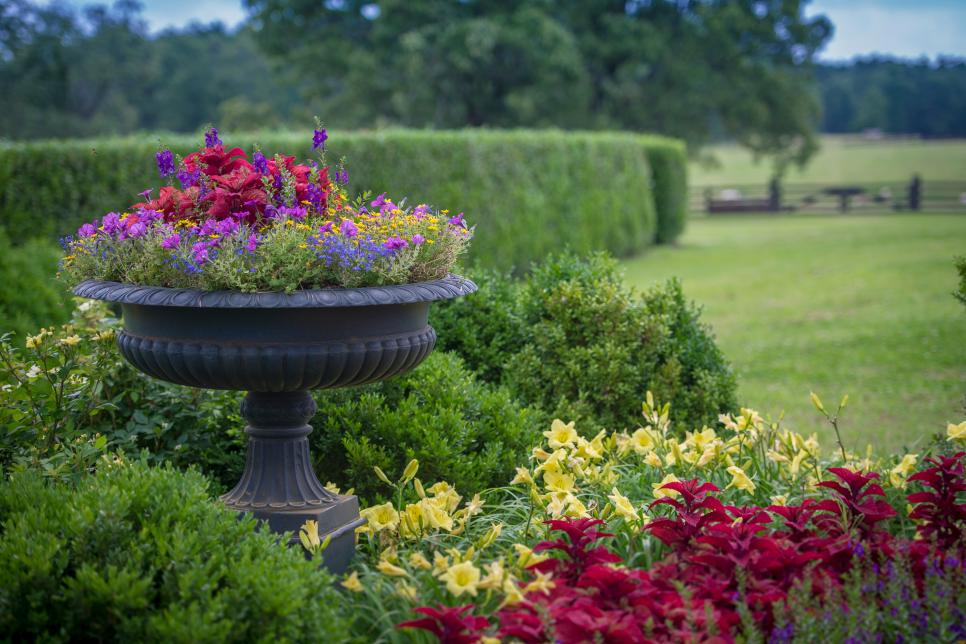
Easy perennials are some of the best plants for a low-stress garden because they return year after year, often becoming fuller and more beautiful with time. They are ideal for beginners, busy gardeners, cottage gardens, pollinator borders, and anyone who wants color without replanting everything each season.
Even easy perennials still need the right location, watering while they establish, occasional feeding, deadheading, cutting back, or dividing. The good news is that once you choose reliable plants for your sun, soil, and climate, a perennial garden can become easier every year.
What Makes a Perennial Easy to Grow?
An easy perennial is not a plant you can ignore completely. It is a plant that adapts well, blooms reliably, resists common problems, and does not need constant fussing. The best choices for beginners are tough enough to handle normal garden ups and downs.
Look for these traits
- Reliable return growth each year in your hardiness zone.
- Good tolerance for ordinary garden soil.
- Long bloom time or attractive foliage.
- Low pest and disease pressure.
- Moderate water needs once established.
- Simple maintenance, such as deadheading or cutting back.
Before buying plants, check your sun exposure and soil moisture. A sun-loving perennial placed in shade will not feel easy, and a moisture-loving plant in dry soil will struggle.
How to Choose Perennials for Your Garden
Start with the conditions you already have rather than trying to force a plant into the wrong spot. Most plant problems begin with a mismatch between the plant and the site.
Match plants to these conditions
- Sun: Full sun usually means six or more hours of direct light.
- Part shade: Three to six hours of sun, often morning sun and afternoon shade.
- Soil: Clay, sandy, loamy, dry, moist, or amended garden soil.
- Water: Some perennials tolerate drought after establishment, while others need steady moisture.
- Height: Place tall plants behind shorter plants so the border stays layered.
- Bloom time: Mix spring, summer, and fall bloomers for longer color.
Best Easy Perennials for Sunny Gardens
These reliable perennials are popular because they bring color and texture without needing advanced gardening skills.
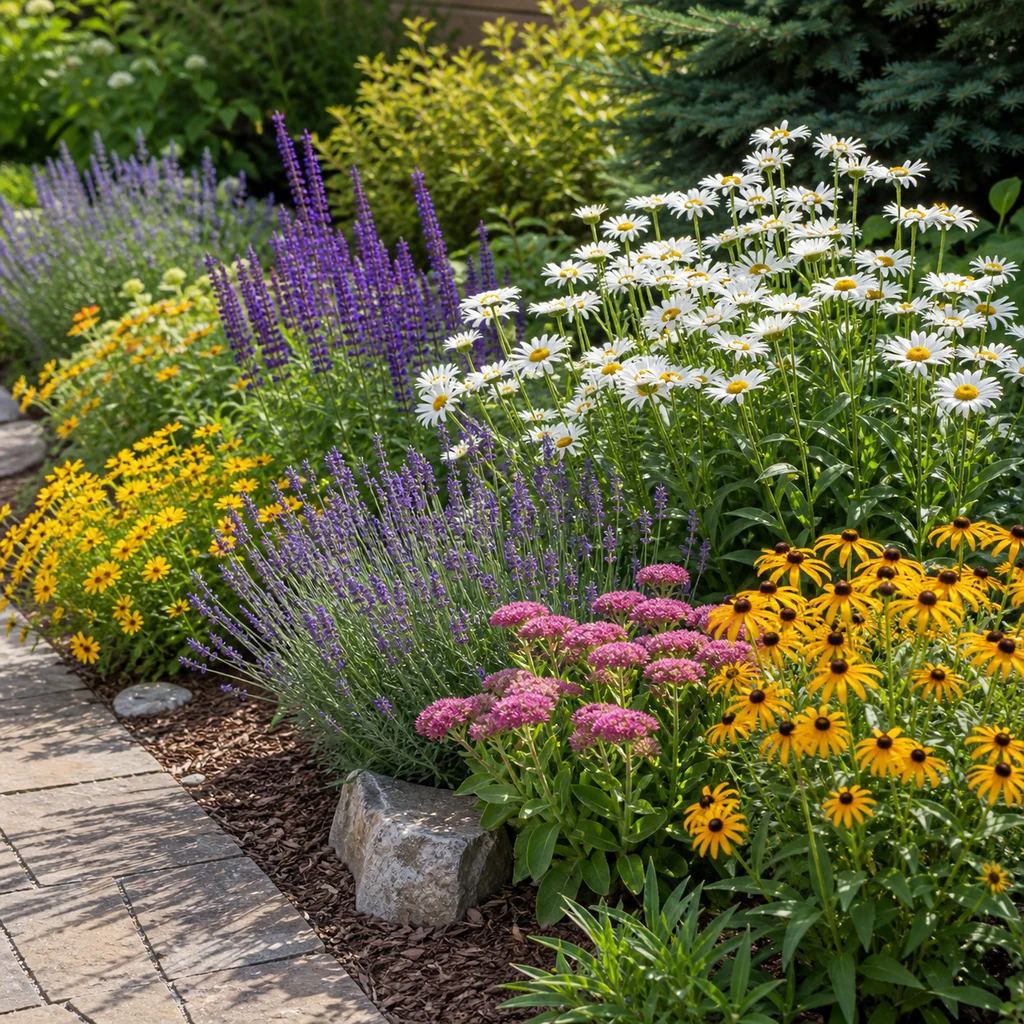
Black-Eyed Susan
Black-eyed Susan is a cheerful, tough perennial with golden-yellow petals and dark centers. It is excellent for summer color, pollinators, and natural-looking borders.
- Best for: Sunny borders and pollinator gardens.
- Light: Full sun.
- Care: Deadhead for tidier plants or leave seed heads for birds.
Shasta Daisy
Shasta daisies bring classic white petals and yellow centers to sunny beds. Varieties such as Becky are known for sturdy growth and bright summer flowers.
- Best for: Cottage gardens, cutting gardens, and mixed borders.
- Light: Full sun.
- Care: Divide clumps when they become crowded.
Coreopsis
Coreopsis is a long-blooming perennial with sunny yellow or soft-toned flowers. It is useful for filling gaps and adding easy color.
- Best for: Hot sunny beds and beginner gardens.
- Light: Full sun.
- Care: Shear lightly after heavy bloom to refresh growth.
Daylily
Daylilies are dependable perennials that tolerate many soils and return reliably. Each flower lasts a short time, but established clumps produce many blooms.
- Best for: Low-maintenance borders and slopes.
- Light: Full sun to part sun.
- Care: Remove spent flower stalks and divide when clumps are crowded.
Salvia
Perennial salvia offers upright flower spikes in blue, purple, pink, or white. It attracts pollinators and pairs well with daisies, yarrow, and ornamental grasses.
- Best for: Pollinator gardens and structured borders.
- Light: Full sun.
- Care: Cut back after bloom for a tidier shape and possible rebloom.
Drought-Tolerant Easy Perennials
Once established, some perennials handle dry periods better than others. These are useful for sunny beds, hot summers, and gardeners who want lower water needs.
Lavender
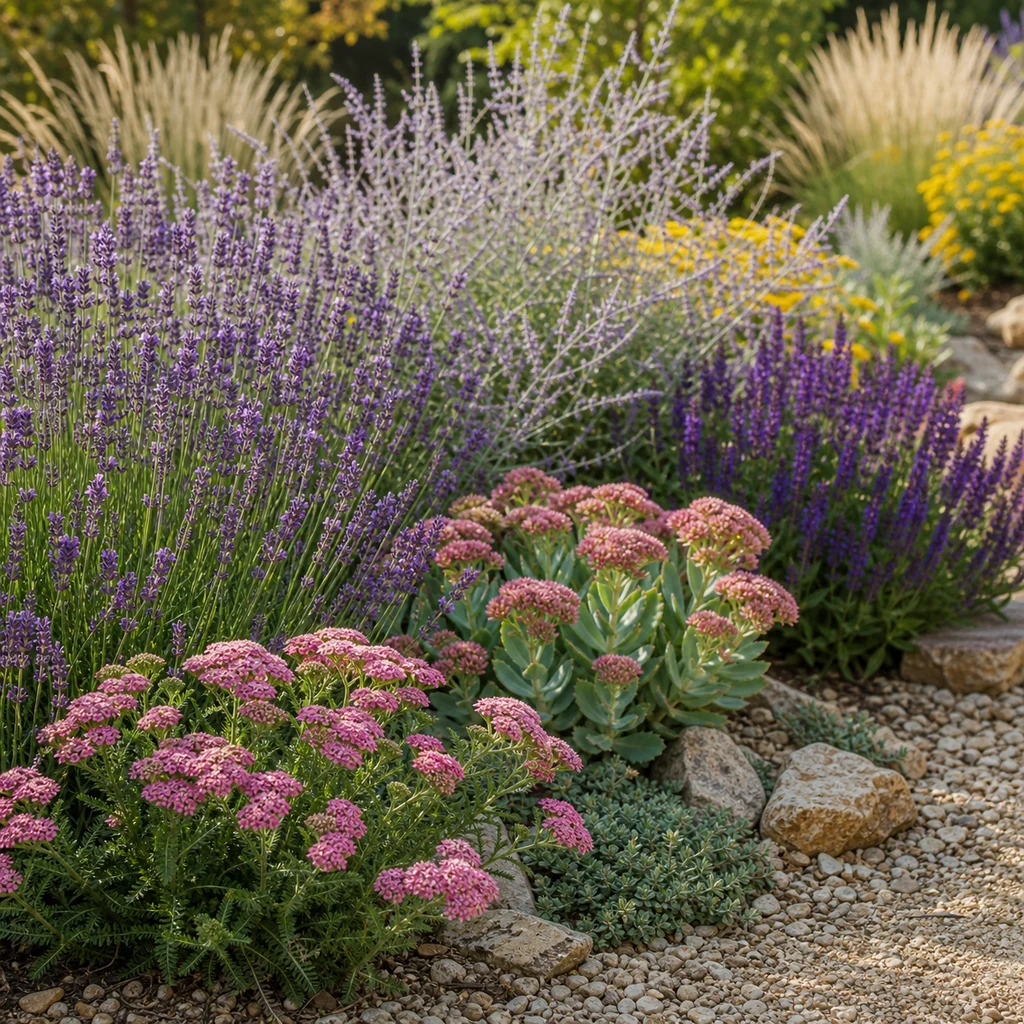
Lavender loves sun and well-drained soil. It is fragrant, attractive to pollinators, and beautiful along paths or in herb-inspired borders.
Yarrow
Yarrow is tough, airy, and long-blooming. It works well in meadow-style gardens and can handle heat once established.
Sedum
Sedum, especially upright types such as Autumn Joy, has succulent foliage and late-season flowers that add structure to the garden.
Russian Sage
Russian sage brings silvery foliage and lavender-blue flowers. It performs best in sunny, well-drained areas and pairs well with ornamental grasses.
Easy Perennials for Part Shade
Not every garden has full sun. If your space gets morning sun or filtered light, choose plants that tolerate part shade.
- Bleeding heart: Lovely spring flowers and delicate foliage for cooler shade.
- Catmint: Often best in sun, but can tolerate light shade in warm regions.
- Garden phlox: Fragrant summer flowers; needs airflow to reduce mildew.
- Veronica: Upright flower spikes that work in mixed borders.
- Dianthus: Fragrant, low-growing flowers for edges and cottage-style beds.
Part-shade gardens vary widely, so watch how light moves through the space during the day before planting.
How to Plant Easy Perennials
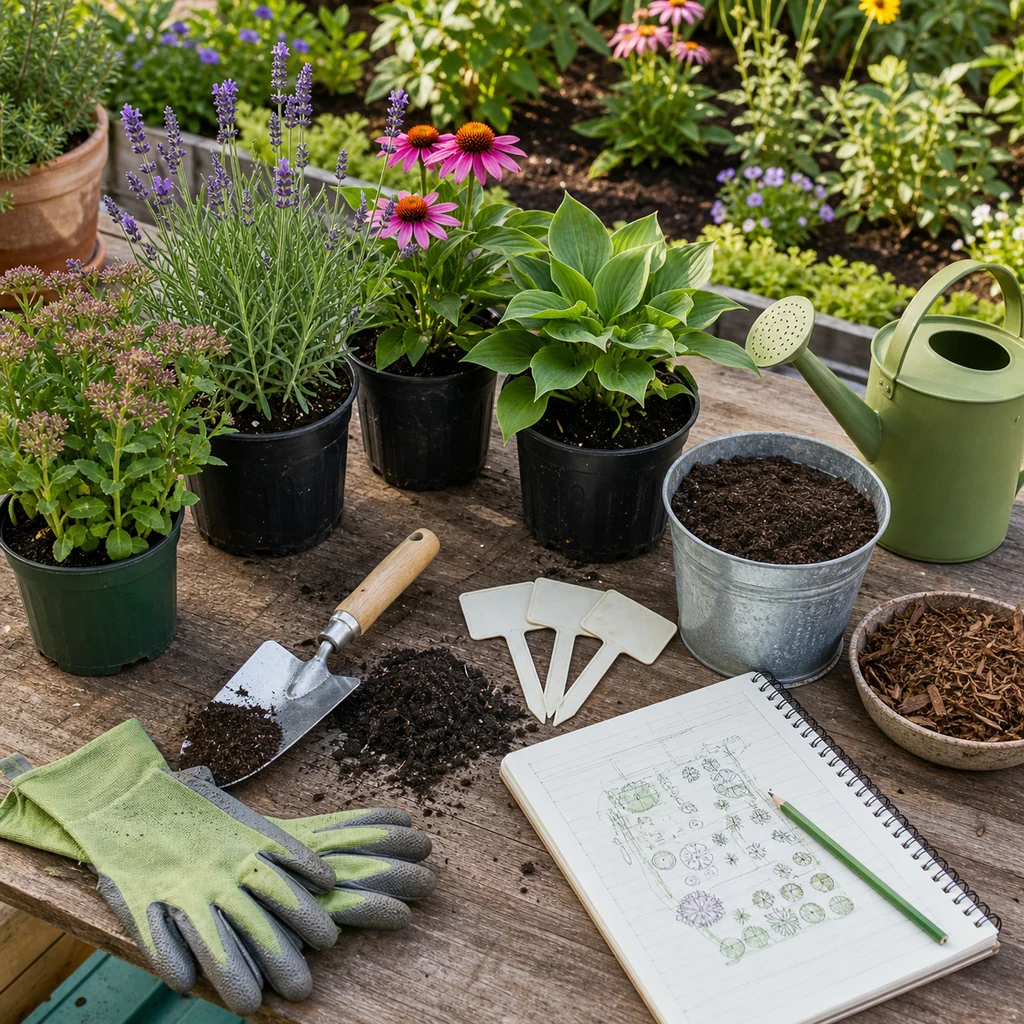
- Water plants before planting so the root ball is moist.
- Dig a hole about as deep as the root ball and slightly wider.
- Loosen compacted soil and mix in compost if needed.
- Place the plant at the same soil level it had in the pot.
- Backfill gently and water deeply.
- Add mulch around the plant, keeping it away from the crown.
- Water regularly during the first growing season.
The first year is mostly about root establishment. Many perennials look better in their second and third years.
Perennial Garden Care Checklist
Use this checklist to keep easy perennials healthy without overcomplicating garden care.
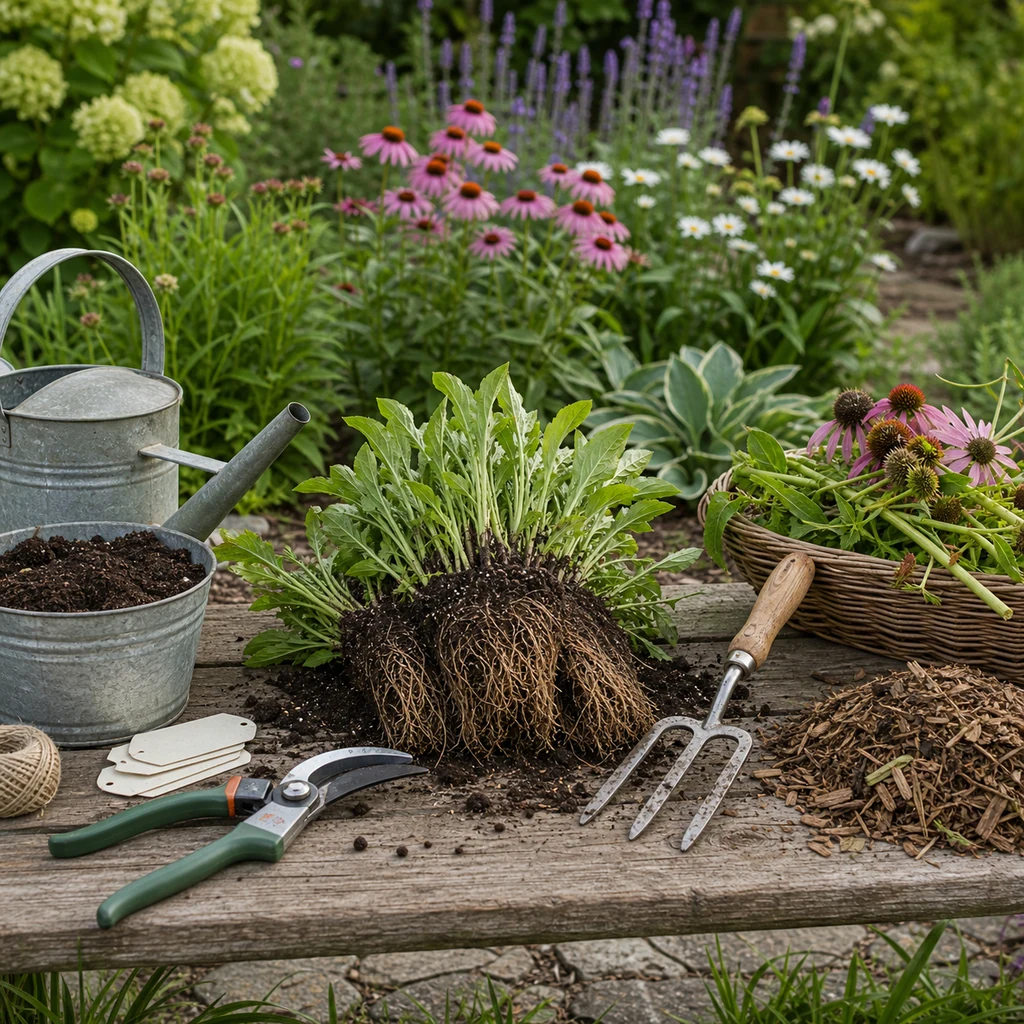
- Water new perennials consistently during the first season.
- Mulch to conserve moisture and reduce weeds.
- Deadhead flowers if you want a tidier look or more bloom.
- Cut back dead stems in fall or early spring, depending on the plant.
- Divide crowded clumps every few years when needed.
- Feed lightly with compost or balanced flower food if growth is weak.
- Watch for pests, mildew, or poor airflow.
- Label plants so you remember what returns in spring.
Common Mistakes to Avoid
Planting too closely
Young perennials look small, but many expand quickly. Give them room based on mature size.
Forgetting first-year watering
Drought-tolerant does not mean drought-proof at planting time. New roots need steady moisture.
Choosing plants only by flower color
Also consider height, foliage, bloom time, soil, sun, and maintenance needs.
Cutting everything back too early
Some seed heads feed birds or add winter interest. Cut back based on plant health and garden style.
FAQ
What is the easiest perennial for beginners?
Black-eyed Susan, daylily, sedum, coreopsis, and Shasta daisy are often easy choices for sunny gardens.
Do easy perennials come back every year?
Yes, perennials return year after year when they are suited to your climate, soil, and winter conditions.
When should I plant perennials?
Spring and fall are usually good planting times because temperatures are milder and plants have time to establish roots.
Do perennials need fertilizer?
Many do fine with compost and healthy soil. Use fertilizer lightly if plants show weak growth, but avoid overfeeding.
How often should perennials be divided?
Many perennials benefit from division every three to five years, or whenever clumps become crowded, bloom less, or die out in the center.
Final Thoughts
Easy perennials can make gardening more rewarding because they return, spread, and bloom with less yearly replanting. Choose plants that match your light and soil, water them well while they establish, and keep up with simple seasonal care. With the right mix, your garden can become fuller, easier, and more colorful every year.