
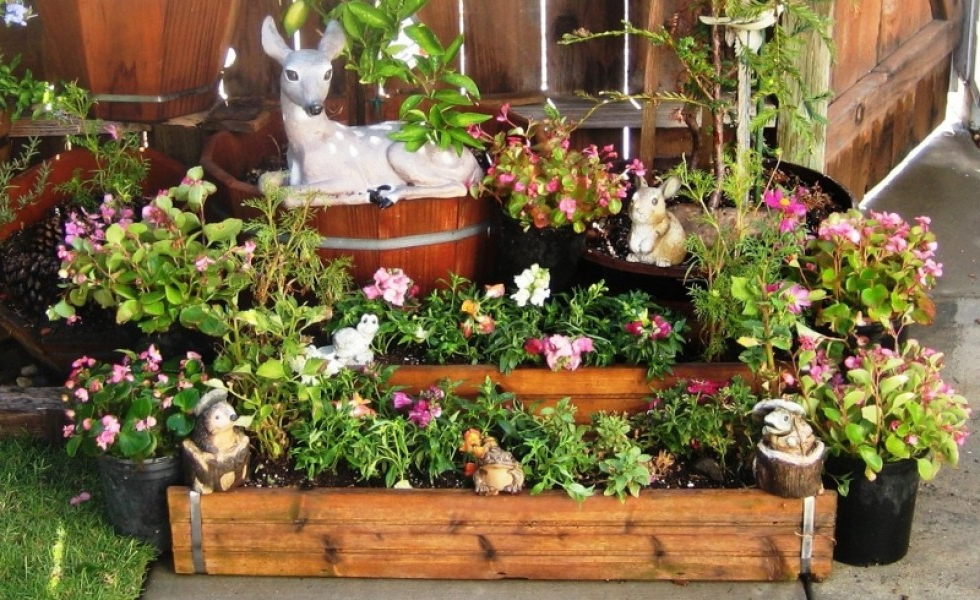
Container gardening is one of the easiest ways to start growing plants when you do not have a large yard. A balcony, patio, porch, sunny doorstep, or even a bright small corner can become a productive little garden with the right containers, soil, plants, and watering routine.
This beginner guide walks you through the practical choices that matter most: which pots to use, what to plant first, how to choose potting mix, how often to water, and how to avoid the most common container gardening mistakes. Start small, learn from a few healthy pots, and expand once you understand your light and watering rhythm.
Why Container Gardening Is Perfect for Beginners
Container gardening gives you more control than planting directly in the ground. You can choose the soil, move pots to better light, protect plants from harsh weather, and start with only a few containers. This makes it less intimidating for beginners who are still learning how plants respond to sun, water, and nutrients.
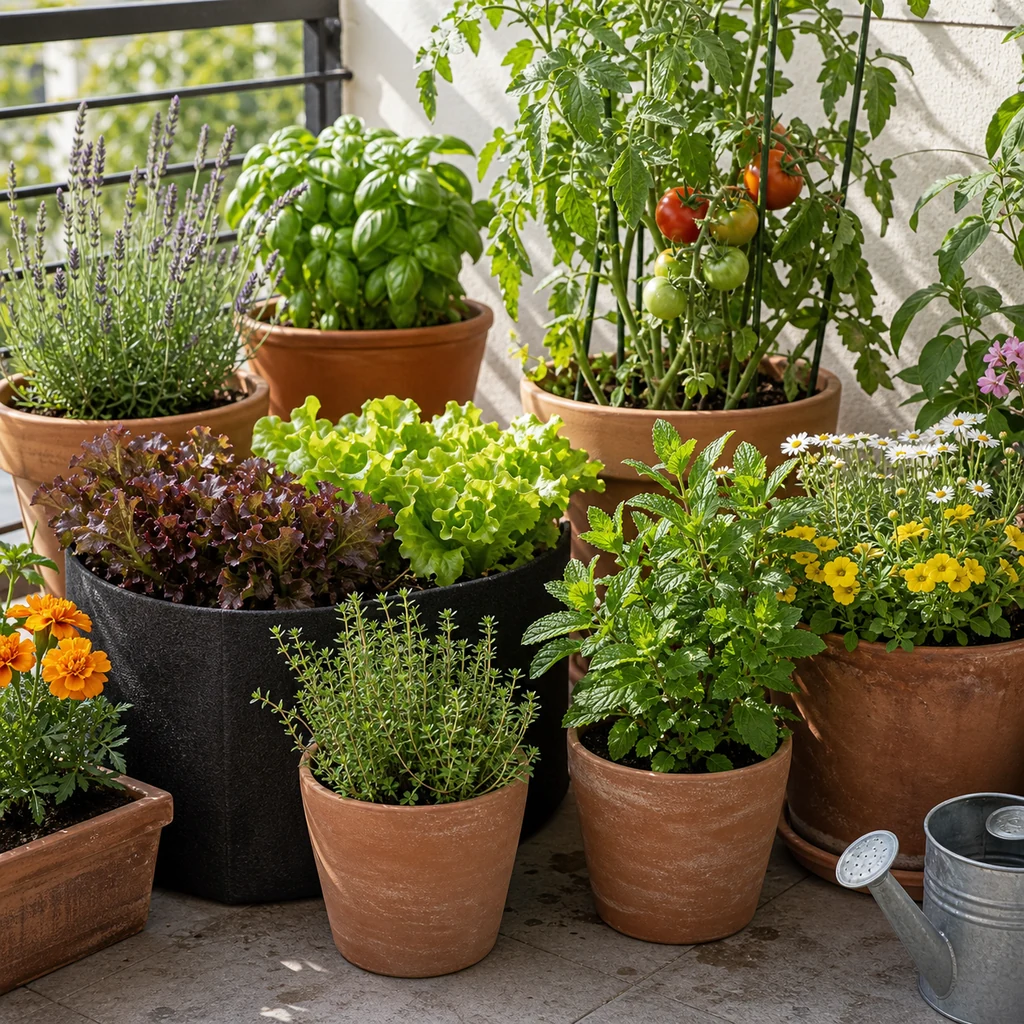
It also works for many types of plants. Herbs, lettuce, peppers, compact tomatoes, strawberries, flowers, and many ornamental plants can grow well in containers when the pot is large enough and has good drainage.
Quick Start Plan
- Best first plants: basil, mint, parsley, lettuce, marigolds, petunias, compact tomatoes, peppers, and strawberries.
- Best location: a spot with 4 to 6+ hours of light, depending on what you grow.
- Best soil: lightweight potting mix, not heavy garden soil.
- Best pot feature: drainage holes in the bottom.
- Beginner goal: start with 3 to 5 containers before building a larger setup.
Choose the Right Containers
The container is more than decoration. It controls root space, drainage, soil temperature, and how often you need to water. Beginners should choose pots that are stable, easy to water, and large enough for the plant to mature.
Container Types That Work Well
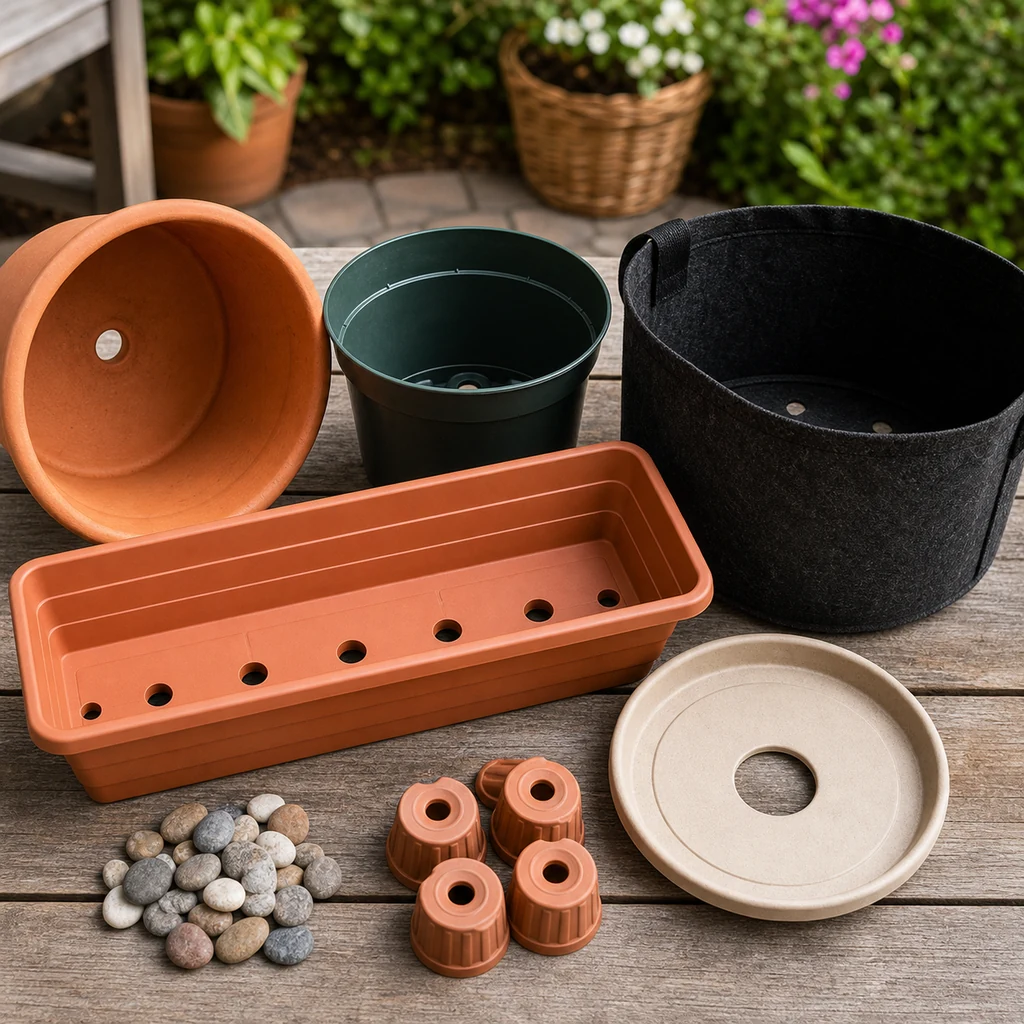
- Terracotta pots: breathable and attractive, but they dry out faster in hot weather.
- Plastic pots: lightweight, affordable, and better at holding moisture.
- Fabric grow bags: excellent drainage and root airflow, ideal for vegetables.
- Window boxes: useful for herbs, lettuce, flowers, and shallow-rooted plants.
- Large patio containers: best for tomatoes, peppers, shrubs, and mixed plantings.
Drainage Is Non-Negotiable
Every container needs drainage holes. Without them, water collects at the bottom, roots suffocate, and plants decline even if the top of the soil looks fine. If you use saucers, empty standing water after watering so the roots do not sit wet for hours.
Pick Beginner-Friendly Plants
The easiest container garden starts with plants that grow quickly and forgive small mistakes. Herbs and leafy greens are especially satisfying because you can harvest them often without waiting all season.
Best Herbs for Containers
Basil, parsley, mint, thyme, chives, oregano, and cilantro are good beginner herbs. Keep mint in its own pot because it spreads aggressively. Basil likes warmth and steady moisture, while thyme and oregano prefer slightly drier soil.
Best Vegetables for Containers
Lettuce, spinach, radishes, peppers, cherry tomatoes, bush beans, and compact cucumbers can all grow in pots. Choose varieties labeled patio, dwarf, compact, bush, or container-friendly when possible.
Best Flowers for Containers
Marigolds, petunias, pansies, nasturtiums, calendula, alyssum, geraniums, and zinnias bring color and attract pollinators. Flowers also make a beginner garden feel rewarding while vegetables are still growing.
Use Potting Mix, Not Garden Soil
Garden soil is usually too heavy for containers. It can compact, drain poorly, and make it harder for roots to breathe. A good potting mix is lighter and usually contains ingredients such as peat or coco coir, compost, bark, perlite, or vermiculite.
For vegetables and herbs, choose a quality all-purpose potting mix or an organic container mix. If the mix does not already include fertilizer, add a slow-release fertilizer according to the label. Do not overdo it; too much fertilizer can burn roots or create lots of leaves with weak growth.
How to Plant a Container Garden
Planting correctly helps the roots settle quickly and reduces transplant shock. Water seedlings before planting so the root ball is moist, then prepare the container before removing the plant from its nursery pot.
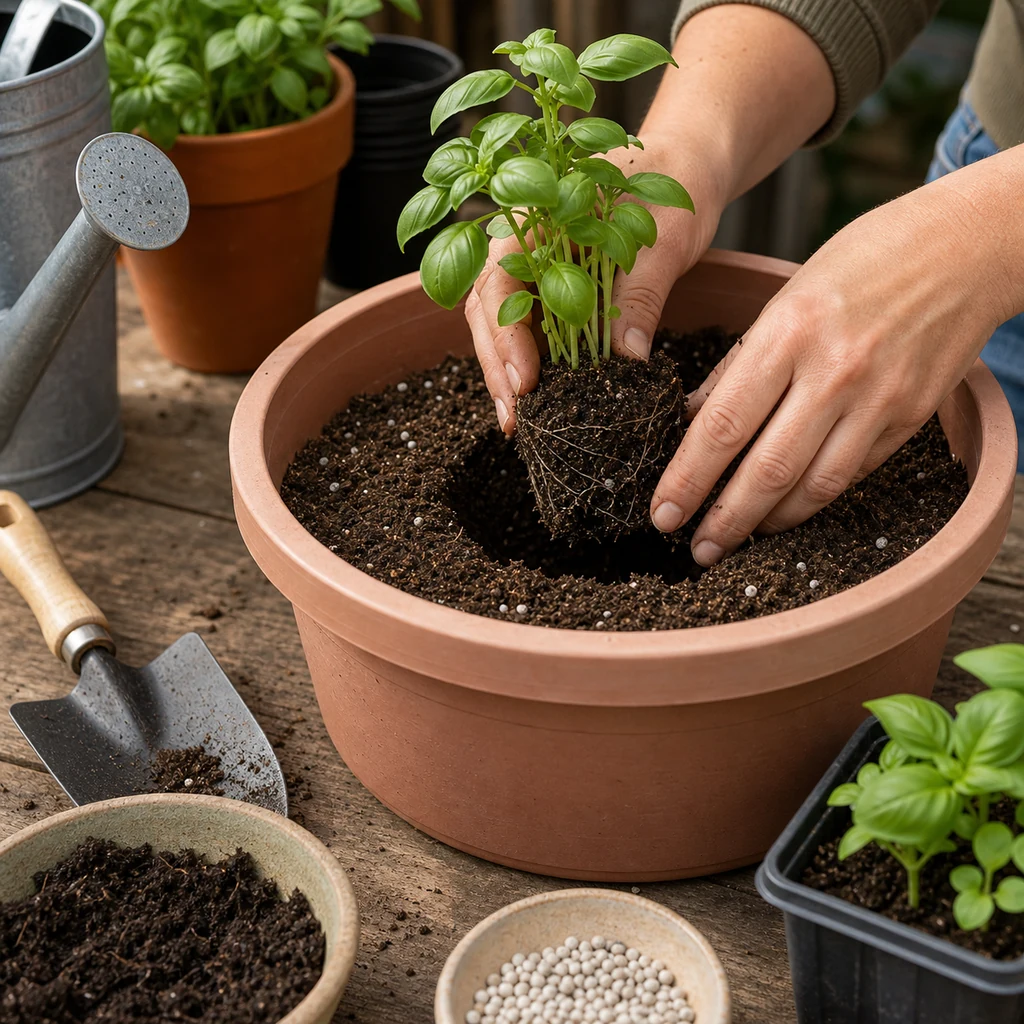
- Fill the container: add potting mix until the plant will sit at the same depth it was growing before.
- Loosen roots gently: if roots circle the pot, tease them apart lightly with your fingers.
- Place the plant: keep the crown of the plant level with the soil surface.
- Backfill: add potting mix around the root ball and press gently, not hard.
- Leave watering space: keep about 1 inch of space between the soil and rim of the pot.
- Water deeply: water until moisture runs from the drainage holes.
Light Requirements for Container Plants
Light is one of the biggest reasons container gardens succeed or struggle. Before buying plants, watch your space for a day and notice how many hours of direct sun it gets.
- Full sun: 6 or more hours of direct sun; best for tomatoes, peppers, basil, lavender, and many flowers.
- Partial sun: 4 to 6 hours; good for lettuce, parsley, cilantro, pansies, and many herbs.
- Shade or low light: fewer than 4 hours; choose shade-tolerant ornamentals and avoid fruiting vegetables.
Containers can heat up quickly in strong sun. In very hot weather, move small pots where they get morning sun and afternoon protection.
Watering Container Gardens the Right Way
Containers dry out faster than garden beds because the root zone is smaller and exposed to air. The best watering habit is to check the soil with your finger. If the top inch feels dry, water deeply until water drains from the bottom.
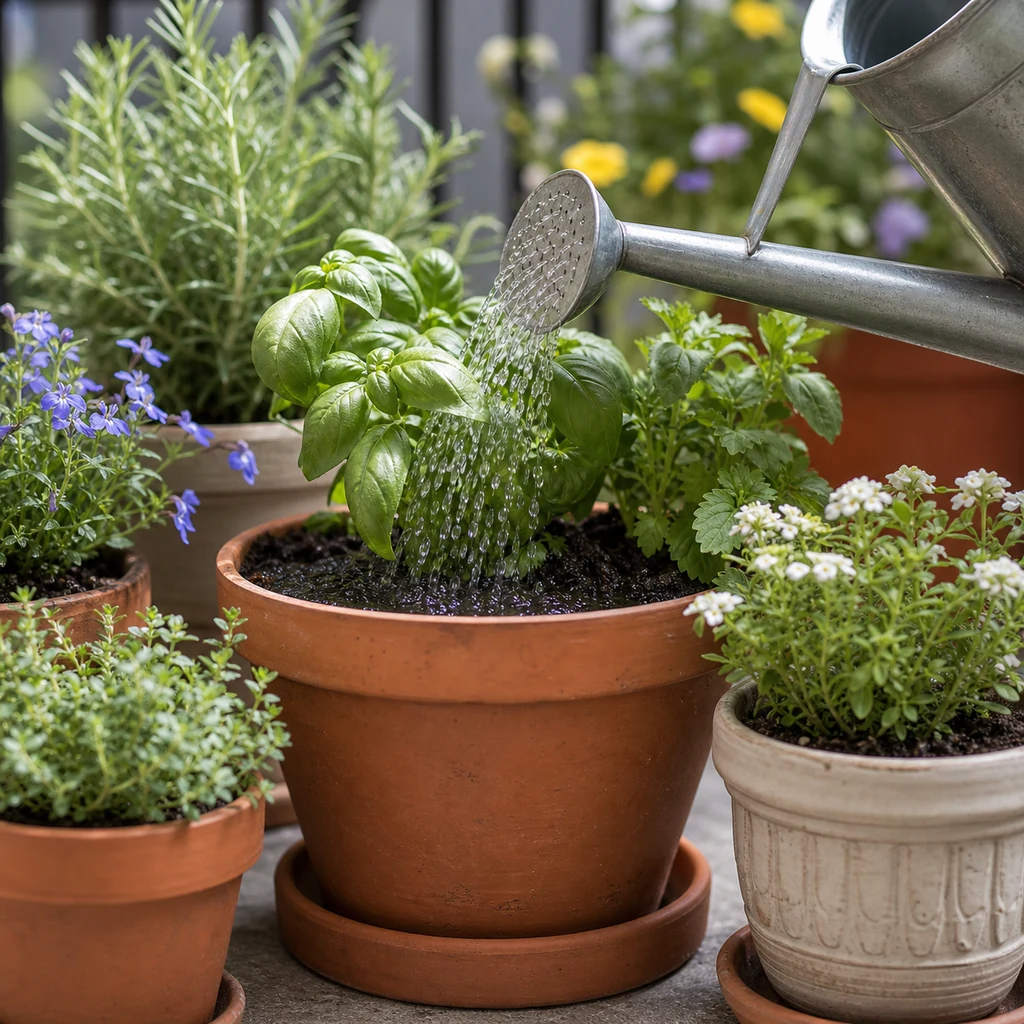
Water the soil, not the leaves, whenever possible. Wet leaves can encourage disease, especially in crowded spaces. In summer, small pots may need daily watering, while larger containers may only need water every few days. Empty saucers after watering so roots do not sit in standing water.
Fertilizing Basics
Container plants depend on you for nutrients because watering slowly washes minerals out of the pot. Use a slow-release fertilizer at planting time or feed with a diluted liquid fertilizer every 2 to 4 weeks during active growth.
Leafy greens and herbs need moderate feeding. Tomatoes, peppers, and heavy-flowering plants usually need more consistent nutrition. If leaves turn pale and growth slows, the plant may need feeding. If leaves grow huge but flowers are weak, you may be using too much nitrogen.
Simple Container Garden Layout Ideas
- Herb kitchen pot: basil, parsley, chives, and thyme in one wide container.
- Salad box: lettuce, spinach, radishes, and a few edible flowers in a window box.
- Tomato patio pot: one compact tomato in a large container with a cage or stake.
- Pollinator pot: marigolds, calendula, alyssum, and nasturtiums.
- Low-maintenance patio: rosemary, lavender, thyme, and drought-tolerant flowers.
Common Beginner Mistakes
- Choosing pots without drainage: this is the fastest path to root rot.
- Using garden soil: heavy soil compacts and drains poorly in containers.
- Starting too big: too many pots make watering and learning harder.
- Planting too crowded: crowded roots compete for water and nutrients.
- Watering only the surface: shallow watering encourages weak roots.
- Ignoring light: tomatoes will not thrive in deep shade, and shade plants can scorch in full sun.
Container Gardening Checklist
- Choose a sunny or bright location first.
- Use containers with drainage holes.
- Fill pots with lightweight potting mix.
- Start with beginner-friendly plants.
- Leave space for mature growth.
- Water deeply when the top inch of soil is dry.
- Feed lightly during active growth.
- Check plants often for stress, pests, and dry soil.
Frequently Asked Questions
What is the easiest plant to grow in a container?
Basil, mint, lettuce, parsley, marigolds, and pansies are all beginner-friendly. For vegetables, cherry tomatoes and peppers are good choices if you have enough sun and a large enough pot.
How deep should a container garden be?
Herbs and lettuce can grow in 6 to 8 inches of soil. Peppers and compact tomatoes usually need 10 to 14 inches or more. Larger roots need larger containers.
Can I reuse old potting soil?
Yes, if the previous plants were healthy. Refresh old mix with compost and some new potting mix. Do not reuse soil from diseased plants.
How often should I water container plants?
Check the top inch of soil. If it feels dry, water deeply. Hot weather, small pots, terracotta containers, and windy balconies dry out faster.
Do container gardens need fertilizer?
Usually yes. Nutrients wash out of containers over time, so use slow-release fertilizer or diluted liquid fertilizer during the growing season.
Final Thoughts
Container gardening for beginners works best when you keep the setup simple. Choose a few good pots, use quality potting mix, match plants to your light, and learn how your containers dry out. Once those basics feel easy, you can add more herbs, vegetables, flowers, and creative container combinations with confidence.