
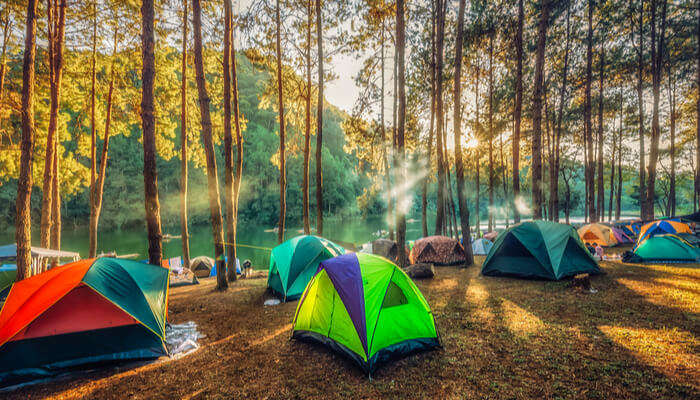
Monsoon camping can be refreshing, dramatic, and surprisingly peaceful when you plan for rain from the beginning. The air feels cooler, the landscape turns greener, waterfalls become stronger, and familiar trails can feel completely new. But the same season that makes camping beautiful can also bring muddy paths, sudden downpours, slippery rocks, insects, condensation, and fast-rising water.
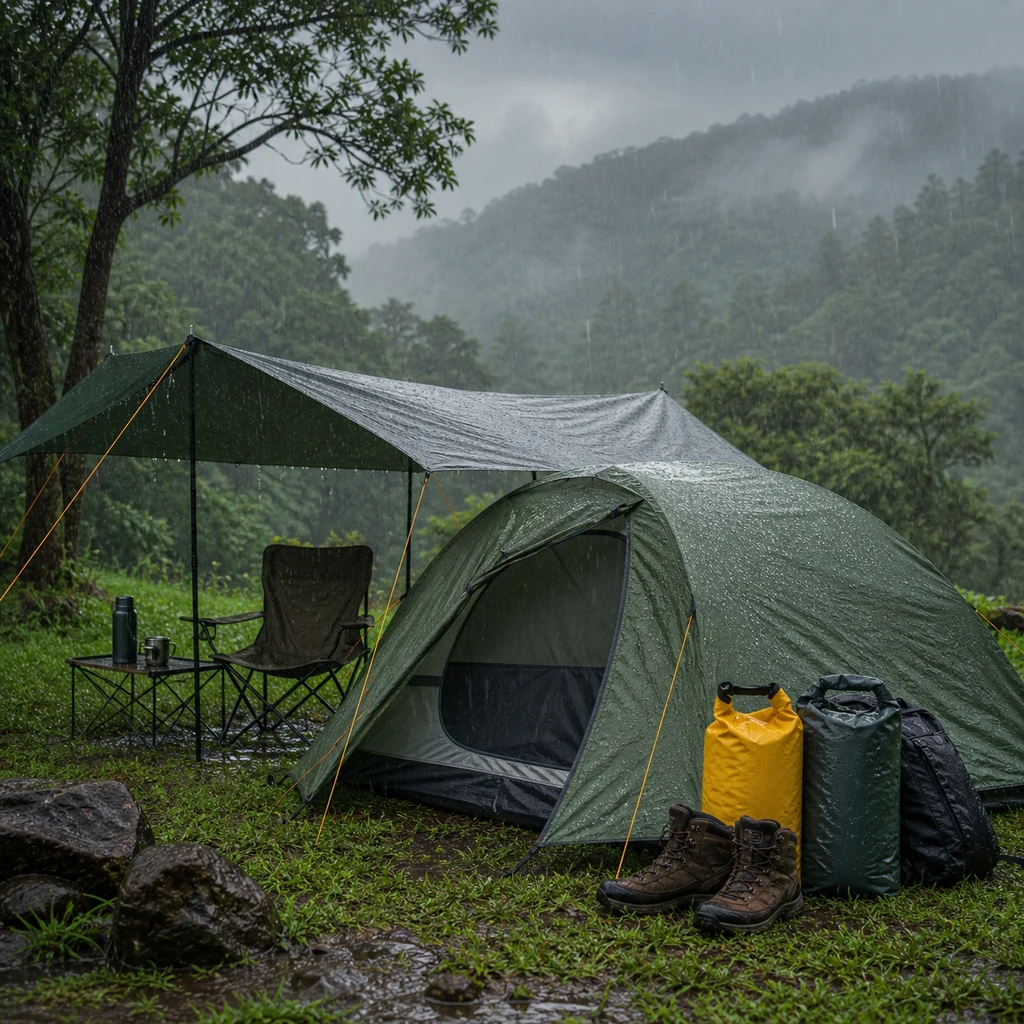
These monsoon camping ideas focus on practical ways to enjoy the rainy season without turning your trip into a wet mess. You will find campsite planning, waterproof gear tips, shelter setup advice, cooking ideas, trail safety, activity suggestions, and a simple checklist you can use before leaving home.
1. Choose a Campsite That Drains Well
Your campsite choice matters more during monsoon season than almost any other time of year. A beautiful flat clearing can become a puddle after an hour of heavy rain, and a dry riverbed can become dangerous when water rises upstream. Look for legal, established campsites on slightly higher ground with natural drainage.
Avoid risky camping spots
- Low-lying ground where water can collect
- Dry streambeds, gullies, drainage channels, and riverbanks
- Areas directly below unstable slopes or loose rocks
- Sites under dead branches or trees that may drop limbs in wind
- Muddy ground where tent stakes will not hold securely
If you are camping near water, keep extra distance from rivers, waterfalls, and stream crossings. Monsoon rain can change water levels quickly, even when the rain is falling farther away from your campsite.
2. Pack Waterproof Gear Before You Pack Anything Else
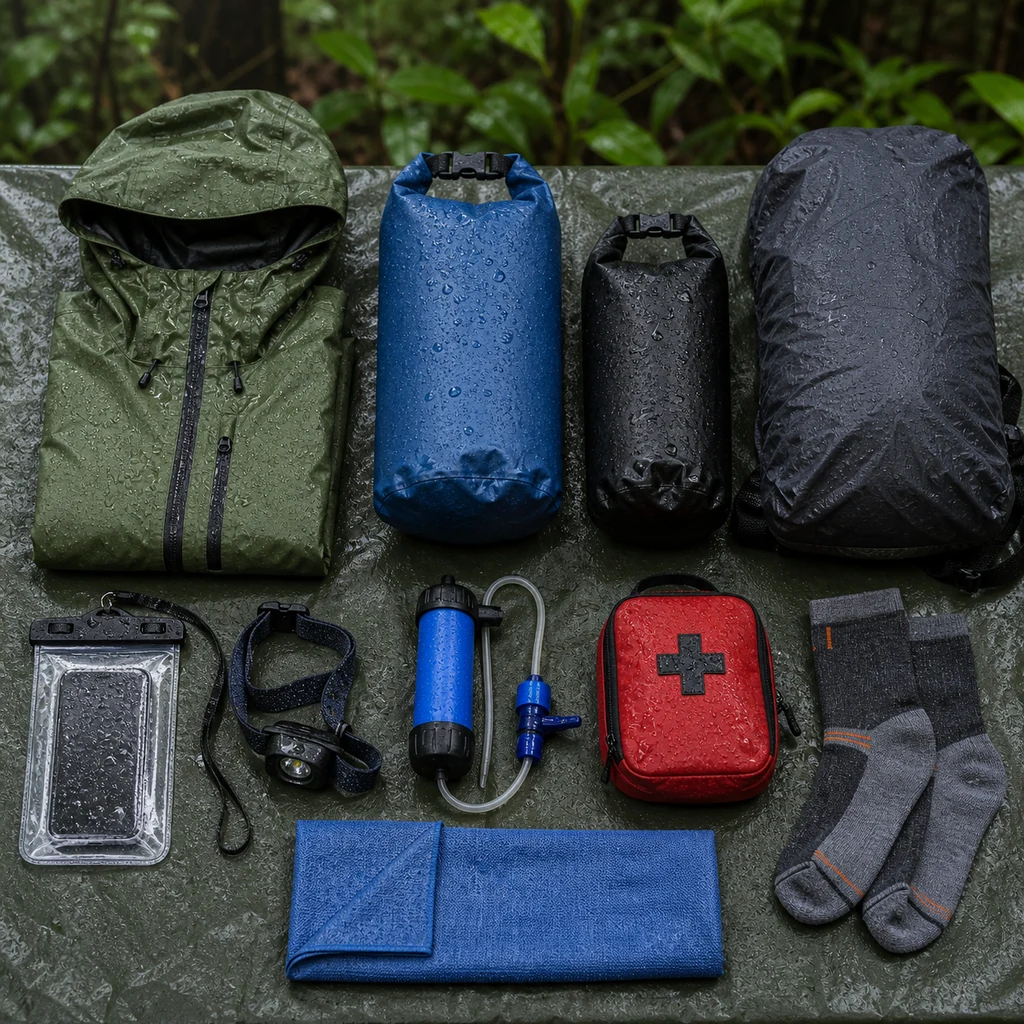
Monsoon camping is not just regular camping with a rain jacket added at the end. Your entire packing system should be built around moisture control. Keep your sleeping bag, dry clothes, electronics, food, and first-aid items protected with dry bags or waterproof stuff sacks.
Monsoon camping gear checklist
- Waterproof tent with full rainfly and sealed seams
- Groundsheet or footprint tucked fully under the tent floor
- Large tarp or canopy for a dry cooking and gear area
- Dry bags for clothes, sleep system, electronics, and food
- Rain jacket, rain pants, and backpack rain cover
- Quick-dry clothing and extra socks
- Waterproof boots or trail shoes with strong traction
- Headlamp, backup batteries, and waterproof phone pouch
- First-aid kit, blister care, and insect protection
- Water filter or purification tablets
Avoid cotton as your main wet-weather layer. Cotton holds moisture, dries slowly, and can make you feel cold after sunset. Quick-dry synthetic layers or merino wool are usually better choices for rainy camping.
3. Set Up a Tarp Before Unpacking Your Tent
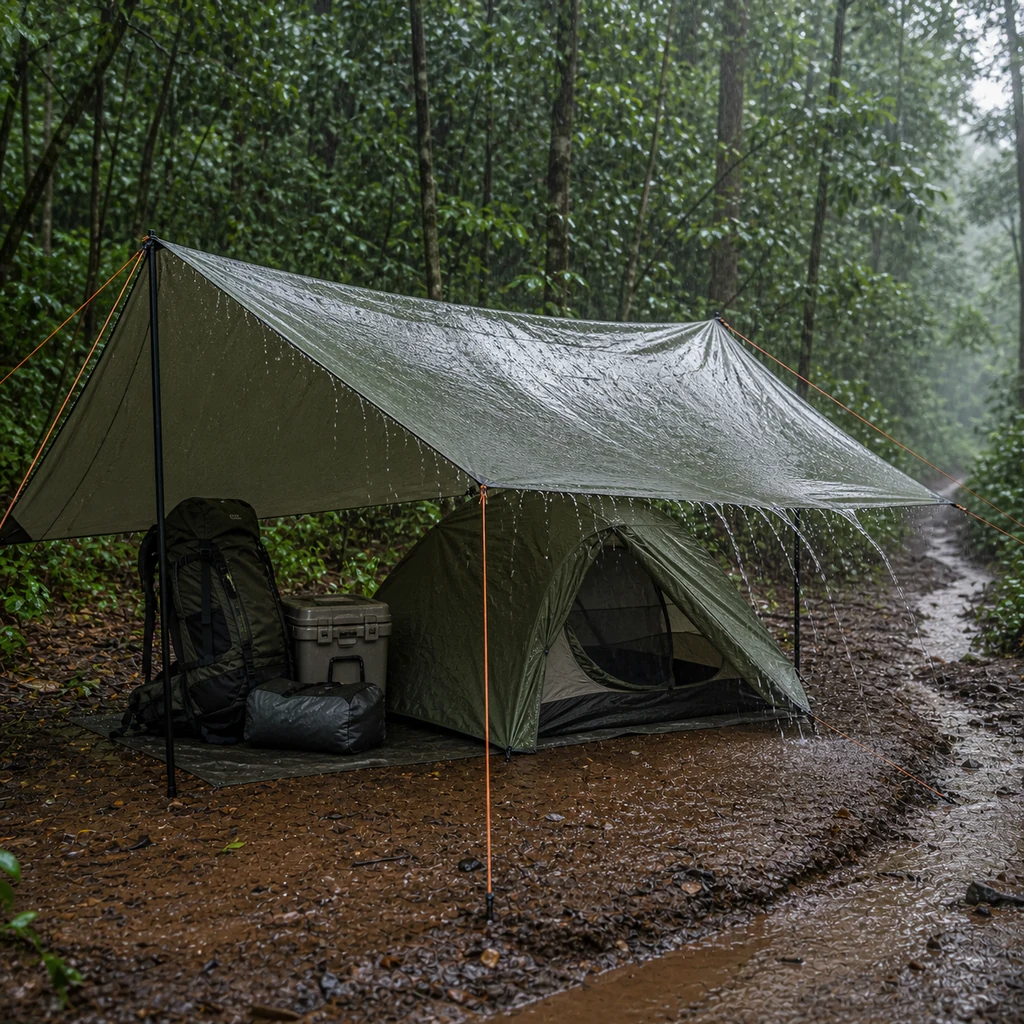
One of the simplest monsoon camping ideas is also one of the most useful: create a dry work zone before you open your pack. If rain is likely, pitch your tarp first. This gives you a protected space for tent setup, cooking, gear sorting, and changing clothes.
How to make your shelter work in rain
- Angle the tarp: Give rain a clear path to run away from the tent entrance.
- Keep airflow moving: Ventilation helps reduce condensation inside the tent.
- Stake everything securely: Wet ground and wind can loosen weak setups.
- Create a wet zone: Keep boots, rain jackets, and muddy gear outside the sleeping area.
- Check runoff paths: Make sure water is not flowing under your tent.
Do not cook inside a closed tent. Use a protected outdoor area with ventilation and stable footing. A tarp can make rainy cooking comfortable, but stove safety still matters.
4. Keep a Wet/Dry Clothing System
Trying to keep every item perfectly dry during monsoon season is unrealistic. A better strategy is to decide what can get wet and what must stay dry. Your hiking clothes, rainwear, and boots may become damp. Your sleep clothes and sleeping bag should stay protected at all costs.
Use two clothing categories
- Wet trail clothes: Clothes you wear while hiking, setting up camp, or moving around in rain.
- Dry camp clothes: Clothes you only wear under shelter or inside the tent before sleeping.
Change into dry layers before bed, even if it feels like a small task. Sleeping in damp clothing can make the night uncomfortable and increase the risk of getting chilled.
5. Plan Warm, Simple Meals Under Shelter
Rainy weather makes warm food feel especially good, but monsoon meals should be simple. Choose foods that cook quickly, require minimal cleanup, and stay protected from moisture. Soups, instant rice, noodles, oatmeal, couscous, tortillas, nut butter, dried fruit, and dehydrated meals all work well.
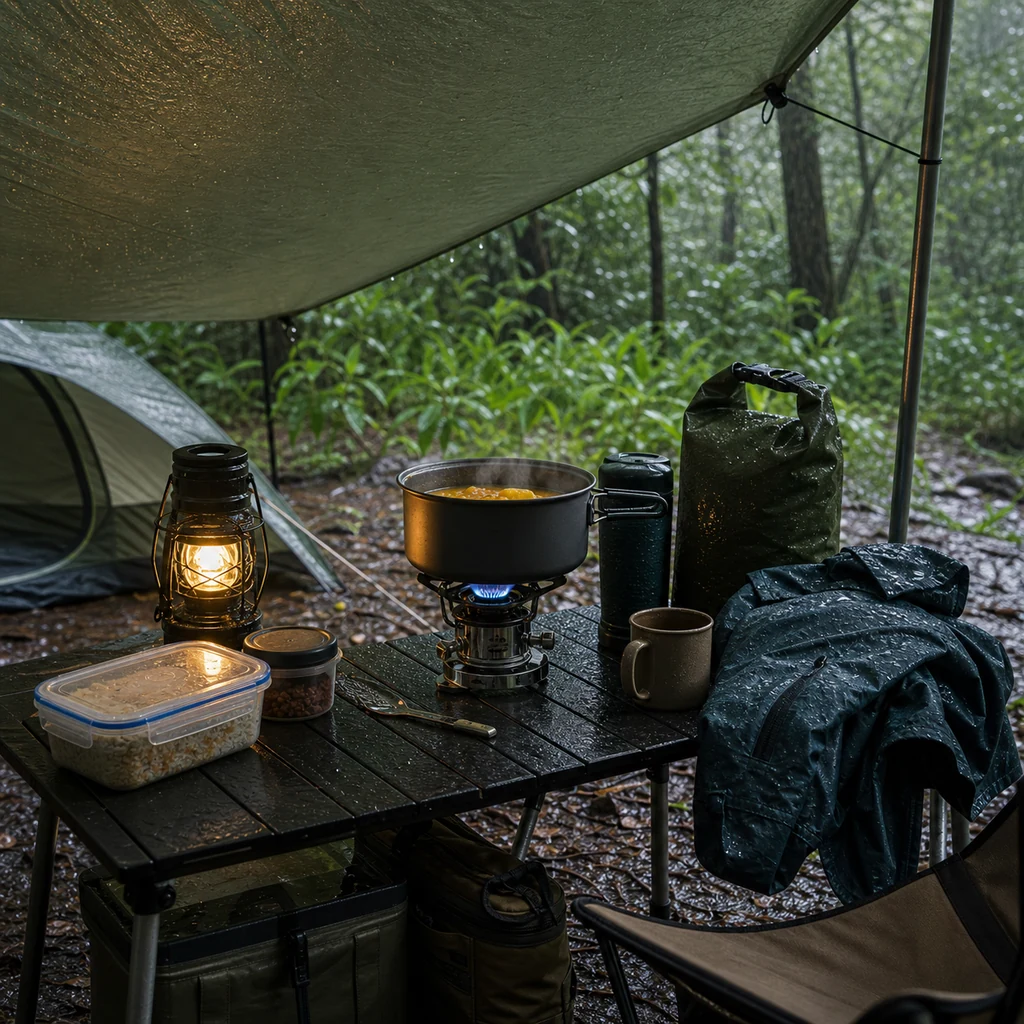
Rainy camp cooking tips
- Keep food in sealed containers or dry bags.
- Use a stove only in a ventilated, stable, sheltered area.
- Prepare ingredients at home to reduce wet-weather cleanup.
- Keep snacks accessible so you do not unpack your whole bag in rain.
- Pack trash bags and remove all food waste from camp.
Store food according to local wildlife rules. Rain does not stop animals or insects from being attracted to crumbs, wrappers, and scented items.
6. Watch Weather, Water, and Trail Conditions
Monsoon weather can shift quickly. A light drizzle can become a heavy downpour, and a safe trail can become slippery or flooded. Check forecasts before you leave and keep checking conditions during the trip when service is available. If alerts mention flooding, landslides, severe storms, or dangerous river levels, change your plan.
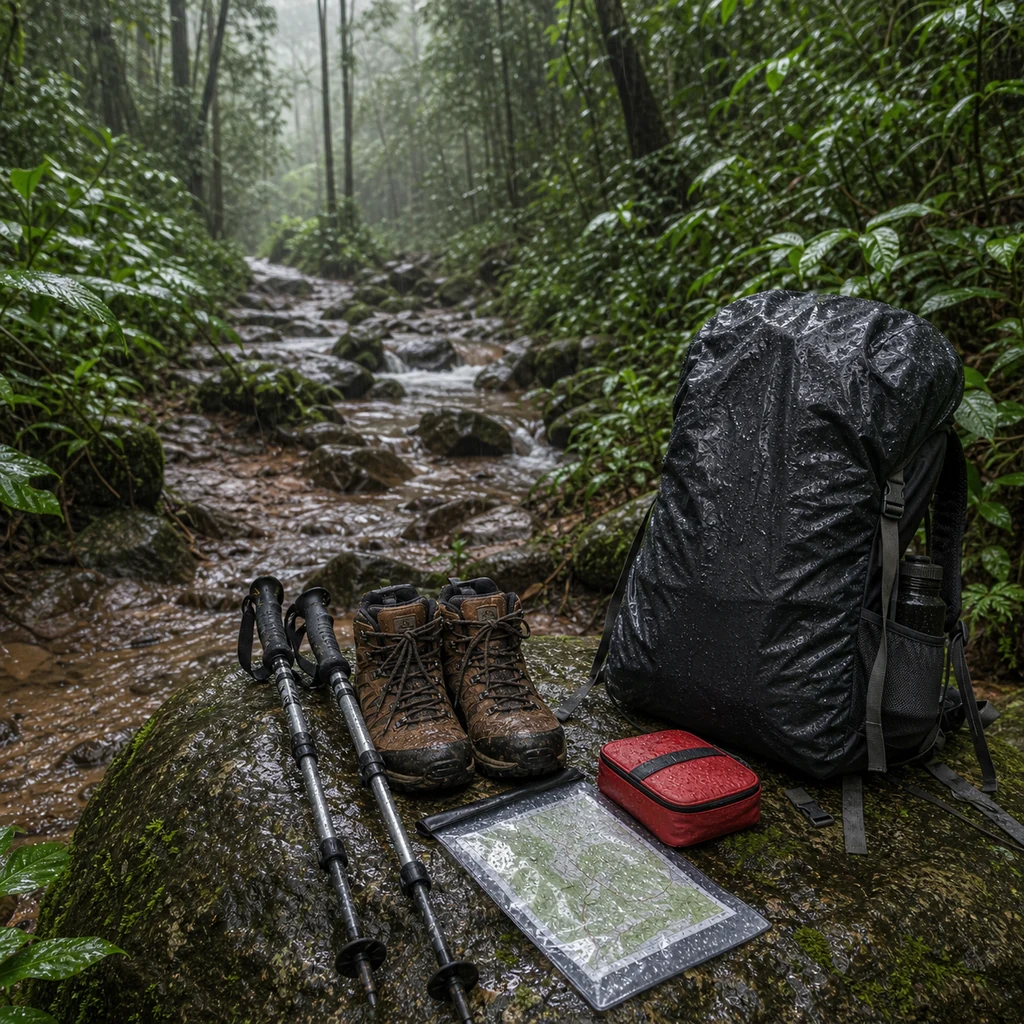
Wet trail safety tips
- Use trekking poles for balance on mud, roots, and wet stones.
- Start hikes early so you are not returning in darkness and rain.
- Turn back before stream crossings become unsafe.
- Keep a map or offline route protected in a waterproof case.
- Move slower than usual and shorten your mileage goal.
For official U.S. weather alerts and flood information, check the National Weather Service before a rainy-season trip.
7. Protect Yourself From Mosquitoes and Insects
Monsoon season often increases insect activity. Bring insect repellent, keep your tent mesh closed, and avoid leaving food or wet clothing scattered around camp. Long sleeves, long pants, and socks can help reduce bites in buggy areas.
For bite-prevention guidance, review the CDC advice on preventing mosquito bites. Follow local health guidance if you are camping somewhere with known mosquito-borne illness risks.
8. Choose Monsoon-Friendly Activities
Rain does not have to cancel the fun. It simply changes the pace. Choose activities that work with wet conditions and do not put you near dangerous water, unstable slopes, or slick exposed rock.
Good rainy-season camping ideas
- Short nature walks on safe, maintained trails
- Waterfall viewing from marked viewpoints
- Photography of mist, clouds, green landscapes, and rain textures
- Birdwatching or quiet wildlife observation from shelter
- Camp cooking, journaling, reading, or map planning under the tarp
Be extra careful around waterfalls and streams. Wet rock can be extremely slippery, and water levels may rise fast during heavy rain.
9. Follow Leave No Trace in Wet Conditions
Wet ground is easy to damage. Stay on established trails, avoid widening muddy paths, and use durable campsites whenever possible. Pack out all trash, keep soap and food scraps away from water, and do not cut vegetation to improve your tarp setup.
For low-impact camping habits, review the National Park Service guidance on Leave No Trace while camping.
10. Monsoon Camping Checklist Before You Leave
- Check weather alerts, flood risk, road conditions, and trail closures.
- Confirm campsite rules, permits, and local wildlife food-storage guidance.
- Test your tent rainfly, seams, stakes, and tarp setup at home.
- Pack sleep gear, clothes, electronics, and food in dry bags.
- Bring rainwear, extra socks, and quick-dry layers.
- Prepare warm, simple meals that work under shelter.
- Carry a water filter, first-aid kit, insect repellent, and headlamp.
- Download offline maps and tell someone your route.
- Bring trash bags and plan to pack out everything.
FAQ About Monsoon Camping Ideas
Is monsoon camping safe?
Monsoon camping can be safe when you choose a legal campsite on higher ground, avoid flood-prone areas, check weather alerts, and use waterproof gear. It is not a good time to take unnecessary risks near rivers, waterfalls, steep slopes, or remote trails.
What is the most important gear for monsoon camping?
A waterproof tent, full rainfly, tarp, dry bags, rainwear, reliable footwear, headlamp, first-aid kit, and water treatment are the core items. Dry storage is especially important because one soaked sleeping bag can ruin the trip.
How do you keep a tent dry during monsoon camping?
Choose higher ground, tuck the footprint under the tent, use a full rainfly, pitch a tarp above the entrance, angle runoff away from the tent, and keep ventilation open to reduce condensation.
What food is best for rainy camping?
Simple warm meals are best: oatmeal, soup, noodles, rice, couscous, dehydrated meals, tortillas, and hot drinks. Choose foods that cook quickly and create minimal cleanup under shelter.
What should you avoid during monsoon camping?
Avoid low-lying campsites, risky stream crossings, cooking inside closed tents, cotton clothing as your main layer, poor drainage, unpacking dry gear in rain, and ignoring weather warnings.
Final Thoughts
Monsoon camping is most enjoyable when your plan accepts rain instead of pretending it will not happen. Choose a campsite that drains well, build shelter first, protect your dry gear, cook simple warm meals, and keep your activities flexible. With the right preparation, the rainy season can become one of the most atmospheric and memorable times to camp.