
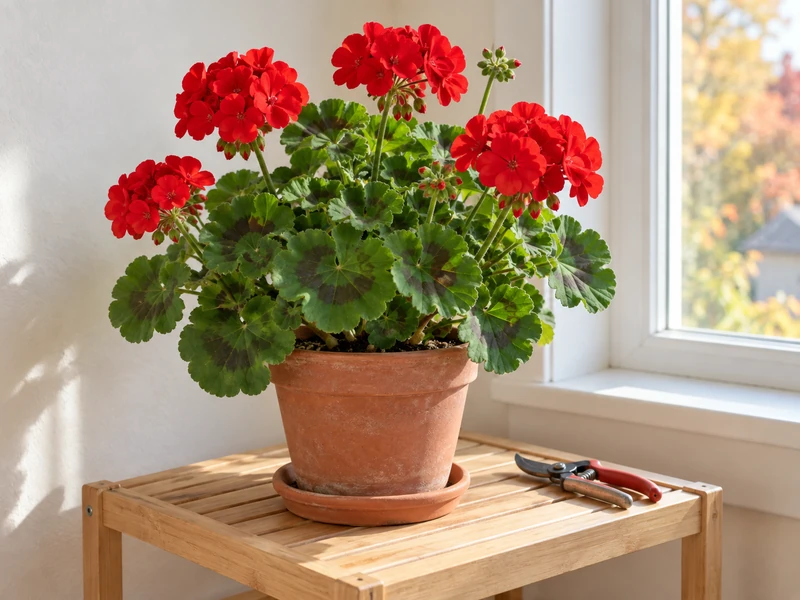
You do not have to treat a healthy container geranium as a one-season plant. With an early pest check, a sensible fall trim, strong indoor light, and less frequent watering, it can spend winter inside and return outdoors after frost danger passes.
The important distinction is that this guide covers the colorful zonal and ivy plants commonly sold as annual geraniums. Botanically, they are Pelargonium. Hardy cranesbill geraniums belong to the genus Geranium and normally remain outdoors.
The Short Answer
Bring a healthy potted geranium indoors before the first frost, ideally as nights begin settling near 50°F (10°C). Inspect it carefully, remove pests and damaged growth, prune the plant by roughly one-third to one-half, and place it in your brightest window. Water only after the upper inch of potting mix feels dry, let the excess drain, and keep the plant away from heating vents.
Good light and cool, steady conditions reduce weak, stretched growth. They cannot completely compensate for a very dark room, so a properly positioned supplemental grow light may be necessary if no sunny window is available.
What You Need
- A healthy potted zonal, ivy, or scented geranium (Pelargonium)
- A clean pot with drainage holes and a saucer
- Fresh, well-draining potting mix if repotting is necessary
- Clean bypass pruners or sharp scissors
- A soft brush or damp cloth for cleaning the pot
- A watering can
- Insecticidal soap or horticultural oil only if needed and labeled for the plant, pest, and indoor use
When to Bring Geraniums Indoors
Do not wait for frost damage. Start the transition while the plant is still healthy and nighttime temperatures are approaching 50°F (10°C). A stressed, chilled plant is harder to clean, prune, and establish indoors.
Choose only vigorous plants with firm stems and no widespread spotting, rot, or heavy insect pressure. If one plant is badly infested or diseased, keeping it may put the rest of your indoor plants at risk.
Step-by-Step Instructions
Step 1: Isolate and inspect the plant
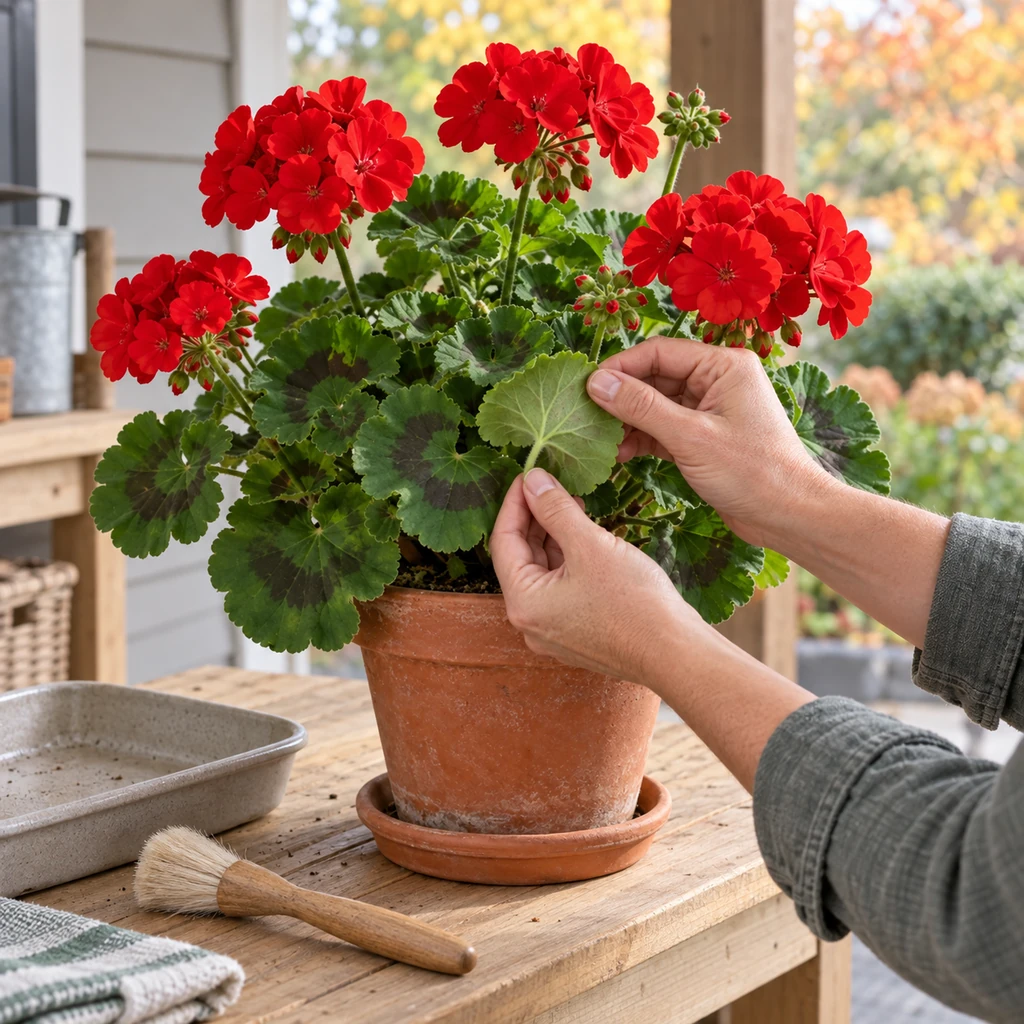
Move the pot away from other plants and examine the tops and undersides of leaves, leaf joints, flower clusters, and the soil surface. Look for sticky residue, fine webbing, white flecks, raised brown bumps, or clusters of small insects. These can indicate aphids, spider mites, whiteflies, or scale.
Rinse the foliage gently outdoors and clean the outside and underside of the pot. Remove fallen leaves and debris from the soil surface. Keep the geranium separate from established houseplants at first and continue checking it whenever you water.
If treatment is needed, use a product specifically labeled for that pest and for indoor use. Follow the label exactly, including ventilation, repeat-treatment, and plant-safety directions. More spray is not better.
Step 2: Remove flowers and unhealthy growth
Cut off faded flower stalks at their base. Remove yellow, damaged, or heavily spotted leaves, but do not strip every healthy leaf. The remaining foliage helps the plant adjust and photosynthesize indoors.
Disinfect pruning blades before moving from a questionable plant to a healthy one. Do not compost material that is heavily infested or clearly diseased.
Step 3: Prune for a compact framework
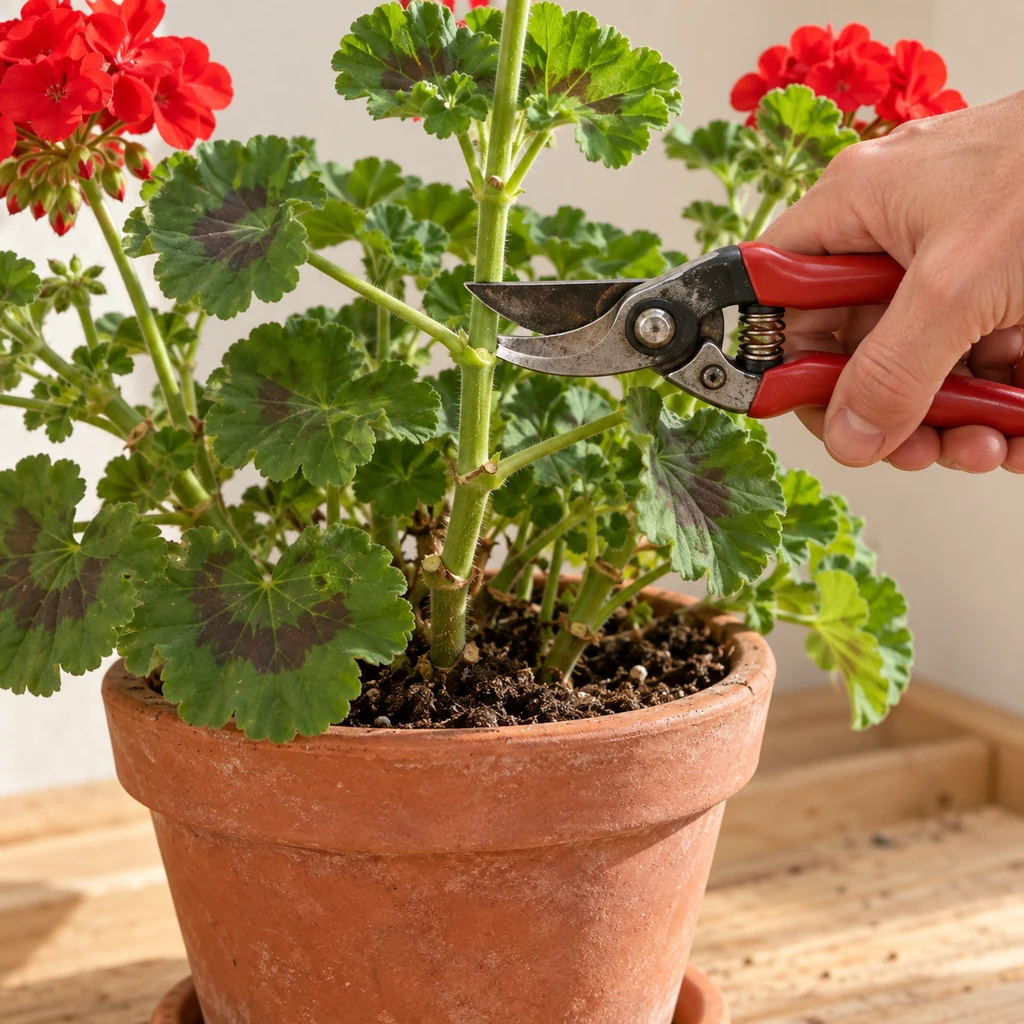
Shorten the plant by approximately one-third to one-half, concentrating on the longest stems. Make each cut just above a healthy leaf node rather than leaving a long bare stub. Keep several sturdy stems distributed around the pot so the plant remains balanced.
This fall trim reduces the amount of foliage the roots must support and makes the plant easier to fit near a window. It also removes soft outer growth that is most likely to stretch in weak winter light.
Step 4: Check the pot and drainage
If the geranium is already in a clean container with open drainage holes and the roots are not tightly circling, it can stay in the same pot. Repot only when drainage is poor, the plant is badly rootbound, or the soil has a confirmed pest problem.
When repotting, use fresh, well-draining potting mix and a container only slightly larger than the root ball. An oversized pot holds moisture for too long and raises the risk of root and stem rot during slow winter growth.
Step 5: Give it the brightest practical window
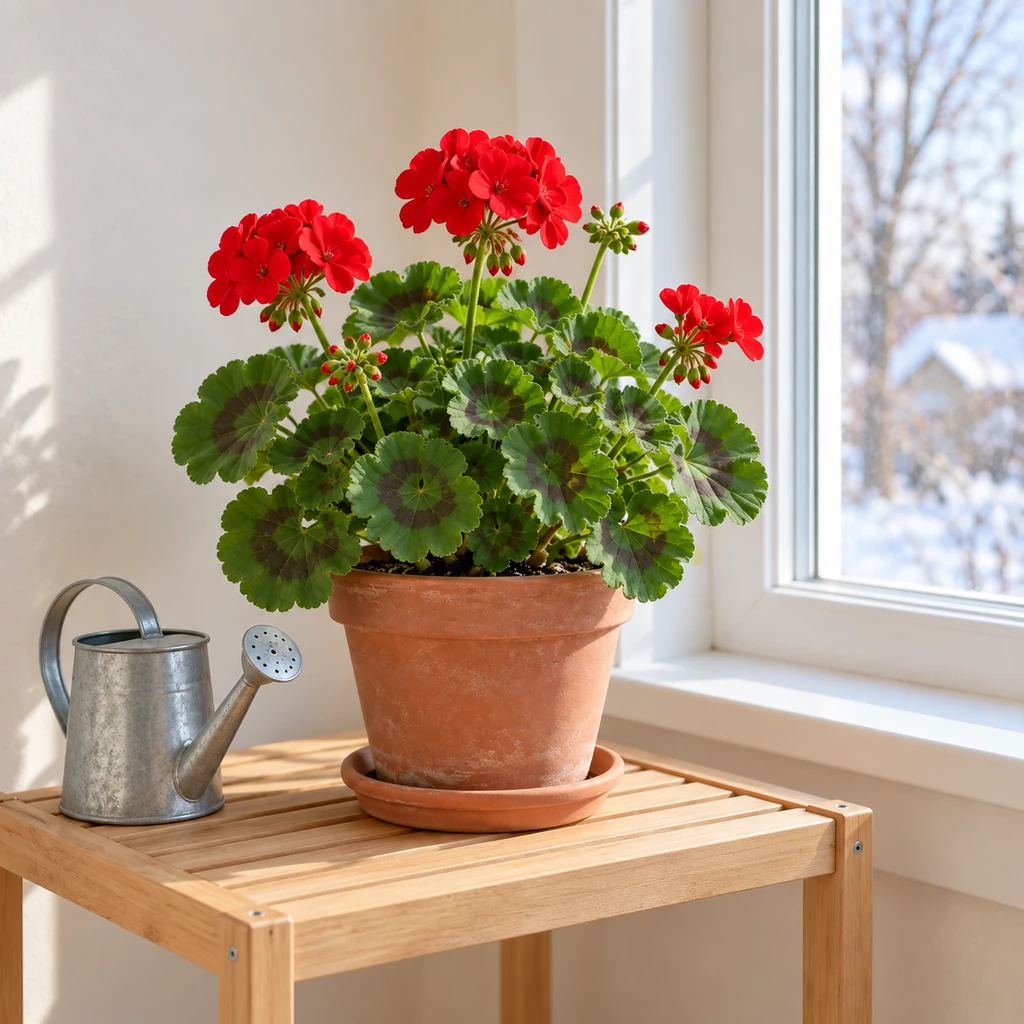
Place the pot in a bright, sunny window. A south- or west-facing exposure is often useful, provided the foliage does not press against cold glass. Rotate the pot a quarter turn every week or two so one side does not lean permanently toward the light.
Geraniums generally handle cool rooms well. Day temperatures around 65–70°F (18–21°C) with slightly cooler nights support compact growth better than a hot, dim corner. Avoid direct blasts from heating vents and repeated cold drafts.
If stems develop long gaps between leaves despite using your brightest window, add a grow light suitable for houseplants. Follow the fixture manufacturer’s height and timing directions, and provide a dark period each night.
Step 6: Water by soil feel, not by calendar
Push a finger into the upper inch of potting mix. If it still feels damp, wait. When that layer feels dry, water thoroughly until a little drains from the bottom, then empty the saucer. Never leave the pot standing in water.
Winter watering intervals change with room temperature, sunlight, pot material, and plant size. Checking the soil is more dependable than choosing a fixed day of the week.
Step 7: Maintain compact growth through winter
Remove yellow leaves and spent blooms promptly. Check leaf undersides and stem joints at every watering. If a shoot begins stretching, first improve the light; then pinch its soft tip back to a healthy node to encourage branching.
Do not push weak winter growth with heavy fertilizer. Wait until days lengthen and active new growth is visible in late winter or early spring. At that point, a balanced houseplant fertilizer can be used at reduced strength according to its label every two to four weeks.
Step 8: Reset the plant and move it outside gradually
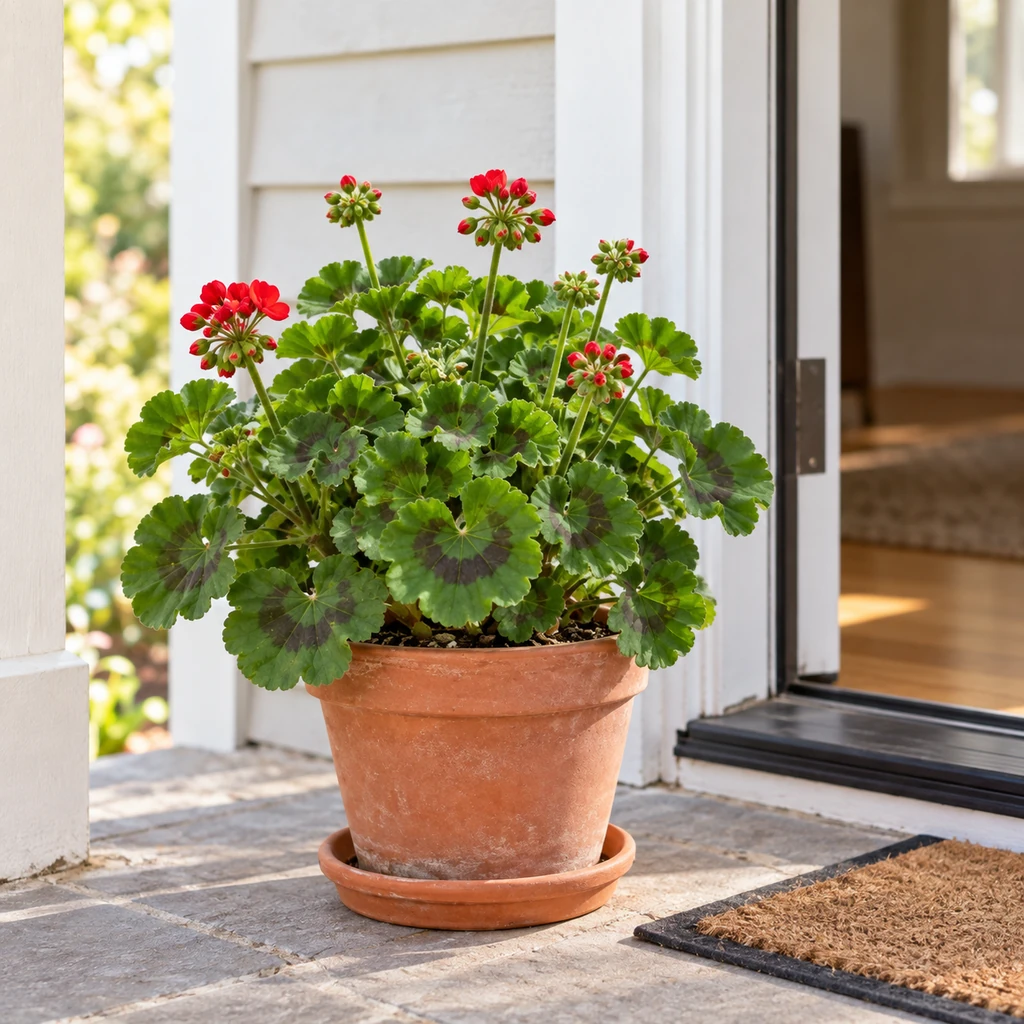
In late winter or early spring, remove weak stems and cut badly stretched growth back by one-half to two-thirds, stopping at firm green tissue. Resume light feeding only after new growth starts.
Wait until frost danger has passed before leaving the pot outdoors. Begin in a sheltered position with bright shade, then introduce gentle morning sun in stages over about two weeks. Bring the plant back inside if a cold night is forecast. Abrupt exposure to strong outdoor sun can scorch leaves that formed indoors.
A Simple Winter Care Rhythm
- Every few days: Check the soil surface and look for wilt, yellowing, or dropped leaves.
- At each watering: Inspect leaf undersides and stem joints for pests; drain the saucer completely.
- Every week or two: Rotate the pot and remove spent flowers or yellow leaves.
- When stems stretch: Increase useful light before pinching the growing tip.
- Late winter: Prune weak growth, refresh the top layer of mix if needed, and begin light feeding only after active growth returns.
Troubleshooting Common Problems
Long stems with wide gaps between leaves
The plant is receiving too little usable light, often combined with warm temperatures. Move it closer to the brightest safe window or use a suitable grow light. Pinch elongated tips only after improving the light; otherwise the replacement growth will stretch too.
Yellow leaves and constantly wet soil
Pause watering and make sure the drainage hole is open. Empty the saucer and move the pot away from a cold, stagnant corner. Persistent soft or dark stems can indicate rot, and badly affected tissue may not recover.
Sudden leaf drop after moving indoors
A modest amount of leaf drop can follow the abrupt change in light and humidity. Keep conditions steady and avoid compensating with extra water. Severe or continuing leaf loss calls for another pest and root-moisture check.
Sticky leaves or fine webbing
Isolate the plant immediately and identify the pest before treating. Clean nearby surfaces and inspect neighboring plants. Use only a treatment labeled for the identified pest and indoor plant use.
Frequently Asked Questions
Will a geranium flower all winter indoors?
It may bloom in a very bright window, but flowering is not the main goal. A compact, healthy plant is a better target than forcing constant winter flowers in limited light.
Can I save space by taking cuttings instead?
Yes. Take 3–4-inch healthy tip cuttings before frost, remove the lower leaves, and root them in a clean, airy propagation medium. Cuttings are useful when the parent plant is too large, but they still need warmth, bright indirect light, and careful moisture control while rooting. The site’s guide to rooting coleus cuttings explains the same basic node and leaf-handling principles, although geraniums are better started in a rooting medium than in water.
Can I keep the plant in a dark garage?
Not with the actively growing potted method described here. Dark, cool storage is a separate dormant or bare-root technique with different temperature and moisture requirements. A potted plant kept in leaf needs strong light.
Should I mist the leaves?
Routine misting does not replace correct watering or light and can keep foliage wet. Improve air circulation, water the potting mix directly, and keep leaves as dry as practical.
Plan the Rest of Your Container Garden
Once your geranium has a winter location, plan ahead for spring with the guides to planting a bulb lasagna pot and container gardening for beginners. If you will travel during the indoor season, use the practical checks in the houseplant vacation-watering plan rather than leaving the pot in standing water.
Before the First Frost: Quick Checklist
- Confirm the plant is a tender Pelargonium, not a hardy cranesbill geranium.
- Select only healthy plants worth bringing indoors.
- Inspect leaves, stems, flowers, soil, and the outside of the pot.
- Remove pests and debris before the plant enters the main living area.
- Prune long stems by roughly one-third to one-half above healthy nodes.
- Confirm the pot drains freely and the saucer can be emptied.
- Reserve your brightest cool window before moving the plant.
- Water according to soil dryness, not a fixed calendar.
The goal is not to keep a summer-sized geranium growing at full speed in January. Keep it clean, compact, lightly growing, and free from waterlogged soil; then rebuild vigorous growth as daylight returns.