
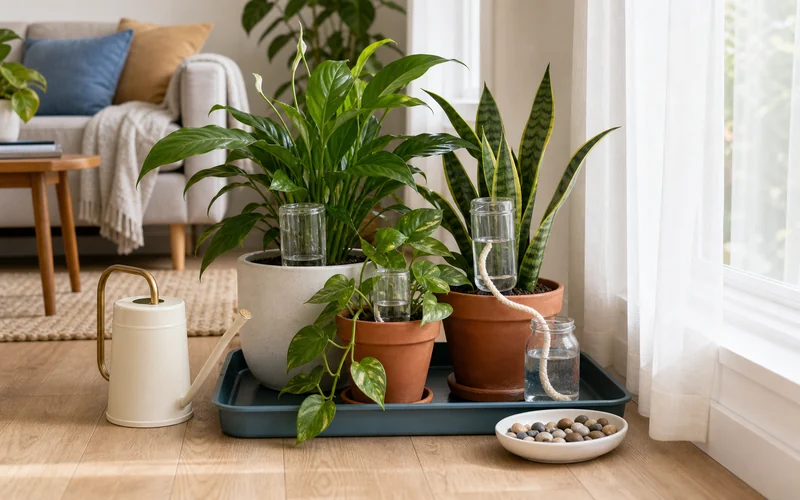
Leaving houseplants behind for a few days can feel risky, especially in summer when soil dries faster and sunny windows heat up. The good news is that most indoor plants do not need a complicated system. They need a sensible reset before you leave, a little protection from harsh light, and the right watering method for the length of your trip.
This guide shows how to water plants while on vacation without overdoing it. The goal is not to keep every pot soaking wet. It is to slow moisture loss, match each plant to its real needs, and avoid the two biggest problems: dry soil for thirsty plants and soggy roots for plants that prefer to dry between watering.
Start With a Plant-by-Plant Check
Before setting up any vacation watering method, walk through your plants one at a time. A fern, pothos, peace lily, succulent, tomato seedling, and herb pot will not all want the same treatment. Grouping them by water needs makes the rest of the plan easier.
Sort Your Plants Into Three Groups
- Thirsty plants: Ferns, peace lilies, calatheas, small herb pots, and plants in tiny containers usually dry faster.
- Moderate plants: Pothos, philodendron, monstera, spider plant, and many common leafy houseplants can often handle a short trip with a good pre-water.
- Dry-loving plants: Succulents, snake plants, ZZ plants, cacti, and many thick-leaf plants can suffer if they sit wet too long.
If you are newer to indoor plants, the general habits in 7 Easy Plant Care Tips to Keep Your Green Friends Thriving are a helpful baseline before you add vacation watering.
Water Well Before You Leave, But Do Not Flood
For a weekend or a short three-day trip, many plants only need a careful watering before you go. Water until moisture runs from the drainage hole, let the pot drain fully, and empty any saucer that still has standing water after a few minutes.
Why Drainage Matters
A pot sitting in water for days can lead to limp leaves, yellowing, sour-smelling soil, or root stress. This is especially true for succulents and snake plants. Give the soil a proper drink, then let excess water leave the pot.
For succulents, keep the plan lighter. The care rhythm in How to Care for Succulents Indoors is a better fit than any constant-wet setup.
Move Plants Out of Harsh Sun
Light control is one of the easiest ways to help plants last longer while you are away. You do not need to put them in a dark room. Just move them back from a hot south- or west-facing window, or close sheer curtains so the soil does not bake all afternoon.
Best Temporary Spots
- A bright room with filtered light.
- A table a few feet back from the window.
- A tray near a window with sheer curtains.
- A bathroom with indirect light for humidity-loving plants.
A small move can make a big difference. Less heat means slower evaporation, which means the soil stays evenly moist for longer.
Use the Wick Watering Method for 4 to 7 Days
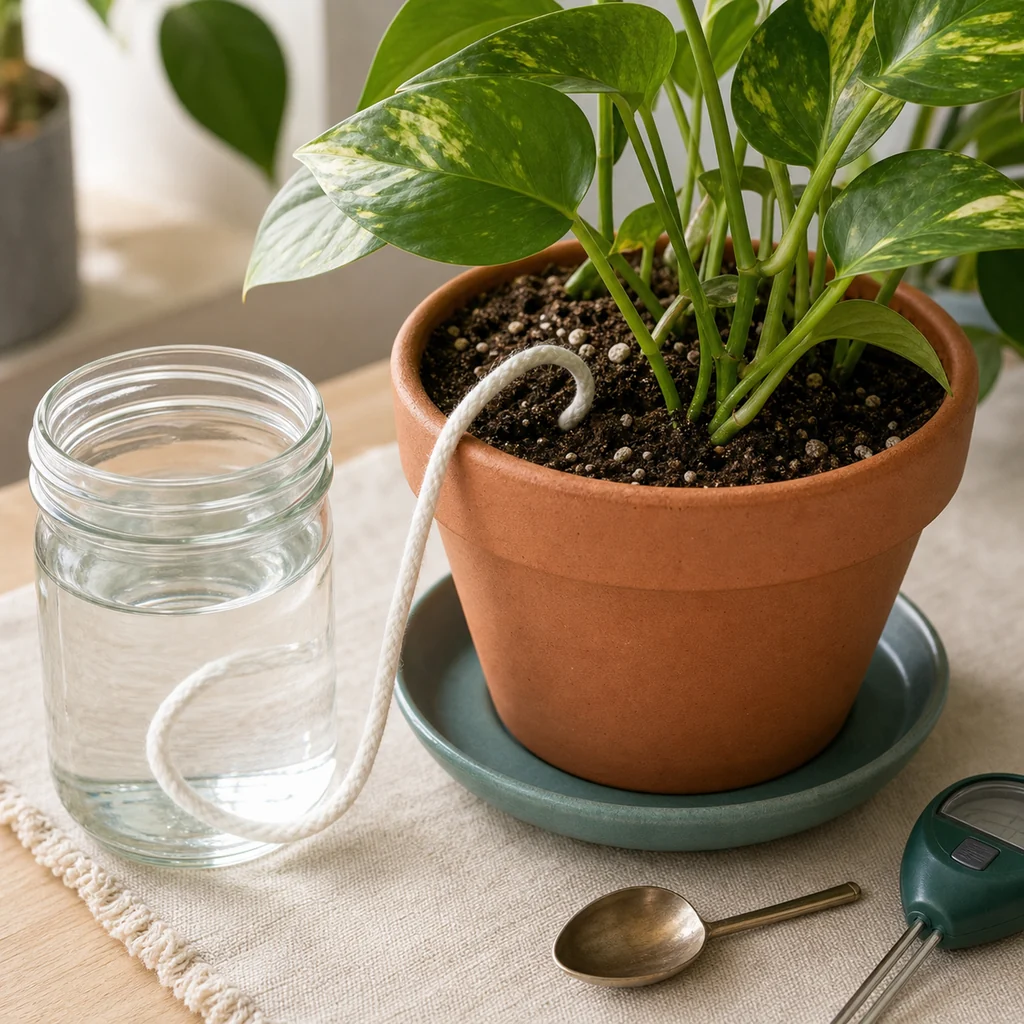
For many leafy houseplants, a cotton wick can provide steady moisture for several days. This method works best for plants that like consistent moisture, not dry-loving plants. Always test it before your trip so you know how fast the water moves.
How to Set Up Wick Watering
- Use clean cotton cord, not synthetic ribbon that may not absorb well.
- Place one end of the cord several inches into the soil.
- Place the other end in a jar of water beside or slightly above the pot.
- Water the plant normally first so the wick is supporting moisture, not rescuing bone-dry soil.
- Check the setup after a few hours to make sure water is moving slowly.
If the soil becomes soggy during your test, use a thinner cord, a smaller jar, or skip the method for that plant.
Group Plants on a Tray to Slow Drying
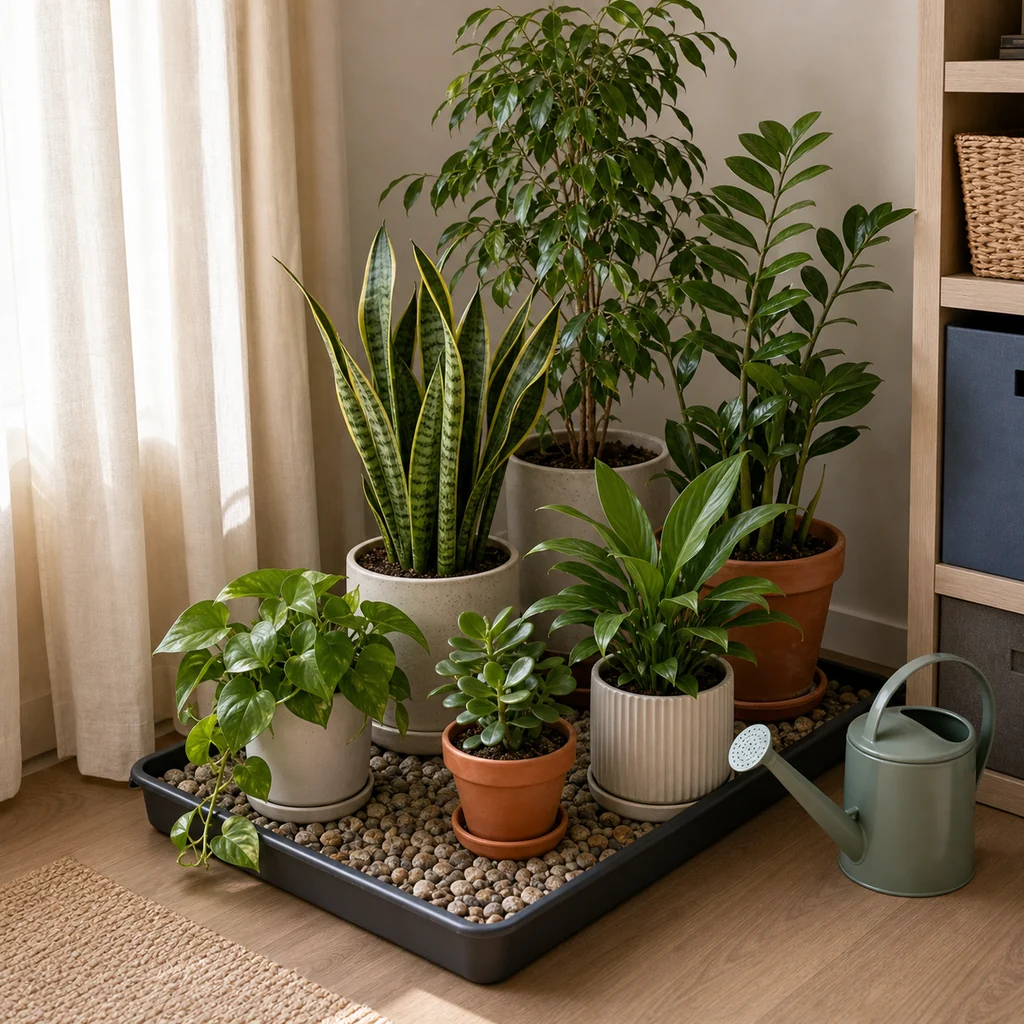
Grouping plants together helps raise the local humidity around the leaves. It also keeps everything easier to check when you return. Place pots on a waterproof tray, add pebbles if you like, and keep the pots on saucers so drainage does not damage the floor.
When a Pebble Tray Helps
- For tropical plants that dislike dry indoor air.
- For small pots that dry quickly.
- For plants moved away from a hot window.
- For short trips where you want a low-risk moisture buffer.
Do not let the bottom of the pot sit directly in a deep pool of water. Pebbles can lift the pot above the water line and reduce the chance of soggy soil.
Try a Bathtub Setup for Short Trips
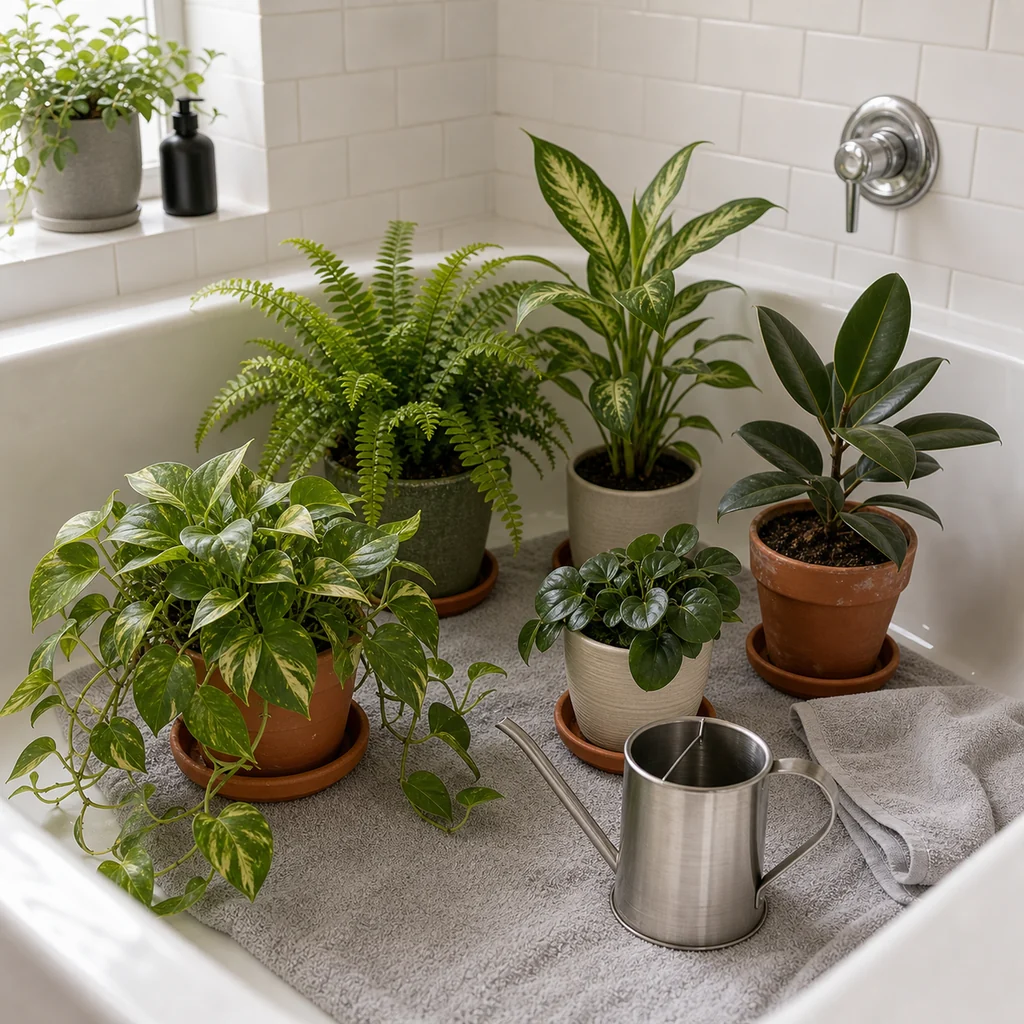
A clean bathtub can work for plants that need a protected place while you are gone, especially if the bathroom has indirect light. Set pots on towels and saucers, water them well, and leave them grouped together. Avoid filling the tub with standing water unless you are using pots and plants that truly tolerate bottom watering.
Use This Method Carefully
- Keep plants in their own pots with drainage.
- Use towels to protect the tub and catch drips.
- Leave the door open if the room gets too humid or stale.
- Skip this setup for succulents, cacti, or plants that hate wet feet.
This method is best for a short trip, not a long absence. For more than a week, a plant sitter is usually the safer choice.
Set Up Supplies Before You Leave
A small prep station makes the whole process calmer. Gather the items you need before the last day so you are not rushing through plant care while packing.
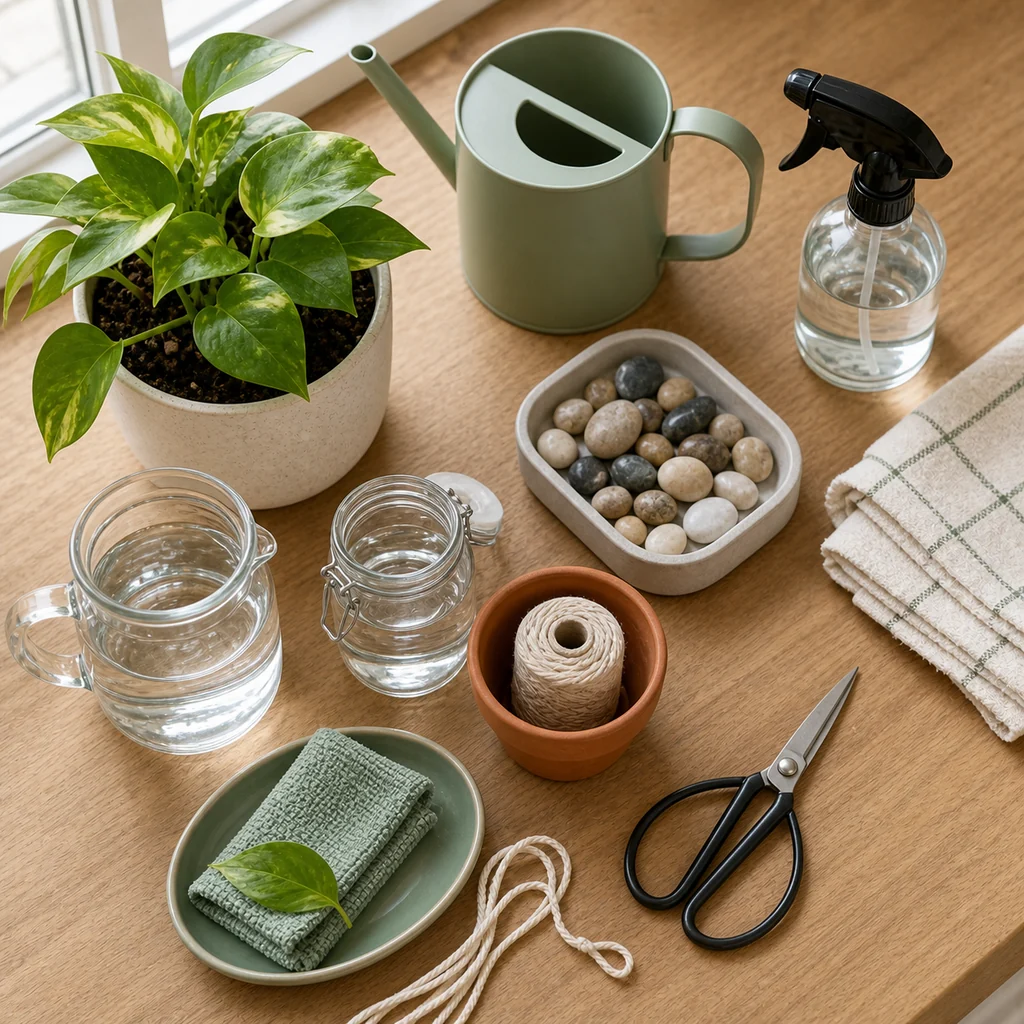
Helpful Vacation Plant Care Supplies
- Watering can with a narrow spout.
- Clean cotton cord for wick watering.
- Glass jars or bottles for water reservoirs.
- Waterproof trays and saucers.
- Pebbles to lift pots above extra moisture.
- Clean scissors for trimming yellow leaves.
- A towel for bathtub or counter setups.
Keep the setup simple. The more complicated it is, the harder it is to test and the easier it is to overwater.
What to Do by Trip Length
For 2 to 3 Days
Water most plants well, drain saucers, and move sensitive pots away from hot direct sun. Dry-loving plants may not need anything beyond their normal schedule.
For 4 to 7 Days
Use a mix of pre-watering, filtered light, plant grouping, and wick watering for thirsty pots. Test wick setups before leaving.
For More Than 7 Days
Ask a reliable person to check plants, especially small pots, herbs, seedlings, and outdoor containers. Leave simple instructions by plant group rather than a long plant-by-plant essay.
If you grow herbs indoors, the watering and light tips in Ultimate Guide to Indoor Herb Gardening can help you decide which pots need extra attention.
Common Vacation Watering Mistakes
- Soaking every plant the same way: Succulents and ZZ plants do not need the same plan as ferns or basil.
- Leaving pots in standing water: This can cause root problems while you are away.
- Trying a new device the night before: Always test wicks, bottles, or watering spikes first.
- Leaving plants in hot direct sun: Even watered plants can dry fast in intense light.
- Forgetting outdoor pots: Containers outside dry much faster than indoor plants in July heat.
Quick Vacation Plant Care Checklist
- Check soil moisture for each plant.
- Sort plants by thirsty, moderate, and dry-loving needs.
- Water only the plants that need it.
- Let pots drain fully before leaving.
- Move plants away from harsh afternoon sun.
- Group leafy plants on a tray.
- Test wick watering several days before the trip.
- Ask for help if you will be gone longer than a week.
FAQ
Can plants survive a week without watering?
Many established houseplants can handle a week with proper prep, filtered light, and a good watering before you leave. Small pots, herbs, ferns, and outdoor containers usually need more support.
Is wick watering safe for all houseplants?
No. Wick watering is better for plants that like steady moisture. It is usually not a good fit for succulents, cacti, snake plants, ZZ plants, or any plant that prefers to dry out.
Should I leave plants sitting in water while on vacation?
Most plants should not sit in deep standing water for days. Use saucers, pebbles, trays, or wick watering to manage moisture more gently.
What is the easiest way to water plants for a short trip?
Water well, let pots drain, move them out of hot direct sun, and group leafy plants together. For a two- or three-day trip, that is often enough for healthy indoor plants.