
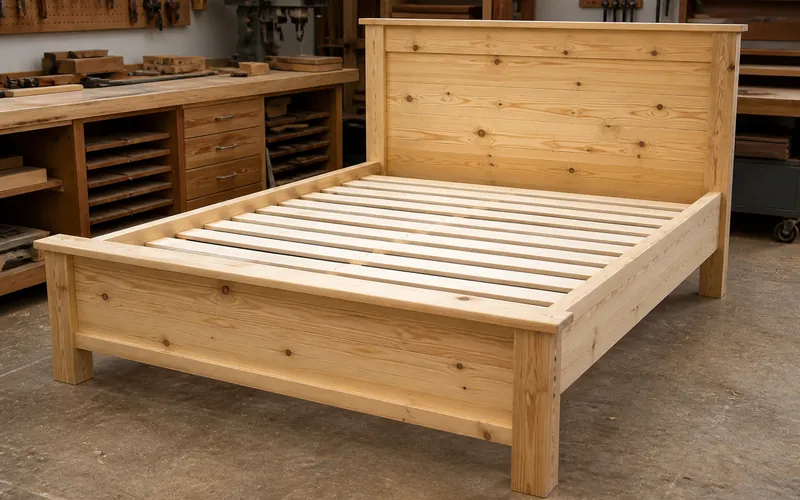
This rebuilt tutorial shows the bed as an actual woodworking project: lumber prep, panel glue-up, rail hardware, center support, and slats. Follow the sequence before buying boards or making cuts.
Rustic DIY Platform Bed Tutorial with Workshop-Style Steps
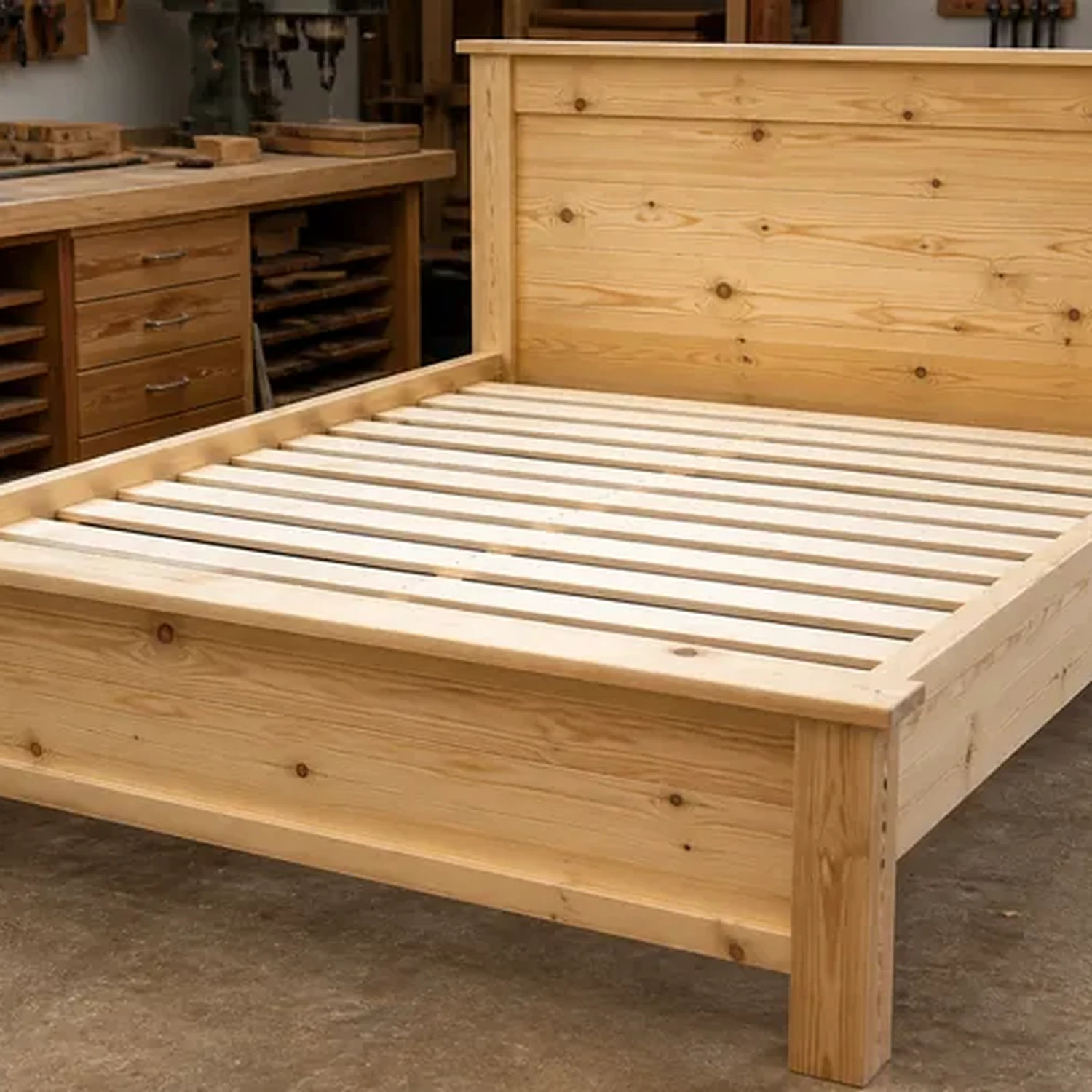
The goal is a sturdy queen-size rustic platform bed with a plank headboard, low footboard, matching side rails, a center support, and closely spaced slats.
This is not a decorative sketch. It is a build sequence you can read at the bench, with each major step matched to the image beside it.
Before You Start
- Mattress used: standard queen, 60 by 80 inches.
- Suggested outer frame: about 64 to 68 inches wide and 82 to 86 inches long, depending on overhang.
- Headboard style: wide plank panel with side posts and a top cap.
- Skill level: intermediate beginner with safe saw and drill experience.
- Best build order: mill lumber, glue panel, build rails, install hardware, assemble, then add slats.
Use these dimensions as a practical queen reference, then adjust if your mattress is unusually thick, rounded, or oversized. Always measure your actual mattress before cutting the rails.
Materials and Hardware
- 2×6 or similar boards for side rails, foot rail, and headboard frame.
- 1x or 2x boards for the headboard face panel.
- 2×2 or 2×4 cleats for slat support.
- Center support rail or beam with legs touching the floor.
- Bed rail connector hardware, or strong wood cleats with structural screws.
- 1×3 or 1×4 slats, cut to fit across the bed width.
- Wood glue, clamps, 2-1/2 inch screws, 1-1/4 inch screws, sandpaper, and finish.
Choose straight boards for the side rails and center support. A bed frame is unforgiving: twisted rails make noisy joints, uneven slats, and a mattress that never sits correctly.
Step 1: Measure and Label the Lumber
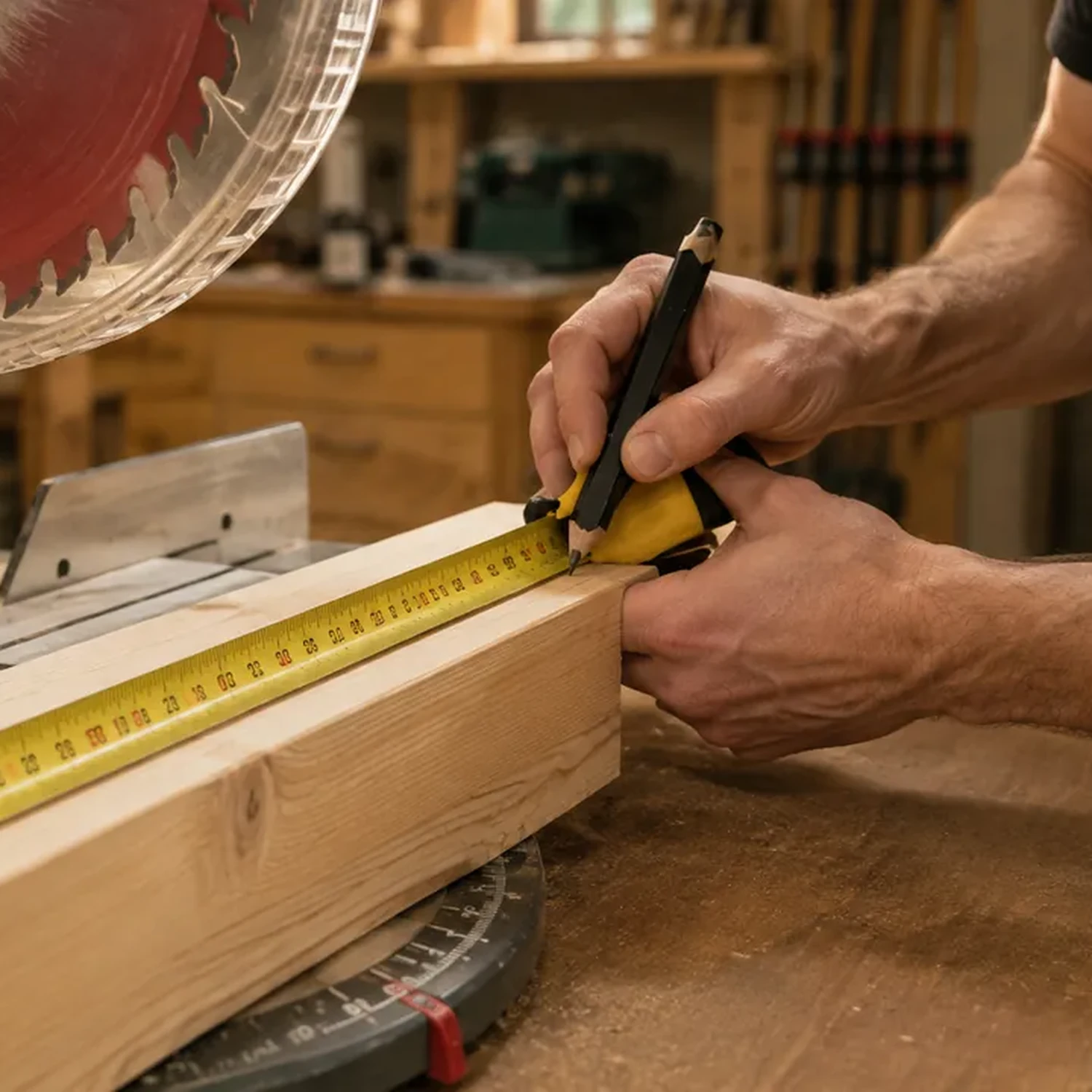
Start by marking rough lengths for the headboard panel, posts, side rails, foot rail, cleats, center support, and slats. Write the part name on painter’s tape.
Mark the waste side of each cut. This keeps repeated cuts consistent and prevents a rail from ending up one blade-width too short.
Step 2: Crosscut Long Boards to Rough Length
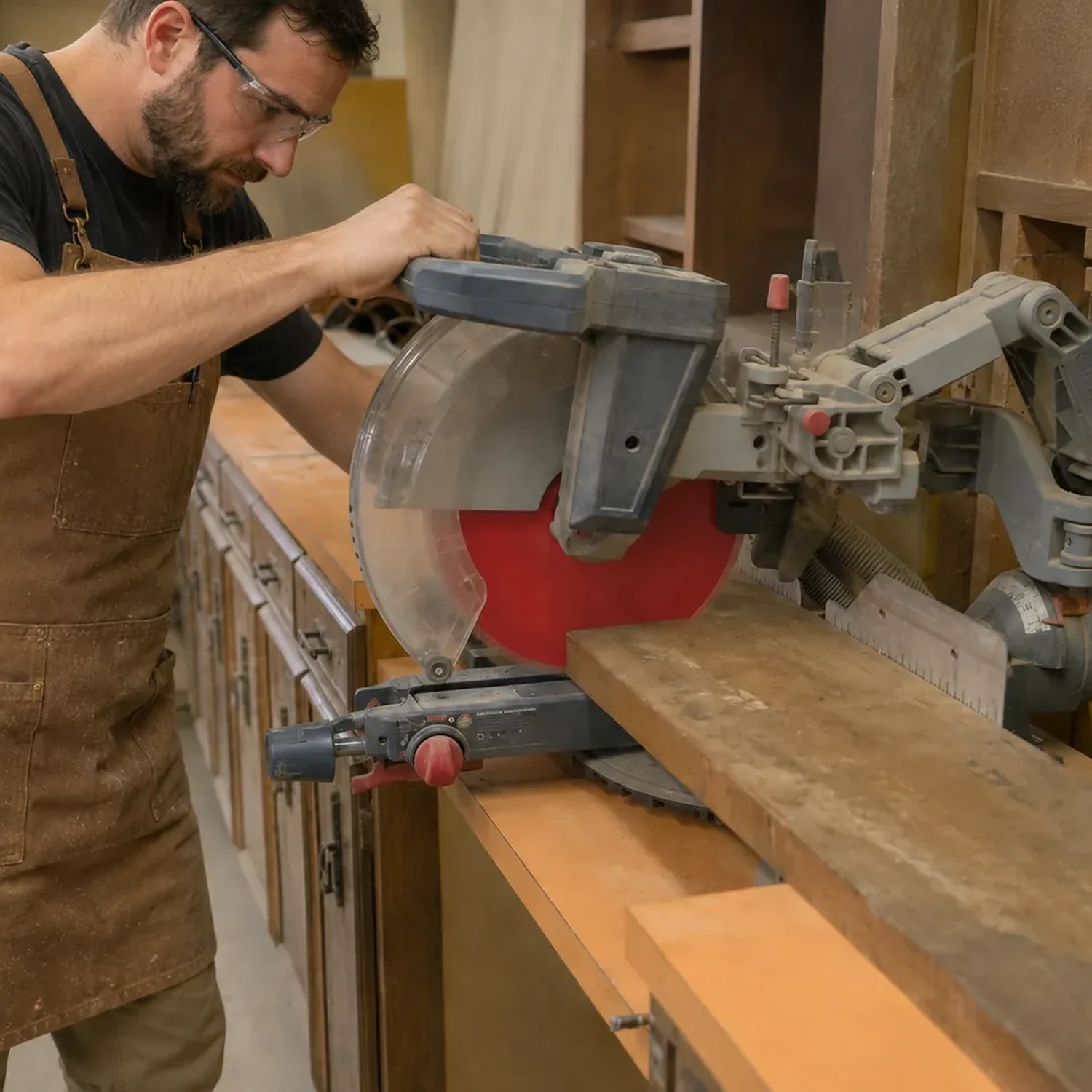
Break long boards into manageable blanks before final milling. Support both ends of the board so it cannot drop, pinch the blade, or twist during the cut.
Wear eye protection and hearing protection. Keep hands outside the saw’s danger zone, wait for the blade to stop, and never reach under the guard.
Step 3: Joint One Straight Edge
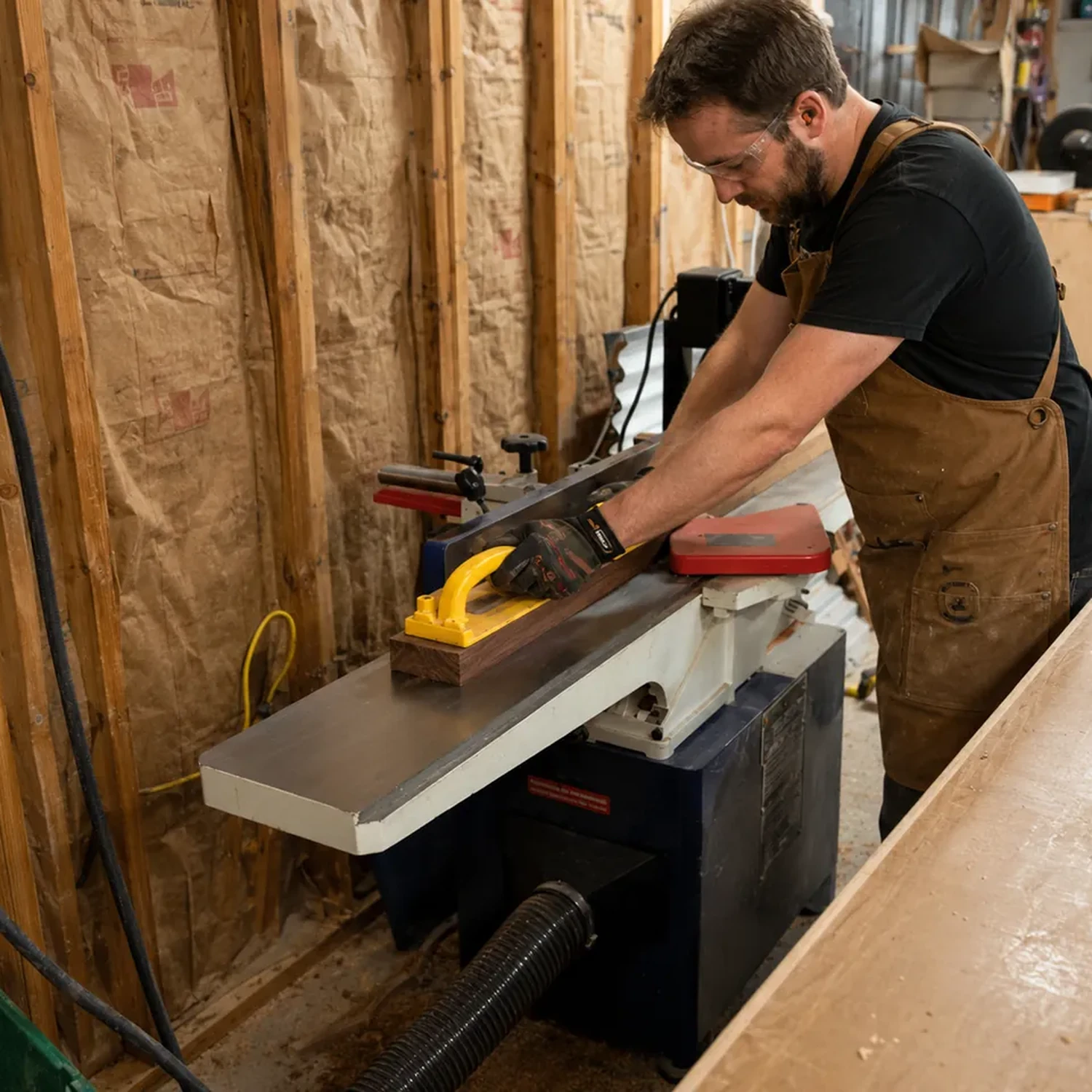
If you are using rough or reclaimed lumber, flatten one face or straighten one edge before ripping. This gives the table saw or track saw a reliable reference surface.
If you bought surfaced lumber that is already straight, you can skip the jointer step. Still sight down every rail board before using it.
Step 4: Plane Boards to Consistent Thickness
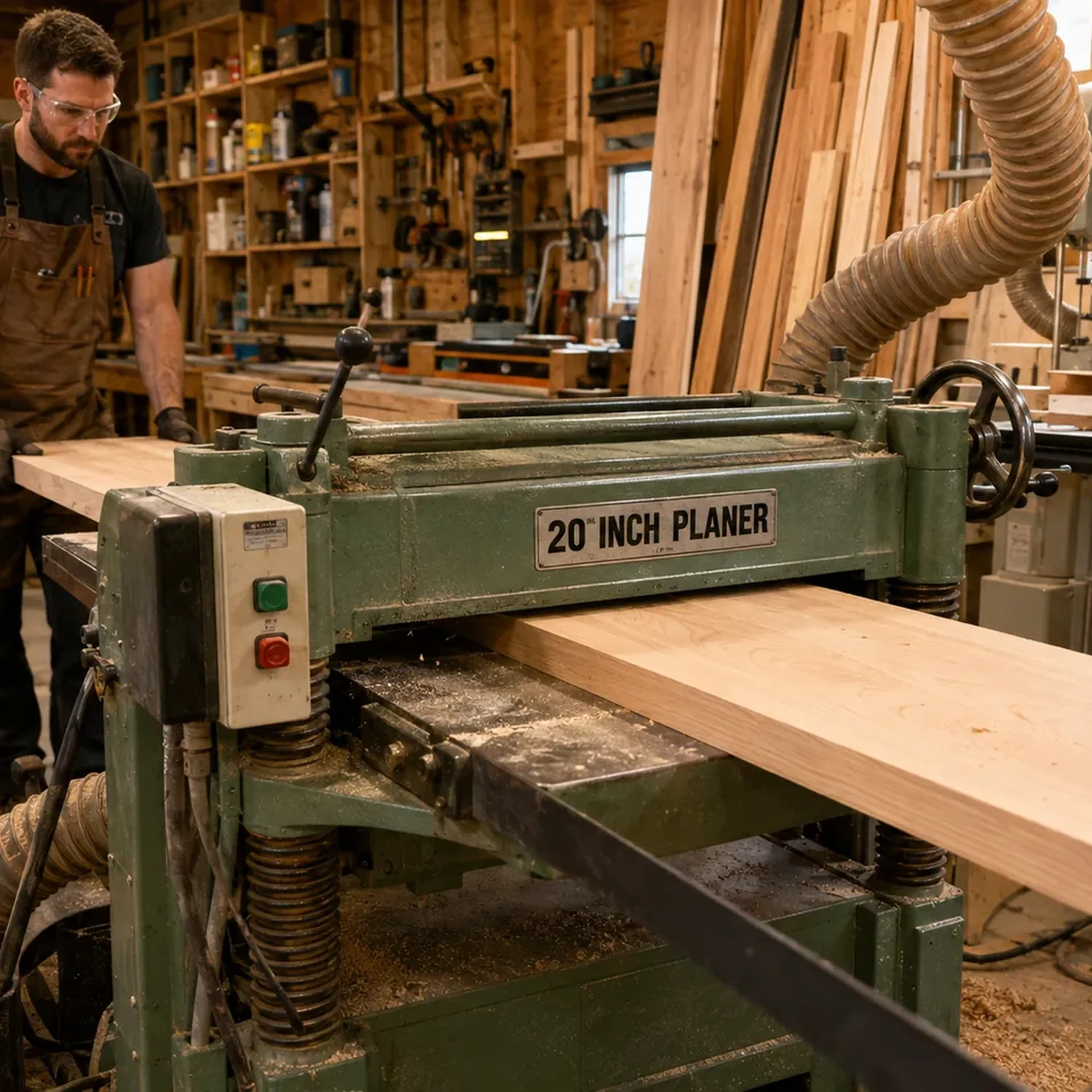
Plane the panel boards and rail parts until the surfaces are even. Take light passes, alternate faces when needed, and stop before the boards become too thin for strength.
Consistent thickness makes the headboard glue-up flatter and helps the rail caps, cleats, and end blocks sit without gaps.
Step 5: Rip Rails, Caps, and Cleats to Width
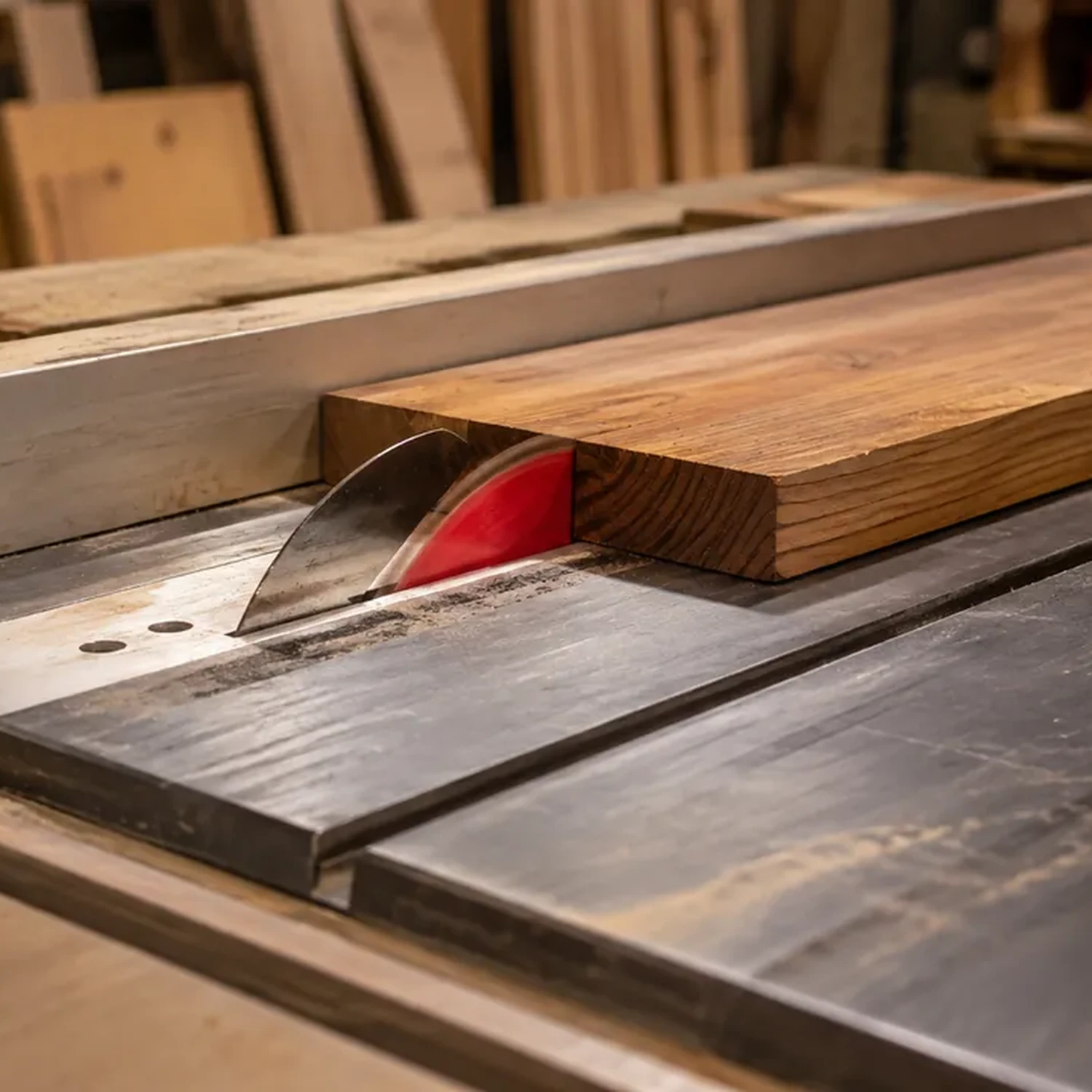
Rip the side rail caps, support cleats, and any narrow trim after one edge is straight. Use push sticks, featherboards, and a clean outfeed path.
The inside cleats must end up level with each other. They carry the slats, so a height mismatch will telegraph through the mattress.
Step 6: Square Large Panels with a Track Saw or Guide
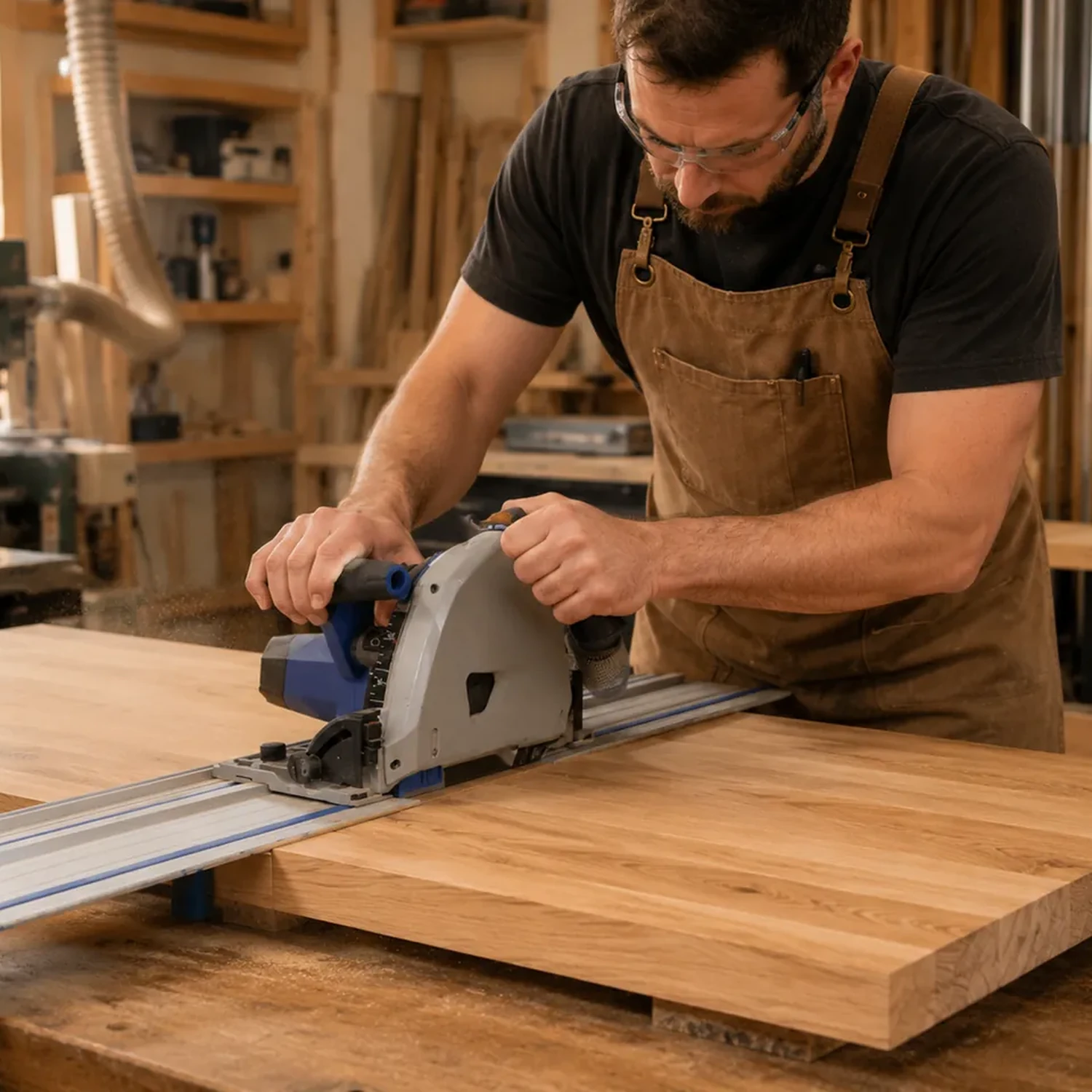
For a wide headboard panel, a track saw or straightedge guide makes the final square trim easier than balancing the whole panel on a small saw table.
Measure both diagonals before trimming. If the panel is out of square, correct it while there is still enough extra length to clean up the ends.
Step 7: Glue the Headboard Panel
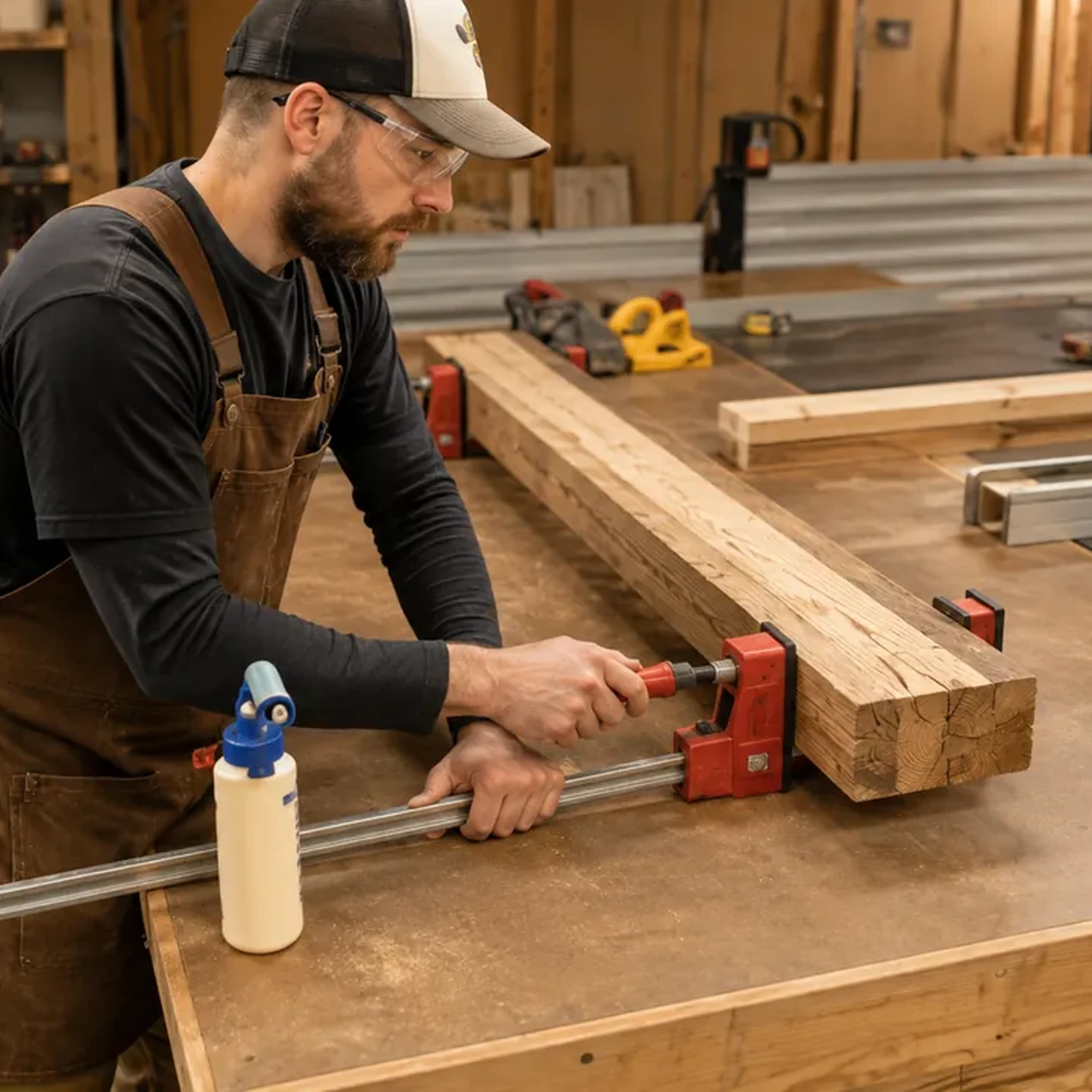
Lay the headboard boards face up, arrange the grain, and dry-fit the clamps before adding glue. Then spread glue evenly on the mating edges.
Clamp from both sides if possible. Tighten only until the seams close; excessive pressure can bow the panel or squeeze out too much glue.
Step 8: Keep the Panel Flat While It Cures
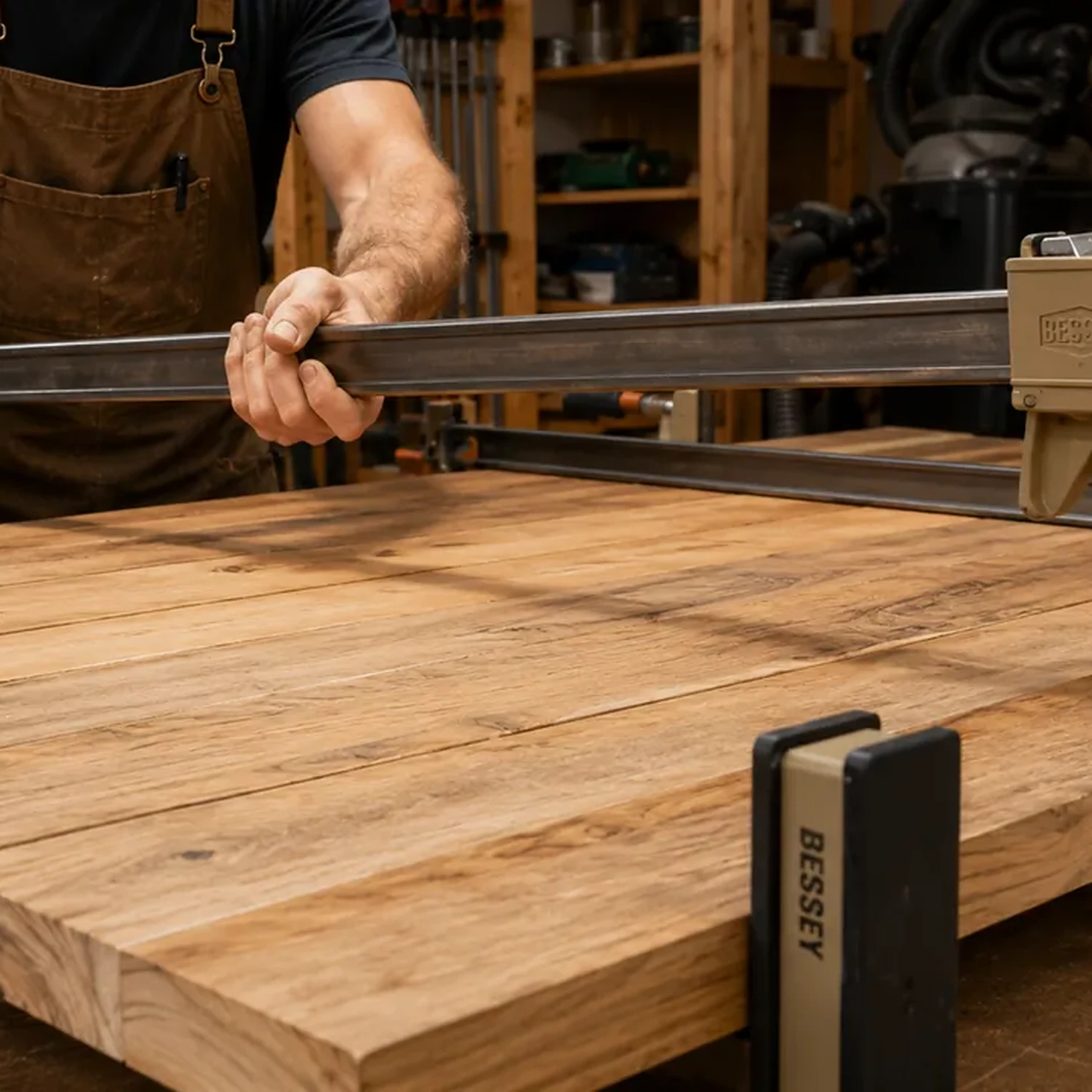
Use cauls, long clamps, or a flat work surface to keep the glued panel from cupping. Wipe heavy squeeze-out before it hardens.
Let the panel cure fully before trimming, sanding, or attaching the posts. Rushing this step is one reason headboards split later.
Step 9: Trim and Sand the Headboard Face
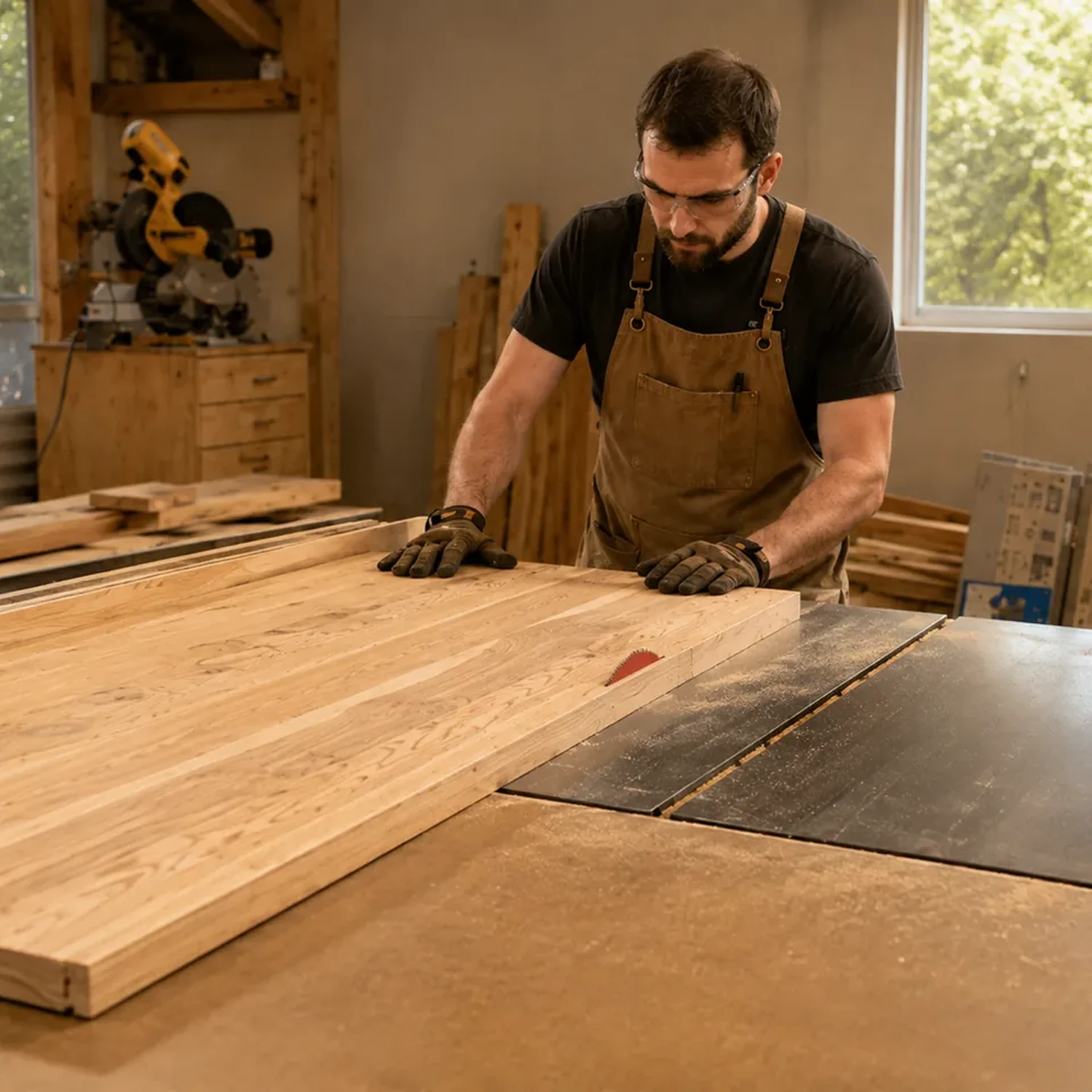
Once the glue is cured, trim the panel to final width and sand the show face. Break sharp edges lightly so the finish feels smooth.
Do not round over the mating edges where posts and caps attach. Flat contact gives the frame stronger glue and screw surfaces.
Step 10: Add Posts and the Top Cap
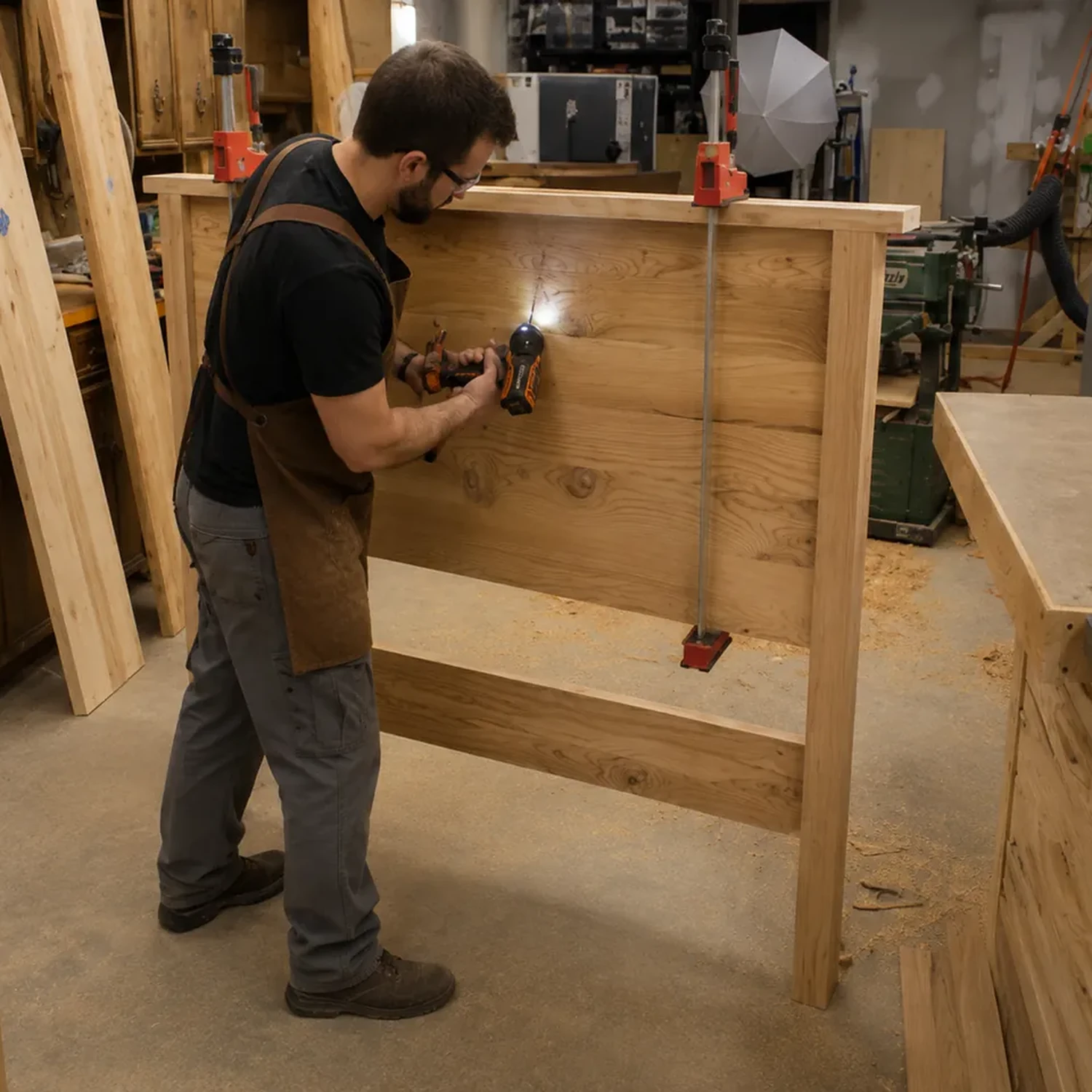
Attach the headboard posts and top cap with clamps holding the pieces flush. Predrill screw holes to reduce splitting, especially near the ends.
Fasten from the back whenever possible. The front of the headboard should look like a clean plank panel, not a field of screw heads.
Step 11: Build the Side Rails
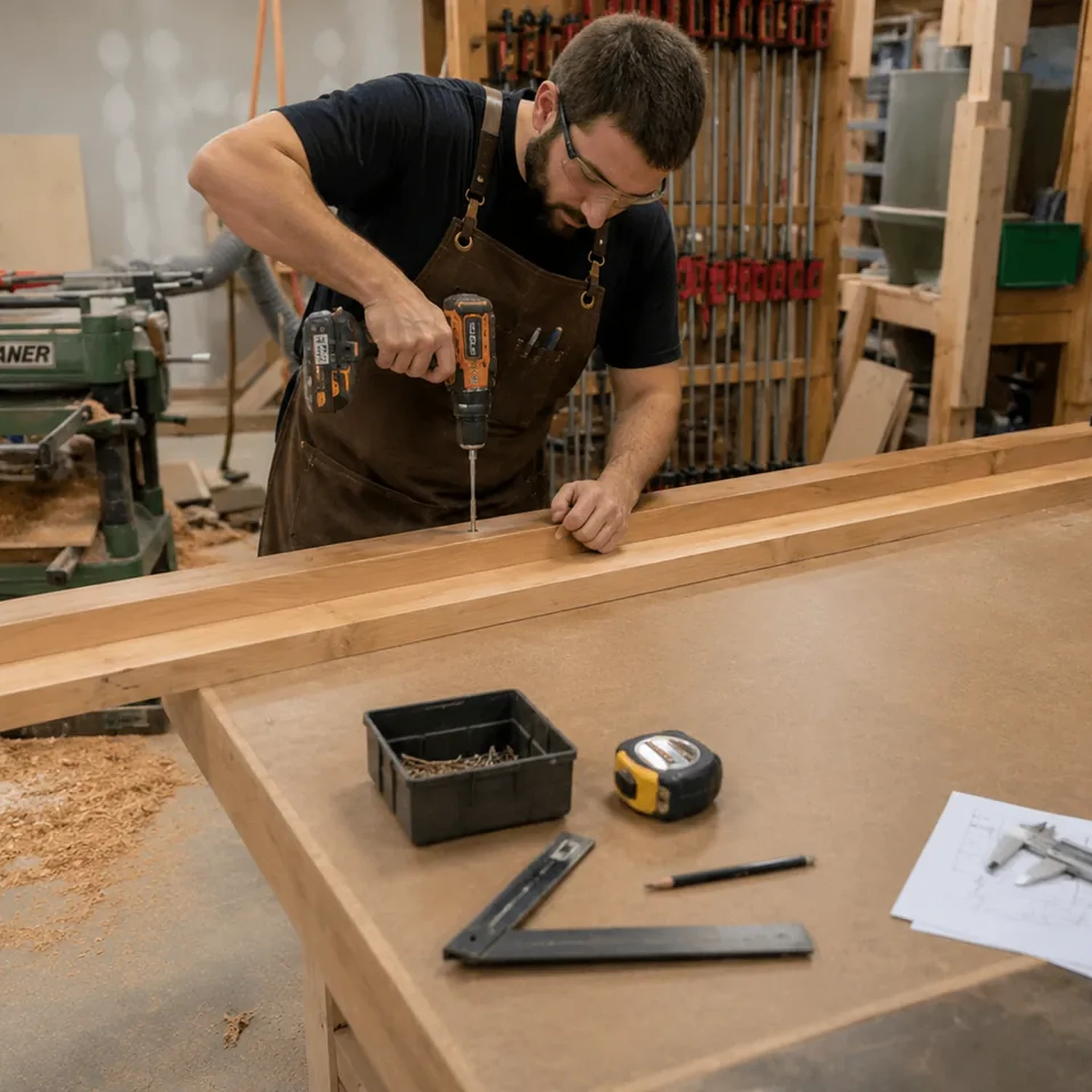
Each side rail needs a strong outer rail and an inner cleat that supports the slats. Build both rails together so their heights match exactly.
Keep the cleat edge flush and straight. If one cleat is low, the slats will rock; if one is high, the mattress may sit unevenly.
Step 12: Use Hidden Joinery Where It Helps
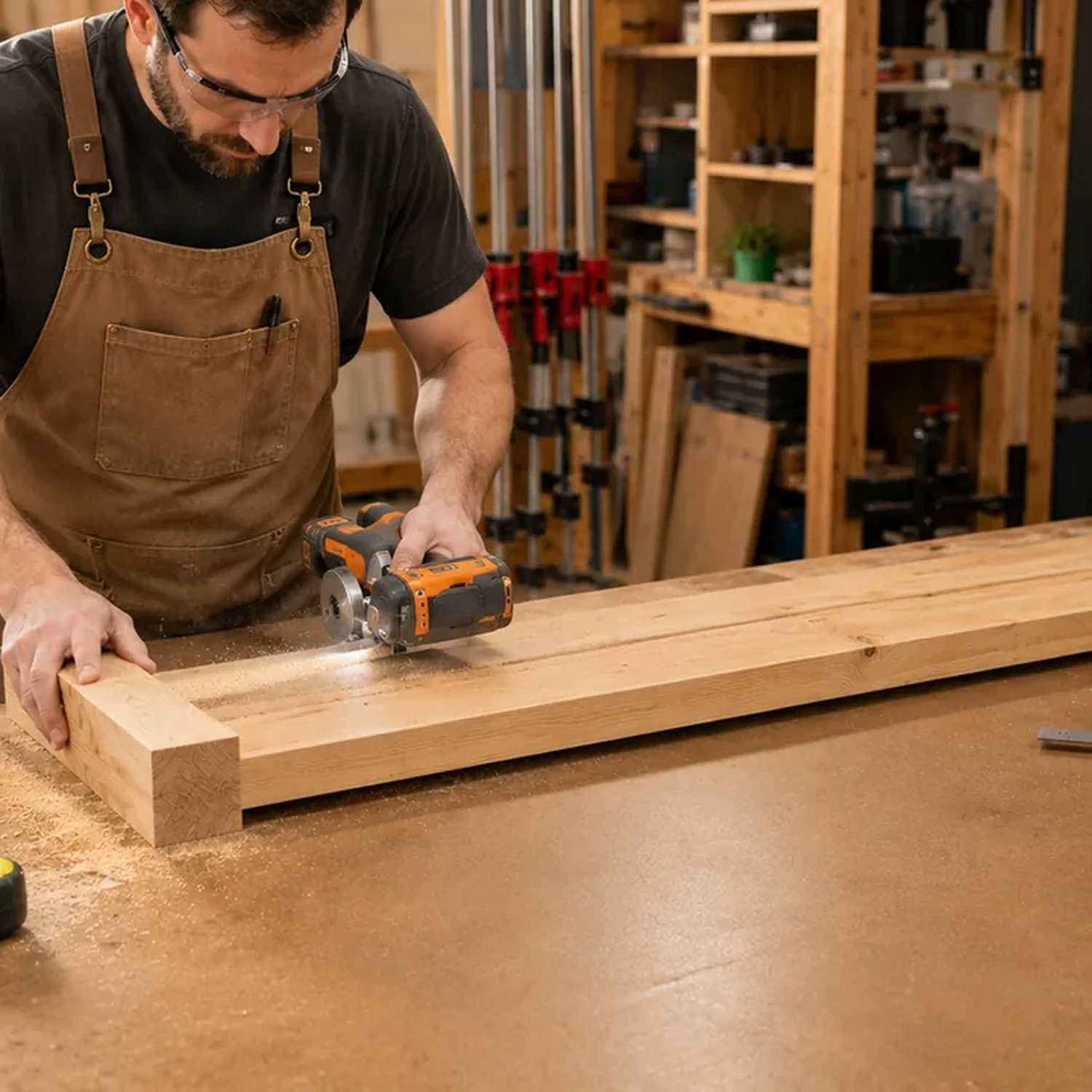
Pocket screws can help attach end blocks or hidden rail parts. They are useful when you want a cleaner outside face with fewer visible fasteners.
Do not rely on pocket screws alone for the whole bed if the joint will carry racking force. Combine them with glue, rail hardware, or structural screws.
Step 13: Check Rail Blocks for Square
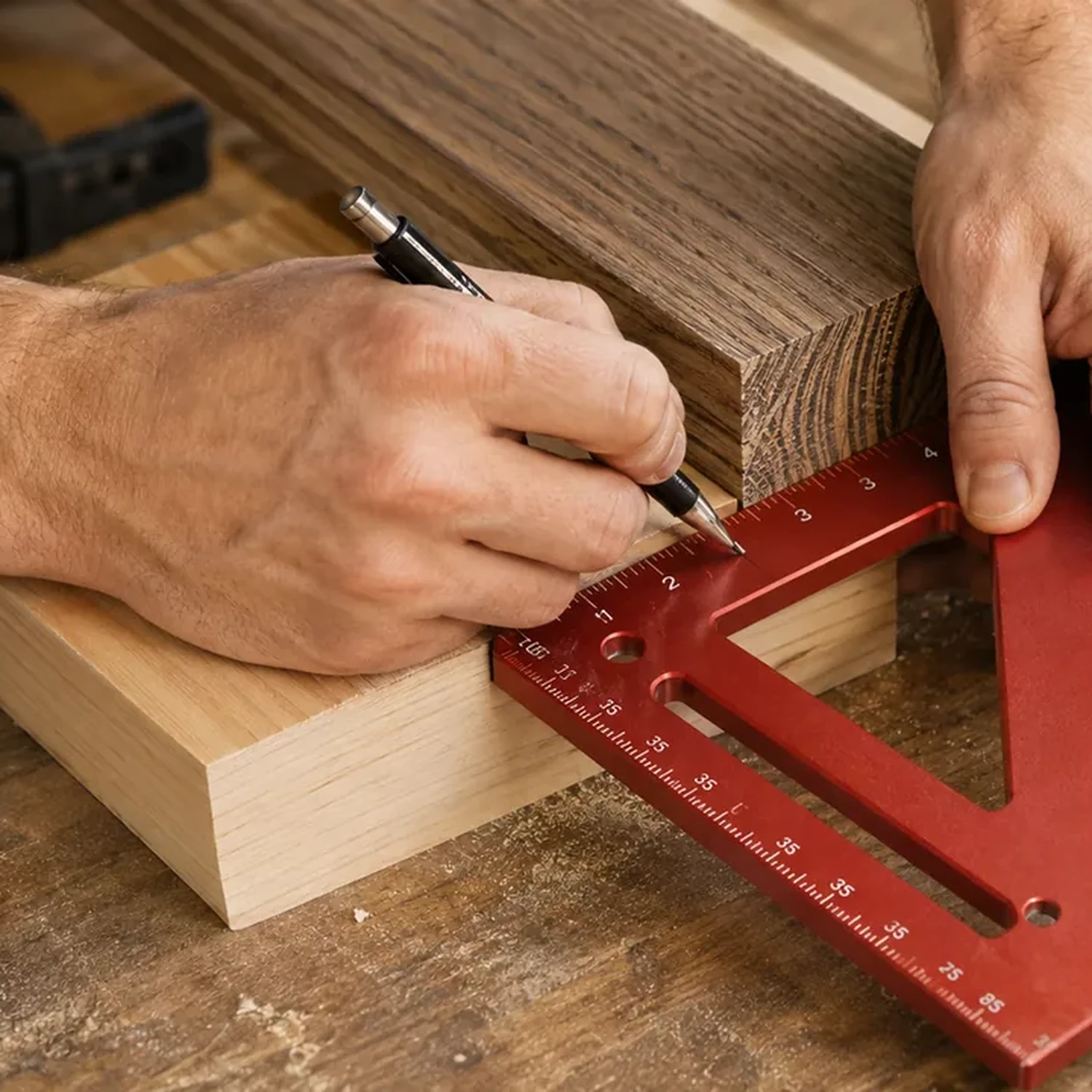
Before hardware goes on, check that each end block sits square to the rail. This determines whether the bed frame pulls together cleanly.
Also check both rail assemblies against each other. The matching parts should be the same length, same cleat height, and same hardware position.
Step 14: Drill Pilot Holes for Rail Hardware
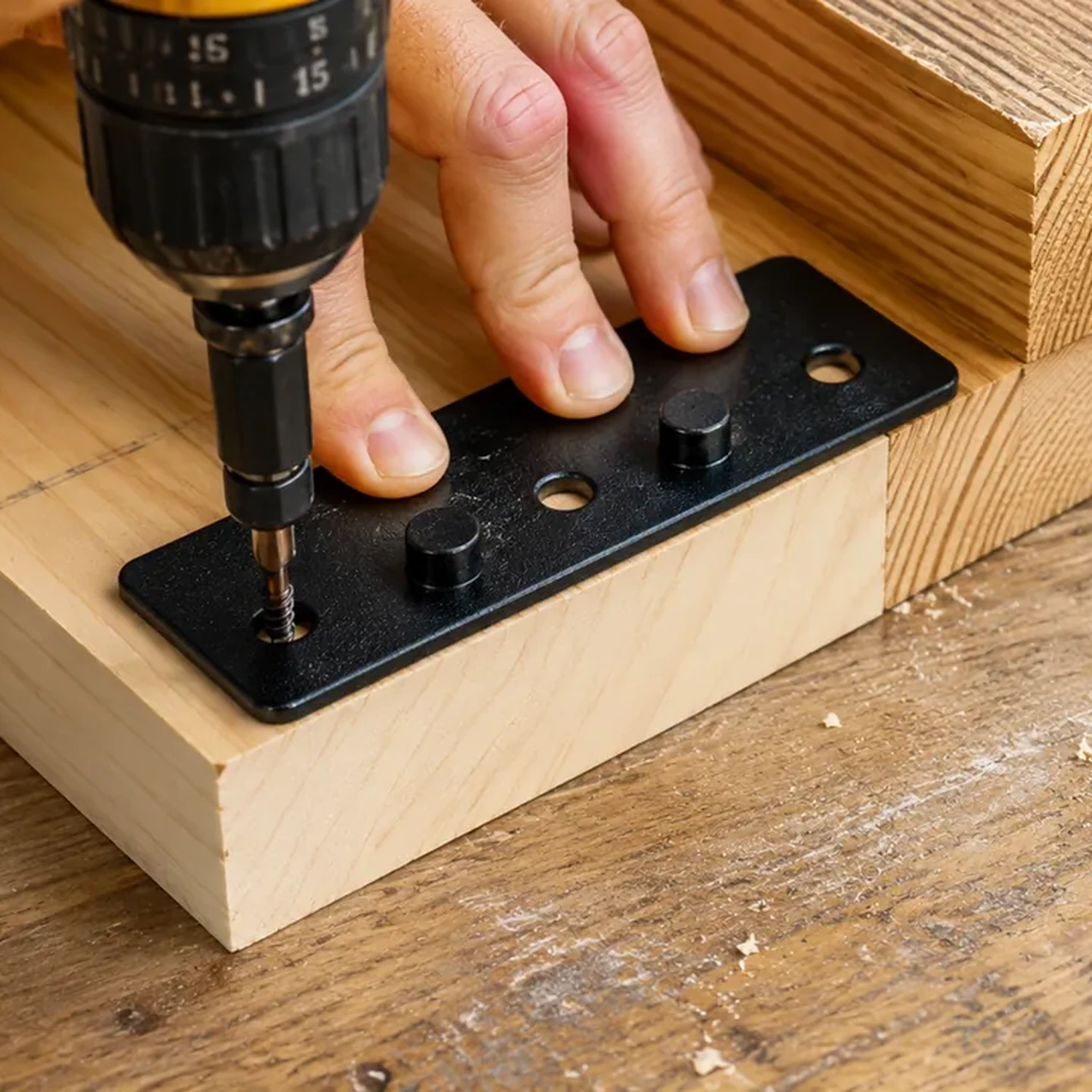
Mark the connector hardware locations with a square and drill pilot holes before driving screws. Pilot holes prevent wandering and reduce splitting.
Dry-fit the matching bracket before final tightening. If the pieces do not slide together easily on the bench, they will be worse in the bedroom.
Step 15: Install the Rail Connectors
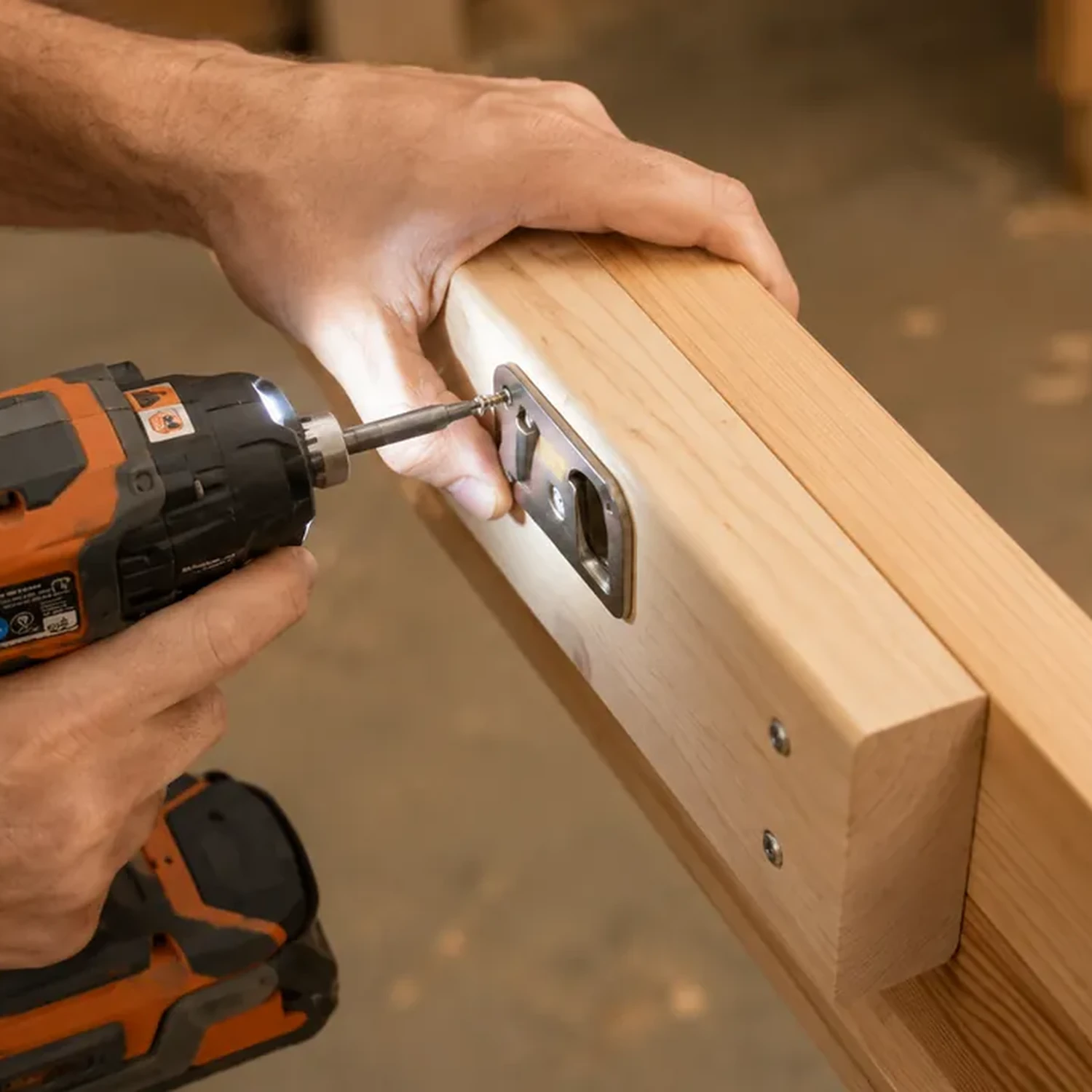
Install the rail connector plates on the side rails and the matching plates or hooks on the posts. Keep the hardware orientation identical on both sides.
After tightening, connect one side rail to the headboard and test the fit. It should lock firmly without needing hammer blows.
Step 16: Add the Center Support
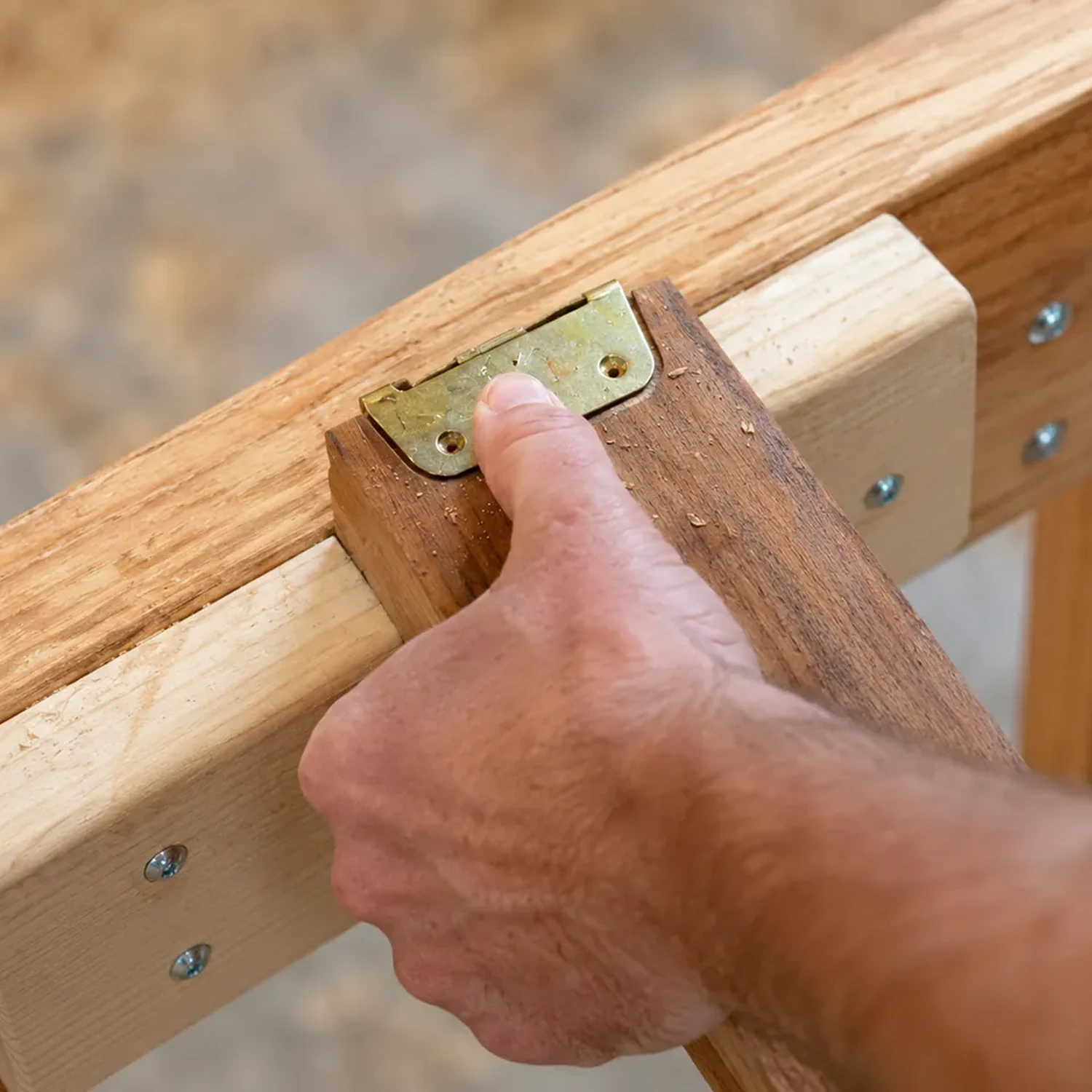
A queen bed needs a center support. Use a center beam or rail running head to foot, with one or more legs that touch the floor.
The center support should be level with the side cleats. It carries the middle of the slats and helps prevent sagging, squeaks, and premature mattress wear.
Step 17: Sand, Finish, and Prepare for Room Assembly
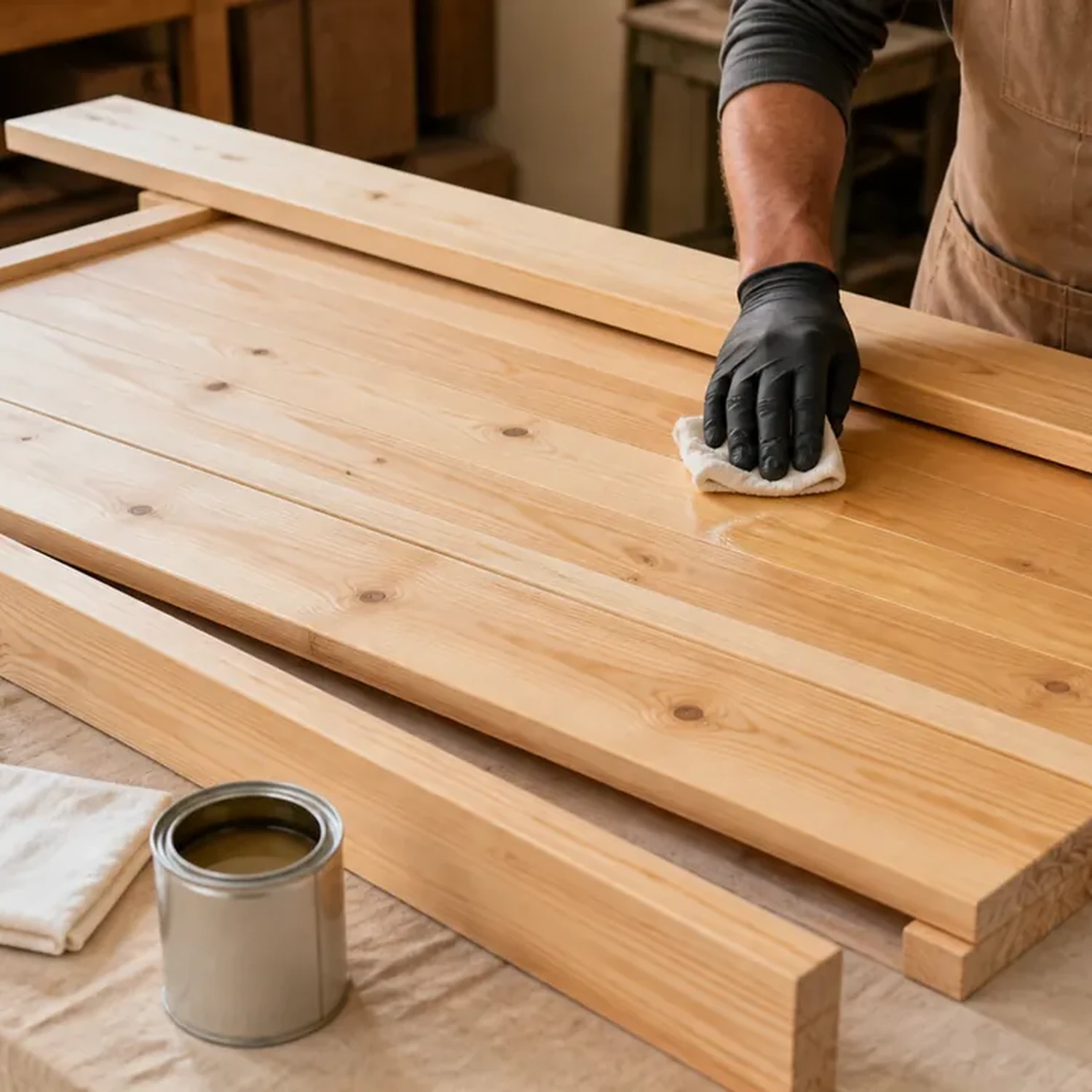
- Sand all visible faces through 120 or 150 grit.
- Ease exposed corners so shins and bedding do not catch.
- Apply stain, oil, or water-based polyurethane before final bedroom assembly.
- Let the finish cure according to the label before placing bedding on the frame.
- Move the headboard, rails, foot rail, center support, and slats into the room after the finish cures.
Finish the parts before final assembly whenever possible. It is much easier to coat rails and headboard edges flat on sawhorses than inside a tight bedroom corner.
Step 18: Assemble the Frame and Install the Slats
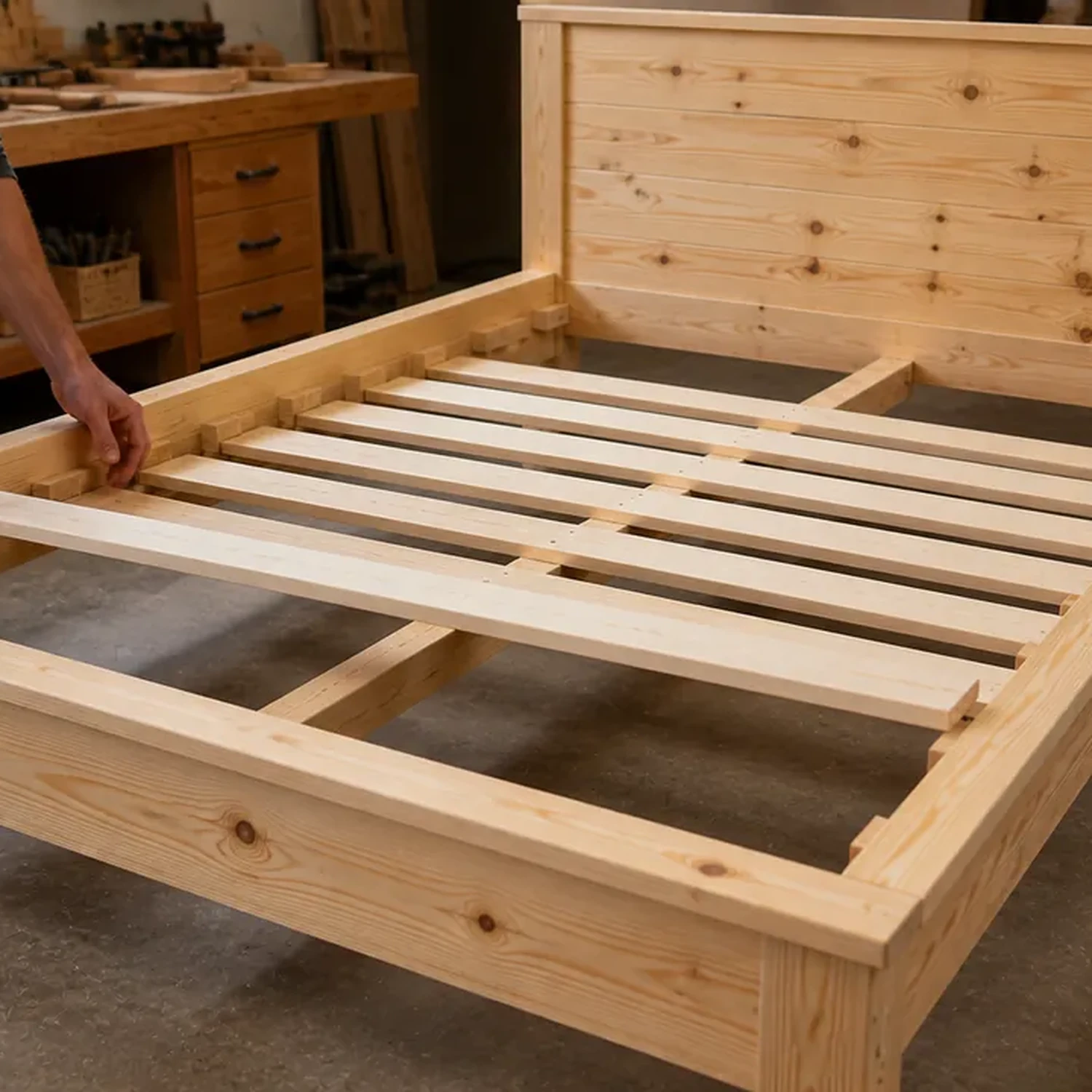
Assemble the headboard, side rails, foot rail, and center support in the room. Then cut or place the slats across the side cleats and center beam.
Space the slats evenly, usually about 2 to 3 inches apart, unless your mattress manufacturer requires tighter spacing. Predrill and screw down the first, middle, and last slat to help keep the frame square.
Final Fit and Safety Check
- Confirm the mattress sits flat without rocking.
- Check that the diagonals of the bed frame match.
- Tighten rail hardware after the first night of use.
- Add felt pads under legs if the bed sits on hardwood flooring.
- Do not use cracked slats, undersized support legs, or loose connector hardware.
This workshop-style version is intentionally more detailed than a quick inspiration post. The bed should make sense from the first rough cut to the final slat.
1 thought on “Rustic DIY Platform Bed Tutorial”