Rainy walks are easier to manage when your dog has one predictable place to stop before crossing the house. A muddy paw cleaning station does not need a built-in sink or a pile of gadgets: a stable mat, two towel zones and a shallow bowl can turn the doorway into a quick, calm routine.
Quick plan: Put a nonslip mat inside the door, keep clean and used towels separate, fill a shallow basin only when needed, invite your dog to pause, wipe and check each paw, dry thoroughly, then reset the station. If your dog is uncomfortable with handling, work slowly and ask your veterinarian or a qualified trainer for help.
Check your dog’s comfort, the size of your equipment and the condition of the paws as you work.
What You Need
- A washable, nonslip absorbent mat that lies flat inside the door
- Two soft, clean cotton towels or washcloths, plus a basket for unused cloths
- A separate washable hamper or bag for damp, dirty cloths
- A broad, shallow basin for lukewarm water when paws need more than a damp wipe
- Small treats or another reward your dog already enjoys
For ordinary mud, plain lukewarm water and a soft cloth are often enough. The VCA dog-walking guide recommends checking paws after a walk, including between the toes and around the pads. In winter, VCA advises wiping or washing paws after contact with sidewalk deicers so the dog does not lick residue. If a cleaning product is needed, use one made for dogs and follow its label; do not improvise with household cleaners.
How to Set Up a Muddy Paw Cleaning Station by the Door
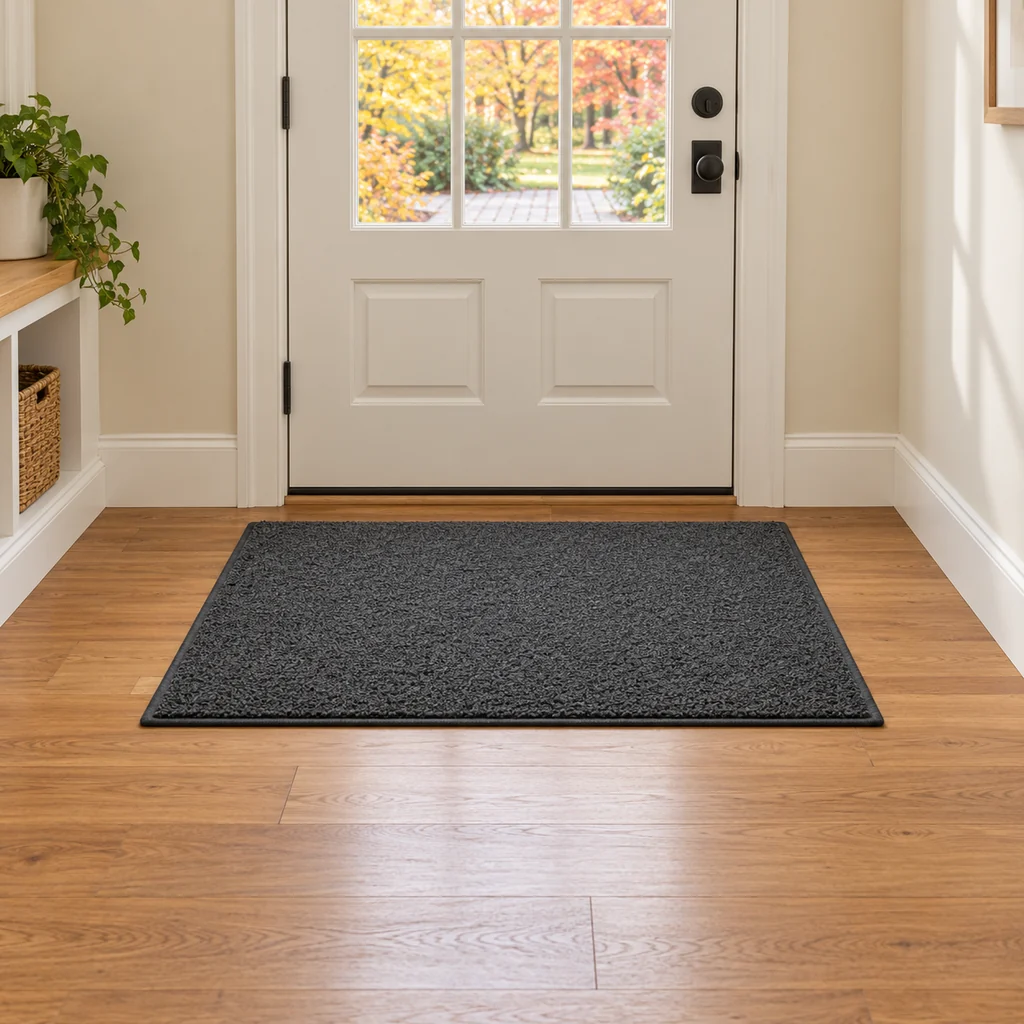
Step 1: Choose a Stable Spot Inside the Door
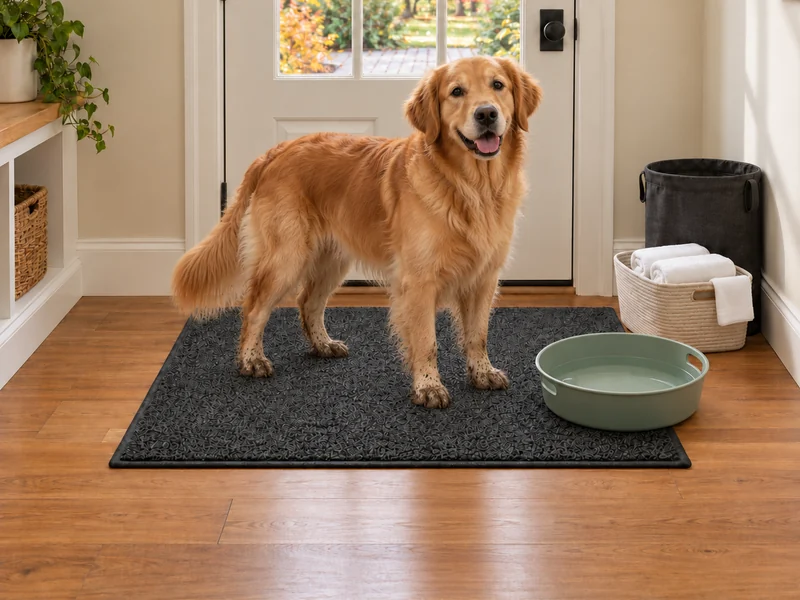
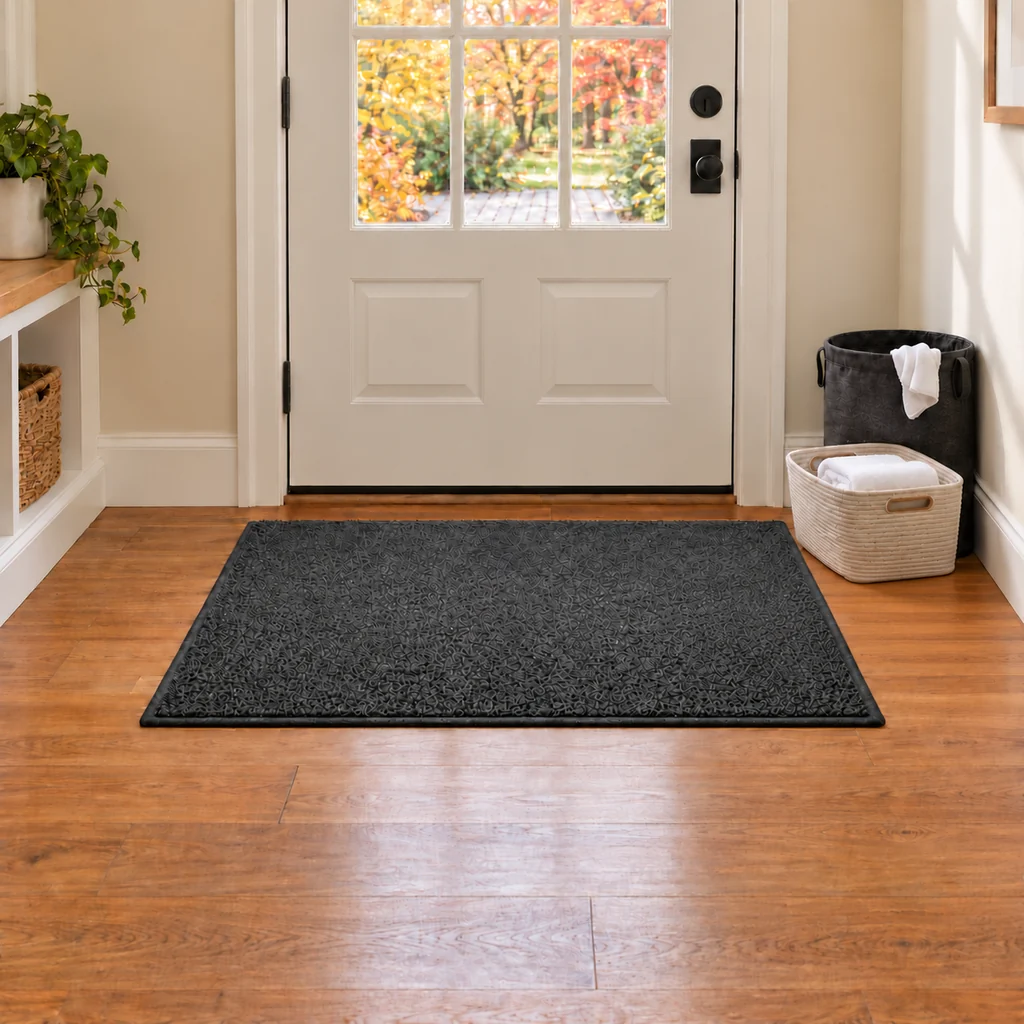
Place the mat where your dog naturally steps in, but leave room for the door to open fully and for people to pass. The mat should not curl at the edges or slide when a paw lands on it. Test it with your own foot before a rainy walk. If your floor is slick, choose a mat with a gripping backing and keep the surrounding floor dry. The pictured mat leaves open floor space on both sides so the station does not become a trip hazard.
Step 2: Separate Clean Towels From Used Ones
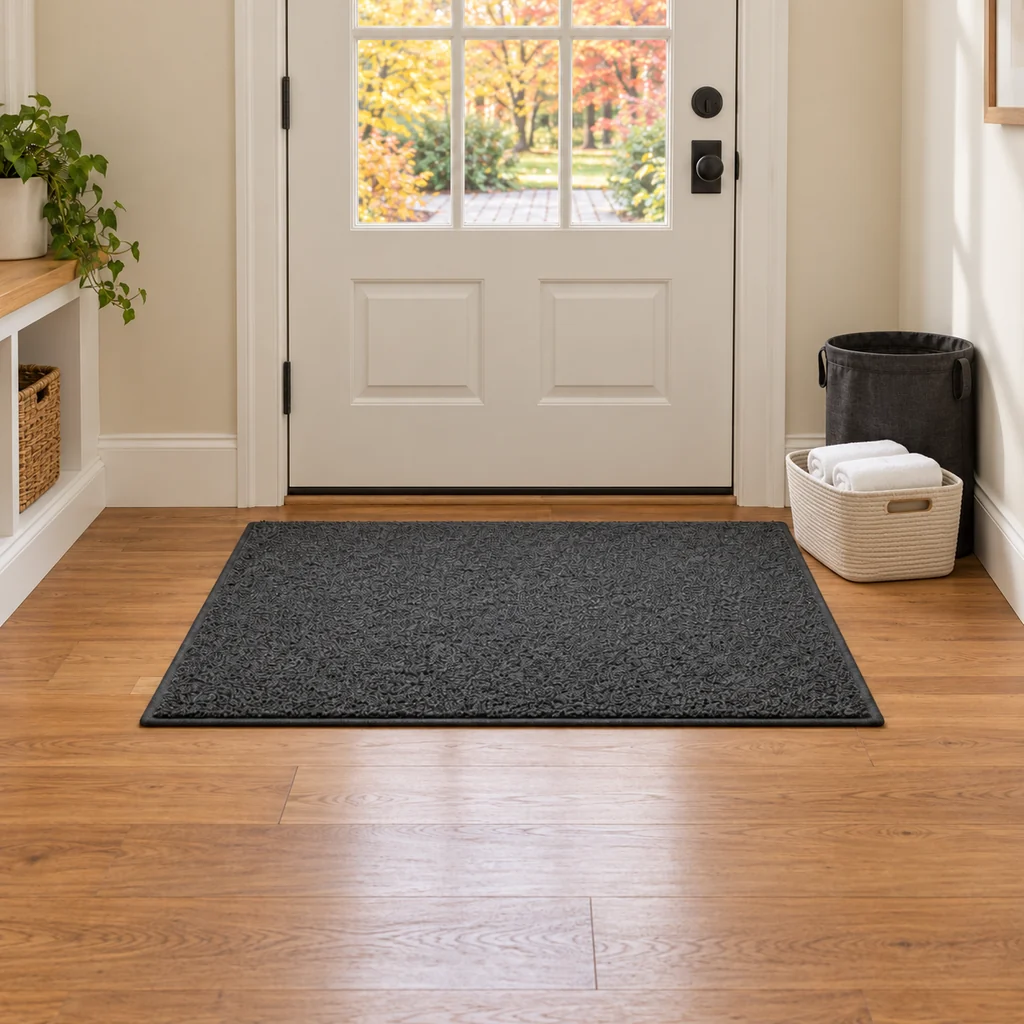
Put two clean, soft towels in an open basket within arm’s reach of the mat. Set a separate washable hamper beside the basket for dirty cloths. This one-way flow matters: a damp, muddy towel should not be dropped back onto the clean stack. Keep the baskets off the dog’s standing area so the mat stays open and the dog can turn or sit comfortably. If your dog is small, a washcloth may be easier to control than a bath towel.
Step 3: Prepare a Shallow Basin Only When Needed
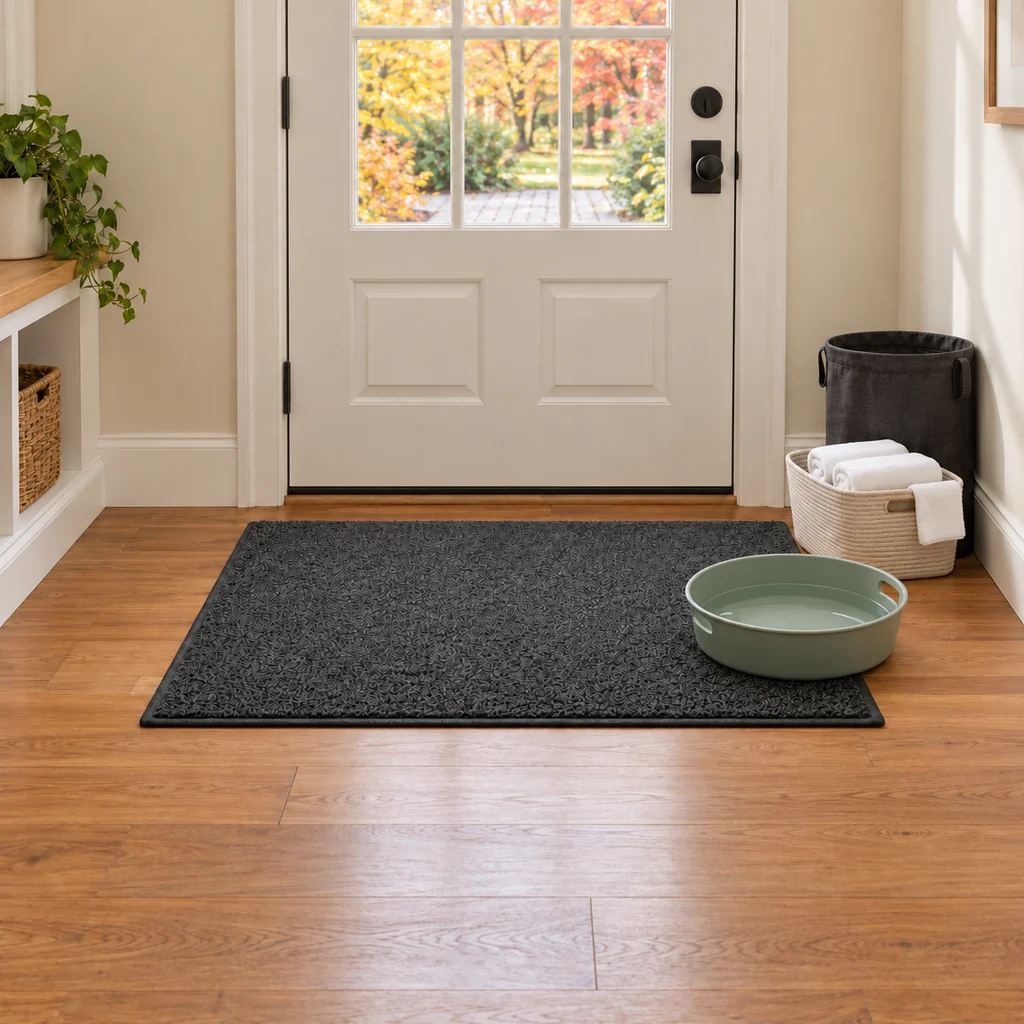
For a lightly muddy paw, dampen one cloth and skip the basin. For caked-on mud or sidewalk salt, set a broad, shallow basin at the edge of the mat and add only a small amount of lukewarm water. Check the temperature with your hand; it should feel comfortable, never hot. Keep the basin low enough that your dog can stand on the mat without stepping into a deep container. Put a clean washcloth nearby and move the basin out of the walkway when finished.
Step 4: Invite Your Dog to Pause on the Mat
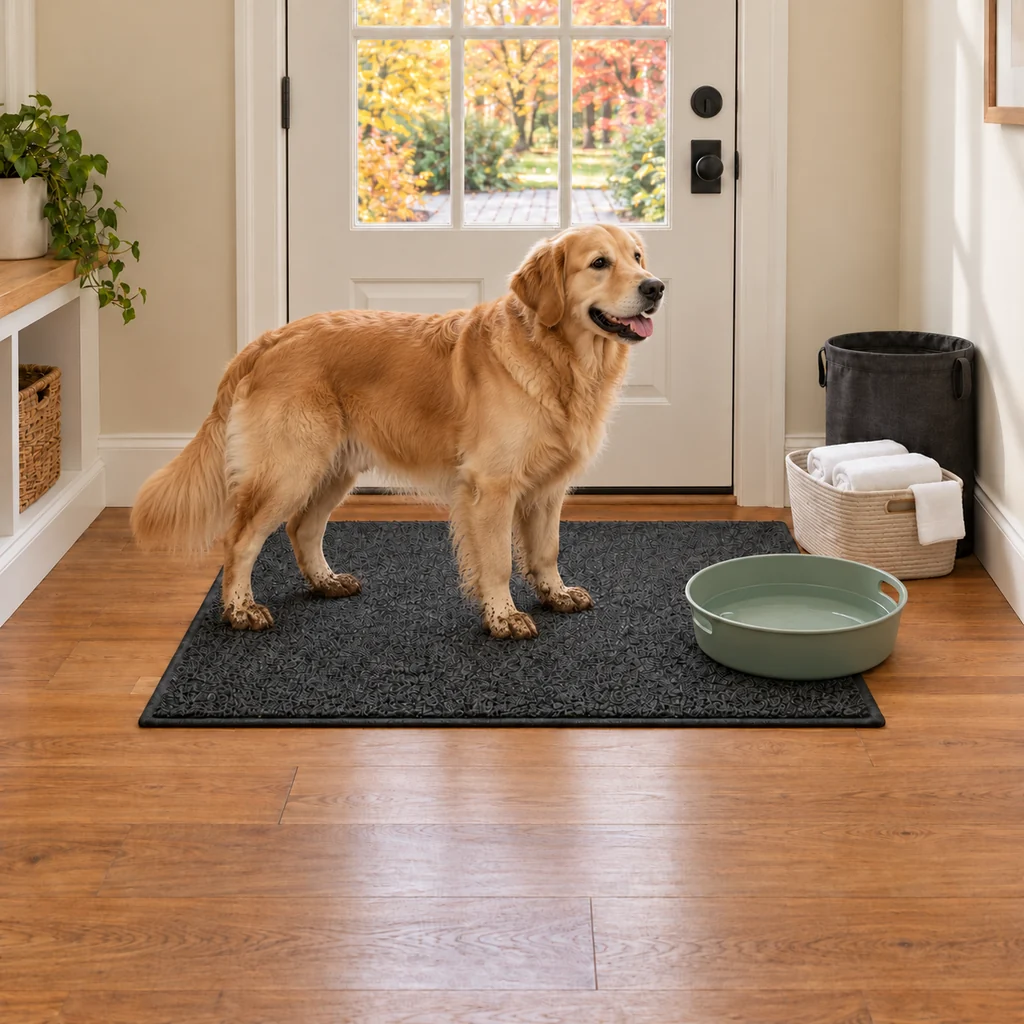
Bring your dog in at a calm pace and ask for a familiar pause or stand on the mat. Reward the pause before you touch a paw. Give the dog enough room to balance; do not pull a leg sideways or make the dog stand in the basin. If the dog backs away, start with a shorter session and reward simply standing on the mat. The goal is a repeatable, low-stress routine, not a wrestling match at the door.
Step 5: Wipe One Paw at a Time
Wet the cloth with plain lukewarm water and gently wipe mud from the top, sides and underside of one paw. Support the paw in its natural position and put it down before moving to the next. If you walked across treated sidewalks, use a clean damp portion of the cloth for each paw so salt is not spread back onto the skin. Change the water if it becomes muddy. Do not force a paw to stay lifted if your dog resists or seems sore.
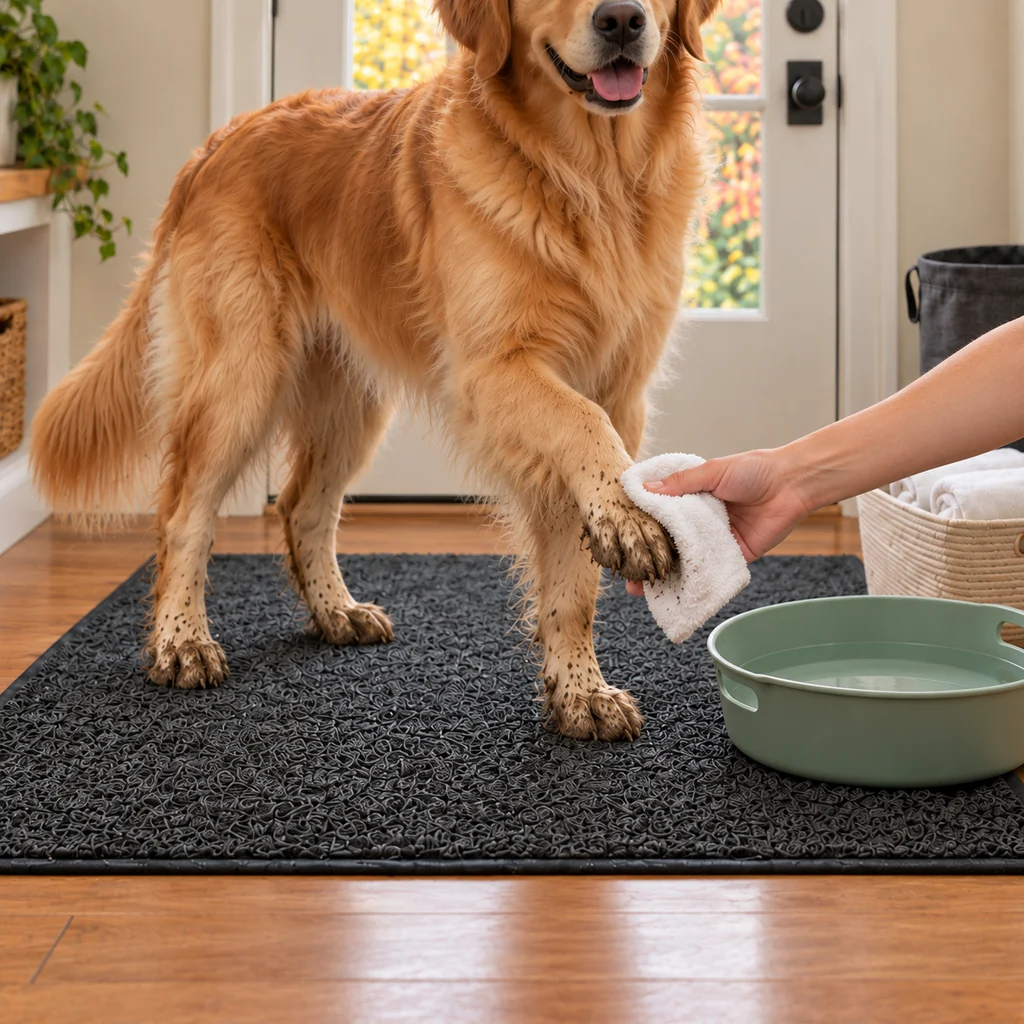
Step 6: Check Between the Toes and Around the Pads
After the first wipe, gently lift one paw only as high as your dog comfortably allows. Support it from below and part the toes slightly to look for remaining grit, small stones or bits of plant material; then check around the pads. Wipe away loose debris with a fresh part of the cloth and set the paw down before checking the others. The photo shows the front-paw check, but inspect all four paws. If you see a cut, swelling, bleeding, a lodged object, or limping, stop the routine and contact your veterinarian rather than digging at the paw. VCA’s limping first-aid guide describes pain and swelling as reasons for veterinary assessment.
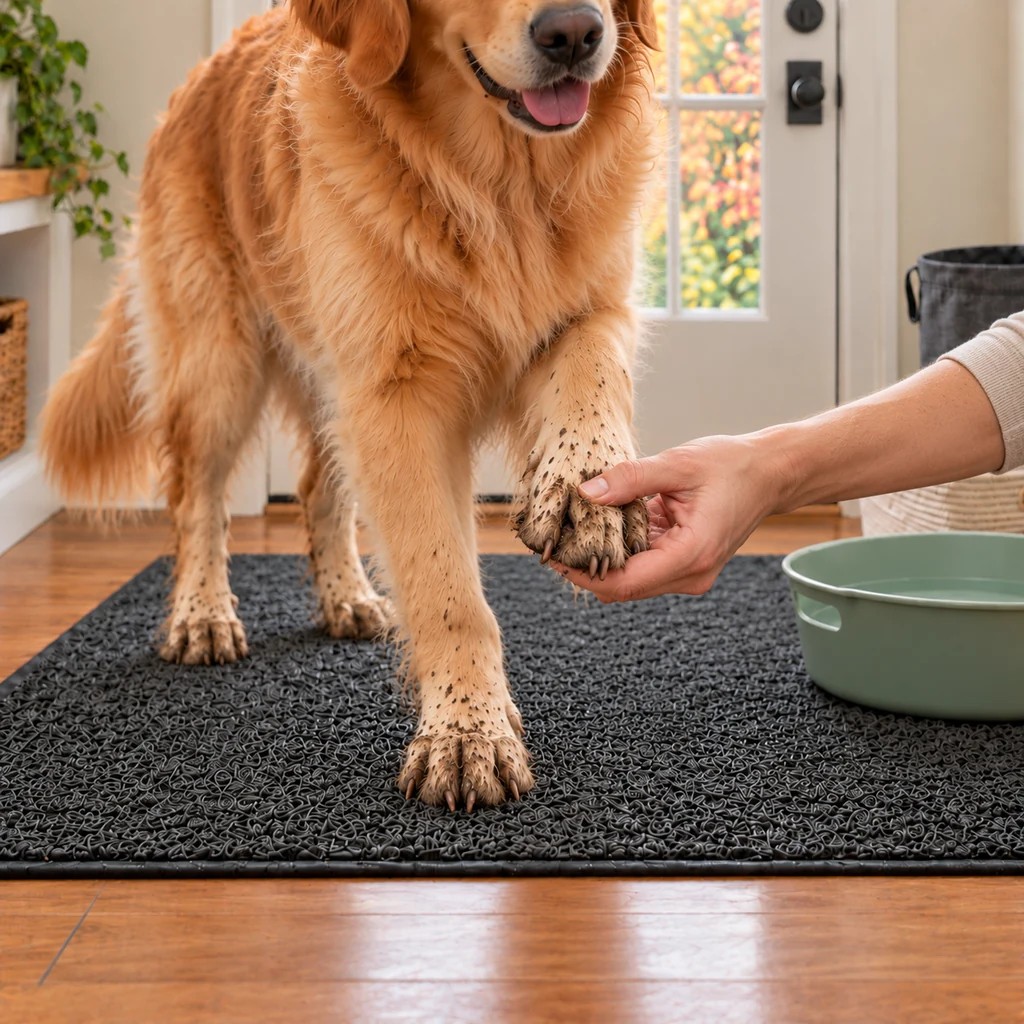
Step 7: Pat the Paws Dry Before the Dog Walks On
Lay a dry towel on the mat and pat each paw, including the fur between toes, until it no longer feels damp. Let the dog stand or shift weight naturally while you work. A quick reward after the last paw helps make the stop at the door predictable. Check that the floor beyond the mat is dry before releasing your dog into the house; slippery wet pawprints can undo the point of the station.
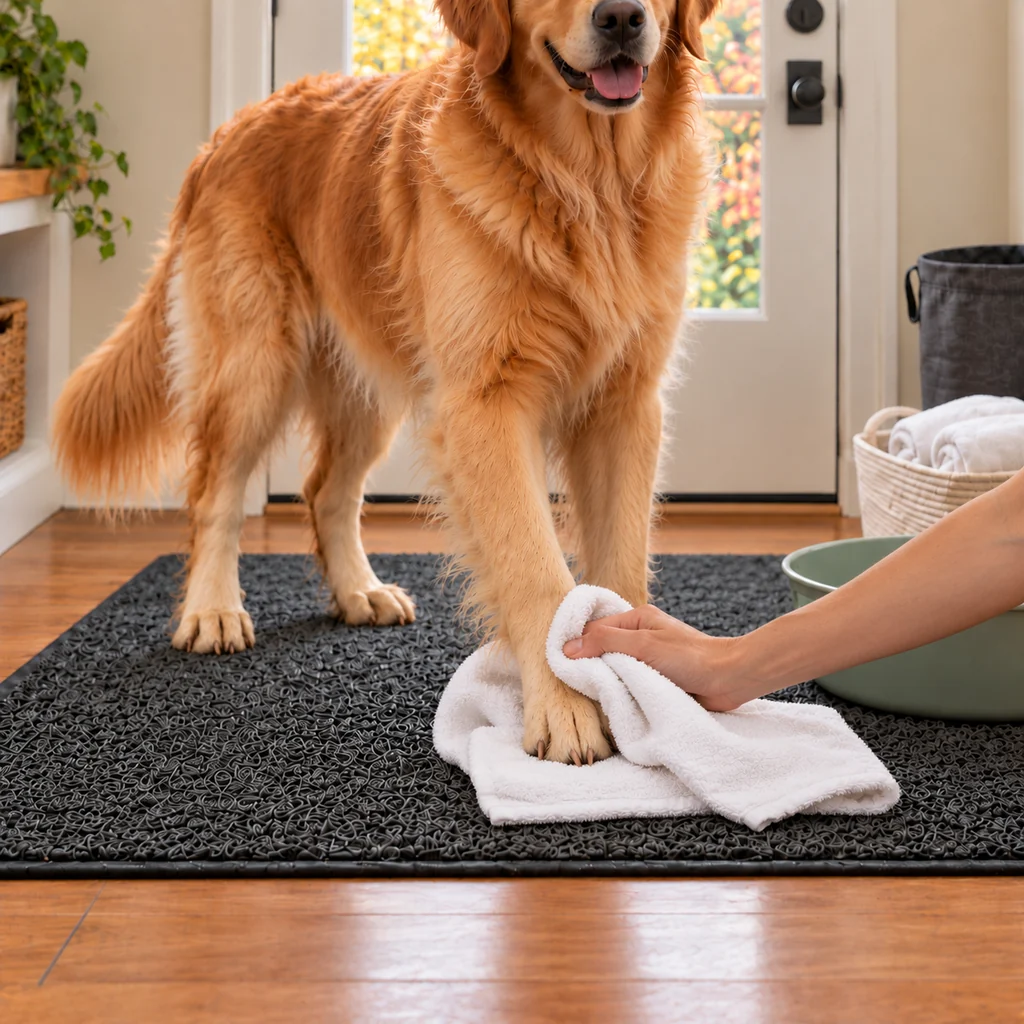
Step 8: Empty, Wash and Reset the Station
Put the used cloth in its separate hamper, pour out the dirty basin water, wash and dry the basin, then store it off the floor. Launder damp towels promptly and let the mat dry according to its care label. Keep one clean towel ready for the next walk. This final image shows the basin put away, a fresh towel in the clean basket and the used cloth separated in the dark hamper.
Make the Routine Easier for Your Dog
Practice on a dry day before you need to remove heavy mud. Ask for a brief stand on the mat, touch a shoulder, then touch a lower leg, rewarding each calm pause. Work up to touching and lifting a paw only when your dog accepts the earlier steps. If paw handling is difficult, a veterinarian or qualified reward-based trainer can help you build a plan for your dog.
If your entryway also collects rain boots and umbrellas, our small entryway plan for wet boots keeps the human gear from crowding the mat. After the paws are dry, a calm activity from your dog’s toy rotation basket can make the return-home routine feel rewarding.
Common Mistakes to Avoid
- Deep water at the doorway: Use only a shallow basin and put it away after the wash.
- One towel for clean and dirty tasks: Separate unused cloths from damp used ones.
- Skipping the toe check: Mud and winter grit can remain where a quick top wipe does not reach.
- Letting damp paws run onto slick flooring: Finish with a dry towel and check the floor.
- Forcing a painful paw: Stop if the dog pulls away in pain, limps or shows a wound.
Frequently Asked Questions
Do I need soap every time my dog’s paws are muddy?
No. For ordinary dirt, start with water and a soft cloth. If a dog-specific cleanser is needed, follow its label and rinse it as directed; avoid household cleaning products.
What if my dog will not stand still at the door?
Practice a short, rewarded pause on a dry day. Clean one paw at a time only while your dog is comfortable, and seek individualized help if the handling is stressful.
Can I leave the water basin out all day?
It is more practical to fill it for a walk, then empty, wash and put it away. That keeps the route through the door clear and the station dry.