Does your dog have a basket full of toys but still pull out the same one every day? A small toy rotation gives familiar toys a break, then brings a few back into view. You can set it up with what you already own: one reachable basket, one lidded storage bin, and a few minutes to check each toy.
Quick answer: Inspect the toys first. Put two or three different types in one basket, store the rest out of reach, and swap one item when interest fades. Watch how your dog uses each toy and remove anything that starts to break. There is no required seven-day schedule.
What You Need
- One shallow basket your dog can reach without tipping it over
- One clean, dry lidded bin for toys out of rotation
- Several dog-appropriate toys already in your home, ideally with different ways to play
- A clear floor space where you can inspect and sort them
Choose toy sizes and materials for your dog’s chewing habits and follow each manufacturer’s directions.
How to Set Up a Dog Toy Rotation
Step 1: Lay Out and Inspect Every Toy
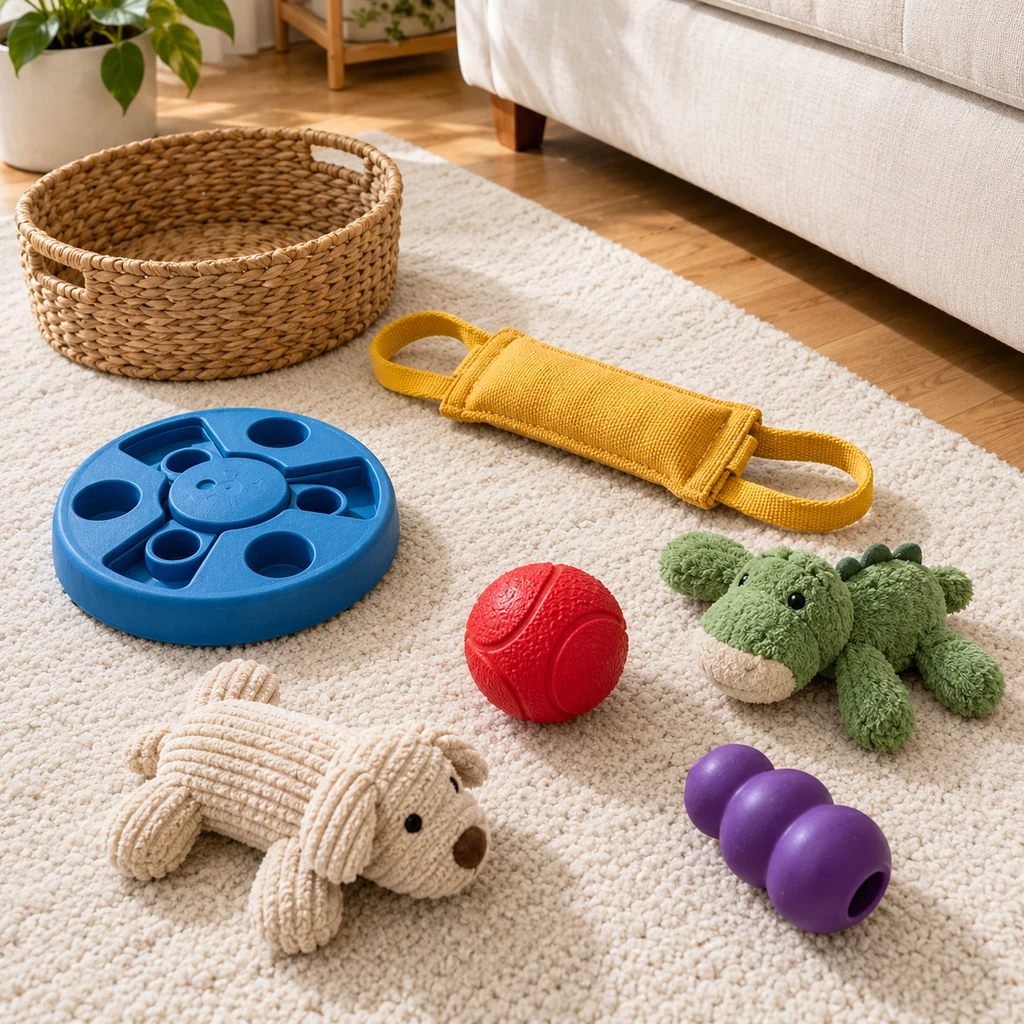
Gather the toys from under furniture, baskets and shelves, then set them apart on a clean floor. Check seams, squeakers, rubber edges and any detachable parts. Discard a toy that is torn, shedding pieces or small enough for your dog to swallow. Set aside anything that needs washing and let it dry fully before storing it. The ASPCA advises matching toys and chews to a dog’s size and chewing habits and watching for pieces that could be swallowed.
Step 2: Sort by How Your Dog Plays
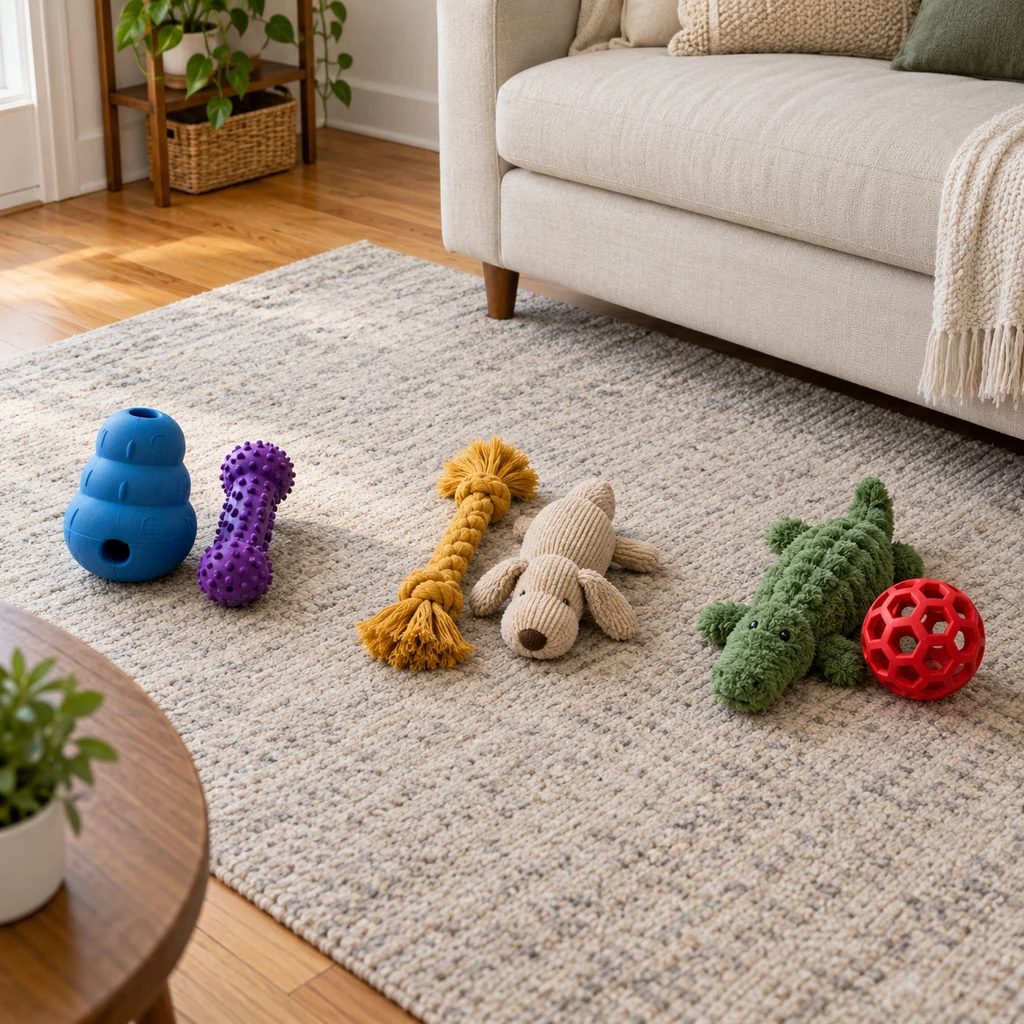
Make loose groups: food puzzles or sturdy rubber toys, toys for play together such as tug or fetch, and softer comfort toys. A toy may fit more than one group. The goal is variety in the small basket, not a perfect filing system. If your dog destroys plush fabric or pulls fibers from a tug toy, reserve that type for active, supervised play or leave it out altogether.
Step 3: Build a Small Active Basket
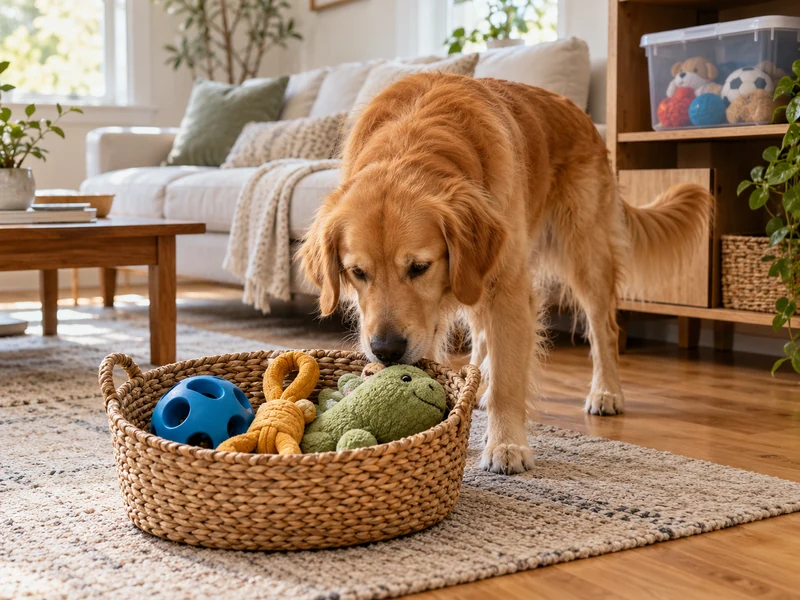
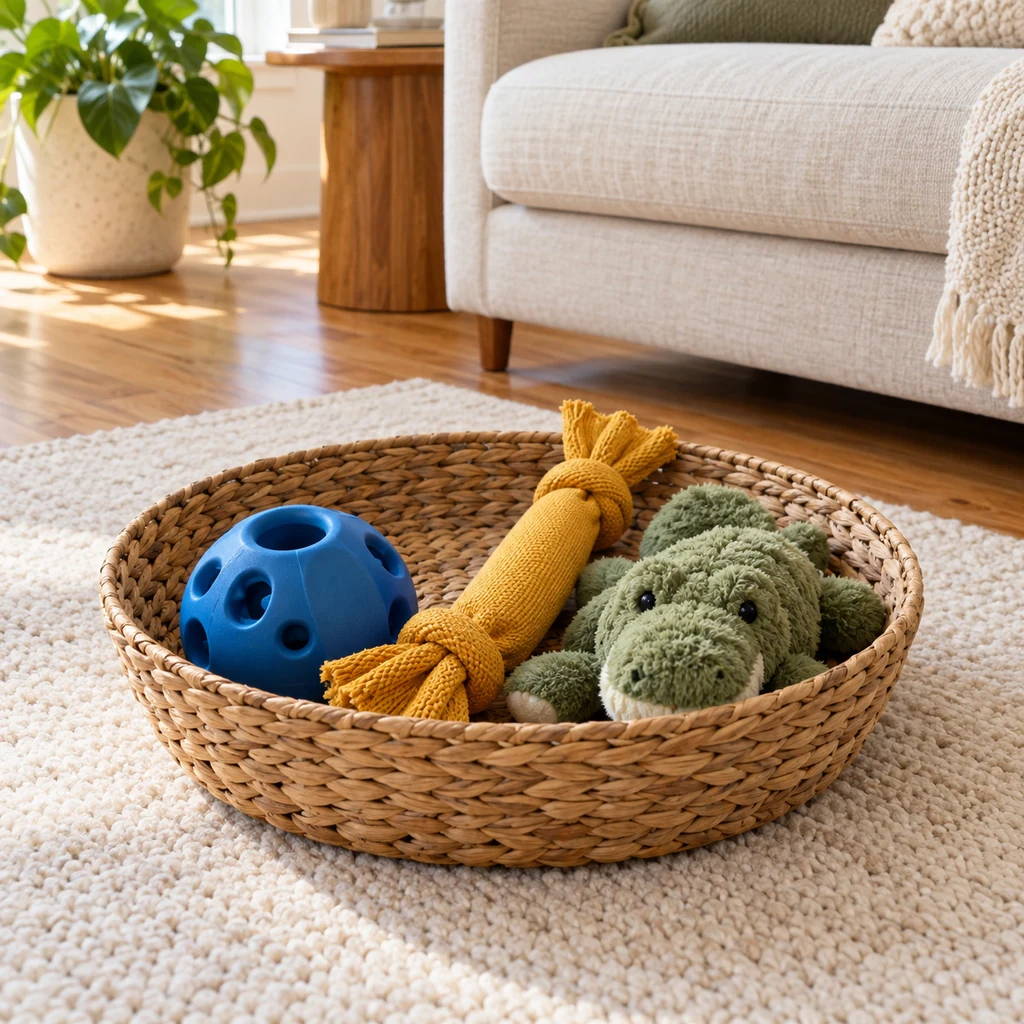
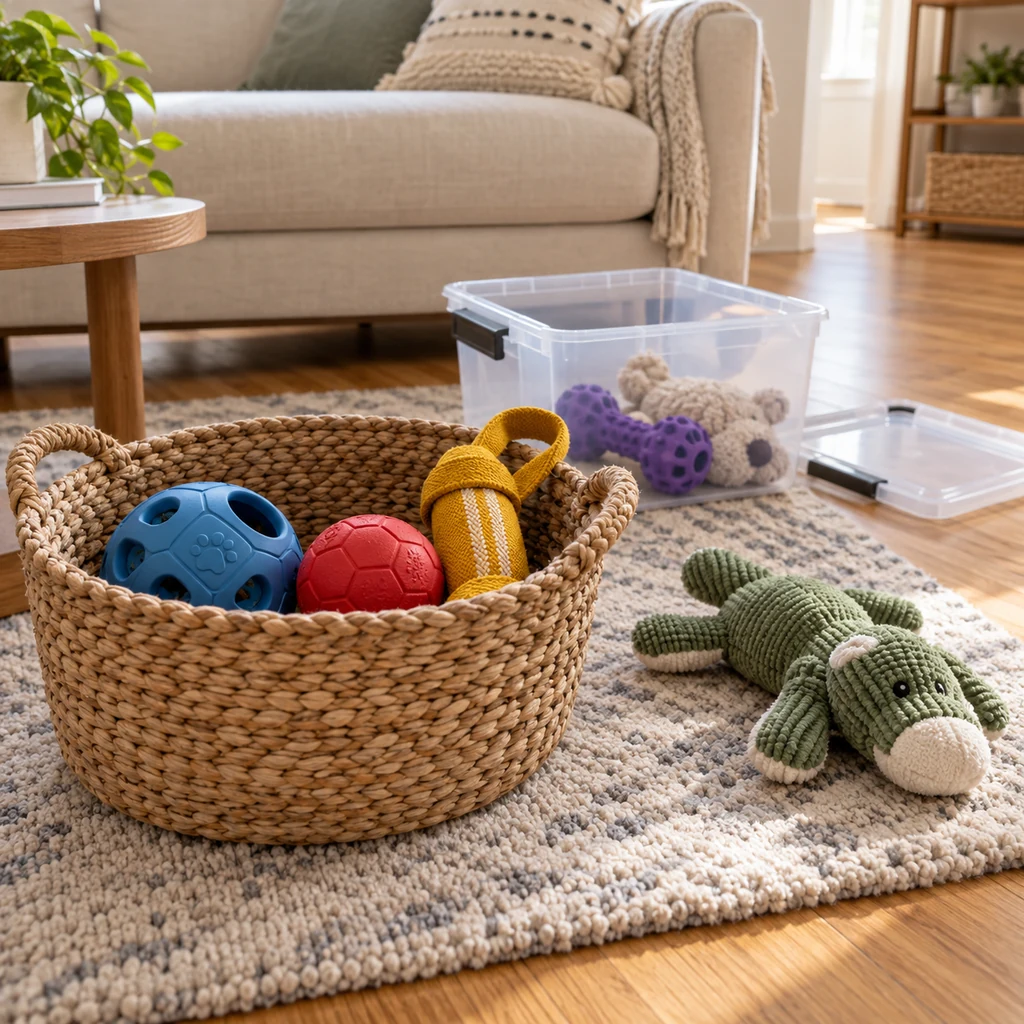
Choose two or three toys your dog can use safely and put them in the reachable basket for a supervised play session. For example, select one sturdy puzzle, one interactive tug toy and one soft toy if your dog treats plush items gently. Keep tug toys for play with you, and put interactive or destructible toys away when you cannot watch. Place the basket where it will not block a walkway, door or food and water bowls. The sample basket in the photo is deliberately small; you do not need to display every toy at once.
Step 4: Store the Rest Clean and Out of Reach
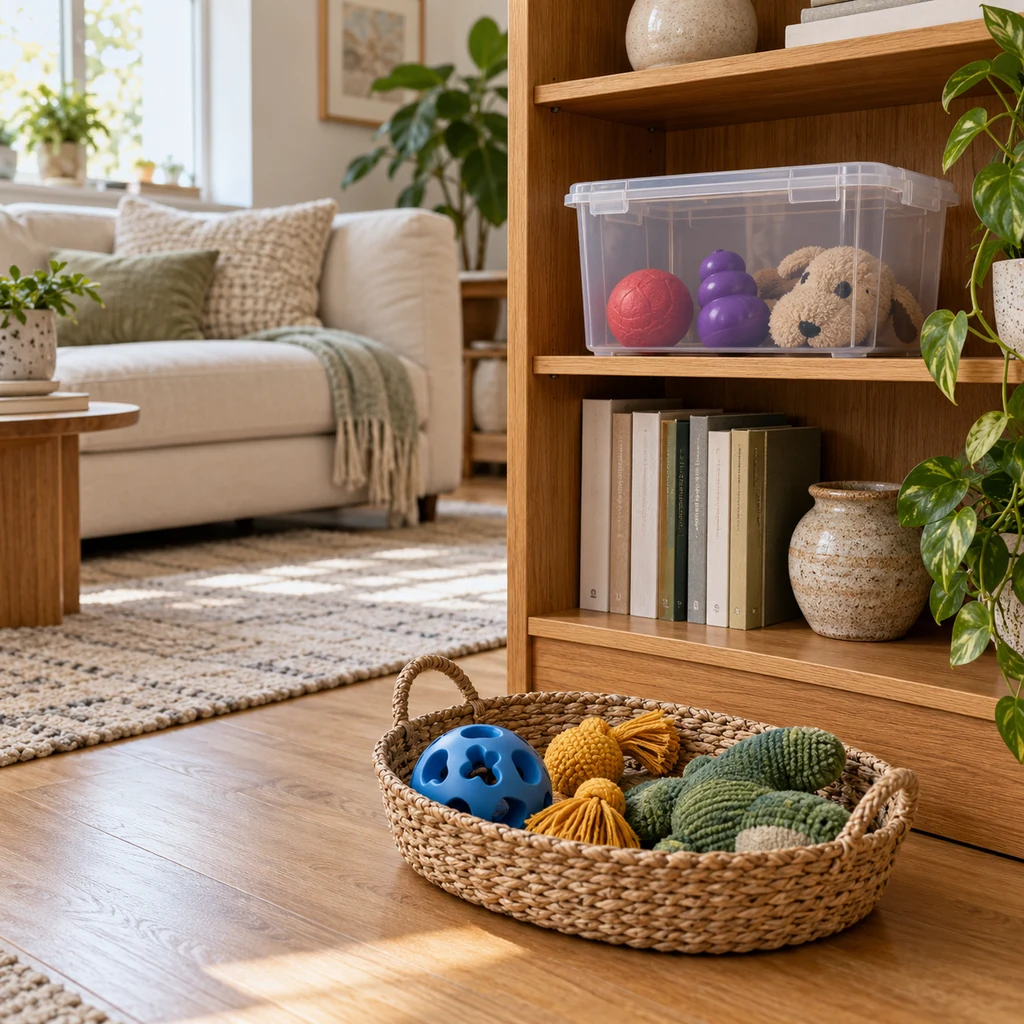
Put the remaining clean, fully dry toys in a lidded bin on a shelf your dog cannot access. Keep the bin separate from food and cleaning products. If a toy has a specific cleaning instruction, follow its label before it goes into storage. This reserve is what makes rotation work: the toys are still yours, but they are briefly out of sight.
Step 5: Swap One Toy When Interest Fades
After a few days, or whenever your dog stops choosing one of the basket toys, trade that item for a different type from the reserve. There is no reason to replace every toy at once. Inspect the outgoing and incoming items, then return the clean, dry outgoing toy to the bin. The American Kennel Club suggests rotating toys to help keep them interesting; your dog’s response is a better guide than a rigid calendar.
Step 6: Watch the First Play Session
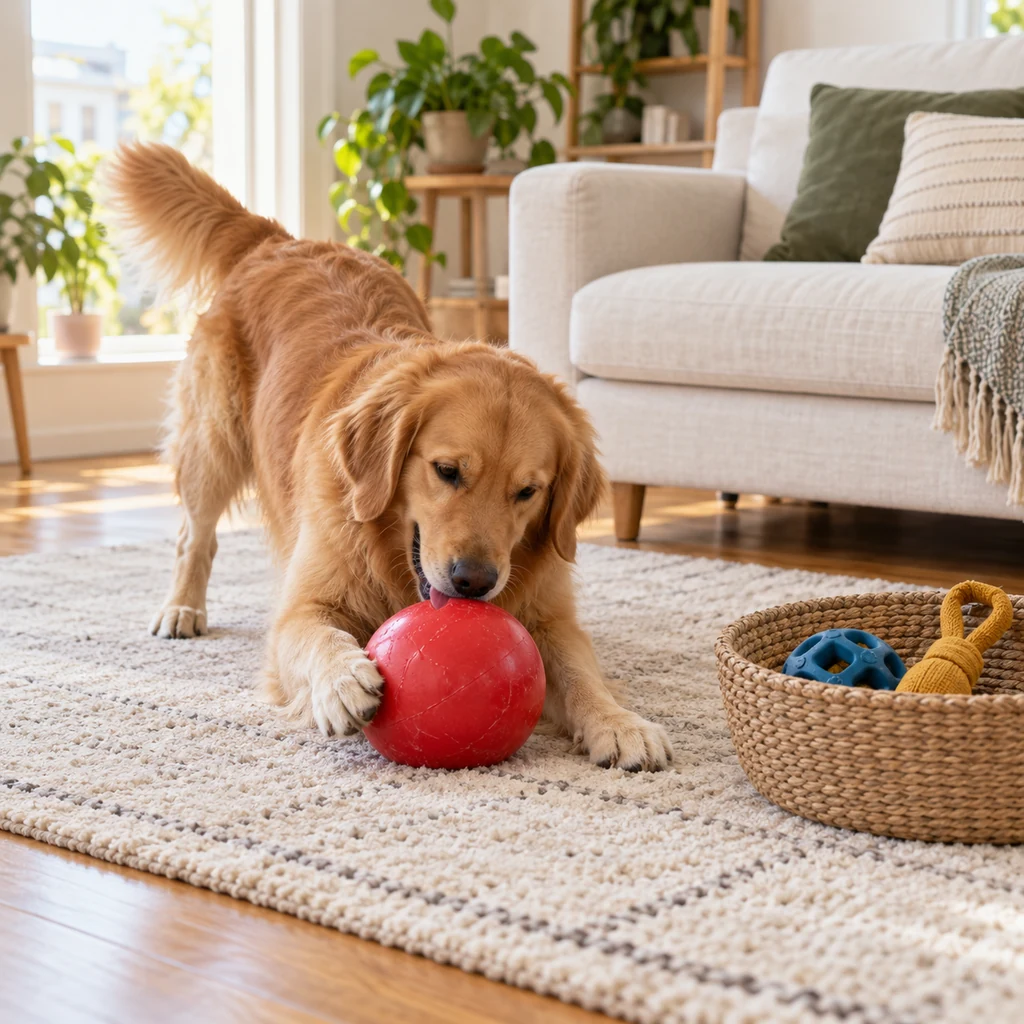
Offer the refreshed basket when you can watch your dog. Notice which toy they choose, whether they can use it comfortably, and whether chewing loosens any material. Remove a toy immediately if pieces come free. Put interactive tug toys away after playing together. Food puzzles should be used according to their product directions; count any food you add as part of your dog’s normal intake. Rotation adds variety, but it does not replace walks, training, rest or time with you.
A Flexible Rotation You Can Repeat
Start with three safe toys in the basket and keep the others in reserve. Check the basket daily for wear. Swap one item when your dog seems ready for a change; that may be after two days for one dog and longer for another. Keep a favorite comfort toy available if your dog relies on it. For a supervised scent activity, try the DIY no-sew snuffle mat; for more toy ideas, browse easy DIY pet toys and check each idea against your dog’s size and play style.
Common Mistakes
Keeping damaged toys in the reserve: A closed bin does not make a broken toy safe later. Remove it during the first inspection. Leaving every toy out: Keep a small selection visible so each swap is noticeable. Rotating by the clock: Watch your dog’s interest and keep a trusted comfort item available. Assuming every toy suits every dog: Size, material and chewing style matter more than how cute a toy looks in a basket.
Frequently Asked Questions
How many toys should be out at once?
Two or three different options make a simple starting basket. Adjust the number to your dog, your space and the toys’ supervision needs.
How often should I swap the toys?
Try a change after a few days and adjust based on interest. Inspect toys whenever you move them in or out of storage.
Can a dog keep a favorite toy all the time?
Yes, if it is safe for your dog and used as intended. The rotation can apply to the other toys while the favorite stays available.