
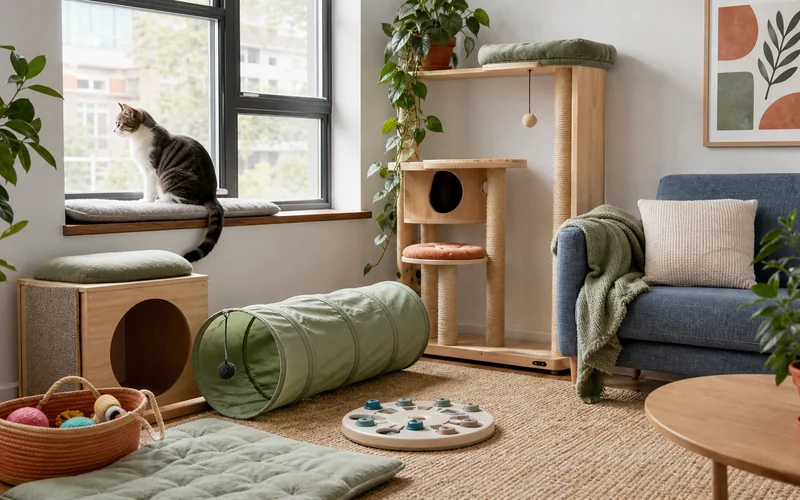
Indoor cat enrichment does not require a huge house or a room full of pet furniture. Cats benefit from chances to climb, scratch, hide, watch, sniff, chase, and work for food. In a small home, the key is to use the space in layers and rotate activities instead of leaving every toy out at once.
These indoor cat enrichment ideas focus on practical routines and compact setups. Start with one or two ideas, watch what your cat chooses, and adjust the space around those preferences.
Begin With Your Cat’s Natural Behaviors
Enrichment works best when it supports normal cat behavior rather than simply adding more objects. Think about what your cat already seeks during the day: a high shelf, a cardboard box, a sunny window, a quiet corner, or a moving toy.
Six Needs to Include
- Climbing: A safe route to an elevated resting spot.
- Scratching: A stable vertical or horizontal surface.
- Hiding: A covered bed, box, or quiet nook.
- Hunting play: Short sessions with toys that move like prey.
- Food exploration: A puzzle feeder or small food search.
- Observation: A secure place to watch the room or outdoors.
Use Vertical Space Instead of More Floor Space
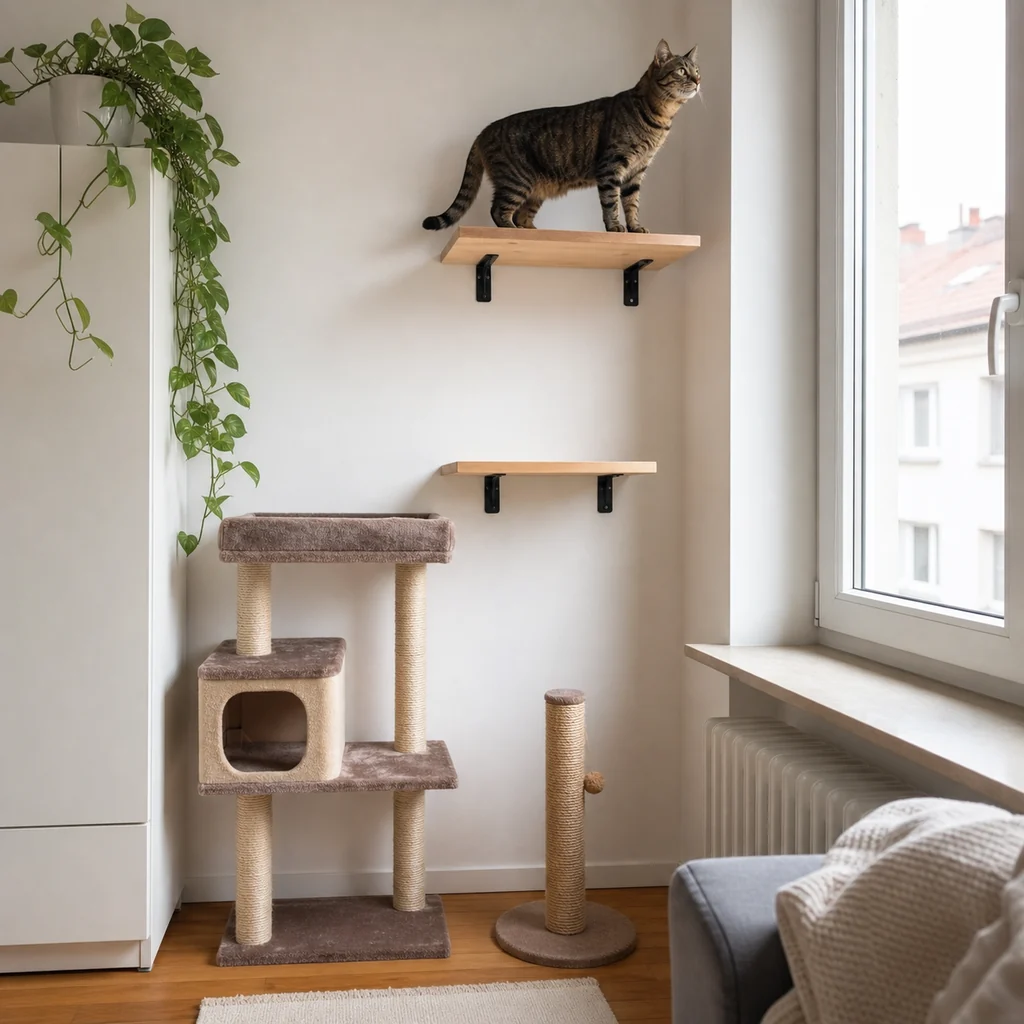
When floor space is limited, height adds territory without making the room feel crowded. A compact cat tree, sturdy shelf route, or secure window perch can give a cat choices for climbing and resting.
Make the Route Safe
- Anchor furniture and cat trees so they cannot wobble.
- Use shelves wide enough for a cat to turn around comfortably.
- Add a non-slip surface to smooth shelves.
- Keep landing points clear of breakable objects.
- Offer more than one way down when possible.
Do not place a high perch beside an unsecured window. Screens are not always strong enough to hold a cat, so keep windows securely closed or use a purpose-built pet-safe barrier.
Turn Mealtime Into a Short Puzzle
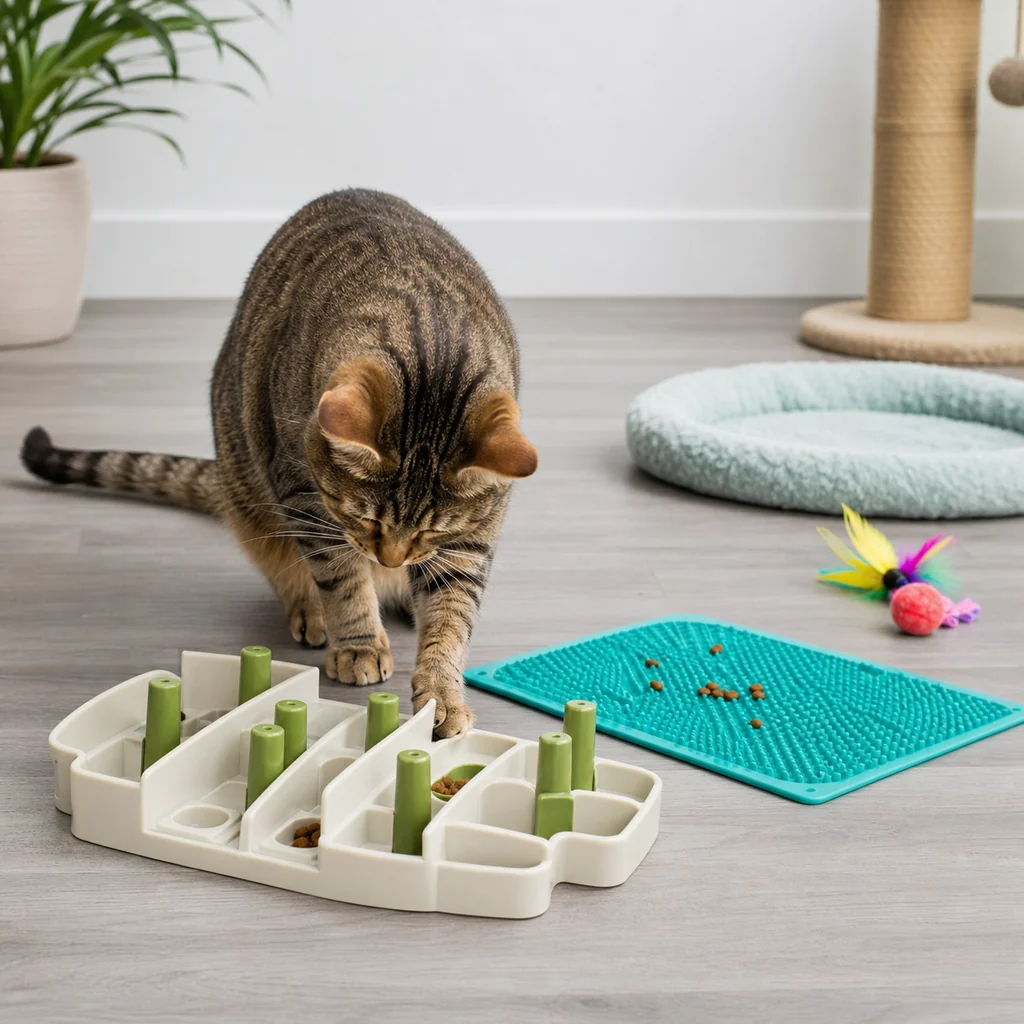
A food puzzle can slow eating and give a cat a simple problem to solve. Begin with an easy puzzle so the food is visible and reachable. Increase difficulty only after your cat understands the game.
Easy Food Enrichment Ideas
- Scatter a small portion of dry food across a clean snuffle mat.
- Place food in a shallow puzzle tray with wide openings.
- Hide a few pieces in separate safe locations around one room.
- Use part of the normal meal rather than adding extra calories.
- Wash food puzzles regularly and discard damaged pieces.
If your cat has a medical diet, eats too quickly, or becomes frustrated around food, ask your veterinarian before changing the feeding routine.
Set Up a Safe Window-Watching Station
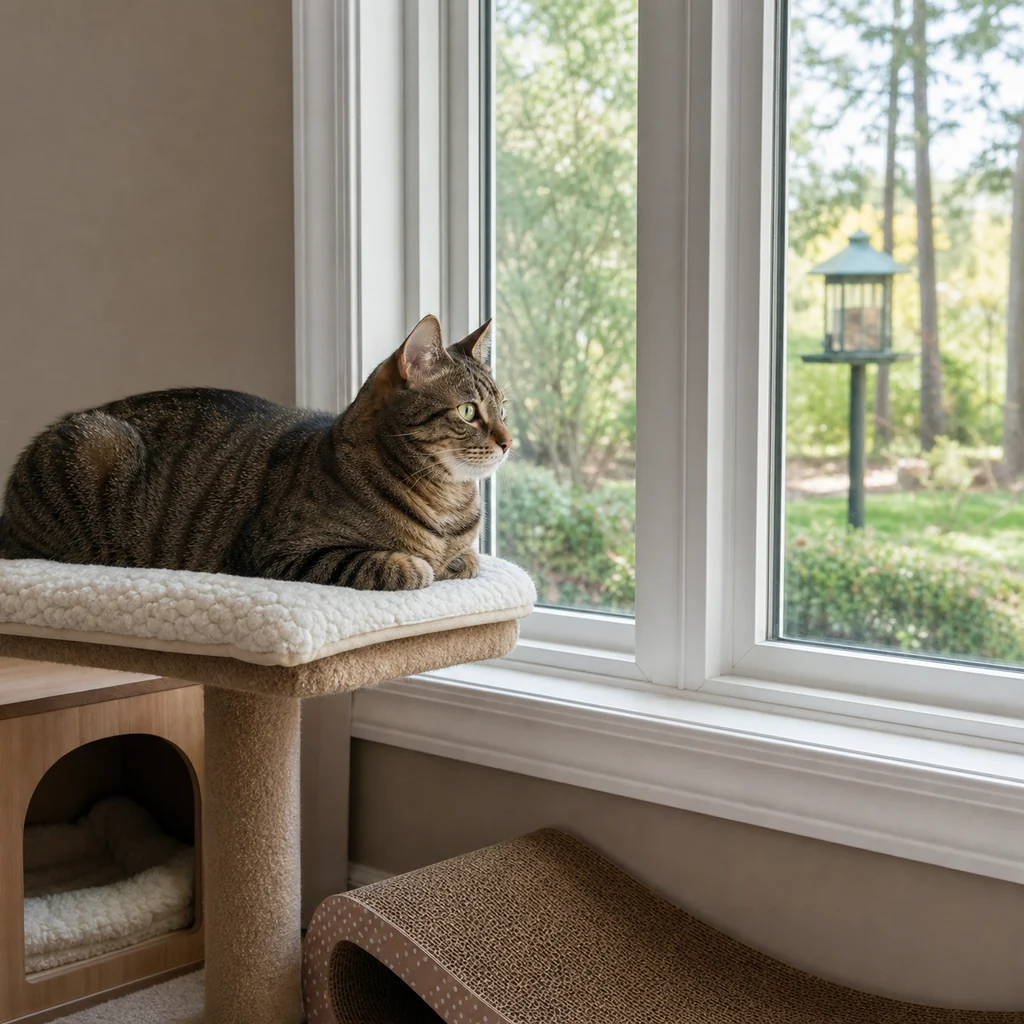
A window perch can provide changing sights, sounds, and movement without taking much room. Choose a stable perch beside a fully secured window and keep cords, blind loops, and fragile objects out of reach.
Make the View More Interesting
- Place the perch where trees or normal outdoor activity are visible.
- Move a chair or cat tree near the window if drilling is not possible.
- Add a scratcher near the perch for a second activity.
- Close curtains partly when the sun makes the area too hot.
Use Short Hunting-Style Play Sessions
Many cats respond better to several short play sessions than one long session. Move a wand toy along the floor, behind furniture, and around corners. Let the cat stalk, chase, and catch it.
A Simple Play Sequence
- Start with slow movement to gain attention.
- Move the toy away from the cat rather than toward the face.
- Pause behind a box or chair to encourage stalking.
- Allow several successful catches.
- Store string and wand toys safely after supervised play.
For simple homemade options, see 6 Easy DIY Pet Toys, and check each toy for loose threads, sharp edges, or small parts before use.
Rotate Toys Instead of Leaving Everything Out
Toys can lose interest when they are always available. Keep a small basket out of reach and offer two or three toys at a time. Swap them every few days based on what your cat actually uses.
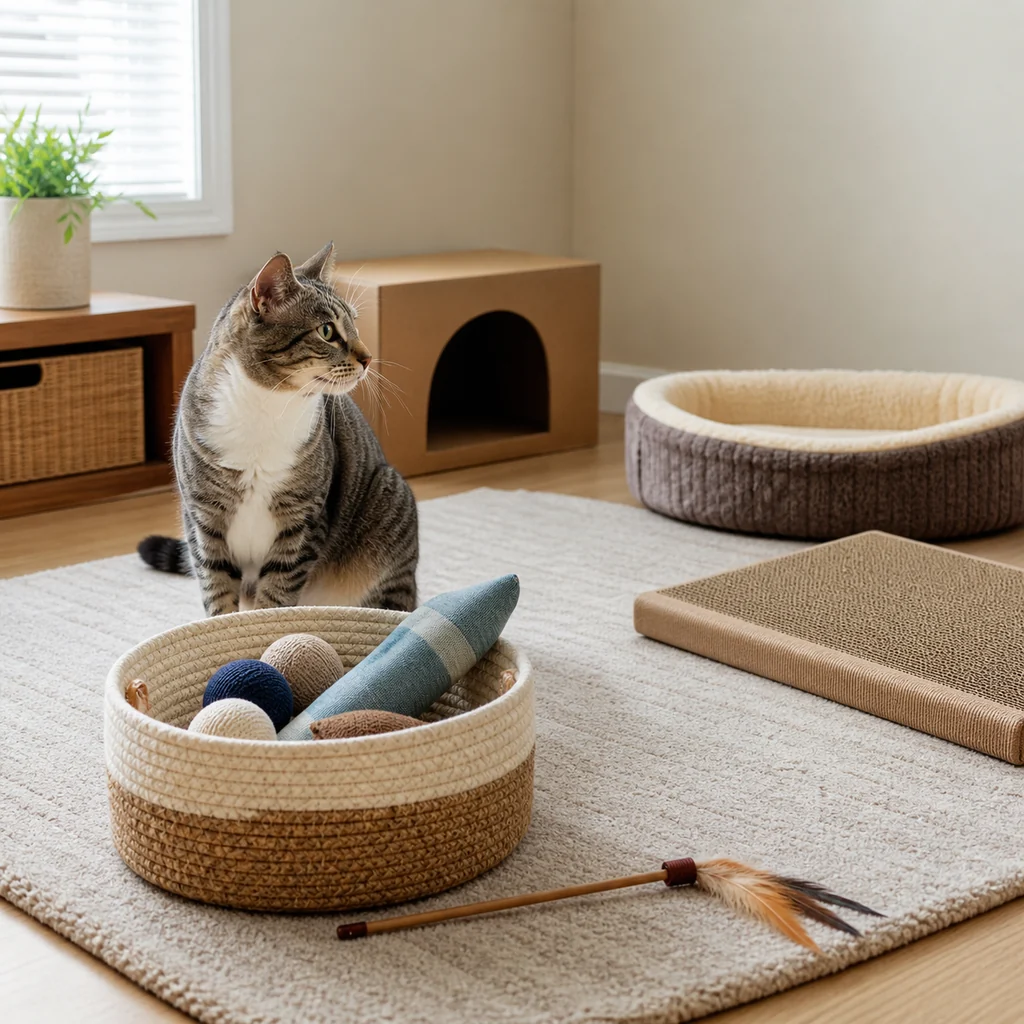
A Useful Toy Mix
- One chase toy for supervised play.
- One soft kicker or fabric toy.
- One rolling toy that is too large to swallow.
- One food puzzle.
- One cardboard scratcher or box.
A compact storage basket keeps the room calm and makes rotation easier. The organizing approach in 7 Easy Tips to Declutter Your Home can help keep pet supplies from spreading across a small space.
Add Quiet Hiding and Resting Options
Enrichment is not only active play. Cats also need places where they can rest without being disturbed. A cardboard box on its side, a covered bed, or a shelf with a soft mat can provide a low-cost retreat.
Good Rest-Zone Locations
- A quiet corner away from the main walkway.
- A shelf above normal room activity.
- A box beside a familiar piece of furniture.
- A bed with a clear view of the room.
Build a Seven-Day Enrichment Rhythm
- Monday: Five-minute wand play and window time.
- Tuesday: Easy food puzzle.
- Wednesday: Swap two toys and refresh the cardboard box.
- Thursday: Short chase-and-catch session.
- Friday: Small food search around one safe room.
- Saturday: Check scratchers, shelves, and toys for wear.
- Sunday: Quiet observation day with a fresh perch blanket.
Common Enrichment Mistakes
- Adding too much at once: Introduce one change and let the cat investigate.
- Using unstable furniture: Climbing routes must be secure.
- Leaving string toys out: Store them after supervised play.
- Forcing interaction: Let the cat choose whether to join.
- Ignoring sudden behavior changes: A sudden loss of interest, hiding, or appetite change deserves veterinary advice.
Quick Indoor Cat Enrichment Checklist
- Provide one high resting spot.
- Offer vertical and horizontal scratching choices.
- Set up a secure window-watching station.
- Use part of a meal in an easy food puzzle.
- Schedule short hunting-style play.
- Rotate toys every few days.
- Keep a quiet hiding place available.
- Inspect toys and climbing areas weekly.
FAQ
How much enrichment does an indoor cat need?
Needs vary by age, health, and personality. Several short opportunities to climb, scratch, watch, forage, and play throughout the day are usually easier to maintain than one long session.
What is the easiest enrichment idea for a small apartment?
A secure window perch, sturdy scratcher, cardboard hideaway, and five-minute play routine provide several kinds of enrichment without using much floor space.
Are food puzzles suitable for every cat?
Many cats enjoy easy food puzzles, but the puzzle should match the cat’s ability and diet. Start simple, use part of the normal meal, and ask a veterinarian if the cat has dietary or health concerns.
How often should cat toys be rotated?
Swap a few toys every several days or whenever interest drops. Keep favorite comfort items available and store string toys safely between supervised sessions.