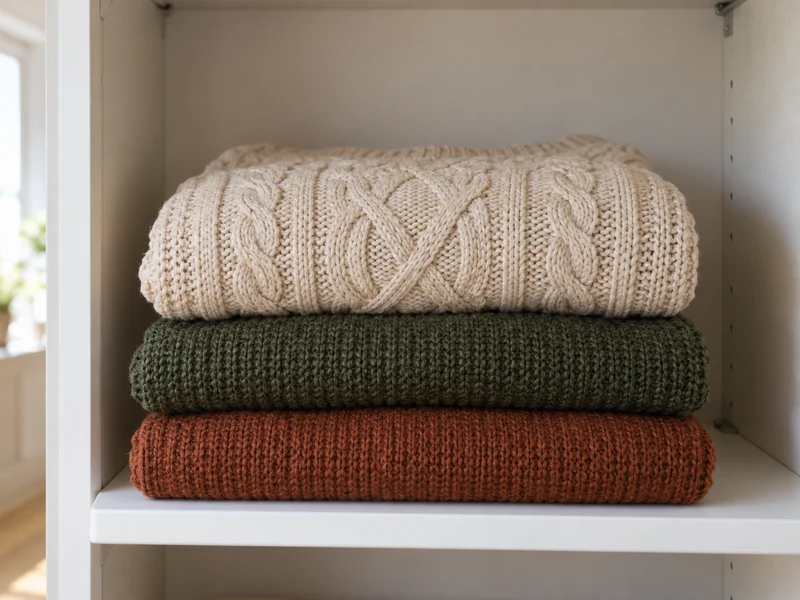
A chunky sweater can take over a small closet shelf, and hanging it by the shoulders may leave bumps or stretch the knit. The fix is a broad, gentle fold and a low stack you can lift without disturbing everything beneath it. This five-step method keeps the sleeves contained without packing the sweater into a tight ball.
Quick answer: Lay a clean, fully dry sweater flat. Fold its sleeves across the body, bring the sides inward, fold the hem up loosely, and store the finished rectangle on a dry shelf. Let the shelf depth and the sweater’s thickness decide how far to fold.
Why Fold a Bulky Sweater Instead of Hanging It?
A heavy knit puts its own weight on two shoulder points when it hangs. Flat storage spreads that weight across a shelf. Woolmark recommends folding wool garments to help them retain their shape. Follow your garment’s care label before cleaning it; knit fibers do not all tolerate the same wash or drying method.
This method is for a crewneck or similar pullover that will be used during the season. A delicate, embellished, or unusually long knit may need a wider fold or its own shelf rather than a standard stack.
What You Need
- One clean, completely dry sweater
- A flat bed or table large enough to spread the sleeves
- A clean, dry shelf or drawer with enough depth for a broad fold
- Optional: a smooth shelf liner if the shelf surface is rough
Measure the shelf depth before starting. The folded sweater should sit fully on the shelf without a sleeve or hem hanging over the edge. If the shelf is shallow, narrow the sweater more at Step 3; avoid squashing the knit just to make it fit.
How to Fold a Bulky Sweater for a Small Shelf
Step 1: Lay the Sweater Flat
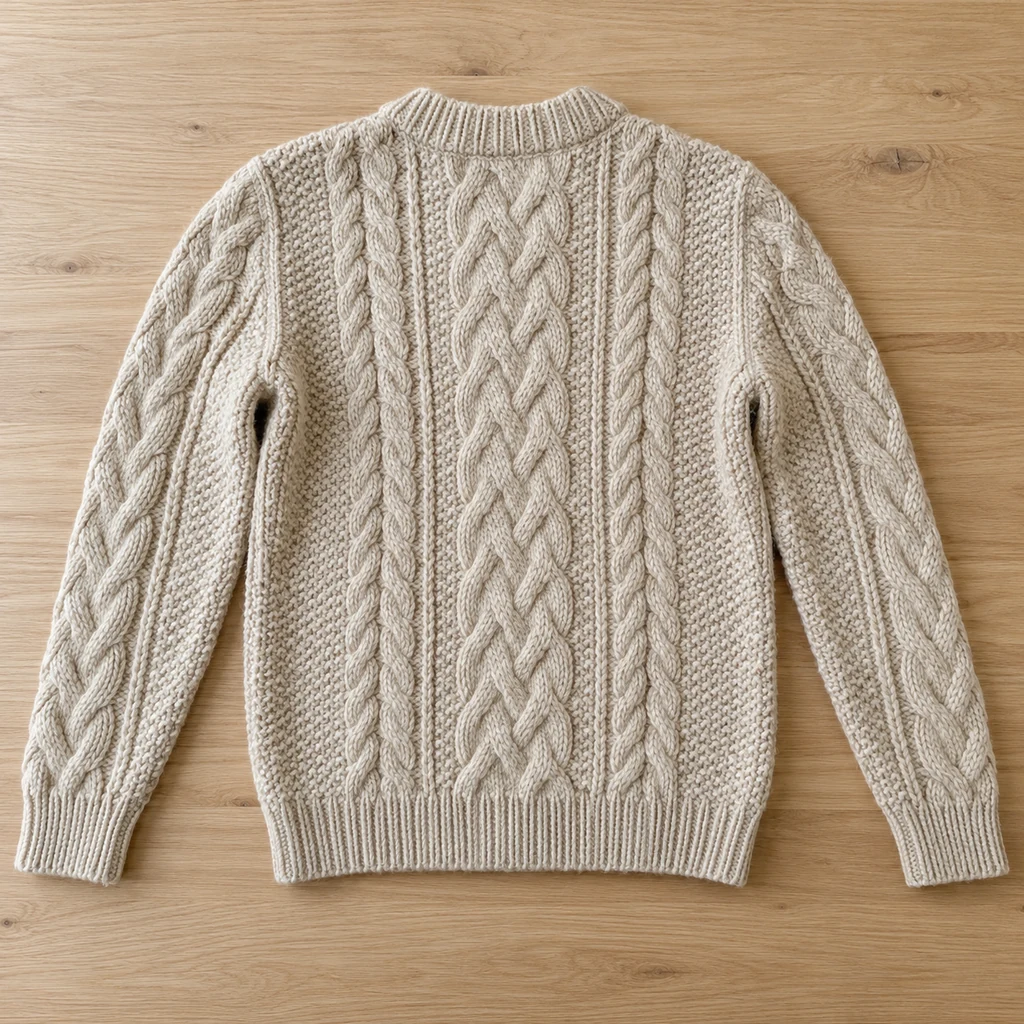
Place the sweater face up on a clean bed or table, with the collar away from you and the hem nearest you. Spread the sleeves and smooth the body with open palms. Do not tug the ribbing or pull the shoulders wider. If the sweater still feels damp after washing, dry it fully according to its care label before folding.
Step 2: Bring Both Sleeves In
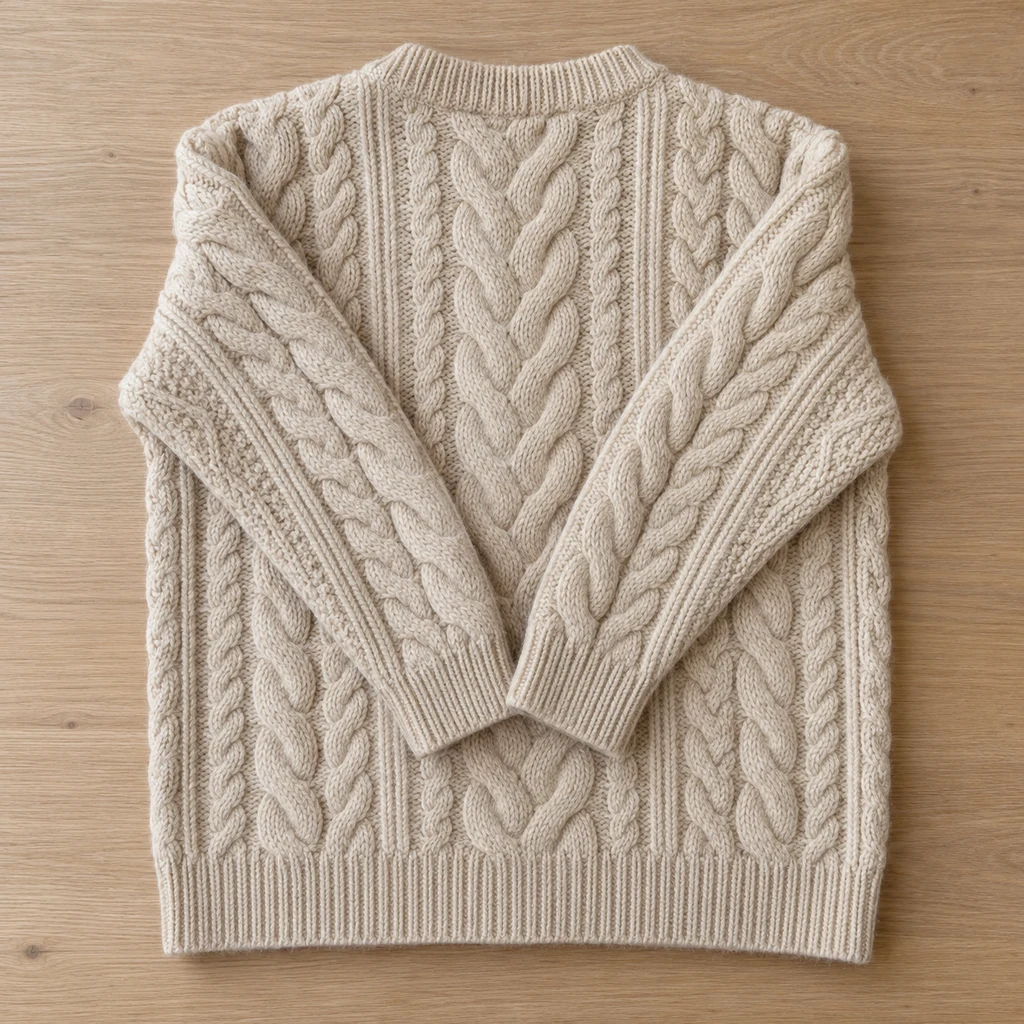
Fold one sleeve diagonally across the body, then bring the other sleeve inward. Keep the cuffs inside the outer edges of the sweater. Smooth each sleeve lightly so it lies flat; crossing is fine, but a thick knot of sleeve fabric at the center will make the final bundle wobble.
Step 3: Narrow the Body Into a Rectangle
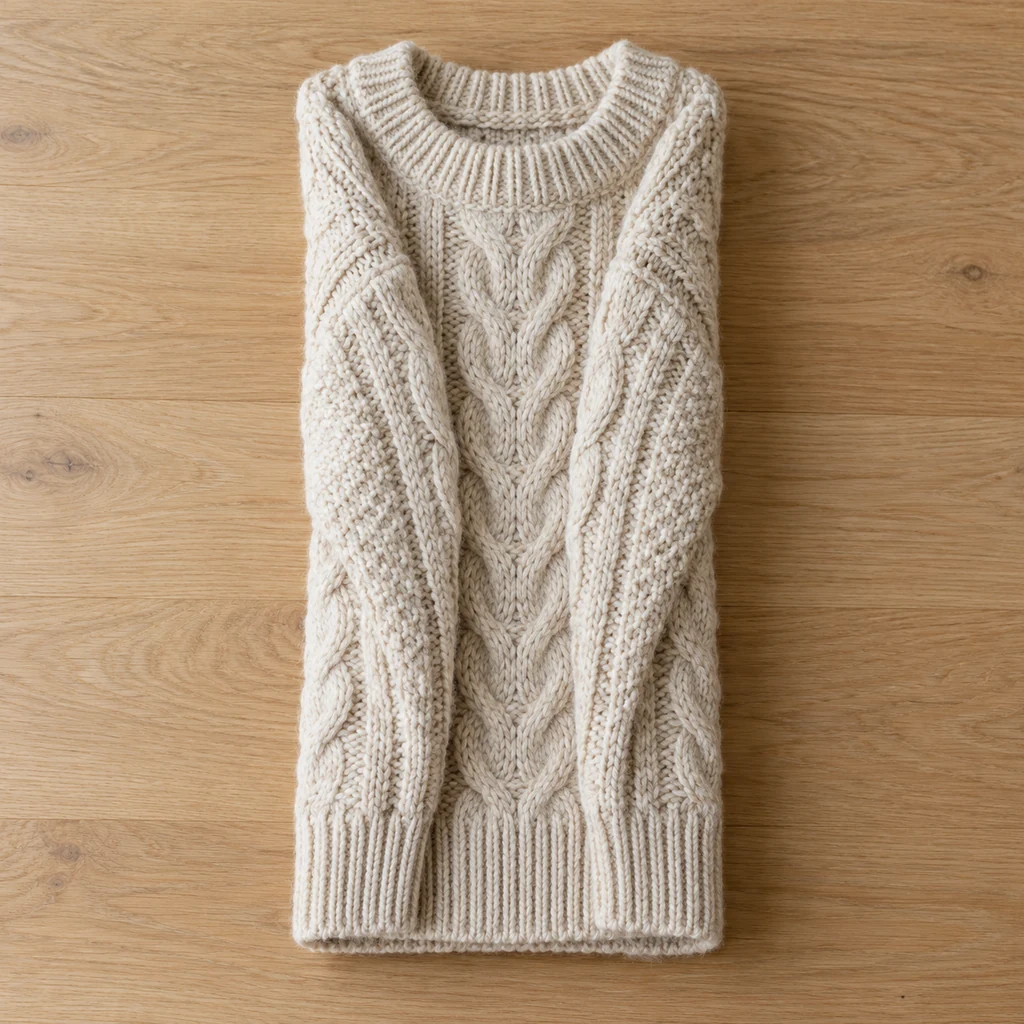
Bring the left body edge toward the center, then the right edge, making a rectangle slightly narrower than your available shelf depth. Keep the sleeve layers inside the new sides. Adjust the width instead of forcing the knit into a rigid square; a roomy rectangle protects the fabric and is easier to retrieve.
Step 4: Fold the Hem Up Once
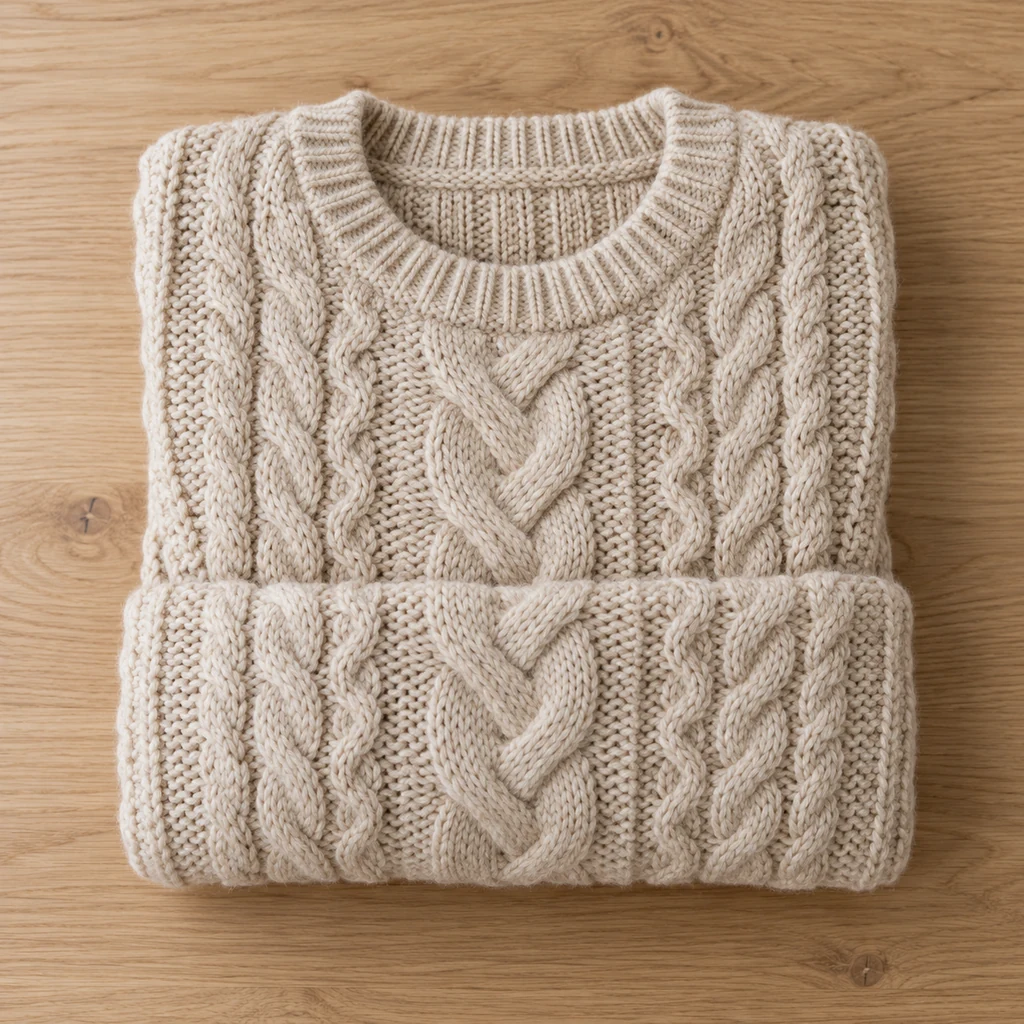
Lift the lower hem and fold it upward in one broad motion, stopping below the collar. The exact fold point depends on the shelf: aim for a package that fits without dangling over the front. Very thick knits often need only one broad fold. If the result is still too long, make a second loose fold rather than pressing it flat or rolling it tightly.
Step 5: Make a Low, Easy-to-Reach Stack
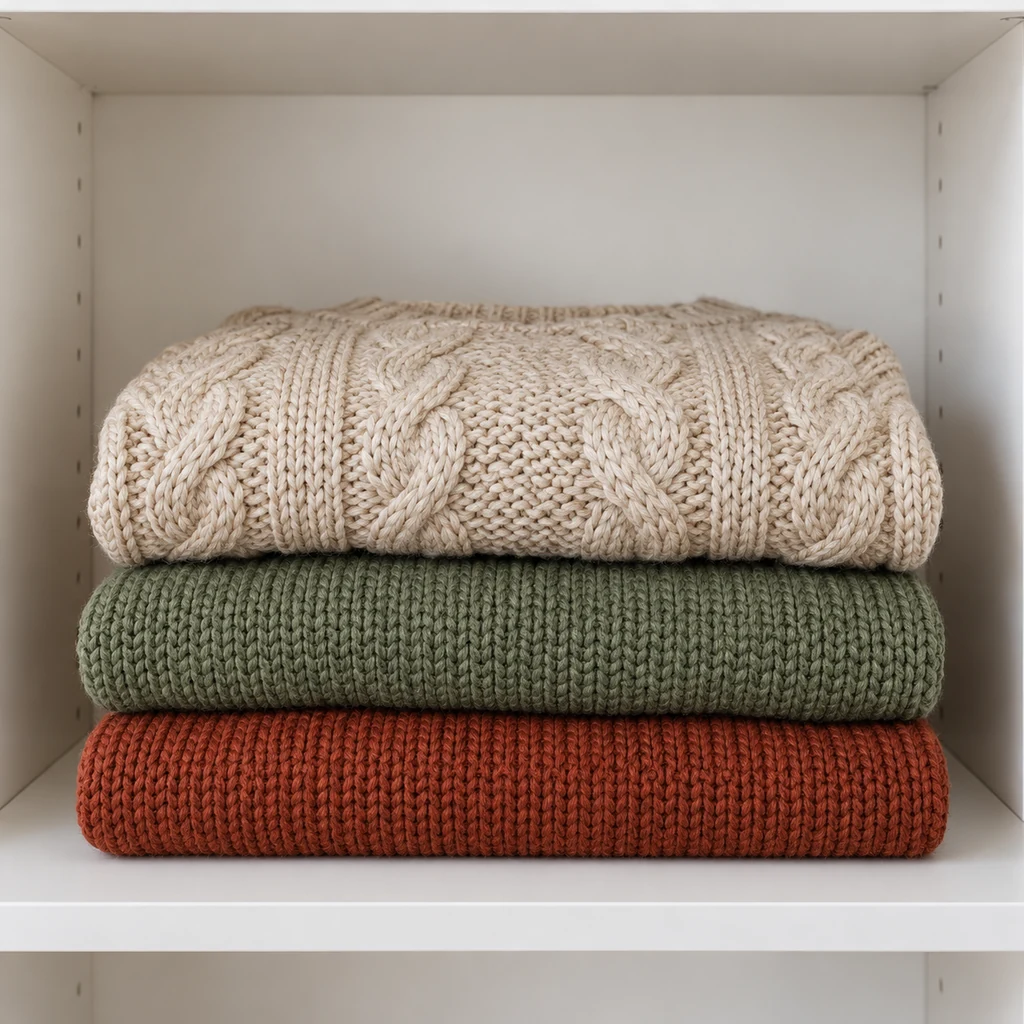
Place the folded sweater flat on the shelf. Put heavier, sturdier knits below lighter ones, and leave clear space above the stack so you can lift the top sweater out without dragging the rest. A small stack of two or three bulky pieces is easier to use than a tower; the practical limit is the space and stability of your shelf, not a fixed number.
If Your Shelf Is Too Shallow
Measure the front-to-back space and refold the sweater into a narrower rectangle at Step 3. Try a second relaxed upward fold only if the first rectangle still projects over the shelf. If the knit must be crushed to fit, use a deeper drawer or a different shelf instead. For more shelf zoning ideas, see our small linen closet four-zone guide.
Common Mistakes to Avoid
- Hanging a heavy knit by its shoulders: this concentrates its weight at the hanger ends.
- Folding while damp: moisture trapped between layers is a poor storage condition. Dry the garment completely first.
- Making a tall, tight pile: the lower sweaters become hard to reach and may be compressed.
- Pulling a single sweater from the middle: lift the pieces above it first so the stack keeps its shape.
- Ignoring the care label: wash, dry and de-pill only in ways appropriate for that specific fiber and construction.
For Off-Season Storage
Clean and dry the sweater before putting it away. Woolmark’s storage guidance also recommends checking stored wool pieces for moisture or pests. A breathable textile bag can protect a delicate knit from snagging; choose a clean, dry storage spot and inspect it periodically. If you have an active moth problem, address the infestation and use a suitable sealed storage system rather than relying on a scented sachet alone.
Frequently Asked Questions
Should bulky sweaters be folded or hung?
Fold most heavy sweaters for daily shelf or drawer storage. The knit’s weight can pull at the shoulders on a conventional hanger. If you must hang a lighter garment temporarily, support its weight broadly and check that the shoulders are not stretched.
Can I file-fold a chunky sweater in a drawer?
Only if it stands without being squeezed. A very thick cable knit often does better in a low horizontal stack. Thin knits can be filed more easily because they make a smaller, more stable fold.
How many sweaters can go in one stack?
Stop when you cannot remove one without pulling or crushing the others. On a small shelf, two or three bulky knits is often more usable than a taller pile. A second stack or shelf zone is better when space allows.
If you are reorganizing the rest of a small closet, our small closet organization guide