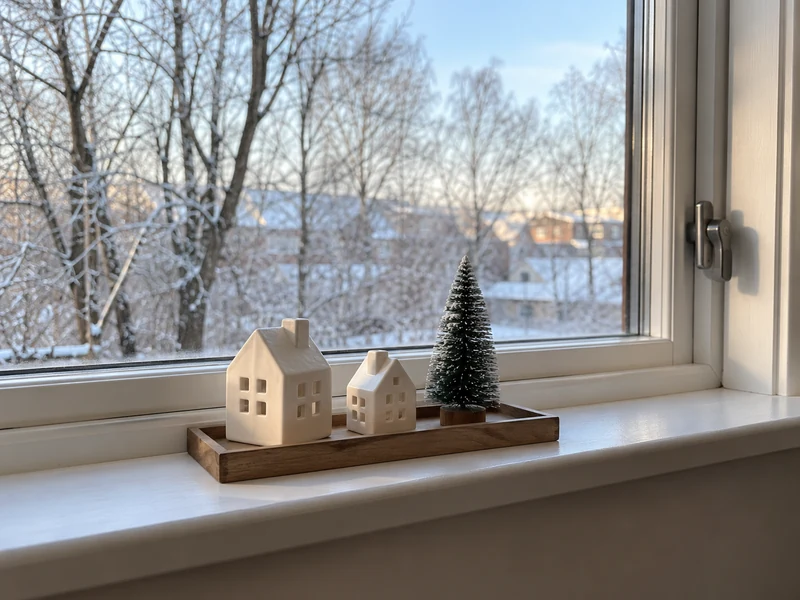
A narrow windowsill can hold a Christmas scene without swallowing the daylight or turning the window into a shelf of loose ornaments. Use one shallow tray, two small houses, and one miniature tree. The tray keeps everything together for cleaning, while the low shapes leave most of the glass open.
Quick plan: Measure the usable sill, test how the window opens, place a tray that sits entirely on the ledge, then add two low houses and one small tree. Check the finished arrangement from the room and move or remove it if it interferes with the sash, latch, blind, or curtain.
Make sure the decorated window still opens safely.
Why a Tray Works on a Narrow Windowsill
A single tray gives the small pieces a clear boundary and lets you lift the whole scene away before cleaning the glass. It also makes the display look intentional from across the room. Choose a tray with a flat base, a low rim, and enough depth for every object to stand completely inside it. A tray that hangs over the front edge is too deep for that sill.
This is a low, unlit display. The ceramic houses in the photos contain no candles, and the miniature tree has no cord. If your window has a heater below it, keep the arrangement away from hot surfaces and follow the heater’s clearance guidance.
What You Need
- A tape measure
- One shallow, stable tray with a flat base
- Two small, lightweight ceramic or wood house ornaments in different heights
- One miniature bottlebrush or faux evergreen tree with a stable base
- Optional: a thin non-slip liner cut to fit inside the tray, if the objects slide
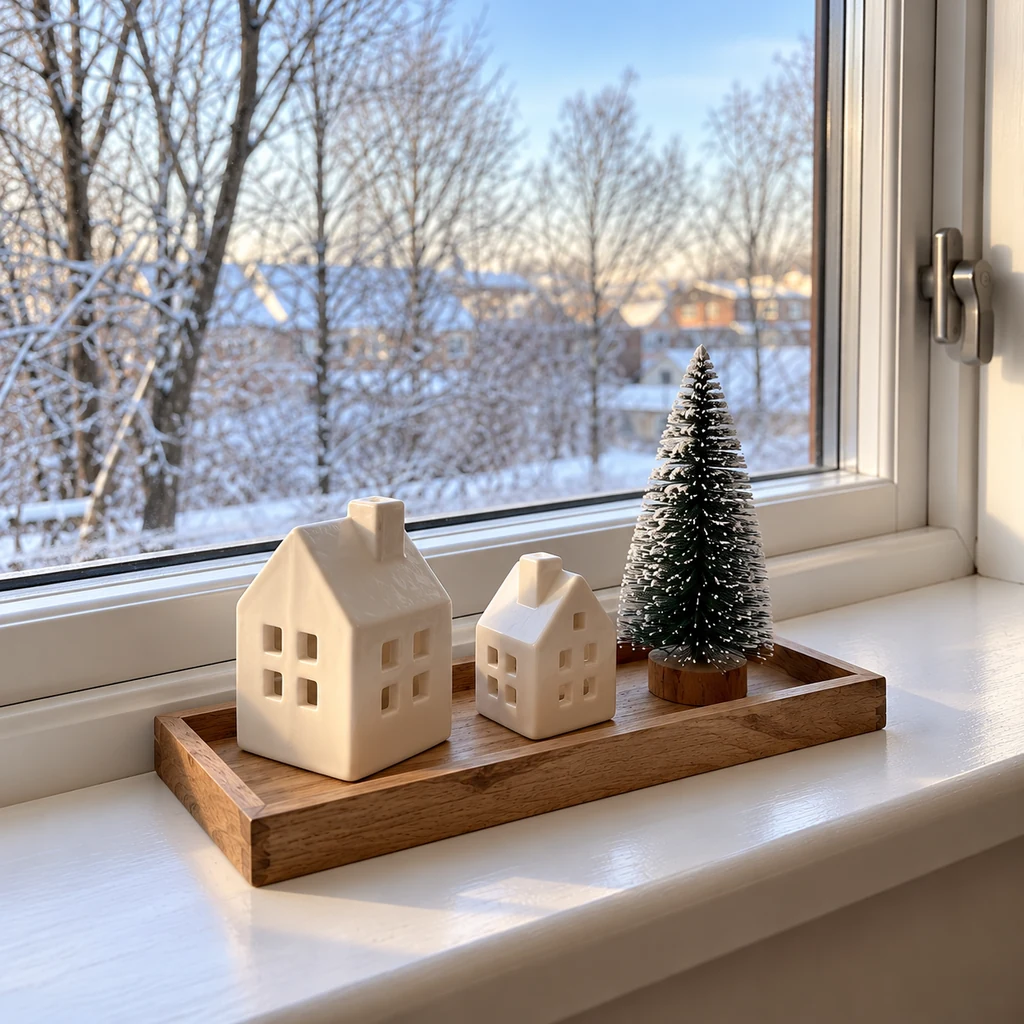
The pictures show a larger ivory house, a smaller ivory house, and one dark green tree. Those are an example of scale and placement, not required products or fixed dimensions. Check the actual bases against your tray before buying anything. Choose shatter-resistant pieces if children or pets can reach the ledge.
Set Up a Mini Christmas Village on a Narrow Windowsill
Step 1: Measure the Sill and Test the Window
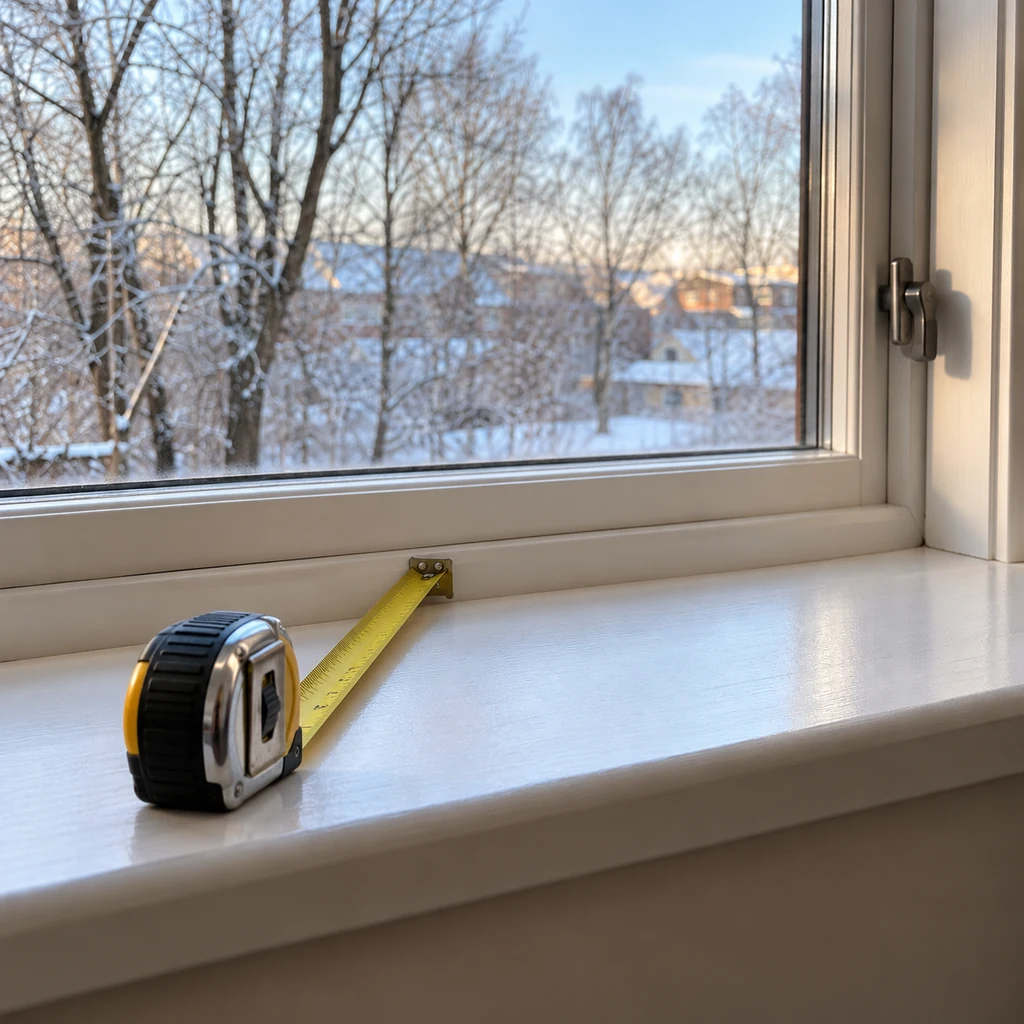
Measure the usable front-to-back depth and the width of the area where the tray could sit. Leave a little margin at the front so the tray is fully supported. Then open the window, move the blind, and pull the curtain through their normal paths while the sill is empty. Note any part of the ledge the sash or fabric must pass over. Do not assume that a tray will be safe just because it looks short in a photo.
Step 2: Set Down One Shallow Tray
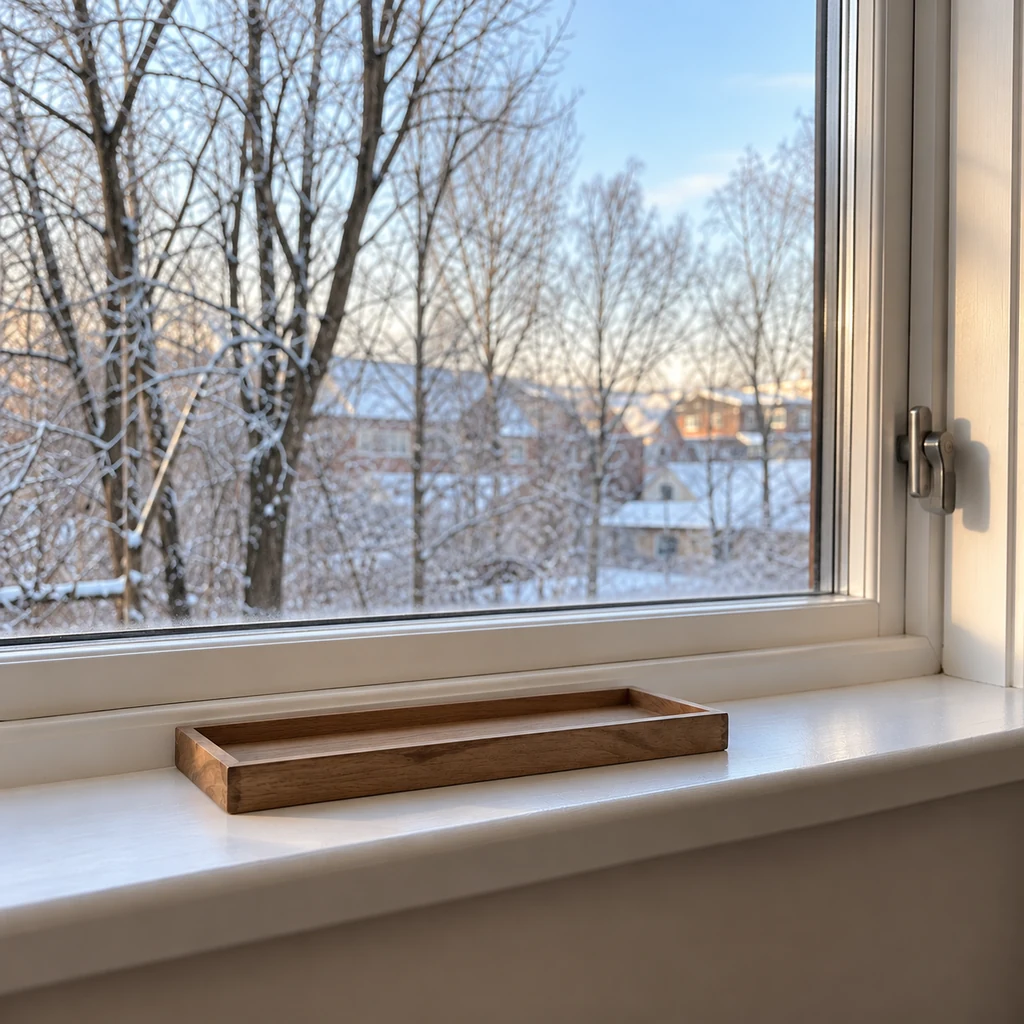
Place the empty tray on a clean, dry section of sill. Every corner of its base should touch the ledge, with no front edge projecting into the room. Keep the latch and any frequently used opening area clear. If the tray rocks, is wider than the usable ledge, or blocks a moving window part, use a smaller tray or choose another location.
Step 3: Place Two Low Houses
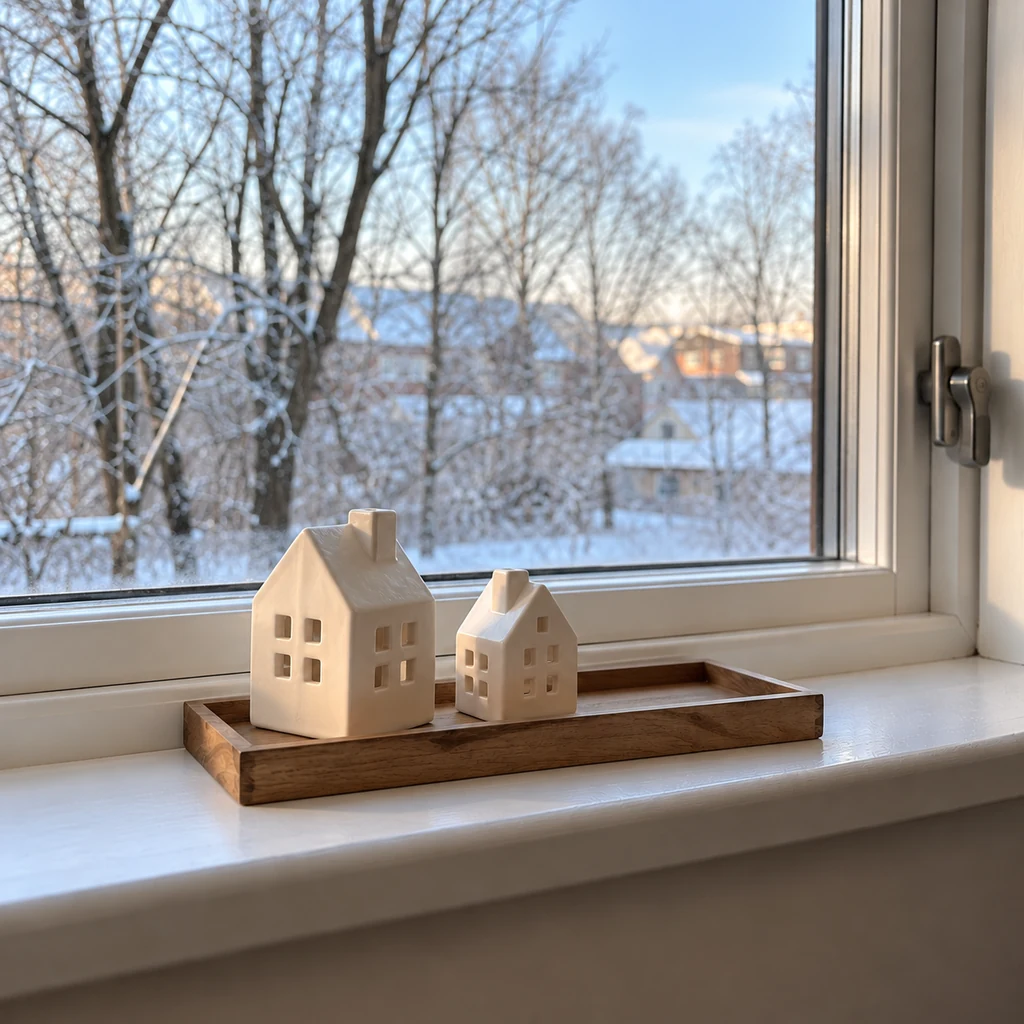
Put the larger house to one side and the smaller one beside it, both fully within the tray. Leave a clear patch for the tree. Two different heights make a recognizable little street without lining the whole pane with objects. Check that both bases sit flat and that neither house leans against the glass. Leave the houses unlit; do not put an open flame inside a decorative house on a windowsill.
Step 4: Add One Small Tree
Set one short bottlebrush or faux tree in the remaining space. Its base should rest flat inside the tray instead of balancing on the rim. Keep the tree lower than the part of the window you most want to see through. Stop here before adding more pieces: the contrast between two pale houses and one dark tree is already enough to read as a Christmas village.
Step 5: Check the View and Window Clearance
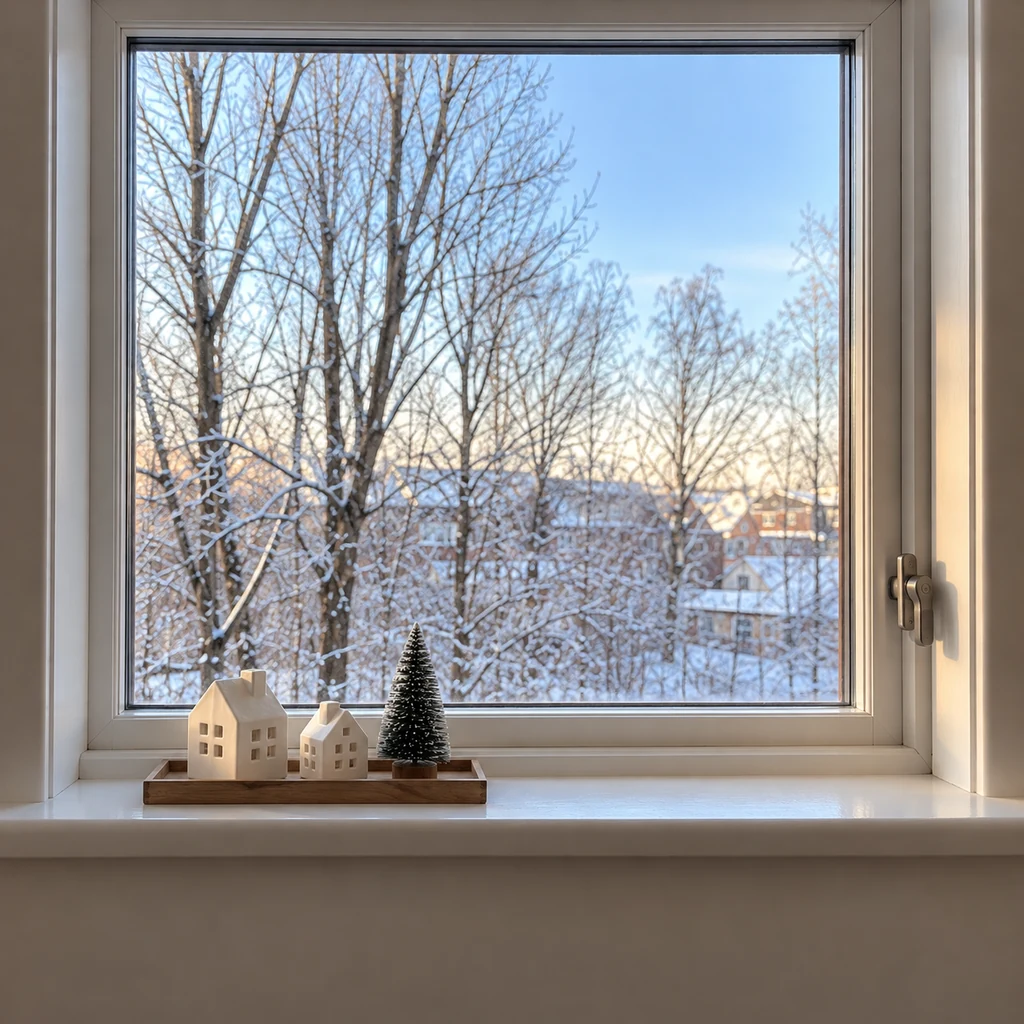
Step back and look from your usual seat. Most of the window should remain clear. Gently operate the latch, blind, and curtain again, and slowly test the sash if that window is meant to open. If any part touches the tray or ornaments, remove the display before using the window or move it to a different spot. Do not block an emergency exit window. The photo shows a closed window and a visual check; it cannot verify the movement path of your own window.
What If the Sill Is Too Shallow?
Skip the tray if you cannot support it fully. One or two small, stable objects may fit directly on the sill, but test them for tipping and remove them before opening the window if needed. Another option is to decorate the frame instead of the ledge; our guide to hanging Christmas garland on a window without nails addresses that separate approach.
How to Keep the Display Easy to Live With
- Lift the tray away as a unit when cleaning the glass or sill, then dry the surface before putting it back.
- Avoid real candles, loose cords, and heavy glass pieces on a ledge near curtains or children.
- Check for condensation; ceramic bases and wood trays should not sit in pooled water.
- If a house or tree becomes unstable when the window is used, take it down rather than wedging it into place.
Frequently Asked Questions
How do you decorate a very narrow windowsill for Christmas?
Start by measuring the usable depth. Use just a few low pieces with bases that fit entirely on the ledge. A tray works when it is fully supported; otherwise, place one or two stable objects directly on the sill or move the decor to the surrounding frame.
Will a miniature village block the light?
Keeping the houses and tree low and to one side leaves most of the glass clear. Check the result from the place where you usually sit; if it feels crowded, remove the tallest piece before adding anything else.
Can I open the window with the village in place?
Only if you have checked the actual sash path, latch, blinds, and curtains and they clear the display. Window designs vary. Remove the tray before opening if there is any contact or if the window serves as an emergency exit.
Want a second small-space Christmas focal point? A no-tape Christmas card display on a door keeps the window free for daylight.