
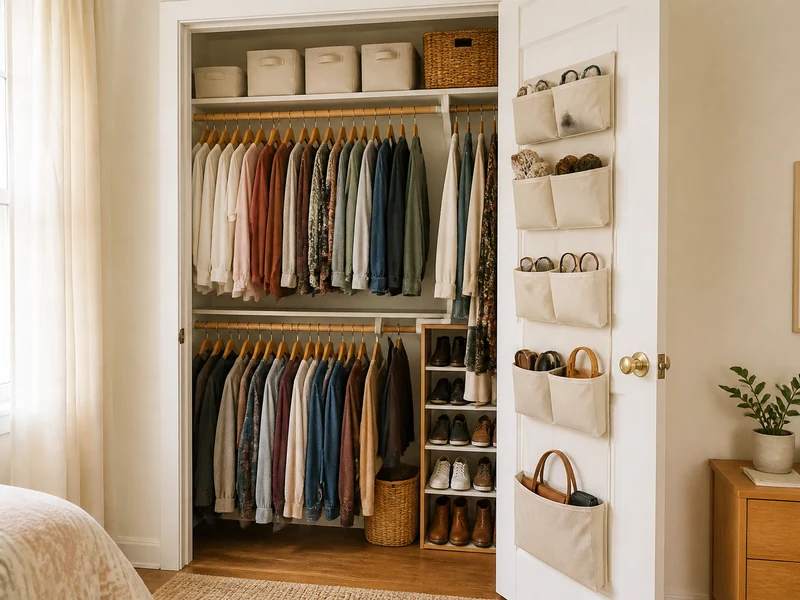
A small closet can work harder without an expensive custom system. The biggest gains usually come from editing what you store, using the full height, and assigning every category a realistic boundary. This budget closet organization plan uses simple measurements, secondhand containers, and a few low-cost upgrades that can move with you.
Set aside two to three hours and resist shopping before you measure. A narrow closet often has less usable depth than expected because doors, baseboards, and hanging clothes consume space. Photograph the empty closet and record its width, depth, shelf height, rod length, and door clearance. Those numbers will guide every decision.
What You Need for a Budget Closet Reset
- Tape measure, painter’s tape, marker, and cleaning cloth
- Sturdy slim hangers you already own or can buy gradually
- Repurposed baskets, shoe boxes, shelf dividers, or open bins
- Optional tension rod, hanging organizer, hooks, or shelf riser
Use renter-safe hardware when required and respect every product’s load rating. Never mount a heavy shelf with adhesive strips alone. If you install screws, locate studs or use wall anchors approved for the wall material and expected load.
How to Organize a Small Closet on a Budget
1. Empty the Closet and Edit Honestly
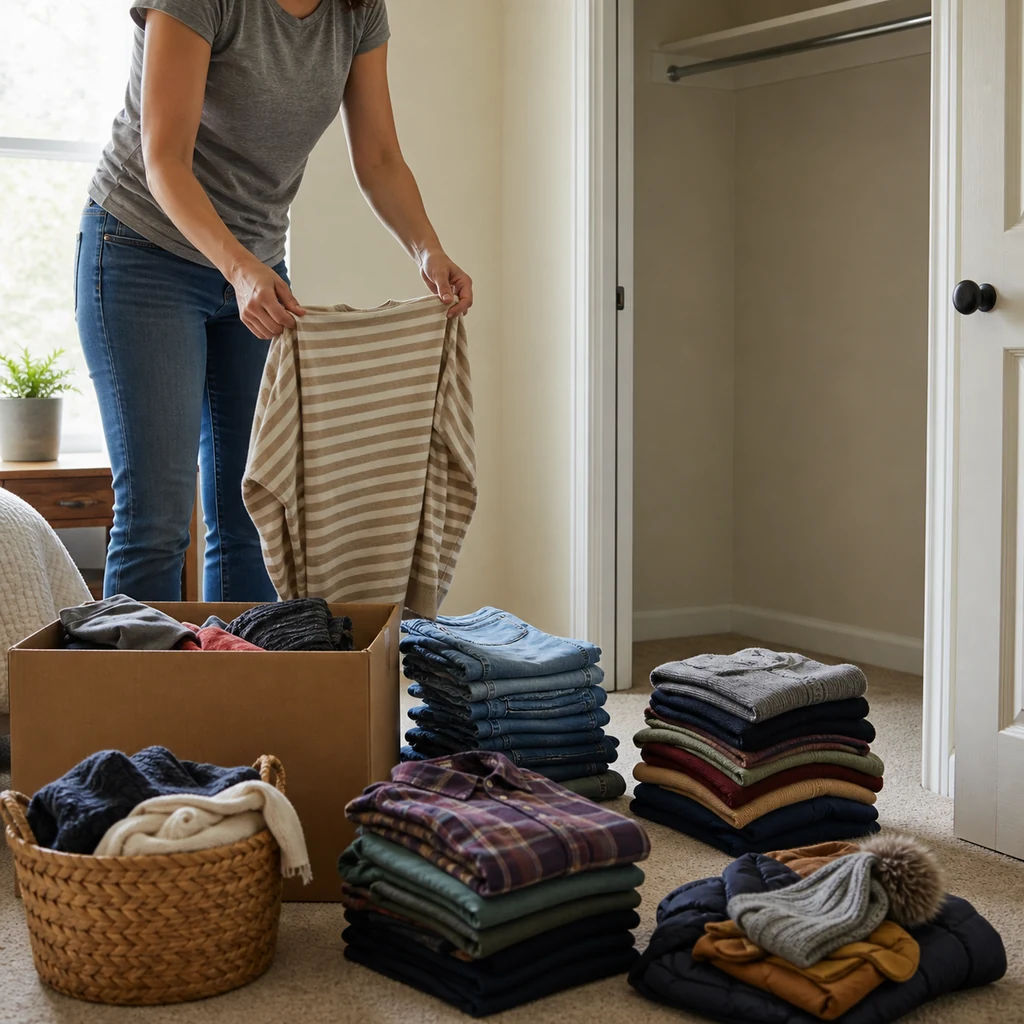
Remove everything, including items on the floor and top shelf. Sort clothing into keep, repair, donate, recycle, relocate, and seasonal categories. Try on uncertain pieces instead of returning them automatically. Keep what fits your current life, not a fantasy routine. Emptying the closet also reveals dust, moisture, loose hardware, and underused corners. Clean all surfaces and address any leak or mildew problem before storage returns.
2. Map the Closet into Everyday Zones
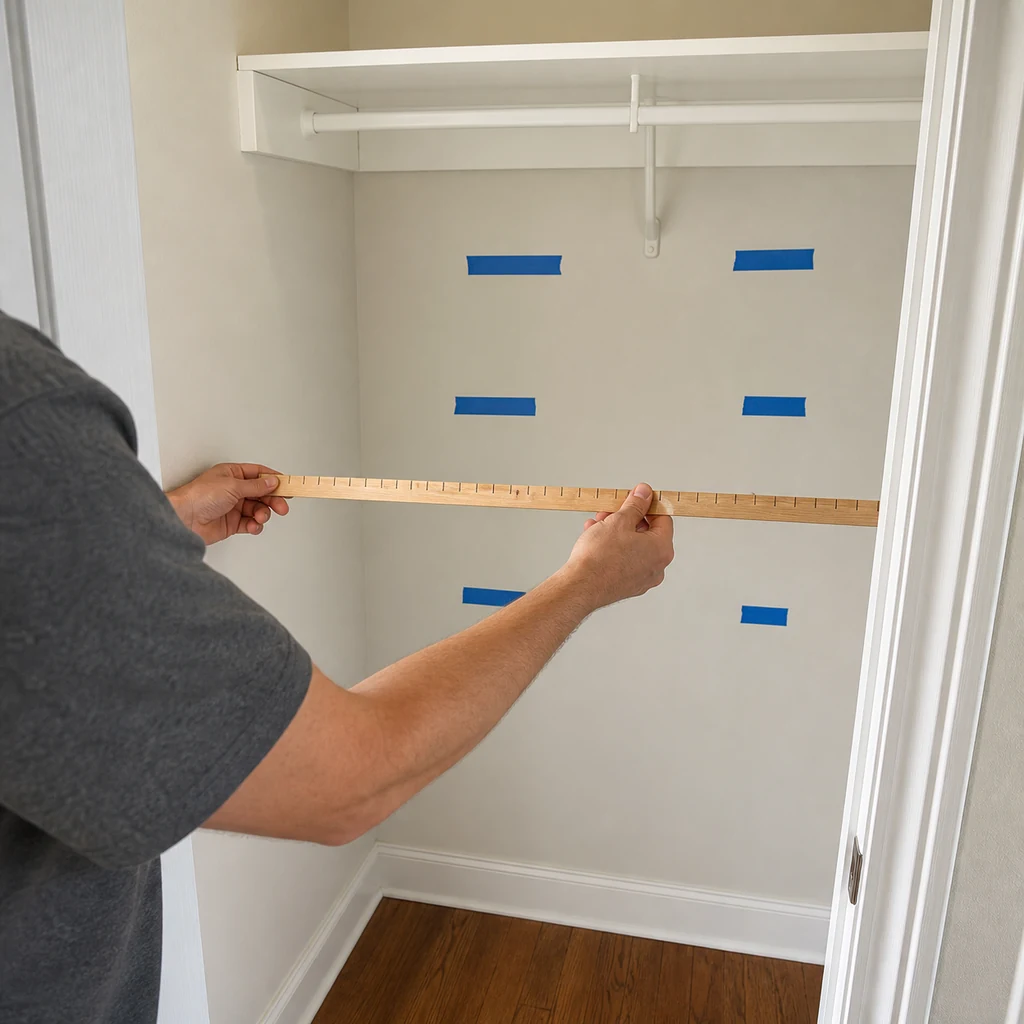
Assign the easiest-to-reach area to clothes worn weekly. Put workwear together, casual tops together, and longer garments where they can hang without folding over a lower shelf. Reserve the top shelf for light seasonal items and the floor for shoes or a laundry basket. Mark proposed zones with painter’s tape while the closet is empty. This quick map prevents you from squeezing a new organizer into the path of hanging clothes.
3. Double the Hanging Space Where It Makes Sense
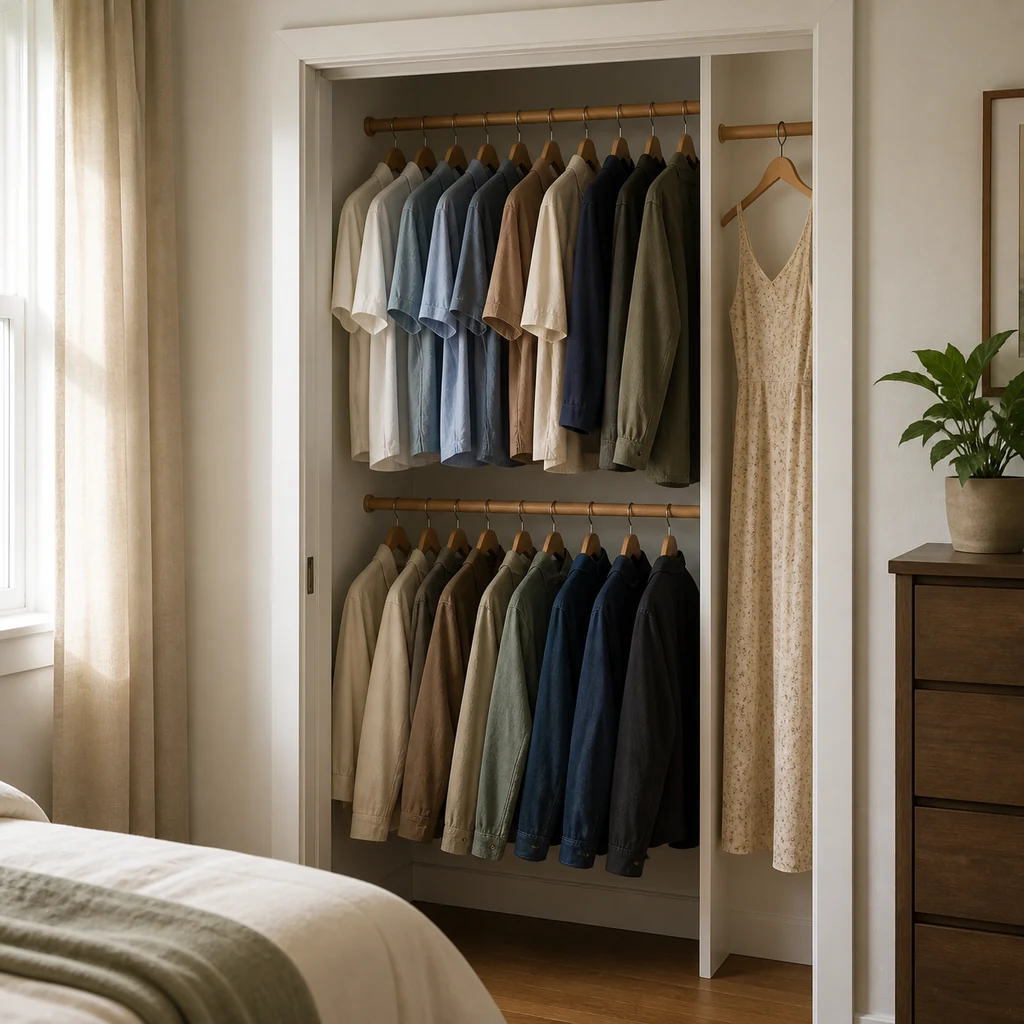
Shirts, folded trousers, and short jackets rarely need the full closet height. A second rod below the existing one can create two useful rows for short garments. Choose a properly mounted rod or a rated hanging extender, and leave one uninterrupted section for dresses and coats. Test the lower row with your longest shirt before committing. Overcrowding two rods makes clothing harder to see and can overload weak hardware.
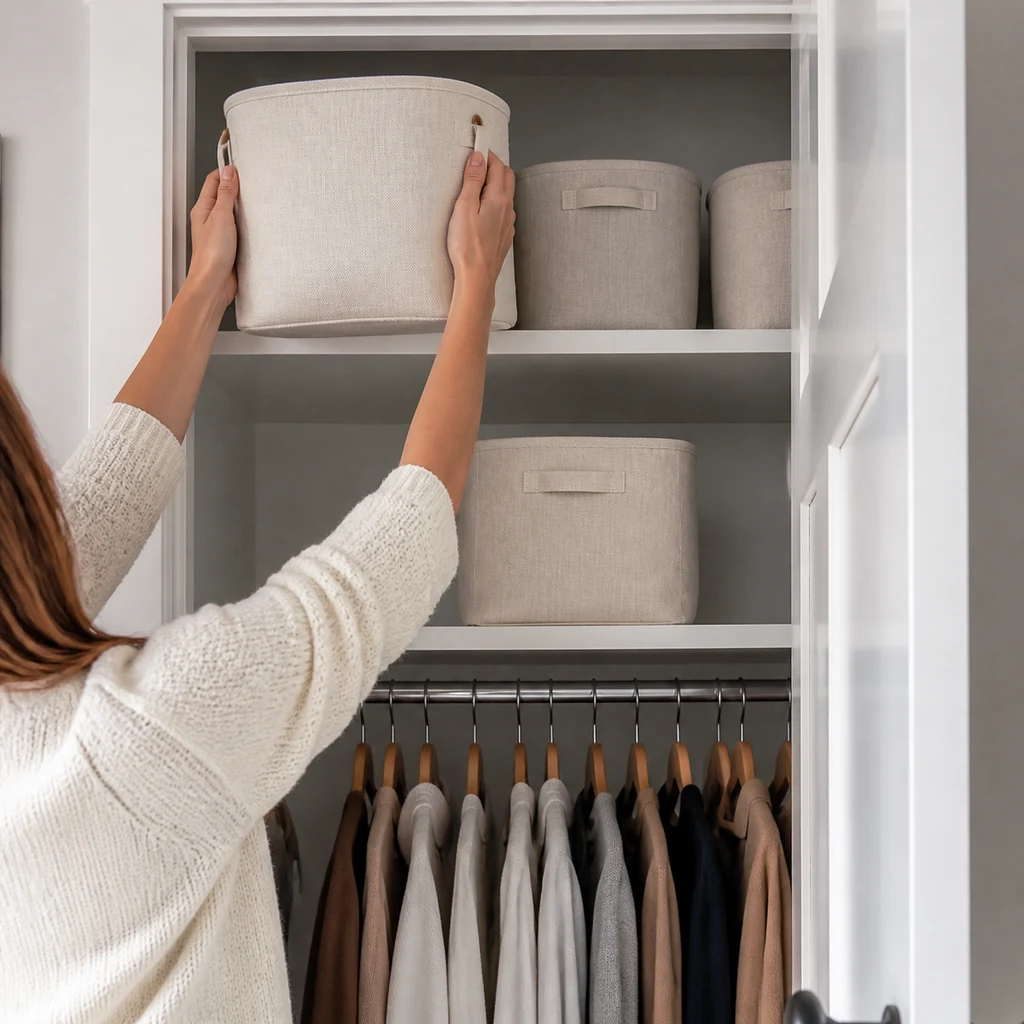
4. Use the Upper Shelf with Reachable Containers
The top shelf is useful only when containers can be lifted safely. Choose lightweight bins with handles and keep categories broad: off-season accessories, travel items, or sentimental textiles. Avoid heavy books and crowded stacks above your head. Place the lightest bin highest and leave enough gap to tilt it out without scraping the ceiling. A repurposed fabric basket can work as well as an expensive matching set.
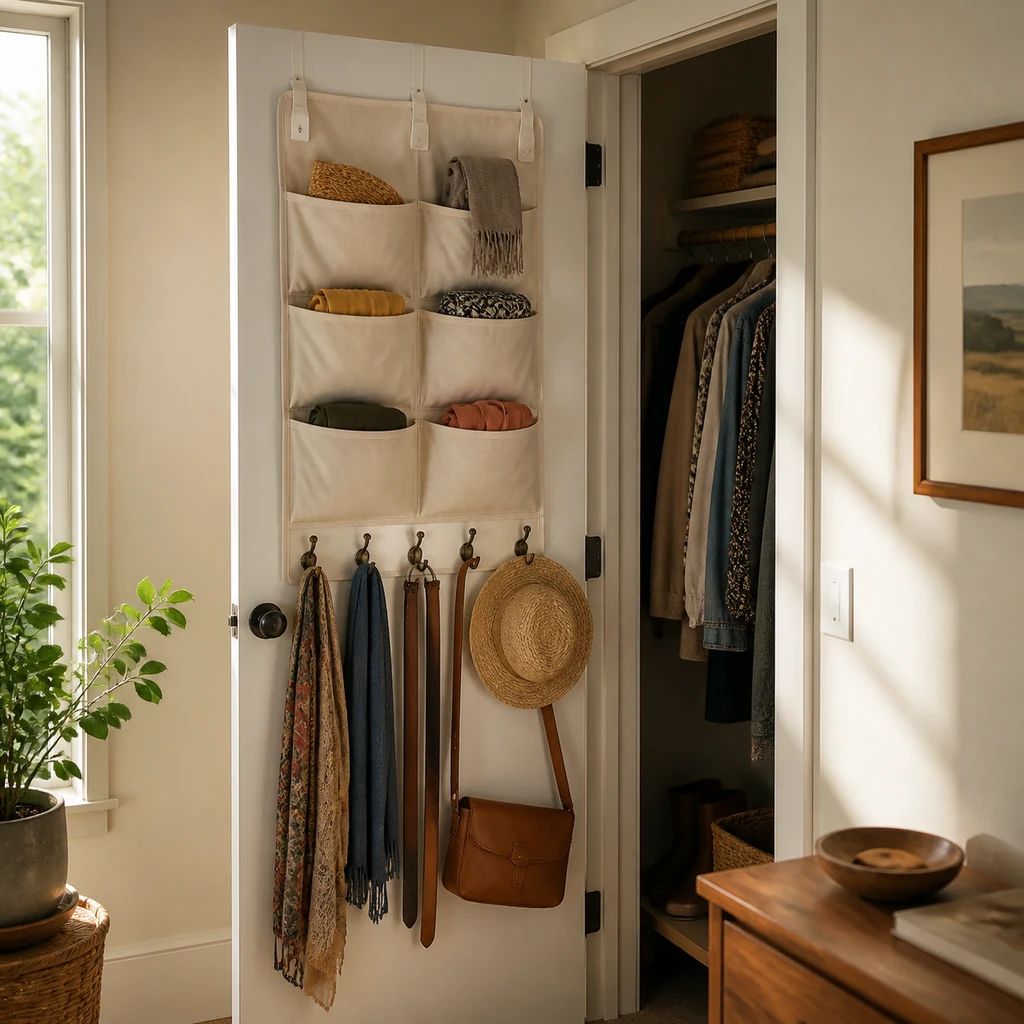
5. Turn the Door into Shallow Accessory Storage
An over-the-door organizer or a few renter-safe hooks can hold scarves, belts, hats, small bags, or tomorrow’s outfit. Keep storage shallow so the door closes and garments do not snag. Check that metal brackets do not damage the top of the door frame. Heavy handbags should remain on a shelf or sturdy hook anchored correctly; the door is better for lightweight items you reach often.
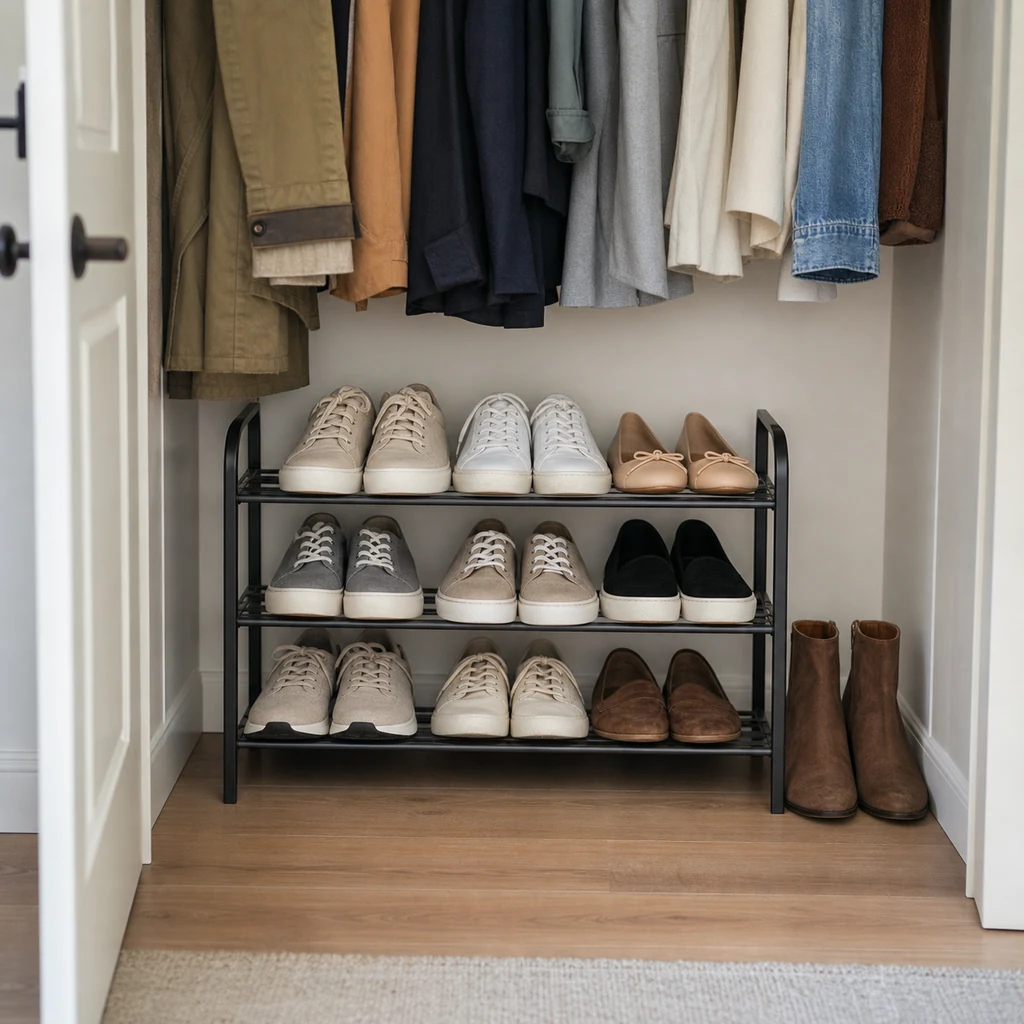
6. Store Shoes Vertically Without Hiding Them
Low stackable shelves, cubbies, or a narrow tiered rack can use vertical floor space while keeping pairs visible. Measure the largest shoes before choosing a system. Place daily pairs near the front and special-occasion shoes higher or farther back. Avoid deep opaque boxes unless you add a photo or can see through them. Leave a small clear strip of floor so cleaning the closet does not require dismantling the entire setup.
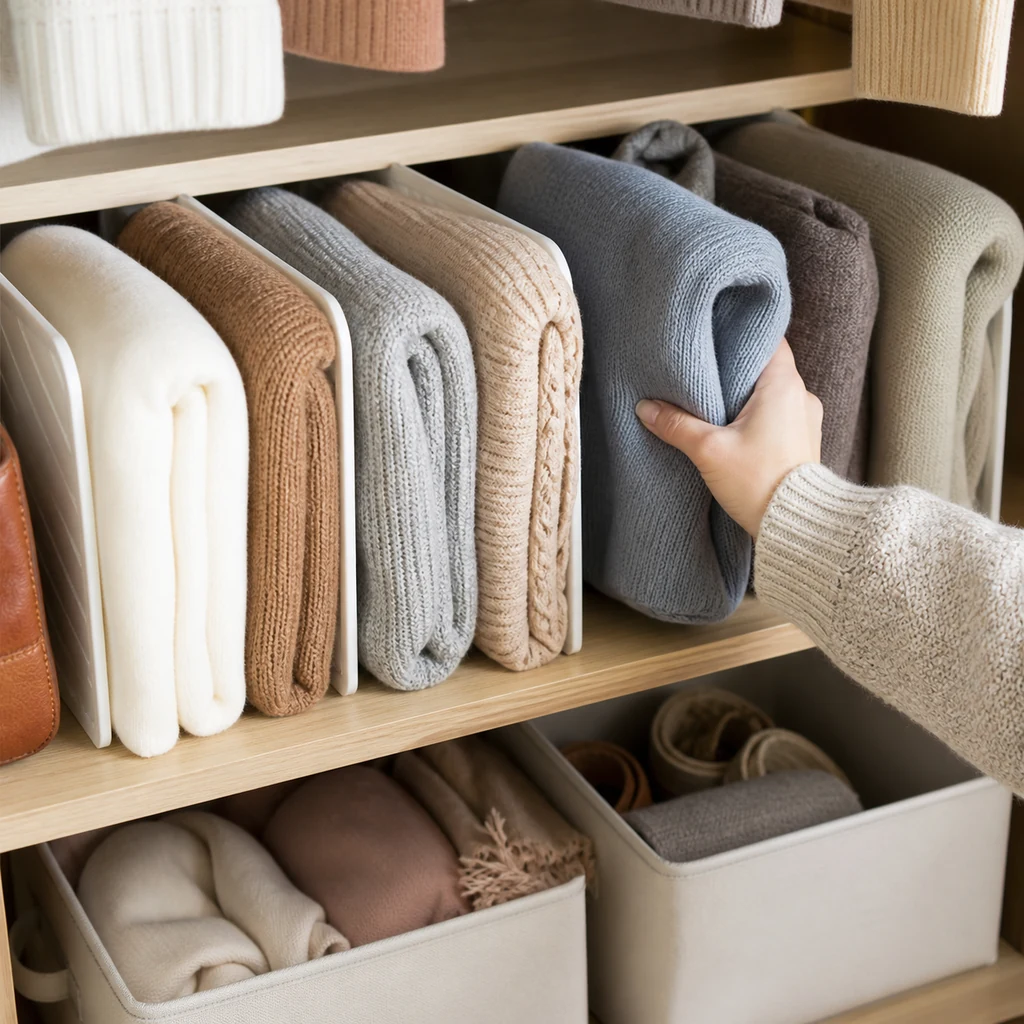
7. Contain Small Items in Flexible Drawer Alternatives
Open bins, a hanging fabric organizer, or shallow baskets can replace a costly built-in drawer unit. Fold sweaters rather than hanging them, which can stretch shoulders. Use shelf dividers to stop stacks from leaning. Corral socks, workout accessories, or clutches in separate containers, but keep labels broad enough to survive changing wardrobes. If a bin becomes difficult to close, treat that boundary as a signal to edit—not to buy another bin.
8. Standardize Hangers and Add a Weekly Reset
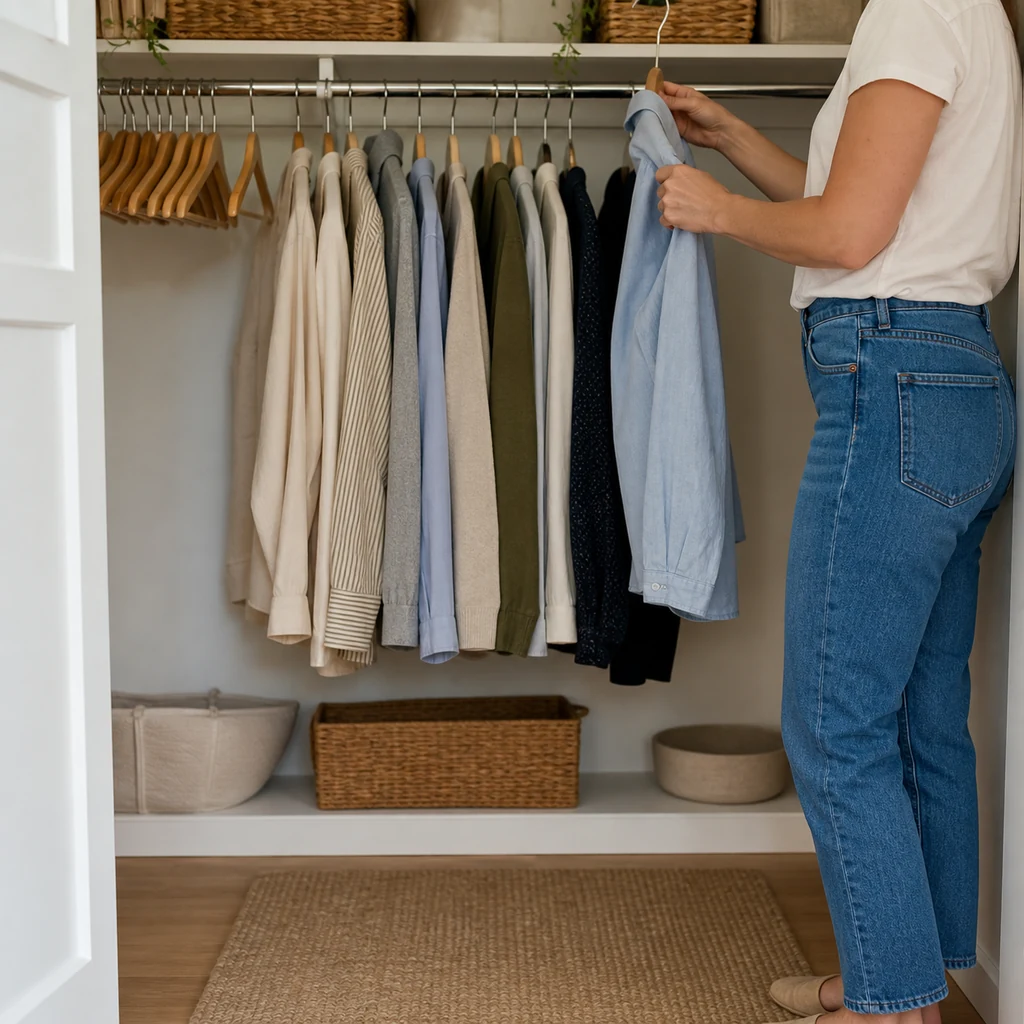
Use one hanger profile within each section so clothes sit at the same depth. You do not need to replace everything at once; remove broken hangers and gradually add slim, sturdy versions as needed. Face hooks in one direction and leave a little breathing room. Once a week, return stray clothes, place empty hangers together, and clear the floor. A five-minute reset protects the system far better than a yearly overhaul.
Budget Substitutions and Rental-Friendly Variations
Test categories with clean shoe boxes before buying bins. Use cardboard dividers wrapped in leftover paper, a tension rod for lightweight scarves, and removable hooks where the manufacturer approves the surface. A small bookcase can become a freestanding closet shelf if it is stable and properly anchored when necessary. Shop your home first, then secondhand stores, and buy only the pieces that solve a measured problem.
What Not to Store in a Small Closet
Relocate unrelated paperwork, bulky empty luggage, damp laundry, and household supplies that compete with everyday clothing. Do not block vents, electrical panels, or access points. Heavy objects should not sit overhead, and tightly sealed plastic can trap moisture around textiles that are not completely dry.
FAQ
How much does a budget closet makeover cost?
A useful reset can cost almost nothing if you edit first and repurpose containers. Add rods, hooks, or bins gradually after measurements reveal a real need.
Should I organize clothes by color or category?
Category is usually faster for daily dressing. Within each category, color order can improve scanning if it feels natural to maintain.
How do I keep a small closet from becoming crowded again?
Keep each category within its assigned boundary, complete a weekly reset, and edit one item when a new purchase has no comfortable place.