
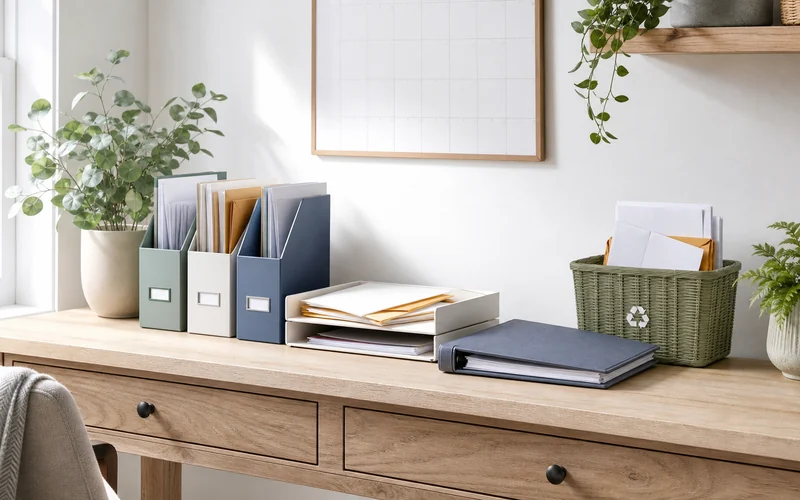
Paper clutter usually starts with a few harmless items: mail on the counter, a receipt in a bag, a school form near the door, and a document saved “for later.” The problem is rarely a lack of storage. It is a lack of clear next steps.
This paper clutter organization system gives every incoming paper one decision and one temporary home. It works in a small entryway, kitchen corner, or home office and does not require a large filing cabinet.
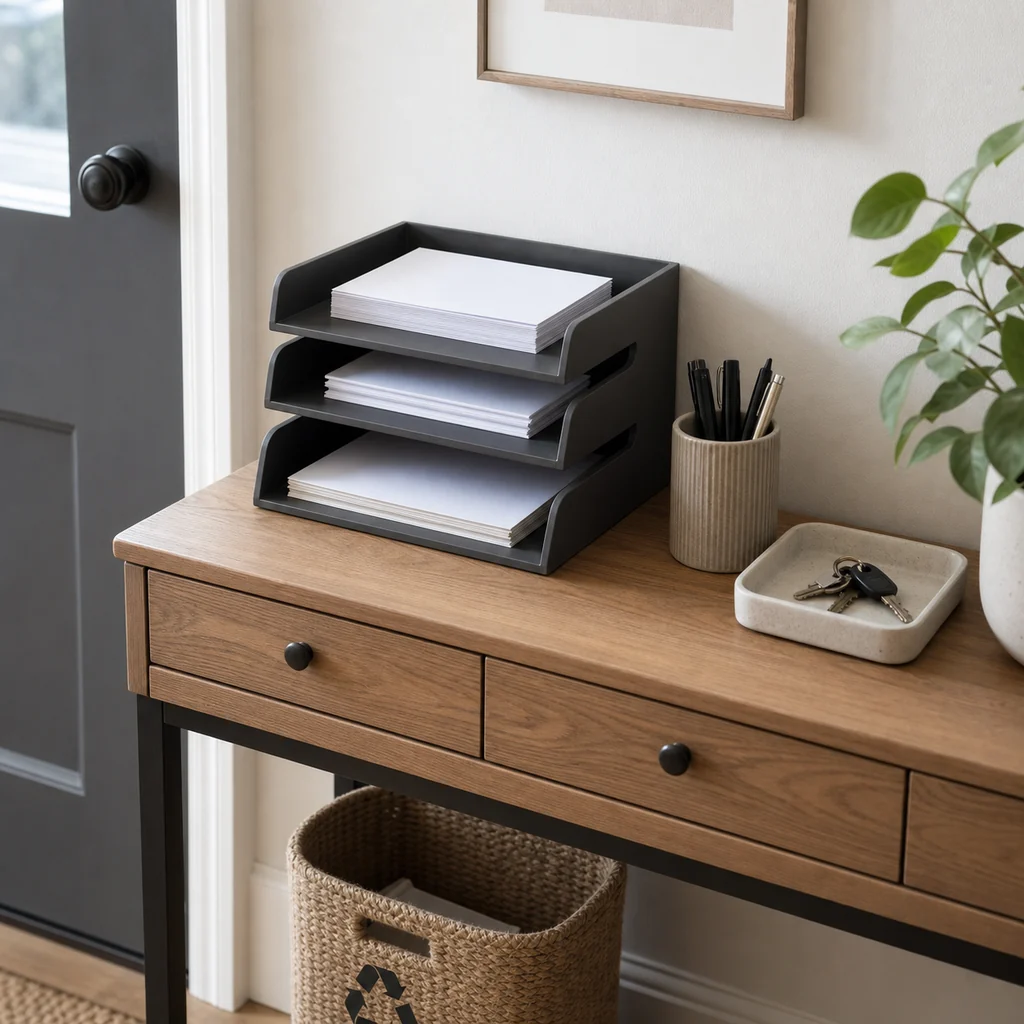
Choose One Paper Landing Spot
Pick one place where mail, receipts, forms, and notices enter the system. A shallow tray on an entry console or desk works well. Avoid collecting papers in several rooms because each pile becomes a separate decision.
What Belongs in the Inbox
- New mail that needs review.
- Forms that need a signature or reply.
- Receipts waiting to be filed or checked.
- Appointments and notices that need calendar action.
- Documents that arrived today but have not been processed.
The inbox is temporary. It should not become long-term storage.
Use a Three-Decision Paper Flow
When you process the inbox, give every paper one of three outcomes: act, file, or discard. This simple rule prevents “maybe later” piles.
Act
Use an action tray for bills to pay, forms to return, calls to make, and documents that need a decision. Add the deadline to your calendar immediately.
File
Keep papers that serve a clear record purpose, such as current insurance documents, warranties, tax records, or household agreements. File them after the action is complete.
Discard
Recycle ordinary paper that has no personal information. Shred documents that show account numbers, signatures, medical details, or other private data.
Build a Small Household Filing System
A useful filing system is broad enough to remember. Too many tiny categories slow the process and encourage new piles.
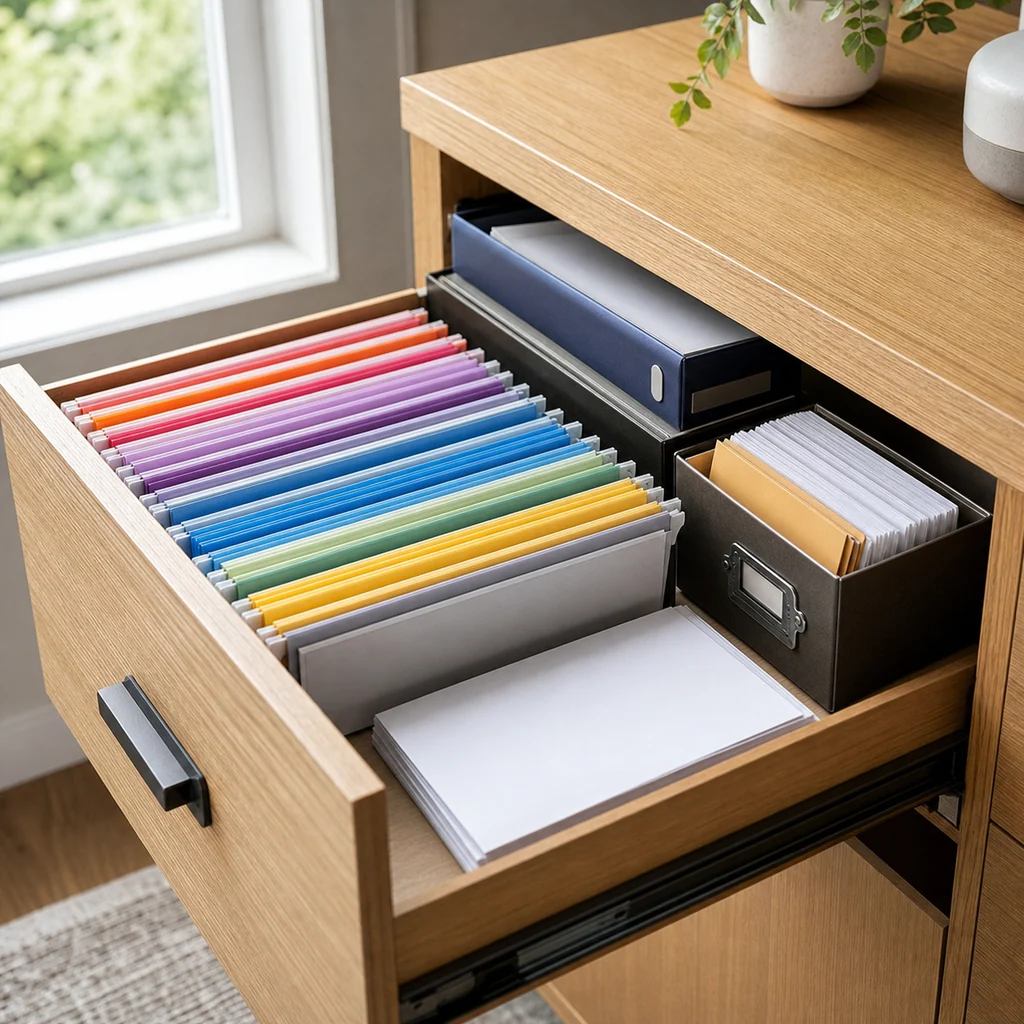
Simple Folder Categories
- Home: Lease, mortgage, repairs, warranties, and utilities.
- Auto: Registration, insurance, service, and repair records.
- Health: Important records and benefit documents.
- Finance: Tax papers, statements that must be retained, and major receipts.
- School: Current forms, schedules, and records.
- Archive: Older documents that still need retention.
Keep labels plain and predictable. A family member should be able to find a document without learning a complicated code.
Separate Active Papers From Records
Active papers need visibility; records need protection. Do not mix unpaid bills or unsigned forms into permanent files. Keep the action tray near the calendar and filing supplies, then move completed papers into the cabinet or document box.
If your entry area also holds bags and daily items, the zones in Small Entryway Drop Zone Ideas pair naturally with a compact paper inbox.
Handle Receipts Without Saving Everything
Keep receipts only when they have a purpose: a return window, warranty, reimbursement, tax record, or major purchase. Write a brief reminder on the envelope or scan it into your chosen record system if a digital copy is acceptable for your needs.
Receipt Categories That Work
- Returns and exchanges.
- Warranty purchases.
- Reimbursements.
- Tax-related expenses.
- Major household purchases.
Protect Sensitive Documents
Birth certificates, identity documents, legal papers, and irreplaceable records should not sit in an open tray. Store them in a secure, appropriate location and keep only copies in everyday files when needed. Follow official retention rules for tax, legal, and financial records rather than guessing.
Schedule a 15-Minute Weekly Paper Reset
A short weekly appointment keeps the system moving. Pick the same day each week and process the inbox before it overflows.
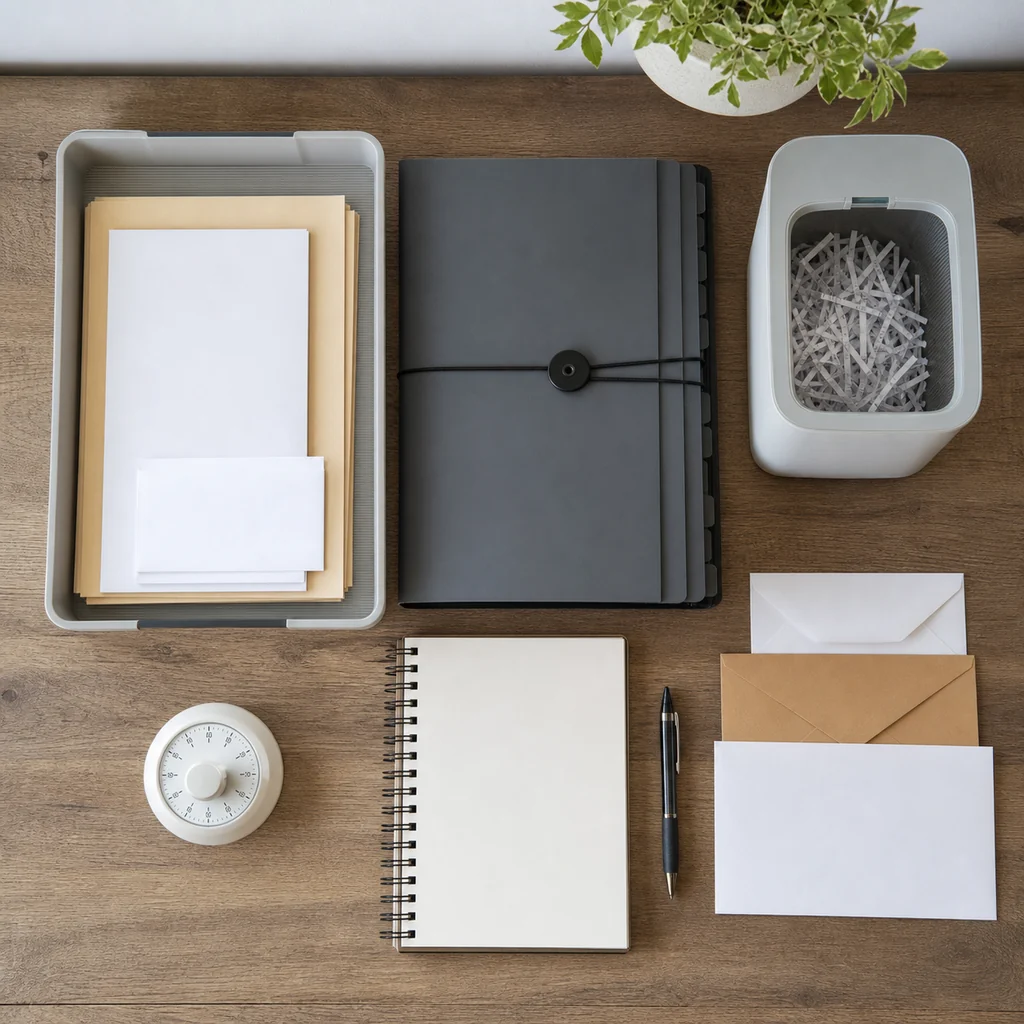
Weekly Reset Steps
- Open and sort new mail.
- Recycle obvious junk paper.
- Shred sensitive discard items.
- Add deadlines and appointments to the calendar.
- Complete quick forms or place them in the action tray.
- File finished records.
- Return the inbox to empty.
For the rest of the home, use the same small-step approach from 7 Easy Tips to Declutter Your Home.
Paper Organization Mistakes to Avoid
- Multiple inboxes: One landing spot is easier to maintain.
- Filing before acting: Active papers disappear inside record folders.
- Saving without a reason: Every retained paper should serve a purpose.
- Too many categories: Broad labels make filing faster.
- Ignoring privacy: Sensitive papers need secure disposal and storage.
Quick Paper Clutter Checklist
- Choose one paper inbox.
- Add an action tray and recycling or shred option nearby.
- Use broad household file categories.
- Put deadlines on the calendar immediately.
- Keep active papers separate from records.
- Process the inbox once a week.
- Review archives once or twice a year.
FAQ
How do I start when paper clutter is overwhelming?
Begin with one small pile. Remove obvious recycling, separate sensitive papers for shredding, place action items in one tray, and file only documents with a clear purpose.
What papers should I keep?
Keep documents needed for legal, tax, financial, warranty, health, school, or household records. Retention periods vary, so check the relevant official guidance for important documents.
Where should a paper inbox go?
Place it near the point where mail and papers enter the home, but away from cooking spills and children’s craft supplies.
How often should household files be reviewed?
Process incoming papers weekly and review stored files once or twice a year to remove expired or duplicate records safely.