
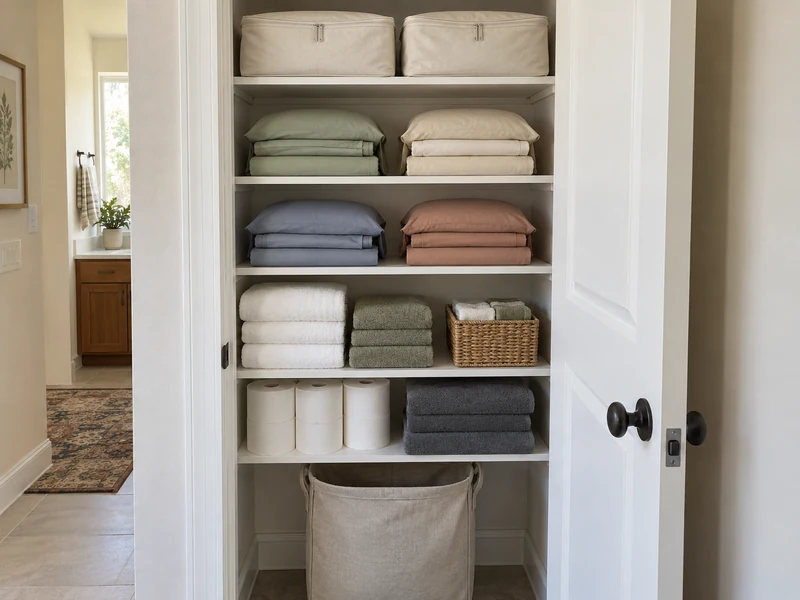
A small linen closet works better when every shelf has one job. This plan divides a narrow closet into four practical zones: occasional bedding at the top, sheet sets at eye level, everyday towels near your hands, and light backstock or a hamper at the bottom.
You do not need matching containers or a custom closet system. Start with the closet’s real dimensions, reduce the inventory to what fits comfortably, and reuse baskets you already own. The goal is not a staged display; it is a setup that lets you remove one towel or sheet set without rebuilding the entire shelf.
The Four-Zone Plan at a Glance
| Zone | Best location | What belongs there | Why it works |
|---|---|---|---|
| 1. Occasional | Top shelf | Guest bedding, spare duvet cover, seasonal blanket | Light, rarely used pieces can sit above eye level |
| 2. Sheet sets | Eye level | Complete sheet bundles grouped by bed | You can identify and remove one full set |
| 3. Daily towels | Waist to shoulder height | Bath towels, hand towels, washcloths | The most-used items get the easiest reach |
| 4. Light backstock | Lowest shelf or floor | Toilet paper, tissue boxes, empty hamper | Bulky but light items stay contained and visible |
If your closet has fewer shelves, combine the occasional and sheet zones in separate baskets. If it has more shelves, split towels by bathroom rather than inventing a miscellaneous zone.
Before You Organize: Check for Moisture
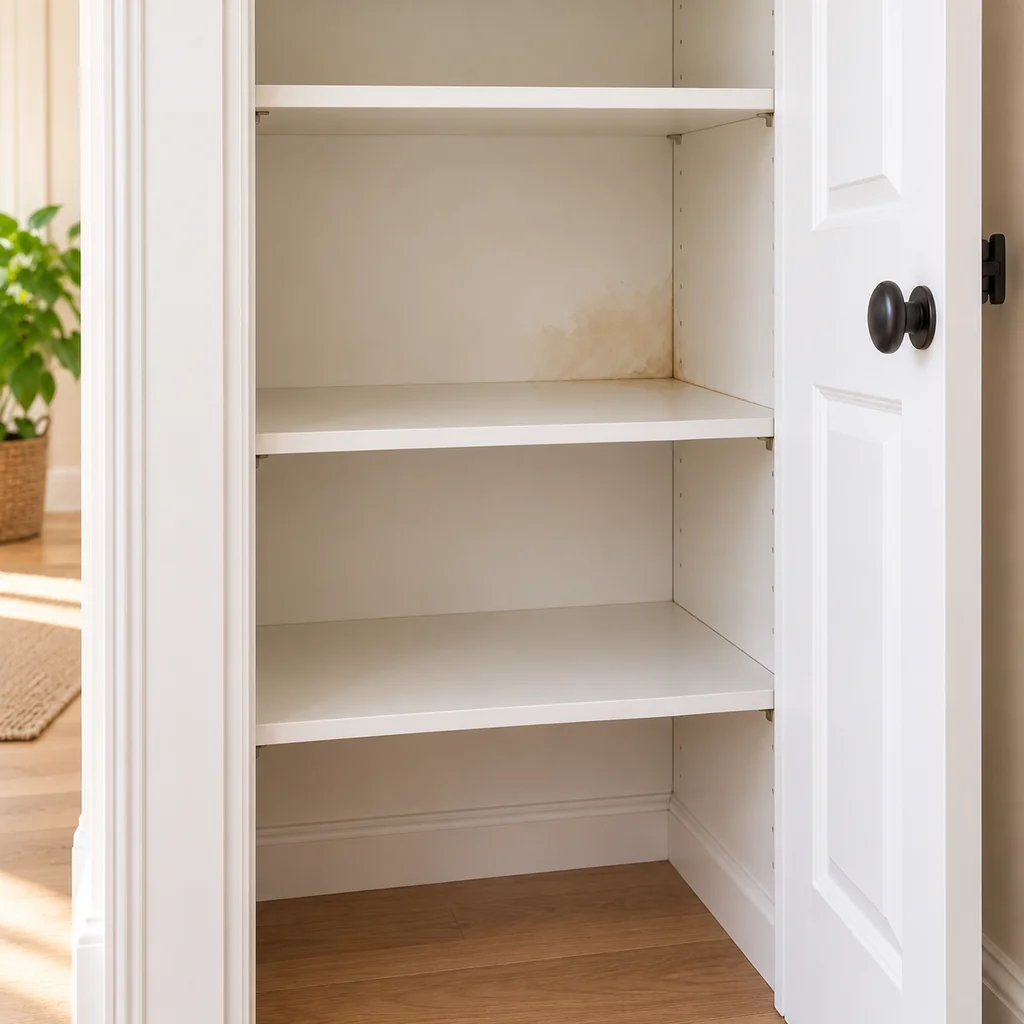
Take musty odors, water marks, damp shelves, or condensation seriously. Remove the linens, find and repair the moisture source, and let the closet dry before restocking. Wet or damp materials should be dried promptly—generally within 24 to 48 hours—to reduce the chance of mold growth. Do not put a towel away until it is fully dry.
Ordinary household linens should be stored clean and dry with some air movement. Avoid packing fabric tightly against a cold or damp wall, and do not seal even slightly damp textiles in an airtight plastic container. Valuable antique textiles need conservation-specific storage rather than this everyday system.
What You Need
- Tape measure and pencil
- Paper or a phone note for dimensions
- Two to four existing baskets or bins, only if the shelves need them
- One small basket for washcloths or loose items
- Clean cloth and vacuum
- Optional removable shelf liner
- Optional clip-on tags or simple labels
Do not buy containers first. Awkward door trim, hinges, shelf supports, and a narrow opening can make a bin unusable even when its listed width matches the shelf.
How to Organize a Small Linen Closet
The newly added step photos are photorealistic AI-generated visual aids. Use your own shelf measurements and linen sizes to adapt the layout.
Step 1 — Empty the Closet and Group Like Items
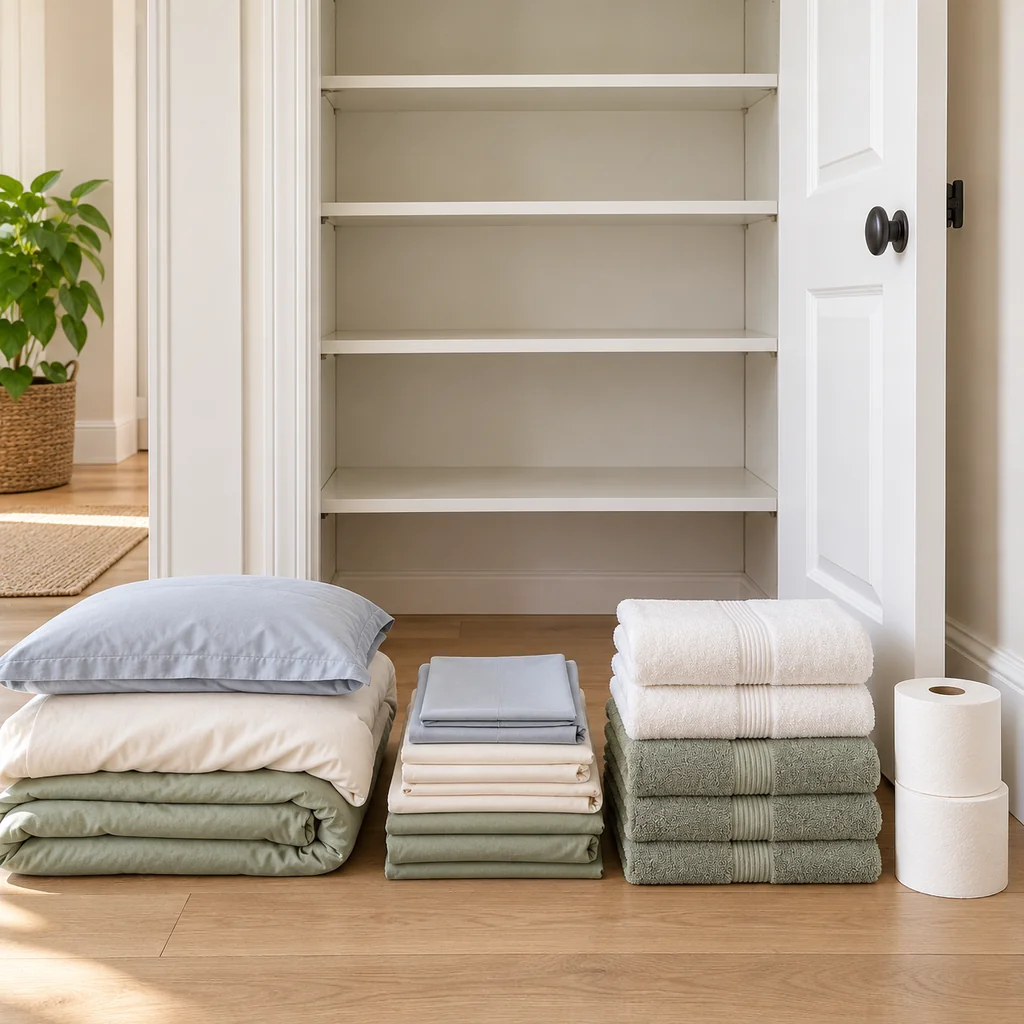
Remove everything and make four piles: bedding, sheets, towels, and light backstock. Move medicine, food, tools, leaking toiletries, and household chemicals to storage designed for those items. An easy inventory is easier to maintain than a closet that serves every room.
Set aside stained, torn, or incomplete linens. Recycle or repurpose them where local programs allow, and wash anything you plan to keep before it returns to the closet.
Step 2 — Measure the Usable Space
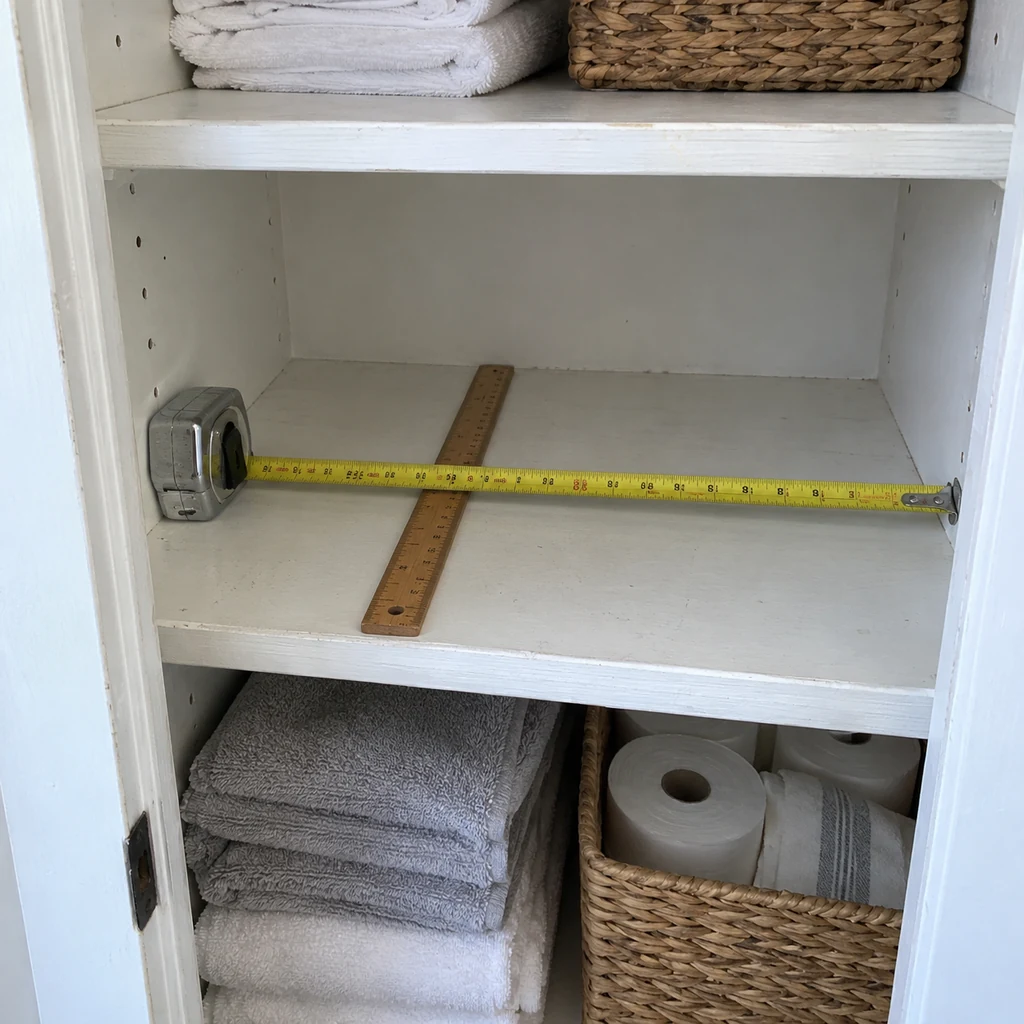
Measure the clear inside width, shelf depth, and vertical gap above every shelf. Then measure the narrowest point of the door opening. Record any hinge, trim, pipe, or shelf bracket that reduces usable space.
Choose a bin about one to two inches shallower than the shelf so it does not scrape the door. Its widest point—including handles or a flared rim—must pass through the opening. If a basket would waste more space than it saves, skip it and use a neat stack.
Step 3 — Set a Realistic Inventory Limit
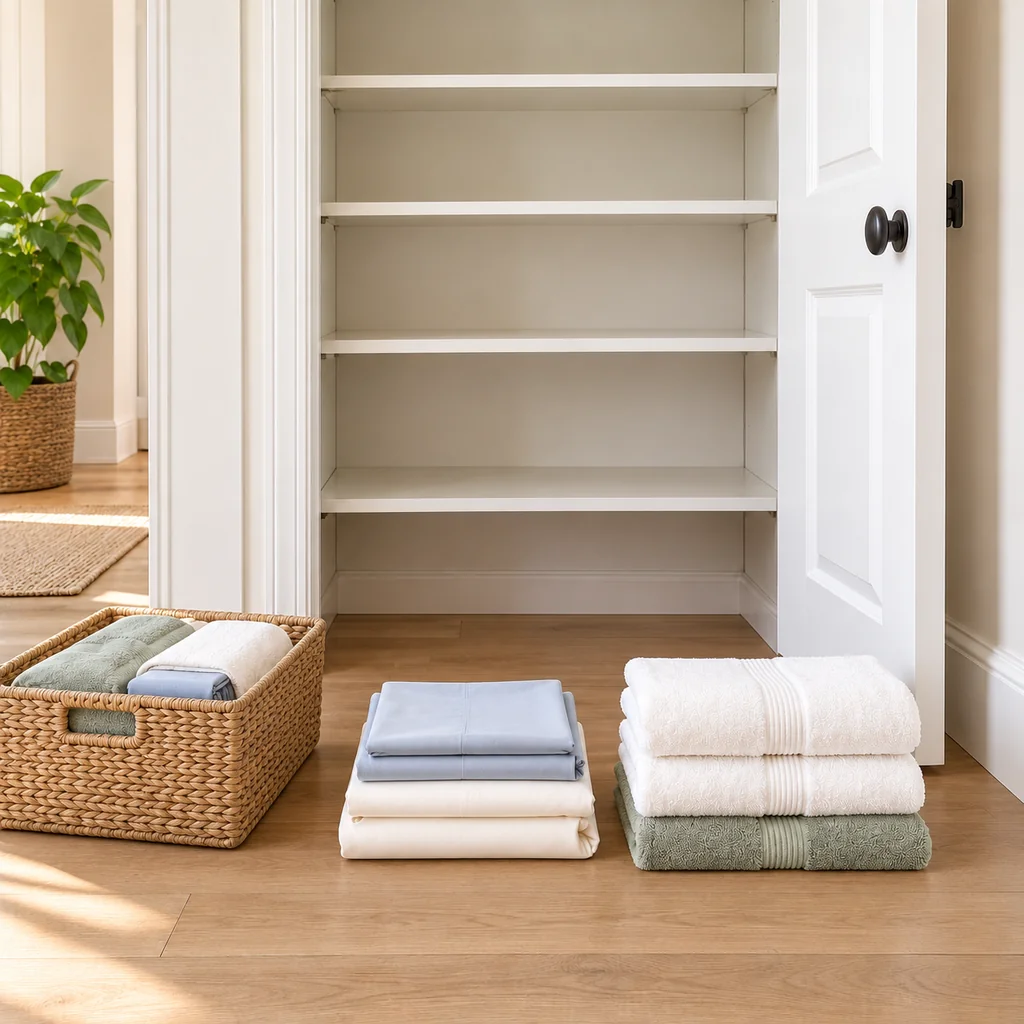
Start with two sheet sets per regularly used bed and two or three bath towels per person, then adjust for your laundry schedule, climate, guests, and household needs. This is a starting point, not a rule. The physical limit is more important: each category should fit in its zone with enough room to remove one item.
Keep the best-fitting pieces and relocate true extras. For more ways to stretch a tight space without buying a full system, see these small closet ideas on a budget.
Step 4 — Build the Top Occasional Zone
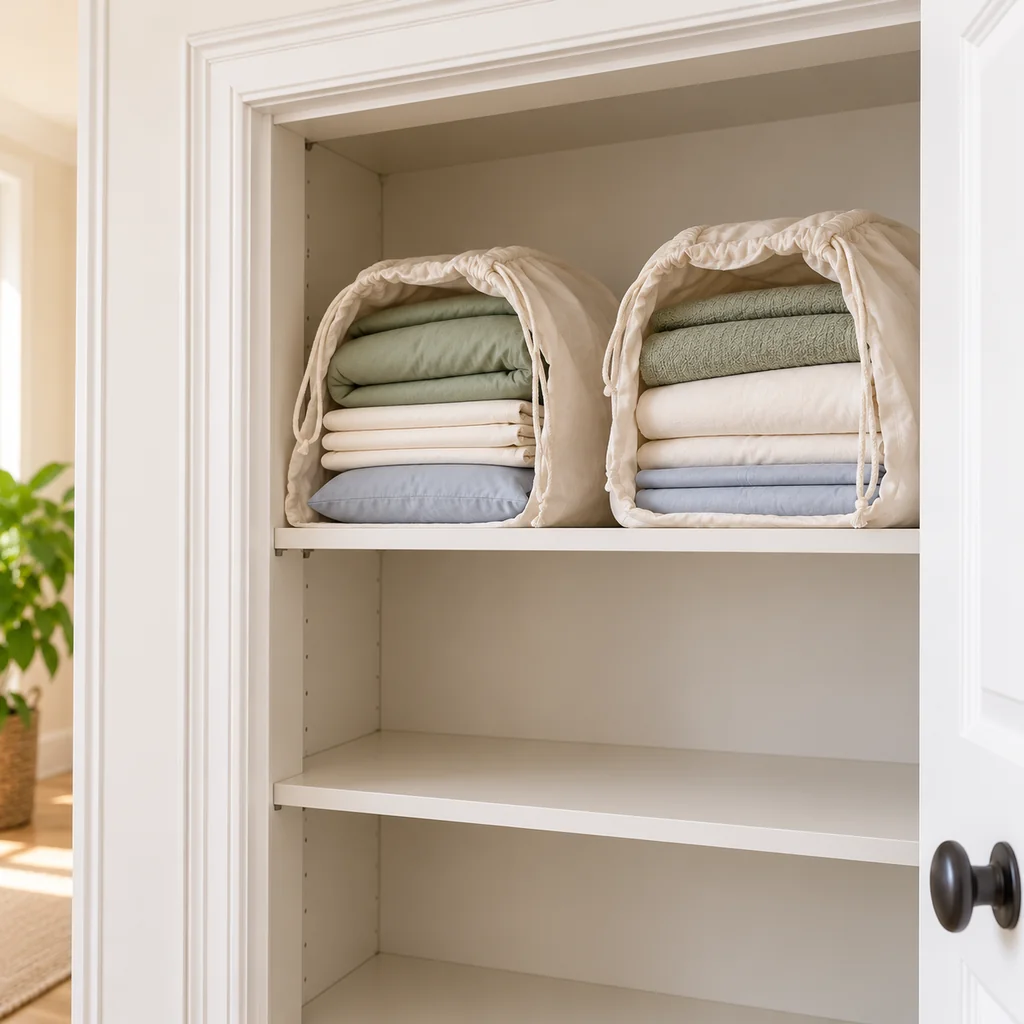
Place lightweight guest bedding and seasonal textiles on the top shelf. Fold each set together and use a breathable cotton bag or loosely closed fabric bin if dust is a concern. Do not place heavy baskets above shoulder height; they are harder to control when lifted down.
Limit this zone to pieces you can name a use for. A guest set can sit beside the supplies in this welcoming guest-room checklist, but worn pillows and mystery-size sheets should not occupy the easiest storage in the house.
Step 5 — Bundle Every Sheet Set
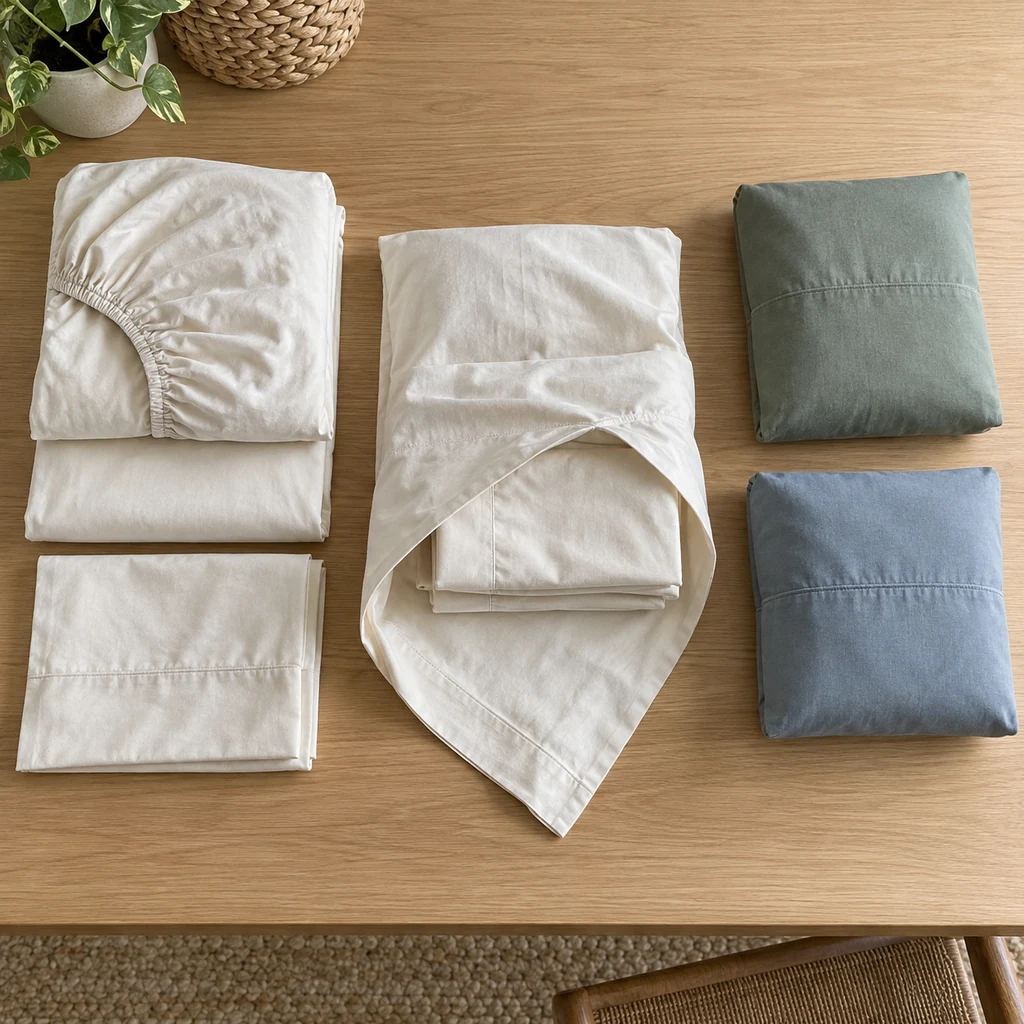
Fold the fitted sheet into a rectangle, fold the flat sheet to roughly the same footprint, and stack the matching pillowcases on top. Slide the stack into one pillowcase, leaving its finished edge visible. Store the bundles vertically when they support themselves; otherwise, make short horizontal stacks.
Group bundles by bed size or room. A clip-on tag can help, but color and shelf position may be enough. Keep the front edge clear so pulling one bundle does not drag the rest forward.
Step 6 — Fold Towels to the Shelf Depth
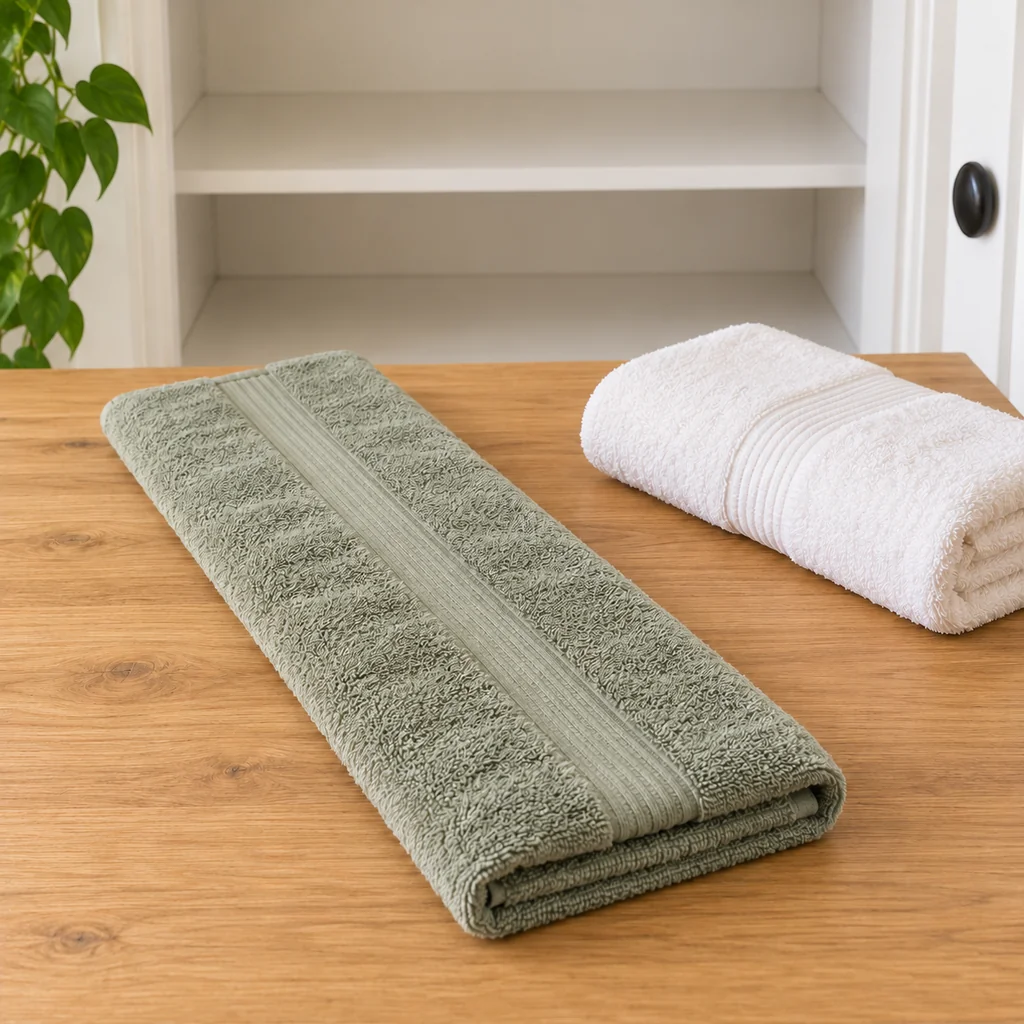
Instead of copying a decorative fold, let the shelf determine the final size. Fold each towel lengthwise into thirds, then fold it in half or thirds until it sits just behind the shelf edge. Use the same method for the whole stack so the layers remain stable.
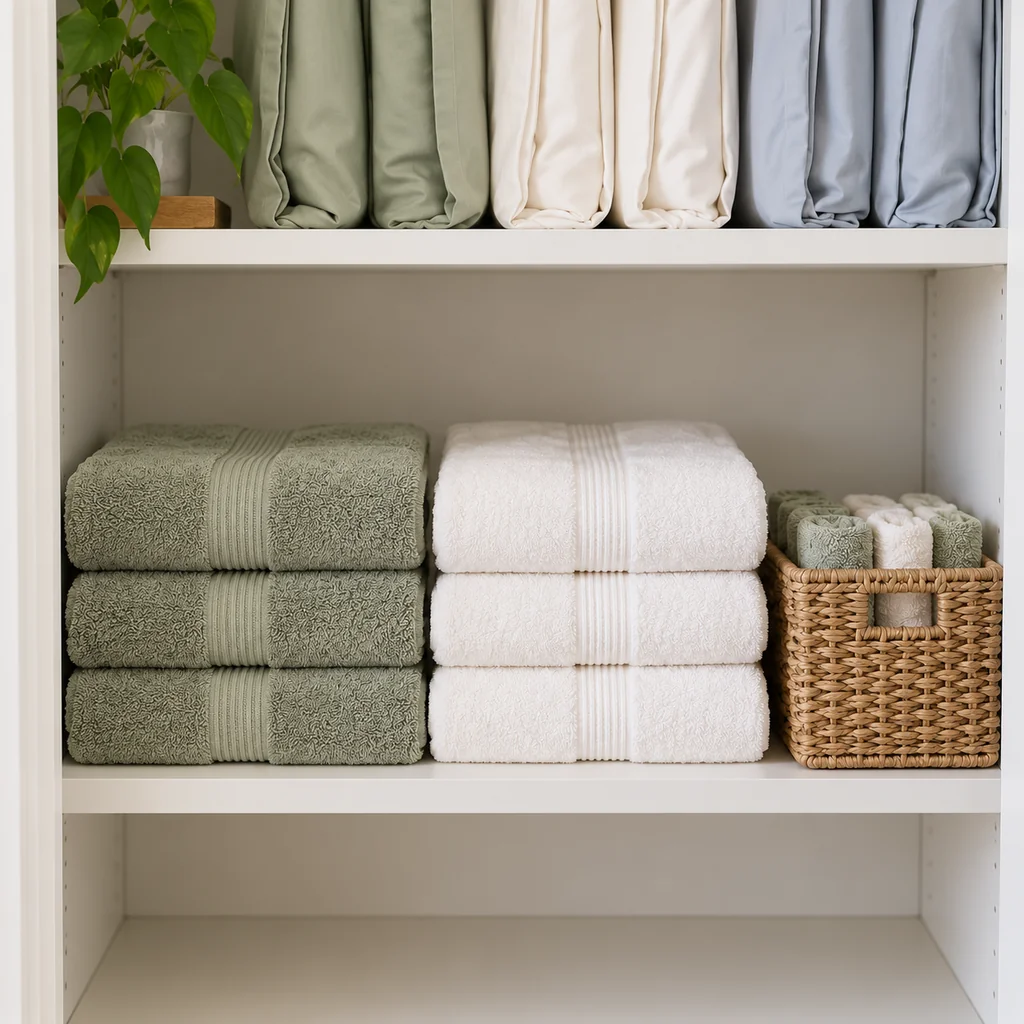
Separate bath towels by bathroom or user only when that distinction saves time. Put washcloths and small hand towels in one shallow basket so they cannot disappear behind larger pieces.
Step 7 — Fill the Lower Zone Without Blocking Airflow
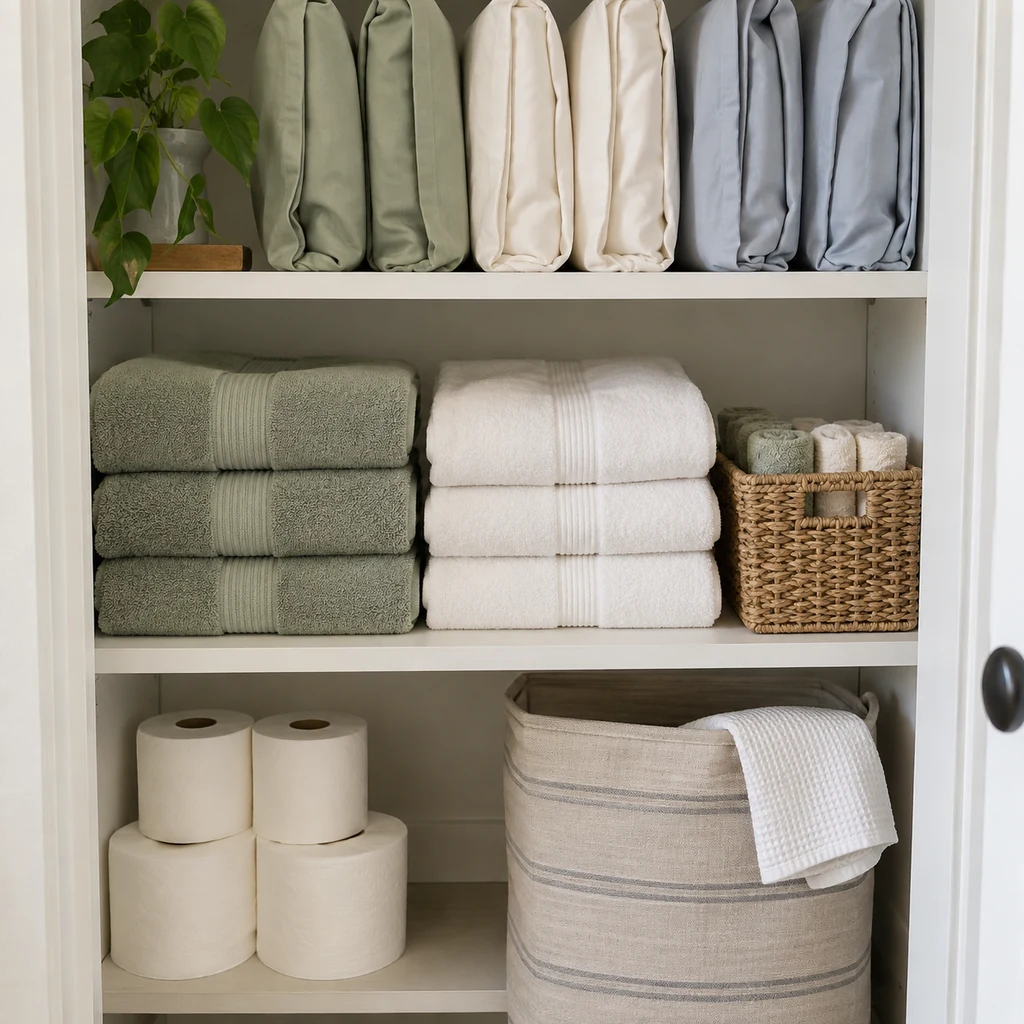
Use the lowest shelf for light, bulky refills such as toilet paper or tissue boxes. An empty or lightly filled soft-sided hamper can sit on the floor. Leave visible space around stacks and do not block a vent, sprinkler, electrical panel, hot pipe, or access point.
If the bottom becomes a catch-all, one handled basket is enough. Give it a single purpose and keep its contents visible. For other measured containers that earn their footprint, review these practical storage inventions.
Step 8 — Do a 10-Minute Weekly Reset
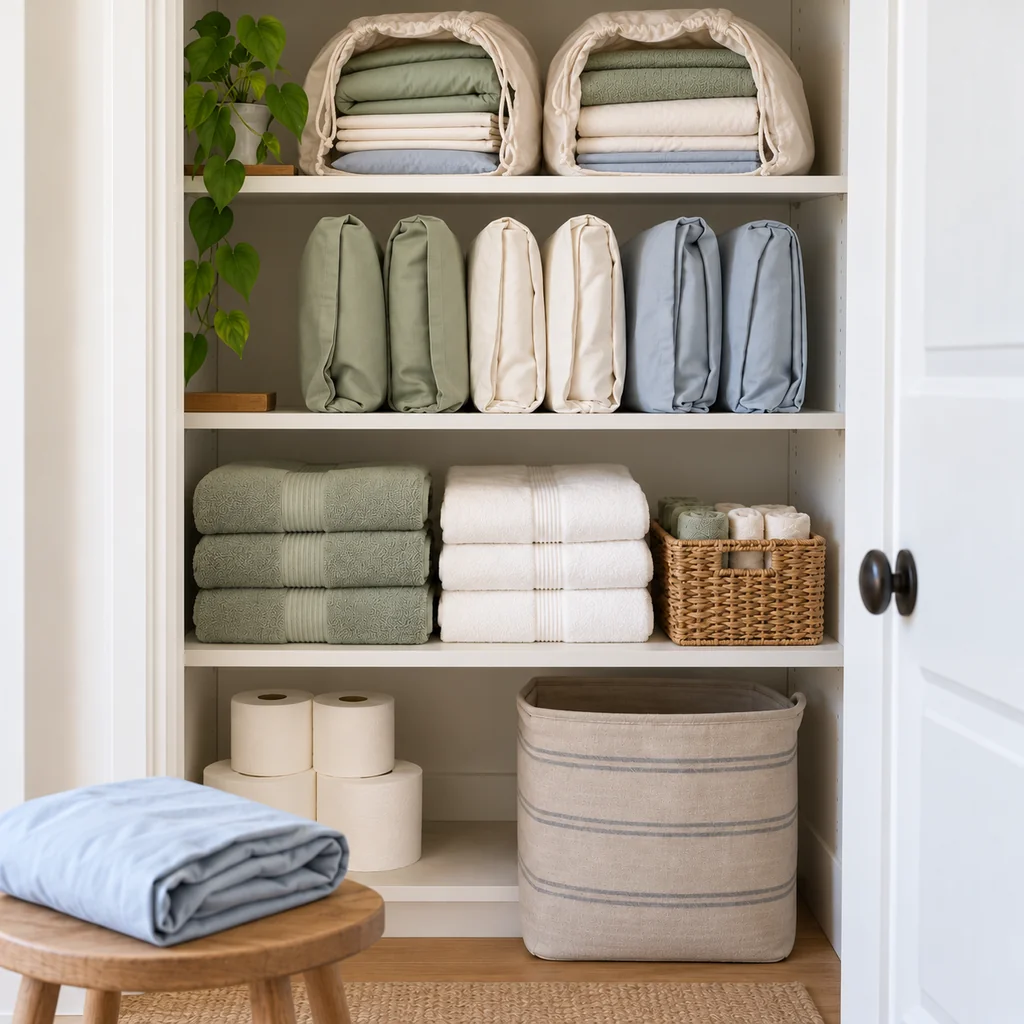
Once a week, return towels to their zone, rebuild any loose sheet bundle, remove empty packaging, and check for dampness or odor. When a new set comes in, decide where it will live before removing the old one. The reset should take minutes; if it becomes a sorting project, the closet is holding too much.
A Layout for a Five-Shelf Closet
- Highest shelf: two light guest-bedding bags.
- Upper middle shelf: queen or primary-bed sheet bundles.
- Center shelf: twin, full, or guest sheet bundles.
- Lower middle shelf: everyday bath towels and one washcloth basket.
- Lowest shelf and floor: paper refills and a soft hamper.
For a three-shelf closet, combine the two sheet shelves. For deep shelves, place seldom-used bundles behind everyday ones only if the back row remains visible from the doorway.
Common Mistakes to Avoid
- Buying matching bins before measuring: the door opening may be narrower than the shelf.
- Filling every inch: packed shelves make one-handed removal difficult and reduce air movement.
- Mixing damp and dry laundry: one damp towel can make the whole closet smell stale.
- Stacking heavy items high: keep weight between knee and shoulder height whenever possible.
- Creating a miscellaneous basket: it quickly becomes a second junk drawer.
- Hiding incomplete sets: identify missing pieces before bundling.
Frequently Asked Questions
Should linen closet bins have lids?
Open bins are convenient for daily towels and sheet bundles. A breathable fabric cover can reduce dust on occasional bedding. Avoid sealing damp textiles in airtight plastic.
Is rolling towels better than folding?
Not automatically. Rolling can work in a basket, but shelf-depth folds usually make a more stable freestanding stack. Choose the method that lets you remove one towel without disturbing the rest.
How do I organize very deep shelves?
Use a handled bin that can slide out, or create a visible front row and a clearly defined backstock row. Never bury daily linens behind unrelated items.
What should not go in a linen closet?
Avoid wet laundry, leaking products, food, and anything that blocks building equipment or access points. Store medications and household chemicals according to their labels and away from children or pets.
How often should I reorganize it?
A short weekly reset and a seasonal inventory check are usually enough. Reorganize sooner if you notice moisture, musty odor, pests, or shelves that no longer support easy removal.