
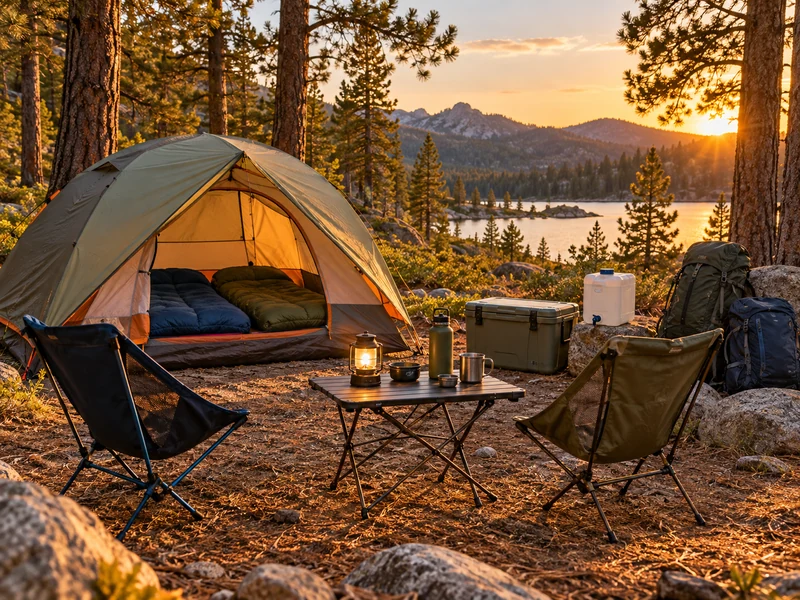
Camping essentials for beginners should solve a few basic problems: shelter, restful sleep, safe food and water, reliable light, and a plan for minor problems. For a first trip, choose an established campground close to home and build a short list around its facilities, rules, forecast, and activities.
Why You’ll Love It
- Focused: The checklist separates true essentials from optional comfort items.
- Beginner-friendly: Each section explains what the gear does and how to test it.
- Adaptable: The advice works as a foundation for different climates, campsites, and group sizes.
Start with the Trip, Not the Shopping List
Confirm whether you are car camping at a developed site or carrying everything on foot. This guide focuses on car camping, where weight matters less and help is usually closer. Review reservation details, road conditions, quiet hours, fire restrictions, wildlife guidance, potable-water availability, and rules for food storage. Share your destination and return plan with someone who is not joining the trip.
Check the forecast again shortly before departure, including overnight lows, wind, rain, and severe-weather alerts. If conditions exceed your experience or equipment, change the destination or postpone. For more planning ideas, see these essential camping trip tips.
1. Shelter That Fits the Site
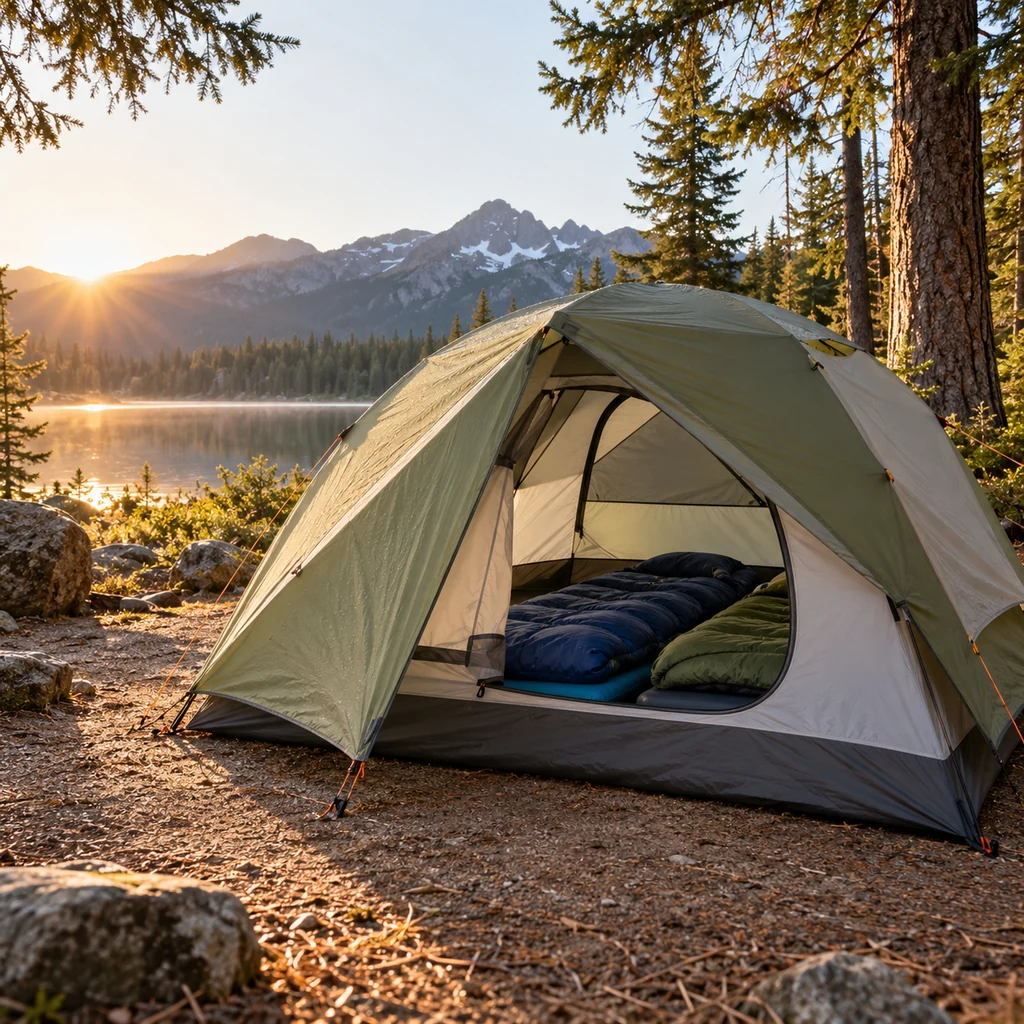
Choose a tent with room for the sleepers and their gear, plus a rainfly, stakes, guylines, and a footprint if the manufacturer recommends one. Practice pitching it at home so you know how the poles, clips, and fly connect. Pack a small repair sleeve or compatible patch material, and bring a mallet only if the campground permits and the stakes require it.
At camp, use the designated tent pad or a durable, level surface. Avoid dead branches overhead, drainage channels, cliff edges, and isolated high points. Keep the footprint tucked under the tent so it does not collect rain. Never use a stove, heater, lantern with a flame, or charcoal inside a tent; carbon monoxide and fire can be deadly.
2. A Complete Sleep System
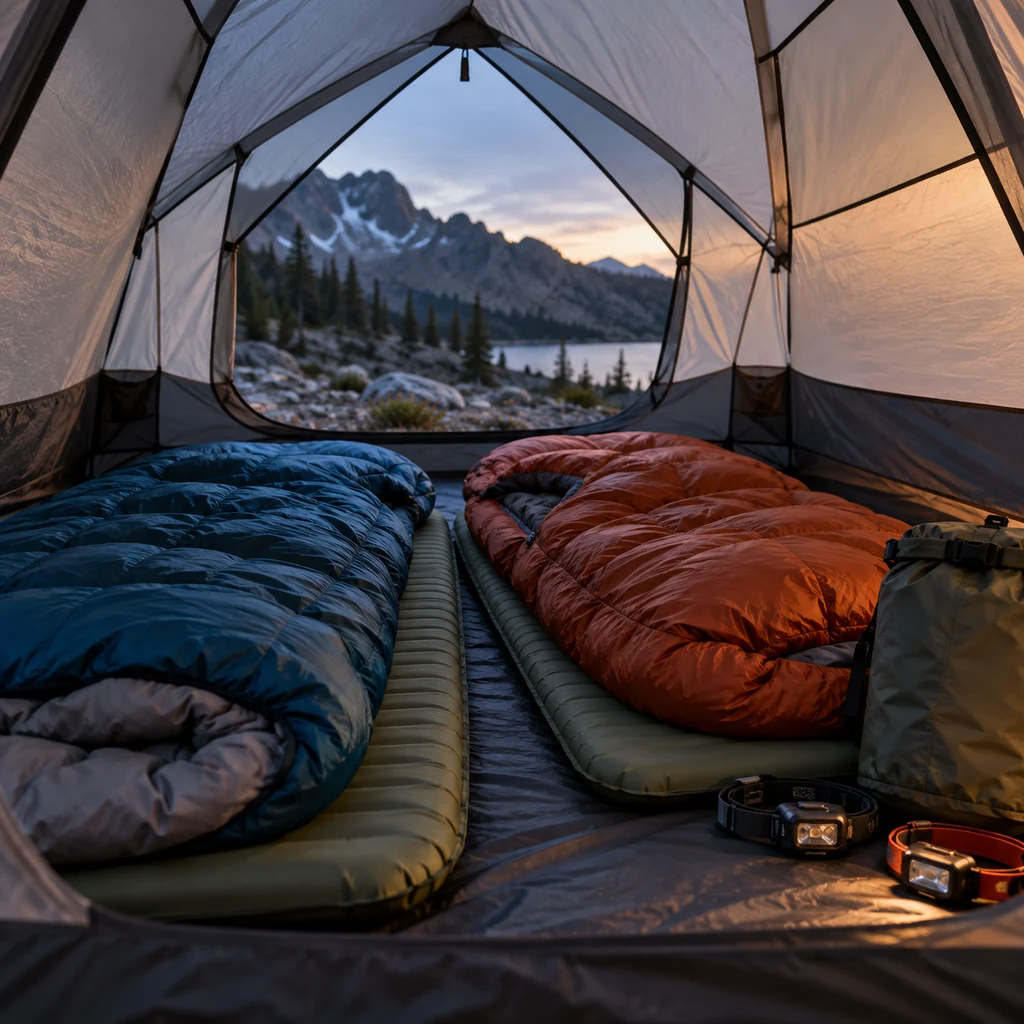
An insulated sleeping pad reduces heat loss to the ground, while the bag provides insulation around you. Compare both ratings with the expected overnight low, remembering that comfort varies by person, clothing, humidity, and shelter.
Pack sleep clothes that stay dry, a warm hat for cool nights, and an extra blanket if space allows. Inflate the pad and test the bag at home. A small pillow or a stuff sack filled with soft clothing can improve comfort without adding much bulk. Keep wet clothing and muddy shoes away from the sleeping area.
3. Camp Kitchen and Food Storage
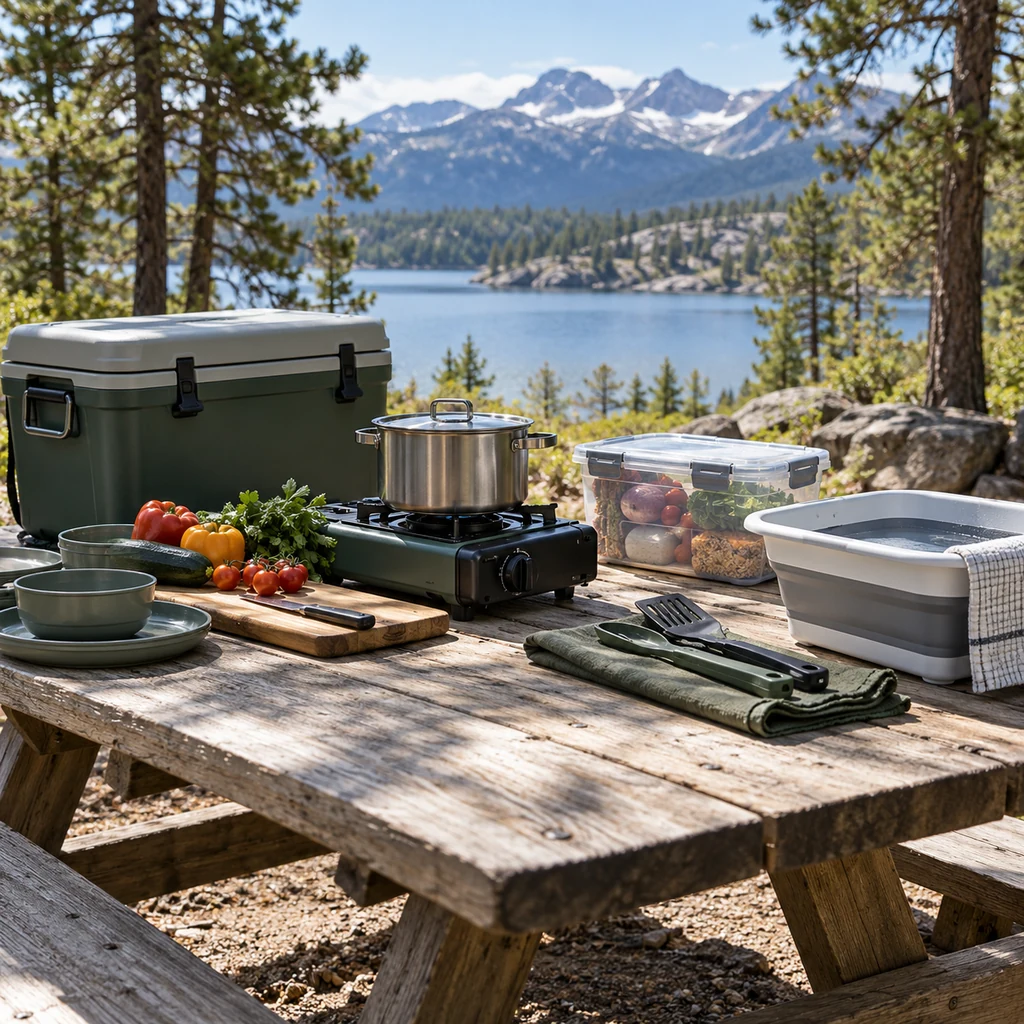
For a simple kitchen, bring a stable camp stove, correct fuel, ignition backup, one pot or pan, utensils, dishes, soap, cleaning water, and containers for wastewater and trash. Operate stoves outdoors on a stable, clear surface. Follow the manufacturer’s directions and local restrictions; never leave cooking unattended.
Plan meals that match your equipment and practice at least one at home. Keep perishable food cold in a well-managed cooler and prevent raw foods from contaminating ready-to-eat items. Store food, scented toiletries, and trash exactly as the campground or land manager requires, especially in bear country. The one-bin camp kitchen guide can help organize the cooking kit.
4. Water, Light, and Power
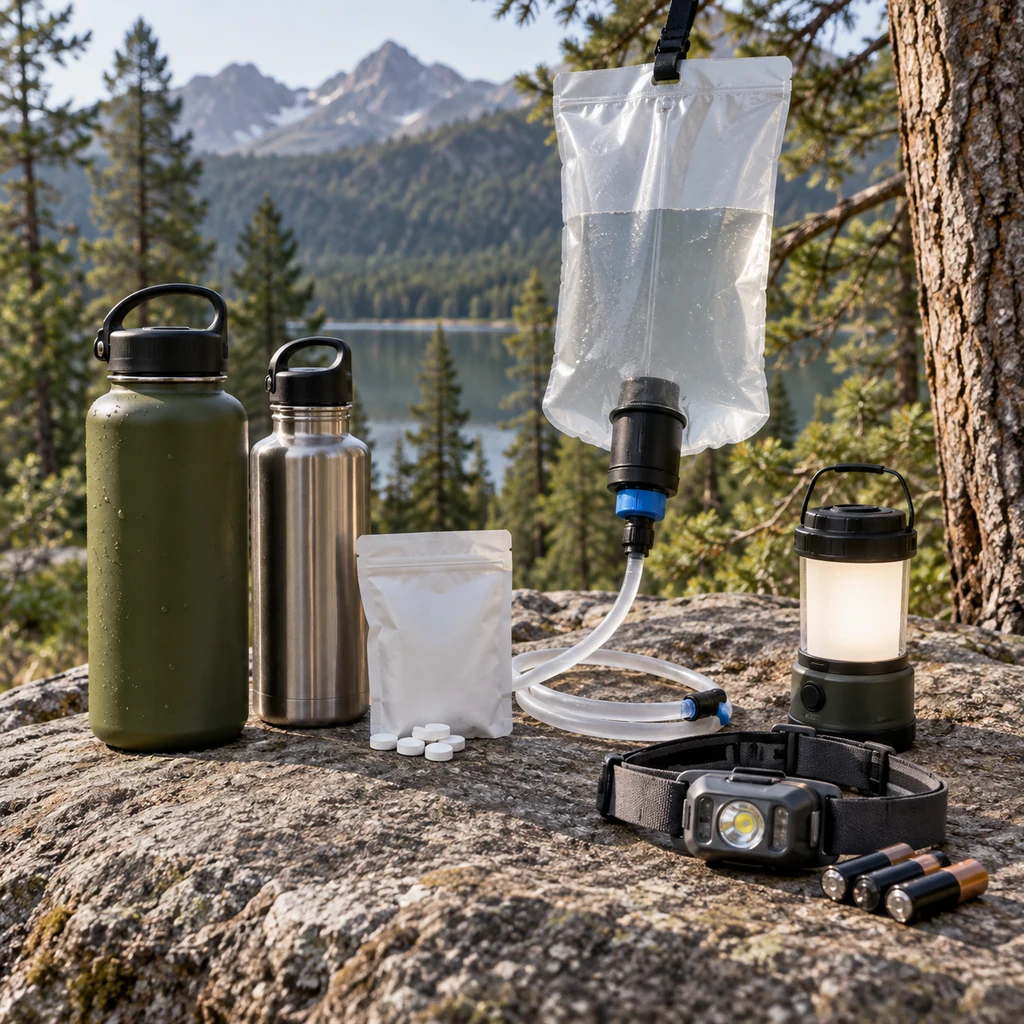
Do not assume that a stream or campground tap is safe to drink. Confirm whether potable water is available and bring enough capacity for drinking, cooking, and cleanup, plus a reasonable reserve. When using backcountry sources, choose a treatment method appropriate to the destination and follow its instructions precisely; filters and chemical treatments do not all address the same contaminants.
Give each camper a headlamp and pack spare batteries or compatible charging. A lantern can illuminate a table, but keep pathways clear. Charge phones, download offline maps, and carry a power bank if needed. Electronics should not replace a paper map or campground information.
5. First Aid and Emergency Basics
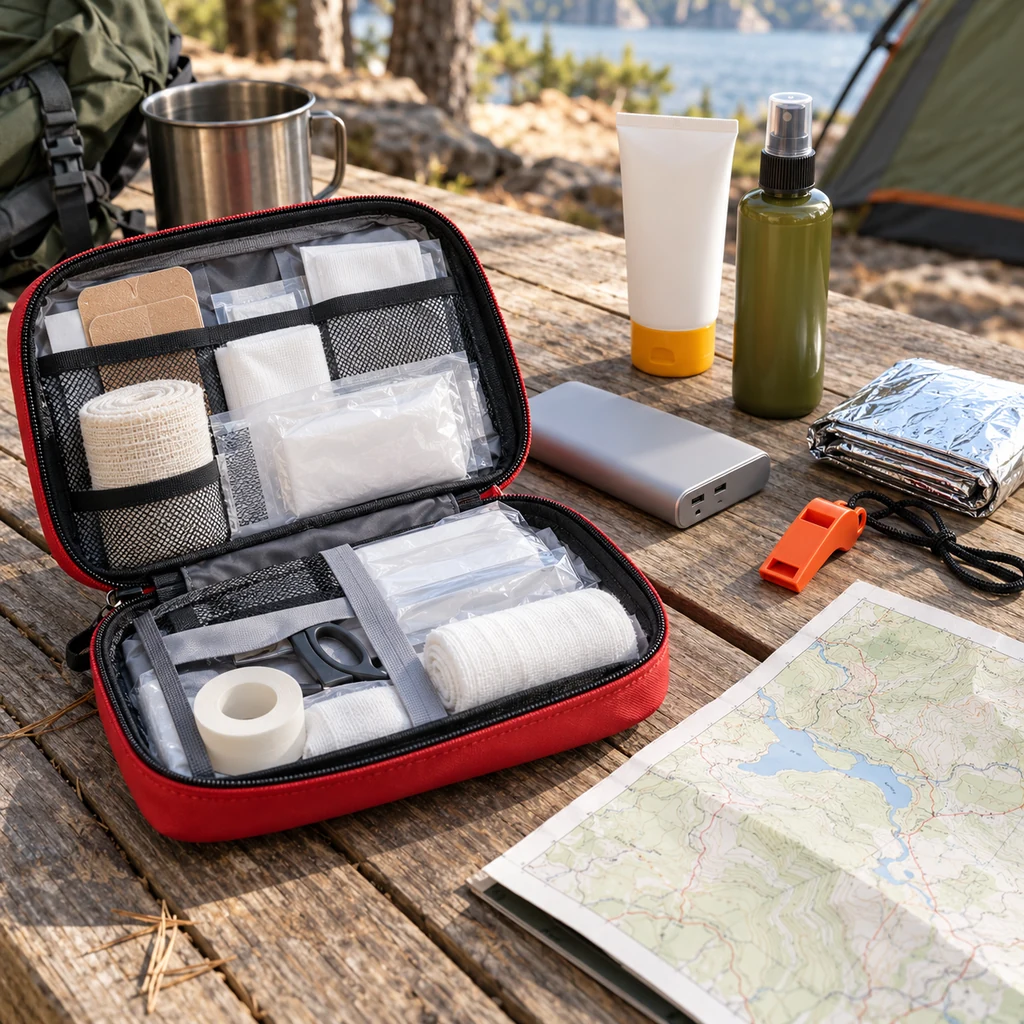
Carry a first-aid kit suited to the group and trip, including personal medications. Know what is inside and obtain training appropriate to your activities; a kit cannot replace judgment or professional care. Add sunscreen, insect protection, a whistle, emergency blanket, paper map, contact details, and any supplies required for allergies or medical conditions.
Save the campground address, host contact, and local emergency number. Learn where help is available, but call emergency services for urgent situations. Never rely on mobile coverage. When hiking, share your route and expected return, carry the essentials, and turn around when weather, daylight, or ability says it is time.
6. Clothing for Changing Conditions
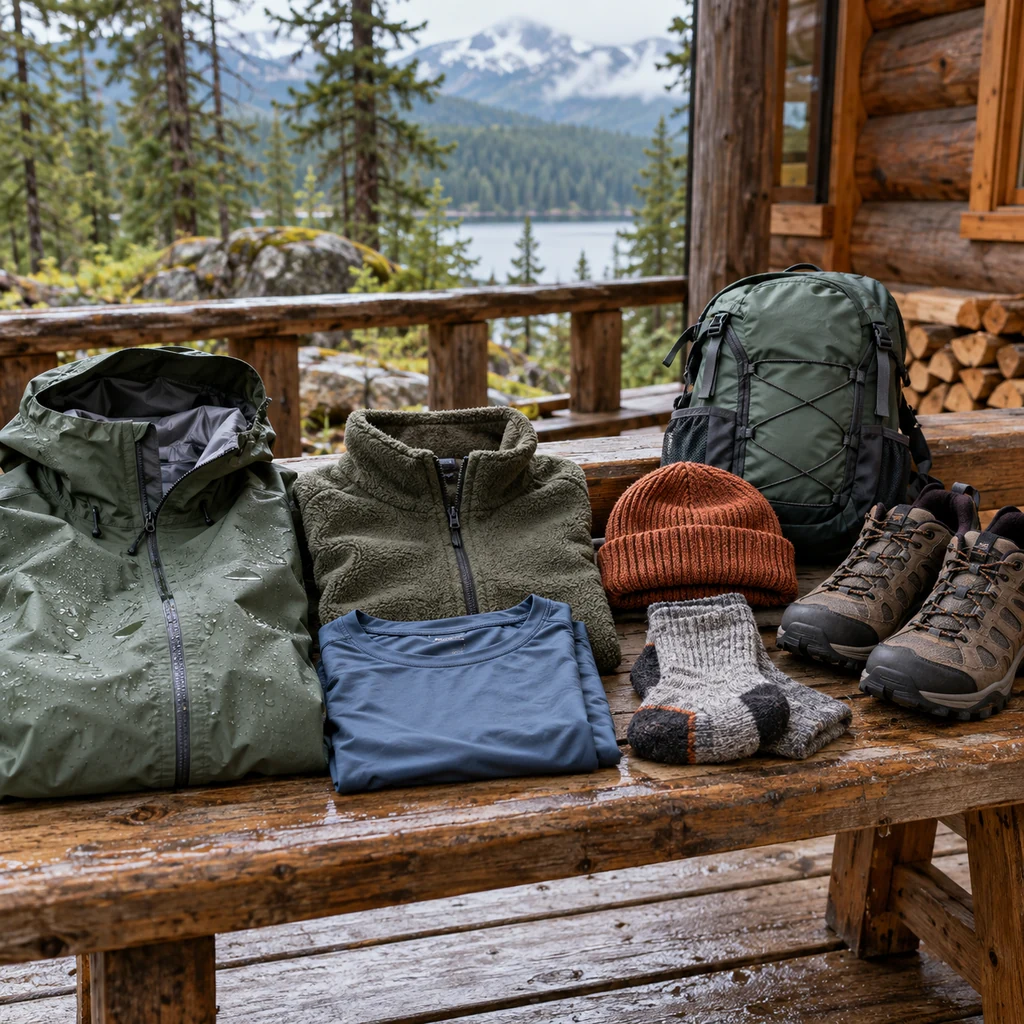
Pack layers rather than one bulky outfit: a moisture-managing base, an insulating midlayer, and a waterproof or weather-resistant outer layer appropriate to the forecast. Include extra socks, sleep clothes, sun protection, and footwear already tested for the planned terrain. Cotton may stay wet and uncomfortable in cool conditions, so choose fabrics thoughtfully for the climate.
Store a dry change of clothing in a protected bag and keep tomorrow’s layer within reach overnight. Weather can shift quickly, particularly at elevation. Seasonal advice can help refine the list; for example, this autumn camping guide covers cooler-day considerations.
Pack, Test, and Leave No Trace
Make a category checklist, then physically test the tent, stove, lights, pads, and cooler before departure. Pack frequently used items where they are easy to reach and label bins by function. Chairs and a table are convenient at sites without furniture, but they are optional; borrow or rent bulky gear until you know what you enjoy.
Follow local Leave No Trace guidance: use established surfaces, dispose of waste correctly, leave natural objects where they are, respect wildlife, and minimize noise. Campfires are never automatic—check current rules and conditions, use only designated facilities when allowed, keep the fire small, supervise it continuously, and extinguish it completely. More layout help is available in these beginner campsite setup ideas.
Frequently Asked Questions
What should a beginner bring for one night?
At minimum, bring confirmed shelter, a suitable sleep system, weather-ready clothing, food and safe water, lighting, navigation and communication backups, hygiene items, and a first-aid kit. Add campground-specific items after reviewing the rules and facilities.
Should beginners buy all their camping gear?
No. Borrowing or renting a tent, sleeping pad, cooler, or stove can reduce cost and help you learn what features matter. Inspect borrowed gear, confirm every part is present, and practice with it before leaving.
Is a campfire essential?
No. A camp stove can handle meals where permitted, and warm layers provide comfort without a fire. Fire bans, wind, drought, and campground rules always take priority; never build a fire when it is prohibited or unsafe.
Final Thoughts
A successful first camping trip comes from matching a modest kit to a well-researched destination. Test the systems at home, respect local rules, keep backups for water and light, and choose conditions within your experience. Comfort and confidence grow quickly once the essentials are familiar.