
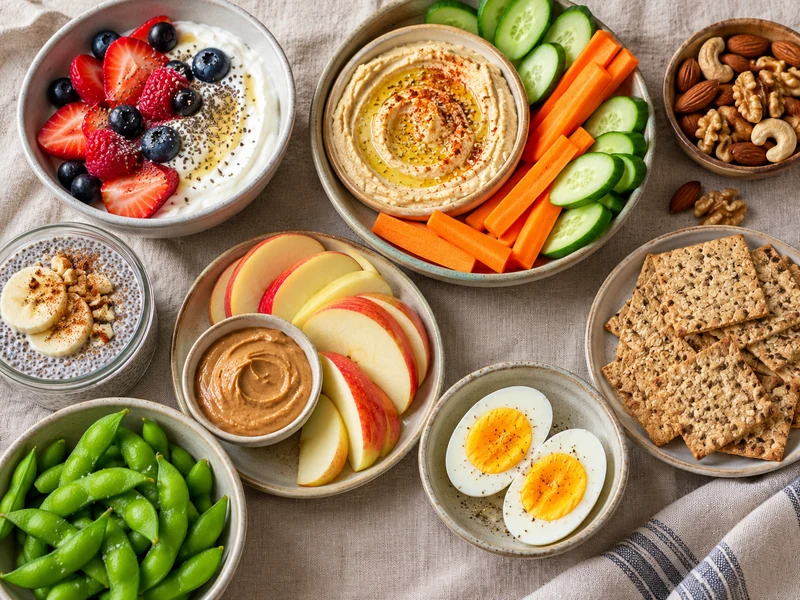
Healthy snack ideas are most useful when they fit real life: quick enough for a busy afternoon, satisfying enough to bridge meals, and flexible enough for different tastes. A snack does not need to be elaborate or “perfect.” Often, pairing two simple foods—such as fruit with yogurt or vegetables with hummus—creates a more enjoyable mix of flavor, texture, and nutrients.
Why You’ll Love It
- Adaptable: Every idea can be adjusted for appetite, schedule, budget, and dietary preference.
- Balanced: Simple pairings combine protein, fiber, or fat for greater staying power.
- Practical: Most options use familiar ingredients and need little or no cooking.
What Makes a Snack Satisfying?
A useful snack often combines at least two food groups. Fruit or whole grains provide carbohydrate, while yogurt, eggs, beans, nuts, seeds, or soy foods add protein and fat. Vegetables and fruit contribute fiber, flavor, and volume. There is no required formula, though: sometimes a piece of fruit is enough, and sometimes hunger calls for a more substantial mini-meal.
Let appetite, meal timing, activity, and personal needs guide the portion. Children, athletes, pregnant people, and anyone managing allergies, diabetes, kidney disease, swallowing difficulties, or another health condition may need individualized choices. A qualified clinician or registered dietitian can help when snack planning is part of medical care.
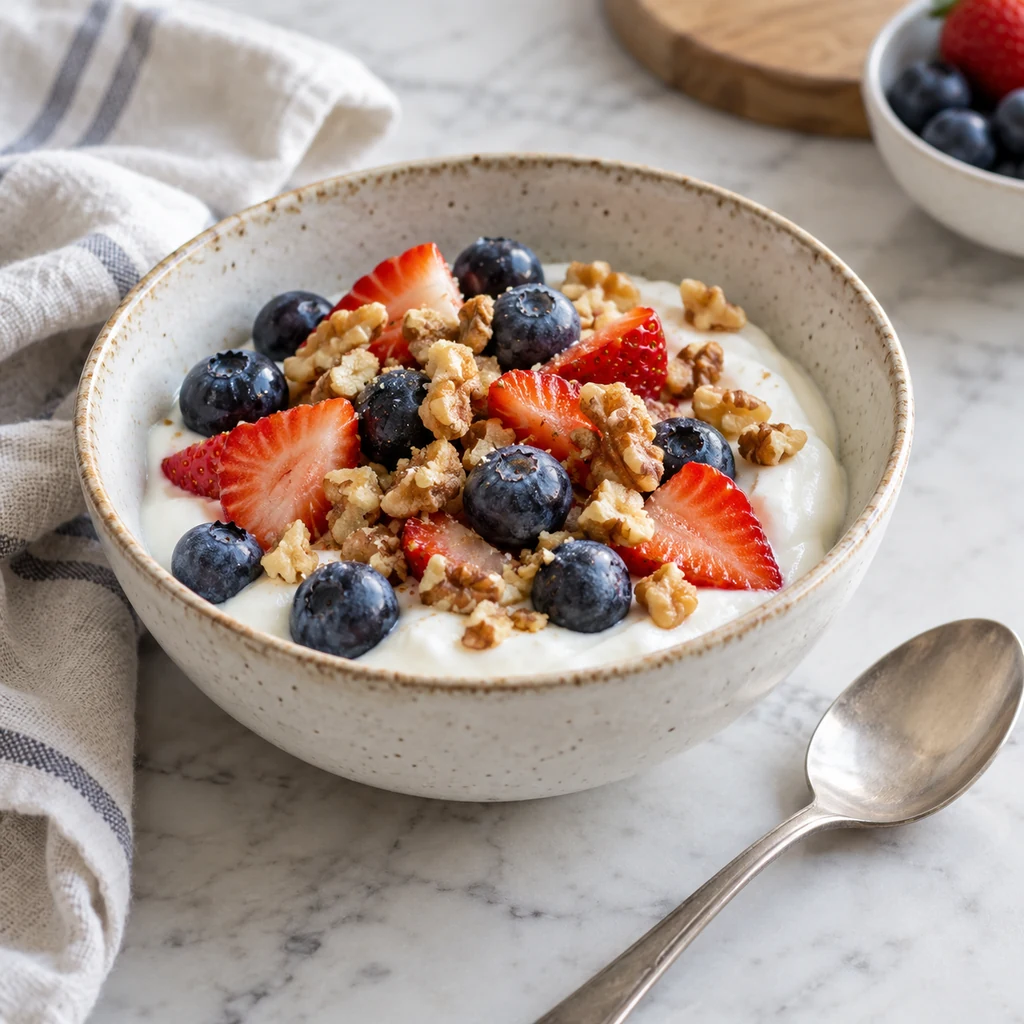
1. Yogurt, Fruit, and Crunch
Plain Greek yogurt with berries and chopped walnuts is fast, creamy, and easy to vary. Use regular yogurt, a fortified soy alternative, or cottage cheese according to preference. Fresh, frozen, or thawed berries all work; sliced peaches, pears, or pineapple are equally welcome. A spoonful of seeds or a small handful of unsweetened granola adds contrast.
For a prepared option, layer yogurt and fruit in a sealed container and keep crunchy toppings separate until serving. If you enjoy a chilled breakfast-style snack, the same mix-and-match thinking appears in this summer berry chia parfait.
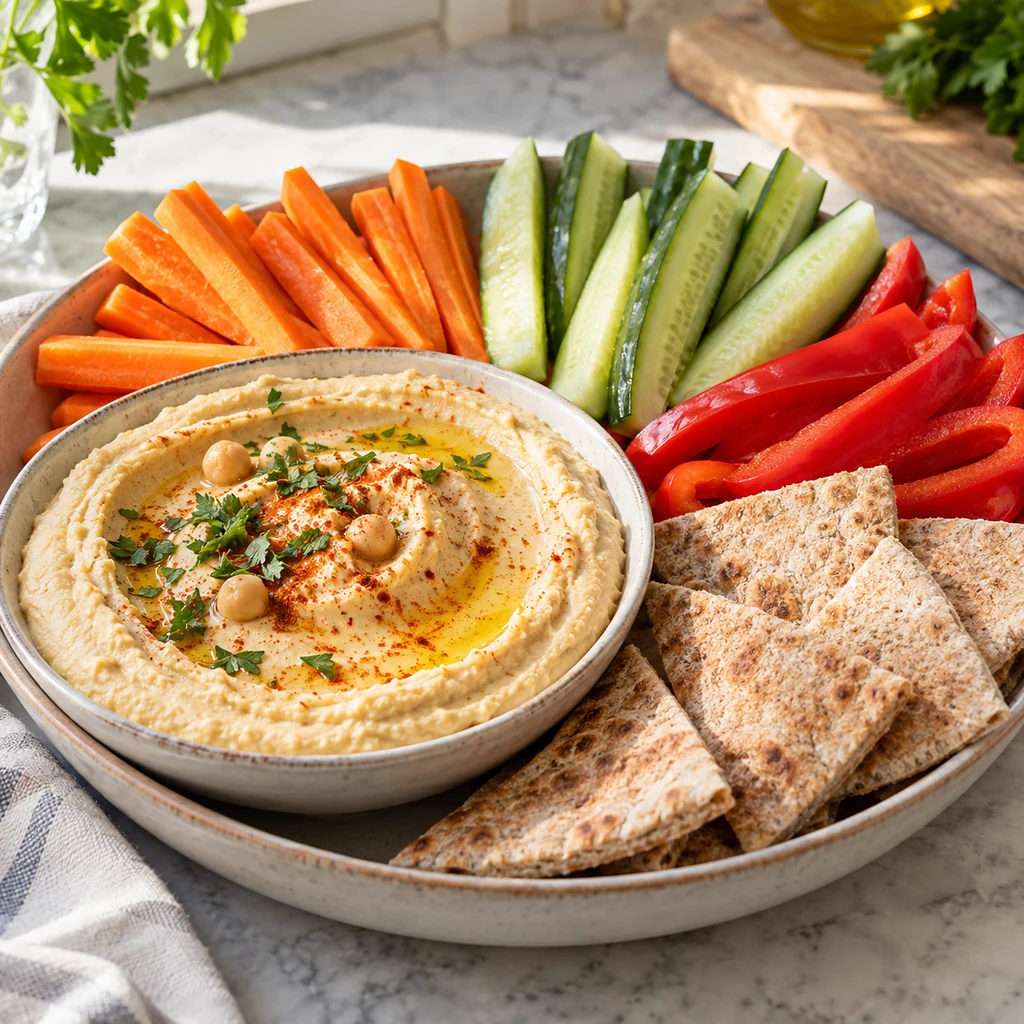
2. Hummus with Colorful Dippers
Hummus pairs naturally with cucumber, carrots, bell peppers, snap peas, or whole-grain pita. It brings chickpeas and tahini to a snack that is easy to pack and pleasant to graze. Use a few vegetables for variety rather than chasing an ideal color count. Leftover roasted vegetables can become dippers too.
Store hummus in a small leakproof container and keep crisp vegetables dry until serving. If chickpeas are a favorite, explore more everyday uses in this easy chickpea salad. People with sesame allergy should choose a tahini-free dip and check labels carefully.
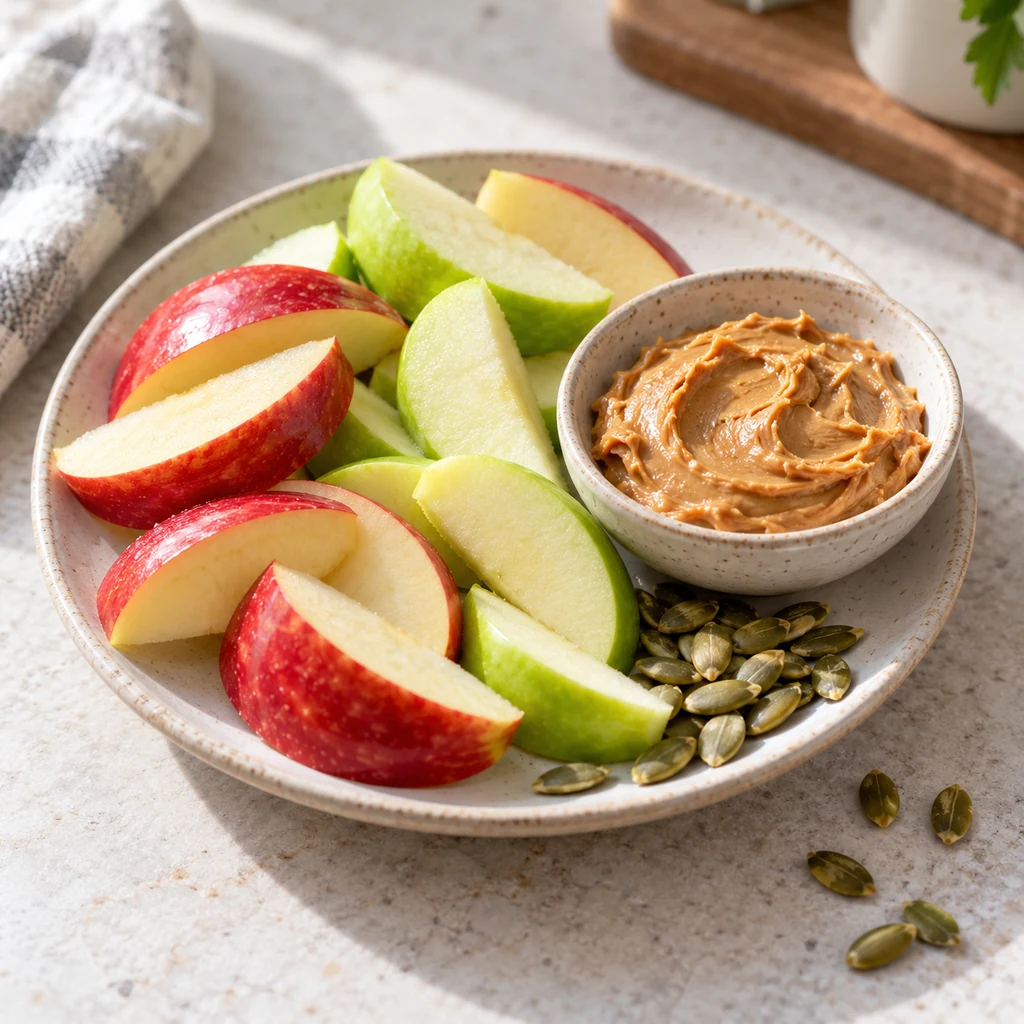
3. Fruit with Nut or Seed Butter
Apple or pear slices with peanut, almond, sunflower-seed, or pumpkin-seed butter create a sweet-savory pairing with plenty of texture. Banana on whole-grain toast is another easy version. Choose a spread that suits household allergies, and use a clean knife rather than dipping fruit directly into a shared jar.
Nut butter can be thick and sticky, and whole nuts can be choking hazards for young children. Age-appropriate preparation matters; follow pediatric guidance for texture and allergen introduction. For adults packing the snack, a thin layer of spread is often less messy than a separate dipping cup.
4. Make-Ahead Chilled Snacks
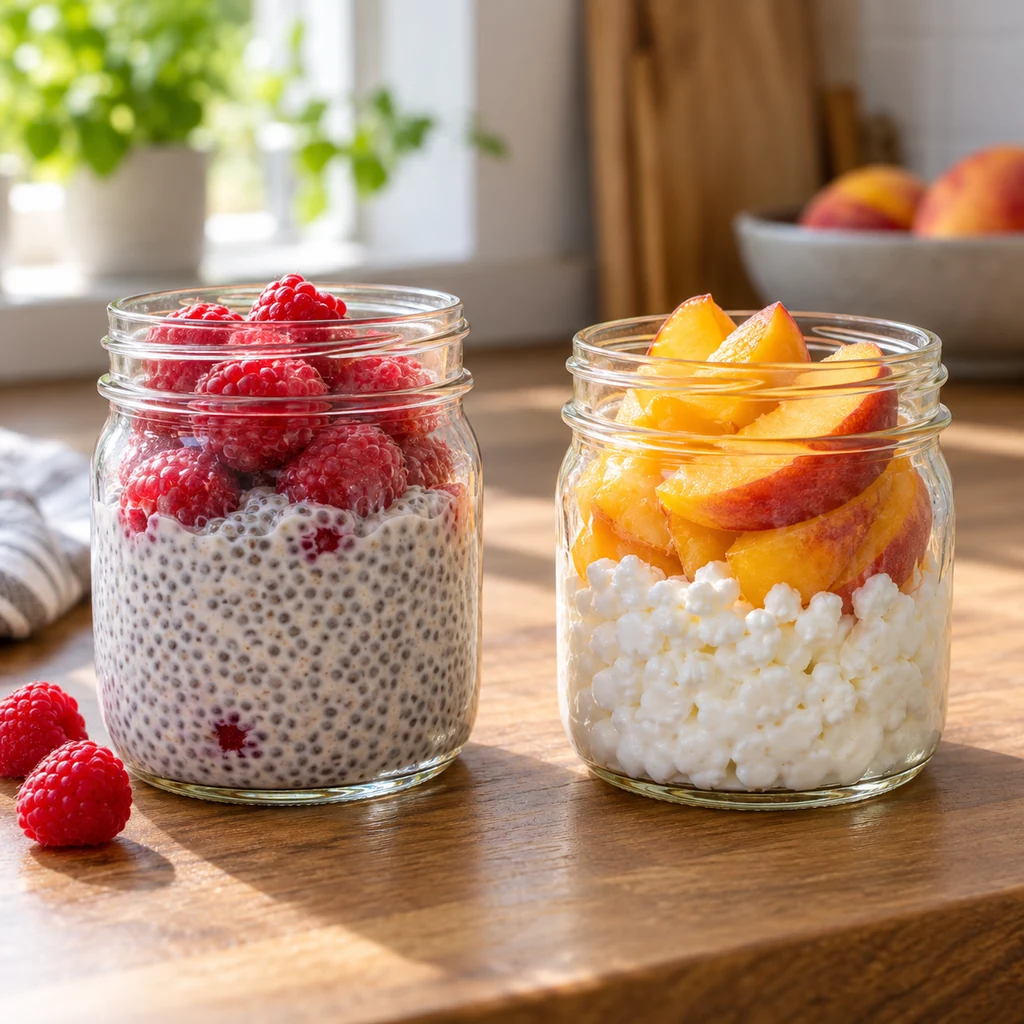
Chia pudding, overnight oats, and cottage cheese with fruit are useful when you want something ready in the refrigerator. Prepare one or two portions rather than an entire week if texture matters to you. Chia pudding thickens as it rests, so stir it well and adjust with more liquid before serving if needed.
Keep perishable snacks refrigerated and use an insulated bag with a cold pack when carrying them for several hours. A jar of chia pudding can be topped just before eating; try the flavor approach in this mango coconut chia pudding for inspiration.
5. Savory Protein Snacks
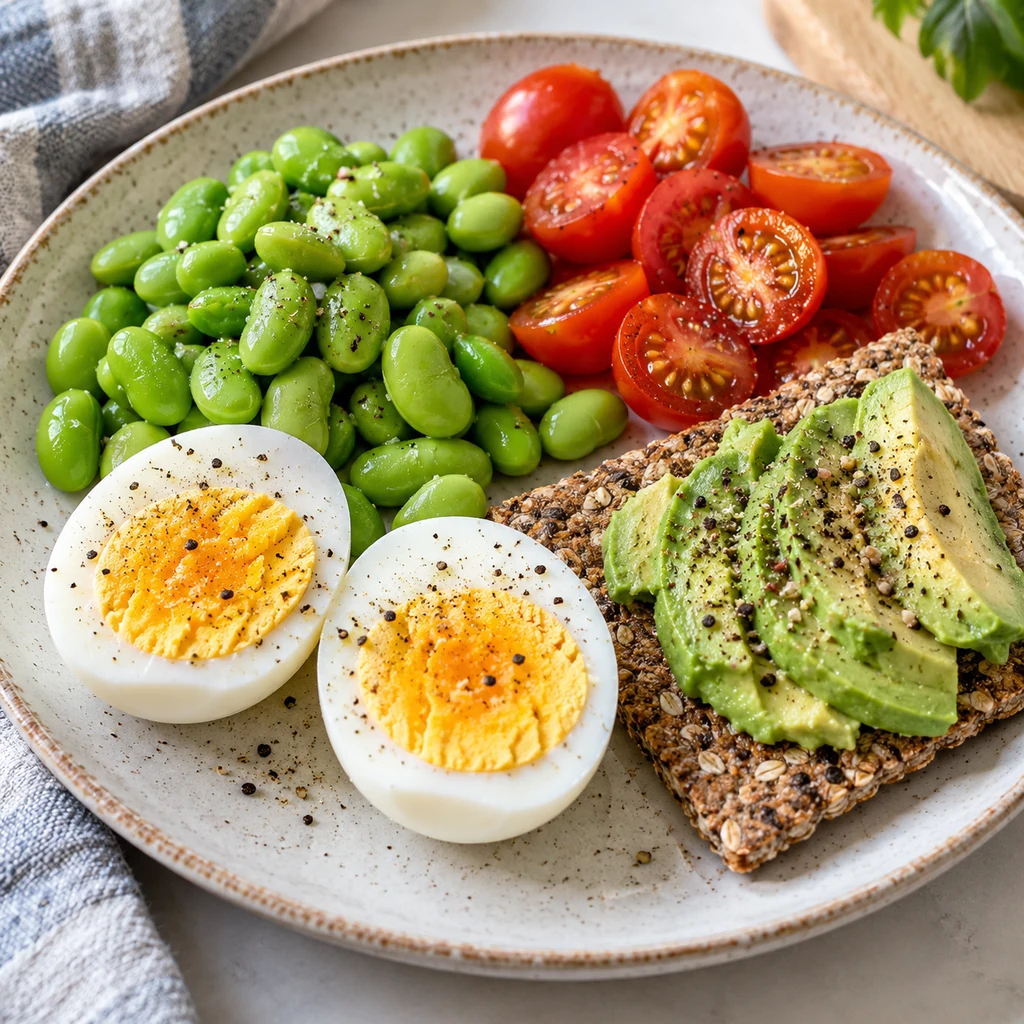
Hard-boiled eggs, steamed edamame, roasted chickpeas, cheese, or tofu can anchor a savory snack. Add cherry tomatoes, whole-grain crackers, or avocado toast to make it more substantial. A boiled egg with vegetables may suit a short break, while edamame with crispbread can bridge a longer gap before dinner.
For a familiar toast option, use the seasoning ideas in this savory avocado egg toast. Cook eggs until both white and yolk are firm when serving people who need to avoid undercooked eggs, and refrigerate cooked foods promptly.
6. Pantry and Desk-Friendly Options
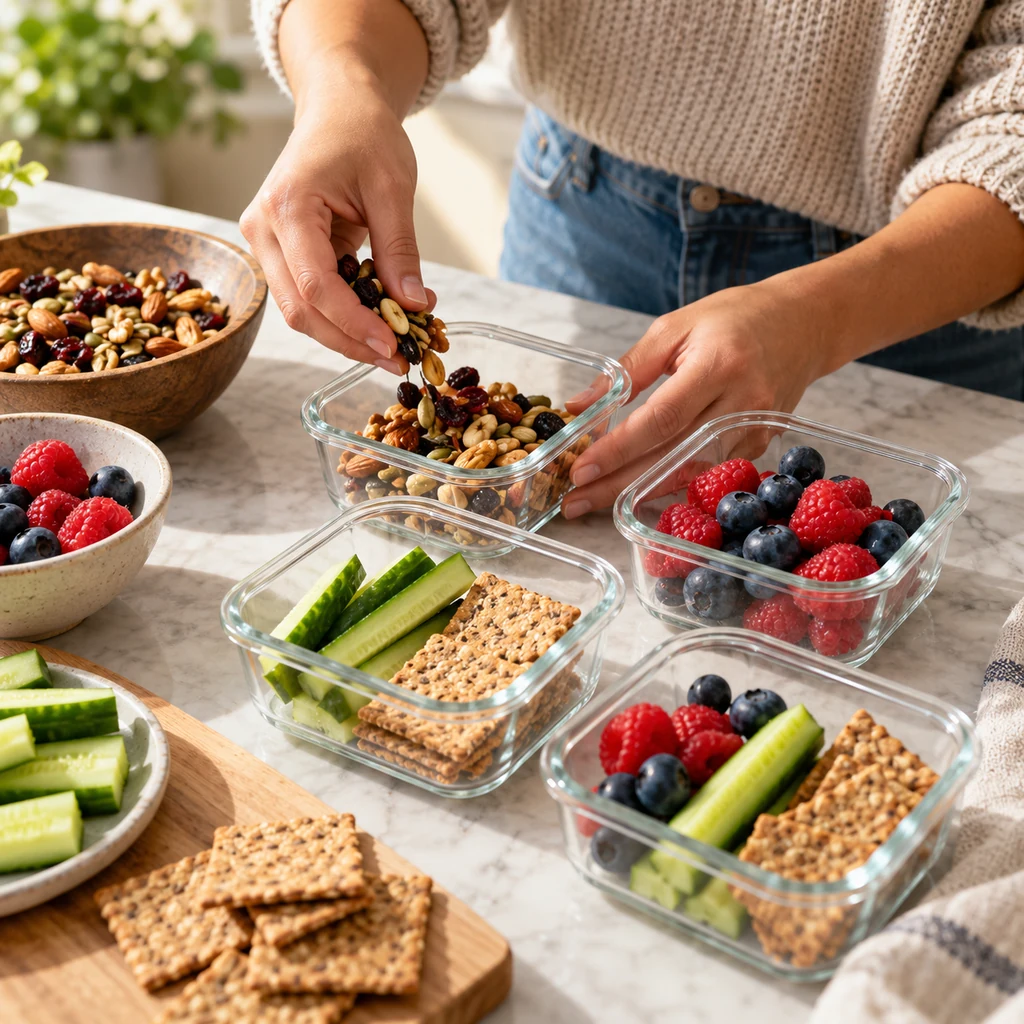
For days without a refrigerator, consider whole fruit, roasted chickpeas, whole-grain crackers, shelf-stable nut or seed butter, or a homemade trail mix. Combine nuts or seeds with unsweetened dried fruit and a whole-grain cereal for different textures. Check labels if sodium or added sugar is a concern, but remember that one ingredient does not define the quality of an entire eating pattern.
Pre-portioning is useful for convenience, not restriction. Pack an amount that matches your expected hunger and bring extra if plans may change. Anyone with nut allergies can build a mix from toasted seeds, cereal, and dried fruit, provided every ingredient is safe for them.
Simple Snack-Planning Tips
- Keep two refrigerator options and two pantry options visible and easy to reach.
- Wash only as much produce as you can use while it is fresh, then store it properly.
- Pair something you already enjoy with a protein or fiber-rich food when you want more staying power.
- Pack snacks in reusable containers and include a cold pack for perishables.
- Respond to hunger without assigning moral labels such as “good” or “bad” to individual foods.
Frequently Asked Questions
Do I need to snack every day?
No. Some people feel best with snacks, while others prefer meals only. Appetite, schedule, activity, medication, and health needs all influence what works. Snacks are an option, not a requirement.
How can I make a snack more filling?
Add a source of protein, fiber, or fat to the food you already want. Examples include yogurt with fruit, crackers with hummus, or apple with seed butter. A larger portion or mini-meal may be appropriate when hunger is stronger.
What is a good snack for on the go?
Choose something that travels safely and is easy to eat, such as whole fruit with a sealed nut or seed butter packet, roasted chickpeas, or crackers with shelf-stable toppings. Use a cold pack for dairy, eggs, cut produce, and other perishables.
Final Thoughts
The best healthy snack ideas are the ones you enjoy, can access, and remember to pack. Begin with a few reliable pairings, rotate flavors when interest fades, and adjust the amount to your hunger. That flexible approach is more useful than a rigid list of rules.