
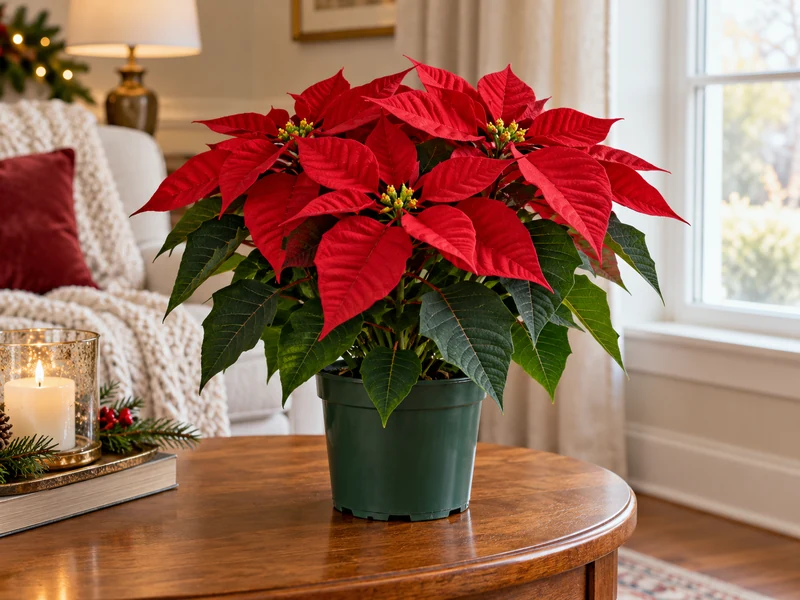
A poinsettia can look full and bright when you bring it home, then start dropping leaves before the holiday gathering. The usual culprits are trapped water, dry soil, a cold window, or a blast of hot air. You do not need a rigid watering calendar to avoid them. You need a pot that drains, a suitable spot, and a quick soil check.
This indoor poinsettia care routine starts before the plant reaches your living room. Follow the five steps below, then use the symptom guide if lower leaves begin to yellow. The goal is to keep the colored bracts and green foliage attractive through the holidays—not to promise that every leaf will stay forever.
Quick Answer: How Do You Keep a Poinsettia From Dropping Leaves?
- Choose a plant with firm green lower leaves, undamaged colored bracts, and small central flower buds that have not fully opened.
- Protect it from freezing air on the trip home. Remove or open decorative foil so water can escape from the nursery pot.
- Place it in bright, indirect natural light away from cold glass, drafty doors, and heating vents. A room near 60–70°F (16–21°C) is a practical target.
- Feel the soil surface regularly. When it is dry to the touch, water thoroughly in a sink and allow the pot to drain before returning it to its display spot.
Why Poinsettias Lose Leaves Indoors
The red, pink, or cream showpieces are bracts, which are modified leaves. The tiny yellow-green structures at their centers are the true flowers. A healthy plant still has a substantial layer of green leaves below those bracts. Sudden changes in moisture or temperature can make that lower foliage yellow or fall, and a stressed plant may also shed bracts.
Both too much and too little water can produce a droopy plant, so the symptom alone is not a diagnosis. Check the soil and the pot first. A sleeve that traps runoff can leave roots sitting in water even when the top feels dry later. Conversely, a warm room and bright light can dry a small pot quickly. Avoid making a second problem by automatically watering every yellow leaf.
Five Steps for Indoor Poinsettia Care
Step 1 — Choose a Healthy Plant and Protect It on the Way Home
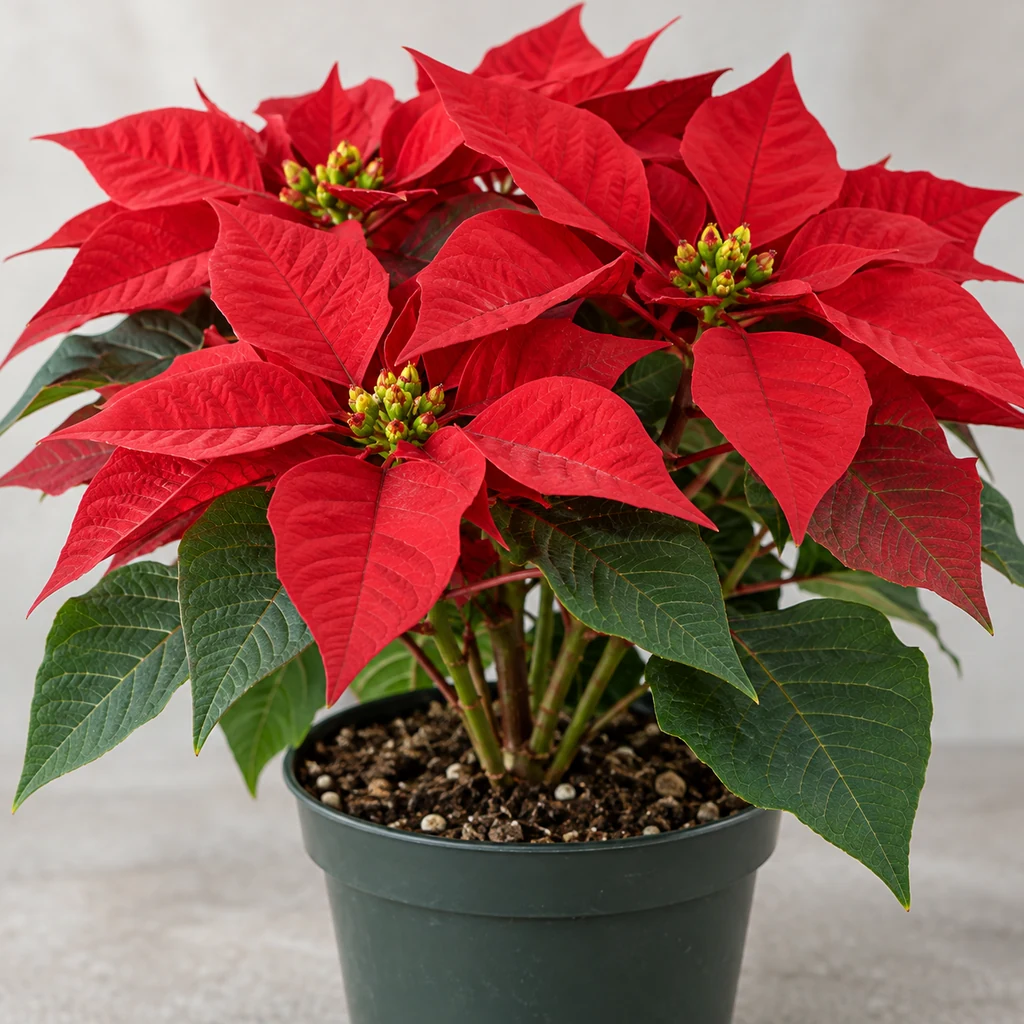
Look under the colored canopy before buying. The lower leaves should be green and attached firmly; the colored bracts should be full rather than torn or curled. A few damaged leaves do not make a plant hopeless, but a pot with widespread yellowing, soggy soil, or many fallen leaves gives you a harder starting point. Look for small central buds that have not released much pollen if you want the display to last longer.
Ask for a protective sleeve or wrap the plant for the trip through cold weather. Do not leave it exposed while you load the car or run another errand. Once indoors, remove the transport sleeve promptly so the foliage is not crushed or held in stale, damp air.
Step 2 — Free the Drainage Holes
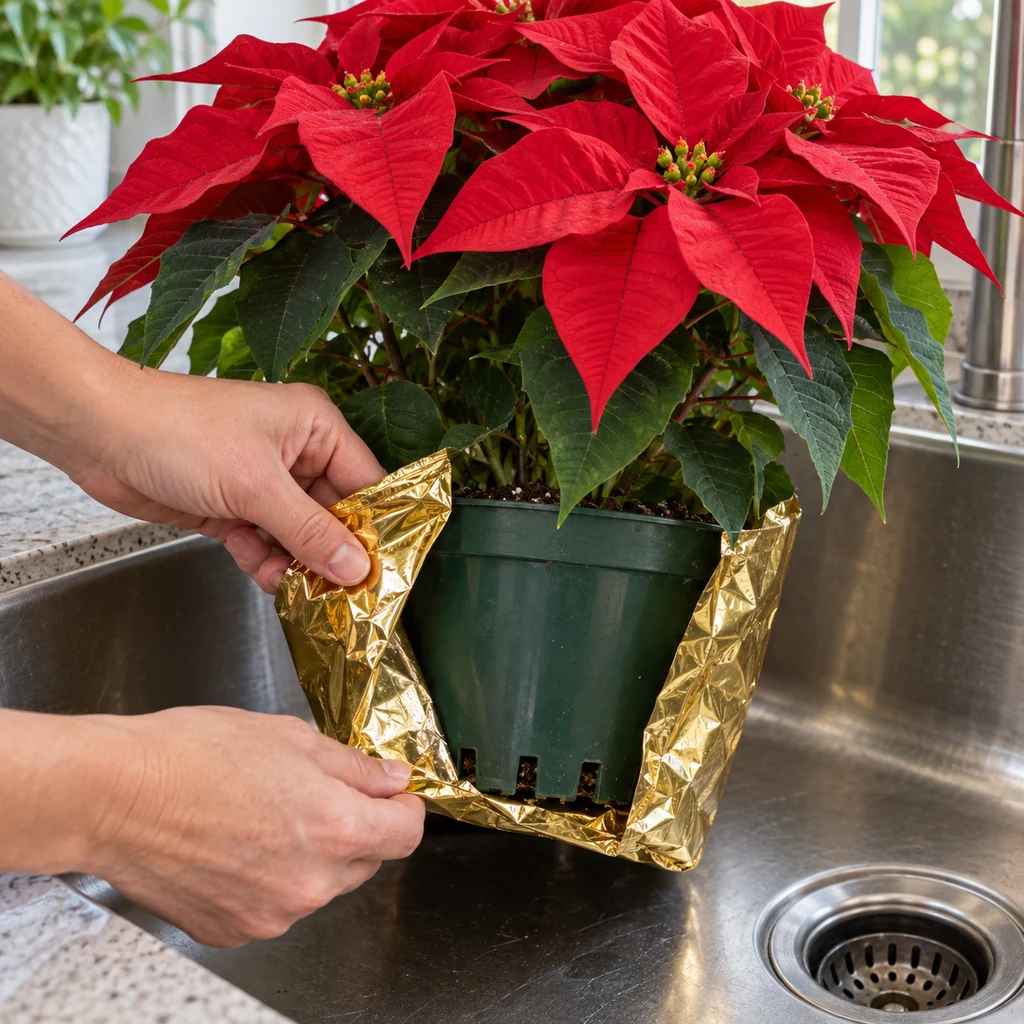
Most holiday plants arrive in a plastic nursery pot inside a decorative foil or plastic sleeve. Check that the inner pot has drainage holes. Remove the outer wrap for watering, or make an opening below the pot so runoff cannot collect around the roots. If you display the nursery pot inside a cachepot, lift it out to water and empty any water left in the outer container before replacing it.
This simple change matters more than a decorative pot upgrade. A poinsettia does not need to be repotted while it is colorful unless the container is damaged or the roots have a separate problem. Keep the existing pot stable and focus on drainage.
Step 3 — Give It Bright Light Without Temperature Swings
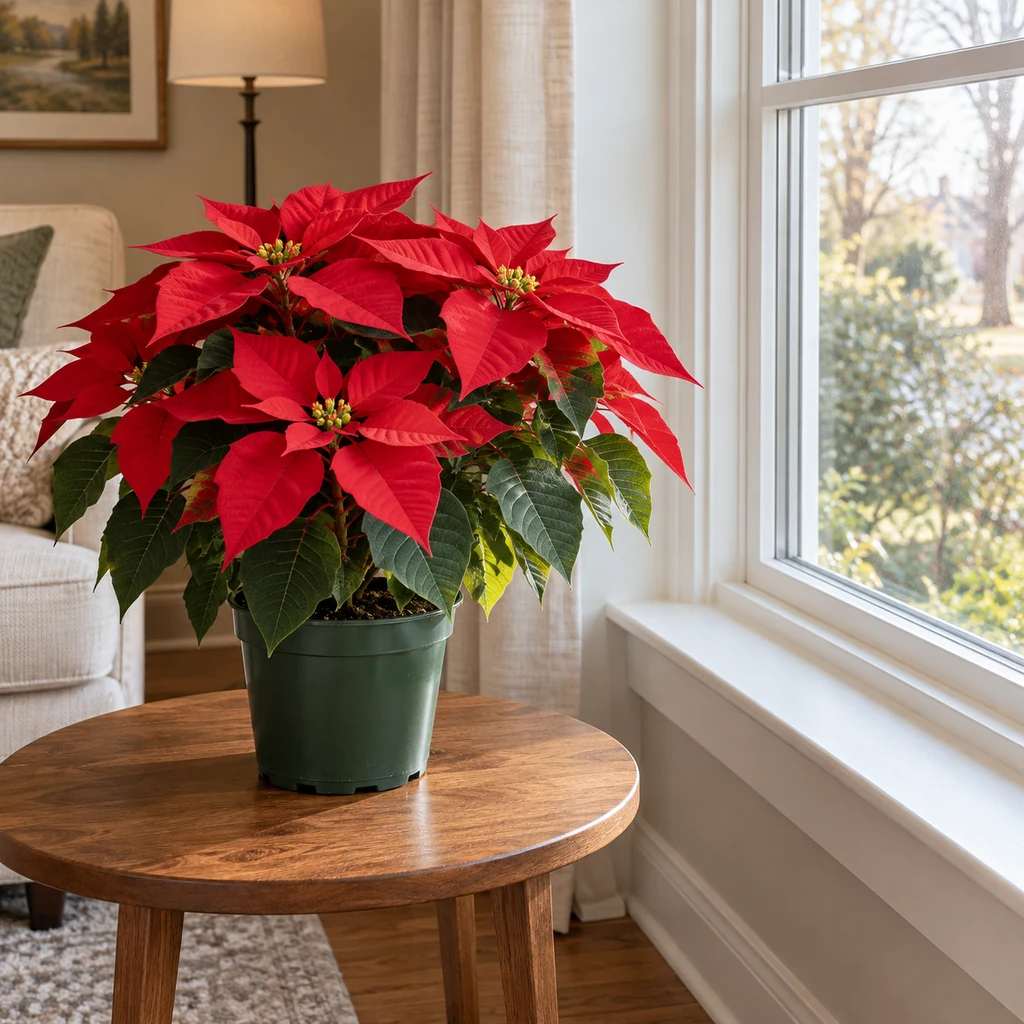
Set the pot near a bright east-, south-, or west-facing window where the light is filtered rather than harsh. Do not press the bracts against cold glass. Keep the plant out of the path of exterior doors, heating vents, radiators, and fireplaces. A display spot that looks perfect for an hour may become chilly overnight or hot when the heating system turns on.
Normal comfortable room temperatures around 60–70°F (16–21°C) suit a holiday display. If the only bright window is drafty, move the plant back from the pane and watch how the leaves respond. You can display it briefly elsewhere for a gathering, then return it to its regular light within a day or two.
Step 4 — Check the Soil Instead of the Calendar
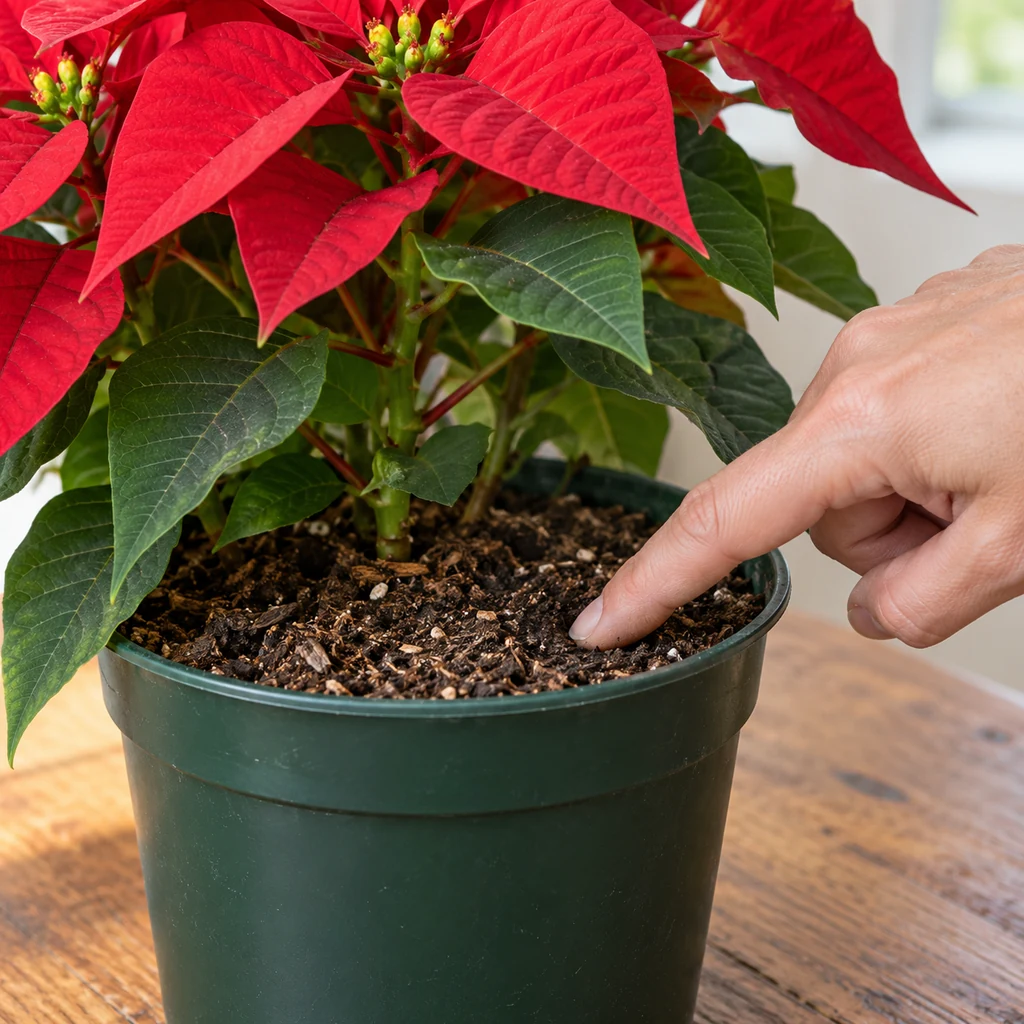
Touch the surface of the potting mix near the rim. If it still feels moist, wait and check again. If the surface is dry, water. Check frequently during the first week in your home: a small plastic pot beside a bright window behaves differently from a larger clay pot in a cooler room. There is no reliable “every three days” rule for every poinsettia.
Lift the pot occasionally as a second clue. It usually feels noticeably lighter when the mix has dried. Do not wait for dramatic wilting; severe drying can cause premature leaf drop. Likewise, do not add a little water every day while the root zone remains wet.
Step 5 — Water Thoroughly, Then Let It Drain
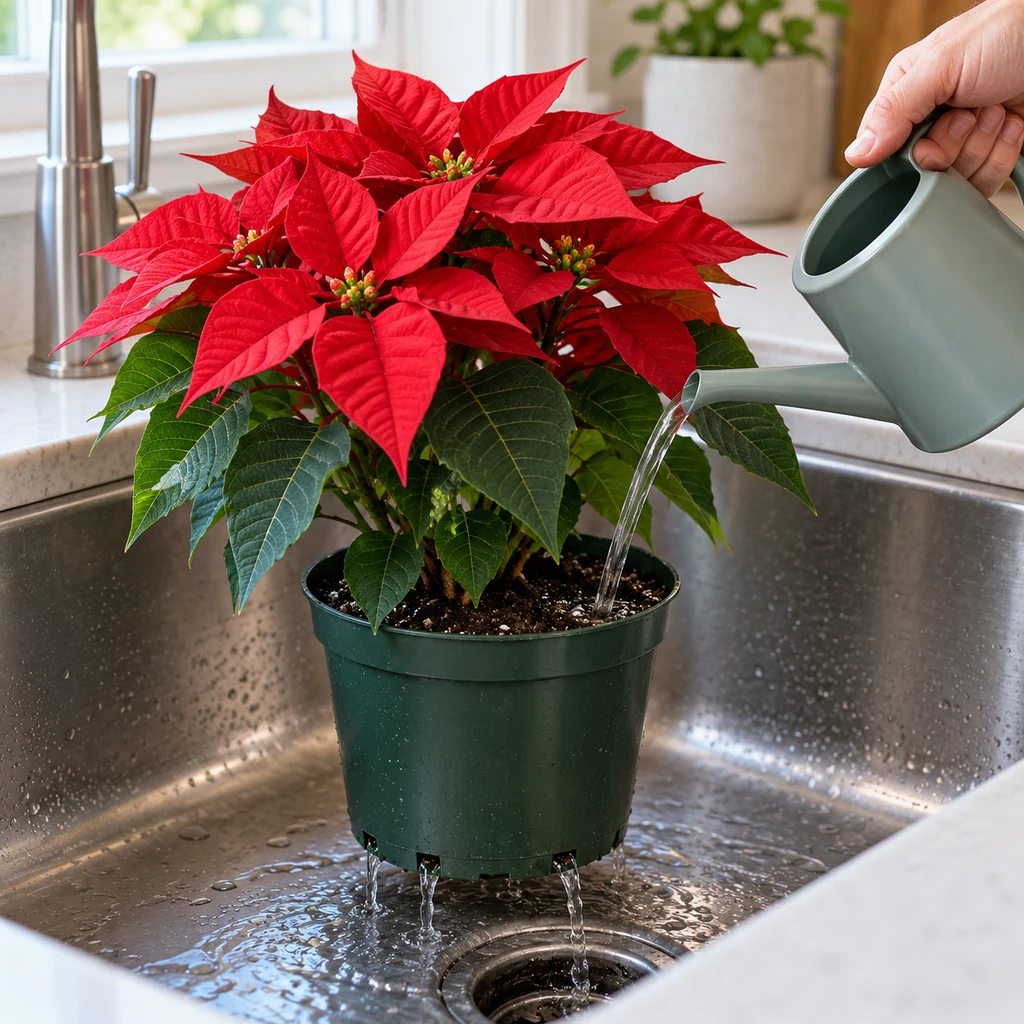
Take the nursery pot to a sink after removing its decorative cover. Pour water gently over the soil rather than over the colored bracts. Continue until water begins to flow from the drainage holes, then leave the pot in the sink until dripping slows. Return it to a dry saucer or cachepot and discard any runoff that collects later.
Do not let the pot stand in water. Root damage from a constantly wet container can resemble drought at first: leaves may droop even though the soil is soaked. If that happens, stop adding water, make sure the pot drains, and reassess the plant over the next several days.
What Yellow Leaves or Leaf Drop Are Telling You
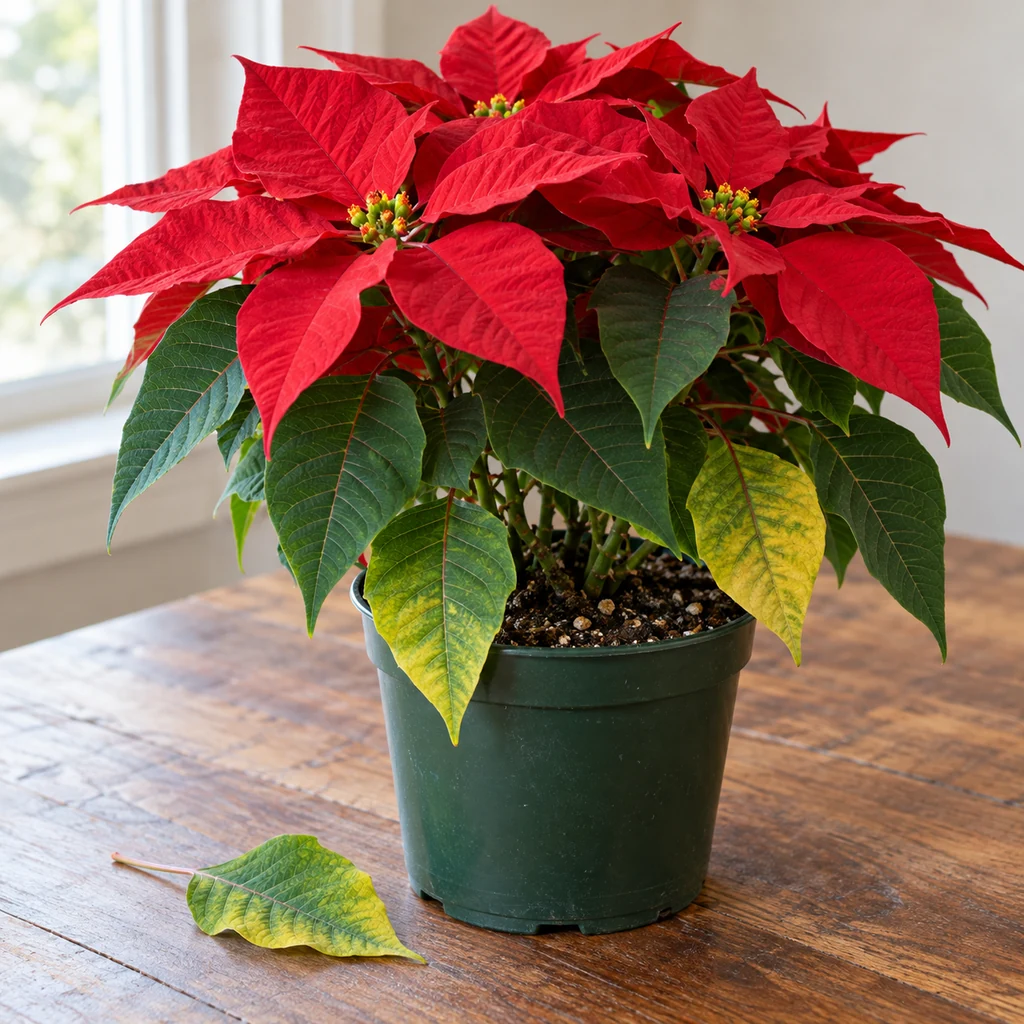
- Yellowing lower leaves with wet soil: Check for trapped water in foil, a saucer, or a cachepot. Clear the drainage path and let the surface begin to dry before the next watering.
- Drooping with dry soil: Water thoroughly, drain the pot, and monitor it. A badly dried plant may lose some leaves even after you correct the moisture.
- Leaves falling after a move: Review the route from the shop and the new display spot. Cold exposure, drafts, and heating vents can all stress the plant.
- Blackened tissue after freezing exposure: Move the plant to a stable indoor temperature. Damaged leaves will not turn green again; judge the remaining stems and foliage rather than expecting instant recovery.
If the soil stays wet for days, smells sour, and the plant continues collapsing, root damage may be involved. Do not claim that a photograph of yellow leaves proves root rot. Check the actual moisture and drainage first; if the plant continues to decline, ask a local garden center or extension service for a closer diagnosis.
A Simple Holiday Care Routine
Choose one bright, stable display location. Each day, give the soil surface a quick check and notice whether the lower leaves still look firm. Water only when the surface is dry, then drain completely. Empty the saucer. If you move the plant to a dining table for a party, return it to light afterward.
There is no need to fertilize a poinsettia while it is in its colorful holiday display. If you decide to keep it as a houseplant after the holidays, the longer-term care and reblooming schedule is a different project. For another seasonal plant with a distinct set of problems, see our guide to Christmas cactus bud drop. If you want a second indoor winter display, learn how to grow paperwhites in water without bulb rot.
Frequently Asked Questions
How often should I water a poinsettia indoors?
Check the soil surface frequently and water when it feels dry. Pot size, room temperature, light, and container material change how quickly it dries. Let water run from the drainage holes and never leave the pot sitting in the runoff.
Can a poinsettia sit on a windowsill?
Only if the sill is wide and warm enough to keep every leaf away from cold glass and drafts. A table a short distance from a bright window is often safer than a narrow, cold sill.
Will yellow poinsettia leaves turn green again?
Usually not. Focus on correcting the cause and keeping the remaining foliage healthy. Remove a fully detached leaf from the display area, but do not strip the plant of every leaf that starts to change color.