
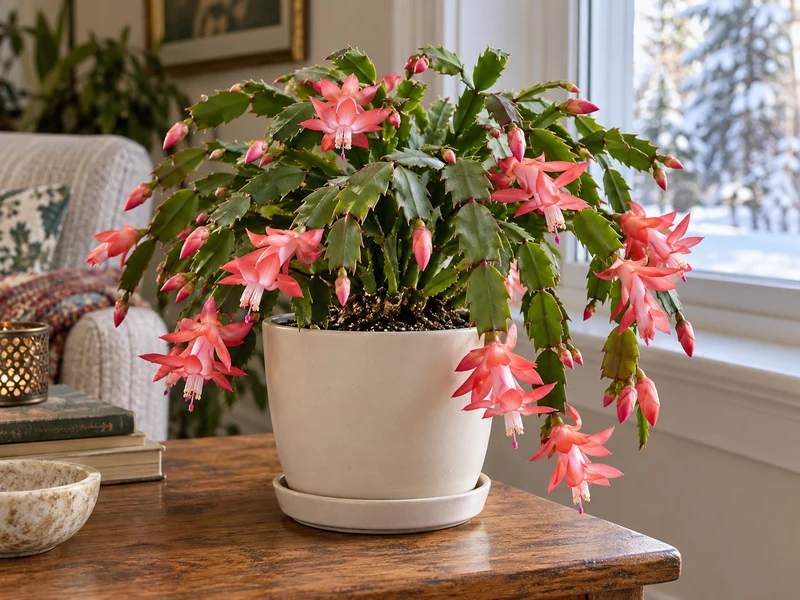
Christmas cactus bud drop is usually a stress response, not the end of the plant. A sudden move, a blast of warm or cold air, irregular watering, saturated soil, or a sharp change in light can make a budded holiday cactus shed flowers before they open. The best response is to stabilize its environment, then resist the urge to keep adjusting it.
This guide gives you a seven-point check in the order that causes the least disruption. It applies to Christmas cactus and the closely related Thanksgiving cactus commonly sold under the same name. Buds that have already fallen will not reattach, but steady care can help the plant hold the remaining buds and recover for its next bloom cycle.
Quick Answer: What to Do First
- Leave the plant in one bright, indirectly lit location.
- Move heat vents, fans, and frequently opened exterior doors out of its immediate airflow.
- Feel the potting mix before watering; keep it evenly moist while budding, never waterlogged.
- Empty the saucer after drainage.
- Postpone repotting, fertilizing, pruning, and repeated rotation until flowering is over.
Do not make all seven changes at once. Check the simplest environmental causes first, correct the most obvious problem, and give the plant several days of consistency.
First, Make Sure You Have a Holiday Cactus
Most plants sold as “Christmas cactus” are Thanksgiving cactus or a hybrid. Both belong to the genus Schlumbergera, grow as rainforest epiphytes in nature, and need similar indoor care. Unlike desert cacti, they do not want to remain bone-dry for long periods.
- Thanksgiving cactus: stem segments usually have pointed, claw-like edges and often bloom from late fall into December.
- True Christmas cactus: stem segments have smoother, rounded or scalloped edges and often bloom a little later.
- Easter cactus: has more rounded segments and normally follows a different late-winter-to-spring schedule.
The green “leaves” are actually flattened stem segments. This distinction matters when you inspect the plant: healthy segments should feel firm rather than limp, translucent, or mushy.
1. Stop Moving or Rotating a Budded Plant
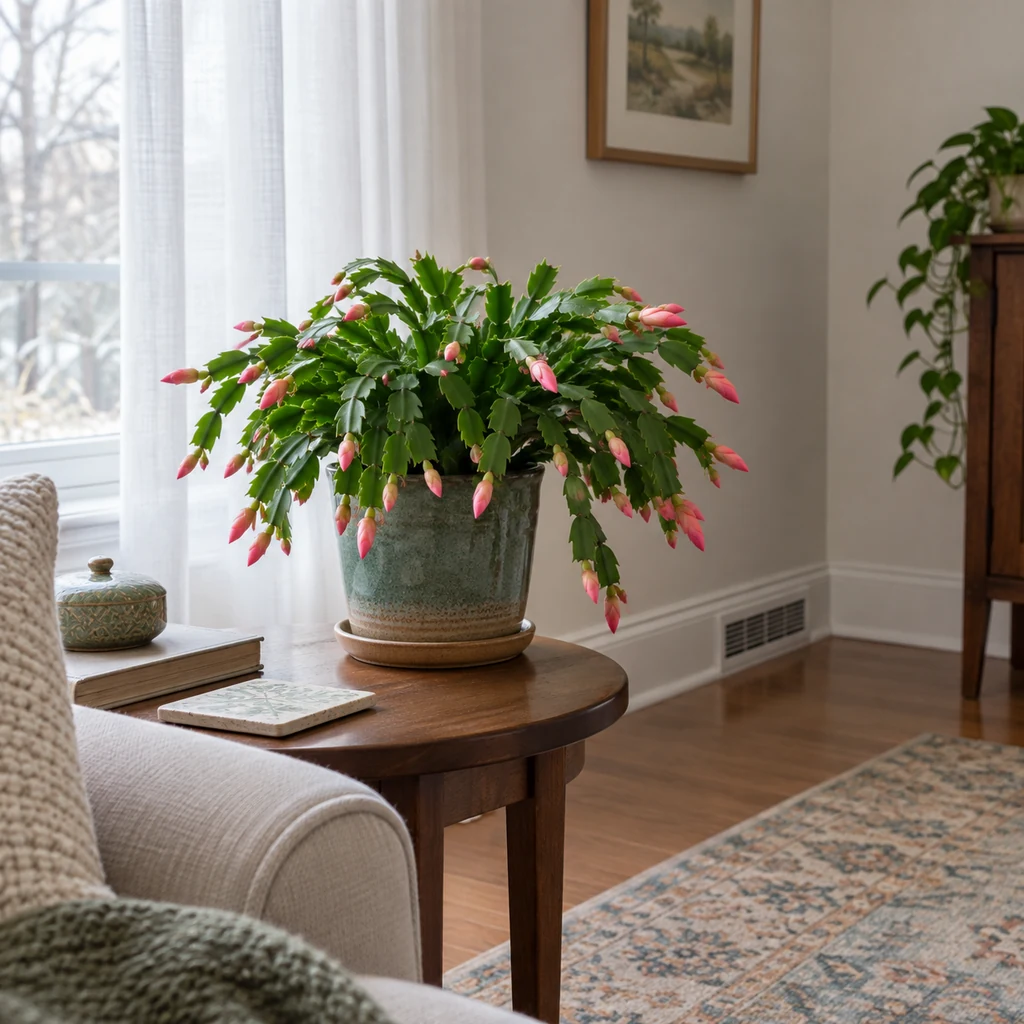
A holiday cactus adapts to the light, temperature, and humidity of its location. Moving it from a cool growing area to a warm living room—or repeatedly turning it for even growth—changes several conditions at once. During bud development, that shift can trigger bud drop.
If the plant is healthy where it is, stop relocating it until the first flowers begin to open. If you must move it away from a damaging draft or heat source, choose the new place once and leave it there. Marking the window-facing side of the pot can help you maintain the same orientation after watering.
2. Check for Temperature Swings and Drafts
Holiday cacti set and hold buds best under cool, steady conditions. Aim for roughly 65–70°F (18–21°C) during the day and 55–65°F (13–18°C) at night. Temperatures above about 70°F can interfere with bud formation, while exposure below about 50°F may cause developing buds to fall.
Look beyond the thermostat. A plant can experience rapid swings on a sunny windowsill, beside a radiator, over a forced-air vent, near a fireplace, or beside an exterior door. Keep the foliage from touching cold glass. If you are carrying a newly purchased plant home in winter, protect it from cold air during transport.
3. Provide Bright, Indirect Light
Place the plant where it receives bright, filtered light rather than harsh midday sun. A sheer curtain can soften a very bright window. Direct sun can stress the flattened stems, while a dim corner may not supply enough energy to finish the flowers.
Light consistency is as important as intensity once buds appear. Do not shuttle the pot between a dark closet and a bright room after bud development has begun. The long-night treatment used to initiate buds happens earlier in the season; after buds are visible, stable everyday care is the priority.
4. Correct the Watering Pattern—Not Just the Amount
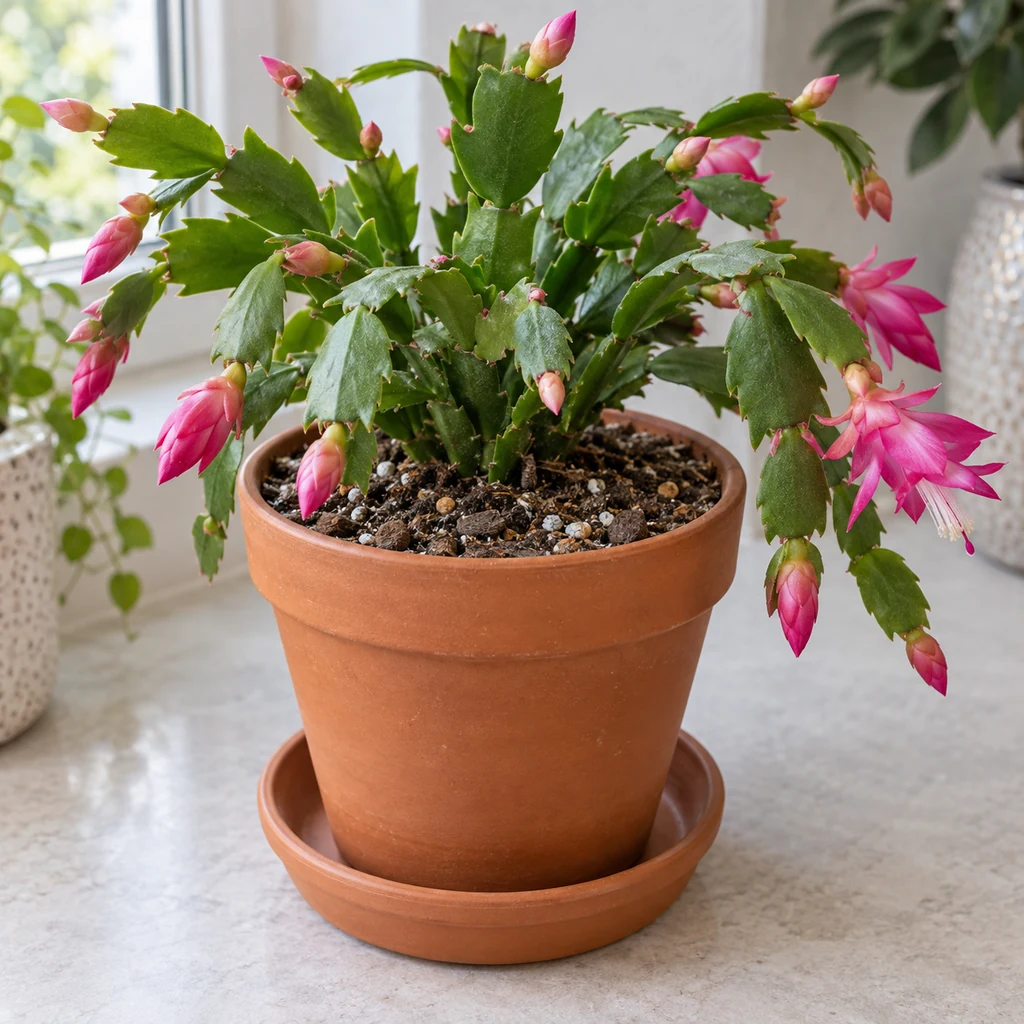
Both a dry root ball and saturated soil can lead to Christmas cactus bud drop. During budding and flowering, the mix should remain lightly and evenly moist—not constantly wet. Check the soil with a finger instead of watering on a fixed calendar. When the surface begins to feel dry, water thoroughly from the top until water exits the drainage holes, then empty the saucer.
If the mix is still wet several days after watering, pause. Confirm that the pot has open drainage holes and that it is not sitting inside a decorative cachepot full of water. A heavy, airless mix can damage roots, making the stems look thirsty even though the soil is wet. In that situation, adding more water makes the problem worse.
For a trip during bloom season, use the same principle as the plan in how to water plants while on vacation: test the actual mix, water before departure only if needed, and avoid improvised systems that keep roots continuously soaked.
5. Raise Humidity Gently
Holiday cacti evolved in humid forest conditions and can struggle beside dry indoor heat. Low humidity is most often a contributing stress rather than the only cause, so correct drafts and watering first.
Group the plant near other houseplants, run a clean room humidifier nearby, or set the pot above—not in—a tray of damp pebbles. Keep the pot base above the waterline so humidity rises around the plant without soaking the roots. Avoid repeatedly wetting flowers late in the day; good air movement around the plant still matters.
6. Pause Fertilizer, Repotting, and Pruning
A budded plant is not the time for a major root or canopy change. Holiday cacti bloom well when slightly pot-bound and may need repotting only every few years. Wait until flowering has finished, then repot in spring or early summer if roots have truly filled the container.
Do not fertilize a stressed, bud-dropping plant. Resume a balanced houseplant fertilizer at reduced strength during active spring and summer growth, following the product label. Pinching stem tips to encourage branching is also a warm-season task, not a rescue step during bloom.
7. Inspect Stems, Roots, and Pests
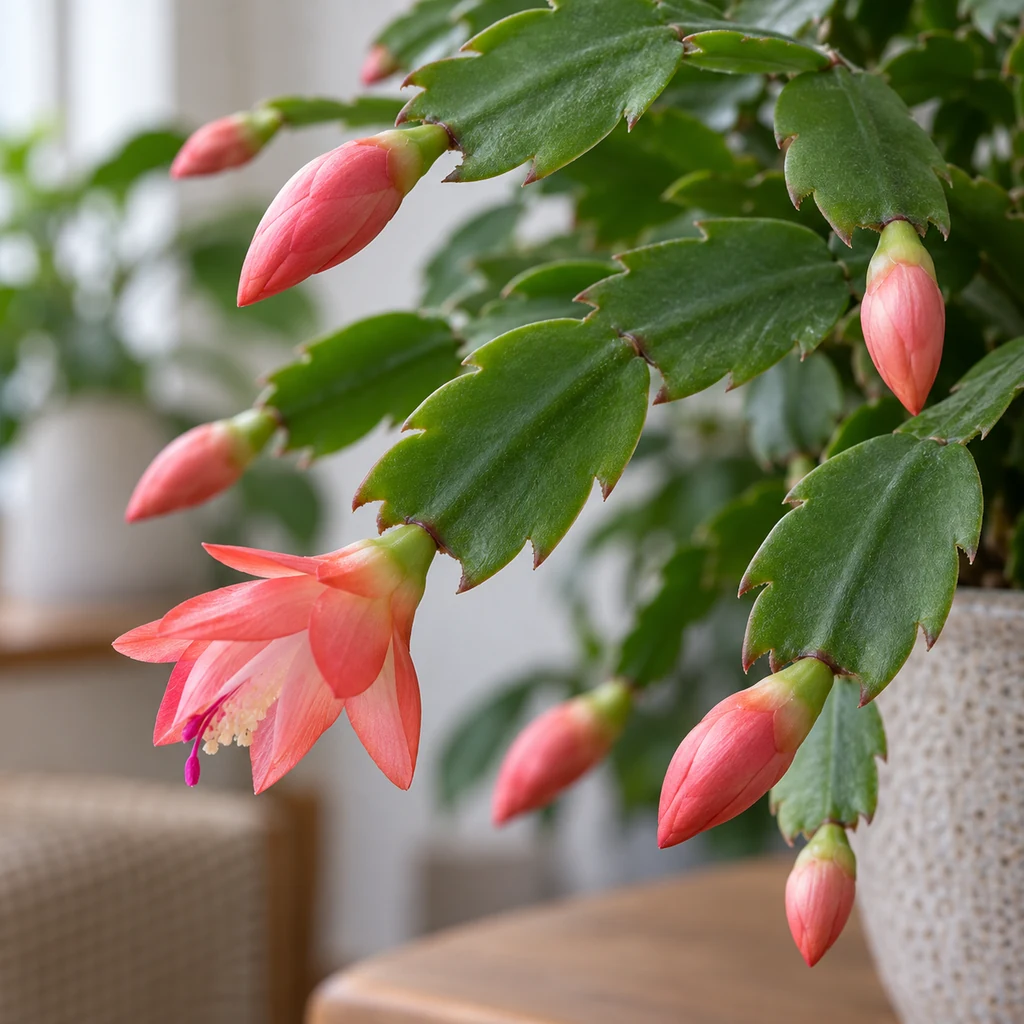
Inspect the junctions between stem segments and the area near the soil. Mealybugs may appear as white cottony clusters, scale as small fixed bumps, and spider mites as fine stippling or webbing. Isolate an affected plant from the rest of your collection before choosing a treatment appropriate for the identified pest.
If the potting mix smells sour, stays wet, and the plant has soft or dull gray-green segments, root damage is possible. Slide the root ball out only when the evidence is strong, because unnecessary inspection adds more stress. Healthy roots are generally firm; rotted roots are dark, soft, and may pull apart. Severe root rot requires removing damaged tissue and placing the plant in fresh, airy mix, but this is a rescue operation—not routine care for ordinary bud drop.
A 48-Hour Rescue Plan
Hour 0: Observe before changing anything
Note where the plant sits, how close it is to vents or doors, whether the soil is wet or dry, and whether stems are firm. Pick up dropped buds and inspect for insects. Take a photo so you can compare the plant later without handling it.
Hour 1: Fix one clear stress
If the soil is dry, water and drain it. If the saucer holds water, empty it. If a vent blows directly on the plant, redirect the airflow or choose one safer permanent spot. Do not combine watering, repotting, feeding, pruning, and relocation.
Hours 2–48: Hold conditions steady
Leave the plant alone in bright, indirect light. Keep temperatures moderate and check that no new airflow source appears overnight. A few more compromised buds may still fall; judge success by whether the rate slows and the remaining buds continue to swell.
What Not to Do When Buds Are Falling
- Do not water again simply because a bud fell.
- Do not move the plant daily to “find the perfect spot.”
- Do not repot a healthy-looking, actively budding plant.
- Do not apply fertilizer to force flowers open.
- Do not place the pot against cold window glass or over a heat register.
- Do not assume a desert-cactus schedule; Schlumbergera needs more consistent moisture.
How to Encourage Buds Next Season
For about six weeks in fall, provide cool nights and at least 12 hours of uninterrupted darkness. An unused room that stays dark after sunset is often easier than moving the plant in and out of a closet. During the day, give it bright, indirect light. Once buds are set, return to the steady-care checklist above.
After flowering, reduce watering slightly while the plant rests, but do not abandon it for months. In spring and summer, support fresh branching with consistent care. The same measured approach used for overwintering potted geraniums indoors applies here: light, temperature, and water have to work together.
If you are still learning how different indoor plants store water, compare this routine with indoor succulent care. Holiday cacti are succulent, but their rainforest background explains why they prefer a more evenly moist, airy root zone.
Frequently Asked Questions
Will dropped Christmas cactus buds grow back this season?
No. A bud that has detached will not reattach. Stabilizing conditions protects the remaining buds and improves the plant’s chance of flowering well in a future cycle.
Should I water immediately after a bud falls?
Only if the potting mix is beginning to dry. Bud drop has several causes, and watering already-wet soil can create root trouble. Always test the mix and check the saucer first.
Can I move a Christmas cactus once flowers open?
It is less sensitive after the first flowers begin opening, but a gradual move is still safer. Avoid a new location with dramatically warmer air, direct sun, or a draft.
Why are the stems wrinkled when the soil is wet?
Waterlogged soil can damage roots so they cannot supply the stems. Check drainage and allow the mix to lose excess moisture. If the plant remains limp and the soil smells sour, inspect for root rot.
Does a Christmas cactus need complete darkness after buds appear?
No special darkness routine is needed once buds are clearly set. Keep normal nights reasonably dark and focus on stable light, temperature, and moisture. Long uninterrupted nights are mainly used to initiate buds earlier in fall.
The useful pattern is simple: diagnose before acting, change only what is clearly wrong, and keep the plant’s environment steady. That calm approach gives the remaining buds their best chance to open—and avoids turning one manageable stress into several.