
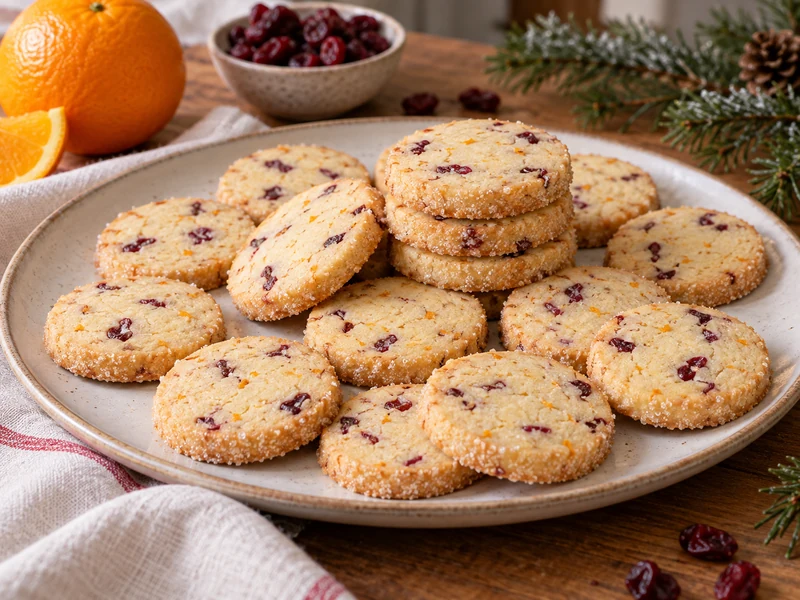
These cranberry orange shortbread cookies are buttery, crisp-tender, and bright with fresh orange zest. Finely chopped dried cranberries create festive red flecks without adding the moisture of fresh fruit, while a chilled slice-and-bake log keeps the rounds neat and evenly sized.
RECIPE CARD
Cranberry Orange Shortbread Cookies With Clean Slices
Ingredients
- 1 cup (226 g) unsalted butter, softened to cool room temperature
- 2/3 cup (80 g) powdered sugar, sifted if lumpy
- 1 packed tablespoon finely grated orange zest, from about 1 large orange
- 1 teaspoon vanilla extract
- 1/2 teaspoon fine sea salt
- 2 cups (240 g) all-purpose flour, spooned and leveled or weighed
- 1/4 cup (30 g) cornstarch
- 2/3 cup (85 g) sweetened dried cranberries, chopped into roughly 1/8-inch pieces
- 3 tablespoons (38 g) coarse sparkling sugar, for rolling
Quick Method
Condensed overview. Use Full Instructions for the complete method, timing and doneness details.
- Prepare the flour and fruit: Whisk the flour and cornstarch together. Chop the dried cranberries into pieces about 1/8 inch across.
- Mix the butter base: Beat the butter, powdered sugar, orange zest, vanilla, and salt on medium-low for 1 to 2 minutes, until smooth but not excessively fluffy.
- Finish the dough: Mix in the flour mixture on low just until no dry flour remains, then fold in the chopped dried cranberries.
- Shape and coat the log: Form one compact 8- to 9-inch cylinder about 1 3/4 inches in diameter. Roll it in coarse sugar and wrap it snugly in parchment.
- Chill the dough: Refrigerate the wrapped log for at least 2 hours and up to 48 hours, turning it once during the first 30 minutes for a…
- Slice the log: Heat the oven to 325°F (160°C). Cut the chilled log into 1/4-inch rounds with a thin sharp knife, rotating it a quarter turn after…
- Bake and cool: Bake up to 12 cookies per parchment-lined sheet for 16 to 19 minutes, until matte and set with lightly golden lower edges. Cool on…
The recipe focuses on the details that make slicing easier: cool room-temperature butter, small cranberry pieces, a tightly shaped log, a full chill, and a quarter-turn between cuts. The result is about 32 cookies with pale centers, lightly golden lower edges, and a delicate sparkling-sugar rim.
Why This Shortbread Slices More Cleanly
- Dried fruit instead of fresh: dried cranberries add concentrated flavor without wet pockets that soften the dough.
- Very small pieces: chopping the cranberries to roughly 1/8 inch lets the knife pass through rather than dragging large pieces from the log.
- Cornstarch: a small amount supports a tender, fine crumb without making the dough sticky.
- A firm chill: two hours in the refrigerator gives the butter time to become evenly firm from edge to center.
- Rotation while slicing: turning the log a quarter turn after each cut helps prevent one flat side.
Ingredients
- 1 cup (226 g) unsalted butter, softened to cool room temperature
- 2/3 cup (80 g) powdered sugar, sifted if lumpy
- 1 packed tablespoon finely grated orange zest, from about 1 large orange
- 1 teaspoon vanilla extract
- 1/2 teaspoon fine sea salt
- 2 cups (240 g) all-purpose flour, spooned and leveled or weighed
- 1/4 cup (30 g) cornstarch
- 2/3 cup (85 g) sweetened dried cranberries, chopped into roughly 1/8-inch pieces
- 3 tablespoons (38 g) coarse sparkling sugar, for rolling
Wash and dry the orange before zesting it. Remove only the fragrant orange-colored surface; the white pith beneath it tastes bitter. Use dried cranberries rather than fresh or frozen berries because the moisture level and cutting behavior are different.
Step-by-Step Instructions
Step 1: Prepare the dry ingredients and cranberries
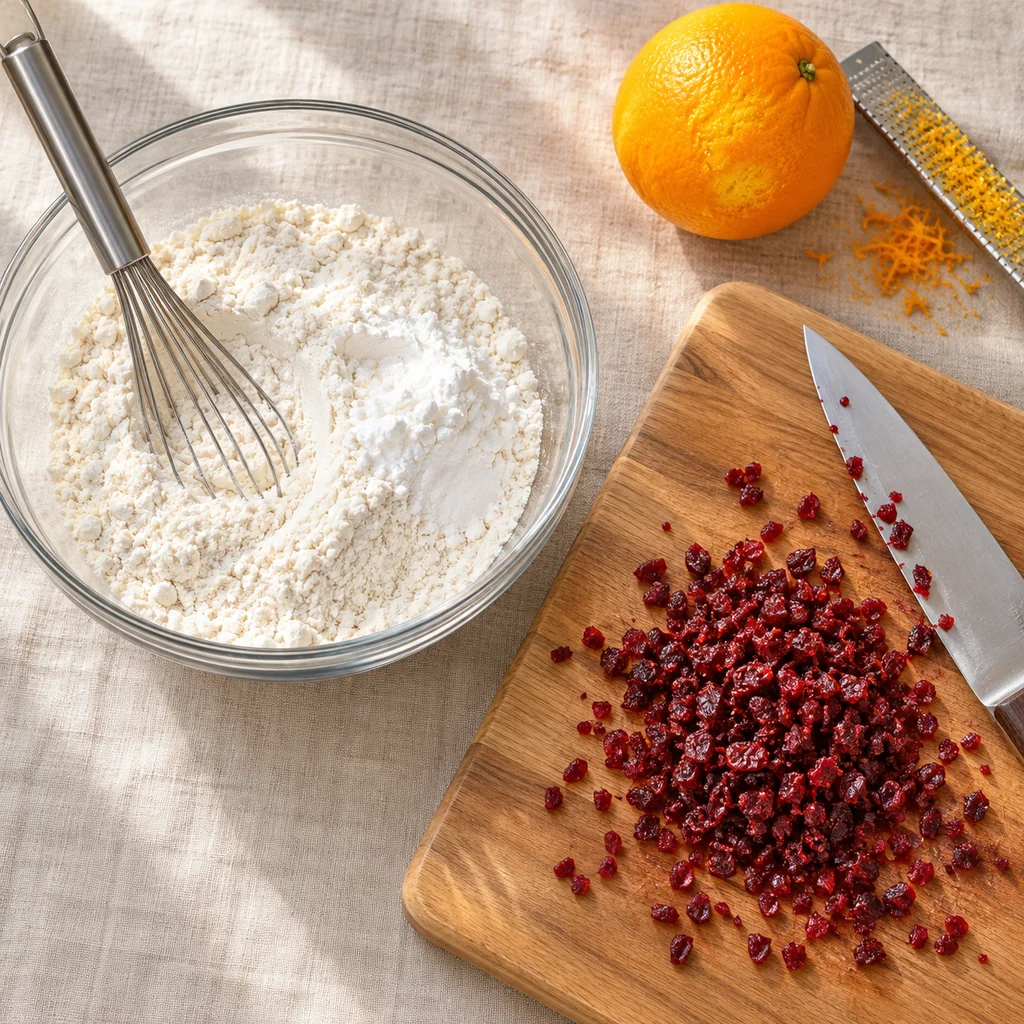
Whisk the flour and cornstarch together in a medium bowl until no cornstarch pockets remain. Chop the dried cranberries with a sharp knife until most pieces are about 1/8 inch. Separate any pieces that have stuck into large clumps.
This fine chop is one of the most important details in the recipe. Large, leathery pieces can catch under the blade and tear the edge of a chilled slice.
Step 2: Mix the butter base
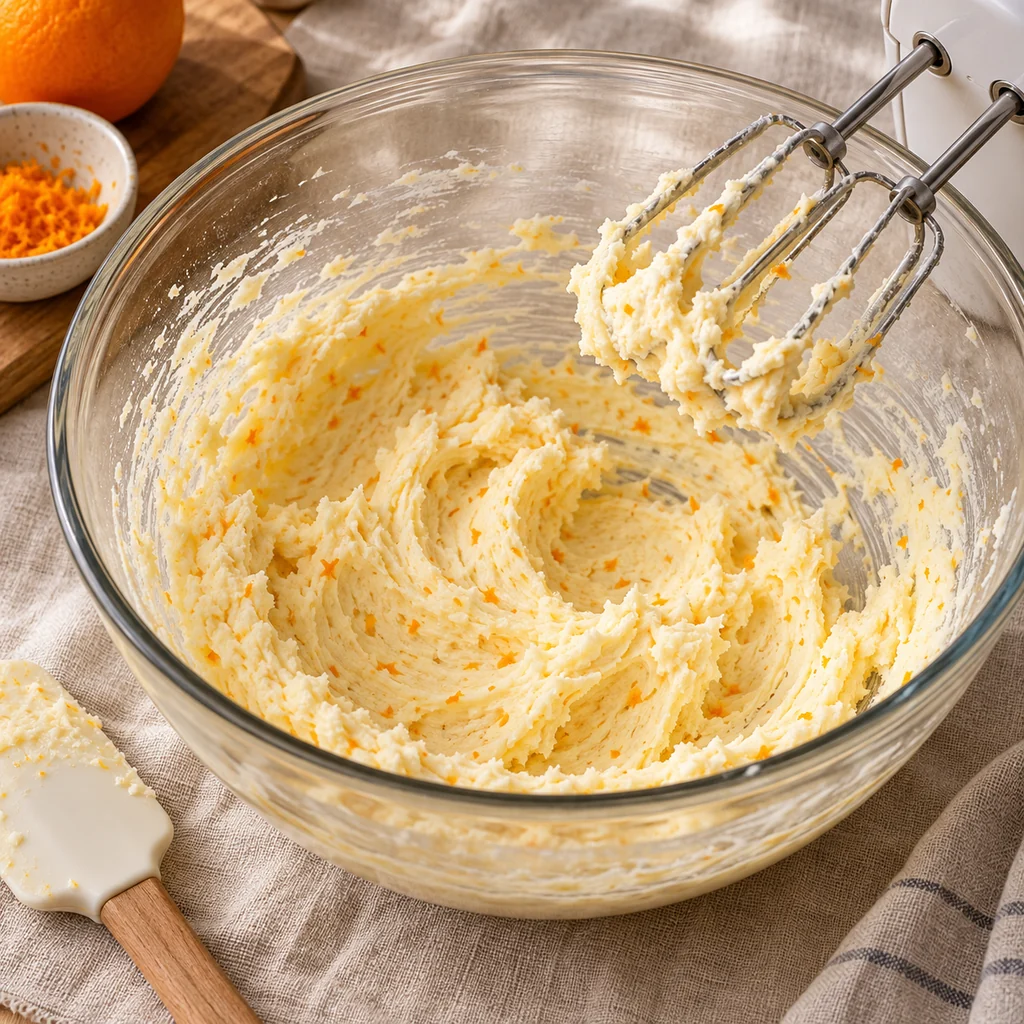
Place the butter, powdered sugar, orange zest, vanilla, and salt in a large bowl. Beat on medium-low speed for 1 to 2 minutes, stopping once to scrape the bowl. The mixture should be smooth and creamy but does not need to become dramatically pale or fluffy.
Butter at cool room temperature should accept a fingertip impression while still holding its shape. If it looks shiny or oily, refrigerate the bowl for 10 minutes before adding the flour. Overly warm butter makes a soft log and encourages spreading.
Step 3: Finish the dough
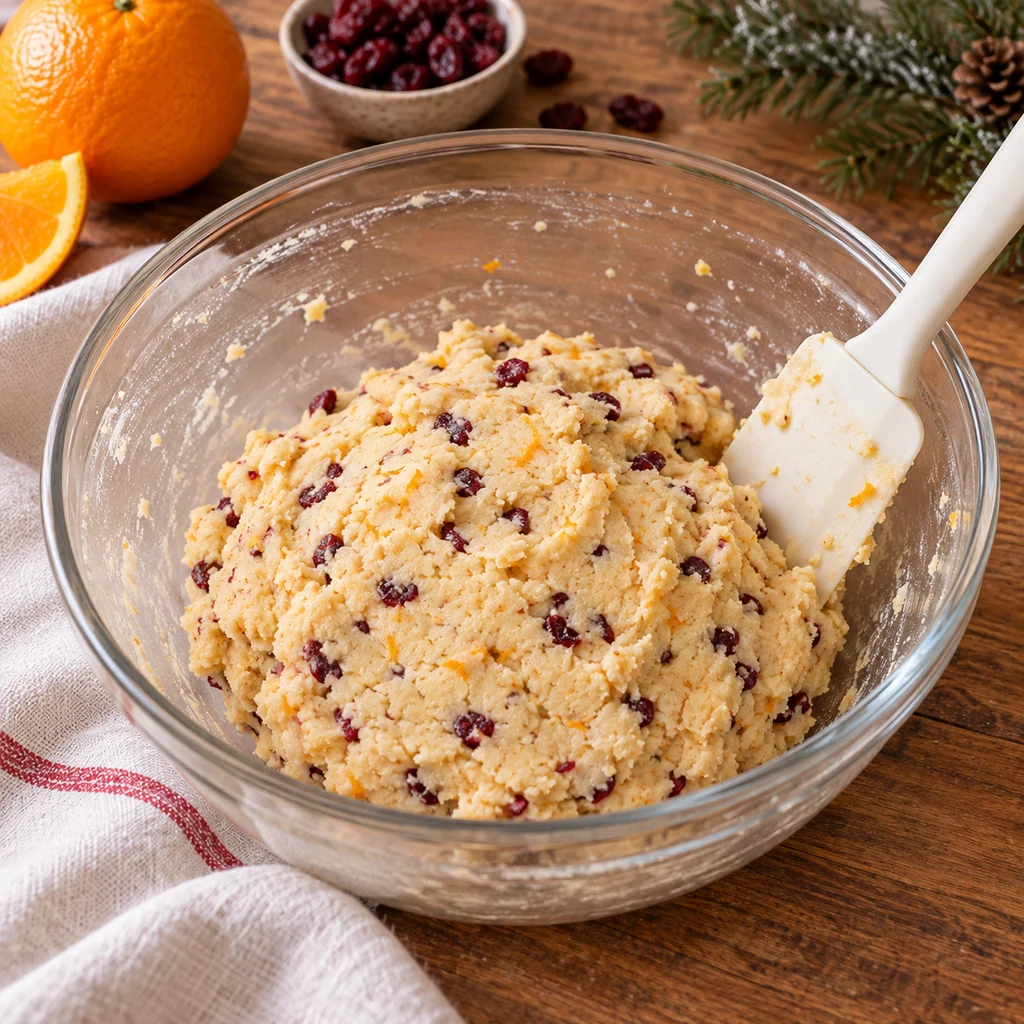
Add the flour mixture in two additions and mix on low just until the visible flour disappears. Fold in the chopped cranberries with a sturdy spatula, distributing them from the bottom of the bowl upward.
Press a tablespoon of dough between your fingers. It should hold together cleanly. If loose crumbs remain at the bottom, press and fold the dough several times with the spatula before considering any adjustment. Do not add orange juice; it changes both the moisture and the short texture.
Step 4: Shape and sugar the log
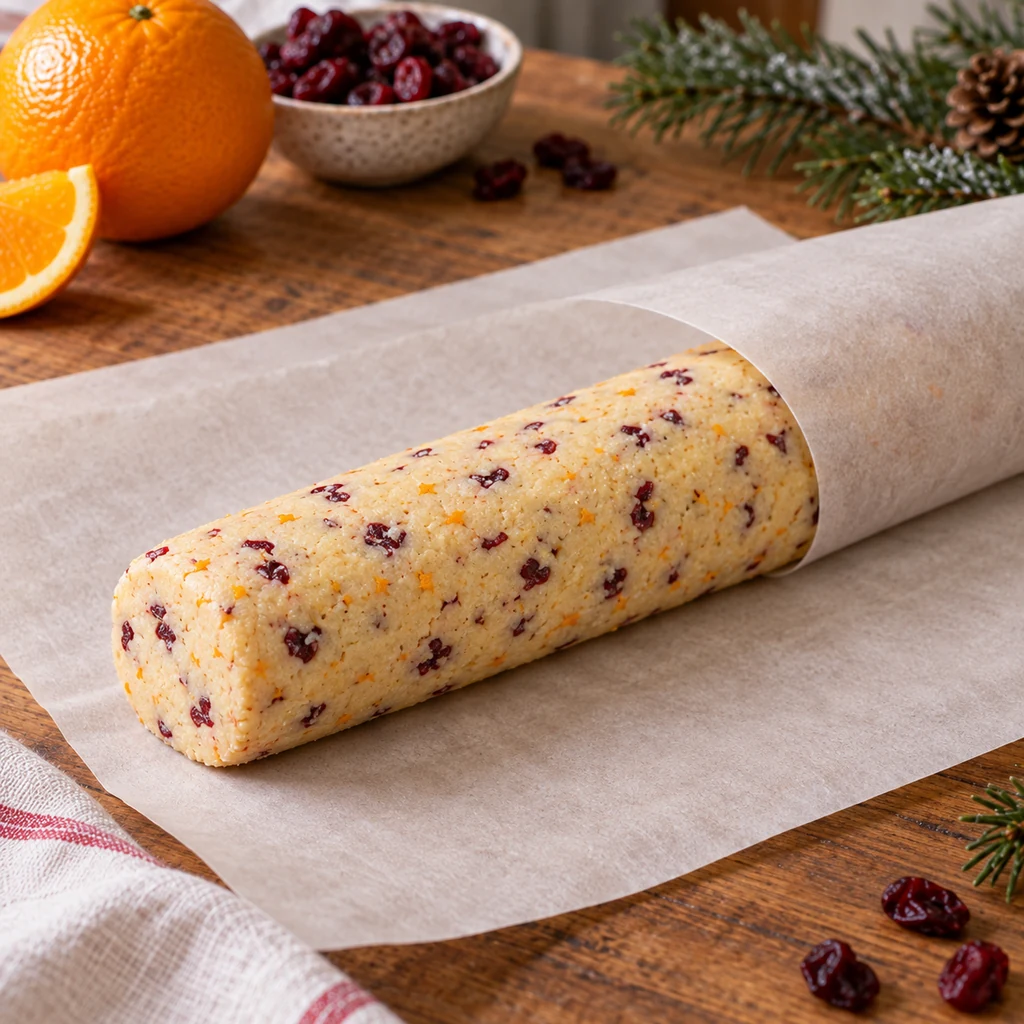
Transfer the dough to a sheet of parchment and press it into one compact log about 8 to 9 inches long and 1 3/4 inches in diameter. Roll it back and forth gently to even the cylinder. Press the ends against a bench scraper or the flat side of a spatula so they are not tapered.
Spread the coarse sugar in a shallow tray and roll the uncovered log through it, pressing lightly so the crystals adhere. Return the log to the parchment, wrap it snugly, and twist the ends. Slide a bench scraper under the loose parchment edge and push it toward the log while pulling the upper sheet in the opposite direction; this tightens the cylinder without squeezing the ends.
Step 5: Chill until firm throughout
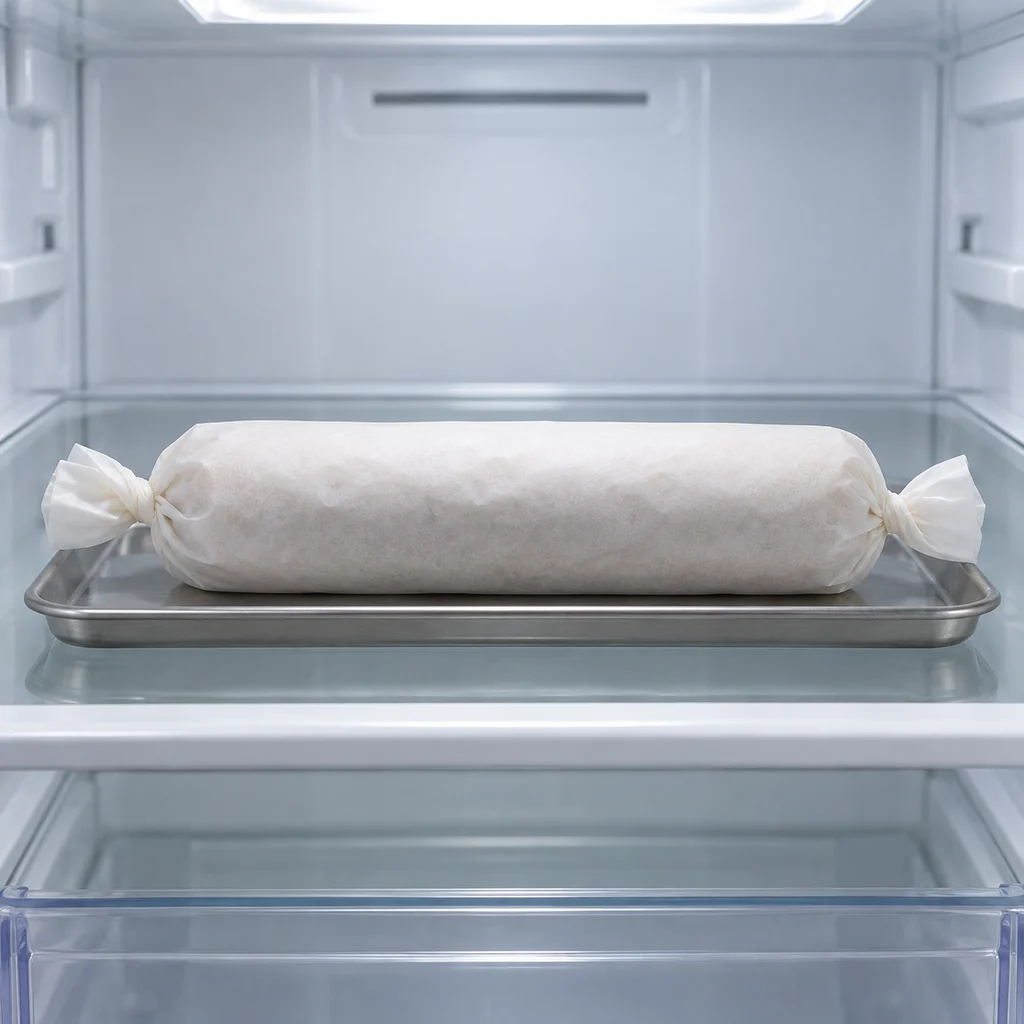
Refrigerate the wrapped log for at least 2 hours and up to 48 hours. For the roundest cookies, turn the log onto a different side after the first 30 minutes, while it is firming but not yet hard.
When ready to bake, heat a conventional oven to 325°F (160°C). Line two light-colored baking sheets with parchment. A dark pan can brown the cookie bottoms before the centers are ready.
Step 6: Slice without flattening the log
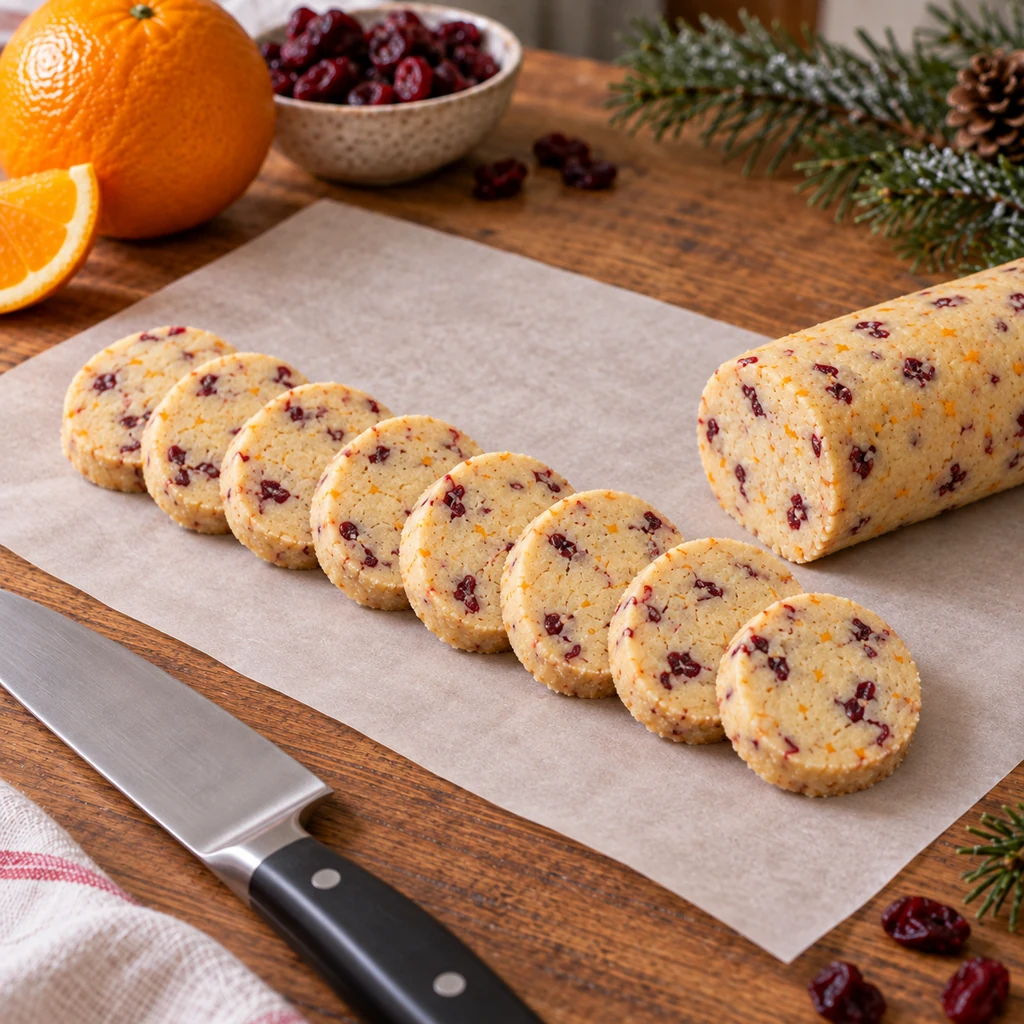
Unwrap the chilled log and place it on a stable cutting board. Use a thin, sharp chef’s knife to cut rounds about 1/4 inch thick. Press straight down in one decisive motion instead of sawing aggressively. Rotate the log a quarter turn after each slice.
If the dough fractures immediately, leave the log at room temperature for 5 minutes and try again. If the slices bend or smear, return it to the refrigerator for 15 minutes. Press a small crack back together at the edge before placing the round on the tray.
Step 7: Bake until set but still pale
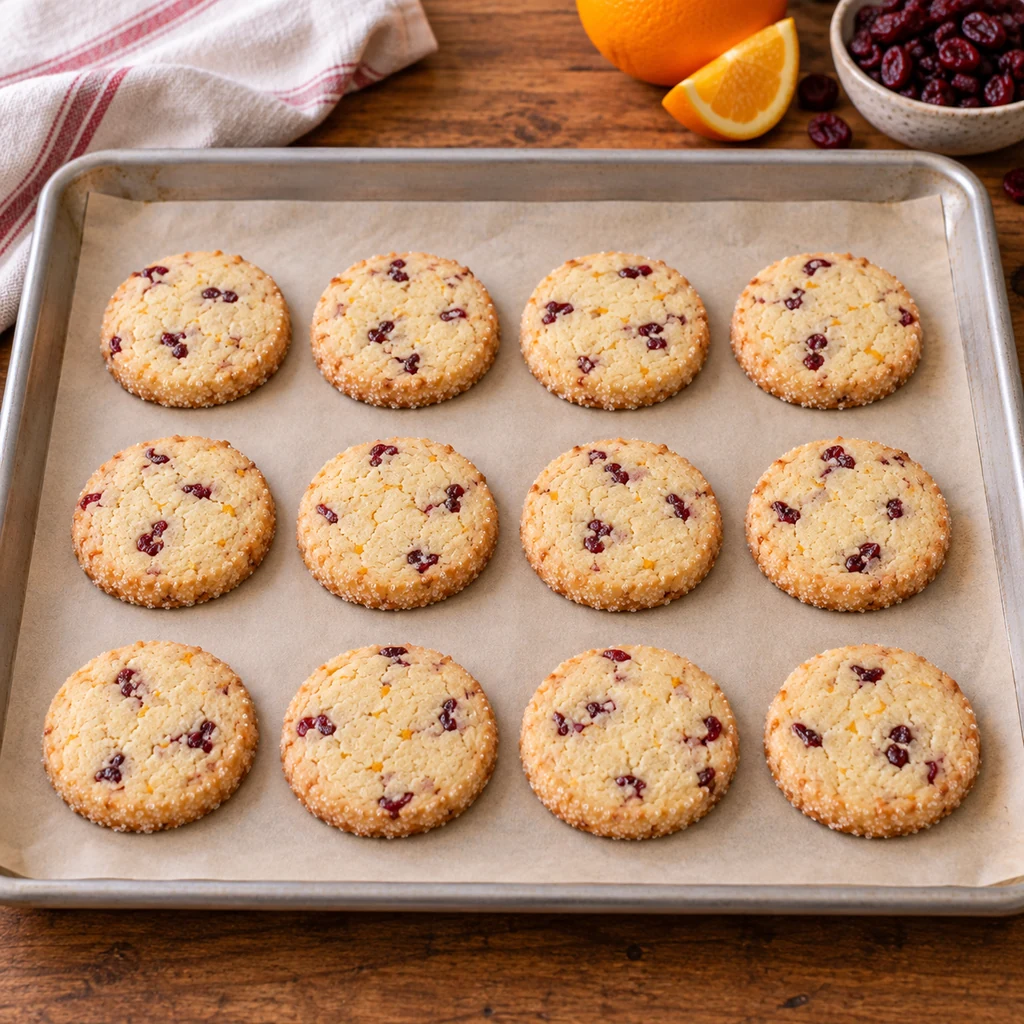
Arrange up to 12 rounds on each prepared sheet, leaving about 1 1/2 inches between them. Bake one sheet at a time on the center rack for 16 to 19 minutes. Rotate the pan from front to back after about 10 minutes if the oven browns unevenly.
The cookies are ready when the tops look set and matte, the centers remain pale, and the bottom outer edges show only a light golden color. Deep browning makes shortbread taste dry. Let the cookies stand on the hot pan for 5 minutes, then move them to a wire rack to cool completely.
How to Prevent Crumbly or Uneven Slices
The log cracks as soon as the knife enters
The butter may be too cold, or a large cranberry piece may be blocking the cut. Let the log rest for 5 minutes, use a sharp blade, and press straight down. Do not microwave the dough; the outside can soften while the center stays hard.
The rounds develop a flat side
Rotate the log after every cut. During the first 30 minutes of chilling, turn it once or twice so gravity does not settle the soft cylinder onto one side.
The dough is sandy and will not form a log
First compress a small portion in your hand. Shortbread can look loose before pressure brings it together. If the butter was too cold, let the bowl stand for a few minutes and fold the dough firmly. Avoid adding liquid unless the ingredients were measured incorrectly.
The cookies spread
Make sure the butter was not oily during mixing and the log chilled fully. Place slices on cool baking sheets, not pans that are still warm from a previous batch. Weighing the flour is the most reliable way to avoid an under-measured amount.
The fruit tears out of the cookie edge
Chop the dried cranberries more finely next time. For the current batch, press the torn section back into place before baking; shortbread dough repairs easily while cold but still pliable.
Make-Ahead and Freezer Instructions
The wrapped dough log can stay refrigerated for up to 48 hours. For longer storage, wrap the parchment-covered log in a freezer-safe layer and freeze it for up to 2 months. Thaw overnight in the refrigerator before slicing. If the center is still rock-hard, give it several minutes at room temperature rather than forcing the knife.
You can also freeze the individual raw rounds on a parchment-lined tray until firm, then transfer them to a freezer container with parchment between layers. Bake from frozen, adding approximately 2 to 4 minutes and using the same visual doneness cues.
Storage and Gifting
Cool the cookies completely before packing. Store them in an airtight container at room temperature for up to 5 days, placing parchment between layers to protect the sugar edge. For longer storage, freeze the baked cookies for up to 2 months and thaw them inside the closed container so condensation forms on the container rather than the cookies.
For a gift box, pair these red-flecked rounds with a contrasting cookie such as matcha checkerboard shortbread or black cocoa thumbprint cookies. Keep strongly flavored or very moist treats in separate compartments so the shortbread remains crisp.
Easy Variations
- Lemon cranberry: replace the orange zest with the same amount of finely grated lemon zest.
- No sugar rim: omit the coarse sugar for a simpler, less sparkly edge; the baking time stays the same.
- Vanilla citrus: omit the cranberries and increase the flour by 1 tablespoon to replace some of their dry bulk.
- Smaller cookies: shape a narrower log and begin checking a minute or two earlier; use color and set texture rather than the clock alone.
For more colorful holiday-cookie inspiration, try the butterfly pea crinkle cookies. If you need a warm dessert for a smaller table instead, the small-batch apple crumble serves two without a full tray of leftovers.
Frequently Asked Questions
Can I use fresh cranberries?
Not as a direct substitution. Fresh cranberries contain much more water and behave differently under the knife and in the oven. This formula is designed for sweetened dried cranberries.
Do I need to chill the dough for the full two hours?
Yes. The center needs to become firm, not just the surface. A partially chilled log compresses under the knife and may spread more in the oven.
Can I make the dough without a mixer?
Yes. Use very soft but not oily butter and a sturdy wooden spoon. Mix the butter base until smooth, then work in the dry ingredients gradually. Stop as soon as the dough comes together.
Why are shortbread cookies supposed to stay pale?
The pale color signals a tender, buttery interior. The cookies should be fully set, but strong browning dries the crumb. Look for matte tops and just a faint golden color at the bottom edge.
Can I double the recipe?
Yes. Divide the doubled dough into two separate logs before chilling. Keeping each log at the original diameter preserves the slice size and baking time more reliably than making one oversized cylinder.
Clean slices come from managing texture rather than forcing a frozen-hard log through the knife. Chop the cranberries finely, shape the cylinder tightly, chill it through, and rotate after each cut. Those small steps keep the bright cranberry-orange flavor inside a neat, gift-ready shortbread round.