
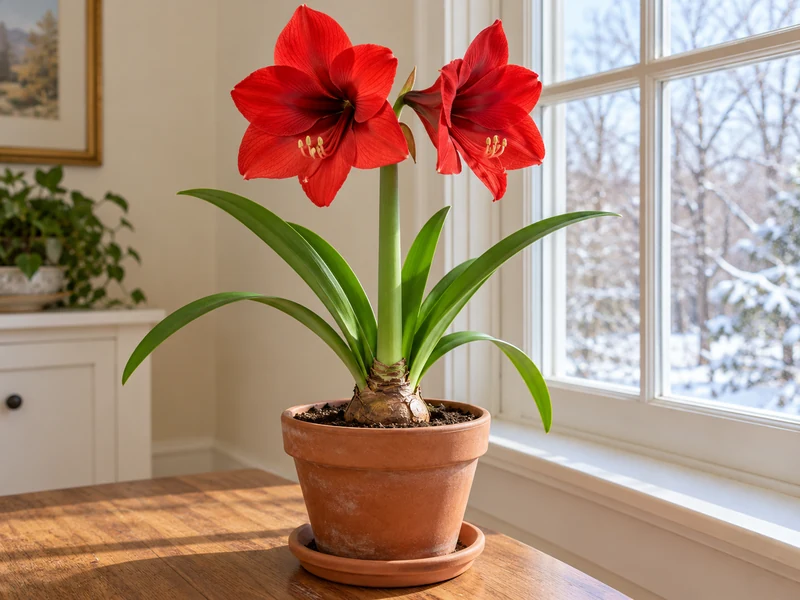
The red flowers may last only a few weeks, but the bulb can keep growing long after the holiday display is over. If you want your amaryllis to bloom again, the months after flowering matter more than any last-minute trick. Keep the leaves healthy, give the bulb a long growing season, and choose whether to use a cool rest period to influence its next bloom.
At a glance: Remove faded flowers, keep healthy leaves in bright light, water when the surface is nearly dry, feed during active growth, and protect the pot from frost. For a timed rebloom, allow roughly 8–12 weeks of cool, dry rest, then resume light and watering. Flowering may take another 4–6 weeks or longer after the rest, and an underfed bulb may skip a year. Start early enough if you have a particular holiday in mind.
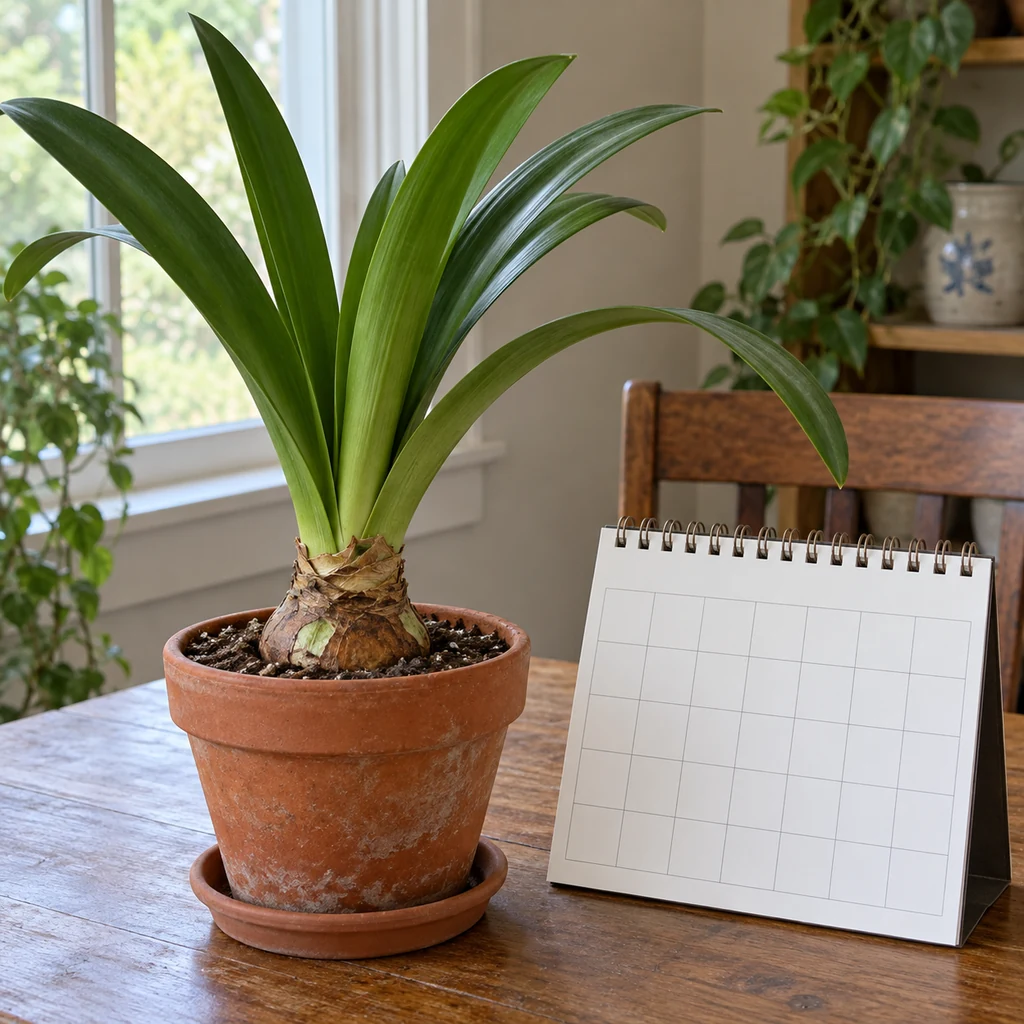
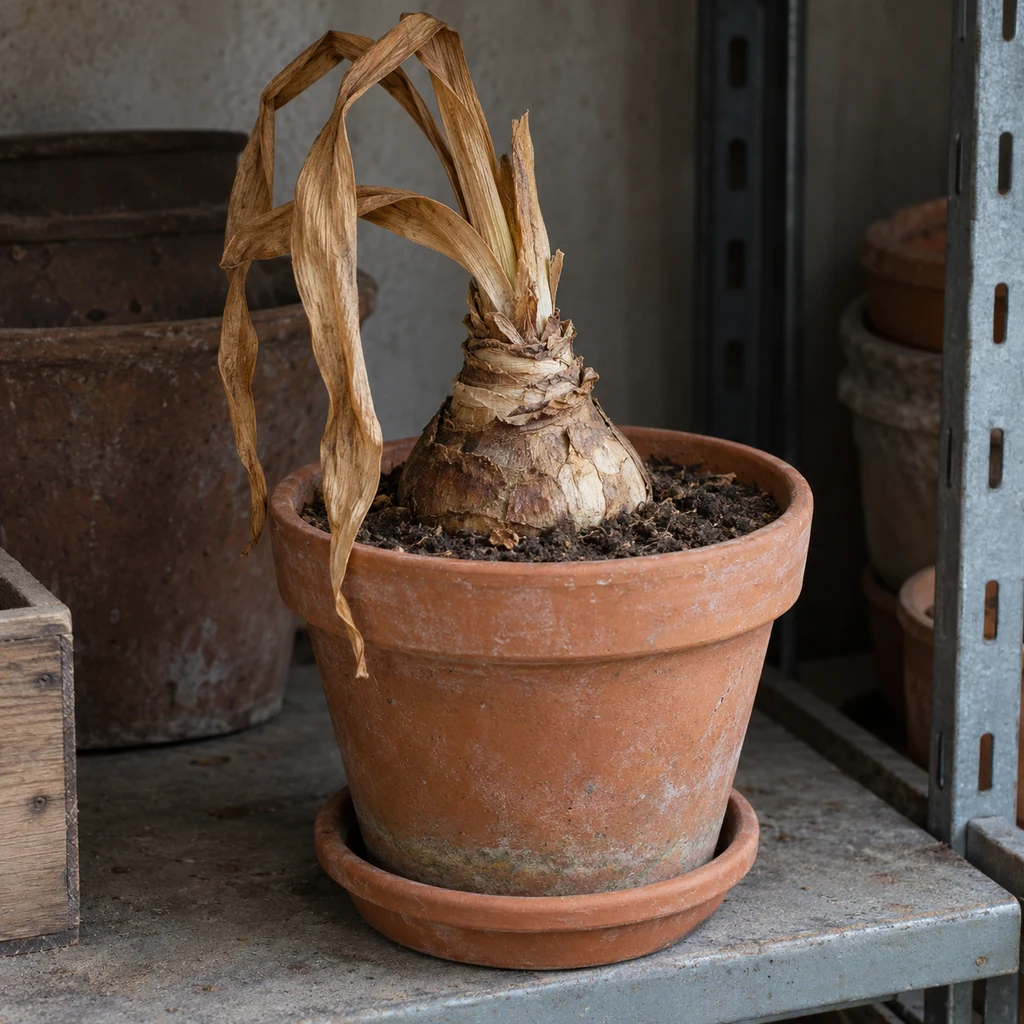
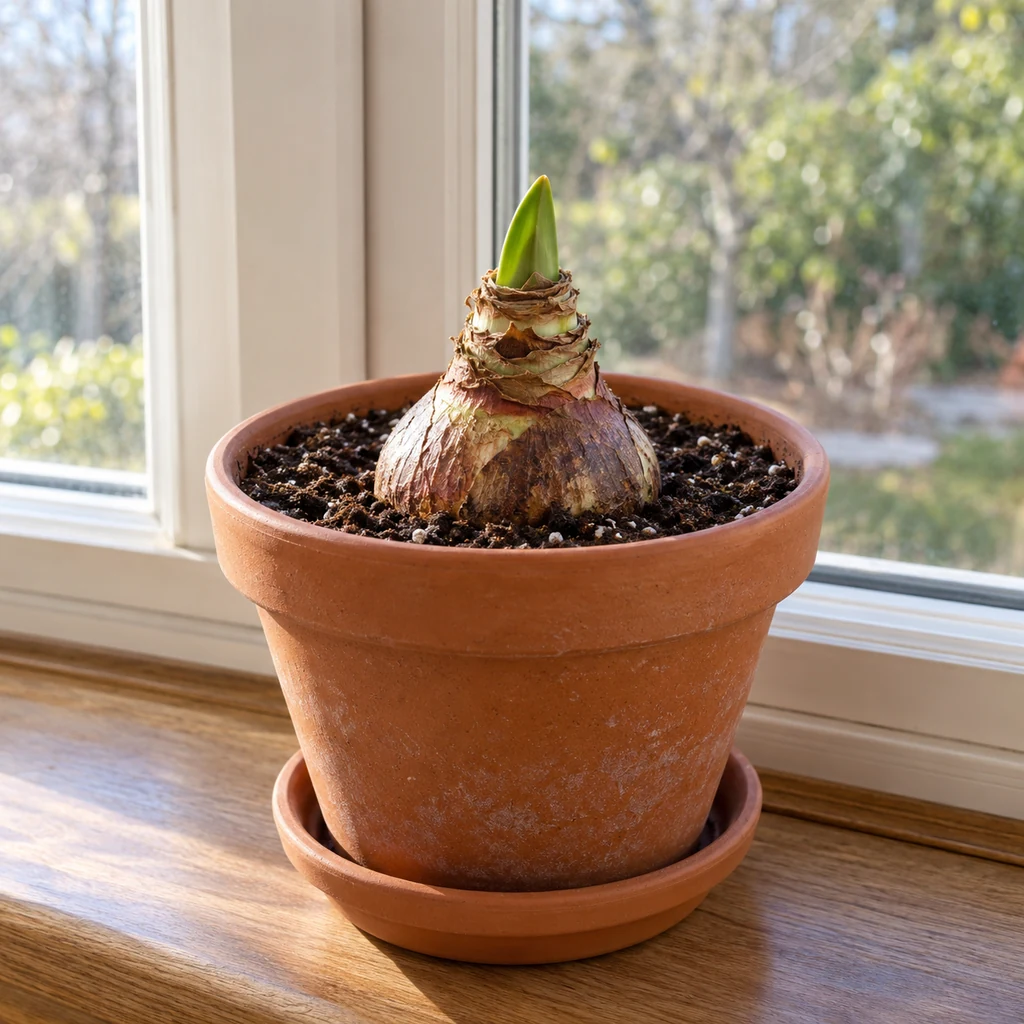
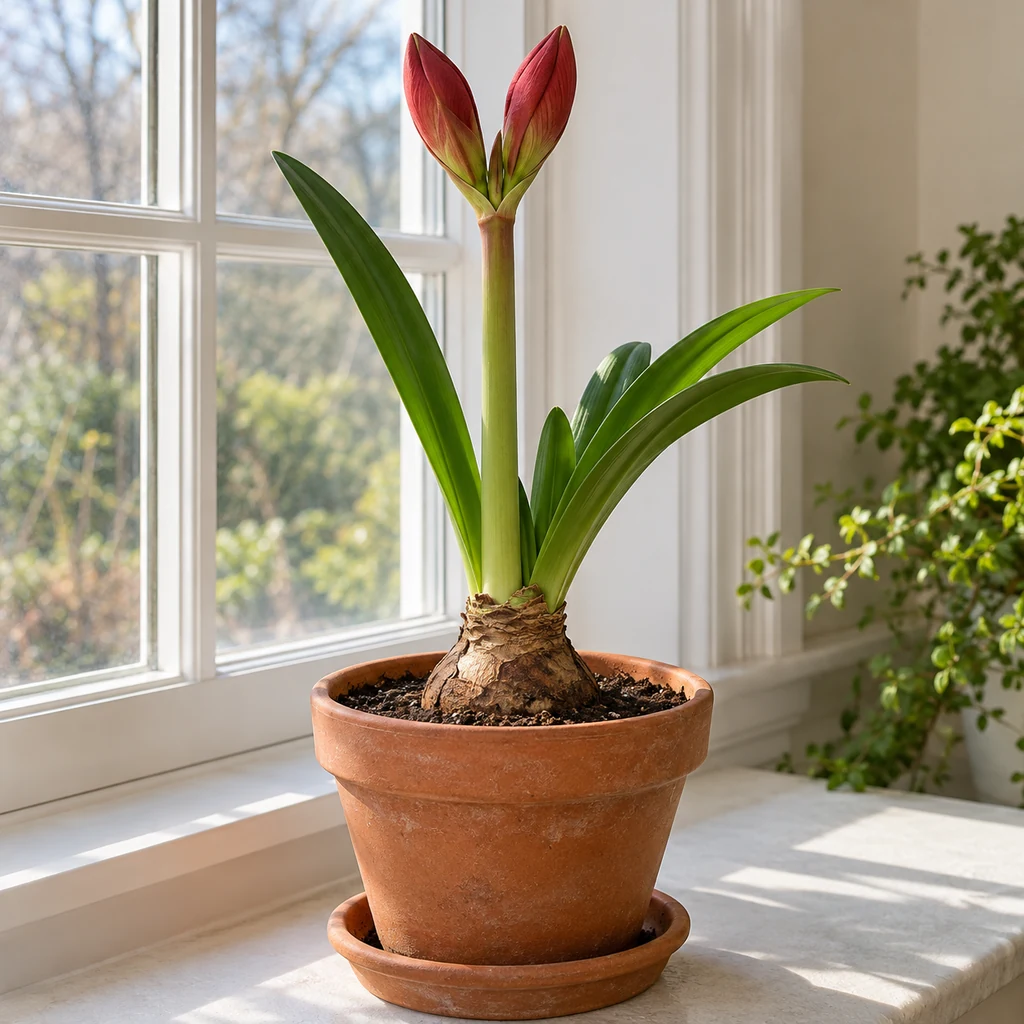
The AI-generated photographs in this guide are visual aids. Check your own bulb, drainage, temperature and local frost dates before following the timeline.
First, Check Which Kind of Bulb You Have
This guide is for a potted, rooted amaryllis with a drainage hole and growing medium. A waxed, rootless bulb sold as a one-season decoration is different; it has used its stored energy without the normal chance to replenish it. Some waxed bulbs can be rescued by carefully removing the wax and potting them, but reblooming is less reliable. If your bulb is soft, sunken, moldy or foul-smelling, it may be rotting rather than simply resting.
Indoor “amaryllis” are commonly Hippeastrum hybrids. The strap-shaped leaves are not clutter to cut away: they make the energy the bulb needs for future flowers. The timeline below follows an indoor bloom in winter and a growing season through spring and summer. Shift the months to fit your plant’s actual bloom date and your climate.
What You Need
- Your healthy potted amaryllis, in a container with an open drainage hole and a saucer
- Clean scissors or pruners for faded flowers and fully dry foliage
- A bright indoor window; an outdoor spot is optional after frost danger passes
- All-purpose houseplant fertilizer used at the label rate during active growth
- A cool, dry place around 50–60°F (10–16°C) if you choose a controlled rest
How to Care for Amaryllis After Flowering
Step 1: Remove spent flowers but keep green leaves
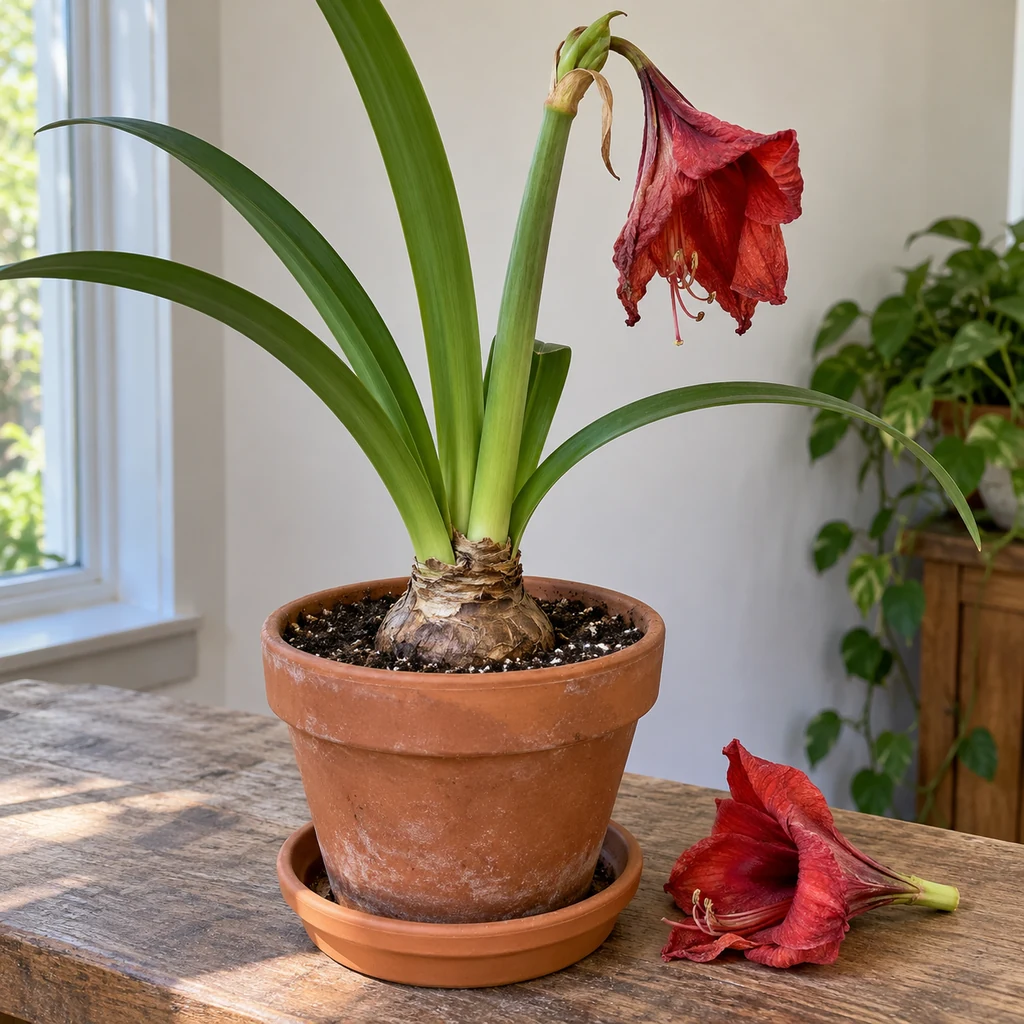
Once each flower fades, snip off the individual spent bloom so the plant does not put energy into seeds. Leave the healthy leaves. You can leave a still-green flower stalk until it yellows, then cut it near the bulb without nicking the leaves or bulb neck. Do not pull a stalk out of the bulb. If all the flowers are finished and you prefer to cut the stalk earlier, make a clean cut above the bulb and keep every healthy leaf.
Step 2: Give the leaves a bright growing season indoors
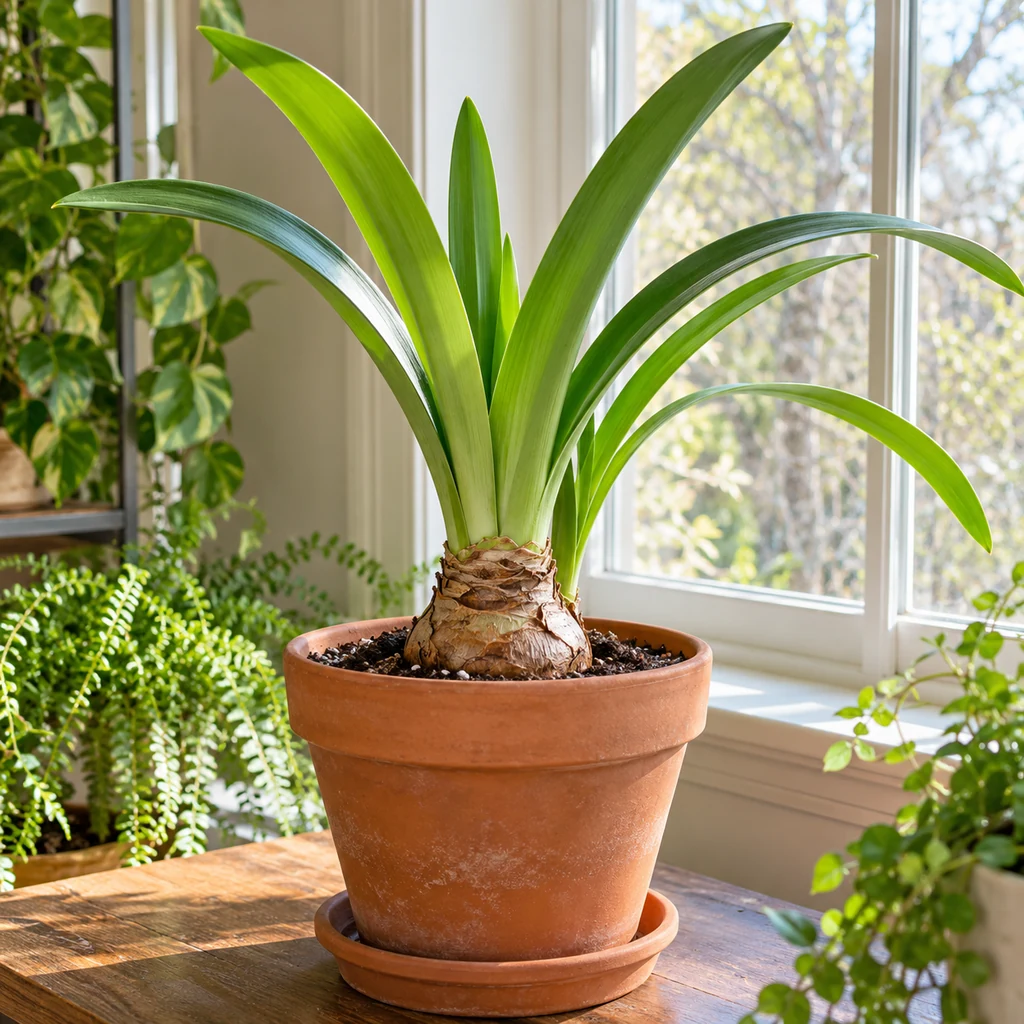
Put the pot near your brightest practical window. Turn it occasionally so the leaves do not lean strongly in one direction. Water thoroughly when the potting mix surface is nearly dry, then let excess drain from the saucer. Do not keep the roots standing in water. During active leaf growth, use an all-purpose houseplant fertilizer according to its label; do not guess at a stronger dose to force flowers.
Step 3: Move the pot outdoors only after frost danger passes
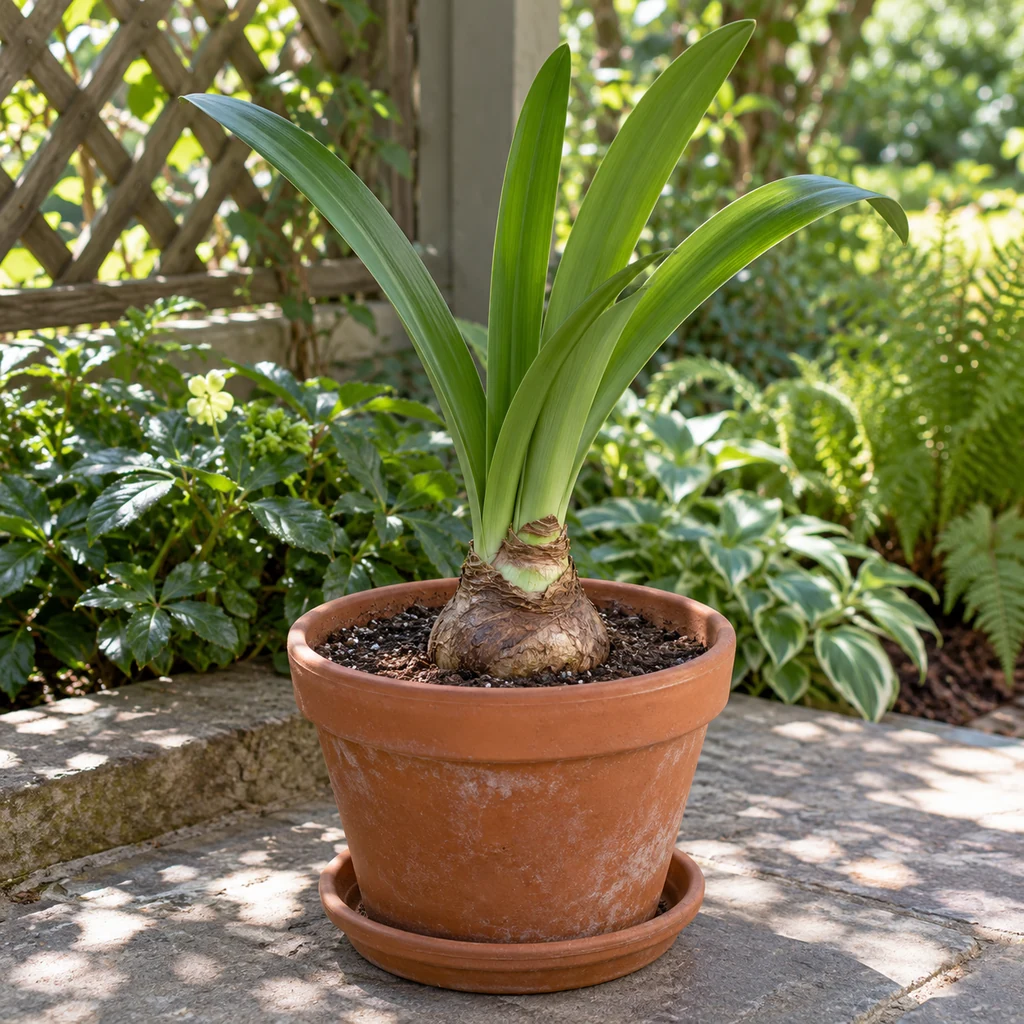
Outdoor summer light can help the bulb grow, but this is optional. After your last frost, place the pot in a protected, shaded spot for the first couple of days. Over about a week, increase sun exposure gradually rather than moving it straight from a window into all-day sun. Keep the drainage hole open, water during dry periods and continue label-rate feeding while leaves are actively growing. Bring the plant back inside before the first fall frost.
Step 4: Decide whether to keep it growing or schedule a rest
A healthy amaryllis can flower again without a forced dormancy period. If a natural bloom time is fine, keep it in bright light and continue normal care. To aim for a particular season, plan backward: a cool rest generally lasts 8–12 weeks, and flowers often develop about 4–6 weeks after growth restarts. This is an estimate, not a guaranteed date. Choose the rest route only after the bulb has had months of healthy leaf growth.
Step 5: Let foliage dry during a cool rest
For the rest route, bring the pot indoors before frost, stop watering and set it in a cool, dry, dark place around 50–60°F (10–16°C). Let the leaves yellow and dry naturally; only then trim the dead foliage. Keep the potted bulb dry for about 8–12 weeks. Check it periodically for softness or mold, but do not add water to make it “wake up” early. A cool closet or basement can work if it stays above freezing.
Step 6: Restart growth in bright light
After the rest, move the pot into a bright, warm room and water the potting mix once, letting the excess drain. Keep the mix lightly moist rather than soggy while waiting for growth. When a new green tip appears, resume your normal watering routine. If the bulb starts growing before your planned rest ends, bring it into light then rather than leaving new growth in darkness.
Step 7: Support the flower stalk and check the result
One or more stalks may appear before leaves, although leaves can come first. Give the emerging stalk strong light and rotate the pot to help it grow straight. Stake only if it leans badly, inserting the support without piercing the bulb. As buds open, moving the pot to a slightly cooler spot away from harsh direct sun can extend the display. If you get only leaves, continue growing the plant; the bulb may need another season to build enough reserves for flowers.
Why an Amaryllis May Not Bloom Again
The leaves were cut too soon
Leaves are the bulb’s energy source. If they were removed while green, focus on good light and care for the next growing season instead of repeating a short rest immediately.
The bulb stayed wet during storage
A resting bulb needs much less moisture than a leafy plant. Check for an open drainage hole and avoid watering during the planned dry rest. Discard a bulb that is clearly soft and rotting.
The bulb is small or recently rescued from wax
A small or depleted bulb may grow leaves without flowering. Give it a full season of bright light, watering and label-rate feeding; another bloom is possible, but the date is uncertain.
You started the rest too late for Christmas
Eight to twelve weeks of rest plus several weeks of renewed growth can extend well past the holiday. The plant may flower later and still be healthy. Plan earlier next year instead of forcing it with extra water or fertilizer.
Amaryllis After-Bloom FAQ
Should I cut all the leaves after the flowers fade?
No. Keep healthy green leaves through the growing period. Remove them only when they have yellowed and dried naturally during a chosen rest.
Does the pot have to go outside in summer?
No. A bright indoor window can support healthy leaf growth. Outdoors can provide stronger seasonal light if you acclimate the plant after frost and bring it back before freezing weather.
Can I guarantee flowers for Christmas?
No. Bulb vigor, light, cultivar and temperature affect timing. A cool rest can help you plan, but treat the calculated date as a window rather than an appointment.
Keep the Holiday Plants Going
If you are caring for other winter bloomers, our hyacinth forcing guide covers a different bulb setup. For another plant that can return after the holidays, read our Christmas cactus propagation tutorial. Our paperwhite water-growing guide explains how to keep those bulbs above the waterline.