
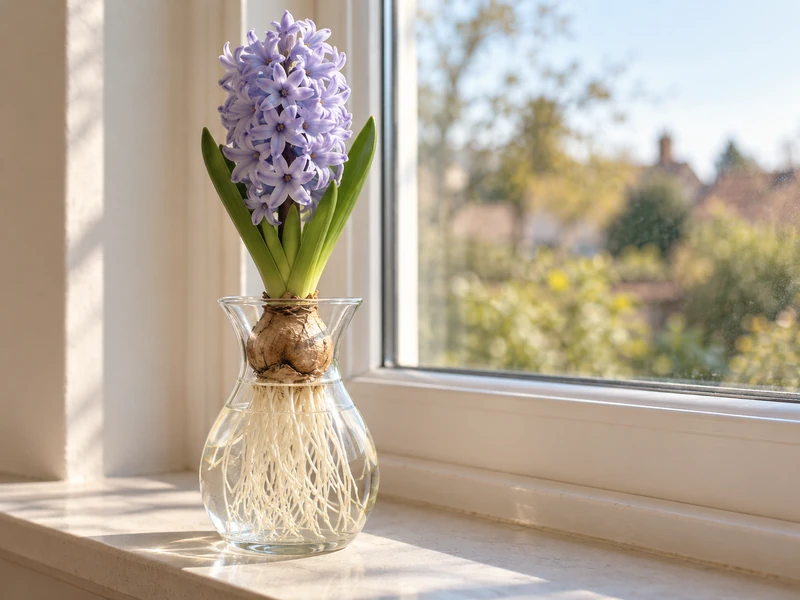
Want fragrant flowers on a winter windowsill without potting soil? A hyacinth forcing vase lets you watch roots grow through clear water while the bulb stays dry above it. The setup is simple, but one detail determines whether it blooms or rots: the water must reach the roots, never the bulb itself.
This guide covers both pre-chilled bulbs and regular bulbs that still need cold treatment, then walks through the vase setup, rooting stage, water changes, and move into light. If you want a different easy water-grown winter bulb, see our paperwhite growing guide; paperwhites have a different chilling requirement.
At a Glance
- Best bulb: a firm, large hyacinth bulb labeled pre-chilled or prepared for indoor forcing.
- Container: one narrow-neck hyacinth glass per bulb.
- Water rule: keep the bulb base above the water and the roots in contact with it.
- Regular bulb cold treatment: about 12–15 weeks at 40–45°F (4–7°C).
- After rooting: bring into bright light; flowers typically open about 2–4 weeks later.
What You Need
- One firm hyacinth bulb, ideally pre-chilled for forcing
- One clean hyacinth forcing vase with a neck that supports the bulb
- Clean water
- A paper bag and a refrigerator or other suitable cold space if the bulb is not pre-chilled
Choose a stable vase deep enough for roots to grow below the bulb. A loose, straight-sided drinking glass can let the bulb fall into the water. If you do not have a forcing vase, a pebble-filled container can work, provided the pebbles support the bulb above the waterline.
How to Force Hyacinths in Water
The six step photos are AI-generated visual aids. Use the waterline and growth checks in the text as your reference; individual bulbs develop at different rates.
Step 1: Choose a firm bulb and a fitted vase
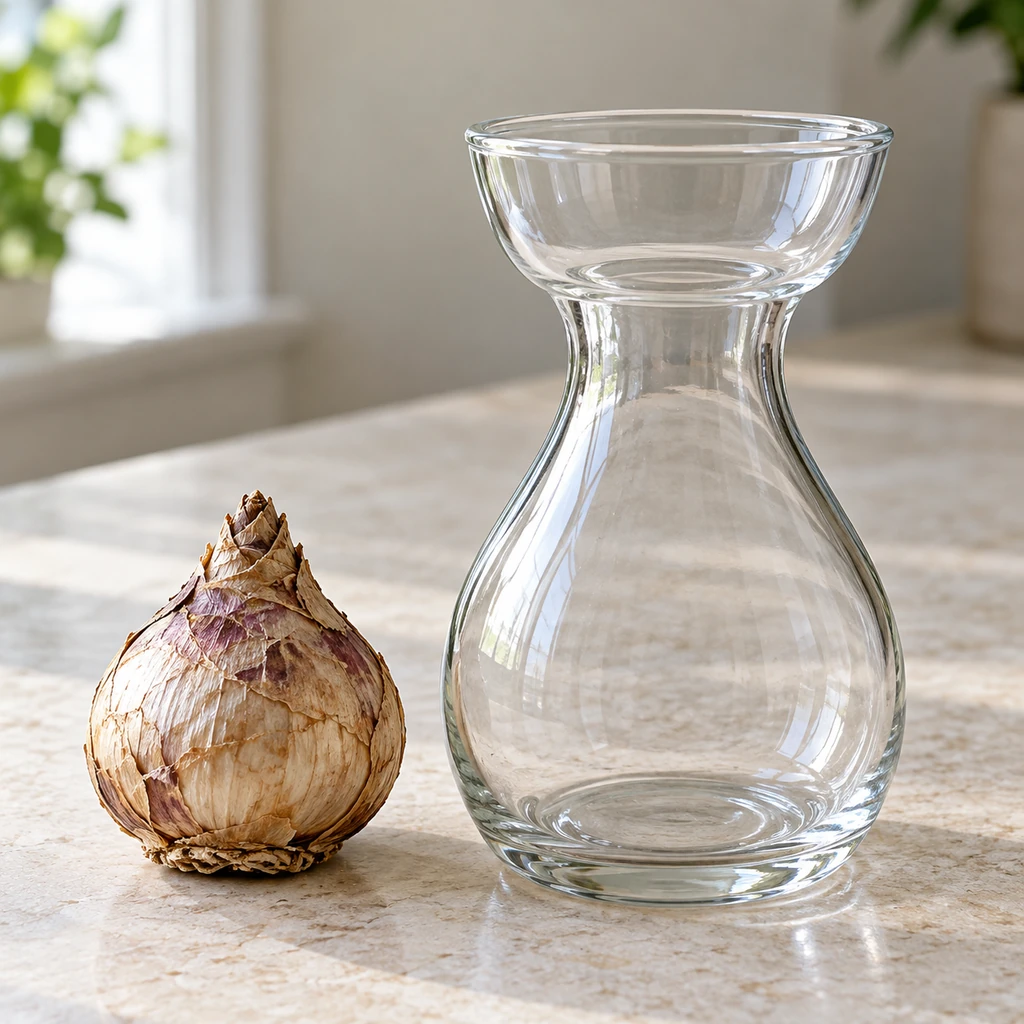
Pick a bulb that feels firm and heavy for its size. Reject bulbs with soft spots, a sour smell, or obvious mold. Set it pointed end up in the vase neck to check that its wider shoulder is supported and its flat root plate faces down. The bulb should not be able to slide into the lower chamber.
Step 2: Confirm the bulb has had enough cold
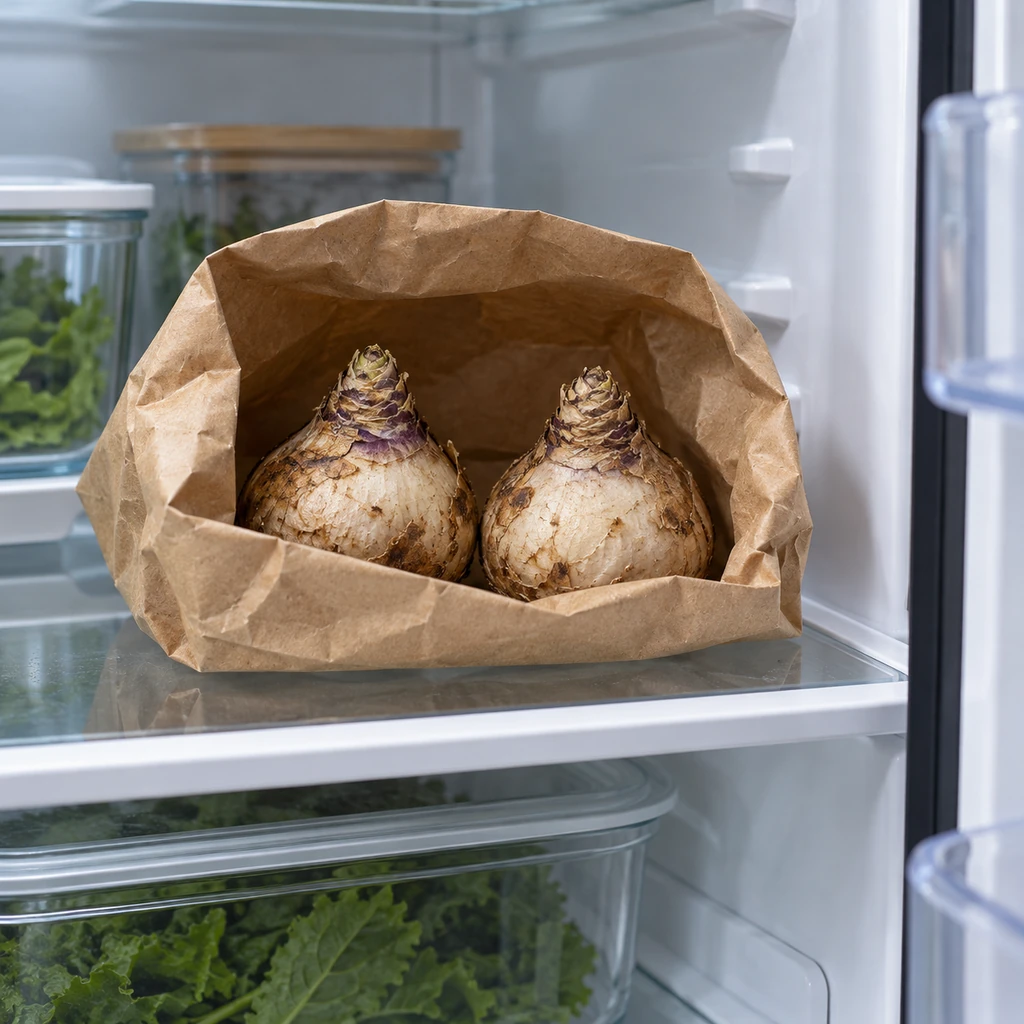
If the package says pre-chilled or prepared for forcing, follow its directions and proceed to the vase. For an ordinary unchilled bulb, place it in a paper bag at 40–45°F (4–7°C) for roughly 12–15 weeks before starting it in water. Keep it away from ripening fruit, which releases ethylene that can interfere with flower development. Check periodically and discard any bulb that turns soft or moldy. This cold period is why a regular bulb started in October should not be promised as a Christmas bloom.
Step 3: Set the water just below the bulb
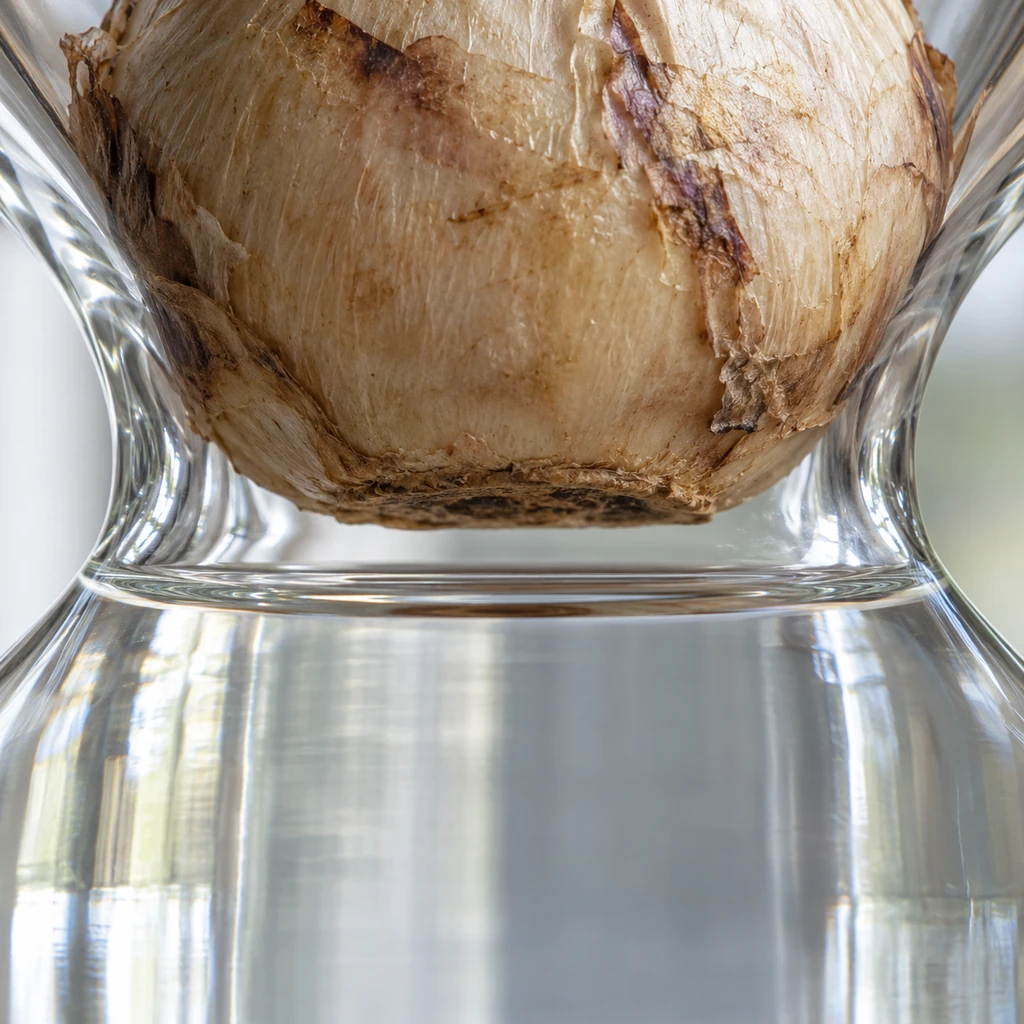
Fill the vase with clean water and seat the chilled bulb in the neck. From the side, look for a visible air gap between the water surface and the bulb’s root plate. If the bulb sits in water, pour some out. If the bulb already has short roots, let those roots touch the water while keeping the bulb dry. Do not push or cut the root plate to make it fit.
Step 4: Let roots establish in a cool, dark place
Place the vase somewhere cool and dark, around 45–50°F (7–10°C), where it will not freeze. Check the water level frequently, especially in the first week: new roots and evaporation can lower it quickly. Add just enough water to keep the developing roots in contact without wetting the bulb. Wait for a substantial white root system and visible shoot growth before moving the vase into the room. Rooting time varies with the bulb and conditions; use the roots and shoots as your signal rather than a fixed calendar date.
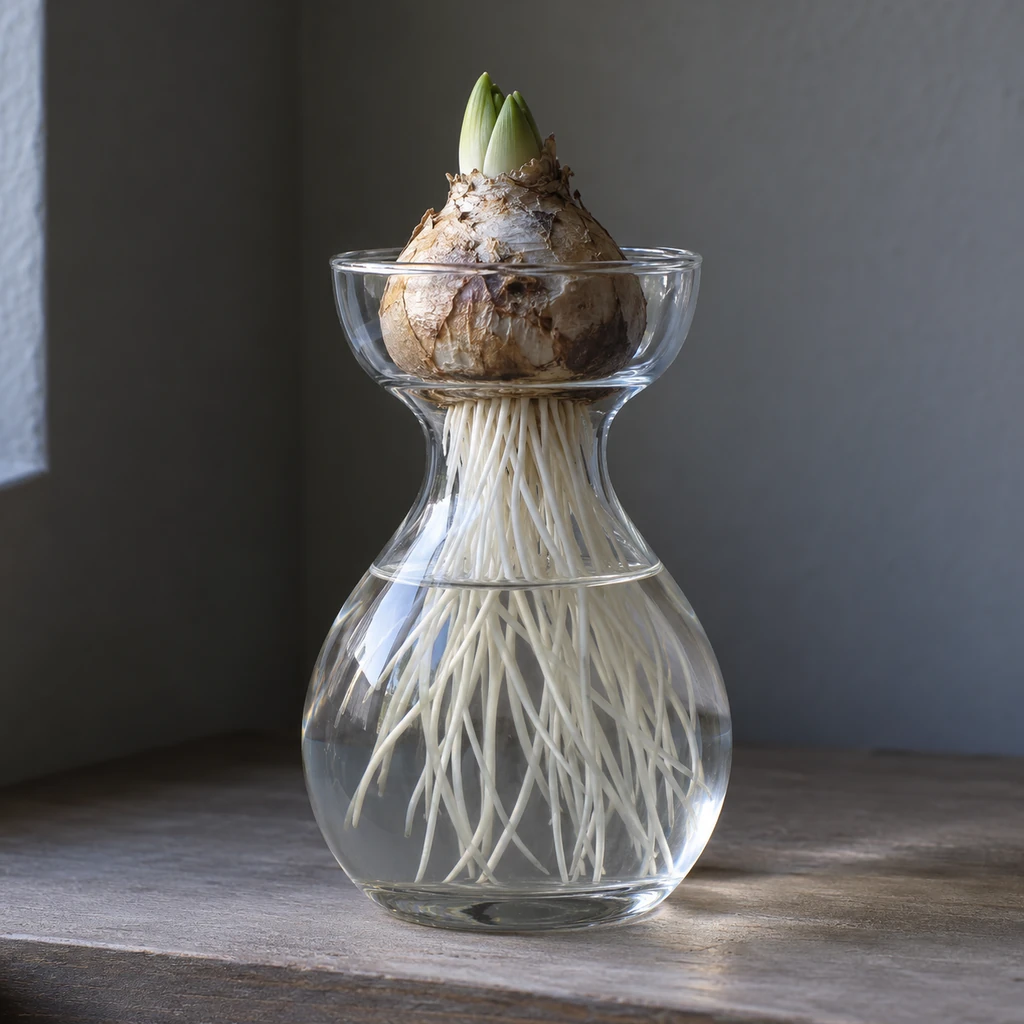
Step 5: Maintain clear water without soaking the bulb
Top up as needed to keep the roots in water. Replace the water once or twice a week, or sooner if it becomes cloudy, as recommended by Iowa State University Extension. Hold the bulb and vase securely and handle roots gently; they are easy to break. Rinse the vase if residue collects, then return the water to the same below-bulb level. If the bulb becomes soft or smells rotten, discard it rather than trying to rescue it with more water.
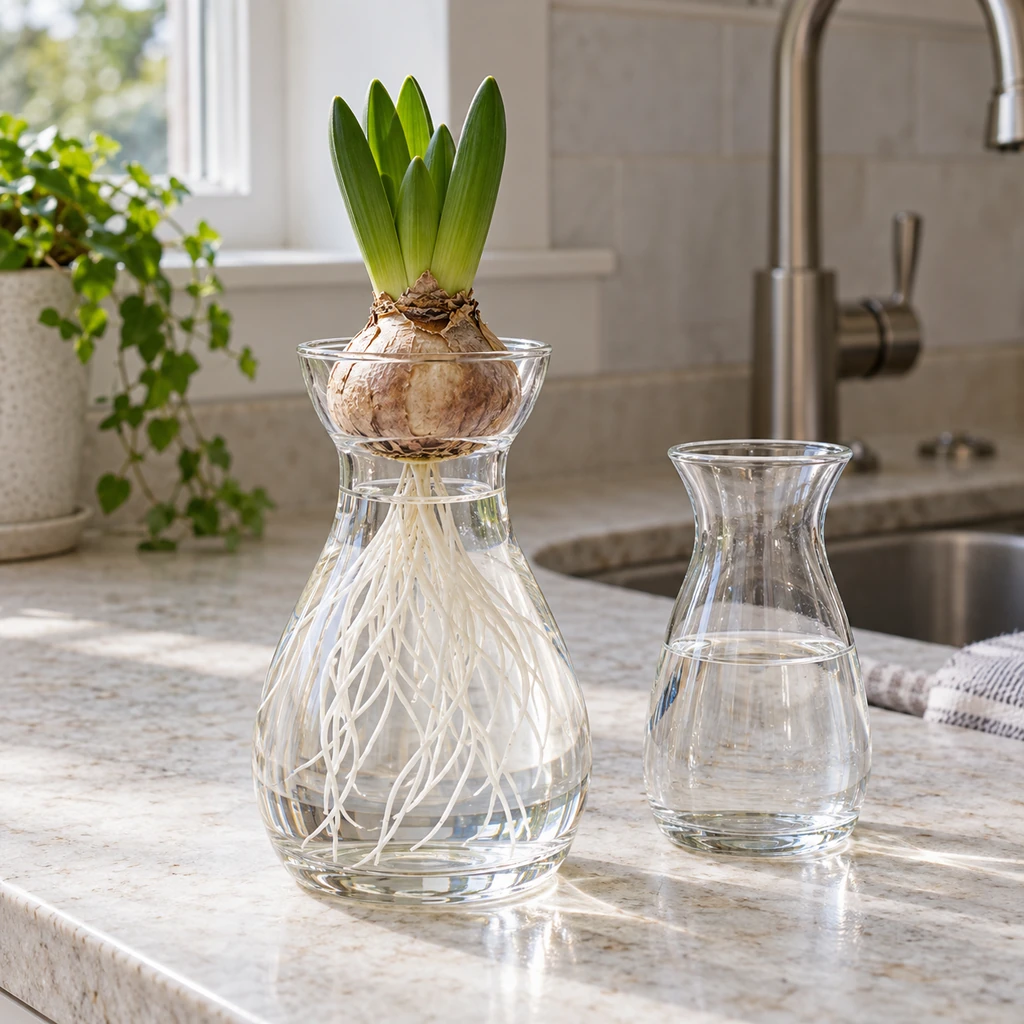
Step 6: Move the rooted bulb into bright light
When roots fill much of the lower chamber and the shoot is growing, move the vase to bright indoor light, away from hot direct sun and heating vents. Rotate it every few days for straighter growth. The flower spike usually opens about 2–4 weeks after this move, though the exact timing varies. If a heavy bloom leans, place the vase in a stable outer glass cylinder for support rather than tying the stem tightly.
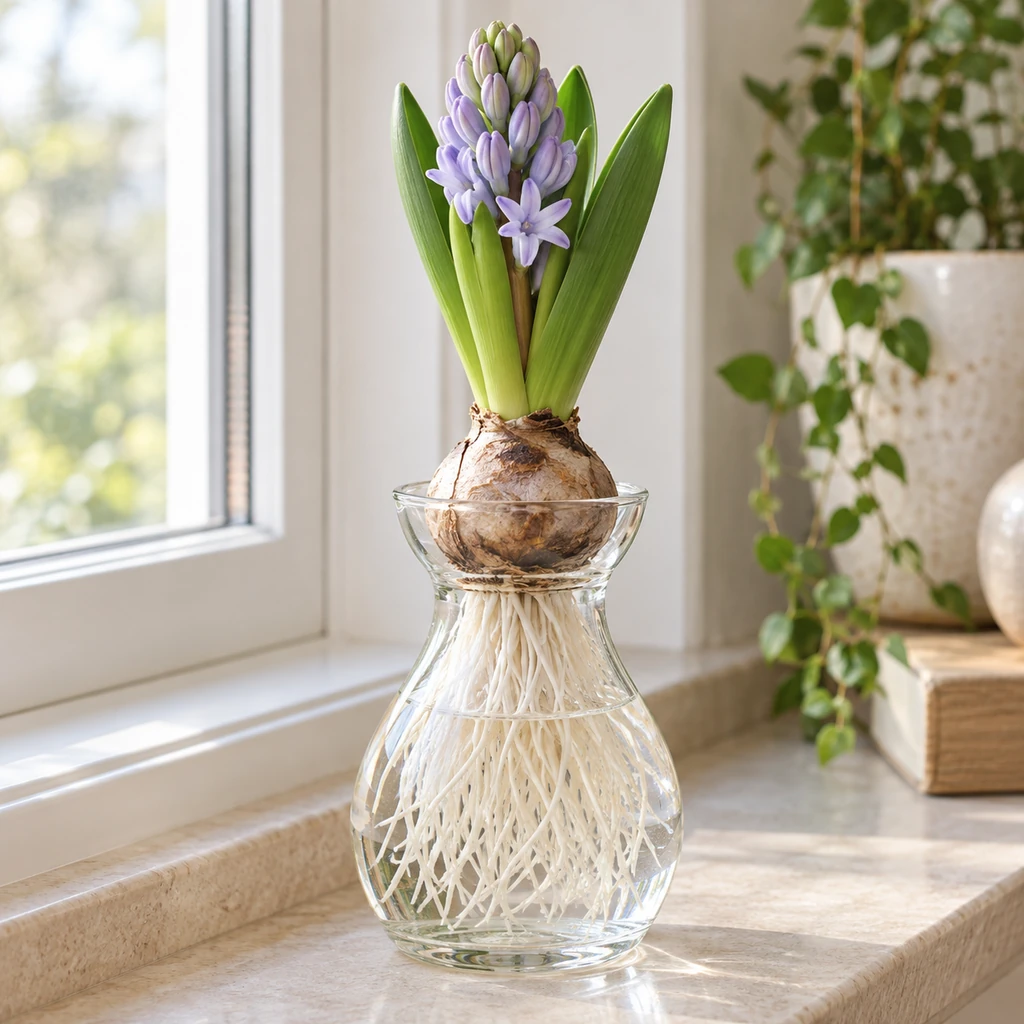
A Simple Timeline
- Regular bulb: allow 12–15 weeks of cold treatment before setting it in a vase.
- Pre-chilled bulb: begin with the vase, then allow time for visible roots and shoots in a cool place.
- After a strong root system forms: move to bright light; bloom may follow in about 2–4 weeks.
These are planning ranges, not a guaranteed holiday date. Bulb variety, how much chilling it received before purchase, and room temperature all matter.
Why a Hyacinth Bulb Rots or Fails to Bloom
- The bulb touches water: lower the waterline so only roots reach it.
- The water level drops below the new roots: inspect the vase often at the start and top it up carefully.
- Leaves grow but no flower appears: an unchilled bulb or insufficient cold treatment may be the cause; a pre-chilled bulb is the simplest next attempt.
- Cloudy water or an unpleasant smell: change the water and clean the vase. Discard a bulb that is soft or rotten.
- The flower spike leans: rotate the vase, keep it away from heat, and support the container if needed.
Frequently Asked Questions
Can I force an ordinary hyacinth bulb without chilling it?
Do not count on it. Most spring-flowering bulbs need a prolonged cold period for reliable roots, stems, and flower buds. Buy a bulb clearly labeled pre-chilled if you want to skip the long wait.
Should I add fertilizer to the forcing vase?
For this single indoor bloom, follow the bulb seller’s directions and focus on clean water, correct level, and sufficient chilling. Fertilizer cannot replace the cold period.
Can I save a hyacinth forced in water after flowering?
Water-forced bulbs use much of their stored energy to flower. Iowa State University Extension advises discarding them after bloom. For a spring garden display, start with fresh outdoor bulbs; our bulb lasagna pot guide explains one container option.
Is a hyacinth safe around cats or dogs?
No. The ASPCA lists hyacinths as toxic to cats and dogs, with the bulb particularly hazardous if chewed. Keep bulbs and vases completely out of reach, and contact a veterinarian promptly if a pet may have eaten any part.