
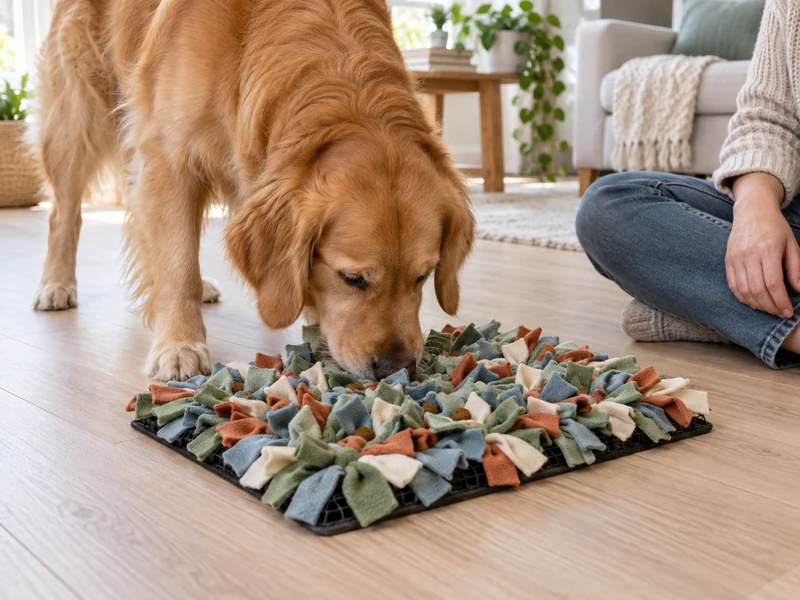
A homemade snuffle mat turns part of your dog’s regular dry-food ration into a supervised sniffing activity. This no-sew version uses a flexible rubber sink mat and 120 fleece strips. The finished mat has a 12-by-16-inch base, takes about 75 to 120 minutes to make, and can be adjusted to the hole pattern you find.
The measured cutting plan below prevents the common mid-project surprise of running out of strips. It also explains how to introduce the mat gradually, when to take it away, and how to inspect it before every session.
Some step photos are photorealistic AI-generated visual aids. Follow the measured cutting plan and inspect your own mat before every supervised use.
Safety First
- Use the mat only while an adult is actively supervising. Pick it up when the food-finding session ends.
- Do not use it for a dog that chews or swallows fabric, rubber, or non-food objects. This is an enrichment tool, not a chew toy or bed.
- Use dry kibble or dry treats only, and count them as part of the dog’s normal daily food allowance.
- Give each pet a separate space. Skip food puzzles if they trigger guarding or conflict.
- Before and after every use, check for loose knots, torn fleece, cracked rubber, or missing pieces. Stop using and discard a damaged mat.
- Stop the session if your dog bites, shakes, tears, or becomes frustrated with the mat.
Finished Size and Exact Cutting Plan
| Part | Measurement | Quantity |
|---|---|---|
| Flexible rubber sink mat | About 12 × 16 inches | 1 |
| Anti-pill fleece panels | 15 × 24 inches per color | 4 colors |
| Finished fleece strips | 1.5 × 8 inches | 120 total; 30 per color |
| Finished fleece pile | About 3 to 4 inches high | Varies with knot tension |
Plan on one usable 15-by-24-inch fleece panel in each of four colors, measured after any prewash and edge trimming. Four panels require 1,440 square inches of usable fabric in total, but the four colors are separate cuts. Check that each fabric cut can yield its full panel; usable bolt width and store minimums vary. A base with wider spacing may need fewer strips; a dense grid may accept more. The goal is full coverage without stretching, buckling, or tearing the rubber.
Materials and Tools
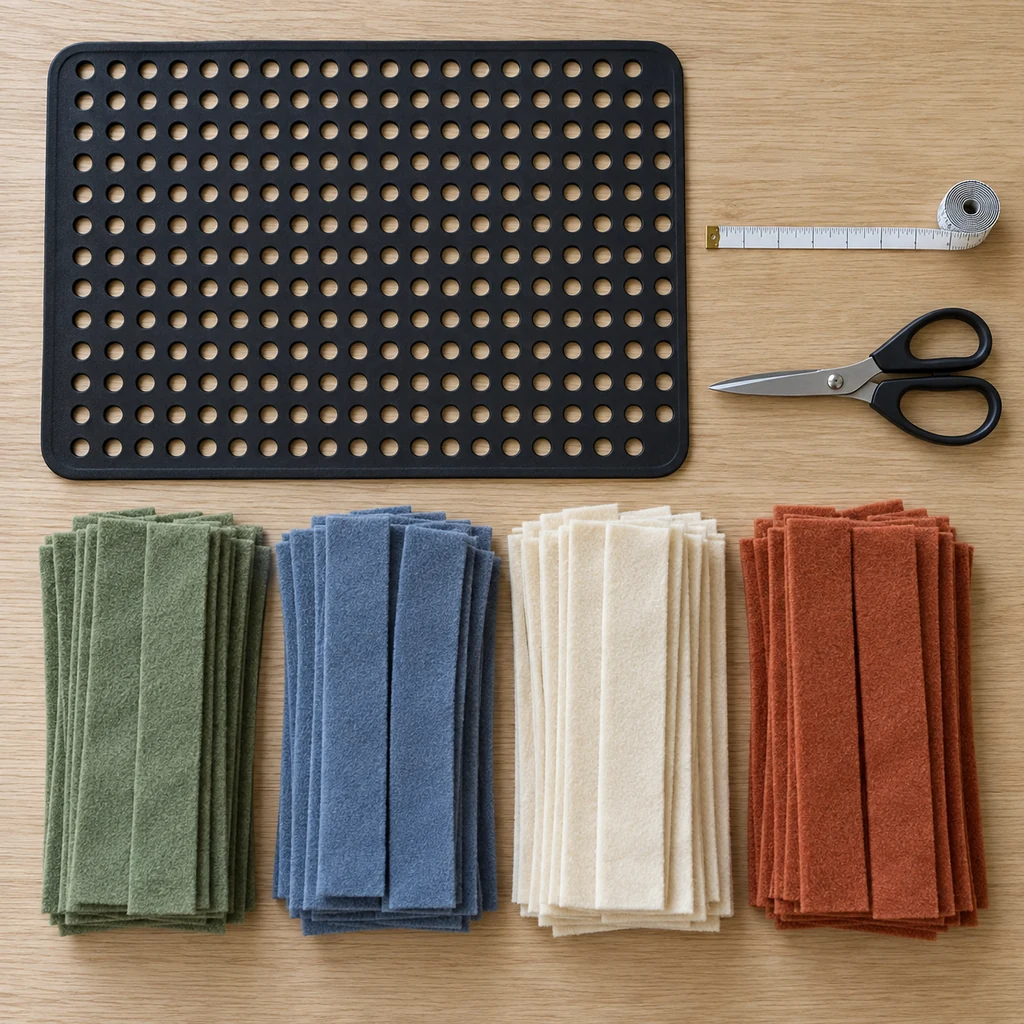
- One new, flexible rubber sink mat with evenly spaced holes, about 12 × 16 inches
- Four anti-pill fleece panels, each 15 × 24 inches
- Fabric scissors or a rotary cutter, cutting mat, and ruler
- Tape measure
- Your dog’s regular dry kibble or small dry treats
Choose an unscented mat with smooth edges and no cracks, loose coating, or sharp molding. Check its care label before washing. Fleece does not need hemmed edges, which is why it works well for this no-sew project.
How to Make a No-Sew Snuffle Mat
Step 1 — Wash and Inspect the Base
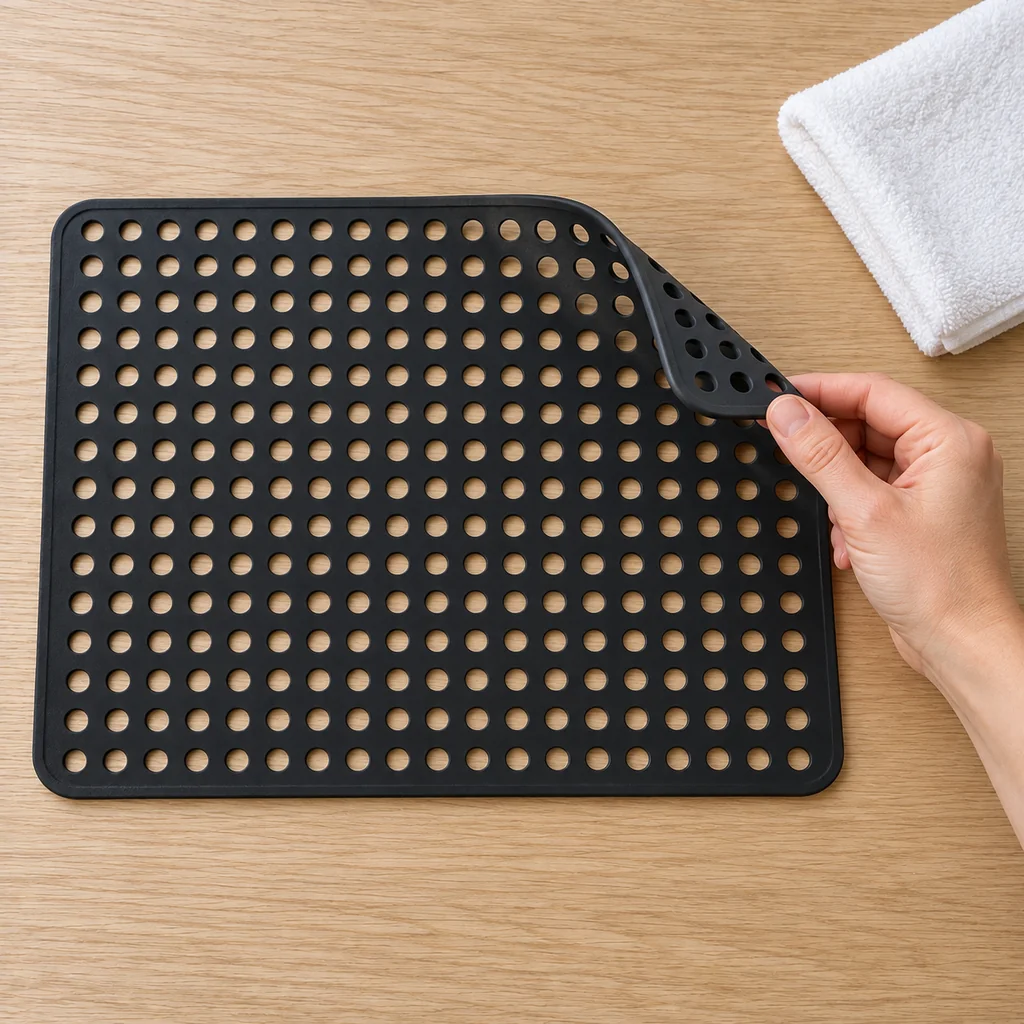
Wash the new rubber mat according to its label, rinse it thoroughly, and let it dry completely. Flex it in your hands and inspect every edge and hole. Do not use a brittle, cracked, sticky, strongly scented, or sharp-edged base.
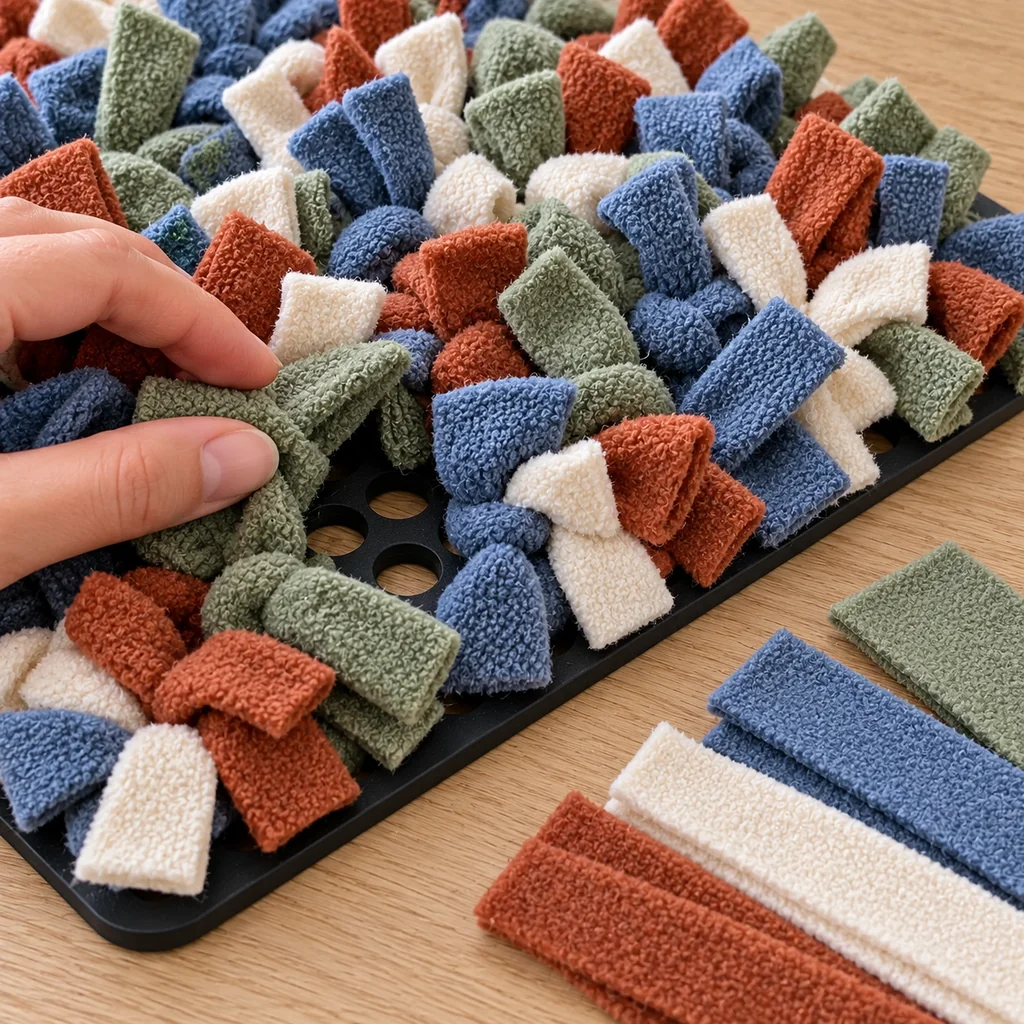
Step 2 — Cut 120 Identical Fleece Strips
Make sure each squared fleece panel still measures 15 by 24 inches after straightening its edges. Cut each panel lengthwise into ten strips, each 1.5 × 24 inches. Cut each long strip crosswise into three 8-inch pieces. That makes 30 strips per color and 120 strips in all.
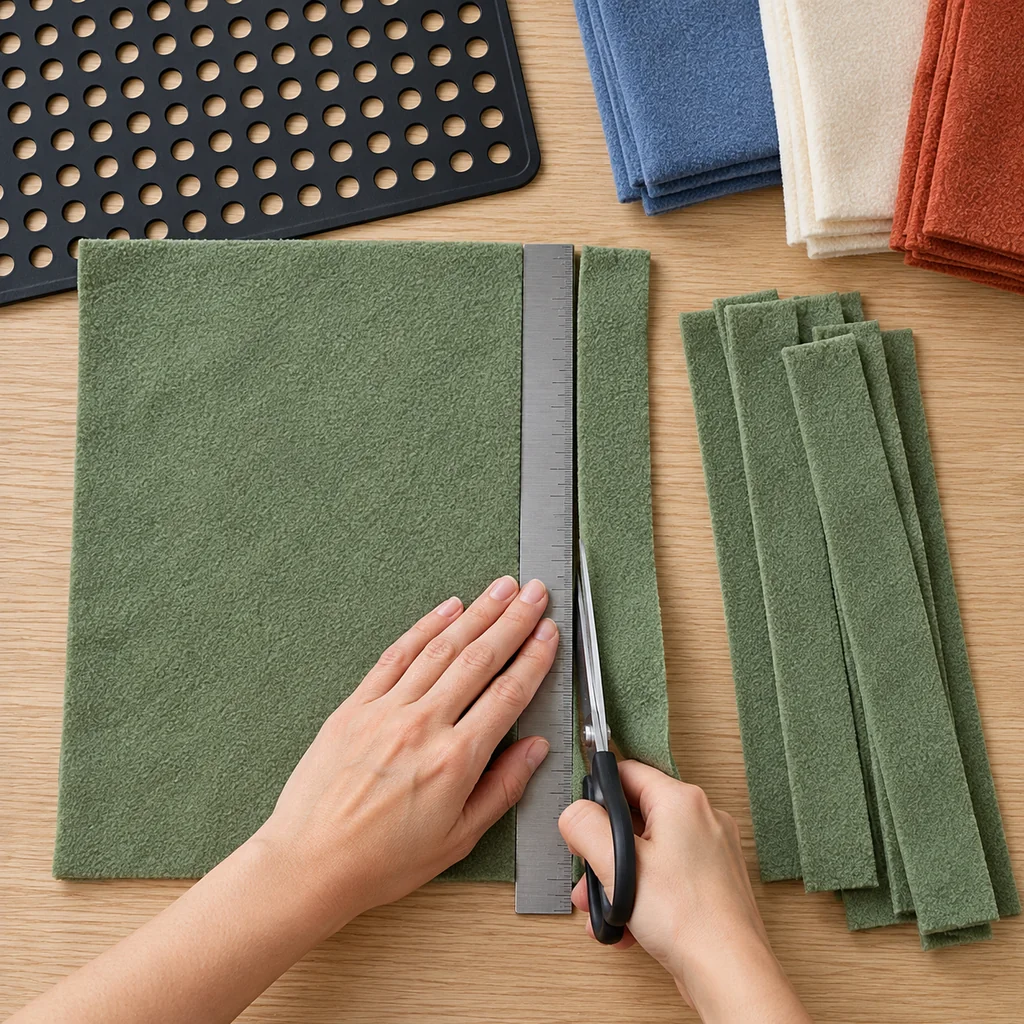
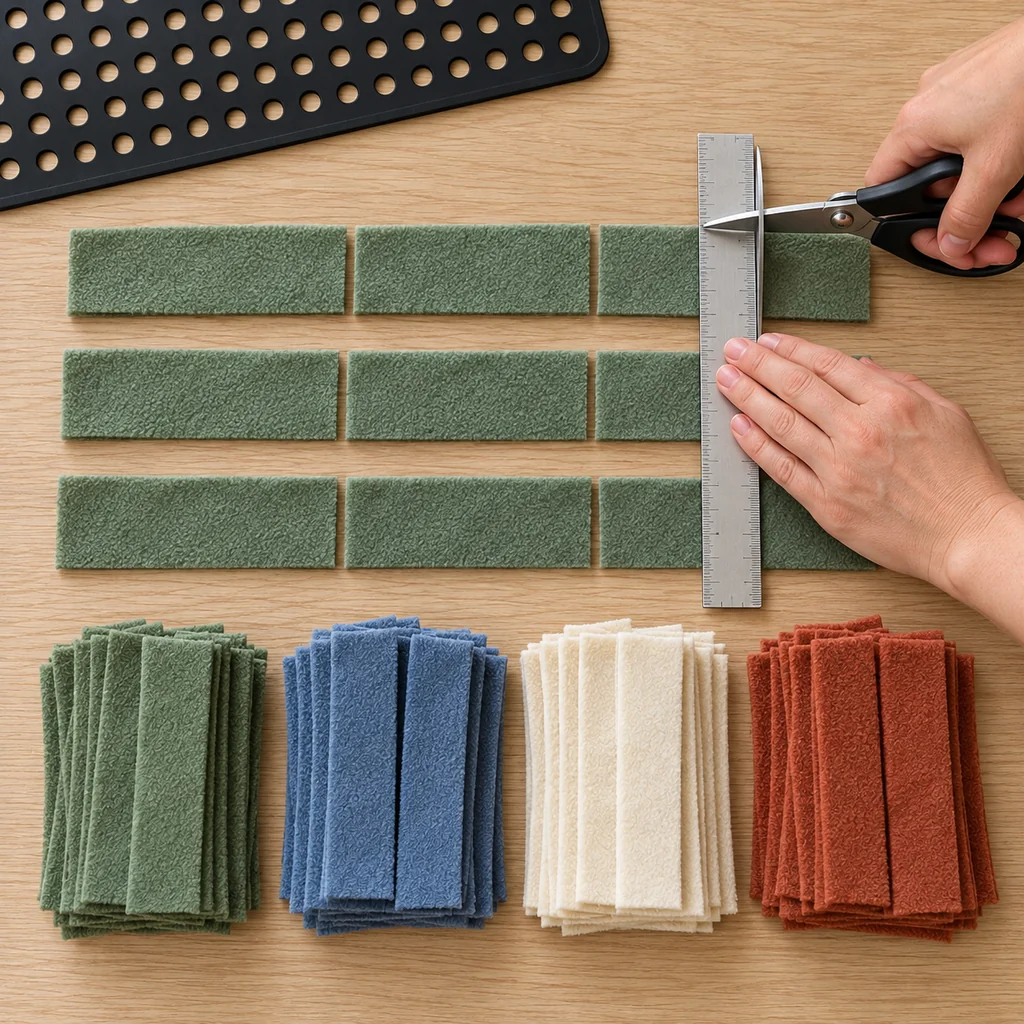
Test one strip before cutting the whole batch. After tying, the two tails should be long enough to create hiding depth but not so long that they tangle around your dog’s muzzle. If your base holes are unusually large or small, adjust the width slightly and repeat the pull test.
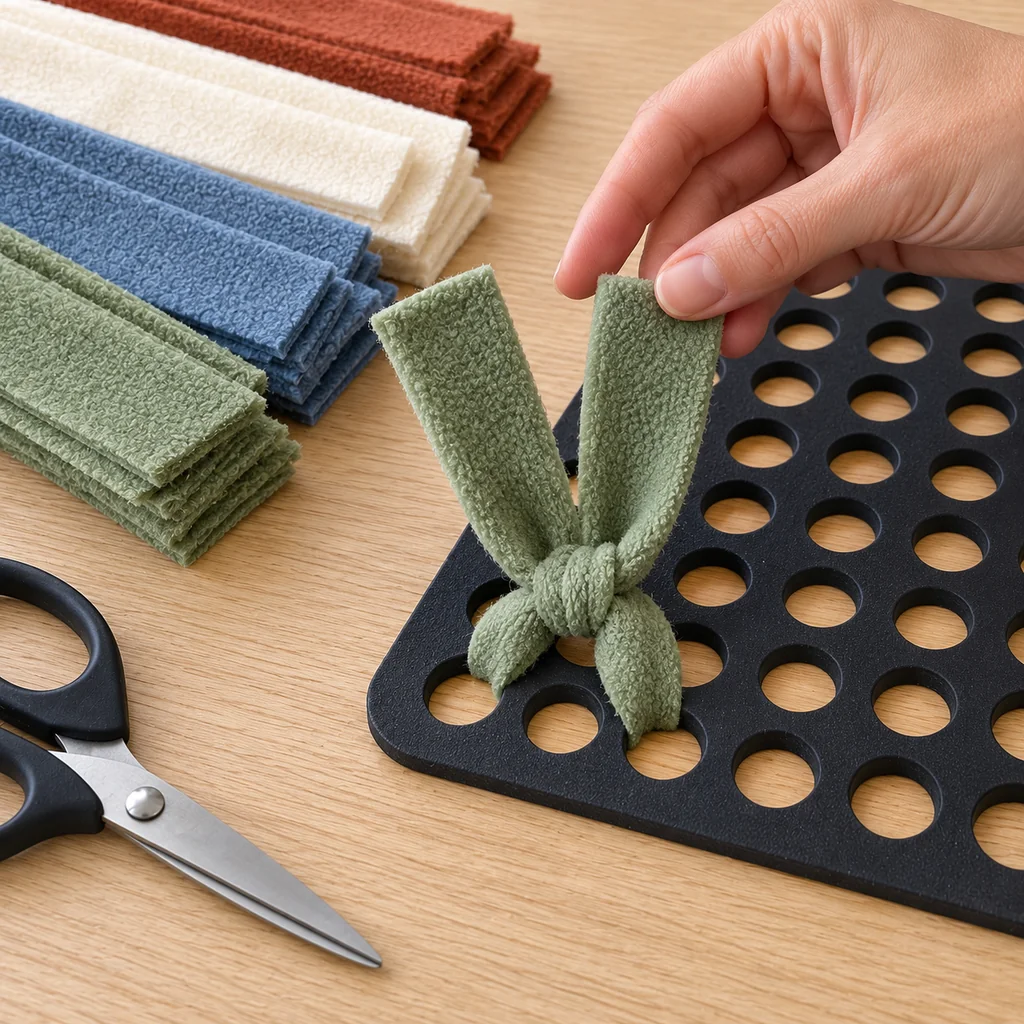
Step 3 — Tie the First Strip Through Two Holes
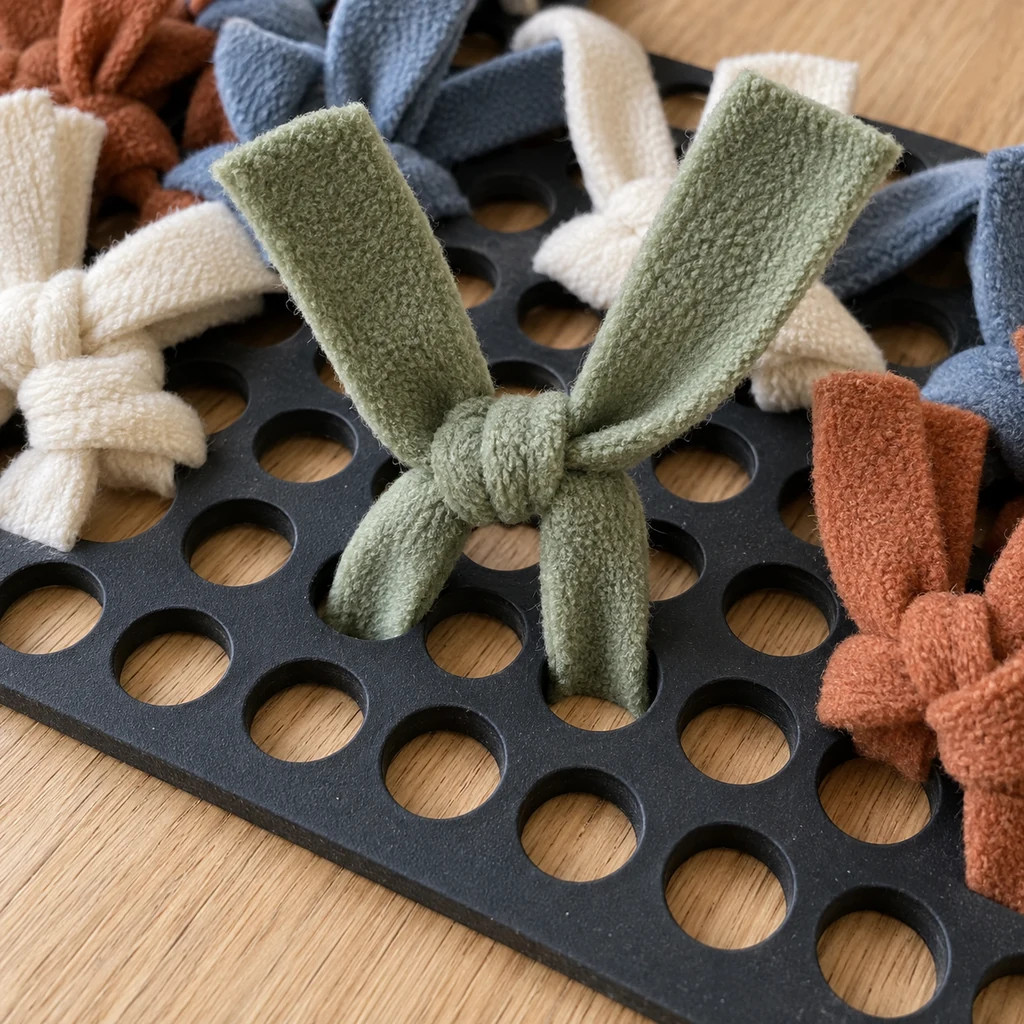
Push one end down through a hole and bring it back up through the adjacent hole. Center the strip so both tails are equal. Tie a square knot: right over left, then left over right. Pull until the knot is secure, but do not cinch so hard that the base puckers or the hole stretches.
Step 4 — Alternate Direction and Color
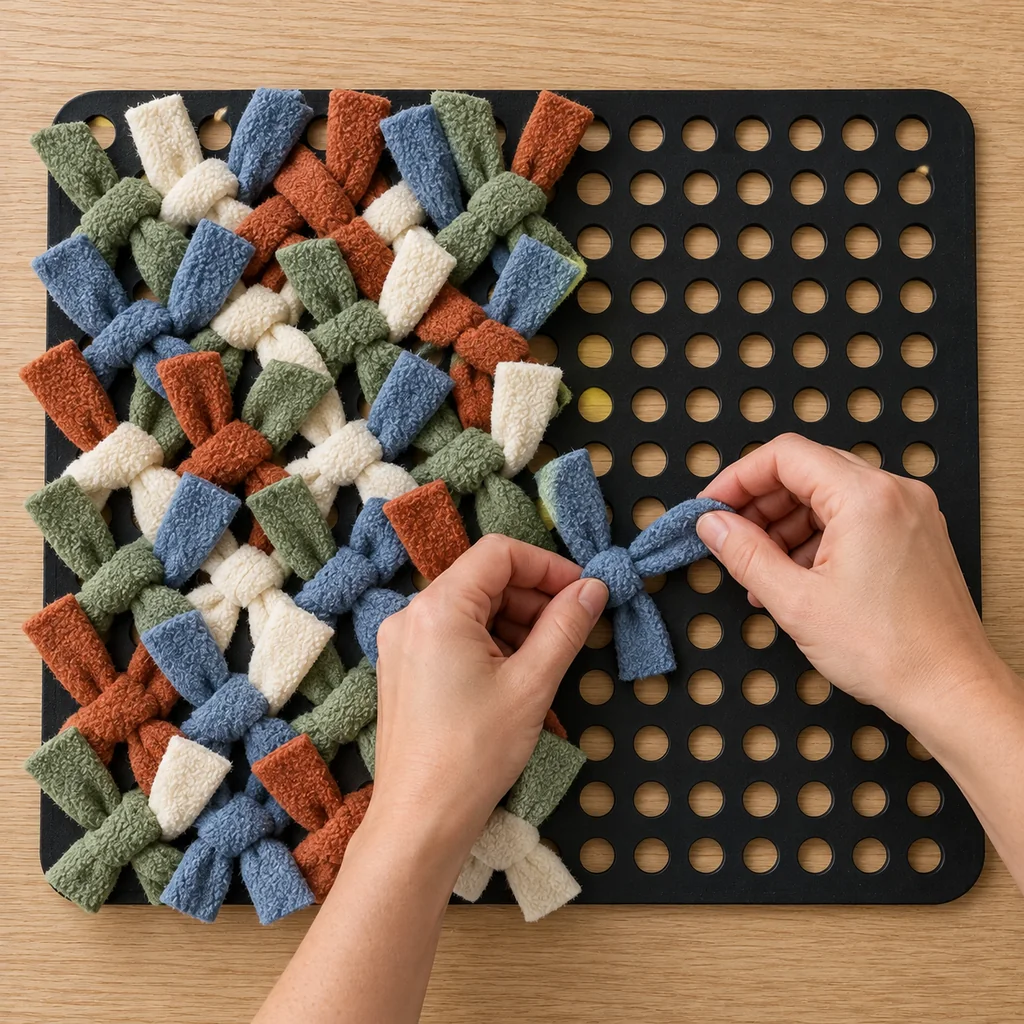
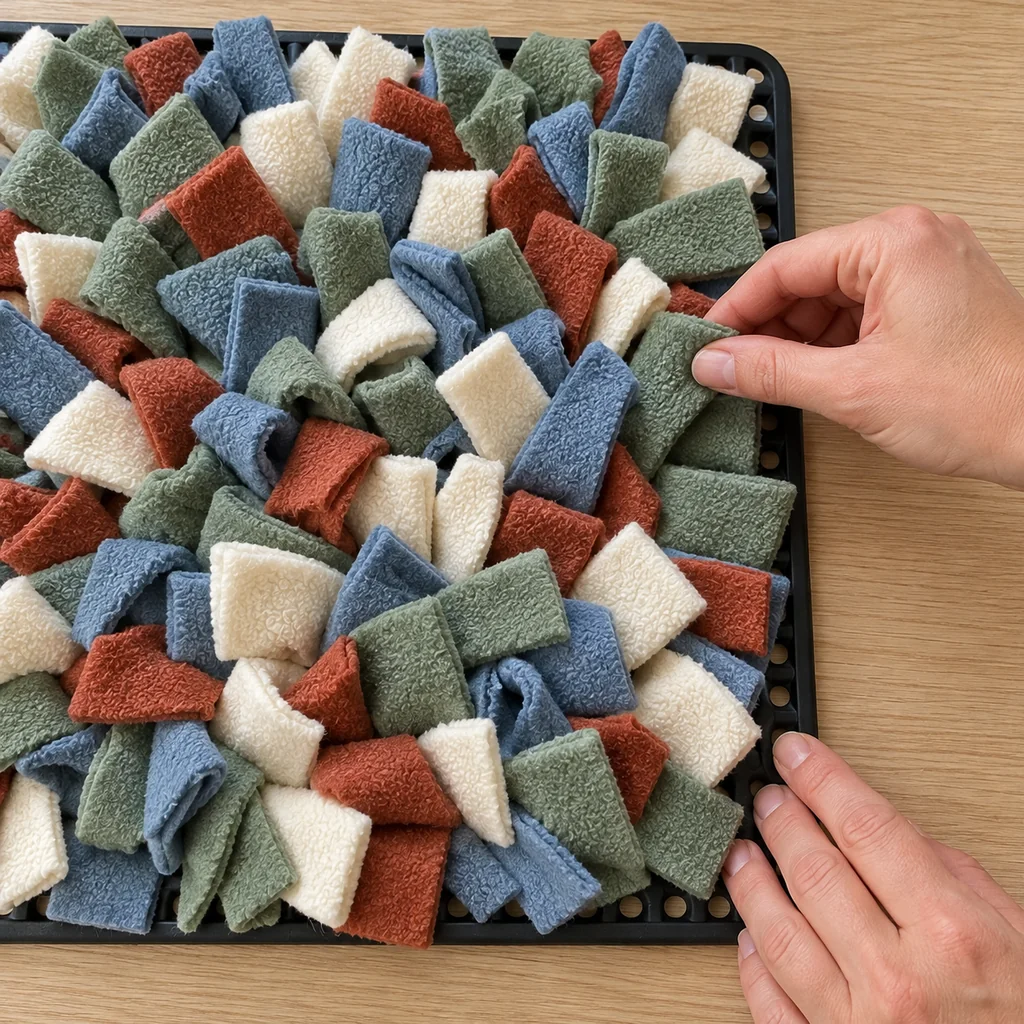
Add strips across the grid, alternating horizontal and vertical pairs of holes. Rotate the four colors instead of building large color blocks. Changing direction fills sight lines and creates an even fleece canopy.
Work from one corner in short rows. Every few rows, lay the mat flat. If an edge curls, loosen the tightest nearby knots rather than forcing the base flat.
Step 5 — Fill Gaps and Perform a Pull Test
Stand the tails upright and look across the mat at eye level. Add strips only where the rubber remains easy to see; you do not need to occupy every possible hole pair. Tug each knot firmly by hand. Replace any strip that slips, frays excessively, or leaves an uneven tail.
Step 6 — Make the First Search Easy
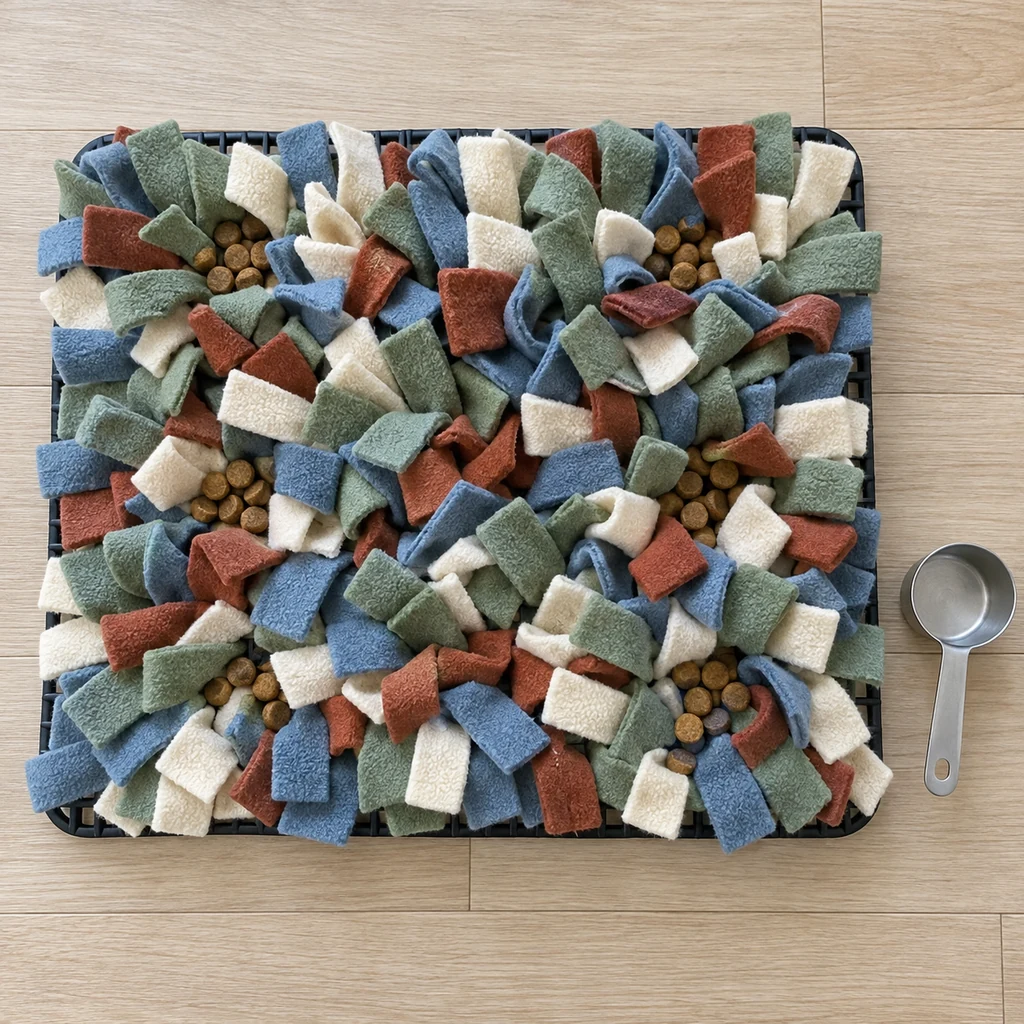
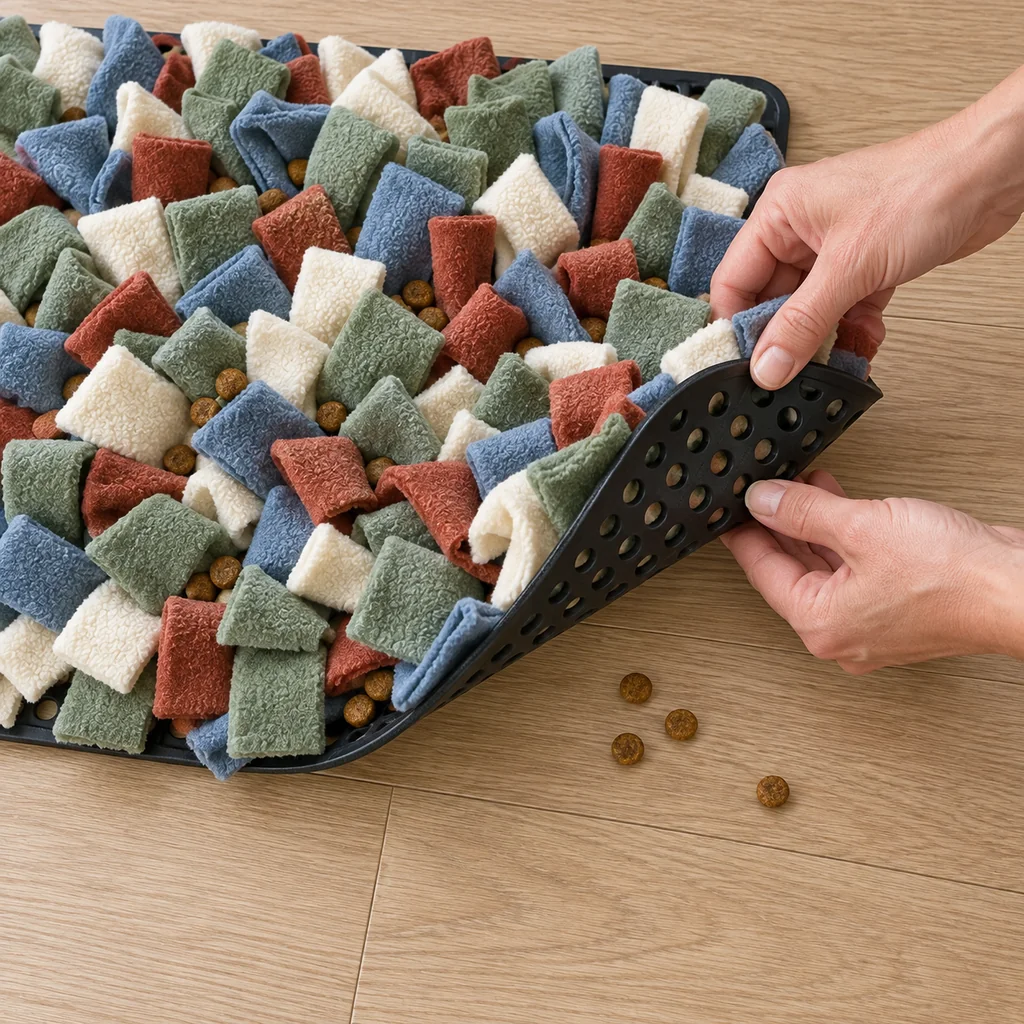
Place the mat on a dry, non-slip floor. Sprinkle a small portion of regular kibble on top so nearly every piece is visible. Use a calm cue such as “find it,” and remain within arm’s reach. A first session can last just two or three minutes.
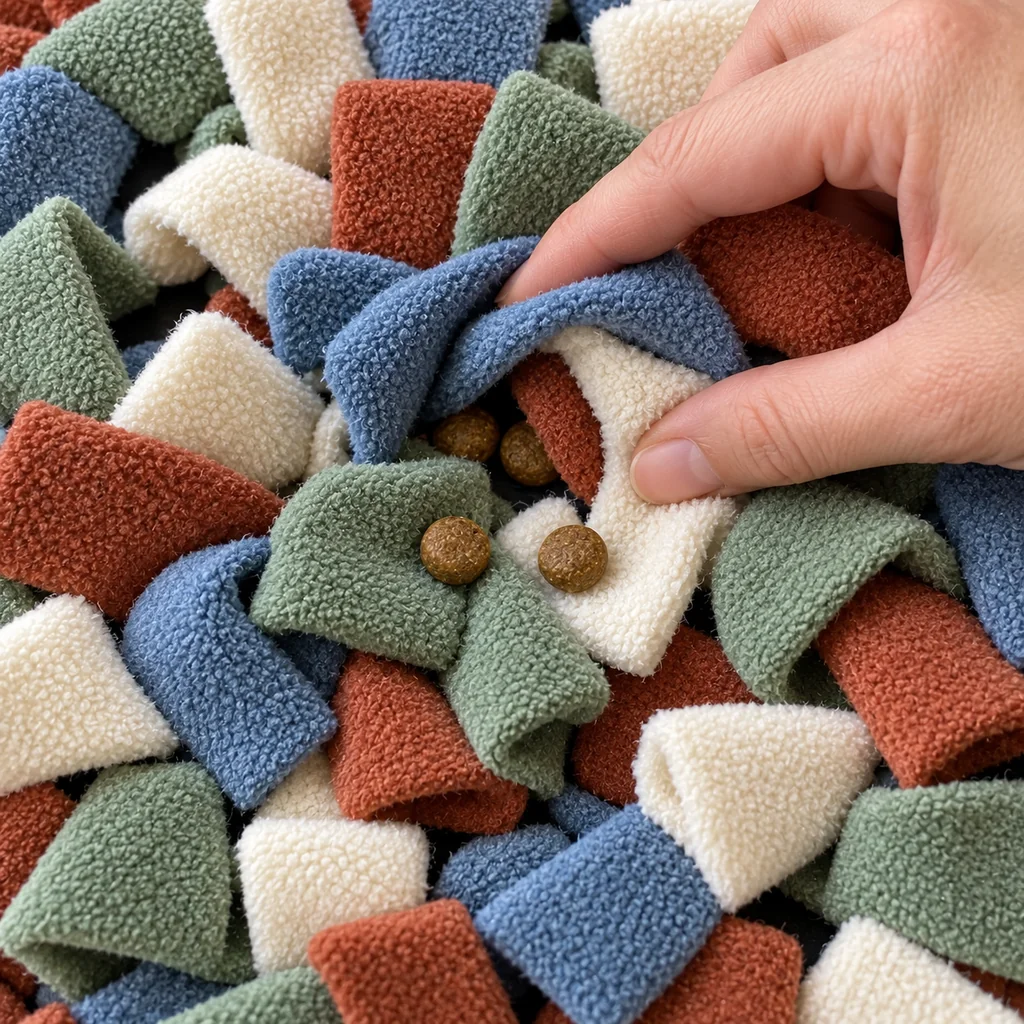
Once your dog searches calmly, tuck a few pieces slightly deeper on later sessions. Increase difficulty gradually; burying every piece at once can turn a simple scent game into frustration.
Step 7 — End and Store the Session
When the food is gone, lift the mat, check the floor and fleece for missed pieces, and store it out of reach. Do not leave it in a crate or use it as an unattended feeder. For other hands-on ideas, rotate it with these easy DIY pet toys rather than offering every activity at once.
Step 8 — Clean, Dry, and Recheck
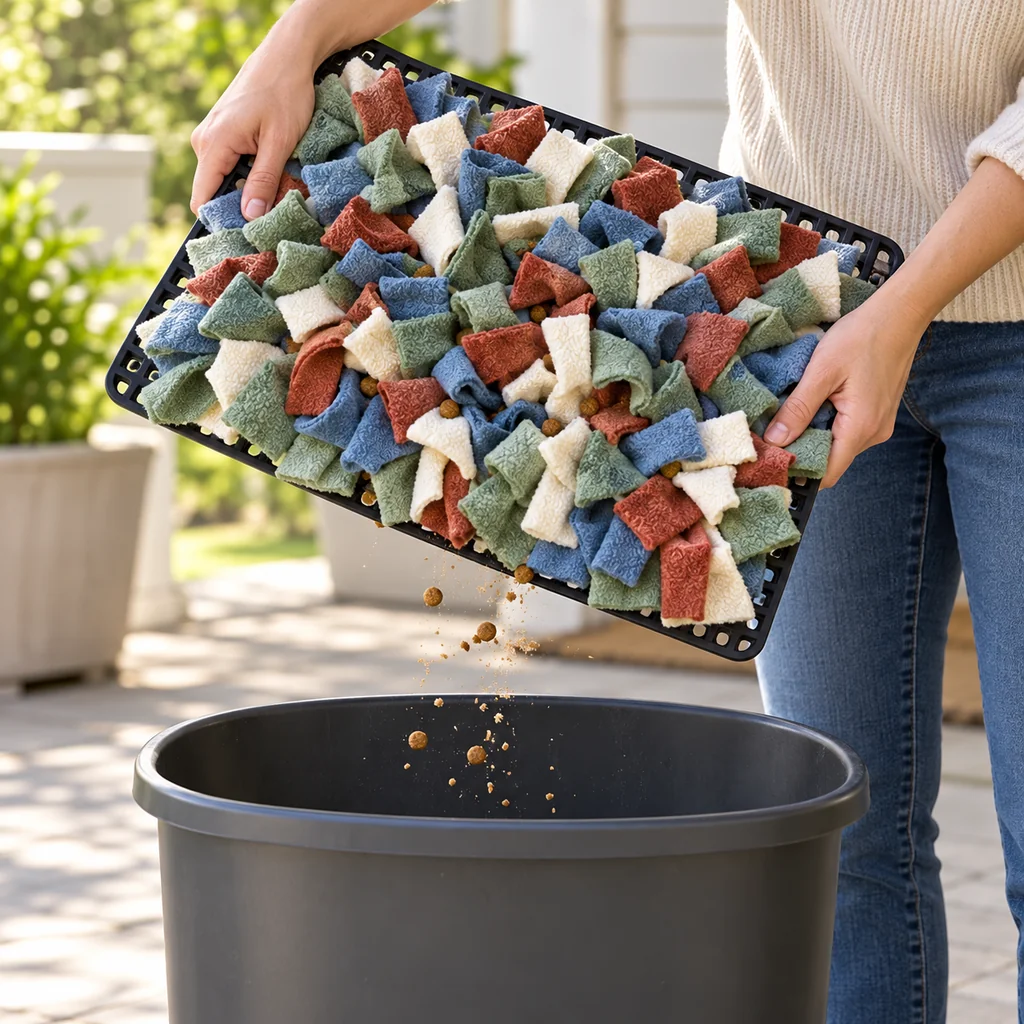
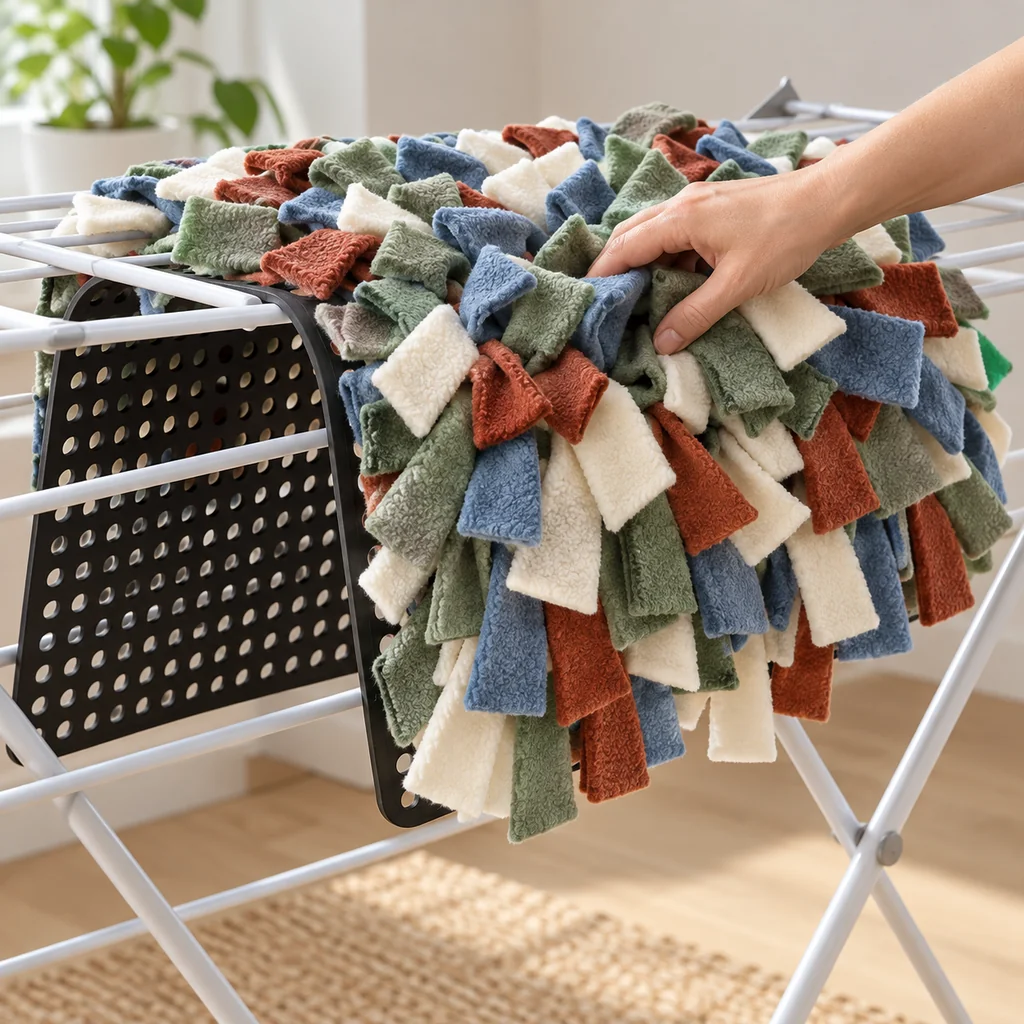
Shake crumbs outdoors after each use. For a deeper clean, follow the rubber mat’s care instructions. If the label permits machine washing, place the mat in a mesh laundry bag, use a cold gentle cycle, and air-dry it completely. Avoid hot water and a hot dryer, which may distort rubber or loosen fleece.
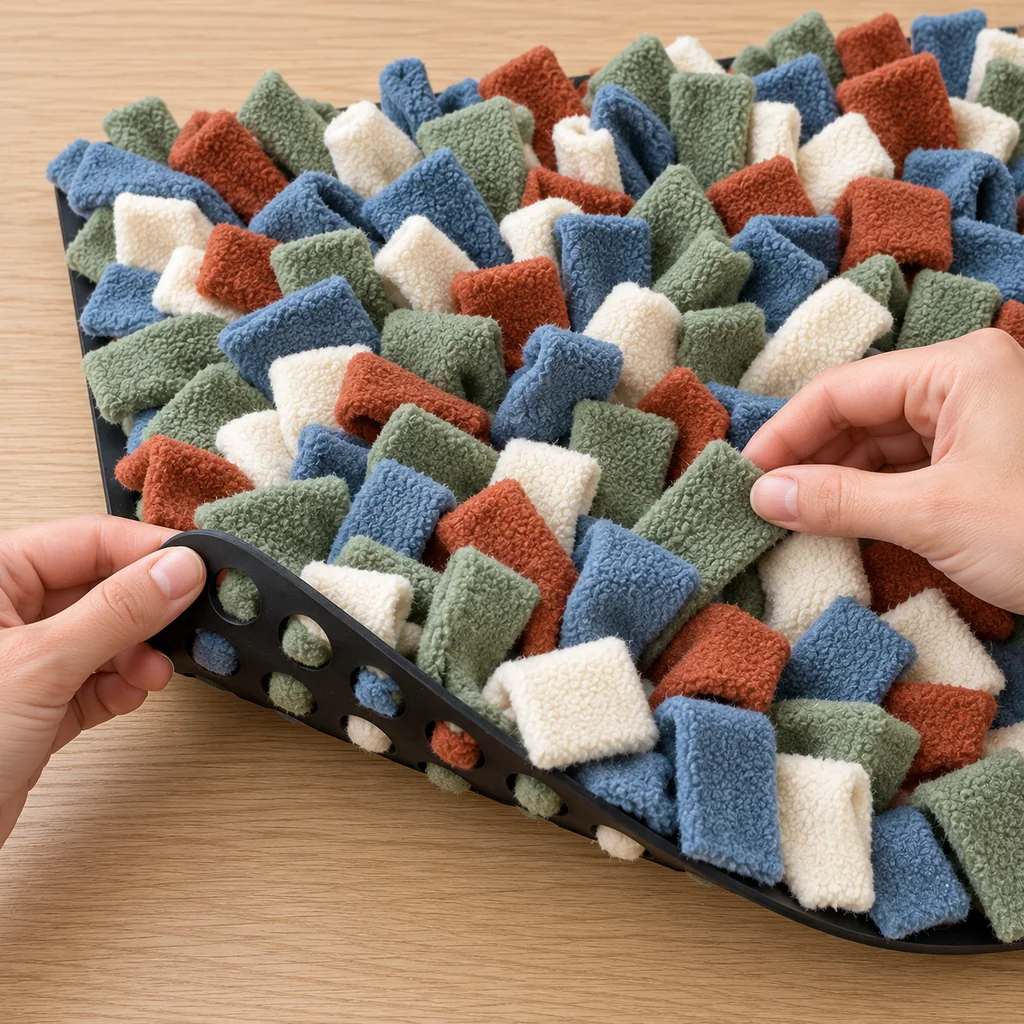
Check every knot and both sides of the base after washing. Moisture trapped in dense fleece can smell stale, so do not store the mat until the center is fully dry.
How Much Food Should Go on the Mat?
Start with a small measured portion taken from your dog’s normal dry-food allowance, not extra calories added on top. The right amount depends on your dog’s diet, size, health, and feeding plan. If you use treats instead of kibble, keep the pieces small and account for them in the daily total. This project is not a substitute for veterinary nutrition advice.
If you want a separate reward for training, choose an appropriate portion from these homemade dog treat ideas only after checking every ingredient against your dog’s needs with a veterinarian.
Troubleshooting
| Problem | Likely cause | What to do |
|---|---|---|
| Knots slide loose | Strips are too narrow or the knot is incomplete | Replace the strip and tie right-over-left, then left-over-right |
| Base curls upward | Several knots are over-tightened | Loosen or replace the tightest strips and lay the base flat |
| Dog grabs or shakes it | The dog treats the mat as a toy or is frustrated | End the session immediately. If grabbing, shaking, or chewing recurs, stop using this mat. |
| Dog gives up | Food is buried too deeply | Place pieces on top and shorten the session |
| Mat smells damp | Dense fleece was stored before drying | Wash as allowed, air-dry fully, and inspect for damage or odor |
| Pets crowd one mat | Competition around food | Separate pets behind closed doors and give each its own supervised activity |
Ways to Adjust the Project
- Smaller base: make a compact mat, then calculate strips from a test row before cutting the full batch.
- Lower pile: test 6-inch strips; confirm the tied tails still cover the rubber without slipping.
- Color plan: use two colors for a checkerboard or four colors for easy row tracking.
- Rotation: store the clean mat between uses so it remains a distinct activity rather than everyday floor clutter.
Households with cats should use cat-appropriate activities and the same supervision mindset. These indoor cat enrichment ideas offer alternatives designed around feline behavior.
Frequently Asked Questions
Can I leave a snuffle mat out all day?
No. Offer it as a short, supervised food-finding session, then inspect and store it out of reach.
Can I use wet food?
This fleece design is intended for dry kibble or dry treats. Wet food is difficult to remove from dense knots and can leave moisture behind.
What if my dog chews fleece?
Remove the mat immediately and do not offer it again. A dog that tears or swallows fabric needs a different enrichment format selected with professional guidance.
Do I have to fill every hole?
No. Hole spacing varies by brand. Stop when the fleece forms even coverage and the rubber base still lies flat.
Can two dogs share one mat?
Do not ask dogs to compete over a food puzzle. Use separate supervised spaces, and avoid food enrichment that worsens resource guarding.
How often should I wash it?
Shake out crumbs after every session and wash whenever it is dirty, damp, or odorous, following the base manufacturer’s instructions. Always air-dry completely and inspect it before reuse.