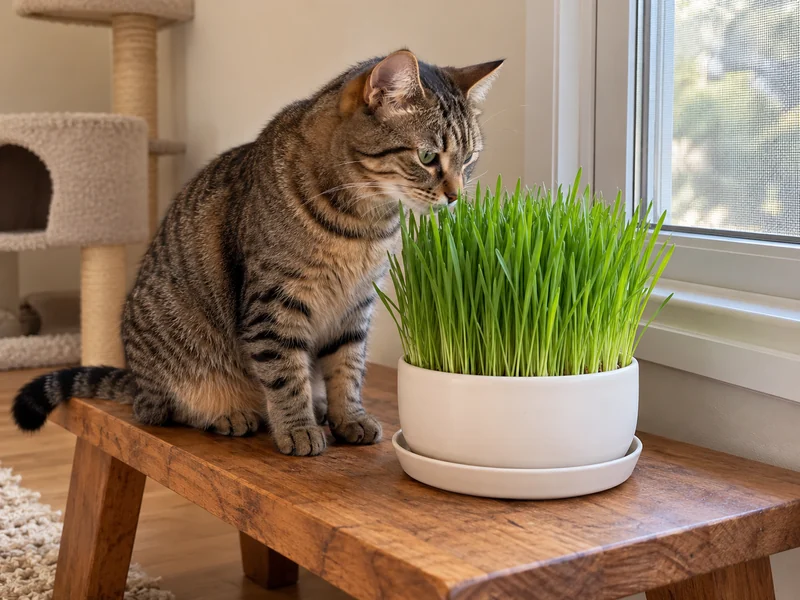
A small pot of cat grass gives a plant-curious indoor cat a place to investigate without sacrificing your windowsill herbs. The useful part is not an elaborate “cat garden.” It is one clearly identified grass, a draining pot that will not tip easily, and a place where the cat can reach it safely once the shoots are ready.
This guide grows oat grass in a low, wide pot about 8 inches across. You can use a cat-grass seed mix labeled for cats instead, but follow its packet for depth and timing. Check your pot and observe your cat’s behavior as you go.
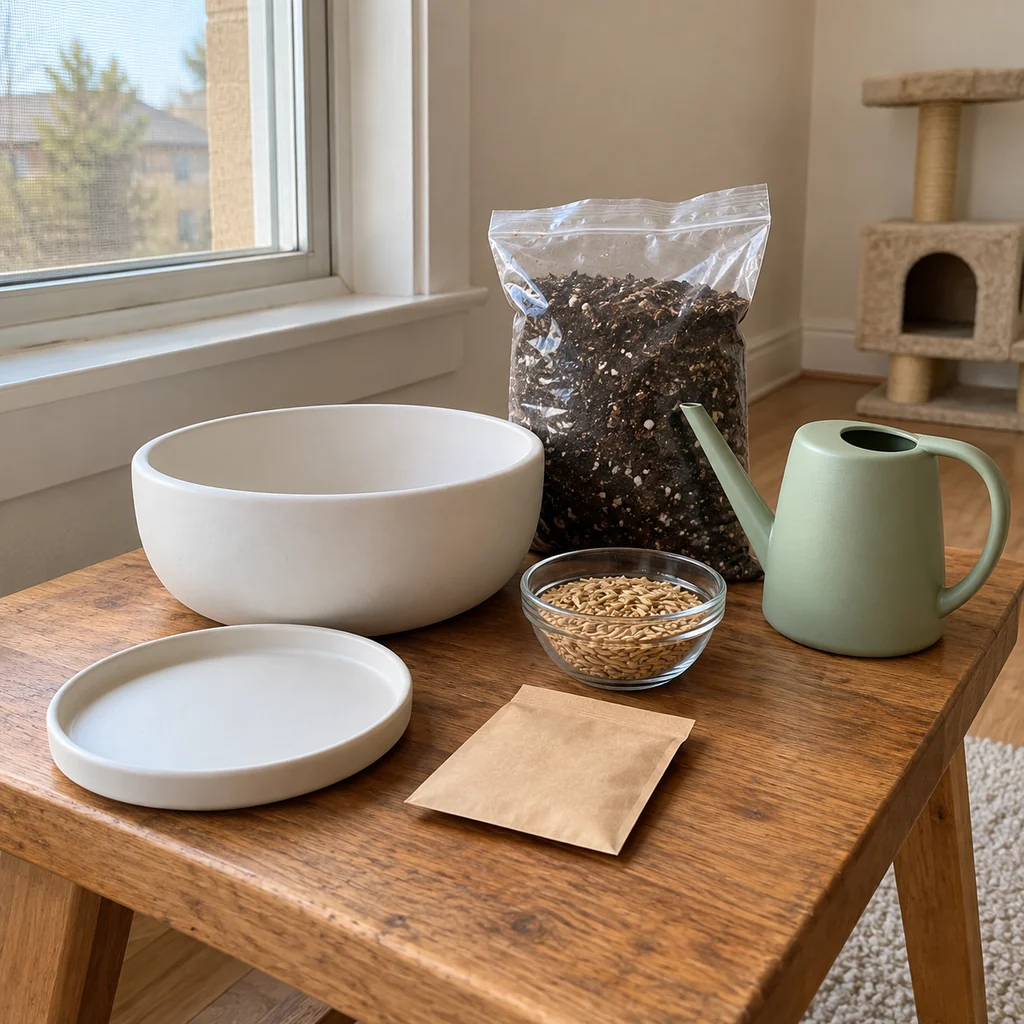
What You Need
- About 2 tablespoons of untreated oat grass seed sold for cat grass, or a clearly labeled cat-grass seed mix
- One low, broad 8-inch pot with open drainage holes and a matching saucer
- Plain seed-starting mix, enough for roughly 2 inches of depth
- A small watering can or spray bottle, a spoon, and a clean towel
- A sturdy low surface near a closed, secure window, where the pot can sit away from the edge
Plant safety first: Use only seeds you can identify. Do not add an unlabeled “garden mix,” treated lawn seed, fertilizer granules, pesticides, decorative stones or essential oils. Cats Protection lists oat, wheat and barley grasses as cat-safe options and warns against letting grasses form seed heads. Its grass guidance also recommends keeping grass free of herbicides and pesticides. If another plant is within chewing reach, check its exact species in the ASPCA cat plant list; lilies are especially dangerous to cats.
How to Grow Cat Grass Indoors
Step 1: Choose One Grass and Set Out the Supplies
Choose untreated oat seed packaged for growing cat grass, or another product explicitly labeled for cats. Read its packet before opening it. Set the pot, saucer, seed, mix and water together so you can see that the grass will be the only reachable plant in this station. Keep seed packets and loose grains out of your cat’s reach during setup. A quiet, well-lit work surface is easier to clean than an upper windowsill.
Step 2: Confirm the Pot Drains and Sits Steadily
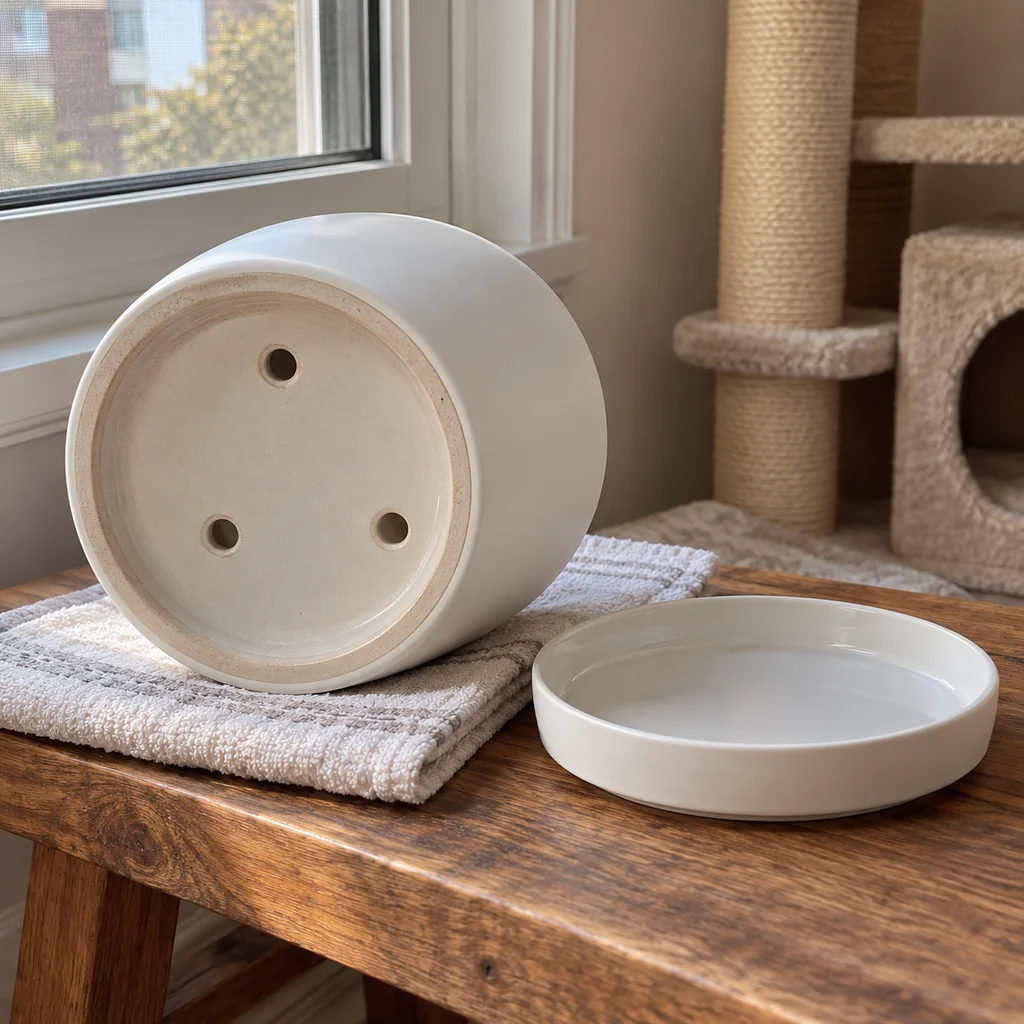
Turn the empty pot over on a towel and check for real, unobstructed holes in its base. A decorative bowl with no holes traps water beneath the seeds. Set the pot back on its saucer and press gently on opposite rim points; it should not rock or slide. Use a heavier, wider pot if your cat tends to paw at objects. The saucer catches runoff but should not hold standing water after a watering.
Step 3: Add Plain, Lightly Damp Seed Mix
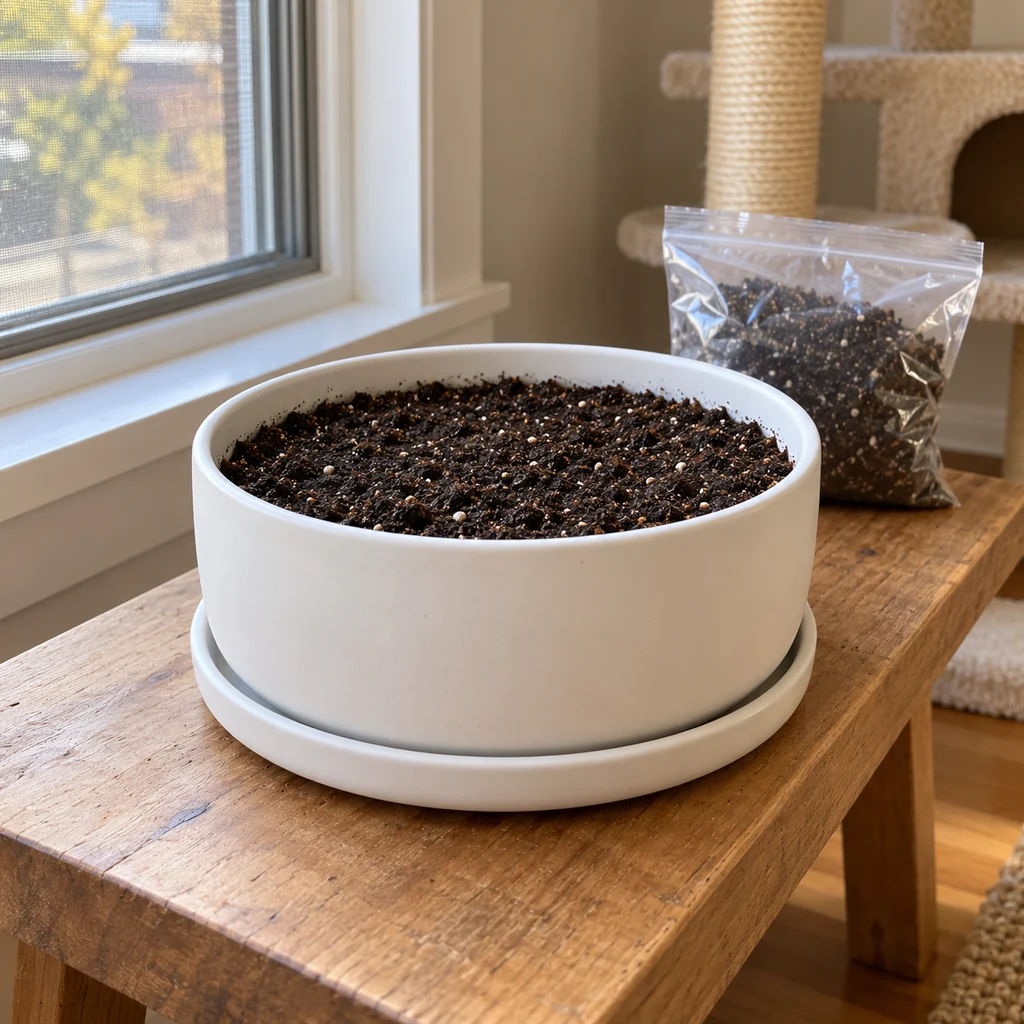
Fill the upright pot with about 2 inches of plain seed-starting mix, leaving roughly half an inch below the rim. Break up large dry clumps with a spoon and level the surface without packing it hard. Moisten the mix lightly if it arrived bone-dry. The goal is an even planting bed, not wet mud; the pot should still be light enough to move but broad and stable when set down.
Step 4: Scatter the Oat Seed Evenly
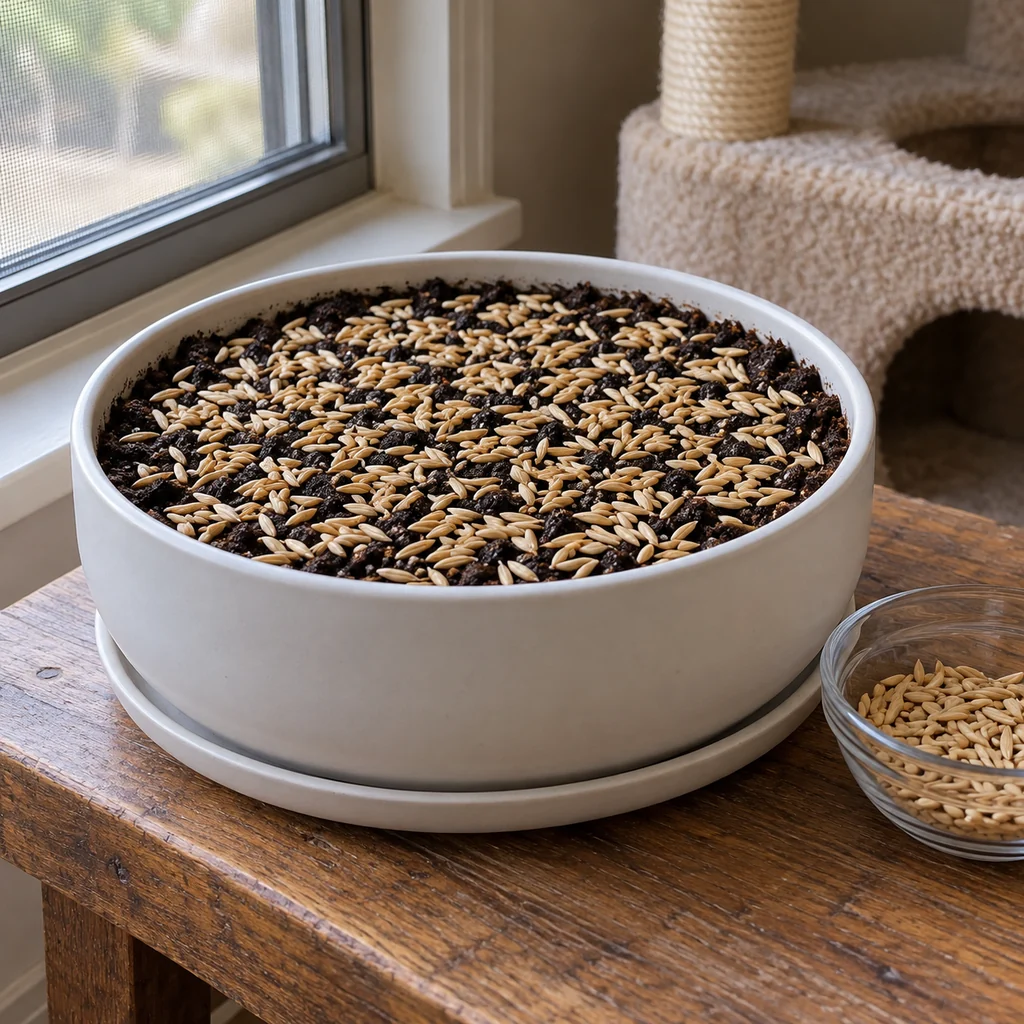
Scatter about 2 tablespoons of oat seed across the surface. Work from the center toward the rim so there are no bare corners or thick piles. A few seeds may touch, but a mound stays wetter and gives poorer air circulation. If your seed packet specifies a different amount for this pot size, use that amount. Return unused seed to a dry, closed packet rather than leaving a bowl where the cat can reach it.
Step 5: Cover Lightly, Water, and Empty the Saucer
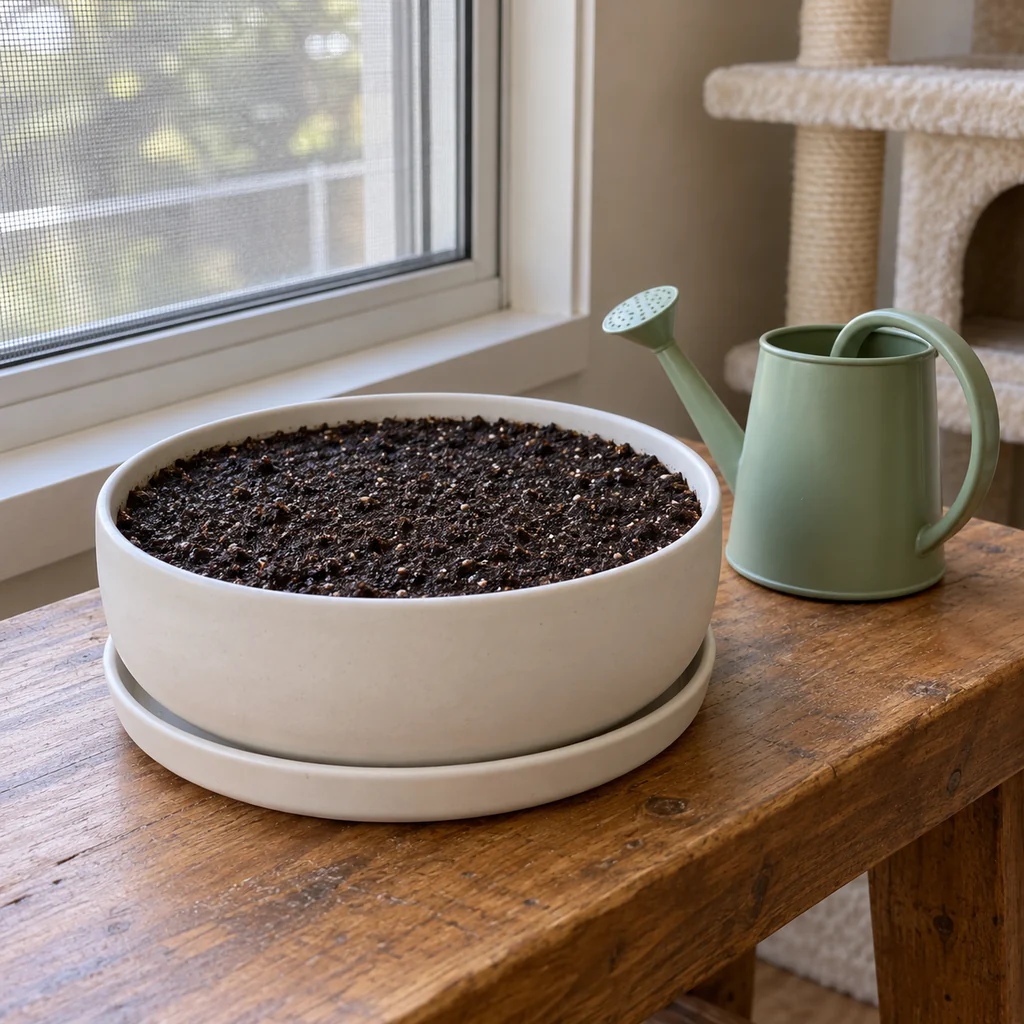
Cover the seed with approximately a quarter inch of mix, or the depth printed on your packet. Water gently until the top is evenly moist and a little water drains through. Let the pot finish draining, then empty the saucer. Do not seal the top with plastic or leave it sitting in water. Keep the pot where the cat cannot dig into the freshly sown seed while it germinates.
Step 6: Watch the Shoots and Adjust Moisture
Place the pot in bright indoor light, away from a cold draft or a hot radiator. Check the top layer each day. Water when it begins to dry, and pour off runoff rather than watering by a rigid schedule. Sprouting time varies with seed and room conditions, so watch for short upright green shoots instead of counting on an exact day. If the mix smells sour, stays soaked, or develops visible fuzzy mold, keep it away from the cat and start again with fresh mix and a clean pot.
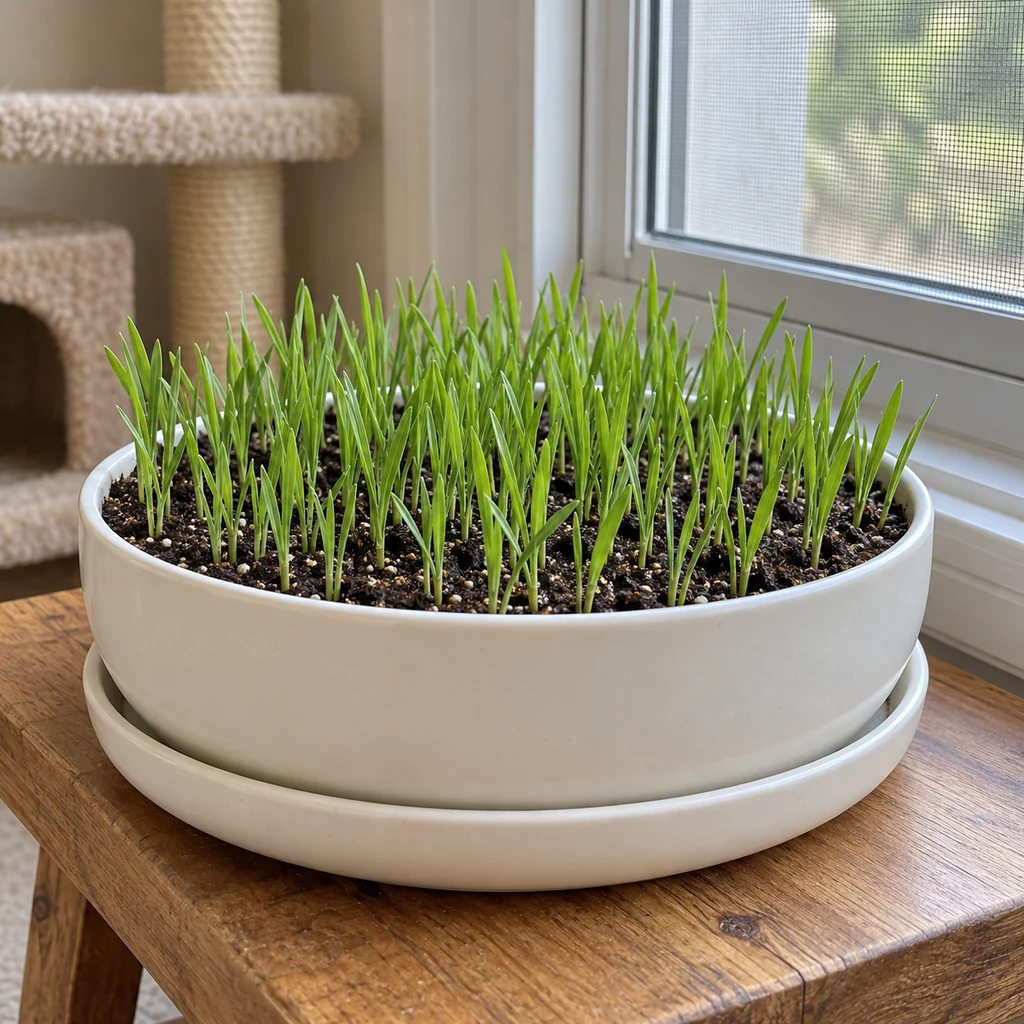
Step 7: Offer the Grass in a Safe, Stable Spot
When the grass is several inches tall and firmly rooted, move the pot to a low sturdy spot your cat can reach without climbing onto a narrow sill. Keep it back from the edge and make sure the window is closed or securely screened. Stay nearby the first time your cat investigates. Some cats take a few nibbles; others only sniff, and that is fine. If your cat digs out soil or tips the pot, remove it and try a heavier, wider container. Discard any chewed seed heads or yellowing growth; sow a fresh pot rather than trying to keep old grass indefinitely.
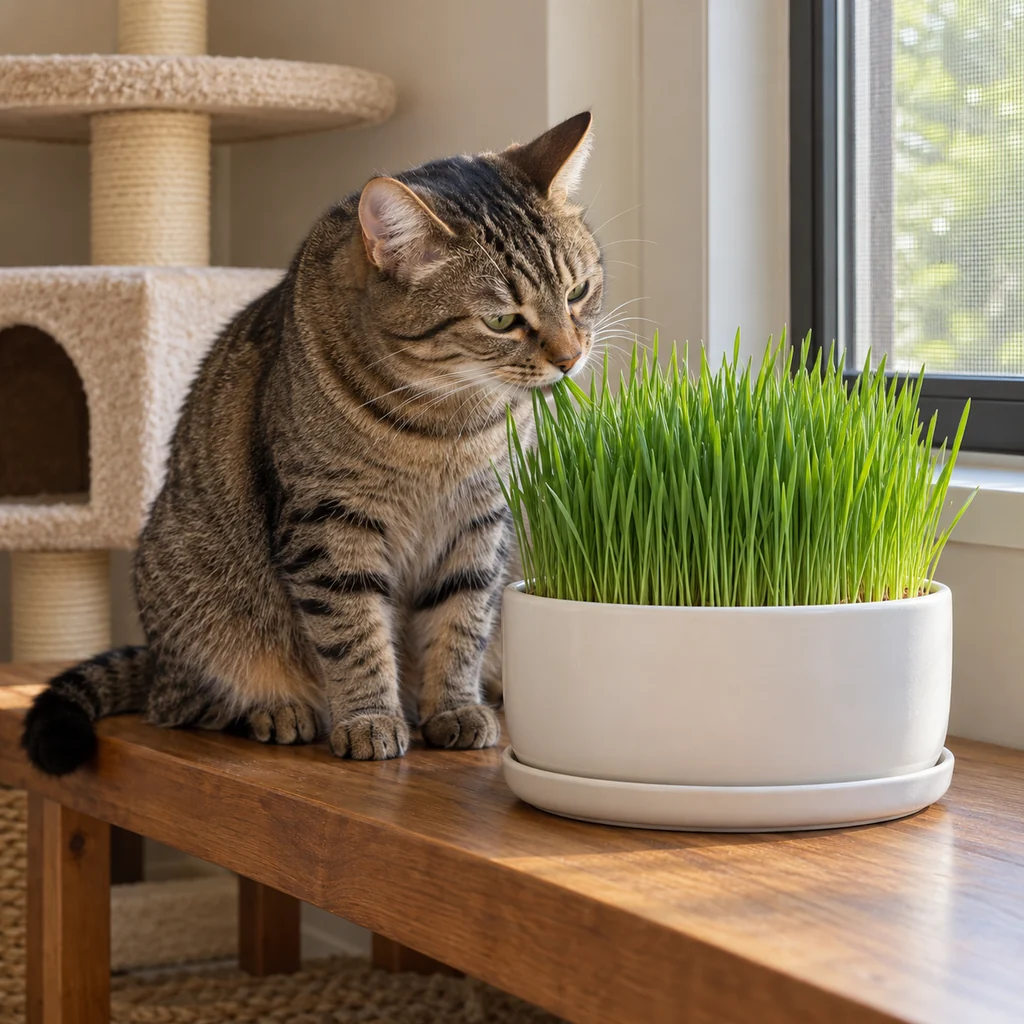
Keep the Station Simple
Cat grass is an optional enrichment, not a replacement for a complete cat food. Cats Protection notes that some cats do not want it, while frequent vomiting or other signs of illness deserve a veterinarian’s advice. Do not use grass to explain away a sudden change in appetite or behavior.
For more ways to vary an indoor cat’s day, see our indoor cat enrichment ideas for small homes. If your cat prefers working for food over nibbling grass, the cardboard tube puzzle feeder is a separate project. Keep the cat grass pot a single-purpose, easy-to-clean plant station.
Common Questions
How long will cat grass take to sprout?
The seed packet and your room conditions matter more than a universal calendar. Keep the mix lightly moist and look for firm green shoots. If the surface stays bare long after the packet’s expected window, check whether the seed is fresh and the pot has been kept too cold or too wet before trying another sowing.
Can I use a decorative bowl without drainage?
A closed bowl makes it harder to judge how much water remains at the bottom. Use a pot with real holes and a saucer you can empty. A decorative outer container is only useful if the inner planting pot still drains and you remove any collected water.
What if my cat ignores the grass?
Leave the pot available in a calm place for a short trial, then move it away if it attracts no interest. Do not push the cat toward it or mix the blades into food to force a response. The grass is simply one optional enrichment choice.