A tiny laundry closet can feel crowded even when the only storage is one shelf. The fix starts with keeping the machines accessible, then giving the shelf two clear jobs and using a narrow side gap only if the hamper truly fits. This setup needs no extra shelves, decanted detergent or baskets balanced on vibrating appliances.
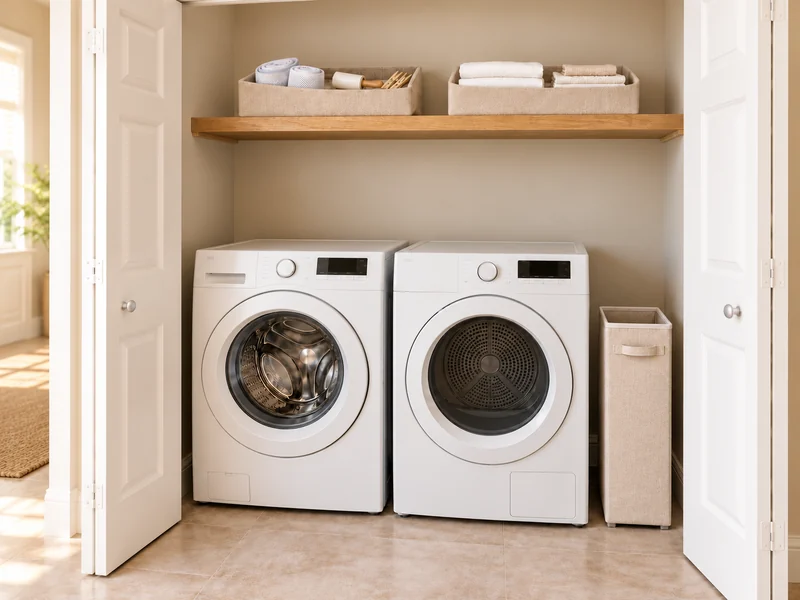
At a glance: Clear the closet, measure the existing shelf and any side gap, dry-fit two shallow bins, fill them with washable tools and clean textiles, then park a slim hamper where doors and machines can still open. The photographs show one example layout; use your appliance manual and your own measurements for clearances.
Check the dimensions, shelf strength, appliance access and door swing in your home before arranging the closet.
What You Need
- An existing, sound laundry closet shelf; this plan does not add or move a shelf
- Two shallow, open-top bins that fit the shelf with room to grasp each one
- One slim, freestanding hamper, only if the side gap is wide and deep enough
- Ruler or tape measure, paper and pencil
- Existing laundry accessories: mesh wash bags, lint roller, clothespins and a few clean cloths or towels
Measure the shelf’s usable width, depth and distance to the closet doors. Measure the narrowest point of any side gap, not just the floor opening. Leave the shelf brackets visible and respect their load rating. Do not move or cover dryer venting, water connections, electrical outlets, controls or the lint filter.
Product storage comes first: Keep detergents and other laundry chemicals closed in their original labeled containers. If children or pets can reach the closet, use a secure storage location beyond their reach rather than treating an open bin as childproof. The American Academy of Pediatrics’ laundry safety guidance explains why original packaging and secure storage matter.
How to Organize a Small Laundry Closet With One Shelf
Step 1: Empty the Shelf and Check the Access
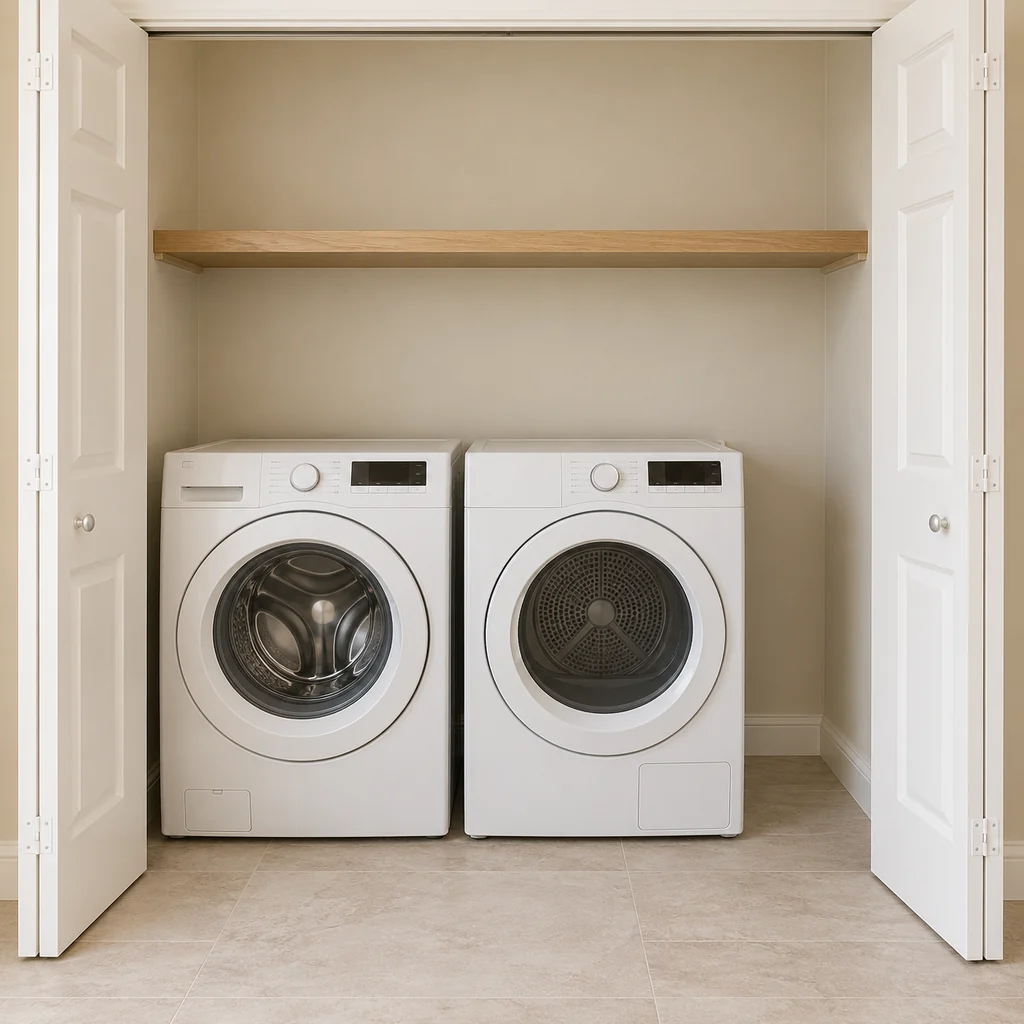
Take everything off the shelf and the tops of both machines. Wipe the shelf and look for loose brackets or bowing; deal with a weak shelf before putting anything back. Open each appliance door fully and locate the lint filter, hookups and dryer vent path. Check whether the closet doors can close without touching the machines. The empty view makes the available shelf space and the optional side gap easy to see.
Step 2: Dry-Fit Two Shallow Bins
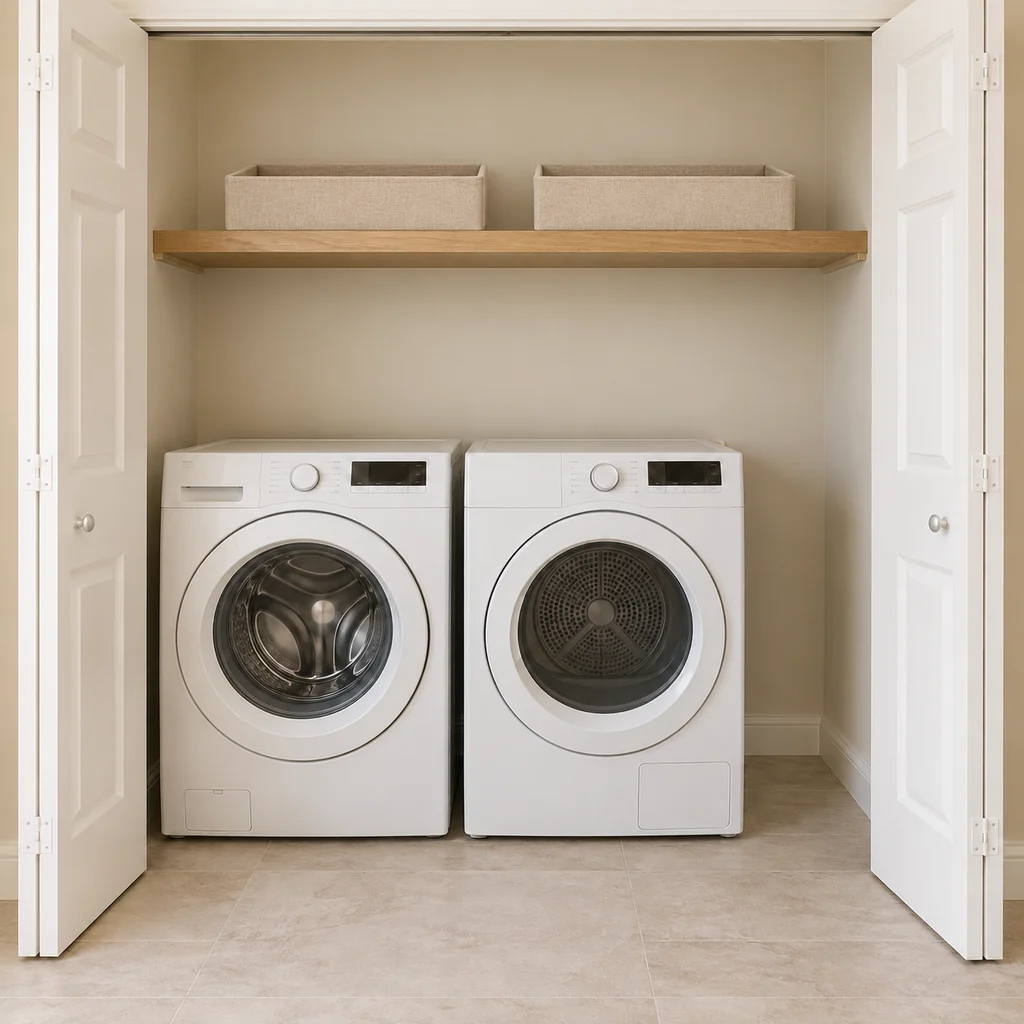
Choose two low bins that sit entirely on the shelf with no overhang. Test them empty before assigning contents. They should not hide a bracket, scrape the doors or demand that you reach awkwardly behind the appliances. Keep a little open shelf between or beside them for a safe handhold. If the shelf is too narrow for two bins, use one bin with two internal sections rather than squeezing the containers together. The goal is easy retrieval, not filling every inch.
Step 3: Put Wash-Day Tools in the Left Bin
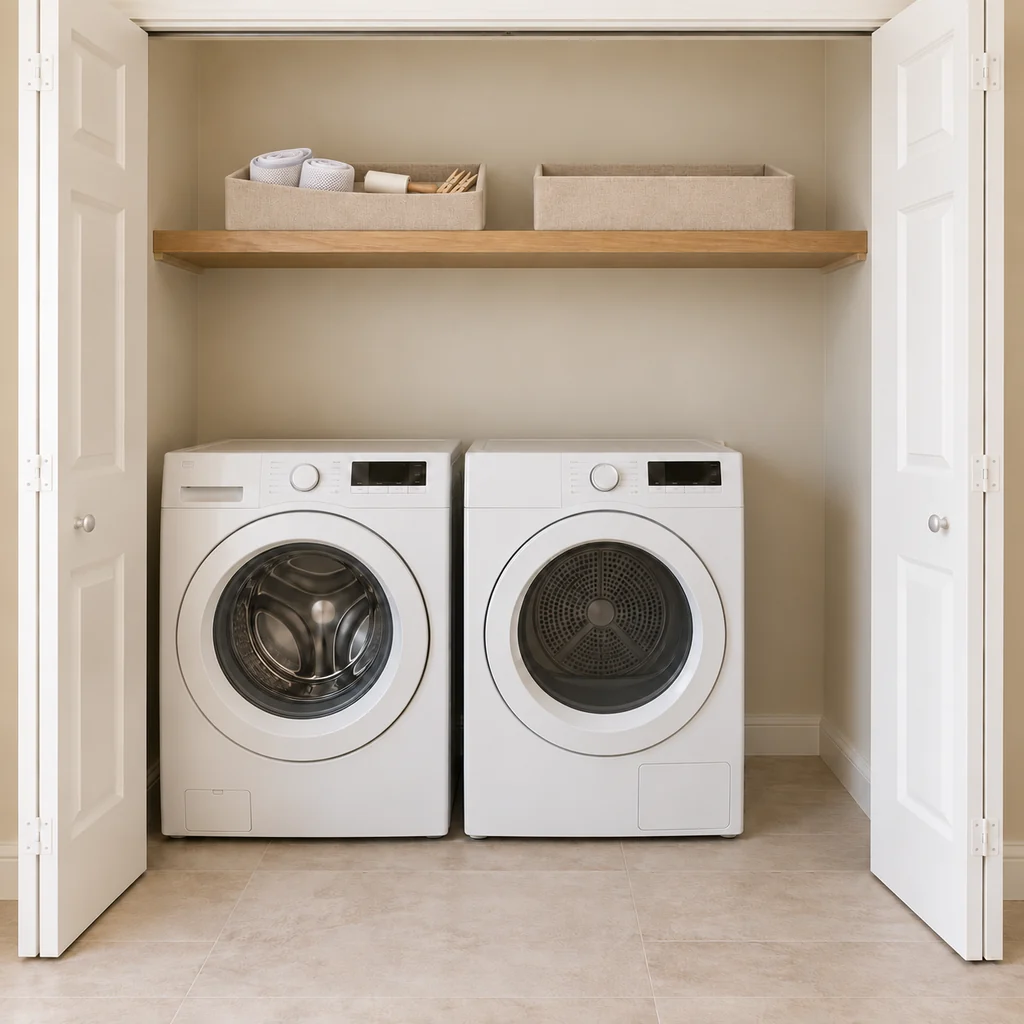
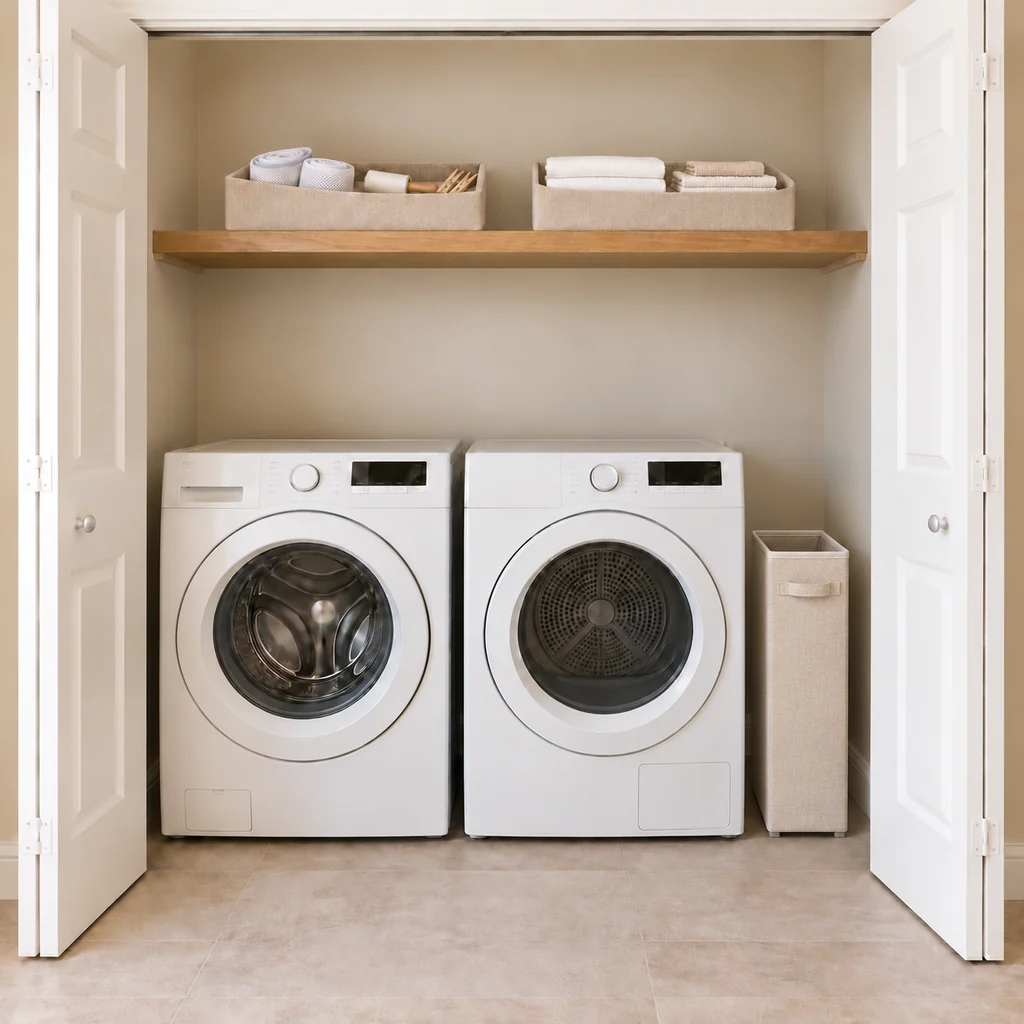
Keep lightweight, nonchemical accessories together: mesh bags, a lint roller and a few clothespins. Roll or fold the mesh bags so you can identify one without dumping the whole bin. Stand the lint roller where it cannot roll off the shelf. Skip a large collection of seldom-used gadgets; if the bin is so full that you cannot return an item with one hand, edit it down. This is the bin you reach for before starting a load.
Step 4: Reserve the Right Bin for Clean Cloths
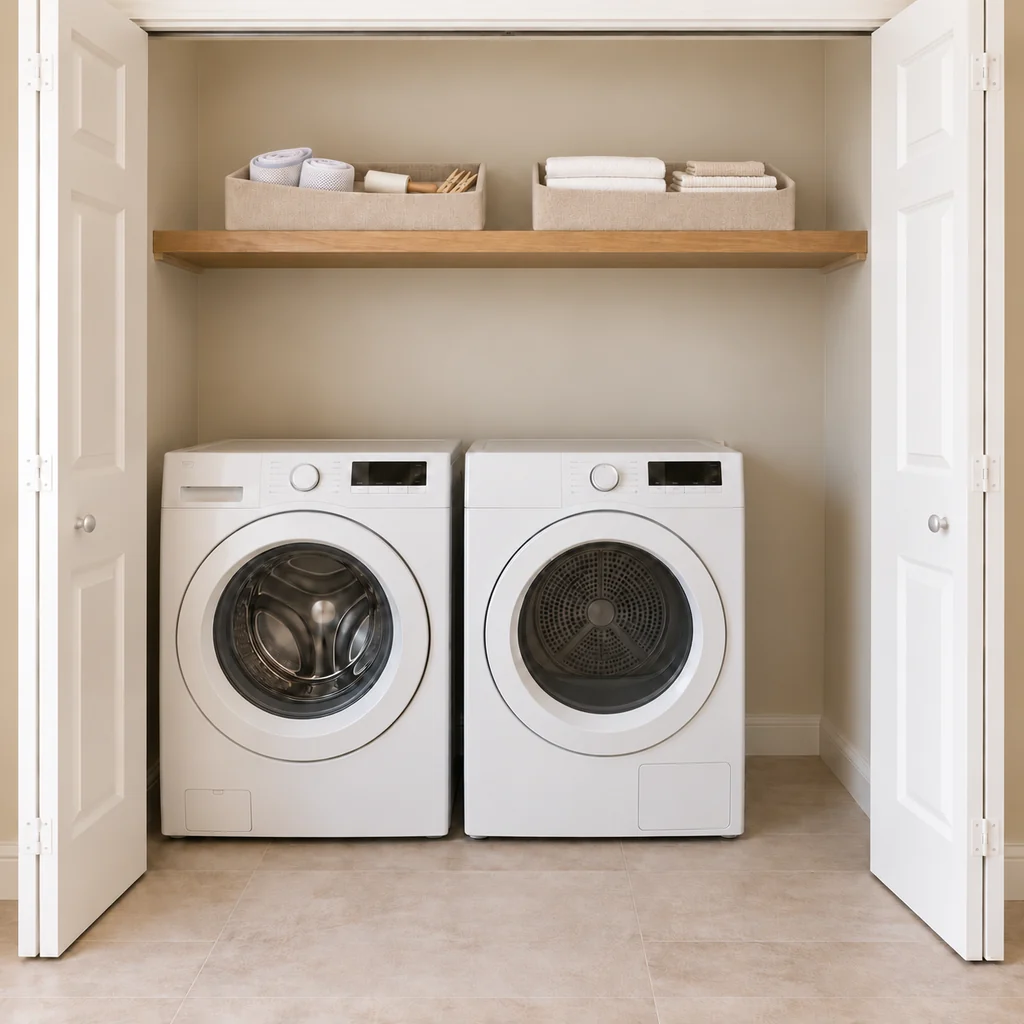
Fold a small working set of clean microfiber cloths, hand towels or dryer-safe reusable laundry cloths into the second bin. Keep clean pieces separate from used ones; dirty or damp cloths belong in the wash, never back on this shelf. Put the most frequently used cloth at the front. If you need to store bulky backstock, move it to a linen closet so this little shelf stays easy to use. Our four-zone linen closet guide can help with that overflow.
Step 5: Fit a Slim Hamper Only Where It Clears Everything
If a genuine side slot remains beside the machines, measure its width and depth at floor level and higher up before buying a hamper. Choose a slim, freestanding model that slides out without rubbing the machines, blocking the dryer vent or snagging a door. In the pictured closet, it parks at the far right and the appliance doors still open. If your machines fill the opening, put the hamper just outside the closet against a nearby wall instead. Never wedge it in front of the washer or dryer. Close and reopen the closet doors once, then pull out both bins and the hamper to prove that the layout works in everyday use.
Keep the System Working
Return tools to the left bin, clean cloths to the right bin and worn laundry to the hamper after each load. Once a week, pull the bins forward, wipe the shelf and discard empty packaging. Clean the dryer lint filter as directed by its manufacturer and keep the vent path unobstructed; the U.S. Fire Administration’s dryer safety guidance emphasizes lint and vent maintenance.
If the setup feels crowded again, remove an item before buying a new organizer. A small closet works best when every container is easy to lift, every appliance remains serviceable, and the doors close without forcing them.
Common Fit Problems
- Bins scrape the door: Choose shallower bins and retest the swing before filling them.
- The shelf bows: Remove weight immediately and have the shelf repaired or replaced appropriately; do not rely on decorative bins to conceal the problem.
- The hamper blocks access: Move it outside the closet. A free machine door is more useful than a hidden basket.
- The tools bin becomes a catchall: Keep only items used in this laundry routine and move unrelated cleaners to their proper secure storage.
Small Laundry Closet Questions
Can detergent go in a matching clear jar?
Keep it in its original, labeled container instead. A clear jar removes the product directions and warnings and can make a concentrated product look like something harmless. Decorative bins can hide the original closed package, but they do not make it childproof. If children or pets can enter the laundry area, choose a properly secure storage location.
What if there is no side gap for a hamper?
The plan still works with two shelf bins. Place a freestanding hamper outside the closet, close enough to use but outside the swing of the closet and appliance doors. Avoid a bag hanging from a door if it makes the door hard to close or puts weight on hinges that were not designed for it.
Will this work with a top-loading washer or stacked machines?
The two-bin idea can work, but the pictured dimensions and shelf position may not. A top-loading washer needs clear space above its lid; stacked machines may have controls, filters or required service clearance in different places. Follow the appliance manual first, then use only storage that leaves every working and service point accessible.