
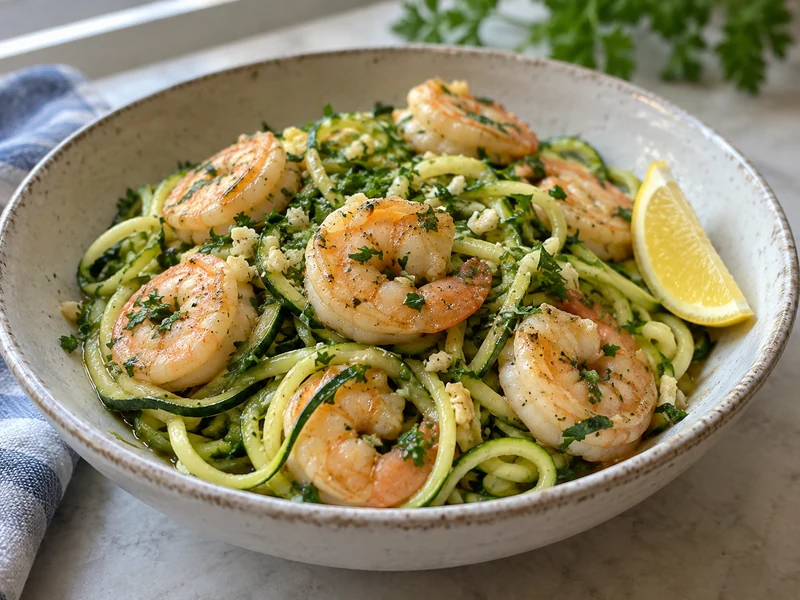
Zucchini noodles with garlic shrimp bring together two ingredients that cook quickly but reward a little attention. The zucchini stays tender-crisp, while shrimp gets a light sear before meeting fragrant garlic, lemon, and parsley. The result is a bright skillet dinner with distinct strands rather than a watery pile of vegetables.
RECIPE CARD
Zucchini Noodles with Garlic Shrimp
Ingredients
- 2 medium zucchinis, spiralized into noodles
- 1 lb large shrimp, peeled and deveined
- 3 tablespoons olive oil, divided
- 4 garlic cloves, minced
- 1/2 teaspoon red pepper flakes (optional)
- 1/4 cup fresh parsley, chopped
- 1 tablespoon lemon juice
- Salt and pepper to taste
- Lemon wedges for serving
- Parmesan cheese for garnish (optional)
Quick Method
Condensed overview. Use Full Instructions for the complete method, timing and doneness details.
- Cook the shrimp: Heat 1 tablespoon olive oil in a large skillet over medium-high heat. Season shrimp and cook roughly 2 to 3 minutes per side until…
- Sauté the garlic: Reduce heat to medium, add the remaining 2 tablespoons olive oil, minced garlic, and optional red pepper flakes. Stir for about 1 minute until…
- Soften the zucchini noodles: Add spiralized zucchini and toss in the garlic oil for about 2 to 3 minutes, until slightly softened but still crisp. Pour off excess…
- Combine with lemon and parsley: Return cooked shrimp to the skillet. Add chopped parsley and 1 tablespoon lemon juice, then toss for about 1 minute until warmed and coated.…
- Plate and serve: Divide zucchini noodles and shrimp among four bowls. Serve with lemon wedges and optional Parmesan cheese immediately.
The key is to cook the shrimp separately, then warm the zucchini noodles briefly in the same pan. That order gives the shrimp room to cook evenly and keeps the zucchini from steaming for too long. Have everything prepared before heating the skillet: once the garlic goes in, the rest of the meal comes together in minutes. Serve it promptly, with lemon wedges for anyone who wants extra acidity.
Why You’ll Love It
- Fast cooking: Shrimp and zucchini both need only a few minutes in the skillet.
- Fresh texture: Briefly cooked zucchini strands remain pleasantly springy.
- Bright finish: Lemon and parsley balance the garlicky olive oil.
Ingredients
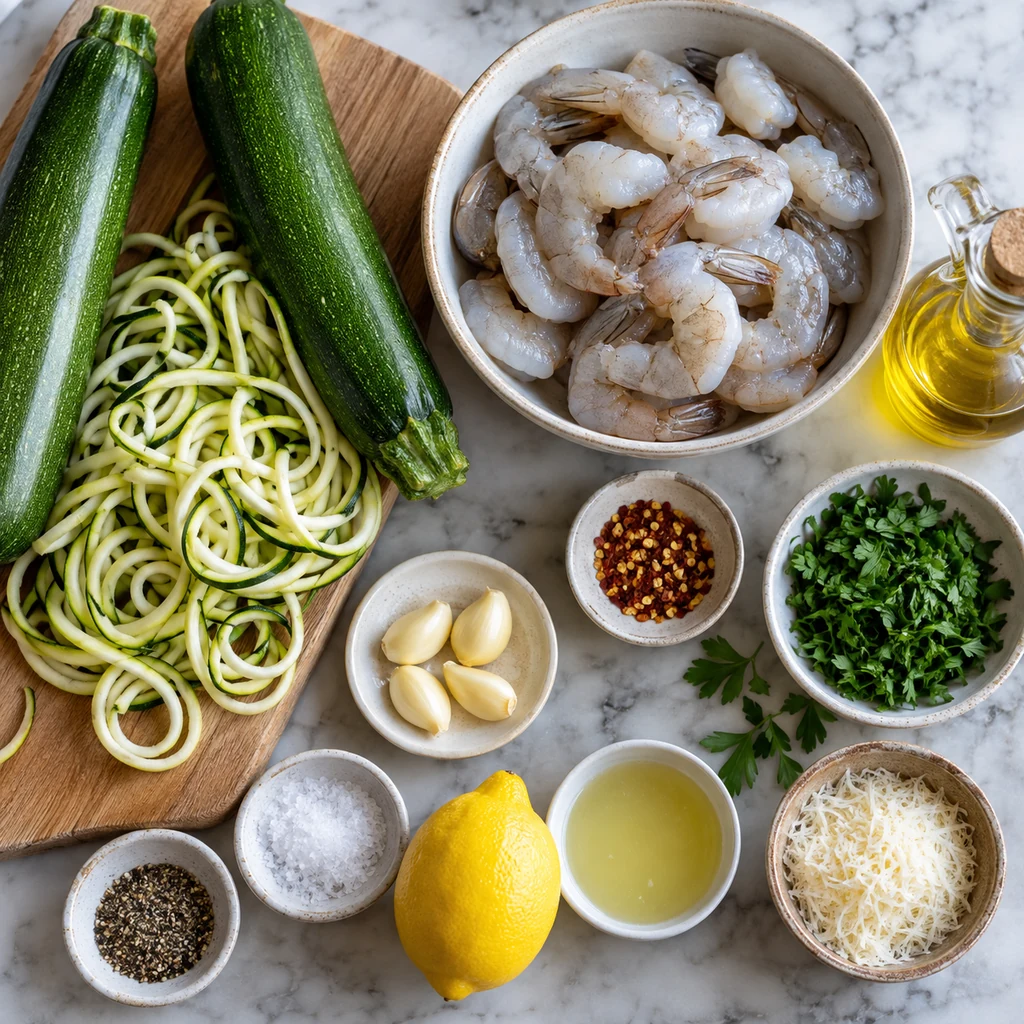
- 2 medium zucchinis, spiralized into noodles
- 1 lb large shrimp, peeled and deveined
- 3 tablespoons olive oil, divided
- 4 garlic cloves, minced
- 1/2 teaspoon red pepper flakes (optional)
- 1/4 cup fresh parsley, chopped
- 1 tablespoon lemon juice
- Salt and pepper to taste
- Lemon wedges for serving
- Parmesan cheese for garnish (optional)
Choose firm zucchini with unblemished skin. Spiralize them just before cooking if possible, then blot especially damp strands with a clean towel. Pat the peeled shrimp dry as well: wet shrimp steam instead of developing a light sear. Use a separate board or thoroughly clean the work surface after handling raw seafood. Mince the garlic finely so it disperses through the oil, and chop the parsley before the skillet is hot.
Step-by-Step Instructions
1. Cook the shrimp
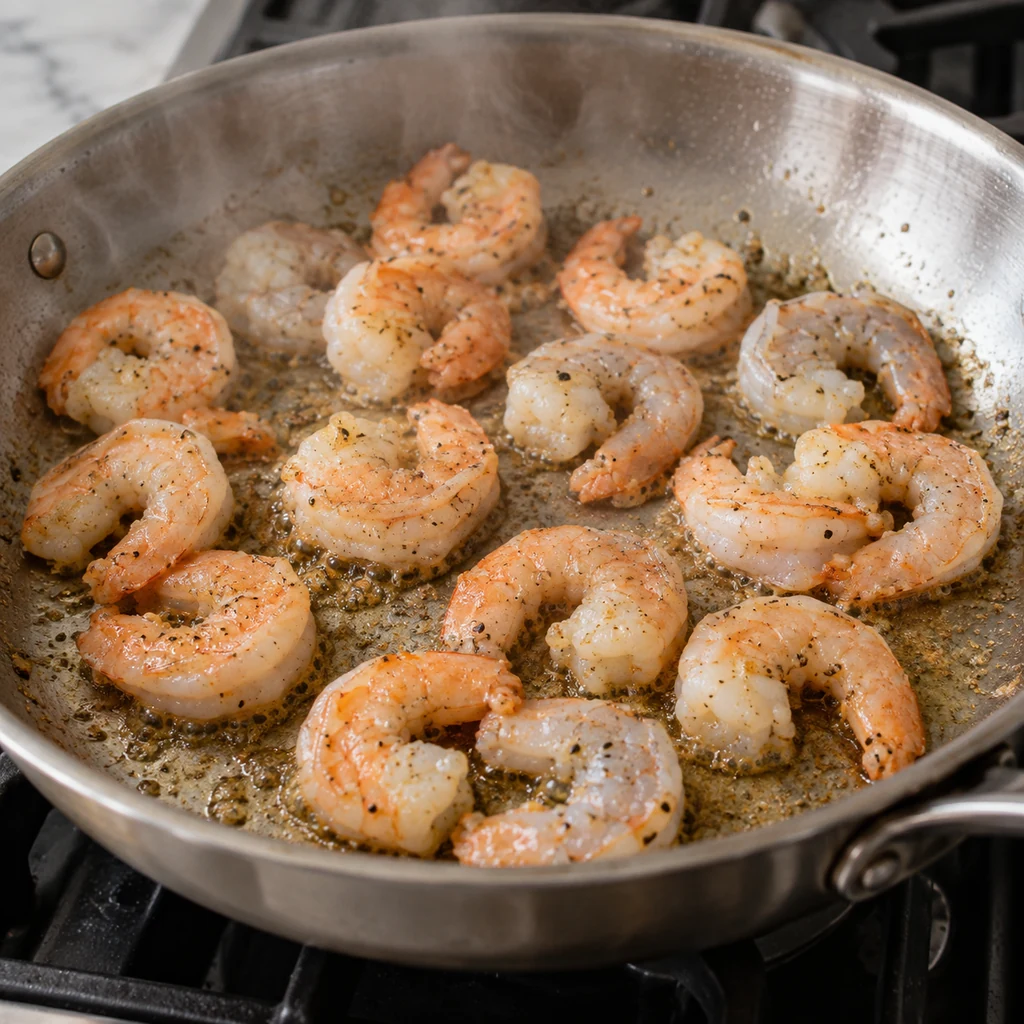
Heat 1 tablespoon olive oil in a large skillet over medium-high heat. Season the shrimp lightly with salt and pepper, then arrange them in one layer. Cook for roughly 2 to 3 minutes on the first side, turn, and cook another 2 to 3 minutes, depending on their size. The flesh should be pearly or white and opaque throughout, with no translucent center. Do not rely on the clock alone; large shrimp can vary. Transfer them to a clean plate, not the plate that held them raw. Leave the flavorful oil in the skillet for the garlic.
2. Sauté the garlic
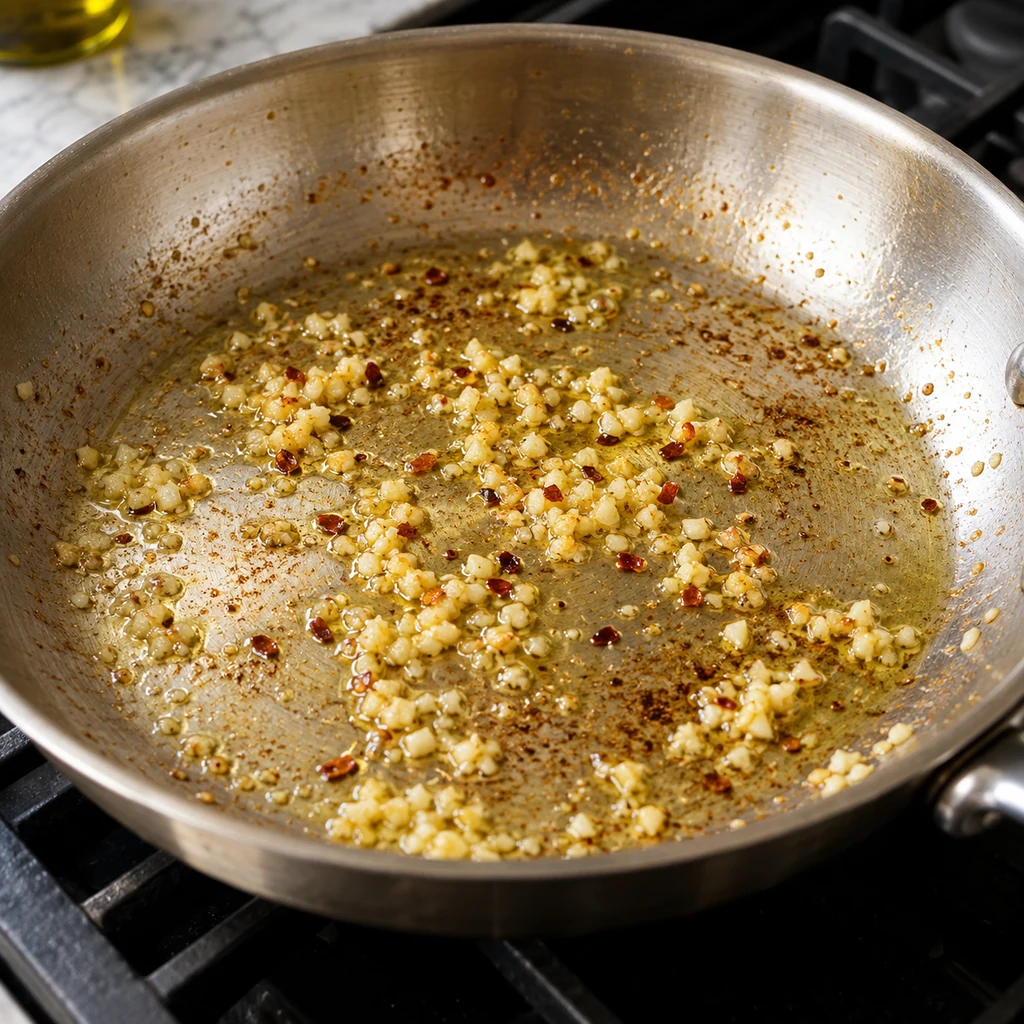
Lower the heat to medium and add the remaining 2 tablespoons olive oil to the same skillet. Stir in the minced garlic and optional red pepper flakes. Sauté for about 1 minute, stirring constantly, just until the garlic smells fragrant and looks lightly golden. If the pan is still very hot from the shrimp, let it cool briefly before adding garlic; dark, burnt bits will make the whole dish taste bitter. The oil should pick up the garlic flavor without smoking. This short stage is worth watching closely because the next ingredient will cool the pan.
3. Soften the zucchini noodles
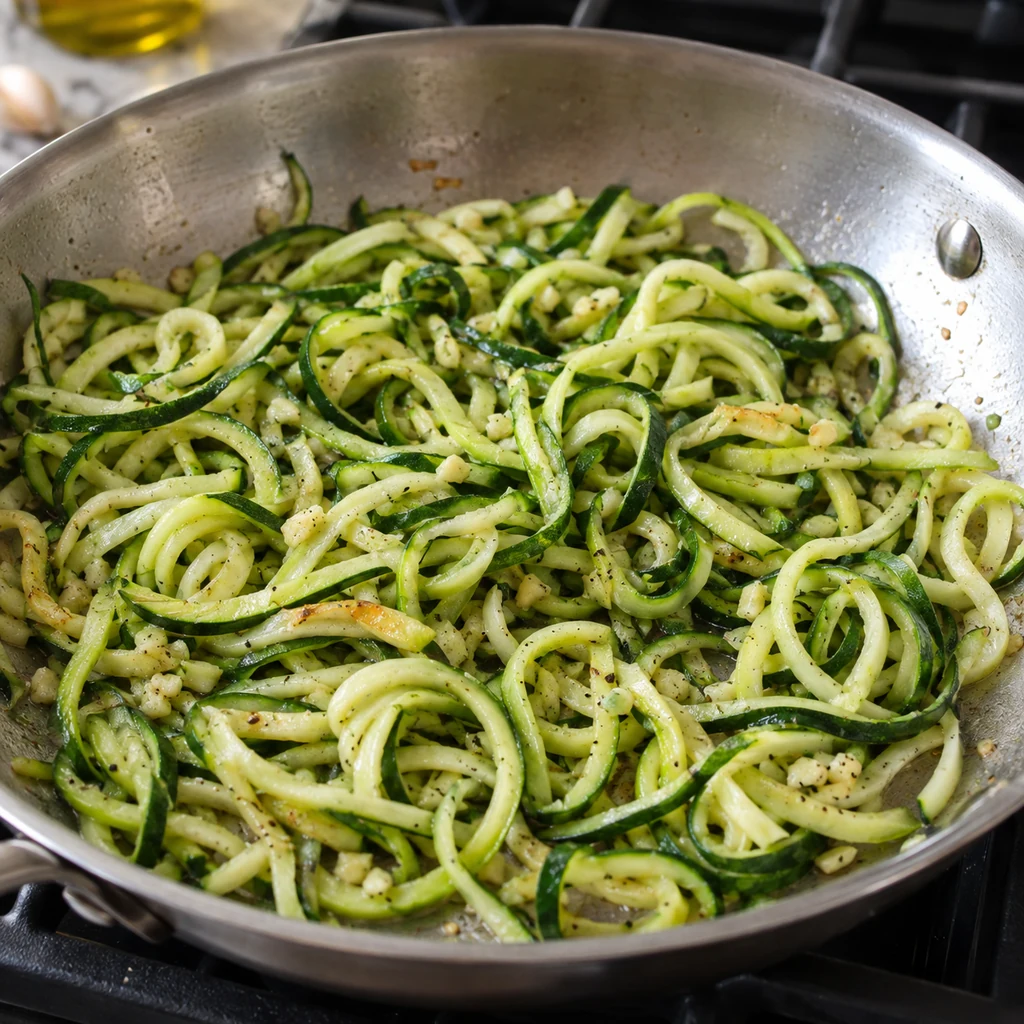
Add the spiralized zucchini to the garlicky oil and lift and turn the strands with tongs for about 2 to 3 minutes. They should soften slightly but keep a little crunch. If the pan is crowded, work in two batches so the noodles do not steam in their own moisture. Avoid covering the skillet, and do not add salt yet if the zucchini is releasing a lot of water; salt draws out more liquid. When ready, the strands should bend easily but should not collapse or look mushy. Pour off any excess liquid before returning the shrimp.
4. Combine with lemon and parsley
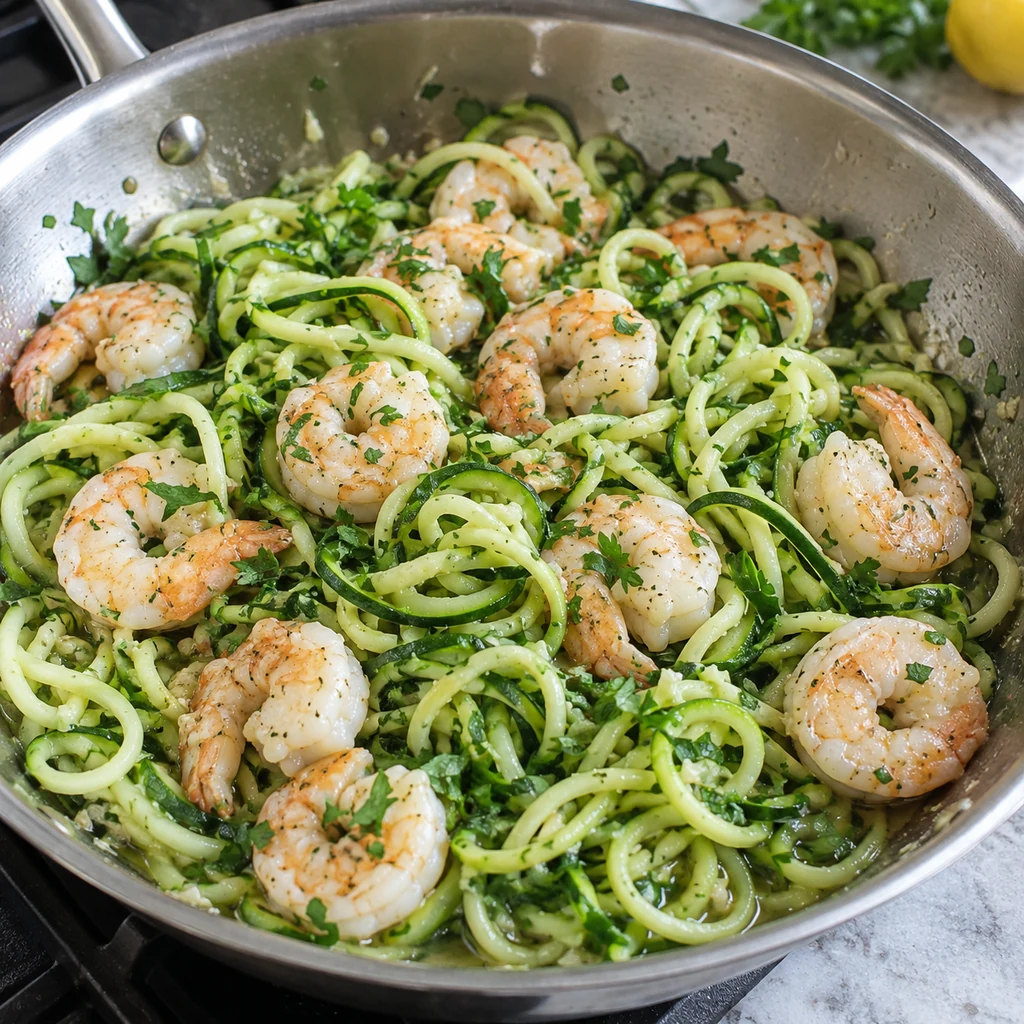
Return the cooked shrimp to the skillet with any juices from the clean resting plate. Add the chopped parsley and 1 tablespoon lemon juice. Toss gently for about 1 minute, just until the shrimp is warmed and the strands are lightly coated. Taste a bite of both shrimp and zucchini before adjusting salt or pepper. If the skillet looks dry, a small drizzle of olive oil is preferable to water; if it looks wet, lift the noodles with tongs rather than stirring the liquid back in. Avoid prolonged cooking here, which can toughen the shrimp and soften the zucchini.
5. Plate and serve
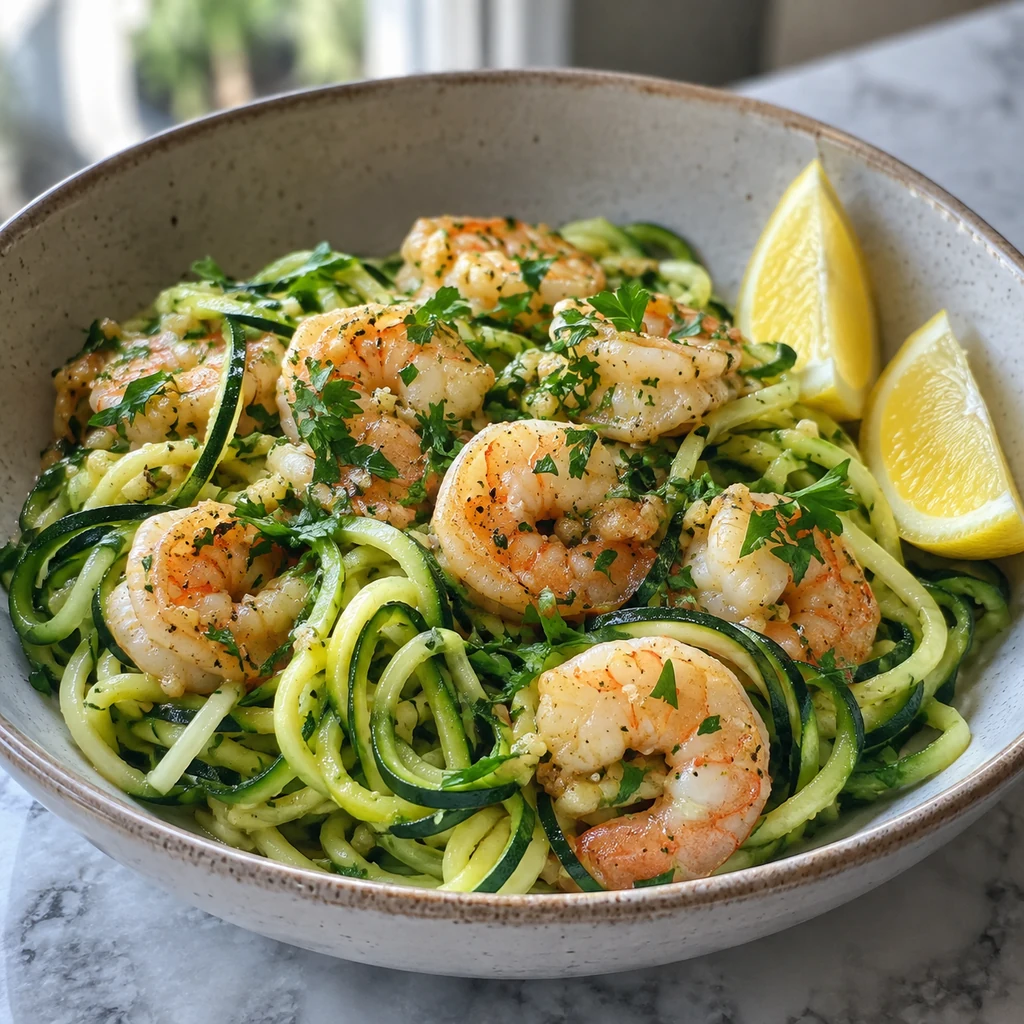
Divide the zucchini noodles between four shallow bowls and arrange the shrimp on top so each serving gets a fair share. Add lemon wedges to the plates. If desired, sprinkle a little Parmesan over the finished dish; it is optional, so omit it for a simpler lemon-garlic flavor. Serve immediately while the shrimp is warm and the zucchini retains its bite. If liquid has gathered at the bottom of the skillet, use tongs to portion the noodles instead of tipping the skillet into the bowls. The final dish should look bright and loose, not soupy.
Substitutions & Variations
For a milder version, leave out the red pepper flakes; the garlic and lemon still provide plenty of character. If you prefer a stronger citrus finish, squeeze a lemon wedge over an individual serving rather than increasing the lemon juice in the whole skillet. A different soft herb such as basil can stand in for parsley, but add it at the end to preserve its aroma. Parmesan is optional and changes the flavor toward a savory, salty finish. Keep these extras modest so the shrimp and zucchini remain the focus.
Frozen shrimp can work if fully thawed in the refrigerator and dried before cooking. Icy shrimp release moisture that works against a light sear. Cut very long zucchini strands with kitchen scissors for easier serving.
What to Serve With
Crusty bread can make this light main course more substantial. For a cool side, serve easy chickpea salad. A bowl of tomato basil soup also works as a starter. Keep sides simple and eat the zucchini strands soon after cooking.
Frequently Asked Questions
How do I keep zucchini noodles from getting watery?
Start with firm zucchini, blot damp strands, and cook them in a wide uncovered skillet for only 2 to 3 minutes. Avoid salting them early if they are releasing a lot of liquid. Pour off any excess before returning the shrimp, then serve with tongs rather than transferring every drop from the pan. The noodles will soften as they sit, so prepare them close to mealtime.
How can I tell when the shrimp is cooked?
Look for flesh that is pearly or white and opaque all the way through, rather than translucent. The usual 2 to 3 minutes per side is only a guide; shrimp size and pan heat matter. Remove them from the pan once cooked, then return them briefly at the end to warm through. Overcooking can make them rubbery, while undercooked shrimp should not be served.
Can I save leftovers?
Yes, but the zucchini will be softer after storage. Refrigerate the cooked shrimp and noodles promptly in a shallow covered container; do not leave the seafood at room temperature for an extended period. Reheat gently until hot rather than searing the shrimp a second time. A fresh squeeze of lemon after reheating helps restore brightness, but it will not bring back the zucchini’s original crispness.