
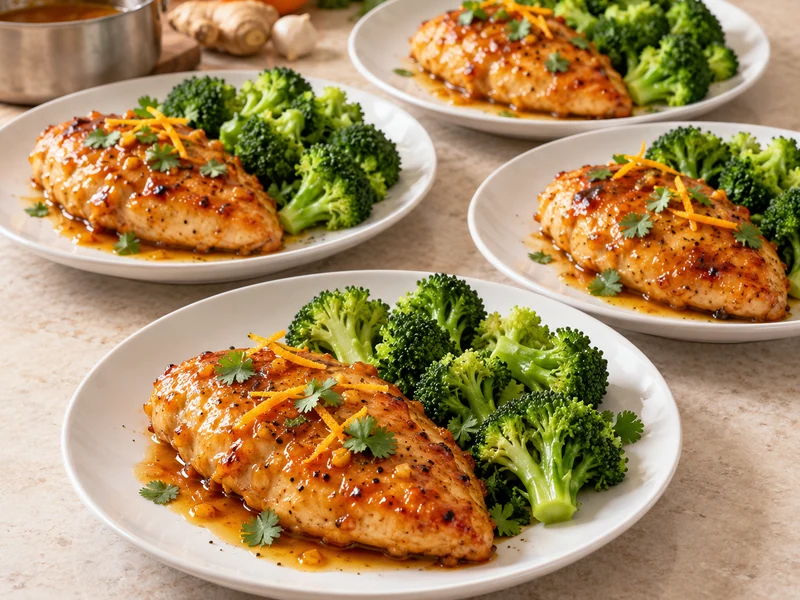
Zesty orange-glazed chicken with steamed broccoli balances citrus, honey, ginger and soy sauce without hiding the flavor of the chicken. The glaze is simmered separately, then added to browned chicken for a brief finish. Broccoli steams while the chicken cooks, so the plate comes together without a complicated sauce or a second long cooking process.
RECIPE CARD
Zesty Orange Glazed Chicken with Steamed Broccoli
Ingredients
- 4 boneless, skinless chicken breasts, about 6 ounces (170 g) each
- 1/2 cup fresh orange juice
- 2 tablespoons honey
- 1 tablespoon soy sauce
- 1 teaspoon freshly grated ginger
- 1 garlic clove, minced
- 1/2 teaspoon fine salt, plus more to taste
- 1/4 teaspoon freshly ground black pepper
- 2 tablespoons olive oil
- 1 large head broccoli, cut into even florets, about 5 cups
- Finely grated zest of 1 orange, optional for garnish
- 2 tablespoons chopped fresh cilantro, optional for garnish
Quick Method
Condensed overview. Use Full Instructions for the complete method, timing and doneness details.
- Simmer the orange glaze: Combine orange juice, honey, soy sauce, grated ginger and minced garlic in a small saucepan. Simmer gently for 5 to 7 minutes until the…
- Brown and cook the chicken: Pat chicken dry, season with salt and pepper, and sear in olive oil over medium-high heat for roughly 6 to 7 minutes per side,…
- Steam the broccoli: Steam evenly cut broccoli florets in a basket above simmering water for 5 to 7 minutes until bright green and tender-crisp. Remove the basket…
- Coat the chicken with glaze: Return cooked chicken to the skillet, pour over the orange glaze and turn the breasts to coat. Simmer gently for 2 to 3 minutes…
- Plate with steamed broccoli: Serve one glazed chicken breast and a share of broccoli on each of four plates. Spoon remaining glaze over chicken and add optional orange…
This recipe makes four portions in about 40 minutes, including 15 minutes of preparation. Aim for evenly thick chicken breasts, a lightly thickened glaze and broccoli that stays bright green. A thermometer is more reliable than a fixed skillet time: cook the chicken to 165°F (74°C) in the thickest part before serving.
Why You’ll Love It
- Clear contrast: Sweet-tart orange glaze sits against savory browned chicken and fresh broccoli.
- Useful parallel timing: Steam the vegetable while the chicken finishes in the skillet.
- Easy portions: One breast and a share of broccoli make each plate simple to serve.
Ingredients
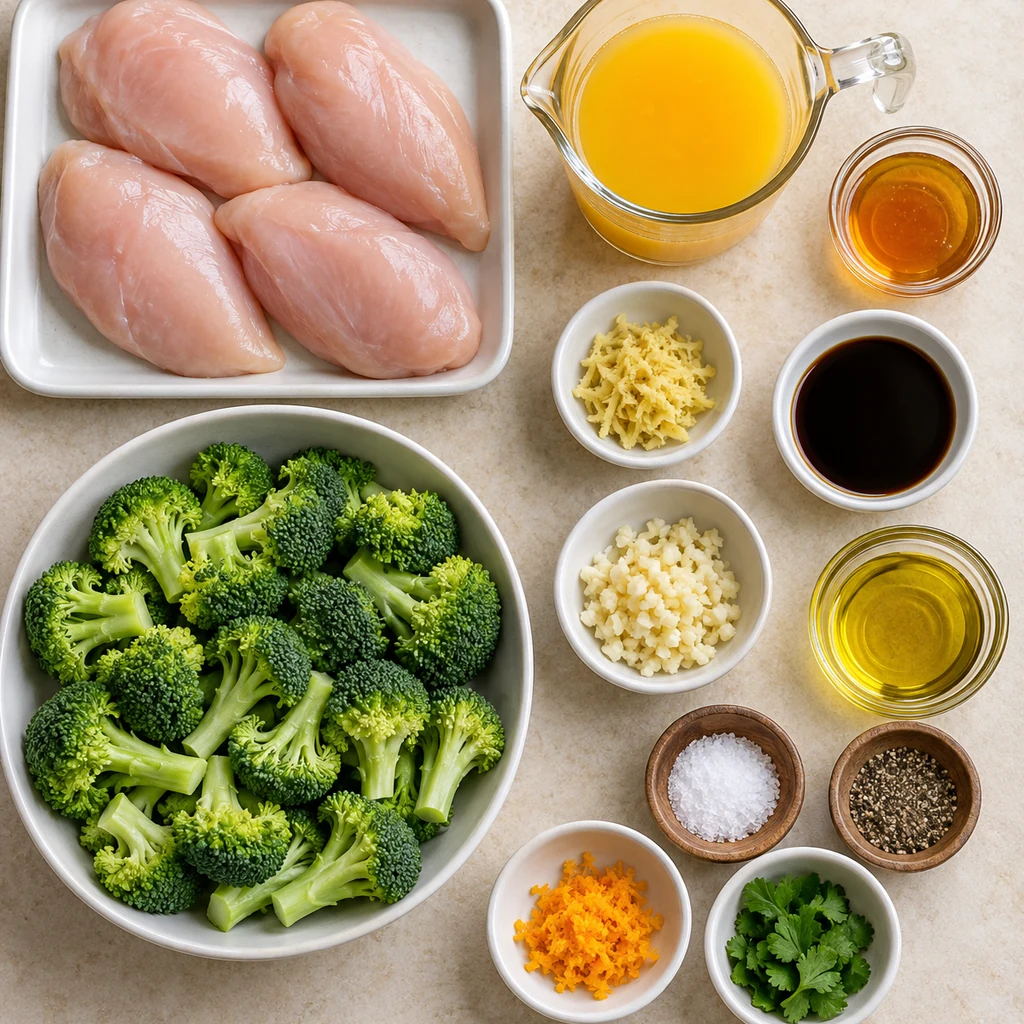
- 4 boneless, skinless chicken breasts, about 6 ounces (170 g) each
- 1/2 cup fresh orange juice
- 2 tablespoons honey
- 1 tablespoon soy sauce
- 1 teaspoon freshly grated ginger
- 1 garlic clove, minced
- 1/2 teaspoon fine salt, plus more to taste
- 1/4 teaspoon freshly ground black pepper
- 2 tablespoons olive oil
- 1 large head broccoli, cut into even florets, about 5 cups
- Finely grated zest of 1 orange, optional for garnish
- 2 tablespoons chopped fresh cilantro, optional for garnish
Fresh orange juice gives the glaze a vivid citrus flavor, but its sweetness varies. Taste the finished sauce before it goes into the chicken pan and adjust only after reducing it; adding extra honey too early can make it cloying. Use low-sodium soy sauce if you want more control over the final salt level. The garlic and ginger should be finely cut so they spread through the glaze rather than gathering in one bite.
If the breasts are thick at one end, gently pound them to an even thickness of about 3/4 inch. That helps them brown and cook through at a similar pace. Keep the broccoli florets close in size as well; oversized pieces can remain firm while tiny pieces turn soft. Have the steamer basket ready before the chicken goes into the skillet.
Step-by-Step Instructions
Step 1: Simmer the Orange Glaze
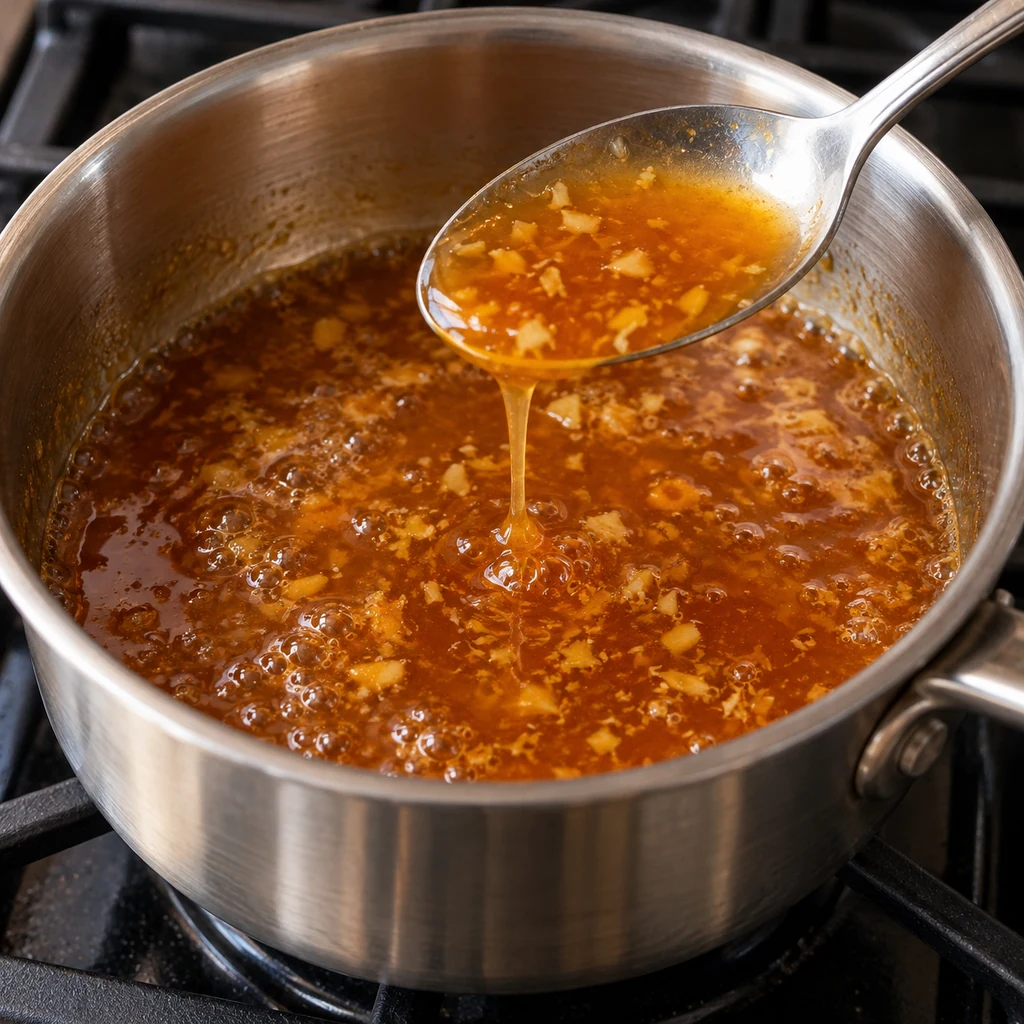
In a small saucepan, combine the orange juice, honey, soy sauce, grated ginger and minced garlic. Bring to a gentle simmer over medium heat, then lower the heat enough to keep it bubbling quietly. Stir occasionally for about five to seven minutes. It should lightly coat a spoon, not turn into a thick syrup; it will reduce again briefly with the chicken. Remove the pan from the heat and keep the glaze nearby.
Step 2: Brown and Cook the Chicken
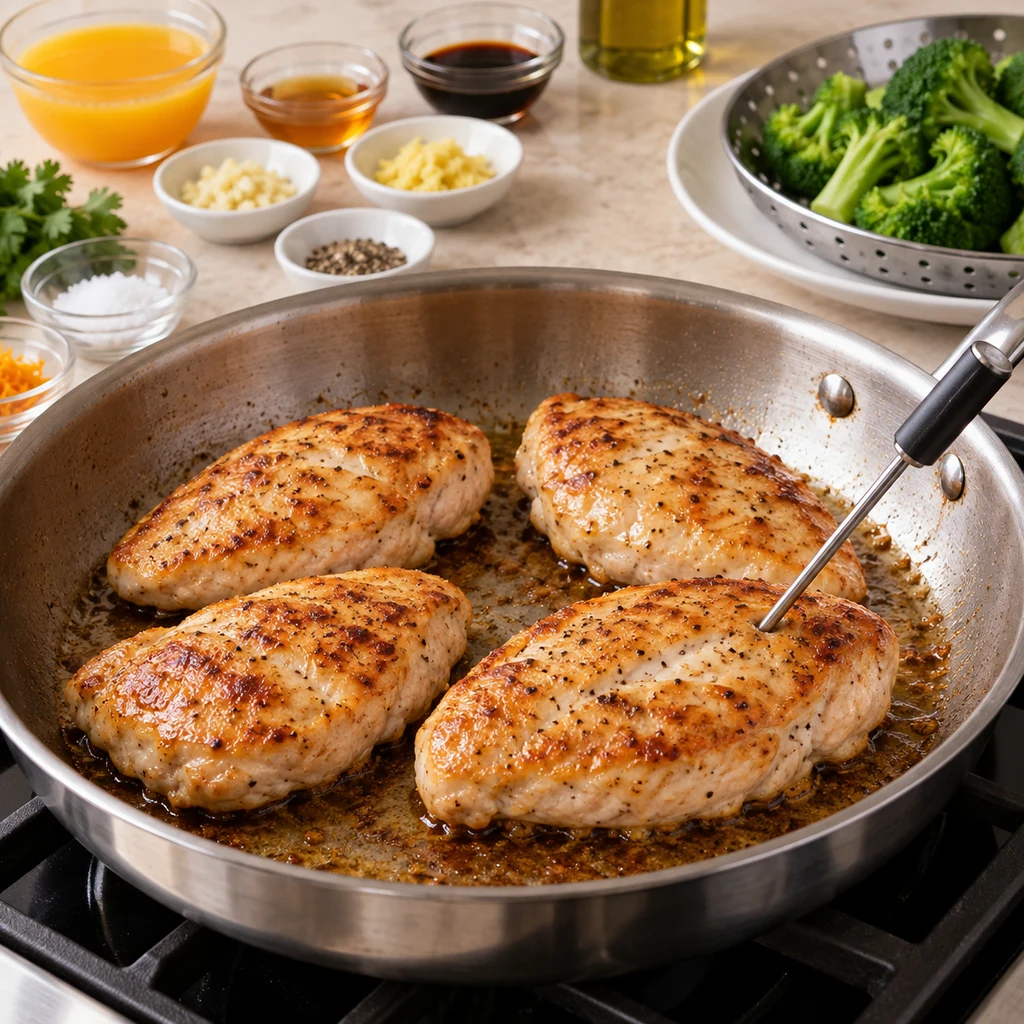
Pat the chicken dry and season both sides with the measured salt and pepper. Heat the olive oil in a large skillet over medium-high heat. Add the breasts with space between them; work in two batches if the pan is crowded. Cook for roughly six to seven minutes per side, lowering the heat if the outside darkens too quickly. Insert a food thermometer into the thickest part. The chicken must reach 165°F (74°C); thickness and pan heat matter more than the clock. Transfer cooked pieces briefly to a clean plate if needed.
Step 3: Steam the Broccoli
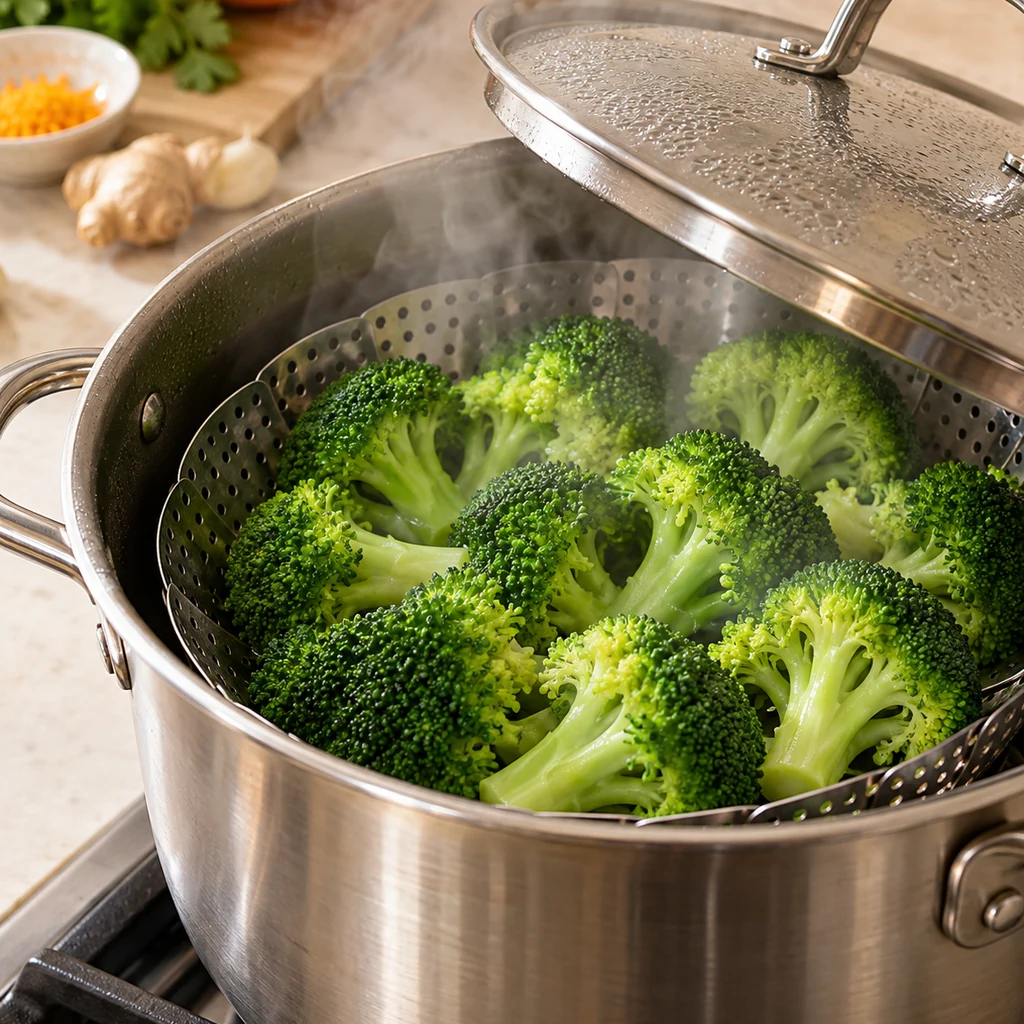
While the chicken cooks, bring an inch of water to a simmer in a pot fitted with a steamer basket. Add the broccoli florets and cover, making sure the water sits below the basket. Steam for five to seven minutes, checking the thickest stems with a fork. They should yield but still have a little resistance. Lift the basket out promptly so residual heat does not dull the broccoli. Season lightly to taste just before plating.
Step 4: Coat the Chicken with Glaze
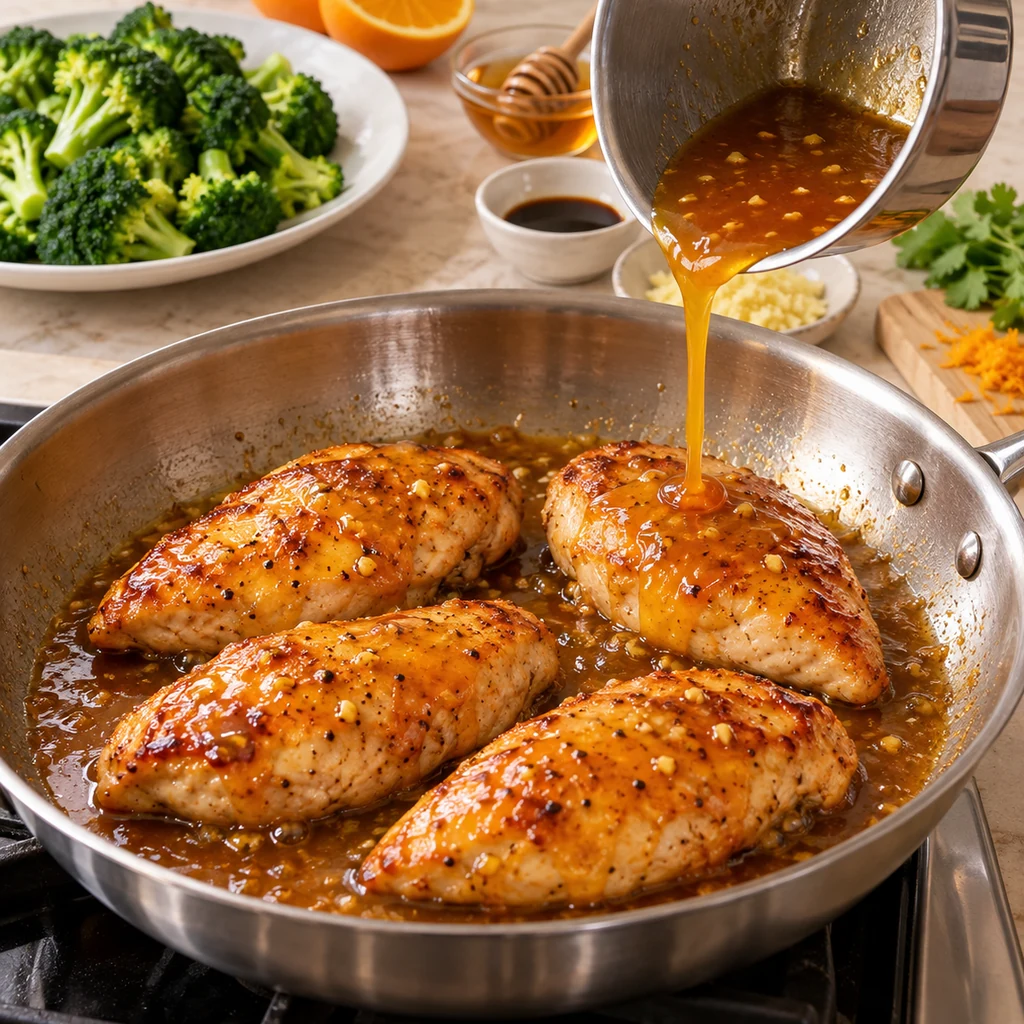
Return all cooked chicken to the skillet over medium-low heat. Pour the prepared orange glaze over the breasts and turn them once or twice to coat. Let it bubble gently for two to three minutes until the surface looks shiny and the sauce clings to the chicken. Do not reduce it until dry: you want a little sauce left for each plate. If the glaze tightens too much, loosen it with a tablespoon of water and stir.
Step 5: Plate with Steamed Broccoli
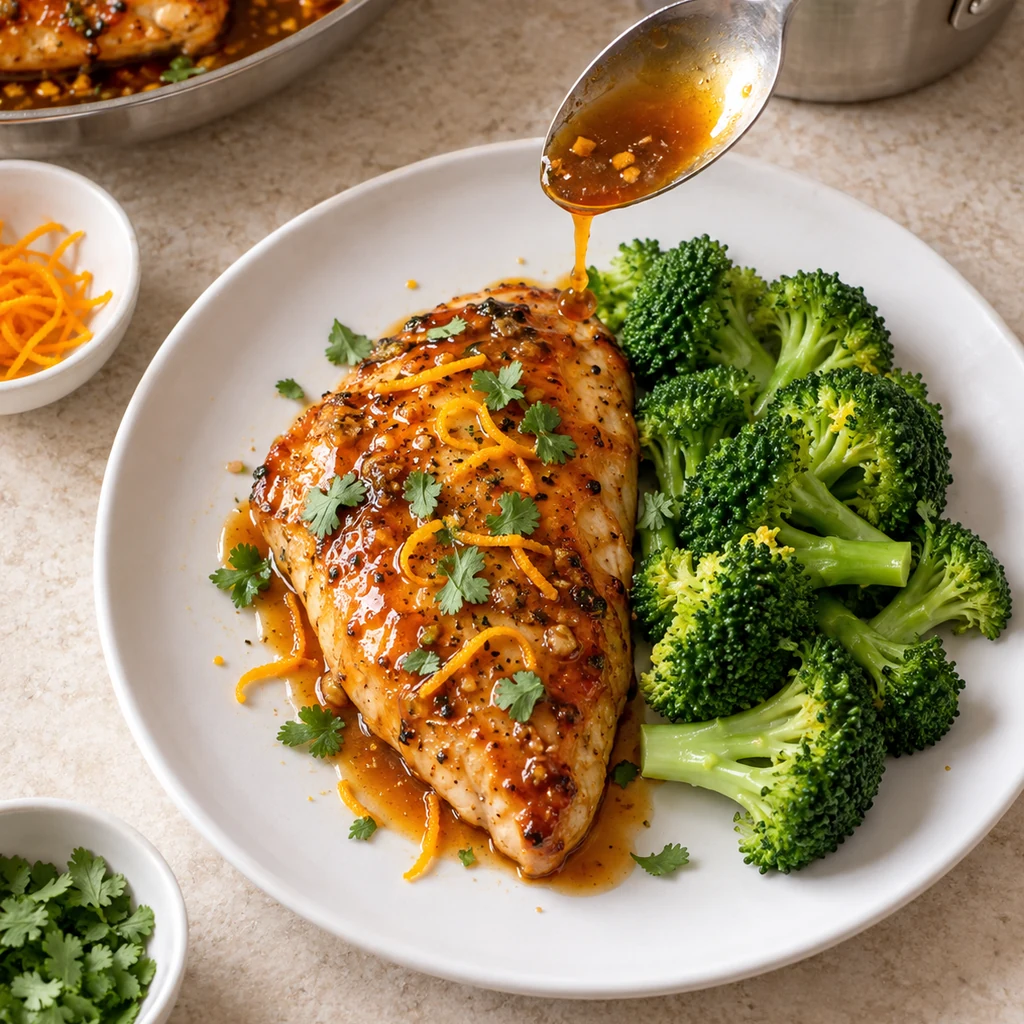
Divide the broccoli between four warm plates and add one glazed chicken breast to each. Spoon a little remaining glaze over the chicken rather than soaking the broccoli, which is best served fresh and green. If desired, scatter a small amount of orange zest and chopped cilantro over the top. Serve immediately while the chicken is hot and the glaze is glossy. Refrigerate leftovers promptly in a covered container.
Substitutions & Variations
Boneless chicken thighs can replace breasts, but their shape and cooking time will differ; still verify doneness with a thermometer. For a less sweet finish, reduce the honey slightly rather than cutting the orange juice, which supplies the citrus character. If you want extra ginger warmth, grate a little more into the saucepan. Keep any additions modest so the glaze remains balanced and pourable.
Cilantro and orange zest are optional. The finished dish is still complete without them, and omitting cilantro is a simple choice for anyone who dislikes its flavor. Frozen broccoli can work, though it often softens faster than fresh florets; watch it closely and lift it out as soon as the stems are tender. Avoid steaming it in the orange glaze, which would make the vegetable wet and hide its color.
What to Serve With
The chicken and broccoli are enough for a light dinner. If you want another vegetable-forward plate for a larger table, try our Caprese stuffed portobello mushrooms as a separate starter. A small bowl of butternut squash soup with coconut milk and ginger also fits a cozy menu, but serve it before the chicken so the citrus glaze remains the main flavor.
For a different quick-dinner idea on another night, spaghetti aglio e olio with chili flakes uses a very different pantry sauce. Keep any side here simple so the orange and ginger remain distinct.
Frequently Asked Questions
Can I prepare the glaze ahead?
Yes. Simmer it, cool it and refrigerate it in a covered container for up to two days. Rewarm gently in the saucepan before coating the fully cooked chicken. If it has thickened in the refrigerator, stir in a small splash of water until it can be poured.
How do I keep chicken breasts from drying out?
Make the pieces an even thickness, avoid crowding the skillet and check the thickest part with a thermometer. Stop cooking once it reaches 165°F (74°C). The final glaze simmer is brief, so have the sauce ready before the chicken finishes browning.
Can I microwave the broccoli instead?
Yes. Put evenly cut florets in a microwave-safe covered dish with a little water and heat in short intervals until tender-crisp. Carefully uncover away from your face because steam escapes quickly. Drain excess water before plating so it does not thin the orange glaze.