

Traditional Turkish kunefe is one of the Middle East’s most dramatic desserts: shatteringly crisp shredded kataifi pastry on the outside, molten cheese in the center, and a cold lemon syrup poured over the top while everything is still hot. For special dinners, weekend treats, and memorable June 2026 gatherings, this recipe delivers restaurant-level wow factor from your home kitchen. Originating in Hatay, Turkey, kunefe makes an unforgettable entrance when you pull apart a slice and watch the cheese stretch across the plate.
RECIPE CARD
Traditional Turkish Kunefe with Melty Cheese & Syrup
Timing and serving details are shown only when they are available in the original recipe.
Ingredients
- 8.8 oz (250 g) fine kataifi (shredded phyllo / angel hair pastry)
- 4 oz (115 g) unsalted butter, melted
- 8 oz (225 g) kunefe cheese, string cheese, or low-moisture mozzarella, shredded
- 2 tbsp crushed pistachios, for garnish
- 1 tsp extra butter, for greasing the pan
- 1 cup granulated sugar
- 1 cup water
- 1 tsp fresh lemon juice
- 1 tsp rose water or orange blossom water (optional)
Quick Method
Condensed overview. Use Full Instructions for the complete method, timing and doneness details.
- Bake kunefe at 350°F (175°C) for 30–35 minutes until the top is deep golden brown. Rotate the pan halfway through if your oven browns…
- Syrup and Baking Details: Simmer sugar and water for 5–7 minutes until the syrup slightly thickens.
- Stir in lemon juice; add rose or orange blossom water if using.
- Cool the syrup completely—make it ahead and refrigerate if needed.
- Remove kunefe from the oven and immediately pour cold syrup evenly over the top.
- Rest 5 minutes, garnish with pistachios, and serve while hot.
- Cold syrup keeps the outer kataifi crisp while the interior absorbs sweetness at the right pace. That contrast separates professional kunefe from the soggy…
- Stovetop Kunefe Alternative: For a more traditional texture, cook kunefe in a buttered skillet over low heat. Brown the first side until deep gold, invert onto a…
The secret to great kunefe is rhythm, not complexity. Chill the syrup first, gently separate the kataifi with butter, layer mild cheese between two nests of pastry, and bake until deeply golden. Then pour cold syrup over hot kunefe and let it rest briefly before serving. This guide covers ingredient choices, step-by-step assembly, baking and stovetop methods, storage, a full checklist, and answers to the questions home cooks ask most often.
Ingredients: What You Need for Traditional Turkish Kunefe
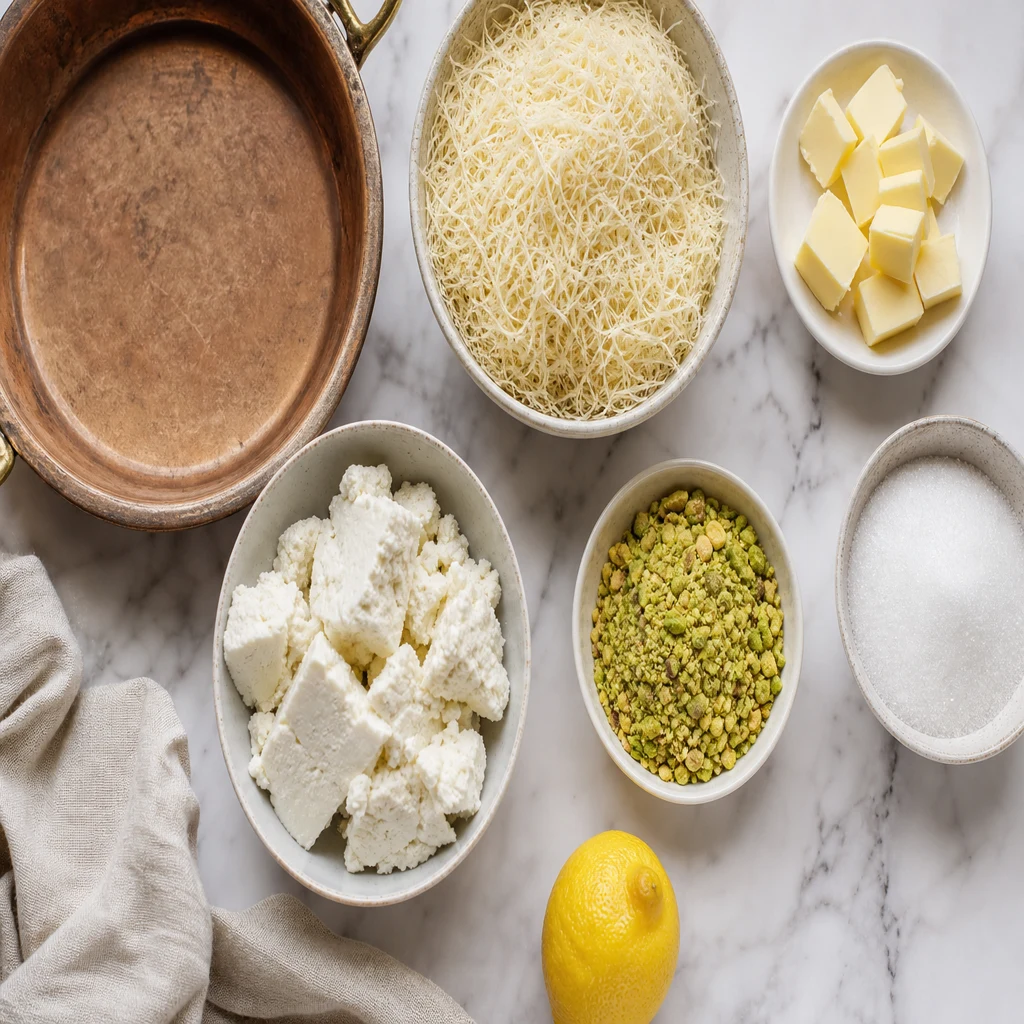
Excellent kunefe starts with balanced ingredients. Kataifi should be fine and dry, not clumped or damp. Butter needs to coat every strand evenly without pooling. Cheese must be unsalted, low-moisture, and stretchy when melted. Syrup should be lemon-balanced, fully chilled, and lightly aromatic.
Kunefe Ingredient List
- 8.8 oz (250 g) fine kataifi (shredded phyllo / angel hair pastry)
- 4 oz (115 g) unsalted butter, melted
- 8 oz (225 g) kunefe cheese, string cheese, or low-moisture mozzarella, shredded
- 2 tbsp crushed pistachios, for garnish
- 1 tsp extra butter, for greasing the pan
Syrup Ingredient List
- 1 cup granulated sugar
- 1 cup water
- 1 tsp fresh lemon juice
- 1 tsp rose water or orange blossom water (optional)
Bring kataifi to room temperature before using it; cold pastry does not absorb butter evenly. If you cannot find kunefe cheese, low-moisture mozzarella is the most practical substitute. Avoid salty or wet cheeses—they throw off flavor and make the filling soggy.
Kataifi Prep and Layering Technique
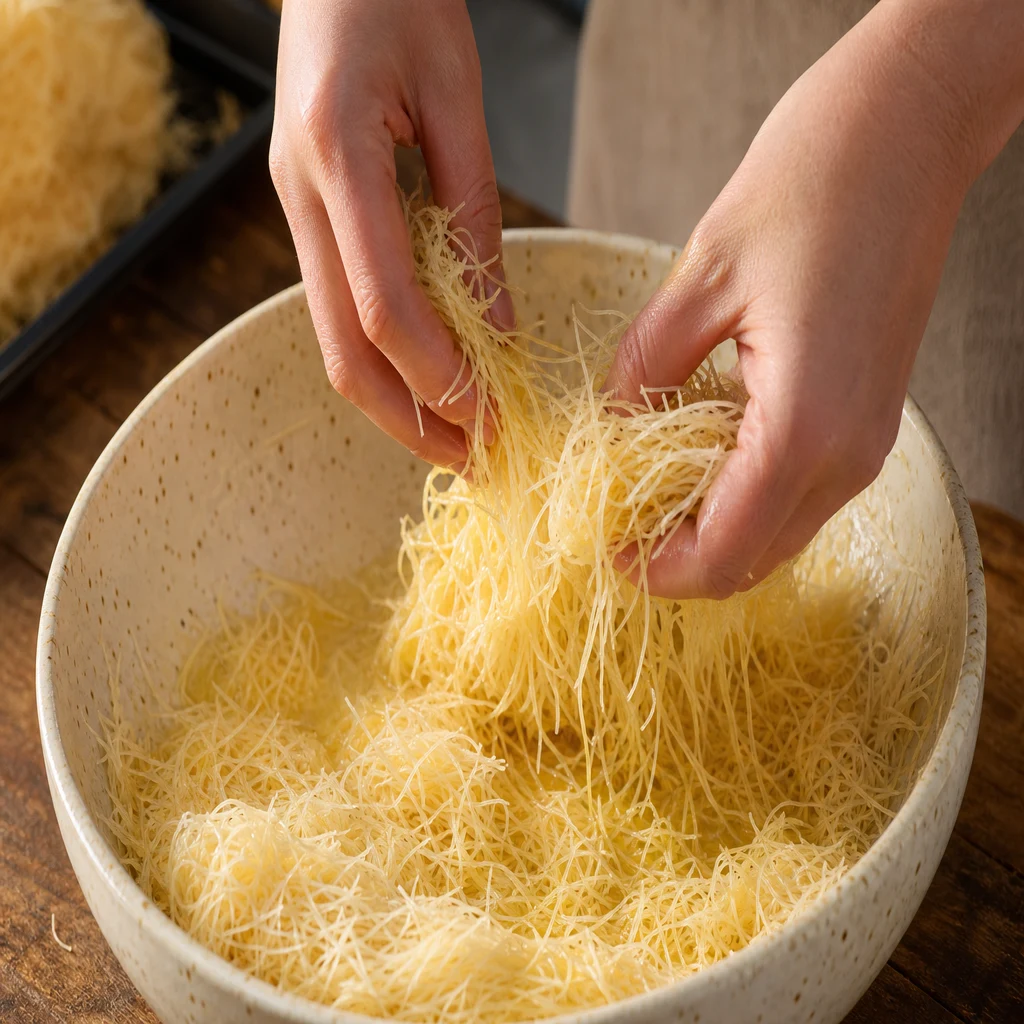
Kataifi preparation is the most important step. Strands that stay tangled bake unevenly; strands that are too dry turn hard and dull. Butter should give each thread a light sheen without leaving greasy clumps in the bowl.
How to Prepare and Layer Kataifi
- Place kataifi in a wide bowl and gently pull the strands apart with your fingers.
- Drizzle in melted butter and toss until every strand is lightly coated.
- Grease a round oven-safe dish or traditional copper kunefe pan with butter.
- Press half the buttered kataifi into the pan to form a compact, even base.
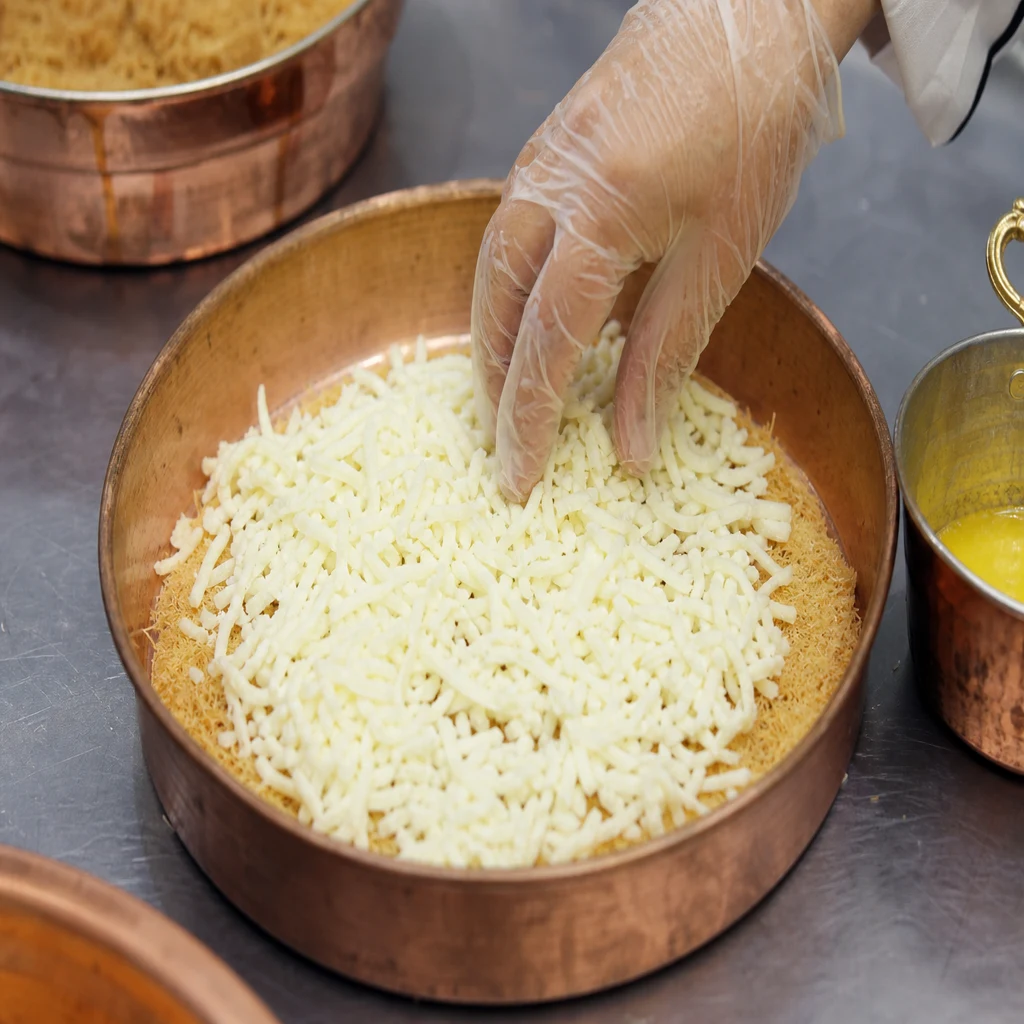
- Spread cheese in an even layer, leaving about 1/2 inch clear at the edges.
- Cover with the remaining kataifi and press lightly so the cheese is fully enclosed.
Keep cheese away from the pan edges to prevent leaks during baking. Press firmly enough to create a level surface, but do not crush the pastry—compression helps structure; crushing kills crispness.
Baking, Syrup Tips, and Stovetop Method
Bake kunefe at 350°F (175°C) for 30–35 minutes until the top is deep golden brown. Rotate the pan halfway through if your oven browns unevenly. The golden rule after baking: hot kunefe plus cold syrup. Never pour warm syrup over warm pastry—it softens the crust and makes the dessert cloyingly heavy.
Syrup and Baking Details
- Simmer sugar and water for 5–7 minutes until the syrup slightly thickens.
- Stir in lemon juice; add rose or orange blossom water if using.
- Cool the syrup completely—make it ahead and refrigerate if needed.
- Remove kunefe from the oven and immediately pour cold syrup evenly over the top.
- Rest 5 minutes, garnish with pistachios, and serve while hot.
Cold syrup keeps the outer kataifi crisp while the interior absorbs sweetness at the right pace. That contrast separates professional kunefe from the soggy home versions most beginners make on their first try.
Stovetop Kunefe Alternative
For a more traditional texture, cook kunefe in a buttered skillet over low heat. Brown the first side until deep gold, invert onto a plate, slide it back into the pan, and crisp the second side. Pour cold syrup over the hot kunefe as soon as it comes off the heat. Stovetop cooking yields extra-crisp edges; oven baking is easier for first-timers and feeds a crowd more comfortably.
Serving, Storage, and Pairing Ideas
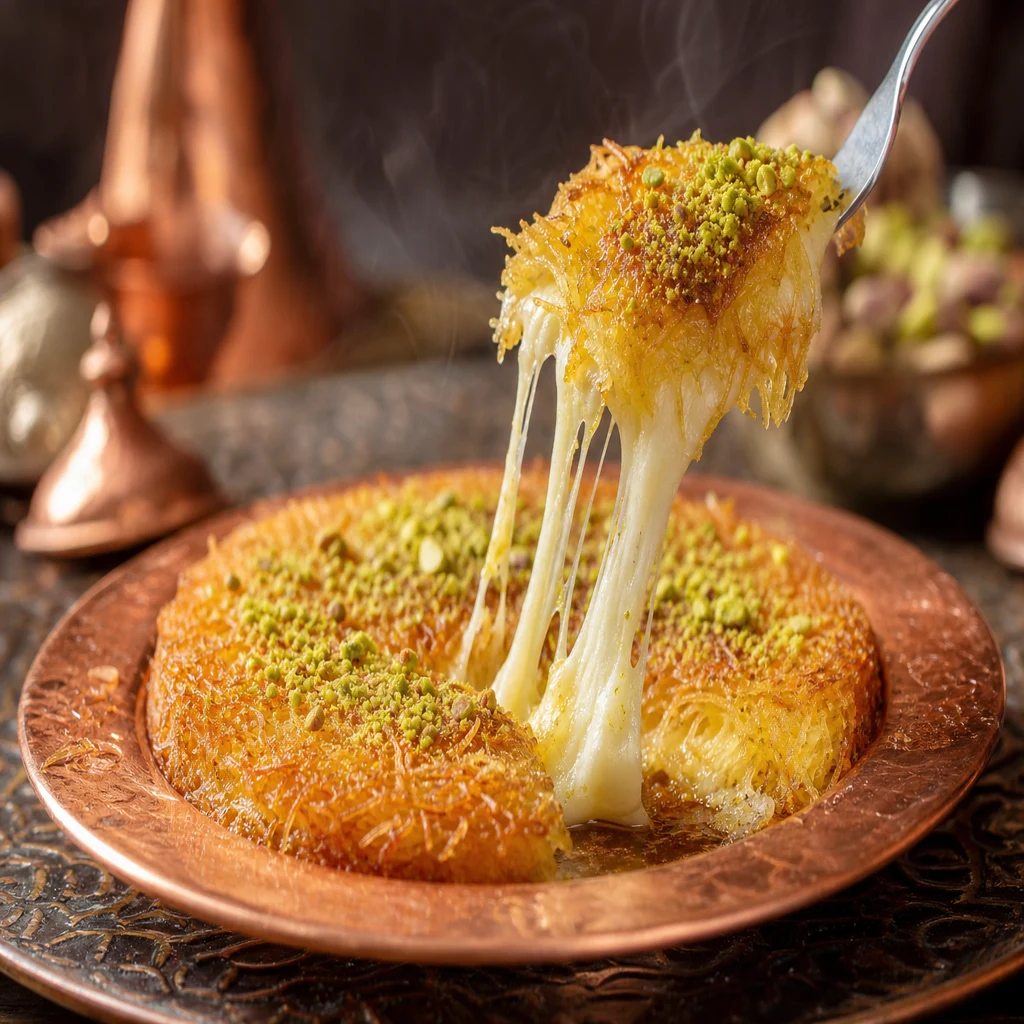
Serve kunefe immediately. As it cools, the cheese sets and the dramatic stretch fades. Plain Turkish tea or strong coffee balances the sweetness beautifully. A small scoop of vanilla ice cream adds a cool contrast that many restaurants use for good reason.
Building a Turkish dessert spread for a June 2026 dinner party? Pair kunefe with baked rice pudding (firin sutlac) or golden syrup-soaked revani. Need something faster on the same menu? Try 5-ingredient semolina halva, or add a savory counterpoint with golden Turkish borek with cheese and herbs.
Storage and Reheating
Kunefe is best fresh, but leftovers keep in an airtight container in the refrigerator for up to 2 days. Reheat in a 320°F (160°C) oven for 10–12 minutes. Avoid the microwave—it steams the kataifi and kills the crunch. A fresh sprinkle of pistachios after reheating brightens the presentation.
Frequently Asked Questions
Can I assemble kunefe ahead of time and bake later?
Yes. Build the layers, cover tightly, and refrigerate for several hours. Bake and add syrup just before serving so your guests get the full hot-and-crisp experience with minimal last-minute work.
Is mozzarella a good substitute for kunefe cheese?
Low-moisture mozzarella is the best widely available substitute. It melts well and produces a satisfying cheese pull. Skip fresh mozzarella balls—they release too much water and can make the center soupy.
Why did my kunefe turn out soft or soggy?
The most common causes are warm syrup, underbaked kataifi, or too much syrup poured at once. Always chill the syrup, bake until the top is deeply golden, and pour in a steady, even stream rather than drowning the pastry.
Can I make kunefe without rose water?
Absolutely. Rose water and orange blossom water are optional. Lemon syrup alone gives a clean, balanced flavor. If you use floral water, add just a teaspoon—too much makes the dessert taste perfumed instead of delicious.
What pan works best for kunefe?
A traditional copper kunefe pan distributes heat beautifully. A round oven-safe baking dish or cast-iron skillet works well too. What matters most is even greasing and consistent thickness from edge to center.
Can I freeze kataifi pastry?
Unopened packages freeze fine. Thaw completely at room temperature before buttering. Do not refreeze thawed kataifi—the moisture shift affects texture and baking results.
Recipe Checklist
- Syrup was cooked and fully chilled before baking began.
- Kataifi strands were separated by hand with no dense clumps remaining.
- Butter was distributed evenly through all the pastry.
- Cheese was unsalted and low-moisture.
- Bottom kataifi layer was pressed into a flat, compact base.
- Cheese was kept away from the pan edges to prevent leaks.
- Top kataifi layer fully covered the cheese.
- Kunefe baked until the surface reached deep golden brown.
- Cold syrup was poured evenly over hot kunefe right out of the oven.
- Dessert rested 5 minutes, then was garnished and served hot.
Conclusion
Traditional Turkish kunefe remains one of the most talked-about desserts on special tables in 2026—and for good reason. Crisp kataifi, molten cheese, and balanced syrup create a combination that feels luxurious yet relies on straightforward technique. Chill your syrup early, take your time separating the pastry, and nail the hot-cold timing at the end. Save this recipe: one warm, stretchy, syrup-glazed slice can turn an ordinary evening into something your guests will remember.