
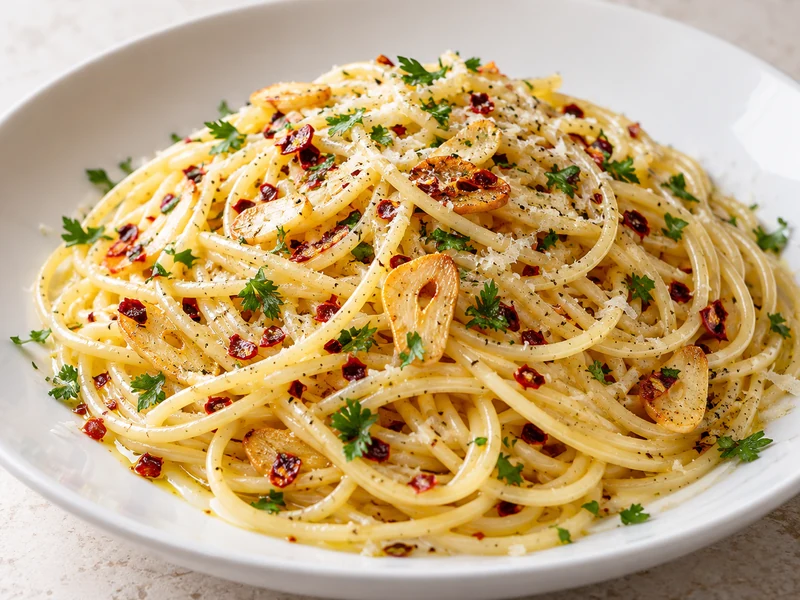
Spaghetti aglio e olio with chili flakes turns a handful of pantry ingredients into a satisfying dinner. Thin garlic slices flavor warm olive oil, chili flakes add gentle heat, and starchy pasta water helps the oil cling to every strand. The result should taste savory and bright rather than greasy or fiery.
RECIPE CARD
Spaghetti Aglio e Olio with Chili Flakes
Ingredients
- 200 g dry spaghetti
- 4 garlic cloves, thinly sliced
- 1/4 cup extra-virgin olive oil
- 1/2 teaspoon red chili flakes, or less to taste
- 1 teaspoon fine salt for the pasta water, plus more to taste
- 1/4 teaspoon freshly ground black pepper, optional
- 2 tablespoons chopped fresh parsley, optional
- 2 tablespoons finely grated Parmesan, optional for serving
- 1/2 cup reserved starchy pasta water, used as needed
Quick Method
Condensed overview. Use Full Instructions for the complete method, timing and doneness details.
- Cook the spaghetti and reserve water: Boil salted water, cook spaghetti until al dente, reserve at least 1/2 cup of cloudy pasta water, then drain without rinsing.
- Gently sauté the garlic: Warm olive oil in a wide skillet over medium-low heat. Stir sliced garlic for about 2 to 3 minutes until pale gold, not dark…
- Bloom the chili flakes: Stir chili flakes into the warm garlic oil for 20 to 30 seconds without scorching them.
- Toss with pasta water until glossy: Add drained spaghetti to the skillet. Toss with reserved pasta water in small splashes for 1 to 2 minutes until the strands are glossy.…
- Plate and serve immediately: Divide the spaghetti and garlic between two warm plates, add optional Parmesan if desired, and serve at once.
This version makes two generous portions in about 25 minutes. The key is to work gently: keep the garlic pale gold, warm the chili briefly, and toss the pasta with water until the sauce looks glossy. You can finish with parsley and Parmesan if you like, but the garlic, oil, chili, and pasta are the heart of the dish.
Why You’ll Love It
- Small ingredient list: The main flavors come from pasta, garlic, olive oil, and chili flakes.
- Quick technique: You can build the sauce while the spaghetti cooks.
- Easy to adjust: Add less chili for a milder plate or use the optional finishes to taste.
Ingredients
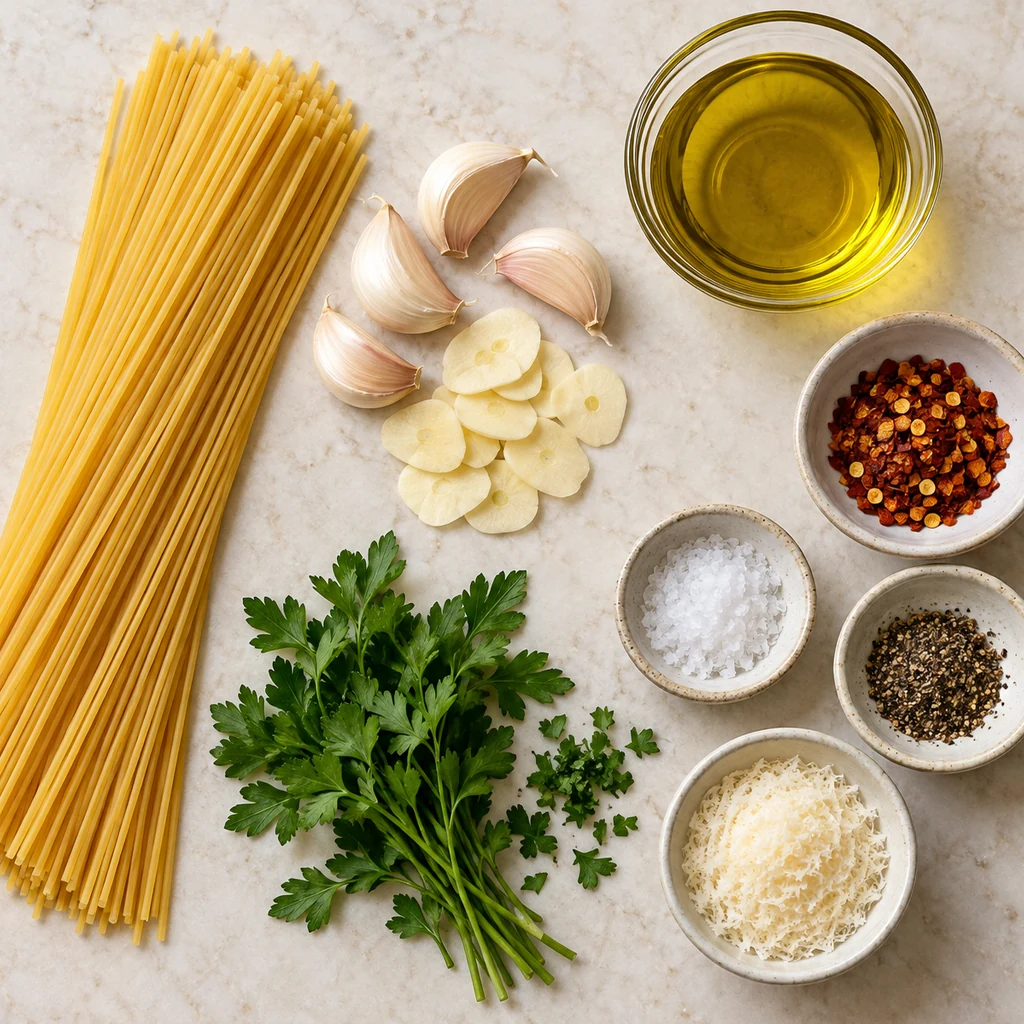
- 200 g dry spaghetti
- 4 garlic cloves, thinly sliced
- 1/4 cup extra-virgin olive oil
- 1/2 teaspoon red chili flakes, or less to taste
- 1 teaspoon fine salt for the pasta water, plus more to taste
- 1/4 teaspoon freshly ground black pepper, optional
- 2 tablespoons chopped fresh parsley, optional
- 2 tablespoons finely grated Parmesan, optional for serving
- 1/2 cup reserved starchy pasta water, used as needed
Use a pot roomy enough for the spaghetti to move freely. Slice the garlic evenly so all the pieces color at roughly the same rate. Chili flakes vary in strength; start with less if you are unsure.
Measure the oil instead of pouring freely. A quarter cup carries the garlic flavor for two portions, and reserved pasta water helps it form a light coating. Keep the water in a heatproof cup near the skillet so you can add it a spoonful at a time.
Step-by-Step Instructions
Step 1: Cook the Spaghetti and Reserve Water
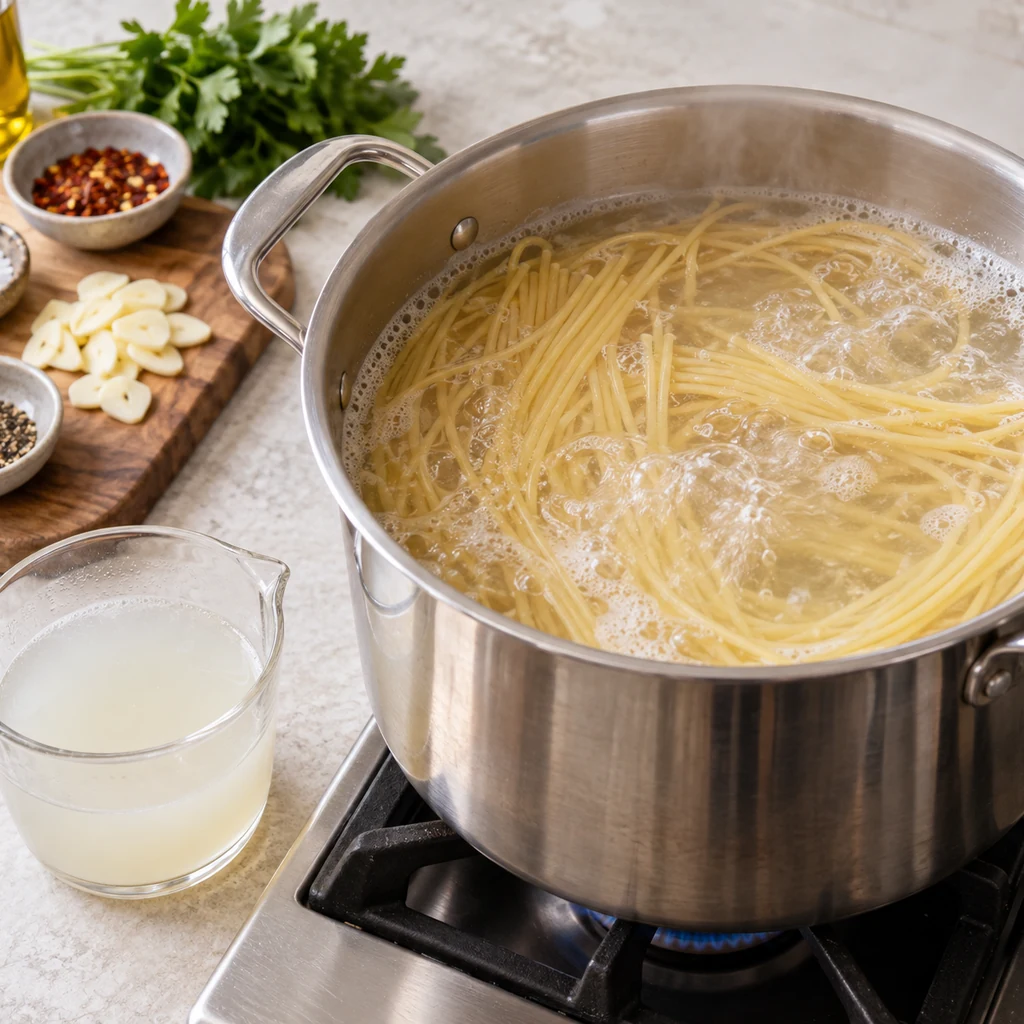
Bring a large pot of water to a full boil and stir in the measured salt. Add the spaghetti, separating the strands as they soften. Cook according to the package timing, checking a minute early for an al dente center. Before draining, scoop out at least half a cup of cloudy cooking water with a heatproof cup. Drain the pasta, but do not rinse it: surface starch is what helps the oil and water coat the strands.
Step 2: Gently Sauté the Garlic
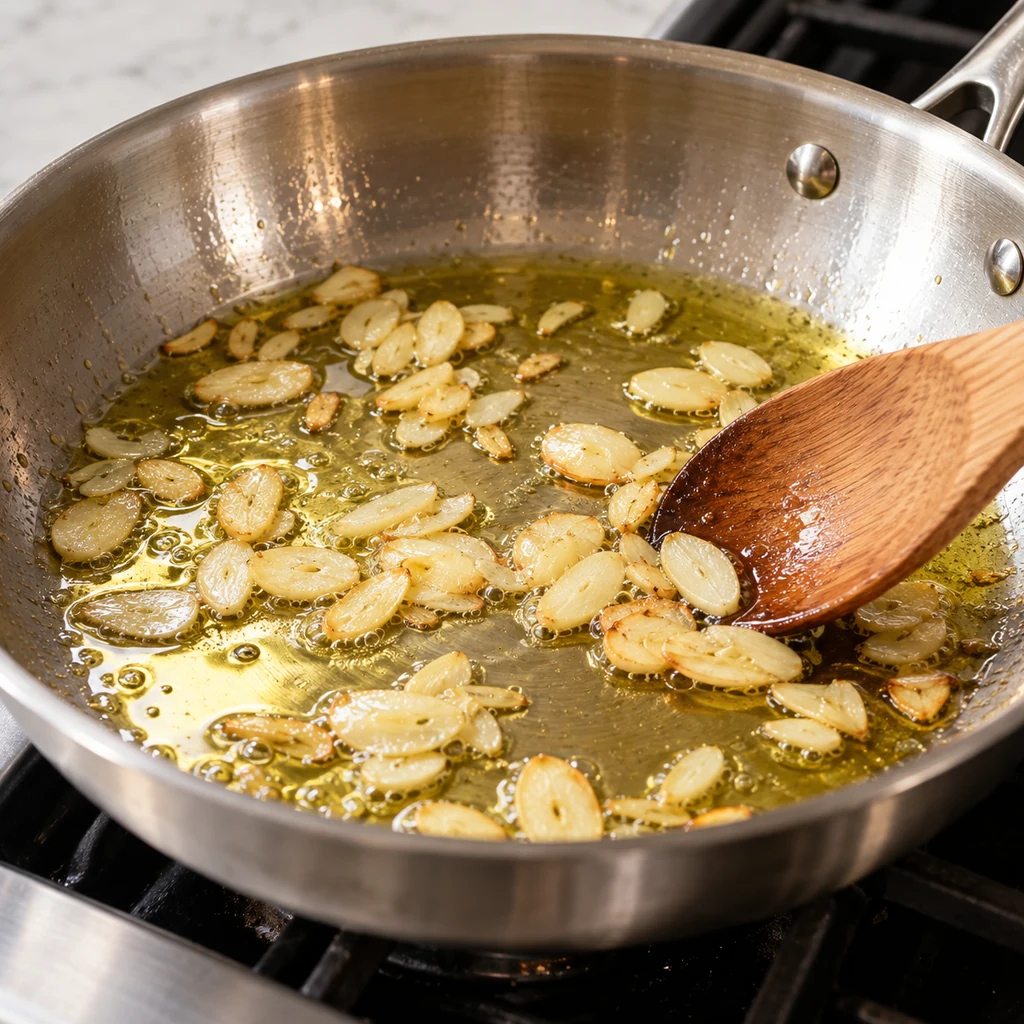
While the pasta cooks, pour the olive oil into a wide skillet over medium-low heat. Add the sliced garlic and stir often with a wooden spoon. It should bubble gently, not spit aggressively. After about two to three minutes, the edges will turn pale gold and the oil will smell fragrant. If the garlic colors too quickly, lift the skillet off the burner for a moment. Dark-brown garlic tastes bitter and cannot be rescued by adding more pasta.
Step 3: Bloom the Chili Flakes
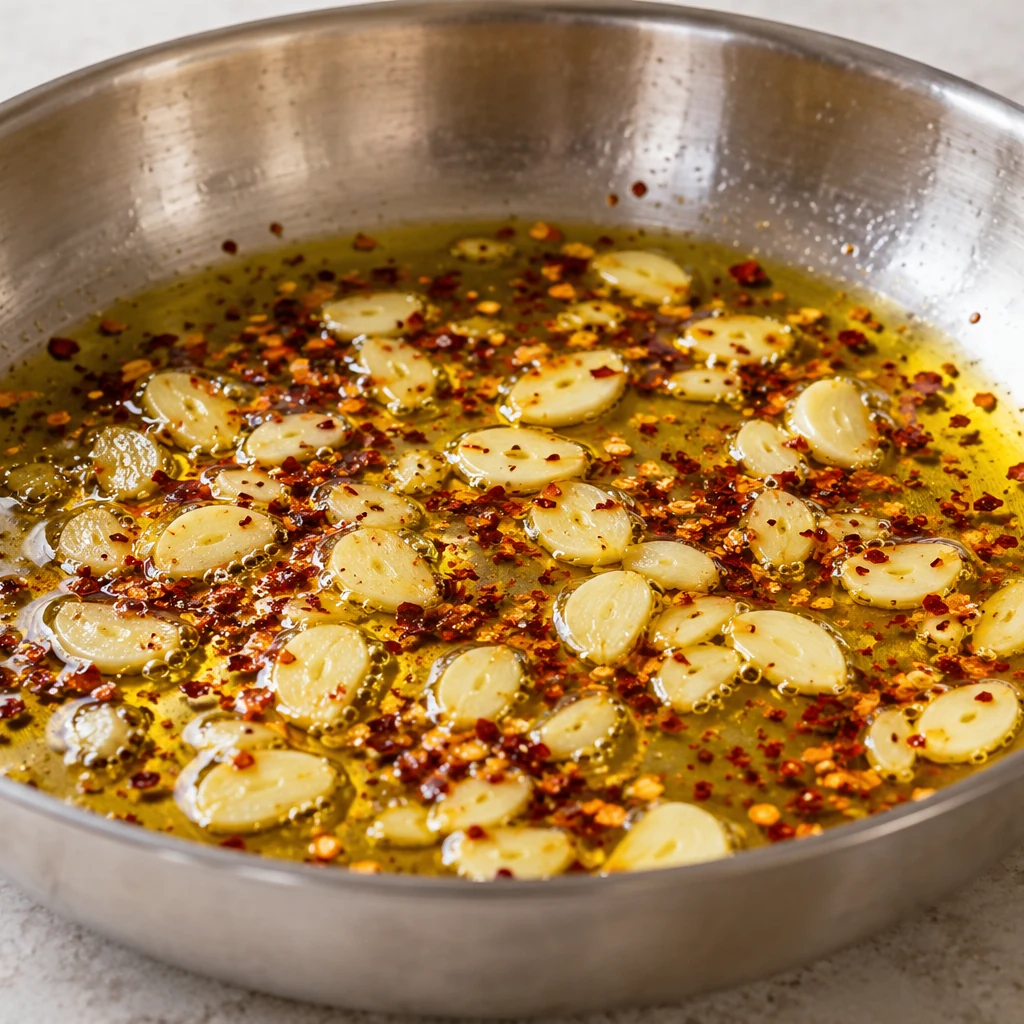
Stir the chili flakes into the warm garlic oil for roughly 20 to 30 seconds. Their color may deepen slightly, but they should not blacken. Turn the heat to low if the pasta is not ready yet. This brief warming spreads the chili flavor through the oil without making the flakes harsh. Leave the garlic slices in the pan so they become part of the finished dish.
Step 4: Toss with Pasta Water Until Glossy
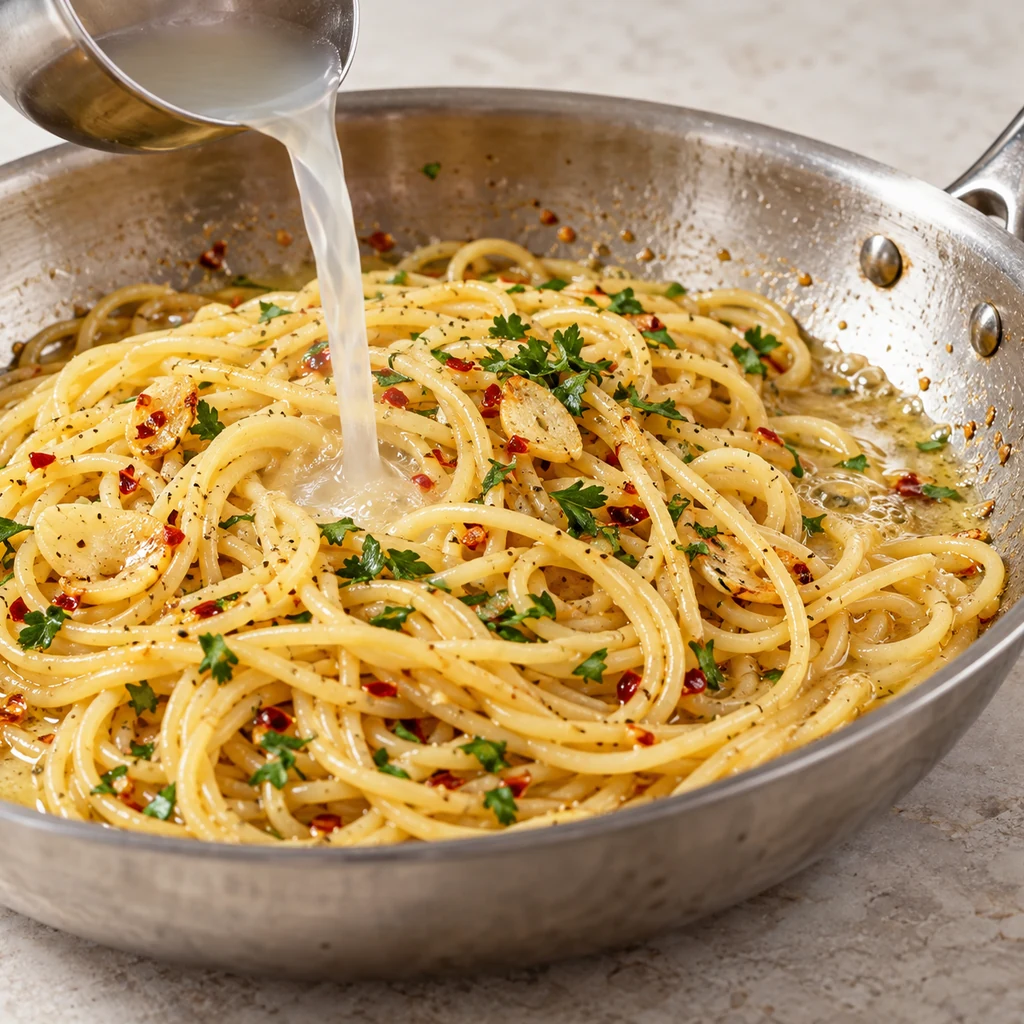
Add the drained spaghetti to the skillet. Pour in about two tablespoons of reserved pasta water and toss with tongs, lifting and folding the strands through the oil. Add more water in small splashes if the pasta looks dry. Keep tossing for one to two minutes until the strands shine and the pan has a thin, silky coating rather than a pool of oil. If using black pepper and parsley, fold them in now. Taste before adding more salt because the cooking water is already seasoned.
Step 5: Plate and Serve Immediately
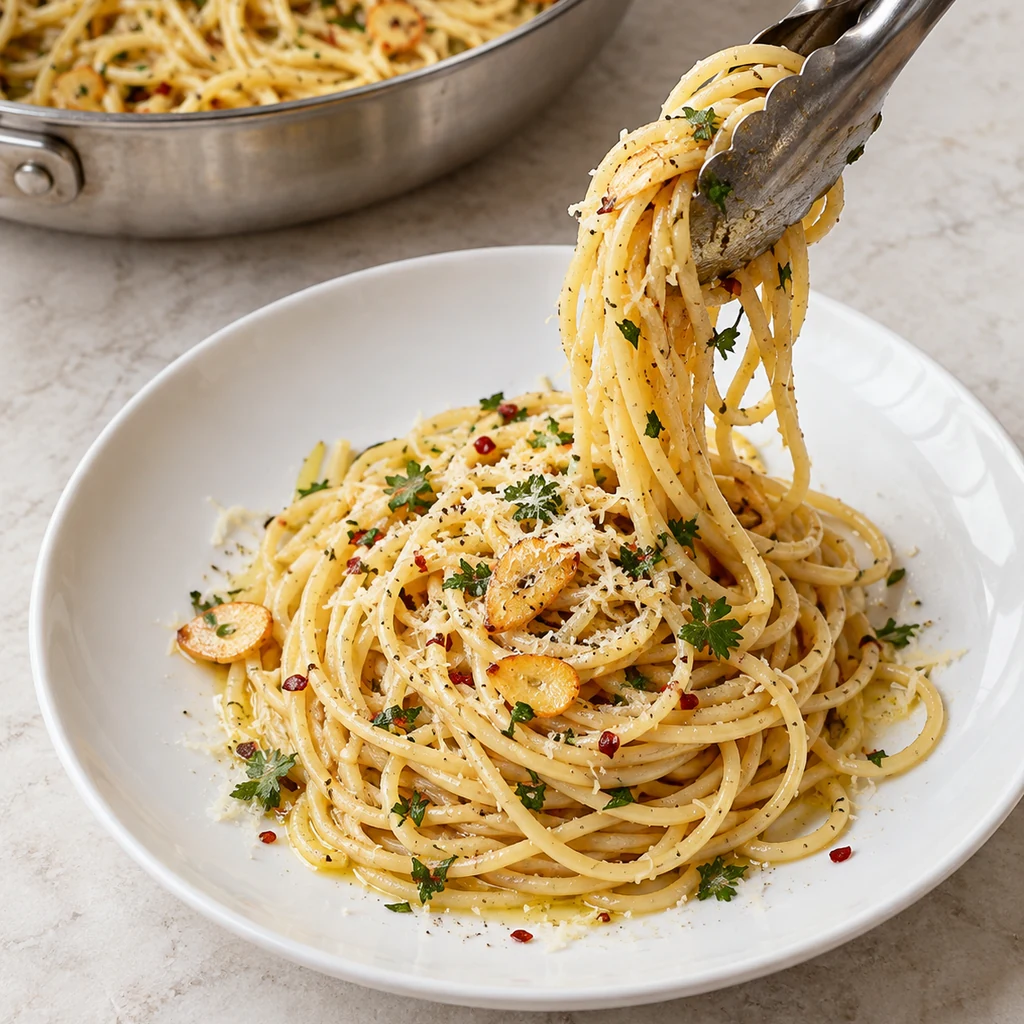
Divide the spaghetti between two warm plates, carrying the garlic slices and chili flecks with it. Add the optional Parmesan now if desired; it changes the traditional minimalist profile but gives a richer finish. A little extra parsley is also welcome. Serve immediately, since the sauce tightens as the pasta cools. If it does thicken in the skillet, loosen it with one final spoonful of the reserved hot water before plating.
Substitutions & Variations
For less heat, use just a quarter teaspoon of chili flakes and let diners add more at the table. For a slightly sharper heat, use a little extra, but keep the flakes in the oil only briefly. A different long pasta such as linguine works if it is what you have; its cooking time and water absorption may differ, so judge the glossy coating by sight.
Parsley and Parmesan are optional finishes, not requirements. Leave off the cheese for a dairy-free plate, and skip the parsley if you prefer the pure garlic-and-chili flavor. Avoid adding heavy cream or a large splash of plain water to fix dryness. The small amount of starchy pasta water, combined with active tossing, gives a lighter and more cohesive result.
What to Serve With
A crisp green salad balances the warm oil and chili. For a vegetable-centered side, the Caprese stuffed portobello mushrooms bring tomatoes and basil to the table. If you are planning a broader noodle night, compare the flavors with our Thai peanut noodles with crunchy veggies; the two dishes use very different sauces but both reward careful tossing.
For a lighter first course before the pasta, a small bowl of butternut squash soup with coconut milk and ginger gives a sweet, warming contrast. Keep the portions modest if the spaghetti is the main event. A glass of water and a simple salad are enough for an easy weeknight meal.
Frequently Asked Questions
Can I make aglio e olio ahead of time?
It is best straight from the skillet because the oil-and-water coating loses its shine as it cools. You can slice the garlic and measure the chili in advance, then cook the pasta and finish the dish just before serving. If you have leftovers, warm them gently with a splash of water, accepting that the texture will be softer.
Why did my garlic taste bitter?
The slices probably browned too far or the oil was too hot. Use medium-low heat, stir regularly, and take the skillet off the burner as soon as the garlic reaches pale gold. Add the chili only after that point, and give it a short bloom rather than a long fry.
Why does the spaghetti look oily instead of glossy?
The oil needs a little starchy cooking water and vigorous tossing to cling to the pasta. Add water one or two tablespoons at a time and keep the pan moving until the liquid becomes a thin coating. Too much water at once makes the sauce loose, while no water leaves separate oil at the bottom of the pan.