
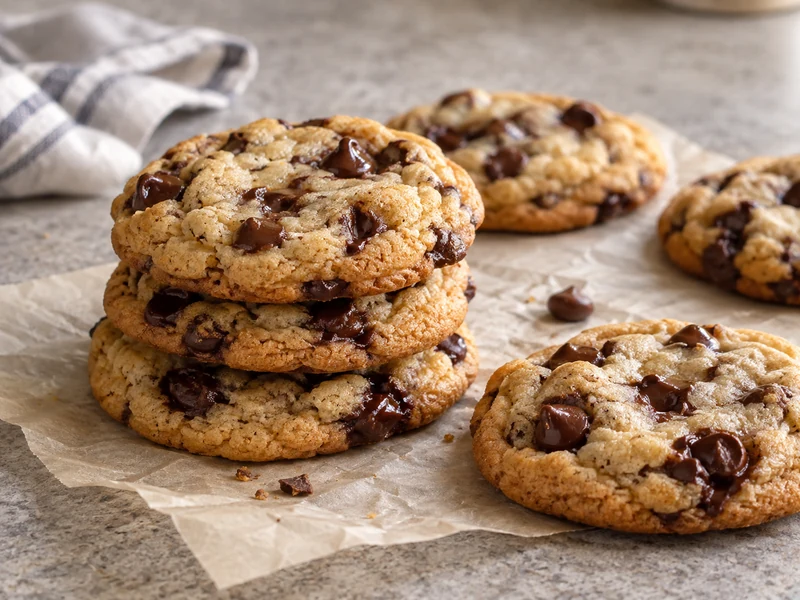
A soft chocolate chip cookie should have a lightly golden edge, a tender middle, and chocolate in nearly every bite. This version uses a familiar butter-and-sugar dough and straightforward mixing, so the texture comes from careful timing rather than an unusual ingredient or complicated technique.
RECIPE CARD
Soft Chocolate Chip Cookies Recipe
Ingredients
- 1 cup unsalted butter, softened but not melted
- ¾ cup packed brown sugar
- ½ cup granulated sugar
- 2 large eggs, at room temperature
- 2 teaspoons vanilla extract
- 2¼ cups all-purpose flour
- 1 teaspoon baking soda
- ½ teaspoon salt
- 2 cups semisweet chocolate chips
Quick Method
Condensed overview. Use Full Instructions for the complete method, timing and doneness details.
- Cream the Butter and Sugars: Beat softened butter with brown sugar and granulated sugar for 2–3 minutes until light and fluffy, scraping the bowl.
- Add the Eggs and Vanilla: Beat in the eggs one at a time, then stir in the vanilla until the mixture is smooth and thick.
- Combine the Dry Ingredients: Whisk flour, baking soda, and salt separately. Add to the wet mixture in two additions and mix just until no flour streaks remain.
- Fold in the Chocolate Chips: Fold in the semisweet chocolate chips. Optionally chill very soft dough for 30 minutes before scooping.
- Scoop and Bake: Heat oven to 350°F (175°C). Scoop about 1½ tablespoons per cookie onto parchment-lined trays, leaving 2 inches between portions. Bake 9–11 minutes per tray…
- Cool Before Moving: Rest cookies on the baking sheet for 5 minutes, then move to a wire rack to cool completely.
The recipe makes about 36 cookies with a 1½-tablespoon scoop. You can bake the dough as soon as it is mixed, or chill it for 30 minutes when the kitchen is warm and you want less spread. Either way, pull the cookies while their centers still look slightly soft; they finish setting on the hot tray.
Why You’ll Love It
- Brown sugar keeps the centers tender while the edges turn lightly crisp.
- The dough uses everyday baking ingredients and a simple two-bowl method.
- Portioned dough freezes well for fresh cookies later.
Ingredients
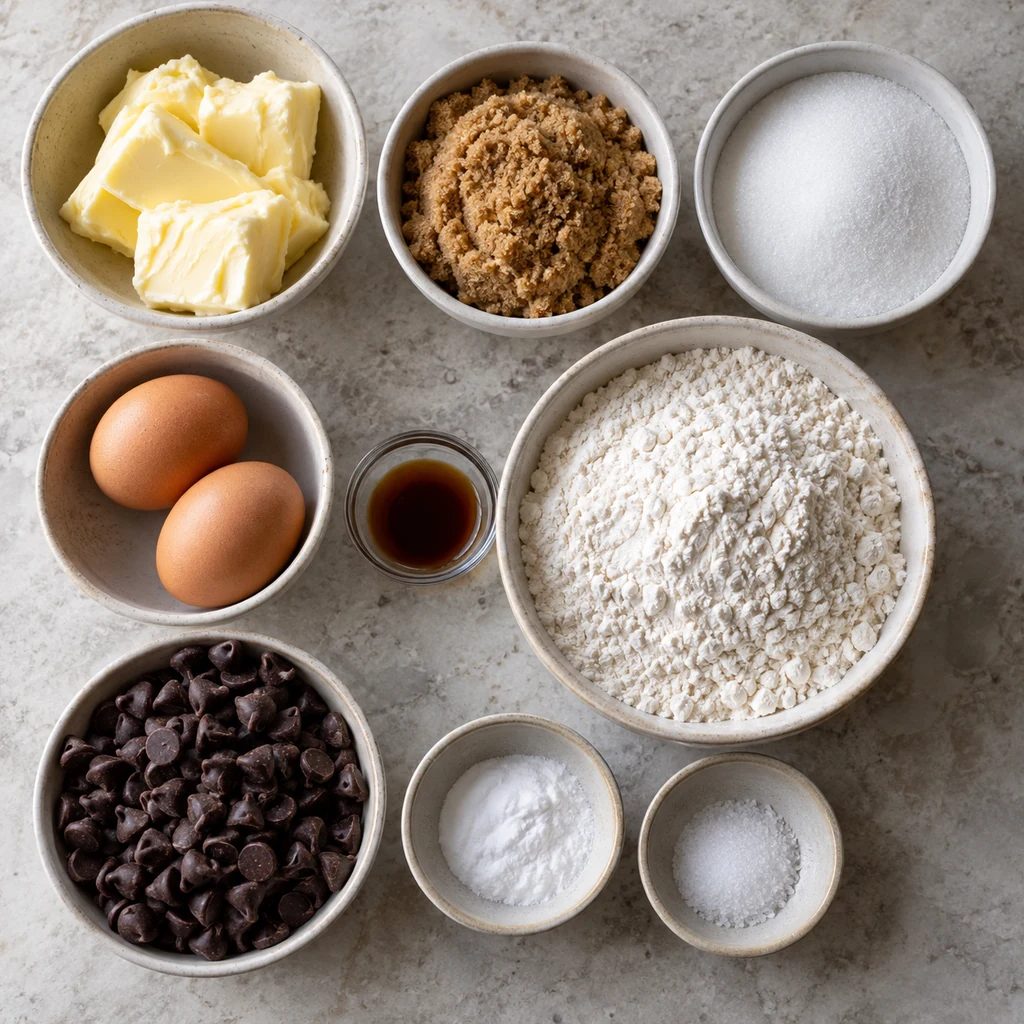
- 1 cup unsalted butter, softened but not melted
- ¾ cup packed brown sugar
- ½ cup granulated sugar
- 2 large eggs, at room temperature
- 2 teaspoons vanilla extract
- 2¼ cups all-purpose flour
- 1 teaspoon baking soda
- ½ teaspoon salt
- 2 cups semisweet chocolate chips
Softened butter should yield to gentle pressure while holding its shape. Melted butter makes a looser dough that spreads more readily. Spoon flour into the measuring cup and level it off; packing flour directly from the bag can make the cookies dry. If your eggs are cold, let them sit in a bowl of lukewarm water for a few minutes before mixing.
Step-by-Step Instructions
1. Cream the Butter and Sugars
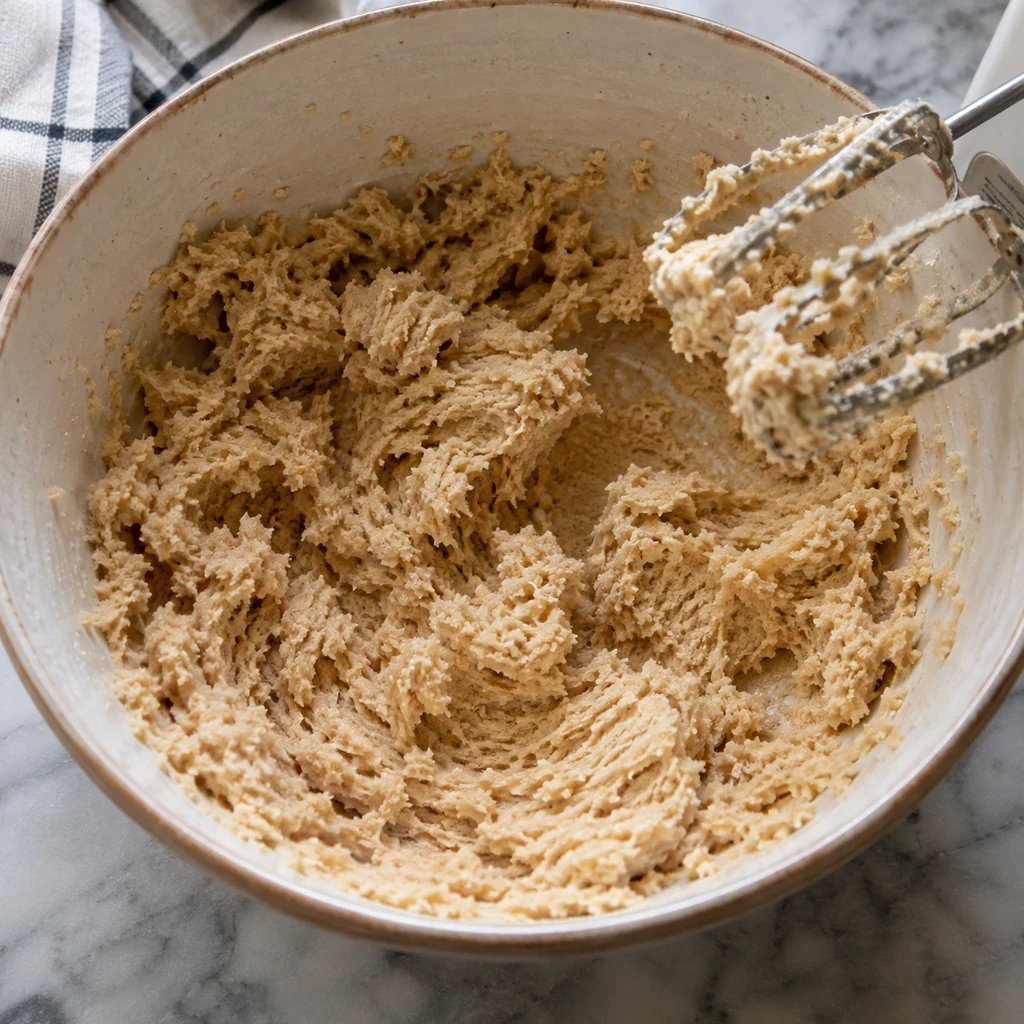
Beat the softened butter with the brown and granulated sugars in a large bowl for about 2–3 minutes. Scrape down the bowl once or twice so no dense butter remains along the sides. The mixture should look lighter, fluffy, and slightly grainy, not oily or liquid. A hand mixer is convenient, but a sturdy spoon works if you allow a little more time. This creaming stage helps the cookies bake up tender rather than heavy.
2. Add the Eggs and Vanilla
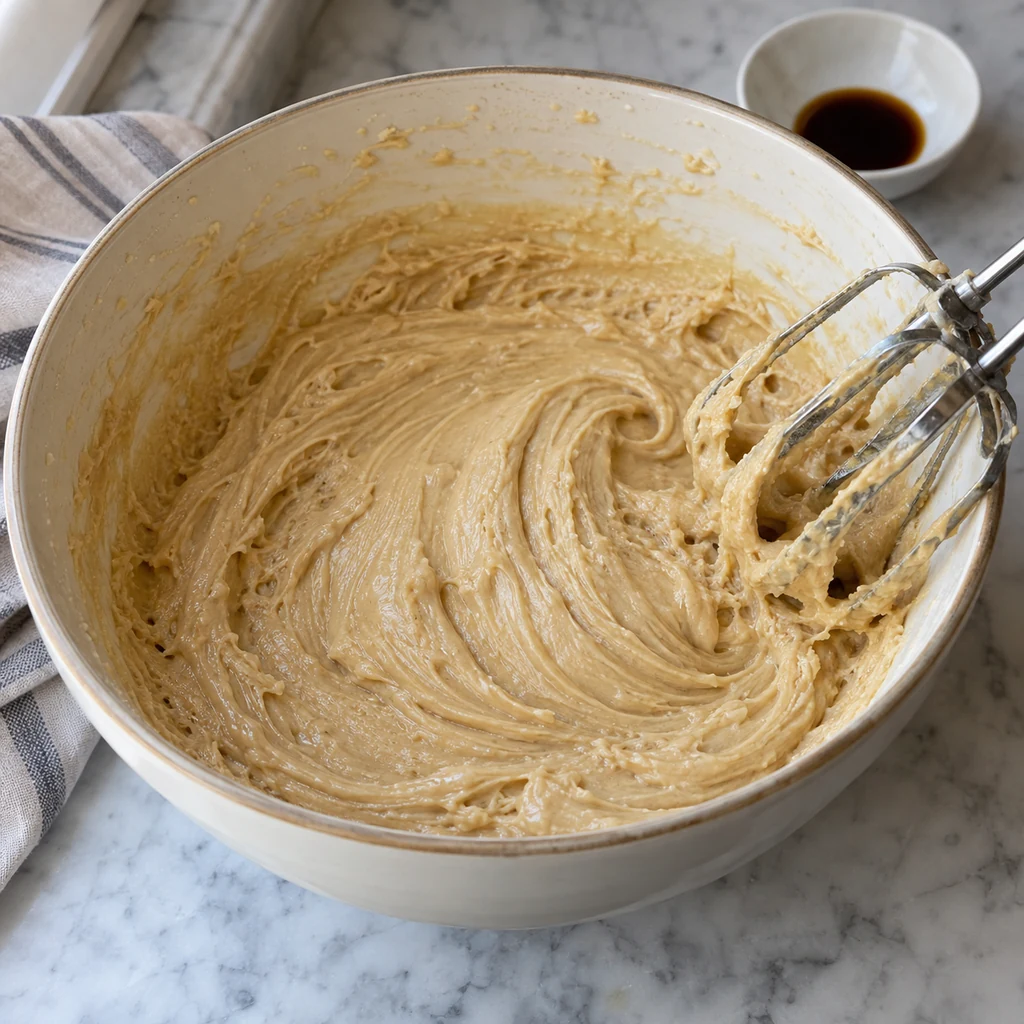
Beat in the eggs one at a time, mixing just until each disappears before adding the next. Stir in the vanilla. The batter should be smooth and thick; a slightly curdled look after a cold egg is not a disaster and will settle once the flour is added. Pause to scrape the bottom of the bowl, where pockets of butter can hide. Avoid extended beating now, which can make the dough warmer and more prone to spreading.
3. Combine the Dry Ingredients
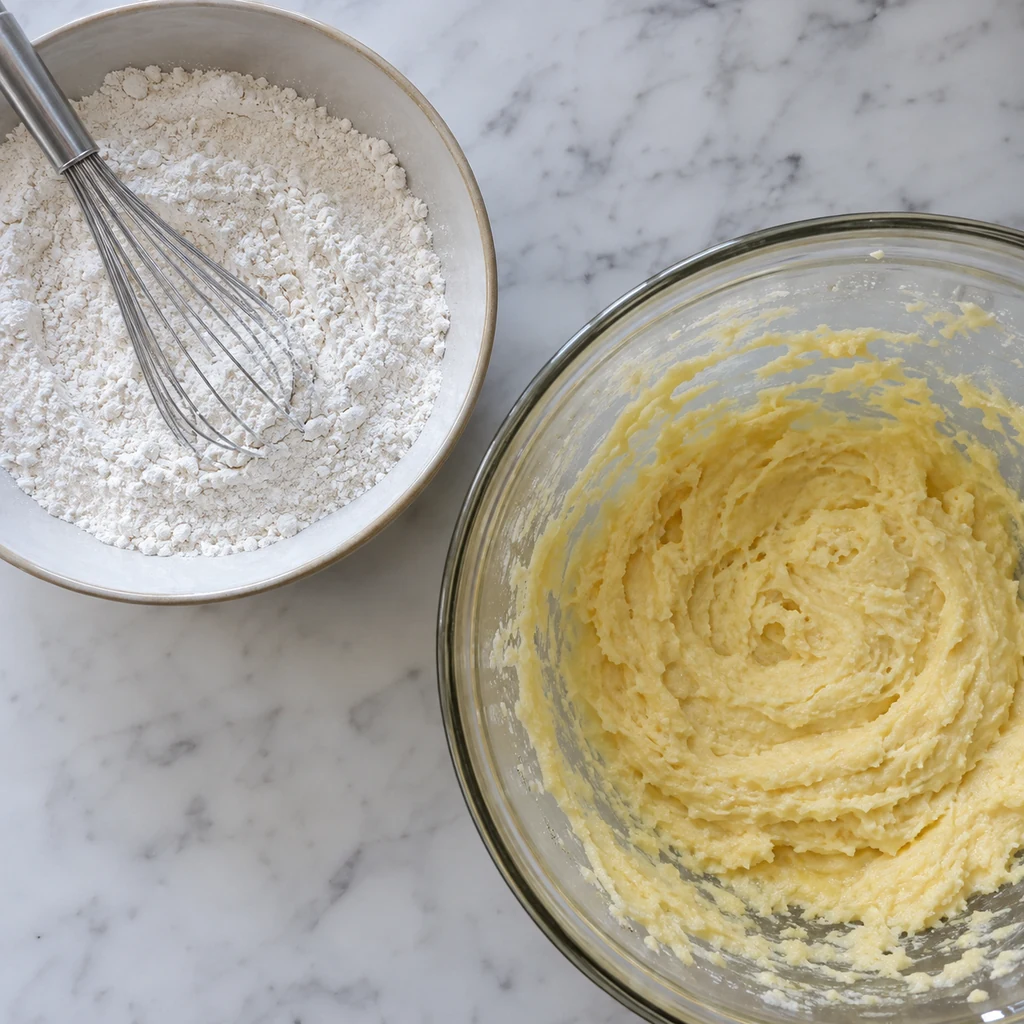
Whisk the flour, baking soda, and salt together in a separate bowl so the leavening and salt distribute evenly. Add this mixture to the wet ingredients in two additions, mixing on low speed or by hand only until the last visible streaks of flour disappear. The dough should feel thick and scoopable, not pourable. Stop as soon as it comes together: extra mixing after flour is added develops gluten and can make a soft cookie tougher.
4. Fold in the Chocolate Chips
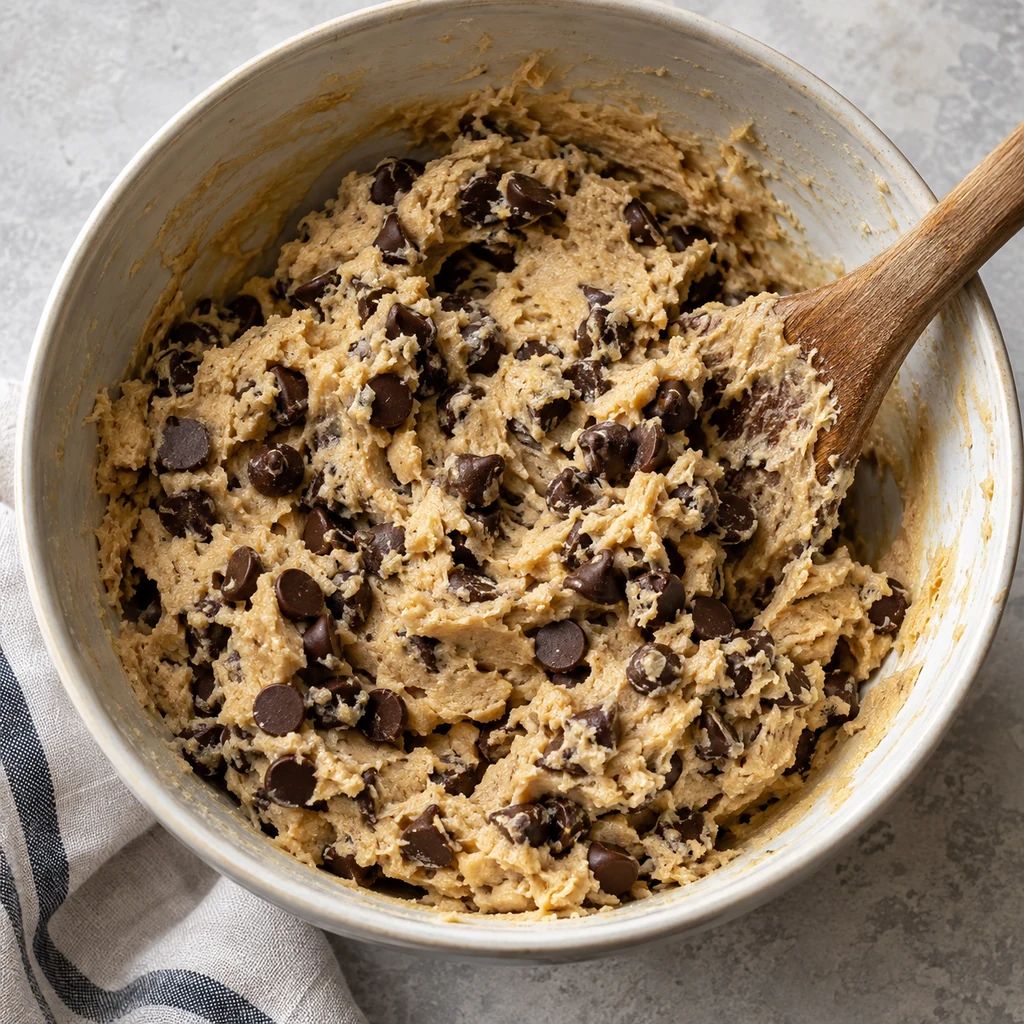
Fold in the semisweet chips with a spatula, turning the bowl and lifting dough from the bottom until chocolate is spread throughout. If the dough feels very soft or the room is warm, cover and chill it for 30 minutes before scooping. Chilling is optional and adds 30 minutes to the stated total time. For a tidy finish, reserve a small handful of the measured chips to press onto the tops of the dough mounds; do not add more chocolate than the listed amount.
5. Scoop and Bake
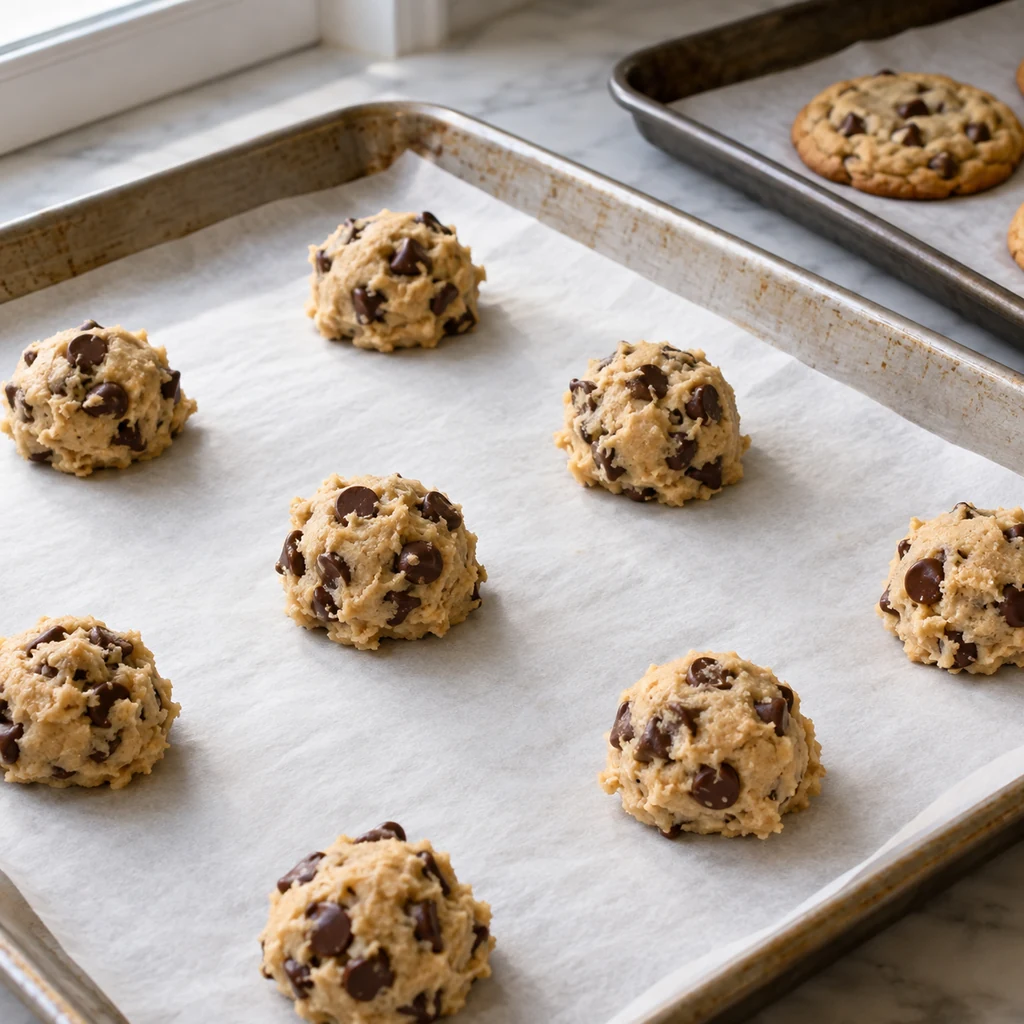
Heat the oven to 350°F (175°C) and line baking sheets with parchment. Scoop roughly 1½ tablespoons of dough per cookie, making about 36 portions, and leave about 2 inches between them. Bake for 9–11 minutes per tray, rotating the tray if your oven browns unevenly. Expect lightly golden edges and centers that still look a little underdone; they should not be wet or glossy. Two rounds take about 20 minutes of oven time. Keep unbaked dough cool while the first round bakes, and use a cooled sheet for the next batch.
6. Cool Before Moving
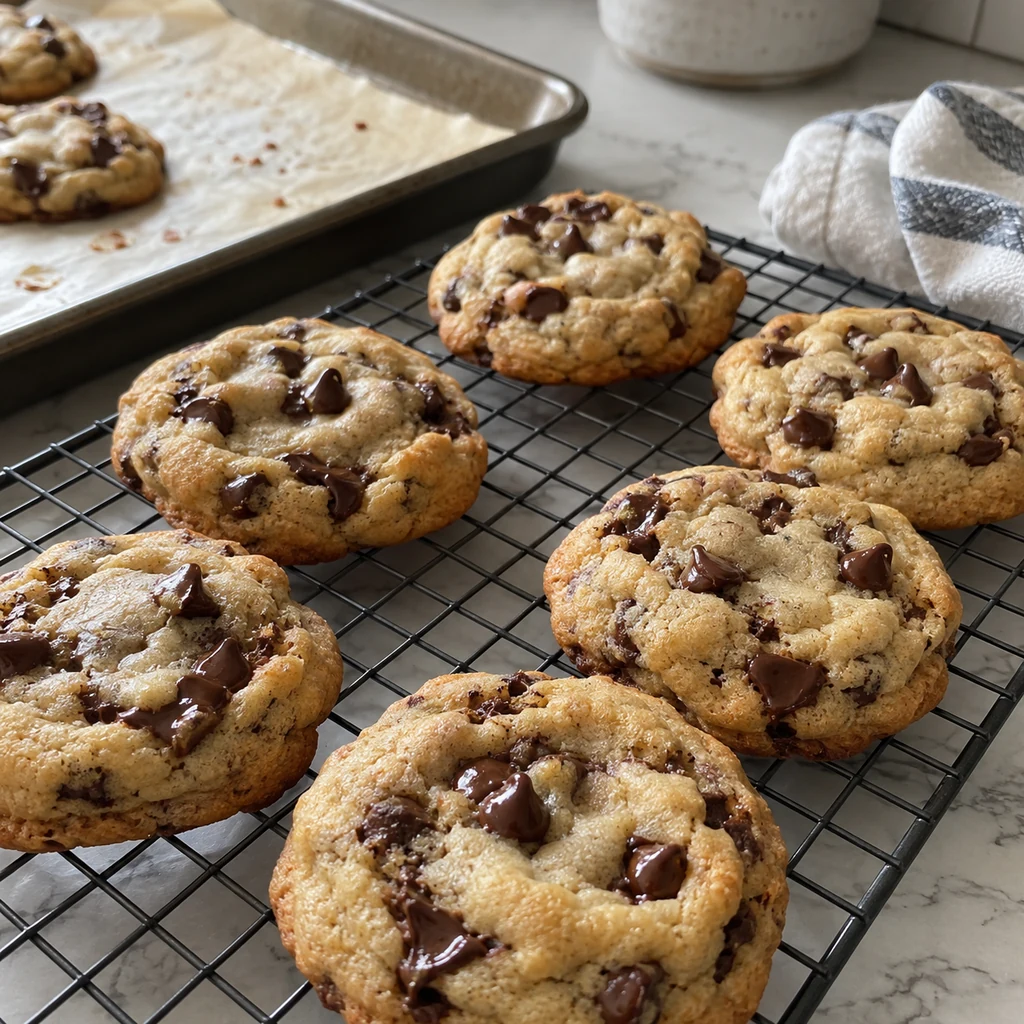
Leave the cookies on their baking sheet for 5 minutes. They are fragile straight from the oven, and this short rest lets the centers set without drying them out. Then transfer them to a wire rack with a thin spatula and let them cool completely before stacking or storing. The middle will firm up yet remain soft. If one tray baked darker than expected, reduce the next tray’s time by a minute and check the edges early.
Substitutions & Variations
Dark chocolate chips can replace semisweet chips in the same quantity for a less sweet bite. For a little crunch, replace up to ½ cup of the chocolate chips with chopped toasted walnuts or pecans; keep the total add-ins at 2 cups so the dough remains easy to portion. A small pinch of flaky salt on the baked cookies is optional, but omit it if you prefer the classic sweet finish. Unsalted butter gives you control over salt, so if you use salted butter, reduce the added salt to ¼ teaspoon.
For make-ahead baking, scoop the dough first and freeze the portions on a lined tray until firm, then transfer them to a sealed container. Bake frozen portions at 350°F, allowing about 1–2 extra minutes and judging doneness by the edges. Freezing the dough changes the baking schedule, while the ingredient amounts and batch yield stay the same.
What to Serve With
Serve a warm cookie with a glass of cold milk, an unsweetened coffee, or a cup of tea. For dessert, place one beside a scoop of vanilla ice cream once the cookie has cooled enough that the ice cream will not melt immediately. A platter of cookies also works well for a casual gathering because they can be baked ahead and offered at room temperature. Let chocolate set before packing them so the cookies do not stick together.
Frequently Asked Questions
Why did my cookies spread too much?
Butter that is nearly melted, a hot baking sheet, or very warm dough can all encourage spreading. Use softened butter that still holds its shape, let used trays cool, and chill soft dough for 30 minutes. Measuring flour lightly but accurately matters as well: too little flour leaves less structure to hold a thick center.
How do I keep the cookies soft after baking?
Remove them when the edges are set and the centers are still slightly soft, then give them the full 5-minute rest on the tray. Once completely cool, keep them in an airtight container at room temperature for up to 3 days. Avoid sealing warm cookies, because trapped steam makes the surface damp.
Can I freeze the baked cookies?
Yes. Cool them completely, layer them with parchment in an airtight freezer container, and freeze for up to 2 months. Thaw at room temperature before serving. You can also warm a thawed cookie briefly in a low oven for a freshly baked feel, watching closely so its soft center does not dry out.