
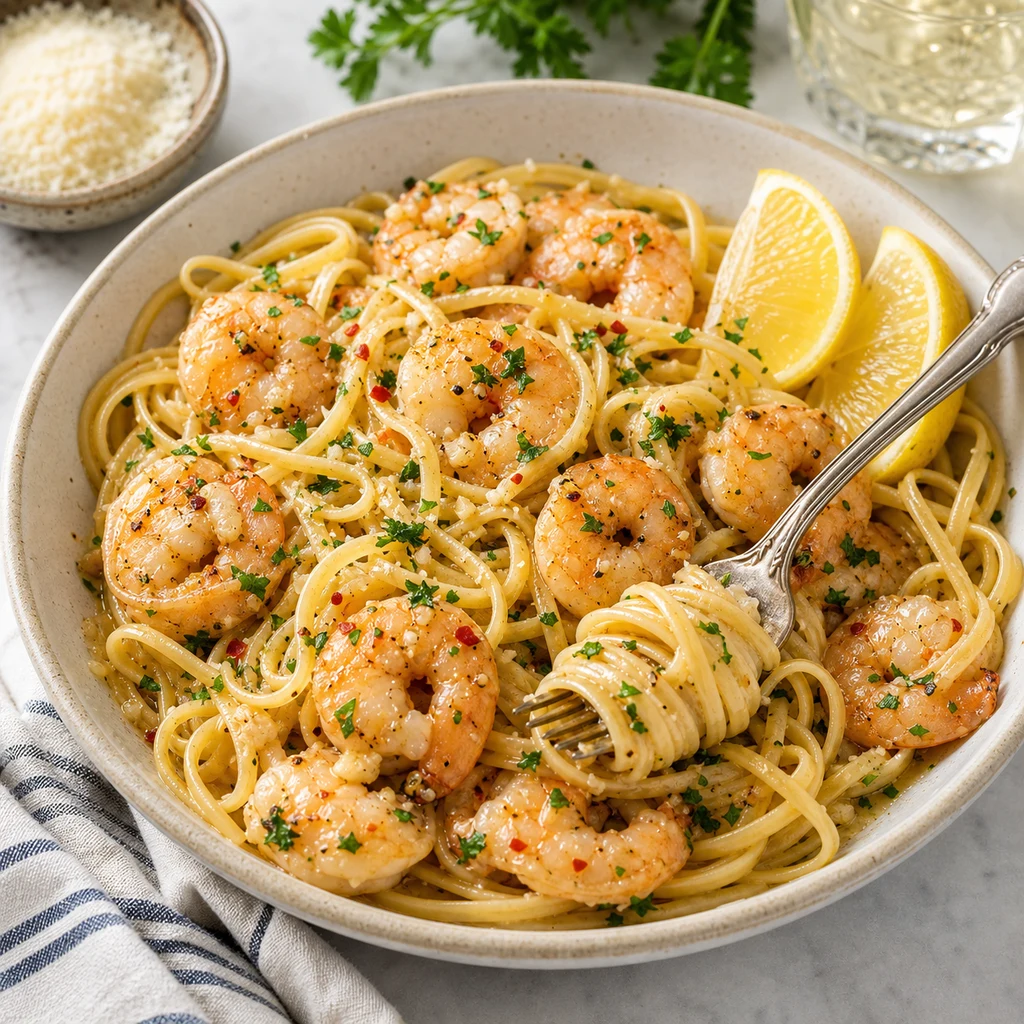
Shrimp Scampi Recipe is a quick seafood pasta built on garlic, butter, lemon, parsley, tender shrimp, and just enough pasta water to bring everything together. It feels special, but the actual cooking moves fast, which is why preparation matters more than complexity.
RECIPE CARD
Shrimp Scampi
Ingredients
- 8 ounces linguine or spaghetti
- 1 pound large shrimp, peeled and deveined
- 4 tablespoons unsalted butter, divided
- 2 tablespoons olive oil
- 4 cloves garlic, minced
- 1/4 teaspoon red pepper flakes, optional
- 1/2 cup dry white wine or chicken broth
- Juice of 1 lemon
- 1/2 cup reserved pasta water
- Salt and black pepper, to taste
- 1/4 cup chopped parsley
- Parmesan, optional for serving
Quick Method
Condensed overview. Use Full Instructions for the complete method, timing and doneness details.
- Cook Pasta: Cook linguine or spaghetti until al dente and reserve pasta water before draining.
- Sauté Shrimp: Pat shrimp dry and cook in butter and olive oil until just pink, then remove from the pan.
- Make Sauce: Cook garlic and red pepper flakes briefly, then add wine or broth, lemon juice, and butter.
- Toss: Return shrimp and pasta to the pan and toss with sauce, using pasta water as needed.
- Serve: Finish with parsley and optional Parmesan.
The goal is not a heavy cream sauce. Classic-style shrimp scampi should be glossy, bright, and lightly buttery, with shrimp that are pink and tender rather than tight and overcooked. Keep the ingredients ready, cook the shrimp briefly, and use reserved pasta water to help the sauce cling to the linguine.
Why This Shrimp Scampi Works
Shrimp cook in minutes, so this recipe separates the process into quick steps: pasta first, shrimp next, sauce in the same skillet, then a final toss. Removing the shrimp while the sauce reduces keeps them from sitting over heat too long.
The reserved pasta water is the quiet helper here. Its starch helps butter, lemon, wine, and garlic coat the noodles evenly. Without it, the sauce can taste oily or slide to the bottom of the bowl.
The other reason this version works is balance. Lemon brings brightness, butter gives roundness, garlic gives depth, and a small amount of red pepper keeps the sauce from tasting flat. None of those ingredients needs to dominate. When the sauce is right, you taste the shrimp first, then the lemon and garlic, then a clean buttery finish.
Ingredients
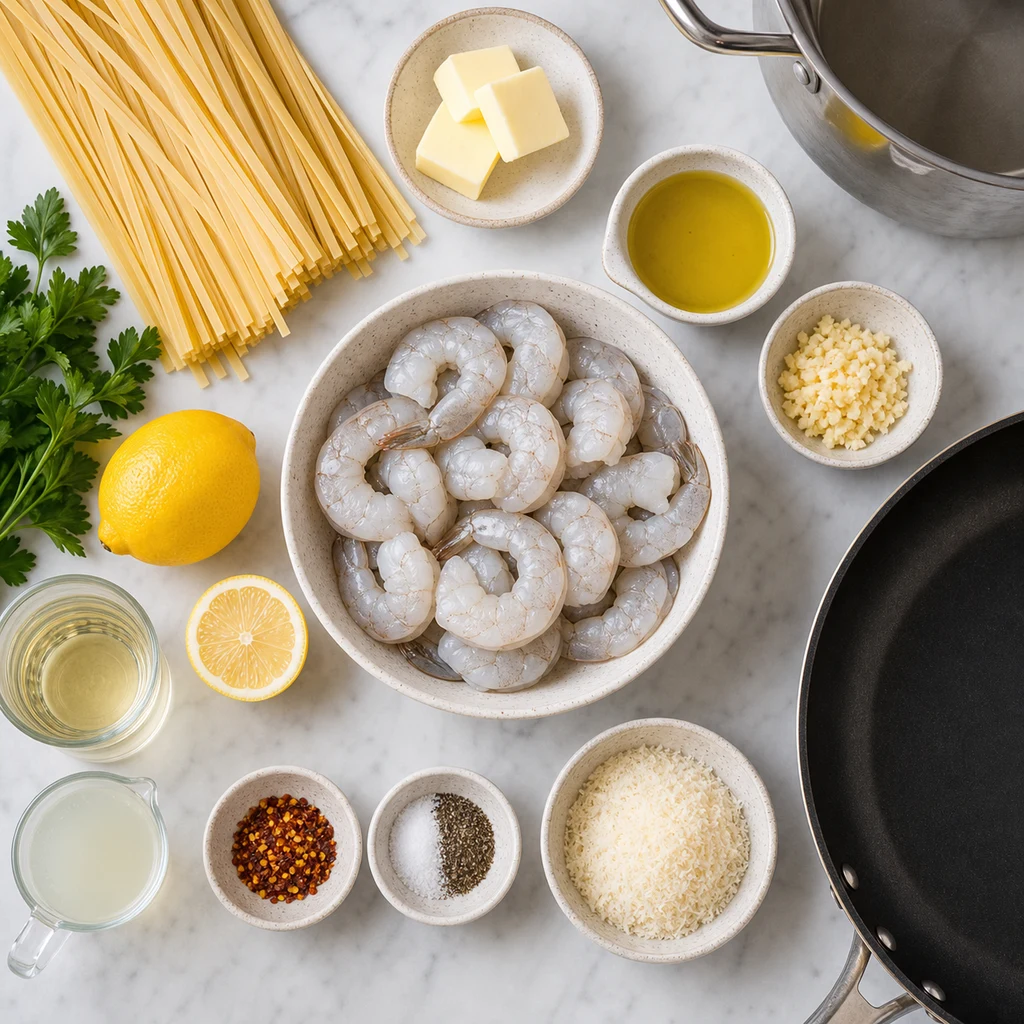
- 8 ounces linguine or spaghetti
- 1 pound large shrimp, peeled and deveined
- 4 tablespoons unsalted butter, divided
- 2 tablespoons olive oil
- 4 cloves garlic, minced
- 1/4 teaspoon red pepper flakes, optional
- 1/2 cup dry white wine or chicken broth
- Juice of 1 lemon
- 1/2 cup reserved pasta water
- Salt and black pepper to taste
- 1/4 cup chopped parsley
- Parmesan for serving, optional
Shrimp and Sauce Notes
Use peeled and deveined shrimp for easier eating. Pat them dry before they hit the skillet so they sear instead of steaming. For the wine, choose something dry and simple. If you prefer not to cook with wine, chicken broth works well and keeps the sauce savory.
Large shrimp are easier to control than tiny shrimp because they give you a little more time before overcooking. Frozen shrimp are fine as long as they are thawed fully and dried well. If the shrimp smell strongly fishy or release a lot of liquid in the pan, the sauce will never taste as clean as it should.
For the pasta, linguine is traditional because it holds the sauce without feeling heavy. Spaghetti, angel hair, or fettuccine can work, but each one changes the timing slightly. Angel hair needs a lighter hand, while fettuccine may need an extra splash of pasta water to loosen the sauce.
Step 1: Cook the Pasta
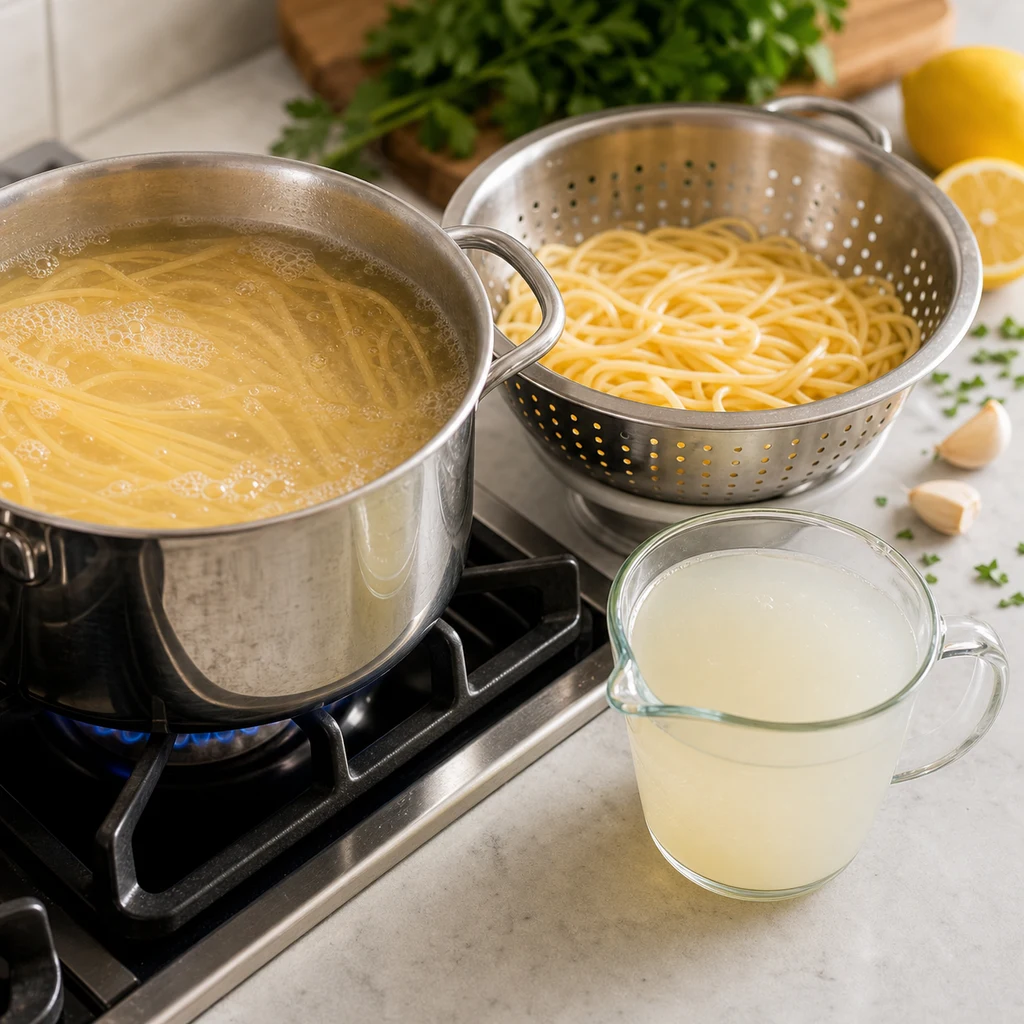
Cook the linguine in well-salted water until al dente. Before draining, scoop out at least 1/2 cup of pasta water. Drain the pasta, but do not rinse it. The light starch left on the noodles helps the sauce cling.
If the pasta finishes before the sauce is ready, toss it with a tiny drizzle of olive oil and keep it nearby. Avoid letting it sit in a tight clump.
Start checking the pasta about a minute before the package time. The noodles will spend a short time in the skillet later, so they should still have a little firmness when drained. If they are already soft at this stage, the final toss can make them feel heavy.
Step 2: Saute the Shrimp
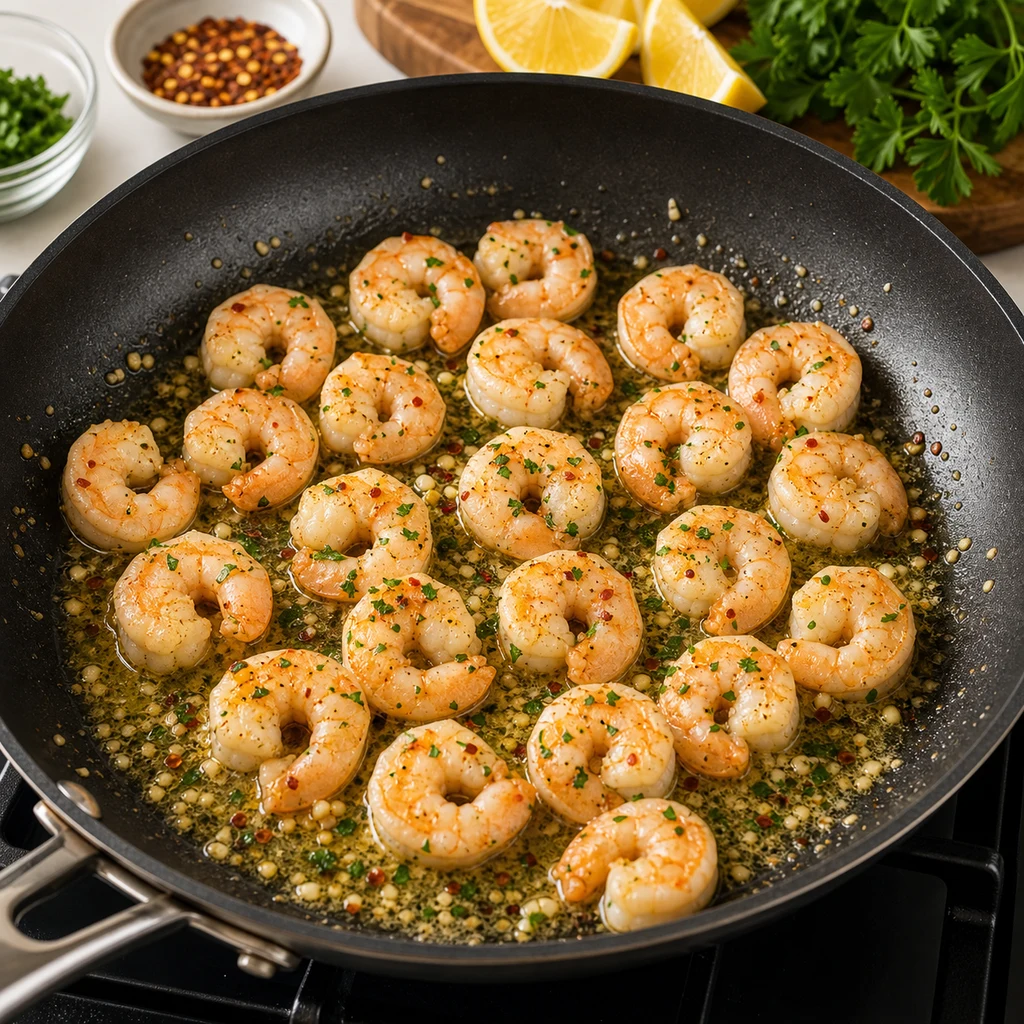
Heat olive oil and part of the butter in a wide skillet. Add the shrimp in a single layer, season with salt and pepper, and cook just until pink and opaque, usually 1 to 2 minutes per side. Transfer the shrimp to a plate.
Do not wait for shrimp to curl tightly. A loose C-shape is usually tender; a tight ring often means they have gone too far.
Step 3: Make the Garlic Butter Sauce
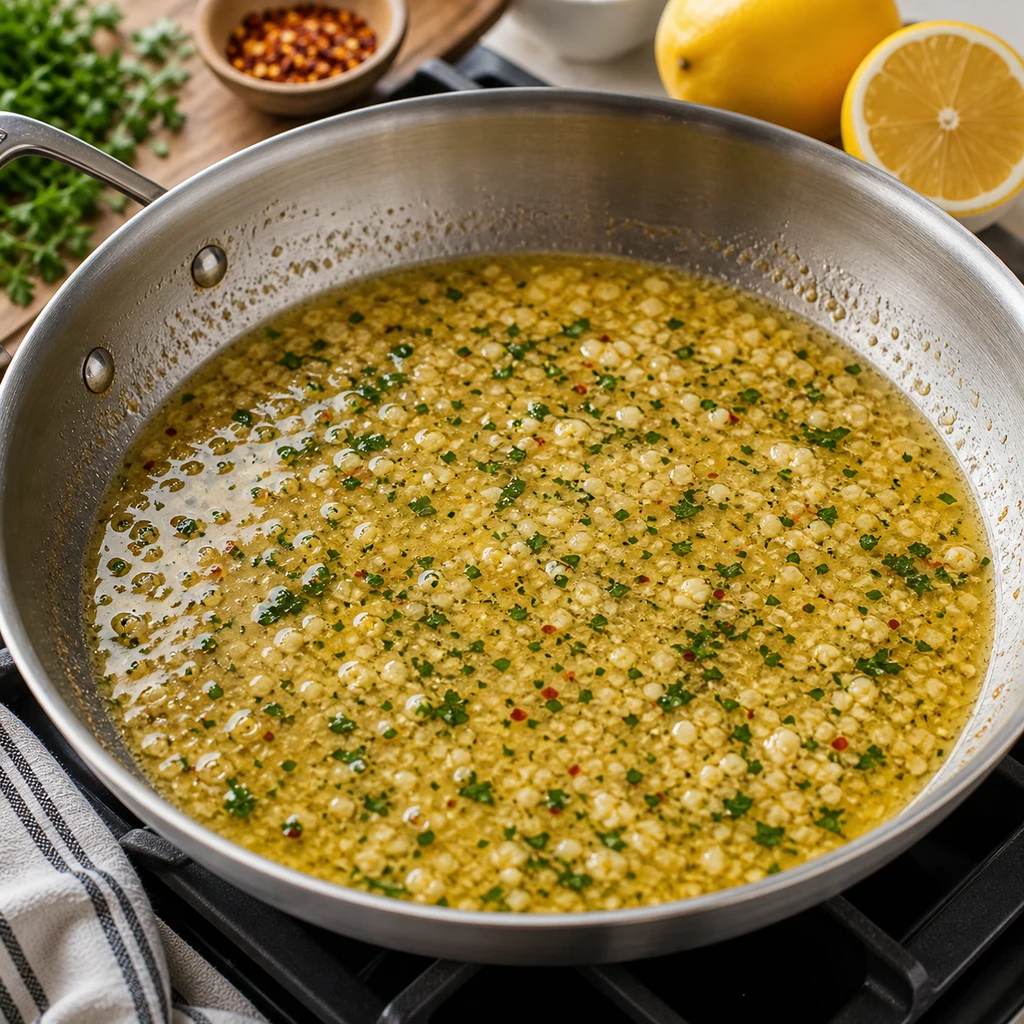
Lower the heat slightly and add the remaining butter, garlic, and red pepper flakes to the skillet. Cook briefly until fragrant. Add wine or broth and lemon juice, scraping the bottom of the pan, then let the sauce simmer for a few minutes.
Garlic should soften, not brown deeply. Burned garlic can make the whole dish taste bitter, so keep the heat controlled and move quickly.
The sauce should reduce enough to taste concentrated but not so much that it disappears. If it smells sharp from the wine, give it another minute. If the pan looks dry before the pasta goes in, add a splash of pasta water and swirl the skillet to loosen the browned bits.
Step 4: Toss Pasta, Shrimp, and Sauce
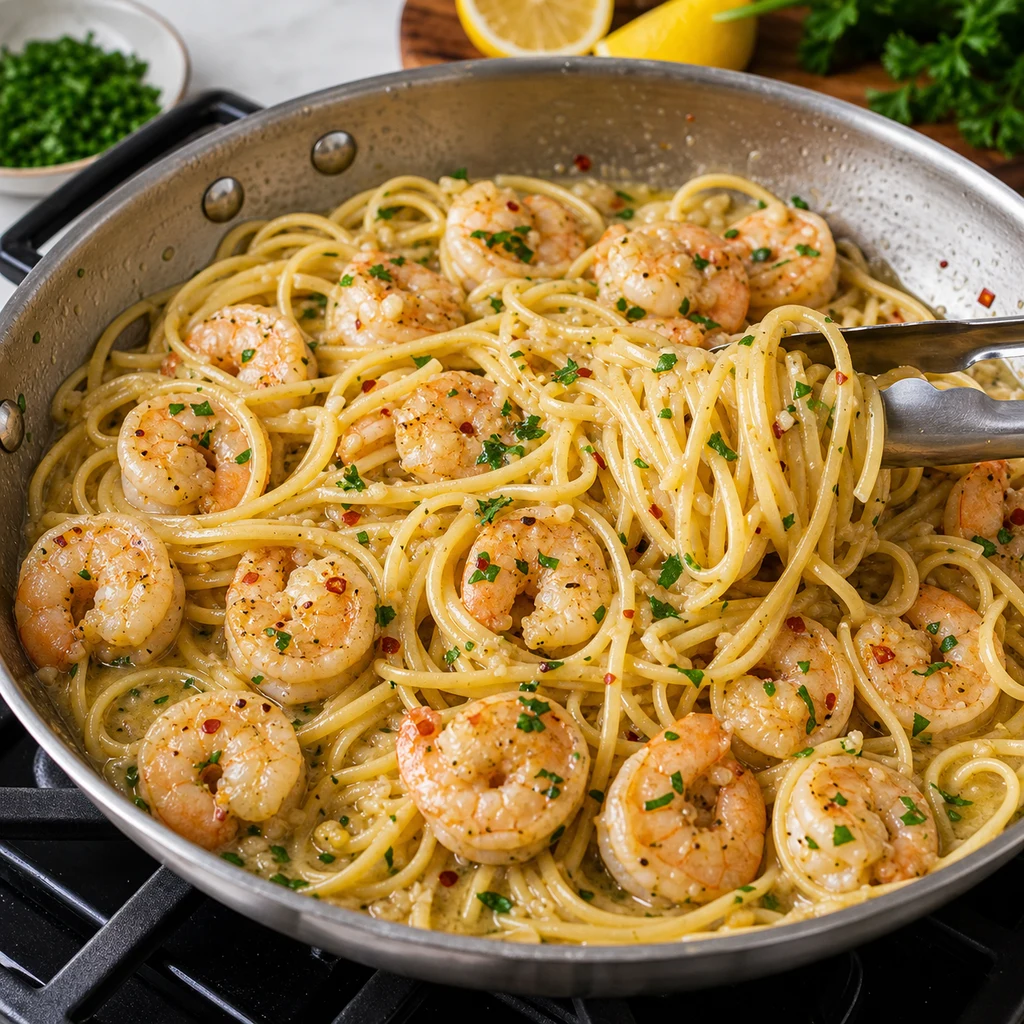
Add the pasta to the skillet with a splash of reserved pasta water. Toss until the noodles turn glossy, then return the shrimp and add parsley. Add more pasta water a spoonful at a time if the sauce looks tight.
The finished pan should look lightly sauced, not soupy. If liquid pools at the bottom, toss over heat for another minute so the sauce reduces and coats the noodles.
This is the moment to taste and adjust. Add salt only after the pasta water and Parmesan, if using, because both can bring saltiness. A little more lemon can wake up the sauce, but too much can make the shrimp taste sharp, so add it gradually.
Serve the Shrimp Scampi
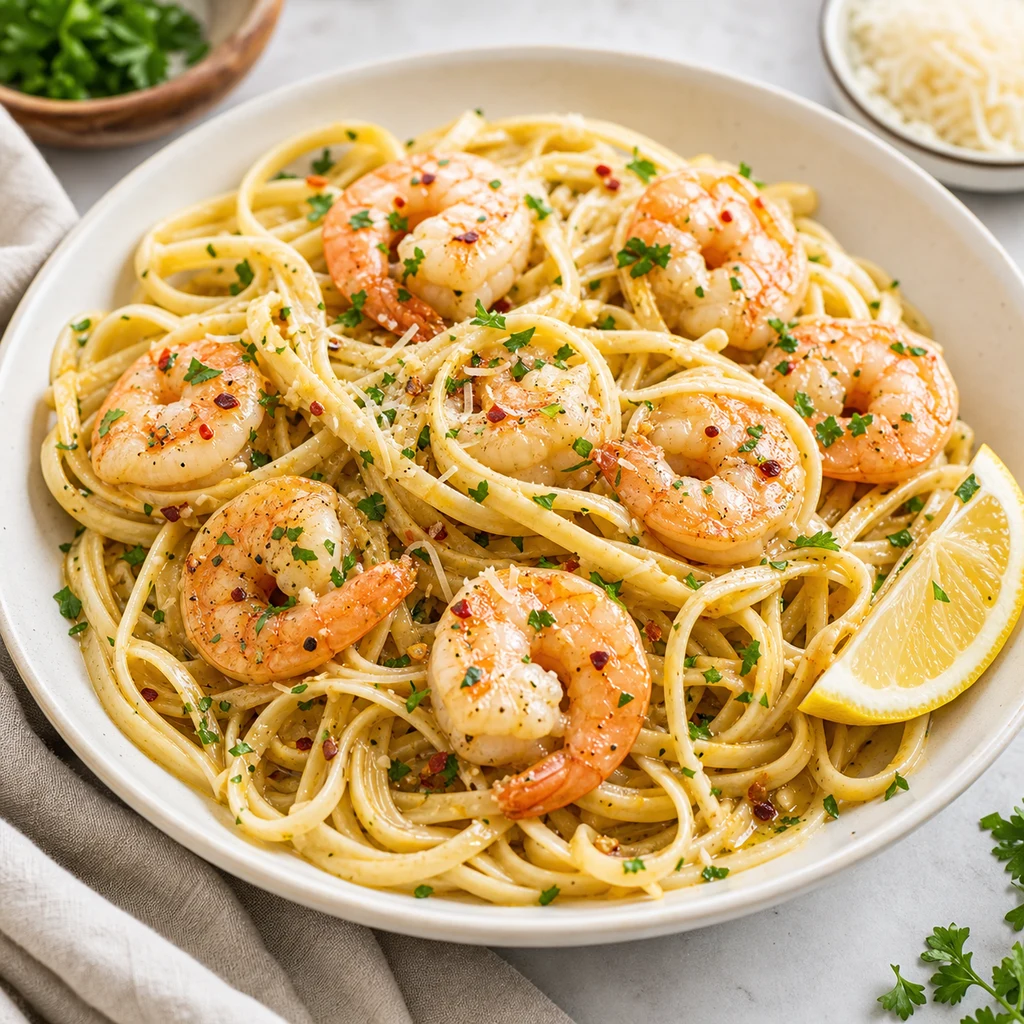
Serve immediately with extra parsley, lemon wedges, and Parmesan if you like it. Shrimp scampi is best right after tossing because the shrimp stay tender and the sauce is still glossy.
A simple green salad, roasted asparagus, or crusty bread works well on the side. Keep the sides simple so the lemon-garlic flavor stays the focus.
If you are cooking for guests, prep everything before anyone arrives and wait to cook until close to serving time. The whole dish comes together quickly, and it tastes far better freshly tossed than held warm on the stove.
Wine-Free and Variation Options
To make shrimp scampi without wine, use chicken broth and add a little extra lemon at the end. For more heat, increase the red pepper flakes slightly. For extra vegetables, add spinach near the end or serve roasted vegetables on the side rather than crowding the skillet.
If you want a lighter version, reduce the butter slightly and lean on pasta water for gloss. If you want a richer version, finish with a small extra pat of butter after turning off the heat.
Storage and Reheating
Store leftovers in an airtight container in the refrigerator for up to 2 days. Reheat gently in a skillet with a splash of water or broth. High heat can make shrimp rubbery, so warm slowly and stop as soon as the pasta is hot.
Shrimp scampi is not ideal for freezing because both shrimp and pasta can lose texture. It is best as a fresh meal or short-term leftover.
When reheating, separate any large shrimp from the pasta if possible and add them back near the end. Pasta needs a little time to loosen, but shrimp only need gentle warming. This small step protects the texture and keeps leftovers from tasting overcooked.
Tips for Perfect Shrimp Scampi
- Pat shrimp dry before cooking.
- Cook shrimp in one layer and remove them before making the sauce.
- Save pasta water before draining the noodles.
- Keep garlic from browning too much.
- Toss pasta over heat until glossy, then serve right away.
More Seafood and Pasta Ideas
For more dinner ideas, try Broccoli and Cheese Stuffed Tilapia, 15-Minute Garlic Butter Shrimp Pasta, Easy Lo Mein Recipe, or browse more Food & Drink recipes.
Shrimp Scampi Recipe is at its best when it stays quick and bright. Cook the shrimp gently, protect the garlic from burning, and let the pasta water pull the sauce together.