

Quick and Easy Ramen Carbonara is a fast noodle dinner built around a simple idea: borrow the creamy, peppery comfort of carbonara and apply it to a pack of ramen noodles without pretending it is the traditional Roman dish. It is quick, inexpensive, and satisfying, but it still needs a little care. The difference between silky noodles and scrambled egg comes down to heat, timing, and a few spoonfuls of reserved noodle water.
RECIPE CARD
Quick and Easy Ramen Carbonara
Ingredients
- 1 package instant ramen noodles, seasoning packet removed or saved for another use
- 1 large egg, at room temperature if possible
- 1/3 cup finely grated Parmesan cheese, plus more for serving
- 2 slices bacon, chopped into small pieces
- 1 small garlic clove, minced
- 1/4 to 1/3 cup reserved noodle water, added gradually
- Freshly cracked black pepper, to taste
- 1 teaspoon olive oil, only if your bacon is very lean
- Chopped parsley or scallions, optional, for serving
Quick Method
Condensed overview. Use Full Instructions for the complete method, timing and doneness details.
- Read through once before you start. Ramen moves fast, so having the egg mixture whisked and the bacon ready makes the toss step much…
- Cook the Noodles and Save the Water: Bring a small pot of water to a boil. Add the ramen noodles and cook just until loosened and tender, usually 2 to 3…
- Before draining, scoop out at least 1/3 cup of reserved noodle water. This is the small detail that makes the sauce work. Drain the…
- Crisp the Bacon and Soften the Garlic: Add the chopped bacon to a skillet over medium heat. Cook until the edges are crisp and the fat has rendered. If the skillet…
- Lower the heat and add the minced garlic for 20 to 30 seconds. Stir constantly. Garlic should smell fragrant, not browned. Burnt garlic can…
- Whisk the Egg-Parmesan Sauce: In a bowl, whisk the egg, Parmesan, and plenty of black pepper until the mixture looks thick and even. Add 1 tablespoon of reserved…
- The sauce will look almost too thick at first. That is fine. More noodle water goes in later, a spoonful at a time, until…
- Toss the Noodles Off Heat: Add the drained ramen noodles to the skillet with the bacon and garlic. Toss once or twice so the noodles pick up the bacon…
- Pour in the egg-Parmesan sauce and toss quickly. Add reserved noodle water 1 tablespoon at a time until the sauce turns creamy and coats…
- Serve While the Sauce Is Glossy: Transfer the ramen carbonara to a bowl right away. Finish with more Parmesan, black pepper, and parsley or scallions if using. The texture is…
- If the noodles sit too long, they will absorb more sauce. That does not ruin the dish, but it does change the texture. A…
This version keeps the ingredient list practical: instant ramen noodles, egg, Parmesan, bacon, garlic, black pepper, and parsley if you want a fresh finish. The seasoning packet stays out of the bowl because bacon and Parmesan already bring salt. What you get instead is a glossy sauce that clings to springy noodles and tastes richer than the short cooking time suggests.
The recipe is meant for busy weeknights, late lunches, small kitchens, dorm-style cooking, and anyone who wants a comforting bowl without making a full pasta dinner. It is also forgiving once you understand the one rule that matters most: take the pan off heat before the egg mixture goes in.
At a Glance
- Prep time: 5 minutes
- Cook time: 10 minutes
- Total time: about 15 minutes
- Serves: 1 to 2
- Skill level: Easy
- Cuisine: Fusion / weeknight comfort
Why Ramen Carbonara Works
Ramen noodles cook fast and release starch into the water. That starchy water is useful because it helps the egg and cheese emulsify into a sauce instead of turning into a clump. In classic carbonara, pasta water does this job. Here, reserved noodle water does the same practical work on a smaller, quicker scale.
Bacon gives the dish smoke, salt, and texture. Parmesan adds savoriness and helps thicken the sauce. Egg gives the sauce body. Black pepper keeps the richness from tasting flat. Garlic is optional in strict carbonara terms, but it works well with ramen and gives the dish a warmer, more familiar weeknight flavor.
It Is Carbonara-Inspired, Not Traditional Carbonara
This is important because it sets the right expectation. Traditional carbonara is usually made with pasta, eggs, Pecorino Romano or Parmesan, guanciale or pancetta, and black pepper. Ramen carbonara is a shortcut noodle bowl inspired by that creamy method. It is not trying to replace the original.
That makes the recipe easier to enjoy for what it is: a smart pantry meal with a creamy sauce, crisp bacon, and enough technique to make it feel considered rather than thrown together.
Ingredients
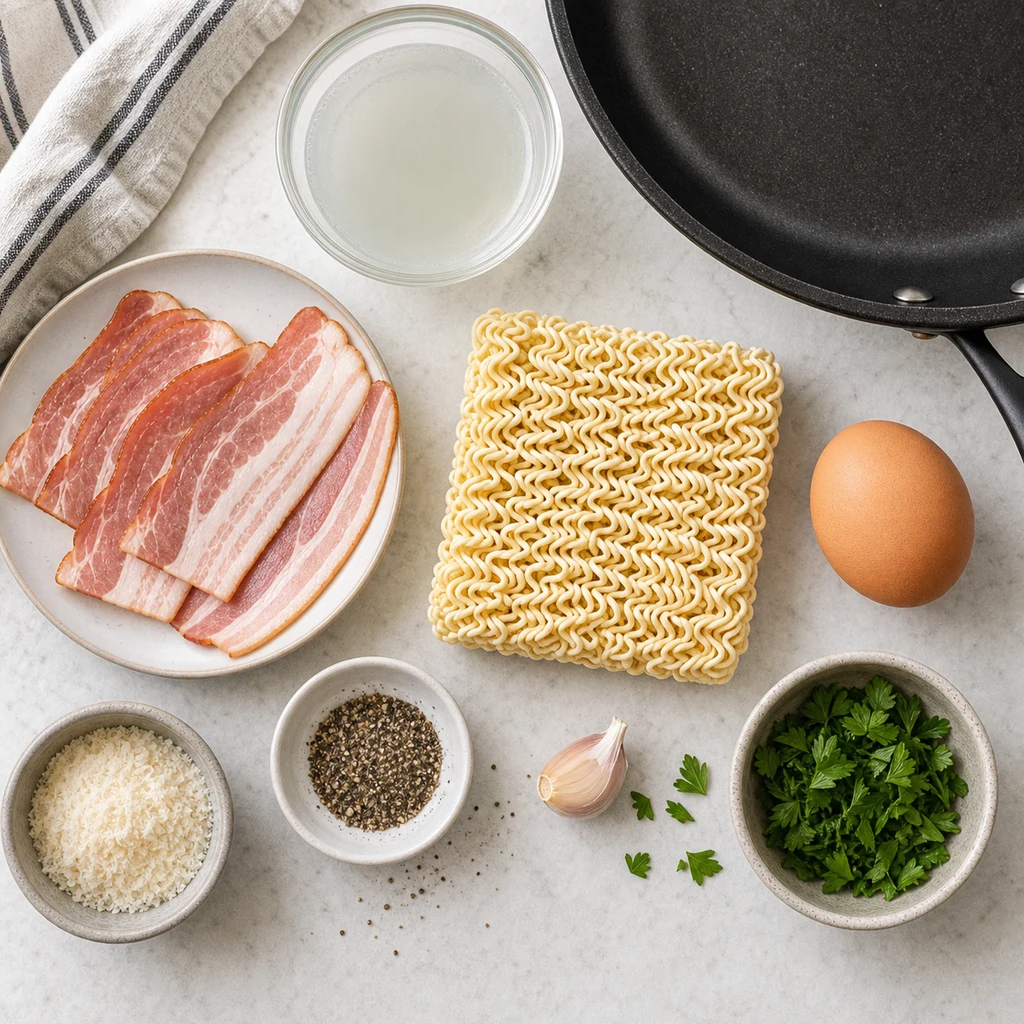
- 1 package instant ramen noodles, seasoning packet removed or saved for another use
- 1 large egg, at room temperature if possible
- 1/3 cup finely grated Parmesan cheese, plus more for serving
- 2 slices bacon, chopped into small pieces
- 1 small garlic clove, minced
- 1/4 to 1/3 cup reserved noodle water, added gradually
- Freshly cracked black pepper, to taste
- 1 teaspoon olive oil, only if your bacon is very lean
- Chopped parsley or scallions, optional, for serving
Ingredient Notes Before You Start
Use finely grated Parmesan, not large shreds. Fine cheese melts into the egg more smoothly and is less likely to form stringy pockets. If your Parmesan is very salty, start with less and add more at the end.
The ramen seasoning packet is usually too salty for this recipe. Bacon, cheese, and noodle water give enough flavor on their own. If you want a little extra depth, add only a tiny pinch from the packet after tasting, not the whole thing.
Room-temperature egg is helpful because it mixes more easily and is less likely to seize when it meets hot noodles. If the egg is cold, the recipe still works, but whisk it thoroughly with the cheese before anything touches the pan.
Step-by-Step Instructions
Read through once before you start. Ramen moves fast, so having the egg mixture whisked and the bacon ready makes the toss step much calmer.
Step 1: Cook the Noodles and Save the Water
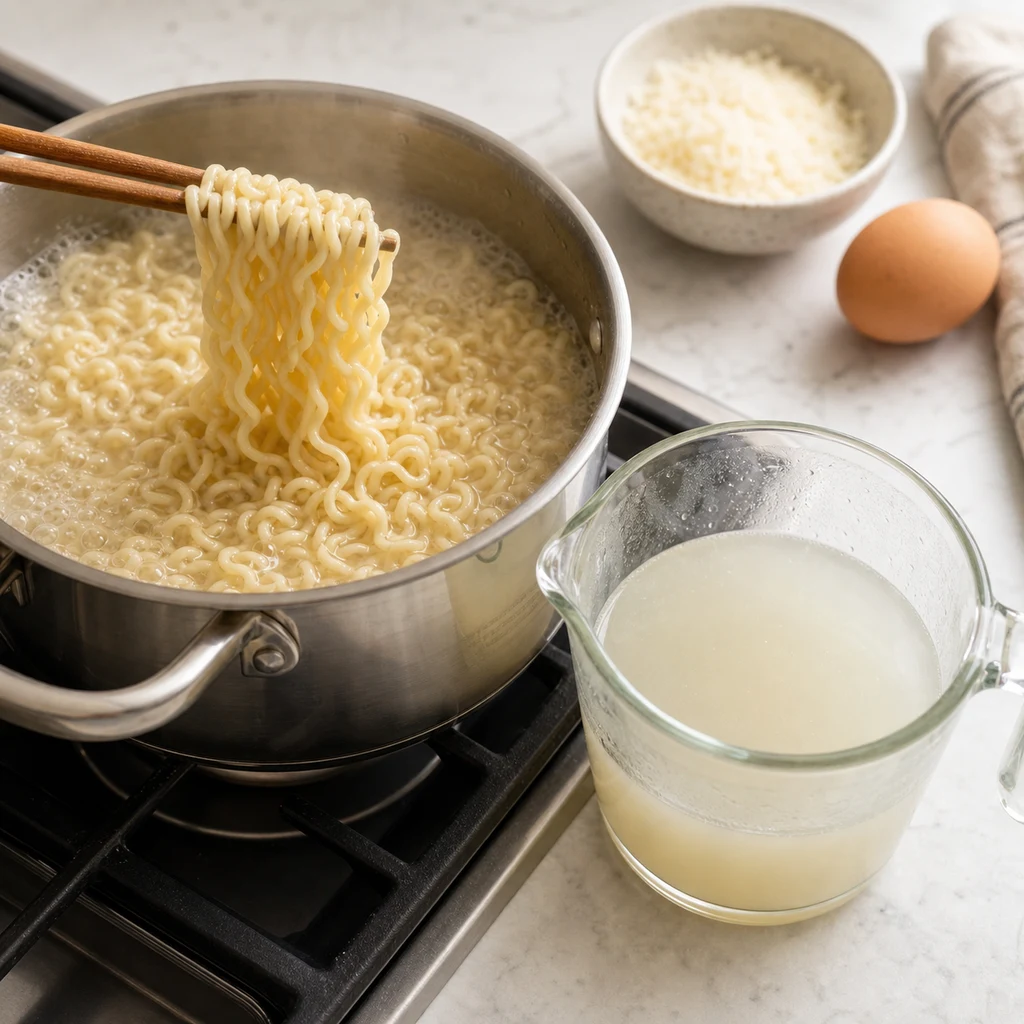
Bring a small pot of water to a boil. Add the ramen noodles and cook just until loosened and tender, usually 2 to 3 minutes. Do not overcook them. Ramen softens quickly, and it will continue to warm through when tossed with the sauce.
Before draining, scoop out at least 1/3 cup of reserved noodle water. This is the small detail that makes the sauce work. Drain the noodles, but do not rinse them. The surface starch helps the sauce cling.
Step 2: Crisp the Bacon and Soften the Garlic
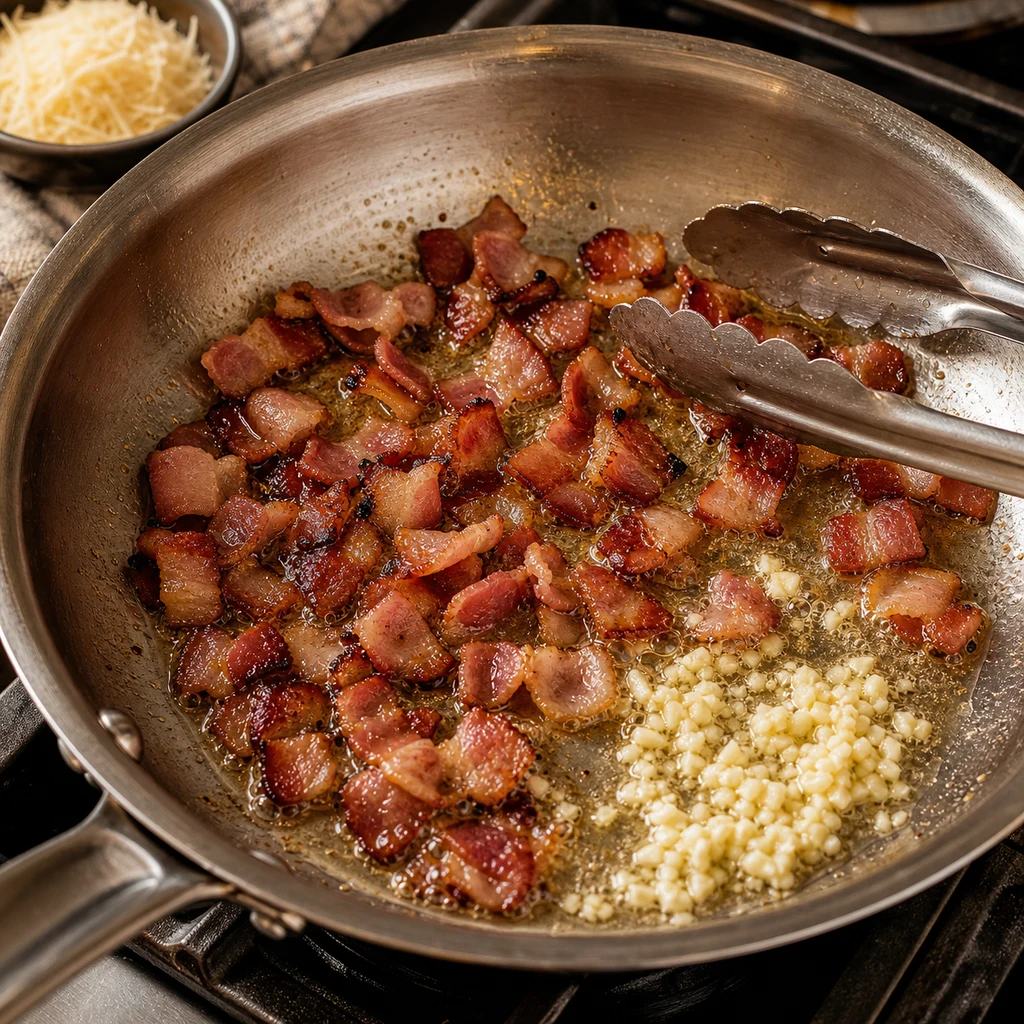
Add the chopped bacon to a skillet over medium heat. Cook until the edges are crisp and the fat has rendered. If the skillet looks dry, add a teaspoon of olive oil, but most bacon will release enough fat on its own.
Lower the heat and add the minced garlic for 20 to 30 seconds. Stir constantly. Garlic should smell fragrant, not browned. Burnt garlic can turn the whole bowl bitter, and because this recipe is so simple, there is nowhere for that bitterness to hide.
Step 3: Whisk the Egg-Parmesan Sauce
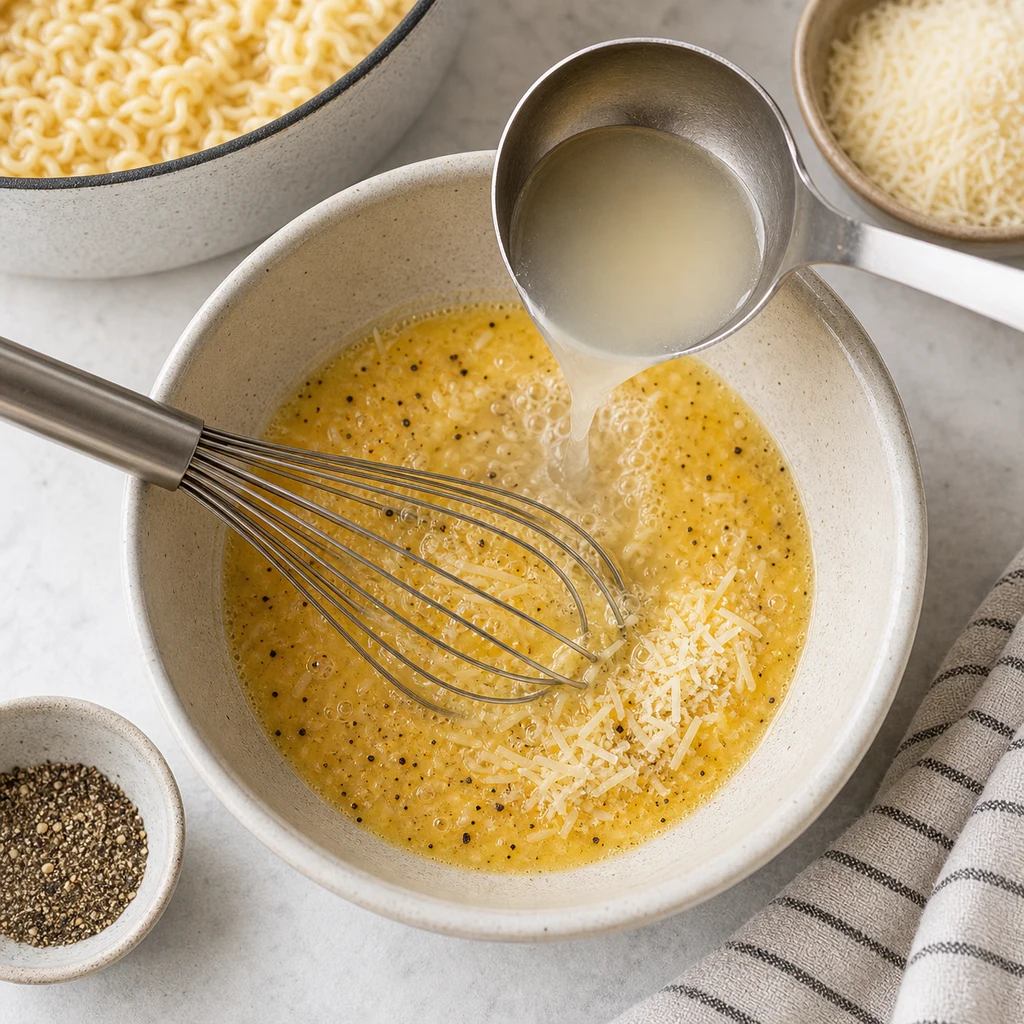
In a bowl, whisk the egg, Parmesan, and plenty of black pepper until the mixture looks thick and even. Add 1 tablespoon of reserved noodle water and whisk again. This small splash loosens the sauce before it hits the hot noodles.
The sauce will look almost too thick at first. That is fine. More noodle water goes in later, a spoonful at a time, until the noodles turn glossy. Adding all the water too early can make the sauce thin before the cheese has a chance to emulsify.
Step 4: Toss the Noodles Off Heat
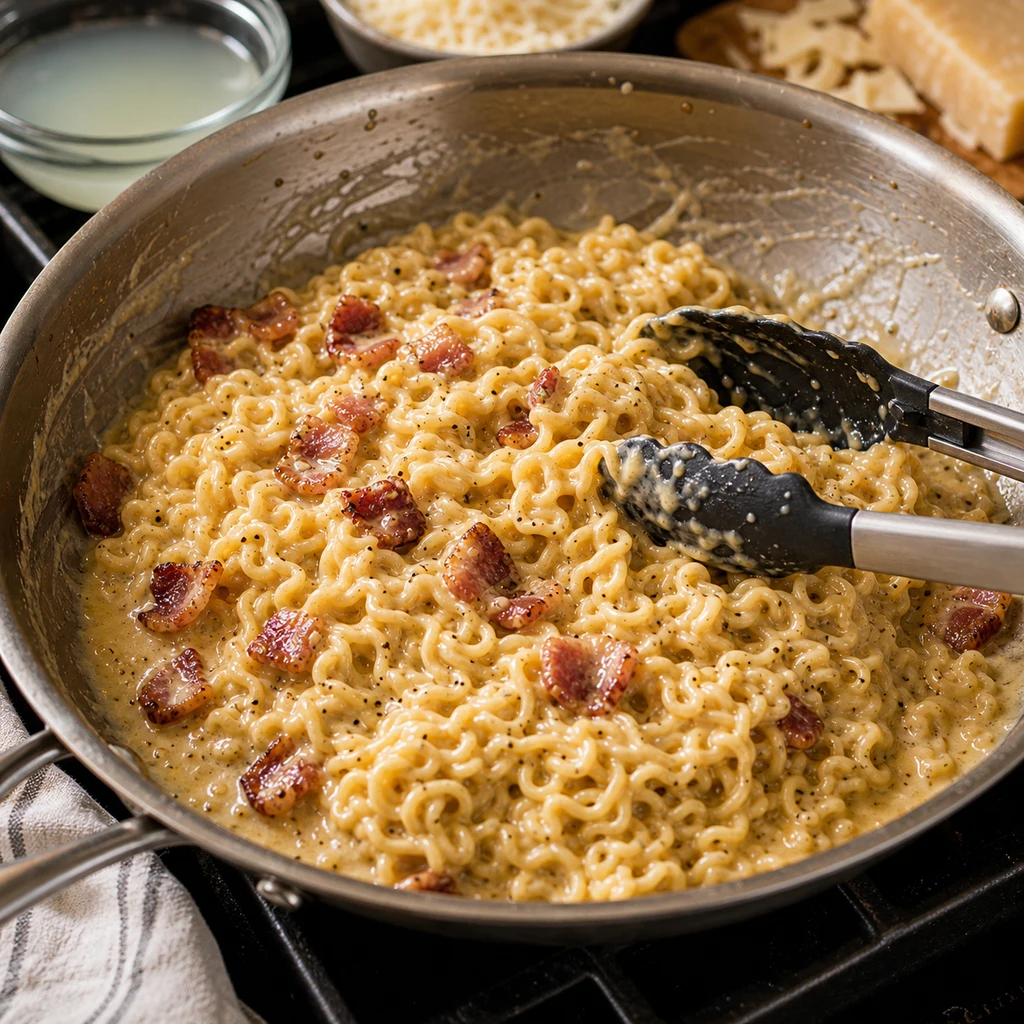
Add the drained ramen noodles to the skillet with the bacon and garlic. Toss once or twice so the noodles pick up the bacon fat. Then remove the skillet from the heat. This is the safest moment to add the egg mixture.
Pour in the egg-Parmesan sauce and toss quickly. Add reserved noodle water 1 tablespoon at a time until the sauce turns creamy and coats the noodles. If the pan starts sizzling loudly after the sauce goes in, move the noodles to a bowl and continue tossing there. Gentle residual heat is enough.
Step 5: Serve While the Sauce Is Glossy
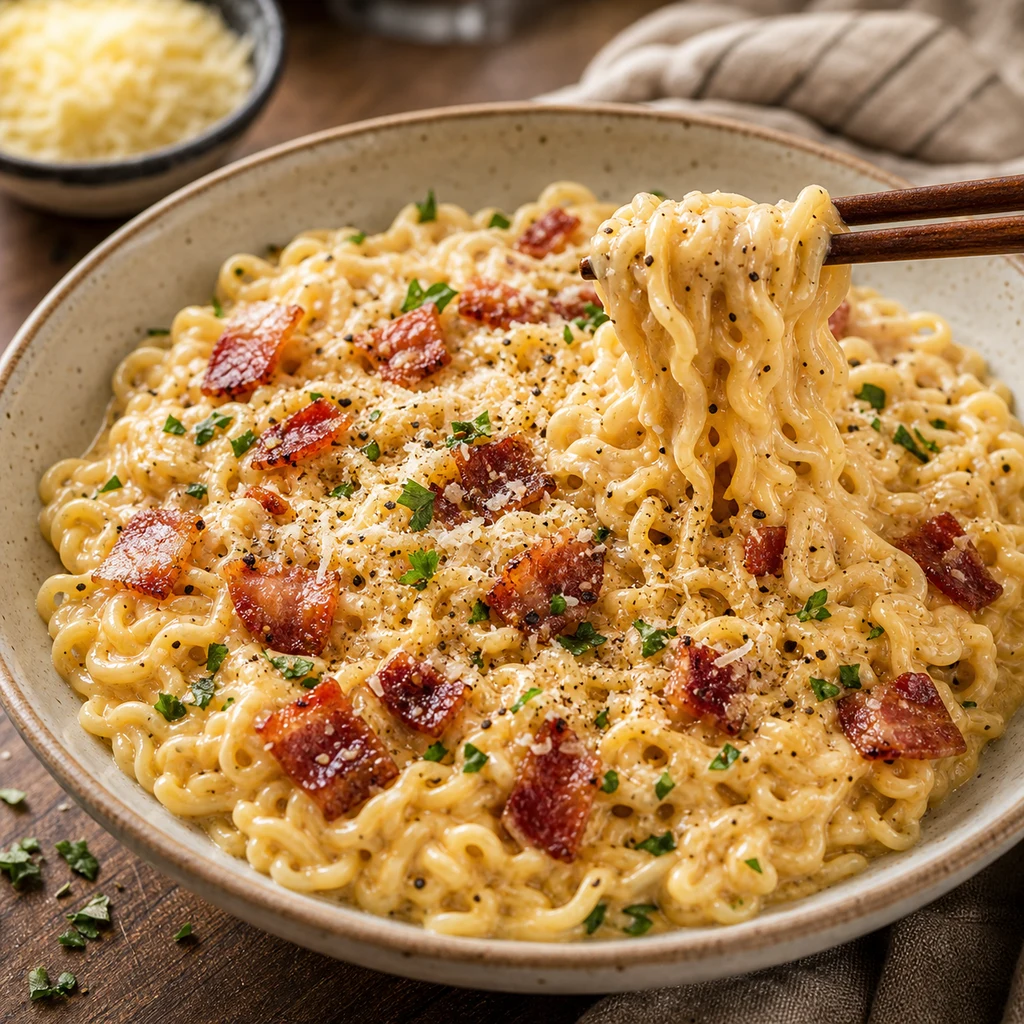
Transfer the ramen carbonara to a bowl right away. Finish with more Parmesan, black pepper, and parsley or scallions if using. The texture is best when served immediately, while the sauce is still loose and the noodles are springy.
If the noodles sit too long, they will absorb more sauce. That does not ruin the dish, but it does change the texture. A tiny splash of hot noodle water can bring it back if needed.
Tips for Creamy Ramen Carbonara
The sauce should never be cooked like a scrambled egg. It should be warmed by the noodles and thinned with reserved noodle water. If you remember only one instruction, remember this: sauce off heat, toss fast, loosen gradually.
- Use fine cheese: finely grated Parmesan melts faster than coarse shreds.
- Keep water nearby: add reserved noodle water in small spoonfuls until the texture looks glossy.
- Avoid high heat: the pan should be hot, not actively frying the egg.
- Work quickly: ramen cools and thickens fast, so have everything ready before draining the noodles.
Common Mistakes and Easy Fixes
The sauce scrambled
The pan was probably too hot. Next time, remove the skillet from the burner before adding the egg mixture. For the current bowl, add a splash of hot water and toss. It will not become perfectly smooth, but it can still taste good.
The noodles turned dry
Add more reserved noodle water, one tablespoon at a time. Ramen absorbs sauce quickly, so a bowl that looks perfect in the skillet can tighten after a minute or two.
The dish tastes too salty
The ramen seasoning packet, salty bacon, or salty cheese may be the reason. Use no seasoning packet, choose a slightly milder bacon, and taste before adding extra cheese.
The sauce is thin
Let the noodles sit for 30 seconds, then toss again. If it is still too loose, add a small spoonful of Parmesan. Thin sauce usually means too much water was added too quickly.
Easy Variations
Once the basic method feels comfortable, the recipe can shift in several directions without losing its quick-dinner appeal.
- Spicy ramen carbonara: add chili crisp, red pepper flakes, or a little gochujang to the finished bowl.
- Mushroom version: cook sliced mushrooms in the bacon fat before adding the noodles.
- Pea and bacon version: add frozen peas to the noodle pot during the last 30 seconds of cooking.
- No-bacon option: use sauteed mushrooms and a little olive oil, then season carefully because the bacon salt will be missing.
- Extra creamy version: add one teaspoon of butter when tossing the noodles, but keep the heat gentle.
What to Serve With Ramen Carbonara
This bowl is rich, so the best sides are crisp, fresh, or bright. A simple cucumber salad, roasted broccoli, steamed greens, or a handful of arugula with lemon works well. If you want another quick noodle idea for a different night, try spicy ramen noodle stir-fry in 15 minutes.
For a creamy dinner with a more classic pasta feel, creamy garlic mushroom pasta fits the same comfort-food mood. If you want something fast but a little lighter, 15-minute garlic butter shrimp pasta is a good companion recipe. You can also browse more Food & Drink recipes.
Storage and Reheating
Ramen carbonara is best fresh. The noodles continue to absorb sauce in the refrigerator, and egg-based sauces can become thick when reheated. If you do have leftovers, store them in an airtight container for up to 2 days.
Reheat gently in a skillet over low heat with a splash of water. Stir often and avoid boiling. The goal is to loosen the sauce, not cook the egg again. The microwave works in short bursts, but the texture is usually better on the stovetop.
Final Thoughts
Quick and Easy Ramen Carbonara works because it treats a simple pack of noodles with a little respect. Save the noodle water, keep the egg mixture off direct heat, and season after tasting. Those small choices turn a fast pantry meal into a creamy, peppery bowl that feels intentional, not improvised in a hurry.