
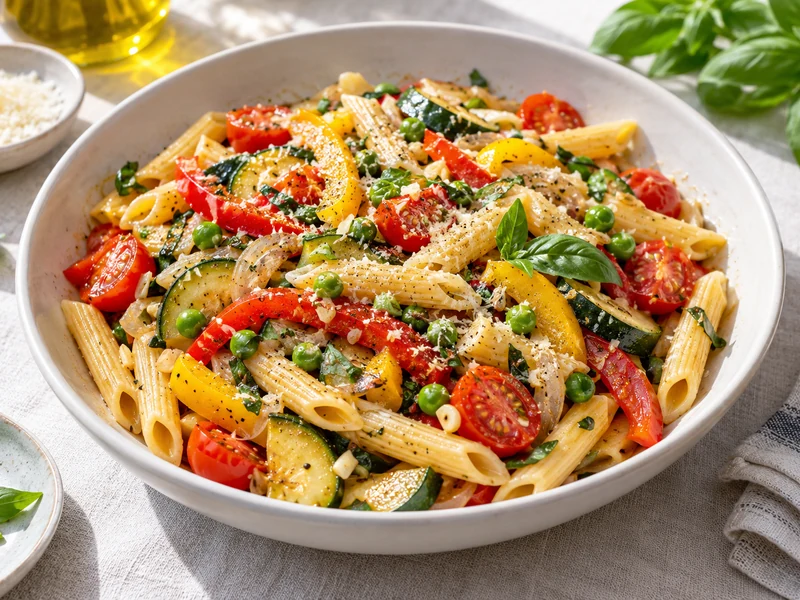
Quick 15-minute veggie pasta is a bright, flexible dinner built from tender pasta, crisp-tender vegetables, garlic, herbs, and a light olive-oil sauce. Bell peppers, zucchini, cherry tomatoes, and peas provide color and texture without requiring a separate sauce. The pasta water ties everything together so every piece tastes seasoned rather than oily.
RECIPE CARD
Quick 15-Minute Veggie Pasta
Ingredients
- 8 ounces (225 grams) penne or other short pasta
- 2 tablespoons olive oil
- 1 small onion, thinly sliced
- 1 bell pepper, thinly sliced
- 1 medium zucchini, cut into half-moons
- 1 cup cherry tomatoes, halved
- 1/2 cup frozen peas
- 2 garlic cloves, minced
- 1 teaspoon dried oregano
- 1/2 teaspoon red pepper flakes, optional
- 3/4 teaspoon fine salt, divided, plus salt for pasta water
- 1/4 teaspoon ground black pepper
- 1/4 cup grated Parmesan, optional
- 1/2 cup fresh basil leaves, torn
- Lemon wedges, optional
Quick Method
Condensed overview. Use Full Instructions for the complete method, timing and doneness details.
- Cook the pasta: Boil the pasta in generously salted water until just al dente. Reserve 1/2 cup pasta water, then drain without rinsing.
- Sauté the firm vegetables: Heat olive oil in a wide skillet over medium-high heat. Cook the onion, bell pepper, and zucchini for 4 to 5 minutes until tender-crisp…
- Add tomatoes, peas, and seasonings: Add garlic, cherry tomatoes, peas, oregano, red pepper flakes, salt, and black pepper. Cook for 1 to 2 minutes until fragrant and warmed through.
- Combine: Add the drained pasta and 2 tablespoons reserved cooking water. Toss over medium heat for 1 minute, adding more water one tablespoon at a…
- Finish and serve: Remove from heat, fold in basil and optional Parmesan, adjust seasoning, and serve immediately with lemon wedges if desired.
The timing works because the vegetables cook while the pasta boils. Prepare everything before the water reaches a full boil, use a wide skillet, and add the vegetables in stages according to how quickly they soften. This keeps the peppers vivid, the zucchini firm, and the tomatoes juicy. For another colorful meatless pasta, save our basil pesto pasta with cherry tomatoes.
Why You’ll Love It
- Fast and coordinated: The pasta and vegetables cook at the same time, putting dinner on the table in about 15 minutes.
- Fresh but satisfying: Colorful vegetables lighten the dish while pasta and optional Parmesan make it filling.
- Easy to customize: You can change the pasta shape, vegetables, heat level, or cheese without changing the core method.
Ingredients and Helpful Substitutions
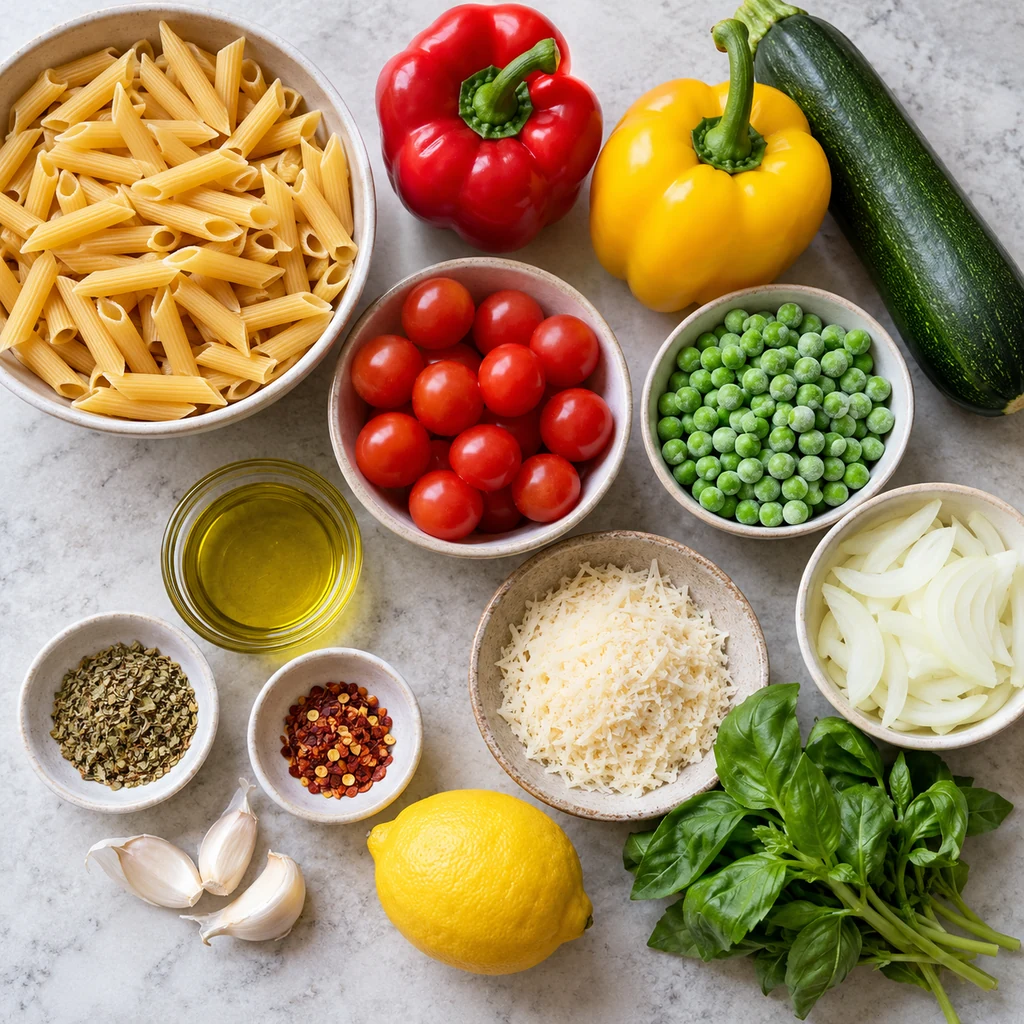
Penne, rotini, bow ties, and small shells all hold the vegetables and light sauce well. Choose a shape with an 8-to-10-minute cooking time if you want the meal to stay within 15 minutes. Whole-wheat or gluten-free pasta also works, but follow its package timing and reserve the cooking water before draining.
Use one red or yellow bell pepper, or half of each for extra color. Cut the pepper and zucchini into pieces of similar thickness so they cook evenly. Frozen peas can go straight into the skillet. Fresh basil is the ideal finish, though parsley is a good substitute. Omit Parmesan or use a dairy-free alternative for a vegan meal.
How to Make 15-Minute Veggie Pasta
Step 1: Cook the Pasta
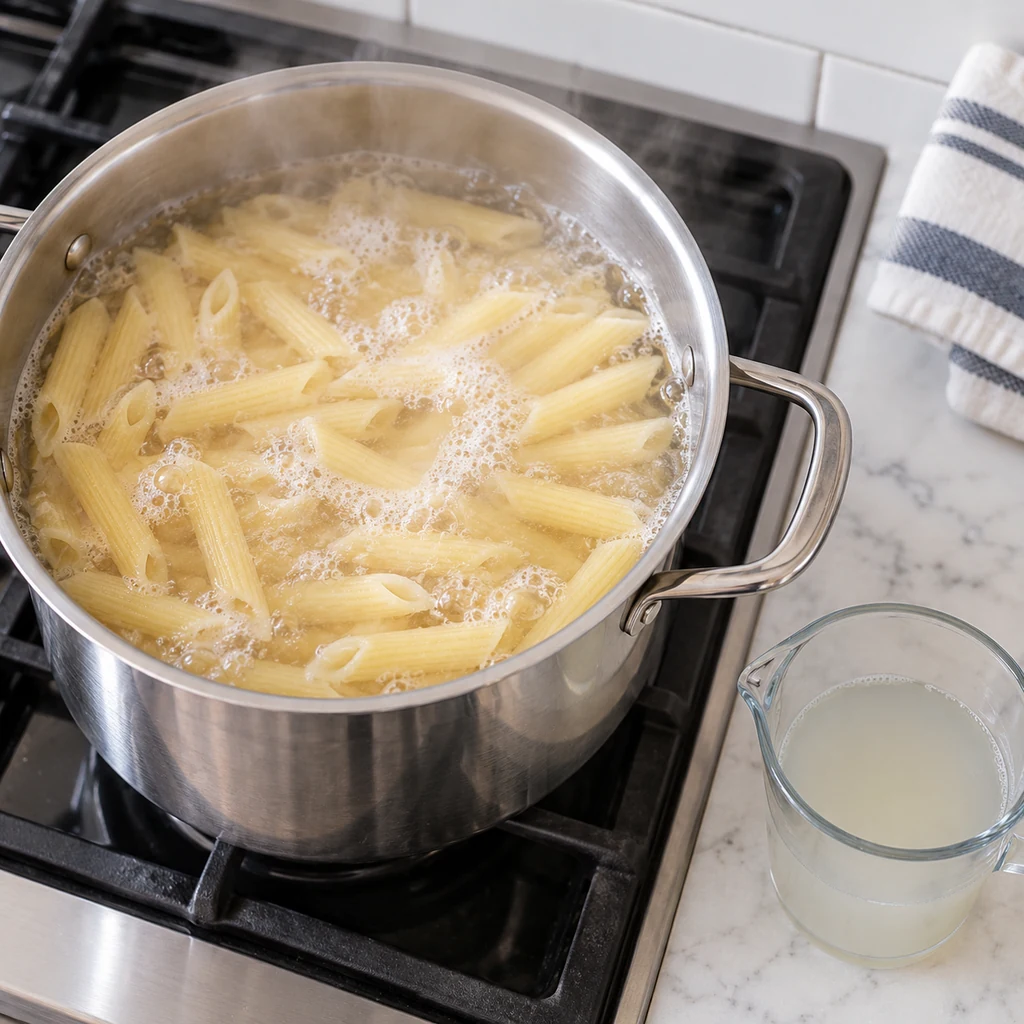
Bring a large pot of water to a vigorous boil and season it generously with salt. Add the pasta and cook according to the package directions until just al dente. Stir during the first minute to prevent sticking. Before draining, scoop out half a cup of the cloudy cooking water, then drain without rinsing.
The starch on the pasta and in the reserved water helps olive oil, tomato juices, and Parmesan form a cohesive coating. Begin the vegetables as soon as the pasta goes into the water. If your chosen shape needs longer than 10 minutes, start the pot a few minutes earlier.
Step 2: Sauté the Firm Vegetables
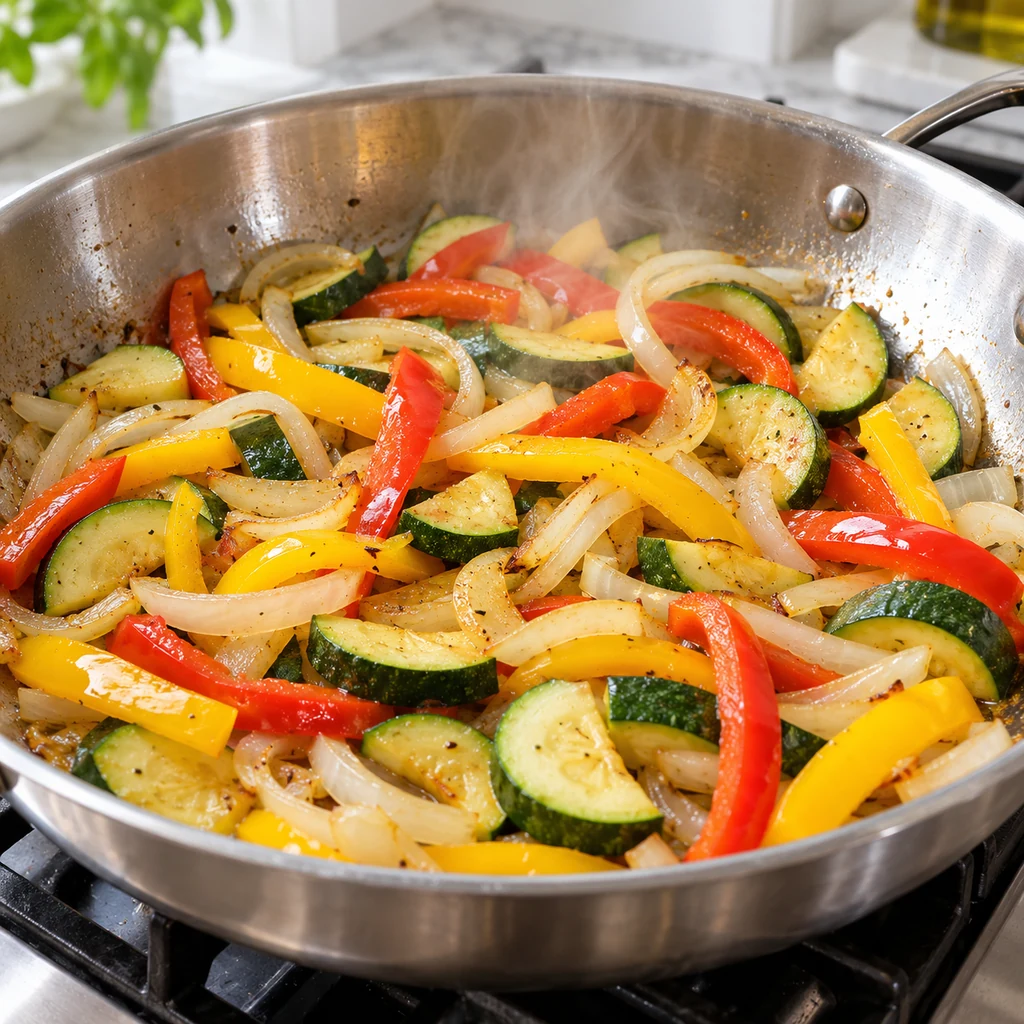
Heat the olive oil in a wide skillet over medium-high heat. Add the sliced onion, bell pepper, and zucchini in an even layer. Cook for four to five minutes, stirring only occasionally so the vegetables can develop golden edges. They should soften slightly but retain their bright color and a little bite.
Do not crowd a small skillet; trapped steam can make zucchini limp. If needed, use two skillets or cook the vegetables in quick batches. Season with a small pinch of salt near the end of this stage. Adding salt too early draws out moisture and slows browning.
Step 3: Add the Quick-Cooking Vegetables
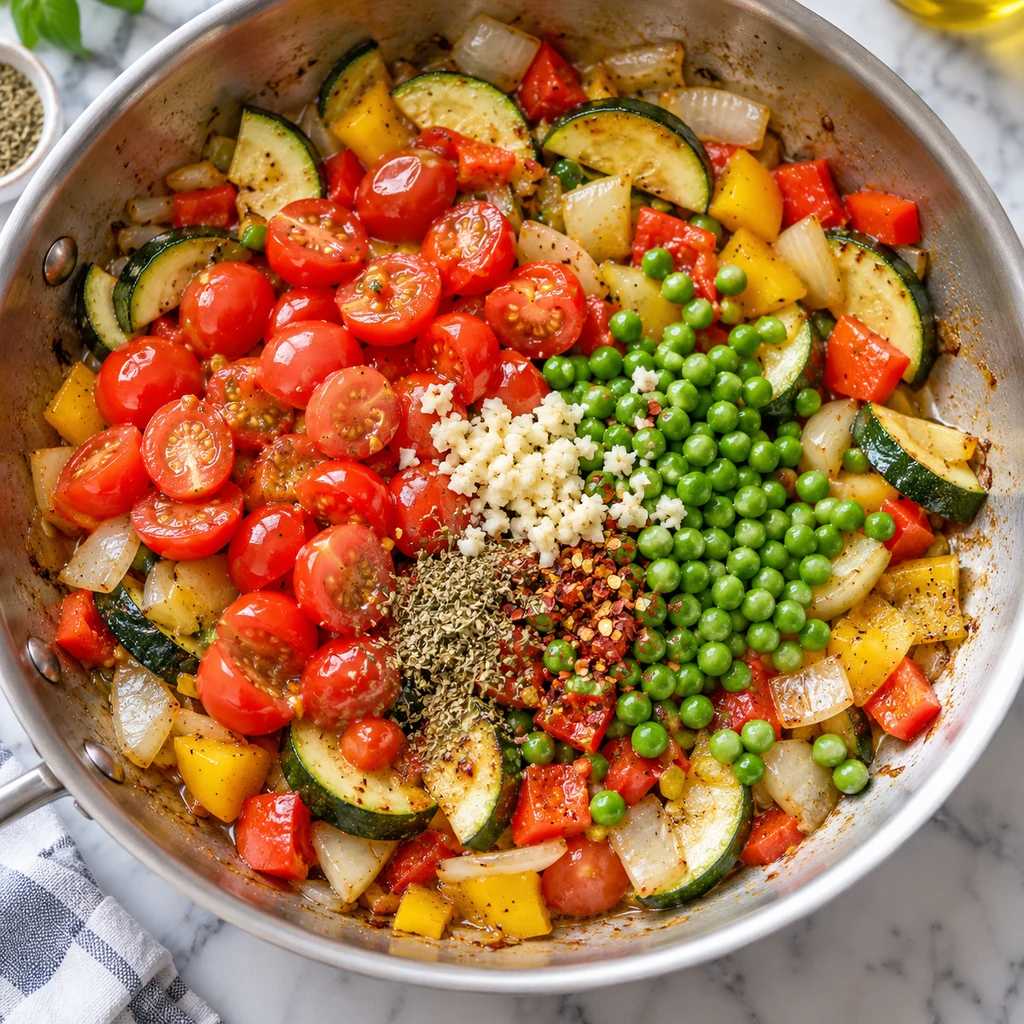
Add the minced garlic, halved cherry tomatoes, frozen peas, oregano, and red pepper flakes. Cook for one to two minutes, stirring gently. The garlic should smell fragrant, the peas should heat through, and the tomato skins should just begin to wrinkle. Keep some tomatoes intact so the finished pasta has fresh, juicy pockets.
Reduce the heat if the garlic begins browning before the tomatoes soften. Taste a pepper or zucchini piece and adjust the salt and black pepper. If you prefer more tomato flavor, press two or three tomato halves against the pan to release their juices while leaving the rest whole.
Step 4: Toss Everything Together
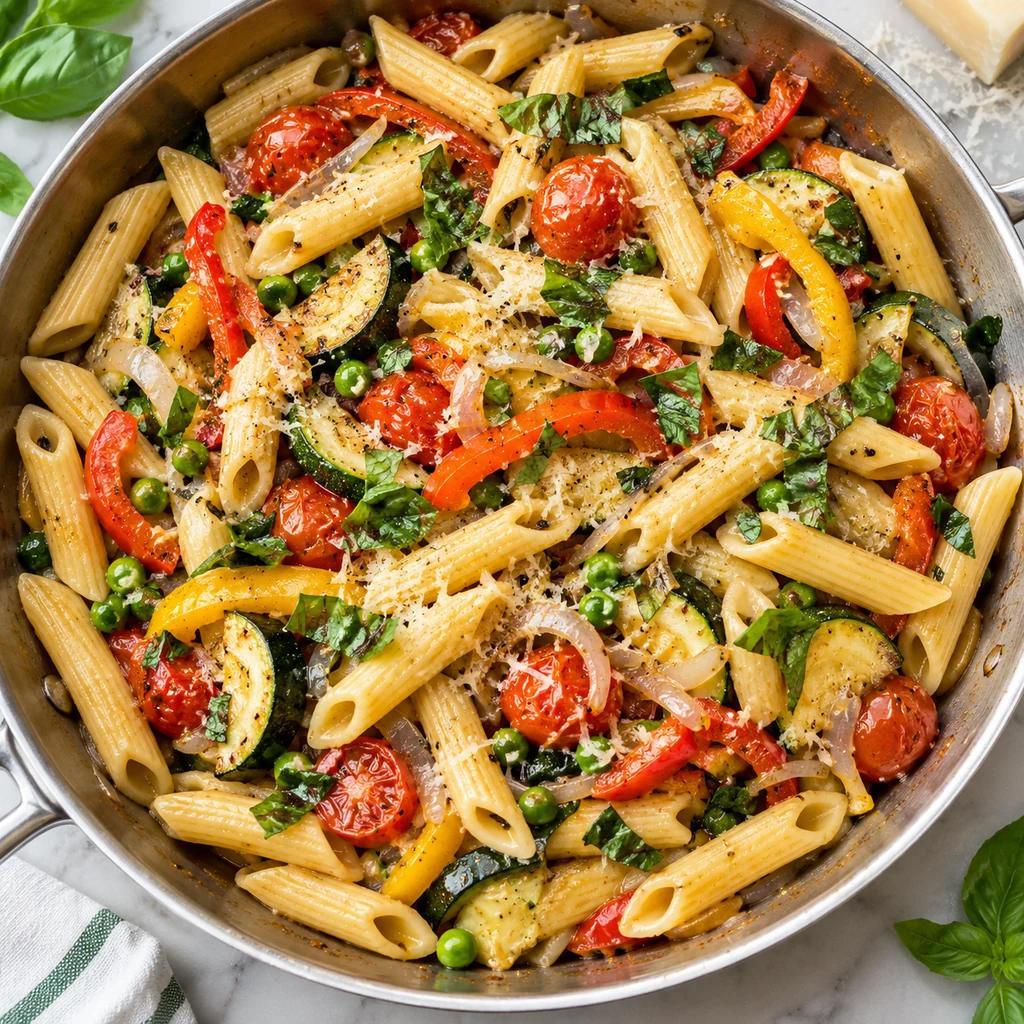
Add the drained pasta to the skillet and pour in two tablespoons of reserved cooking water. Toss over medium heat for about one minute. Add more water one tablespoon at a time until the pasta looks glossy and the vegetables are evenly distributed. The skillet should not contain a pool of liquid.
Remove from the heat and fold in most of the basil. Add Parmesan if using, then taste for salt, pepper, red pepper flakes, or lemon. Serve immediately with the remaining basil. If you like creamy vegetable pasta, our one-pot zucchini mushroom pasta offers a richer variation.
Variations, Storage, and Reheating
Spinach can be folded in during the final toss, while mushrooms should cook with the onion. Broccoli florets can boil with the pasta during its last three minutes. For extra protein, add chickpeas, white beans, tofu, grilled chicken, or shrimp. Keep additions modest so the skillet remains easy to toss.
To stretch the recipe for a larger table, increase the pasta to 12 ounces and add another cup of vegetables. Use a very wide skillet or toss everything in the warm pasta pot so the ingredients mix evenly. Reserve extra cooking water because the larger batch will absorb more moisture.
For a citrus-forward alternative using roasted vegetables, try our zesty lemon orzo with roasted vegetables. This recipe also welcomes seasonal swaps: asparagus in spring, corn in summer, or finely chopped kale in cooler months.
Refrigerate leftovers in an airtight container within two hours and use them within three to four days. Reheat gently in a covered skillet or microwave, adding a splash of water to loosen the pasta. Freezing is not recommended because zucchini and tomatoes become soft after thawing.
Frequently Asked Questions
Can I use different vegetables?
Yes. Choose vegetables with similar cooking times or add them in stages. Mushrooms and broccoli need more time, while spinach, peas, and tender greens should go in near the end.
How do I keep veggie pasta from tasting dry?
Reserve pasta water and add it gradually while tossing. The starch helps the olive oil and vegetable juices cling to the pasta. A final spoonful of Parmesan or olive oil can add richness.
Can I make this recipe vegan?
Yes. The pasta and vegetable base is already dairy-free. Simply omit Parmesan or use a dairy-free hard cheese, and check that the pasta contains no egg if that matters for your diet.