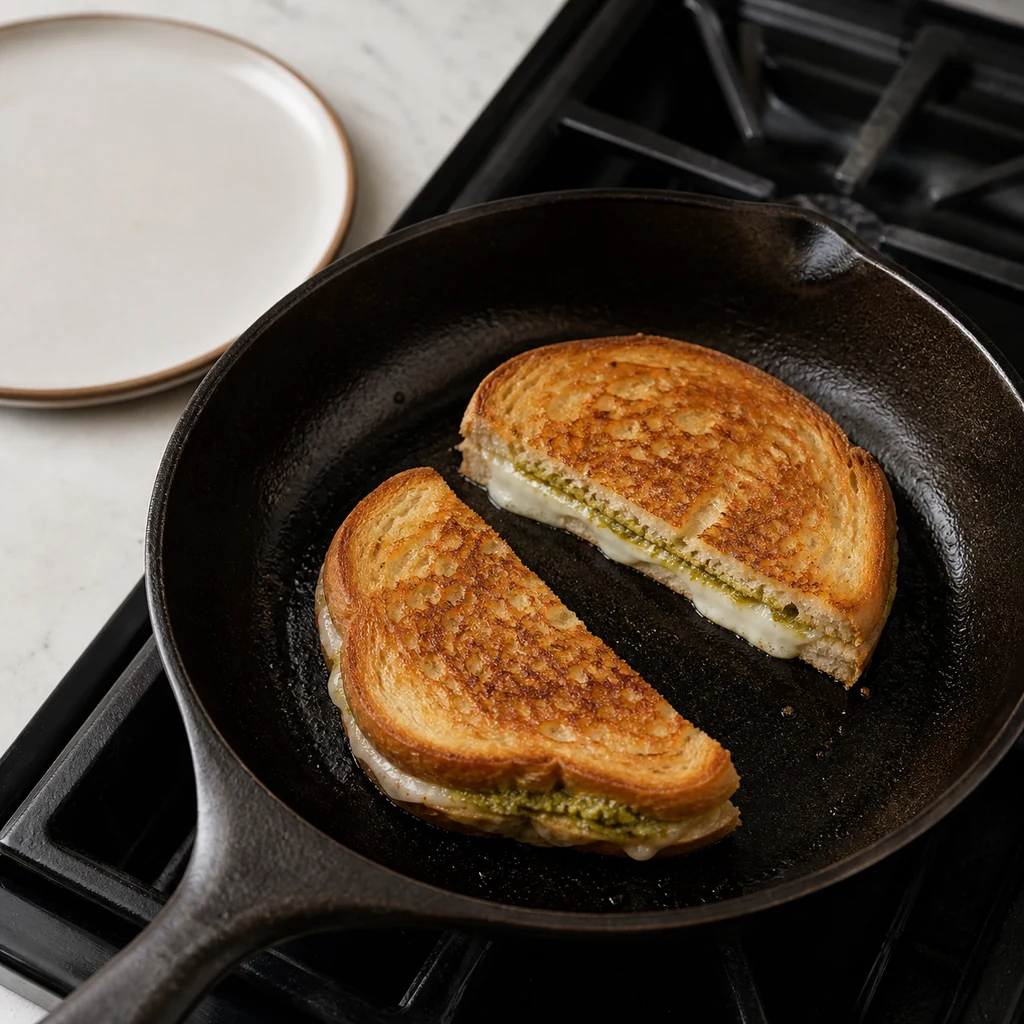
If a classic grilled cheese is the cozy sweater of quick lunches, this Pesto and Mozzarella Grilled Cheese Sandwich is the version you would happily serve to a friend who dropped by at noon. It keeps everything people love about grilled cheese — crisp buttery bread, a warm center, and that first molten bite — but adds the bright, herby lift of basil pesto and the creamy pull of fresh mozzarella. The result is simple enough for a weekday, yet polished enough to feel like a small café lunch at home.
RECIPE CARD
Pesto and Mozzarella Grilled Cheese Sandwich
Ingredients
- 4 slices artisan bread, such as sourdough or ciabatta
- 2 tablespoons softened butter, for the outside of the bread
- 2 tablespoons basil pesto, store-bought or homemade
- 4 slices fresh mozzarella, or about 1 cup shredded mozzarella
- 1/4 cup grated Parmesan cheese, optional
- Optional add-ins: thin tomato slices, baby spinach, or prosciutto
Quick Method
Condensed overview. Use Full Instructions for the complete method, timing and doneness details.
- Butter the Outside of the Bread: Spread a thin, even layer of softened butter on one side of each bread slice, covering the surface edge to edge without piling on…
- Spread the Pesto on the Inside: Turn two slices over so the unbuttered side faces up, then spread 1 tablespoon pesto on each slice, keeping it close to the edges.
- Add Mozzarella and Parmesan: Layer mozzarella evenly over the pesto, patting fresh mozzarella dry first if needed. Sprinkle with Parmesan and add tomato, spinach, or prosciutto if using.
- Assemble and Cook Slowly: Top with the remaining bread, buttered side facing out. Cook in a skillet over medium-low heat for 3 to 4 minutes per side, until…
- Rest, Slice, and Serve: Transfer the sandwiches to a cutting board, rest for 1 minute, slice diagonally, and serve warm with tomato soup, salad, or another simple side.
The secret is balance. Pesto is bold, mozzarella is mild, and artisan bread gives the sandwich enough structure to toast slowly without falling apart. Cook it over medium-low heat, let the cheese melt at the same pace the bread browns, and give the sandwich a brief rest before slicing. That tiny pause keeps the filling from sliding out and makes every half look clean, gooey, and Pinterest-ready.
Why You’ll Love It
- Fast but elevated: It cooks in minutes, but pesto and fresh mozzarella make it taste more thoughtful than a basic sandwich.
- Great texture: Buttered bread turns crisp and golden while the middle stays soft, creamy, and rich.
- Easy to customize: Tomato, spinach, Parmesan, or prosciutto can be added without changing the basic method.
Ingredients
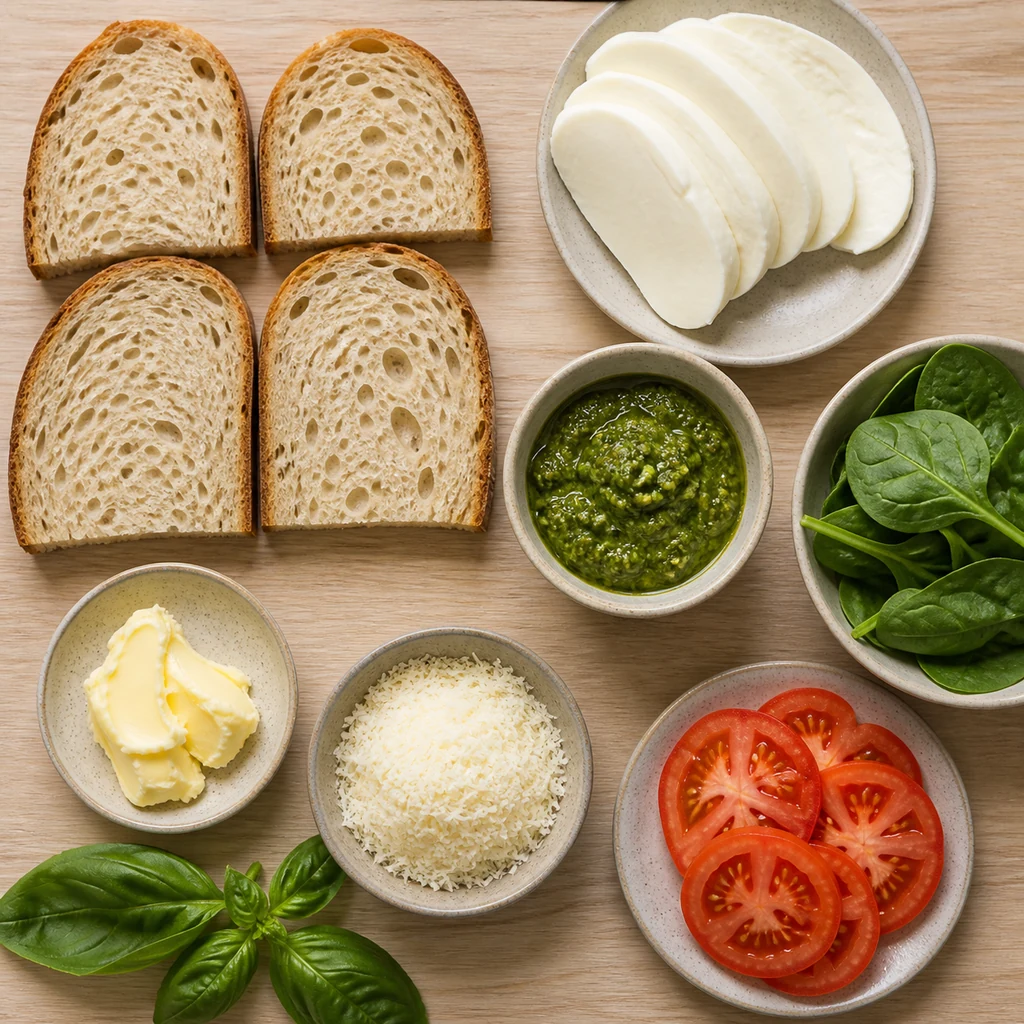
This recipe makes 2 sandwiches. Use bread that is sturdy enough to hold pesto and cheese without becoming soggy. Sourdough is my favorite because the tangy crust works beautifully with basil and mozzarella, but ciabatta or another artisan loaf also works well.
- 4 slices artisan bread, such as sourdough or ciabatta
- 2 tablespoons softened butter, for the outside of the bread
- 2 tablespoons basil pesto, store-bought or homemade
- 4 slices fresh mozzarella, or about 1 cup shredded mozzarella
- 1/4 cup grated Parmesan cheese, optional
- Optional add-ins: thin tomato slices, baby spinach, or prosciutto
Recipe Details
Prep time: 10 minutes
Cook time: 8 minutes
Total time: 18 minutes
Yield: 2 sandwiches
Category: Sandwich
Medium-low heat is the most important detail in this recipe. A hot skillet can brown the bread before the mozzarella has time to soften, especially if you use thick fresh slices. If the bread is deeply golden after only a minute or two, lower the heat. A slower cook gives the butter time to toast the bread evenly while the cheese melts all the way through.
Substitutions & Variations
You can keep the sandwich classic or use the recipe as a flexible base. If fresh mozzarella feels too wet, pat it dry with a paper towel before layering it onto the pesto. Low-moisture mozzarella melts more quickly and gives a stretchier pull, while fresh mozzarella tastes creamier and more delicate. Provolone can be added with mozzarella if you want a sharper, more savory center.
For a Caprese-style version, add thin tomato slices and a few basil leaves, but keep the tomato layer light so the bread stays crisp. Baby spinach adds freshness without overpowering the pesto. Prosciutto brings salty depth, so use it sparingly and skip extra salt. You can also change the bread: sourdough gives tang, ciabatta gives chew, and country white bread gives a softer, diner-style result.

What to Serve With
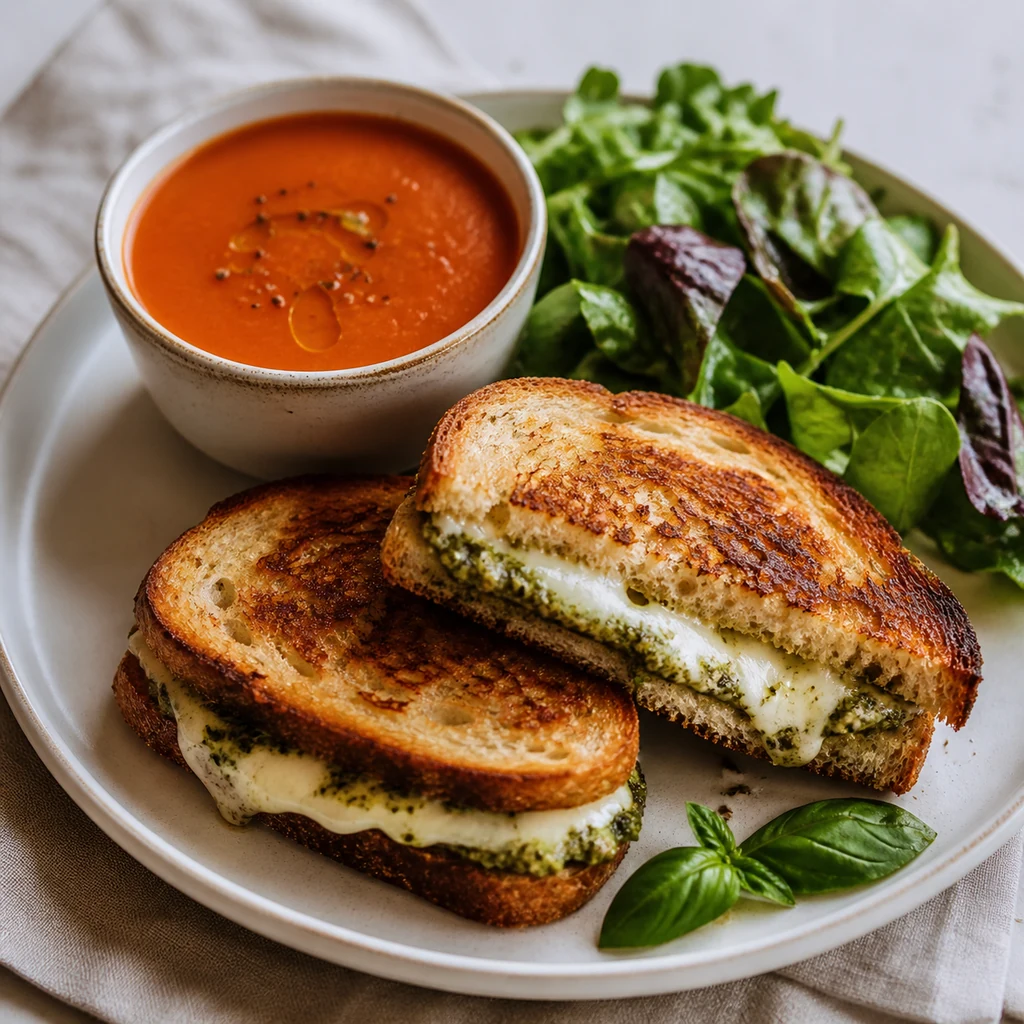
Tomato soup is the classic pairing because its acidity cuts through the richness of butter and mozzarella. A small green salad with lemon vinaigrette also works well, especially if you want the meal to feel lighter. For a heartier plate, serve the sandwich with roasted vegetables, marinated olives, or a simple bowl of minestrone.
If you are making this for lunch, keep the sides bright and not too heavy. Pesto already has oil, herbs, and cheese, so crisp vegetables or a broth-based soup make the plate feel balanced. For a snack board, slice the sandwiches into small triangles and serve them with cherry tomatoes, cucumber, and a little extra pesto for dipping.
Step-by-Step Instructions
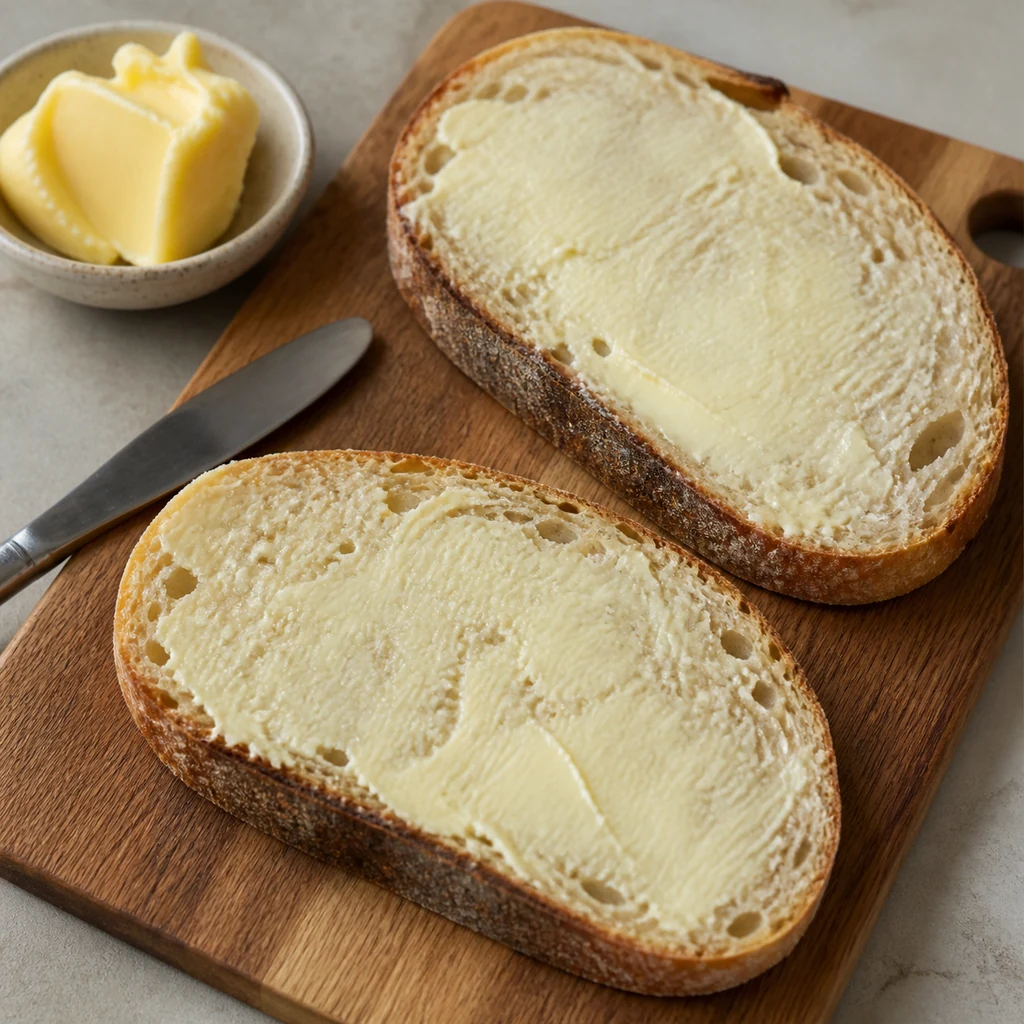
1. Butter the Outside of the Bread
Spread a thin, even layer of softened butter on one side of each bread slice. This buttered side will face the skillet, so cover the surface edge to edge without piling on too much. Too much butter can make the bread greasy before it becomes crisp, while too little can leave dry patches.
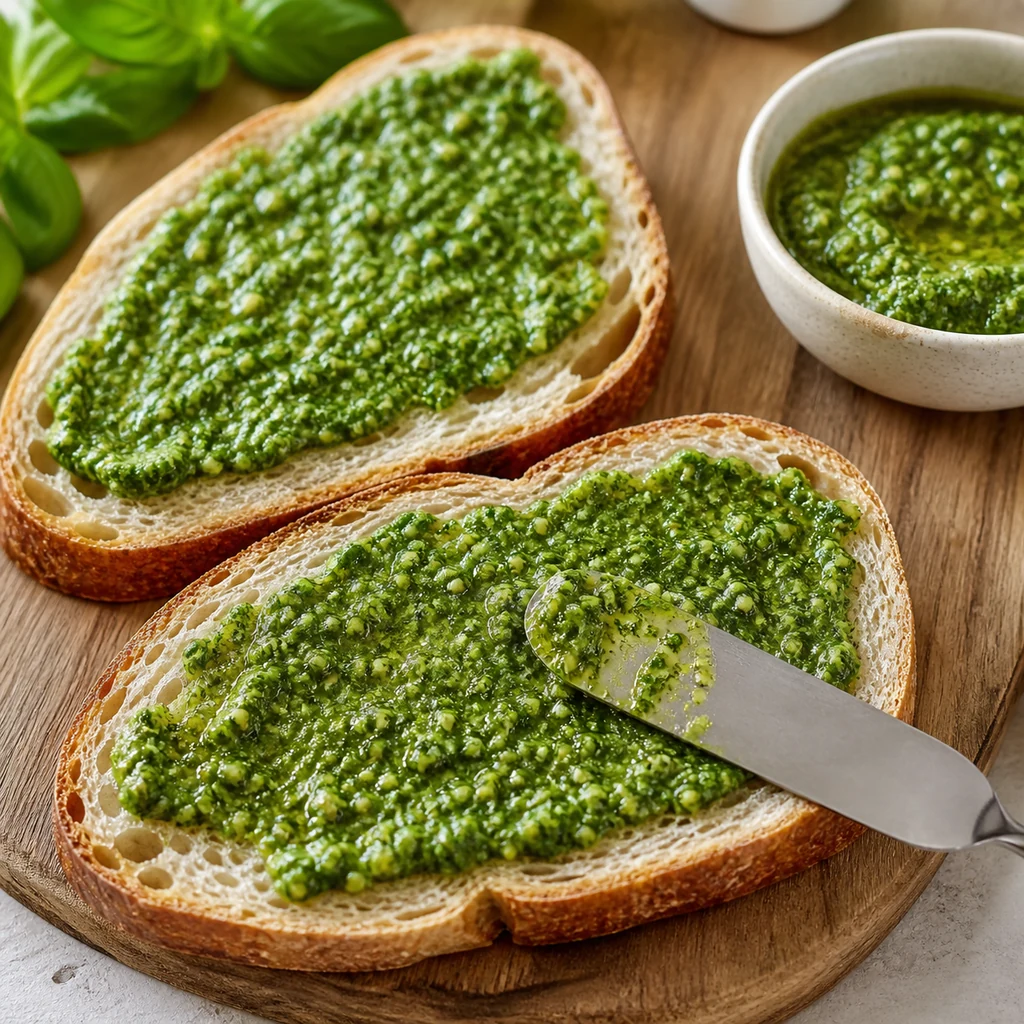
2. Spread the Pesto on the Inside
Turn two slices over so the unbuttered side faces up. Spread 1 tablespoon pesto on each slice, keeping it close to the edges but not dripping over the crust. Pesto is concentrated, so a thin layer is usually enough to flavor the whole sandwich without making the center oily.
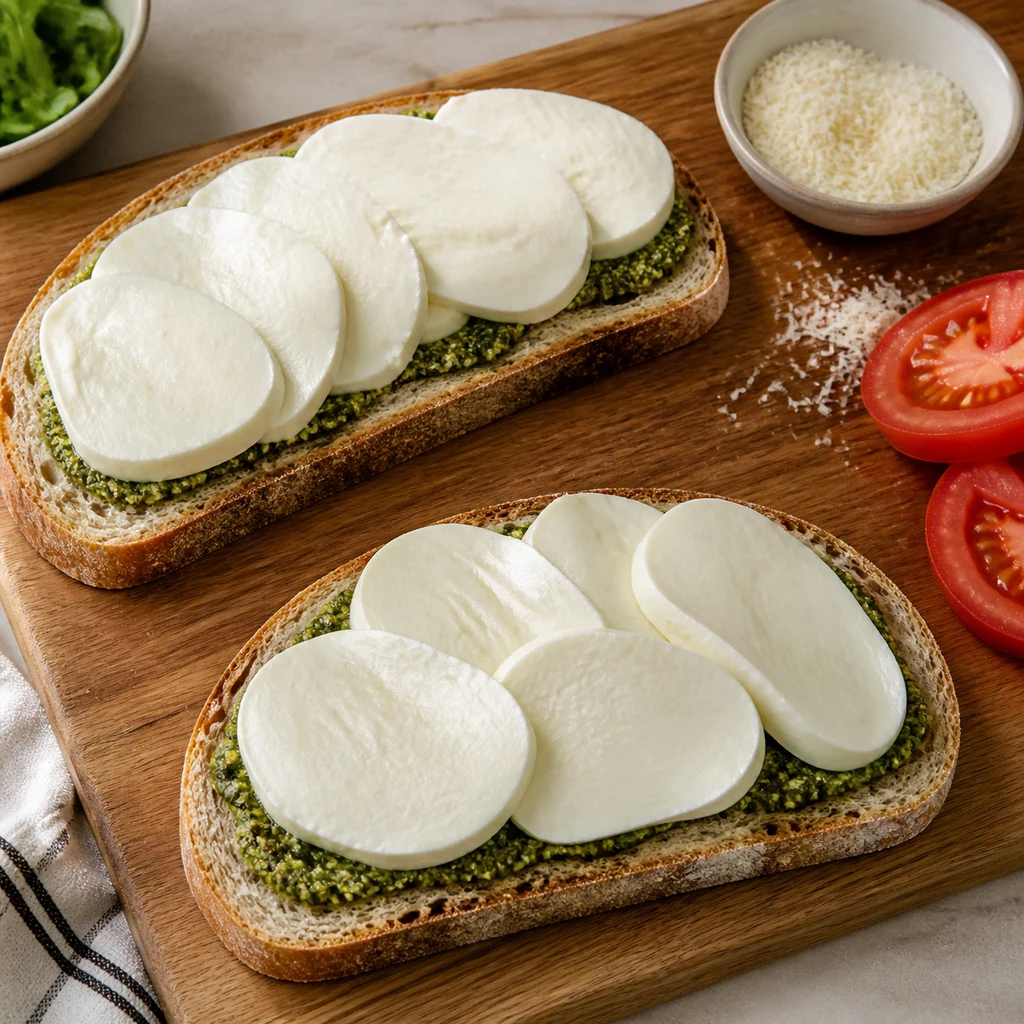
3. Add Mozzarella and Parmesan
Layer the mozzarella evenly over the pesto. If using fresh mozzarella, pat the slices dry first so excess moisture does not soften the bread. Sprinkle Parmesan over the mozzarella if you want a little salty depth. Add tomato, spinach, or prosciutto now, but keep the layers thin so the sandwich closes neatly.
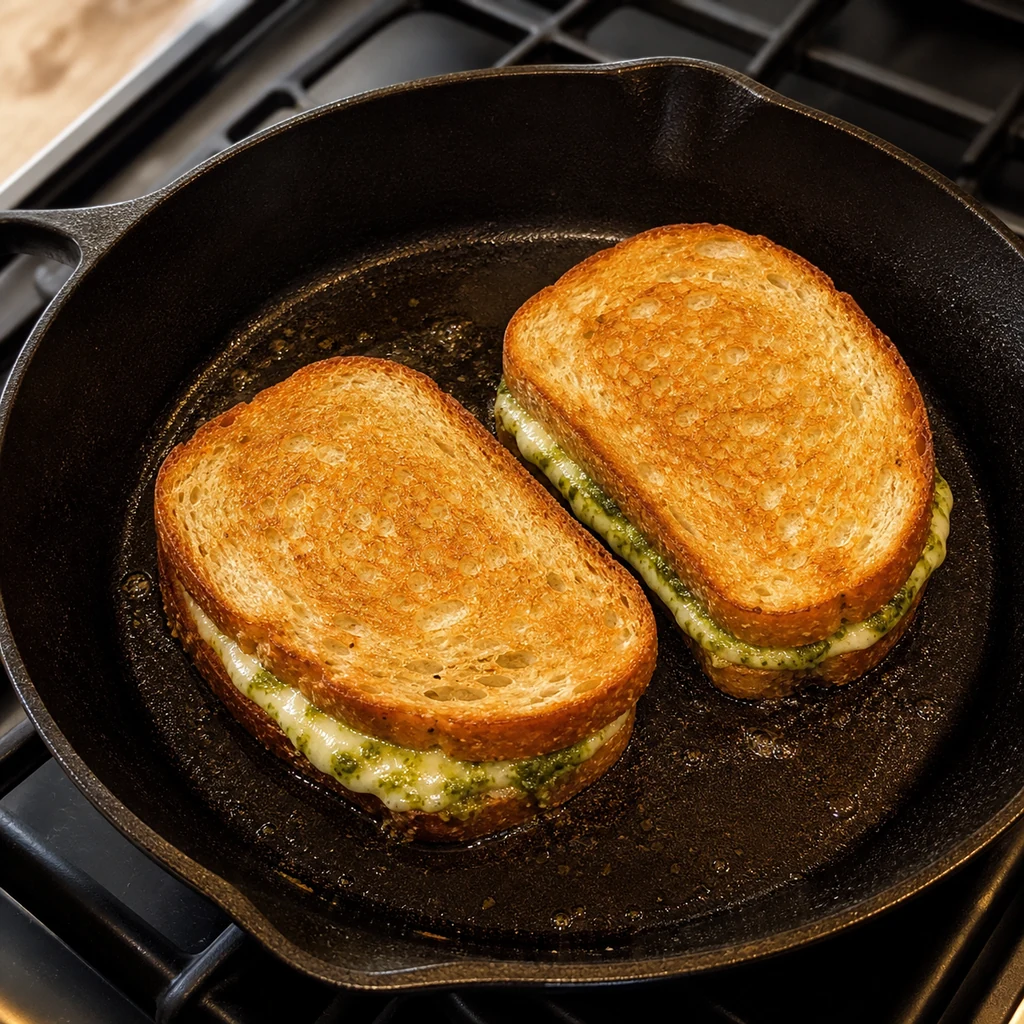
4. Assemble and Cook Slowly
Top each pesto-and-cheese slice with the remaining bread, buttered side facing out. Heat a skillet or griddle over medium-low heat. Place the sandwiches in the skillet and cook for 3 to 4 minutes on the first side, pressing gently with a spatula only once or twice. Flip carefully and cook another 3 to 4 minutes, until both sides are golden and the mozzarella has melted.
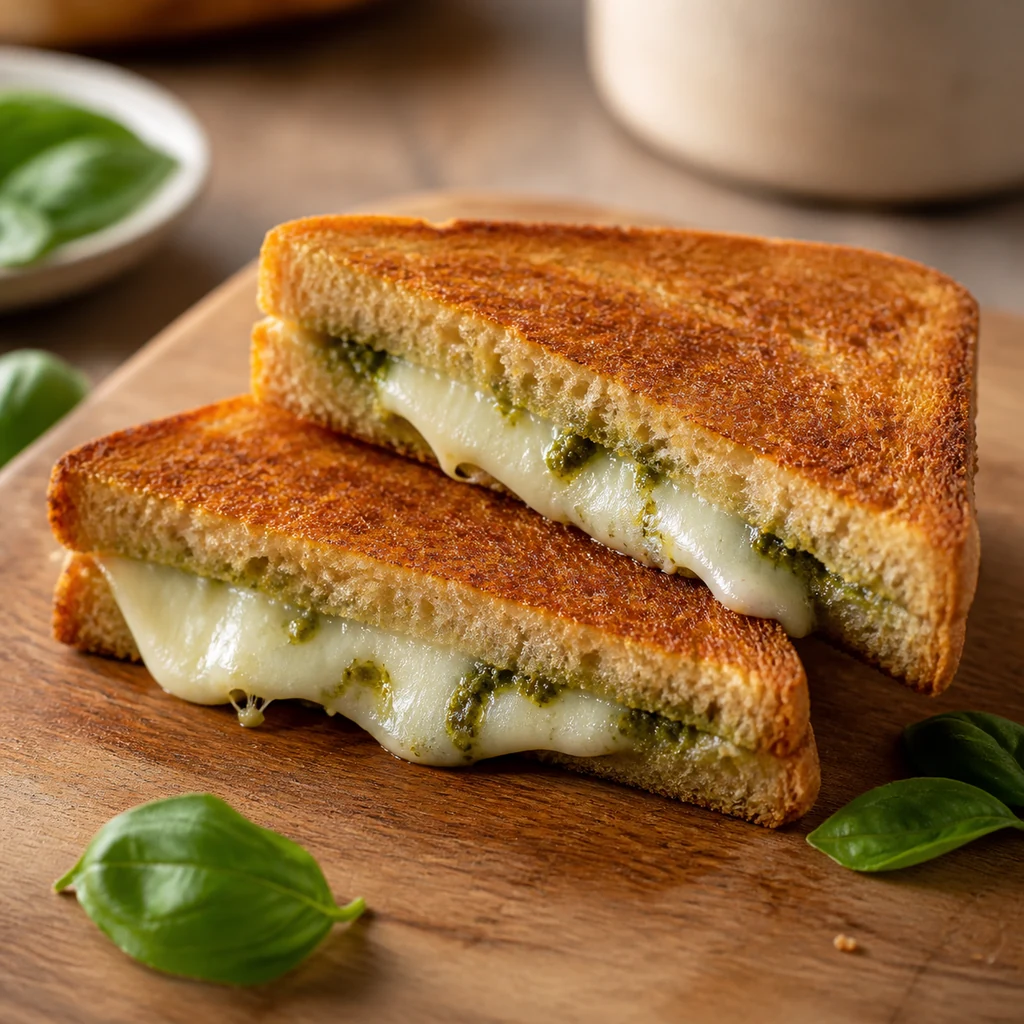
5. Rest, Slice, and Serve
Transfer the sandwiches to a cutting board and let them rest for 1 minute. This short rest helps the melted cheese settle slightly, making the sandwich easier to cut without losing the filling. Slice diagonally and serve warm with tomato soup, salad, or your favorite simple side.
Frequently Asked Questions
Can I use shredded mozzarella instead of fresh mozzarella?
Yes. Shredded mozzarella melts quickly and gives a stretchy texture. Fresh mozzarella tastes creamier, but it should be patted dry before cooking so the sandwich does not become soggy.
Why is my grilled cheese browning before the cheese melts?
The heat is probably too high. Lower the skillet to medium-low and cook more slowly. If the bread is already golden but the cheese still needs time, cover the pan loosely for a minute to trap gentle heat.
Can I make this sandwich ahead?
It is best served fresh, but leftovers can be reheated in a skillet over low heat until the bread becomes crisp again. Avoid microwaving if possible because it softens the crust.