
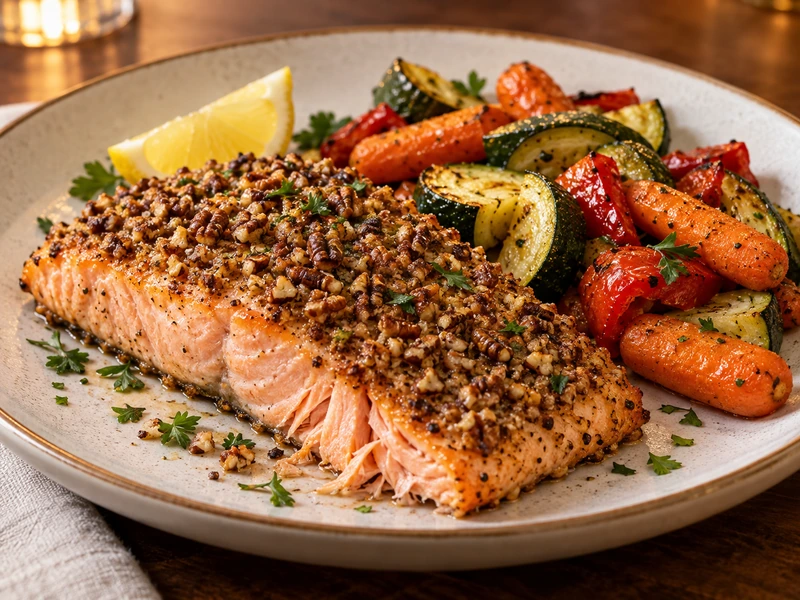
Pecan-crusted salmon with fresh veggie sides turns a sheet-pan dinner into something polished enough for guests. The pecans toast as the salmon bakes, creating a crisp, buttery contrast to the tender fish. Whole-grain mustard, Dijon, and honey hold the crust in place while adding tang and sweetness that complements rather than covers the salmon.
RECIPE CARD
Pecan-Crusted Salmon with Fresh Veggie Sides
Ingredients
- 4 skinless salmon fillets, about 6 ounces each
- 1 cup finely chopped raw pecans
- 1/4 cup whole-grain mustard
- 1 tablespoon Dijon mustard
- 2 tablespoons honey
- 1 medium lemon, zested and cut into 4 wedges
- 1 teaspoon fine salt, divided
- 1/2 teaspoon ground black pepper, divided
- 1 cup baby carrots, halved lengthwise
- 1 medium zucchini, cut into 1/2-inch half-moons
- 1 red bell pepper, cut into 1-inch pieces
- 1 tablespoon olive oil
- 1/2 teaspoon garlic powder
- 2 tablespoons chopped fresh parsley
Quick Method
Condensed overview. Use Full Instructions for the complete method, timing and doneness details.
- Prepare the Oven and Vegetables: Heat the oven to 400°F (204°C) and line two rimmed baking sheets with parchment paper. On the first sheet, combine the carrots, zucchini, and…
- Mix the Glaze and Pecan Crust: While the vegetables begin roasting, stir the whole-grain mustard, Dijon mustard, honey, and all the lemon zest in a small bowl until evenly blended.…
- Season and Coat the Salmon: Pat the salmon dry with paper towels and arrange the fillets on the second lined baking sheet with space between them. Season the fish…
- Roast the Salmon and Vegetables: After the vegetables have roasted for 5 minutes, stir them and return their pan to the oven. Place the salmon pan on the other…
- Check Doneness, Rest, and Serve: Insert an instant-read thermometer into the thickest part of each fillet without pushing through to the pan. For fully cooked salmon, confirm 145°F (63°C),…
This version serves four and pairs the fish with roasted carrots, zucchini, and red bell pepper. Starting the vegetables five minutes before adding the salmon synchronizes their cooking times, so dinner reaches the table in about 40 minutes. The method is organized, colorful, and practical for a weeknight, yet the finished plates have the texture and presentation of a special-occasion meal.
Why You’ll Love It
- Contrasting textures: Toasted pecans form a crisp top while the salmon stays moist and flakes into tender sections.
- One-oven timing: The vegetables get a short head start, then roast beside the salmon at the same temperature.
- Complete dinner: Four measured portions of fish and three vibrant vegetables require no complicated extra side dish.
Ingredients
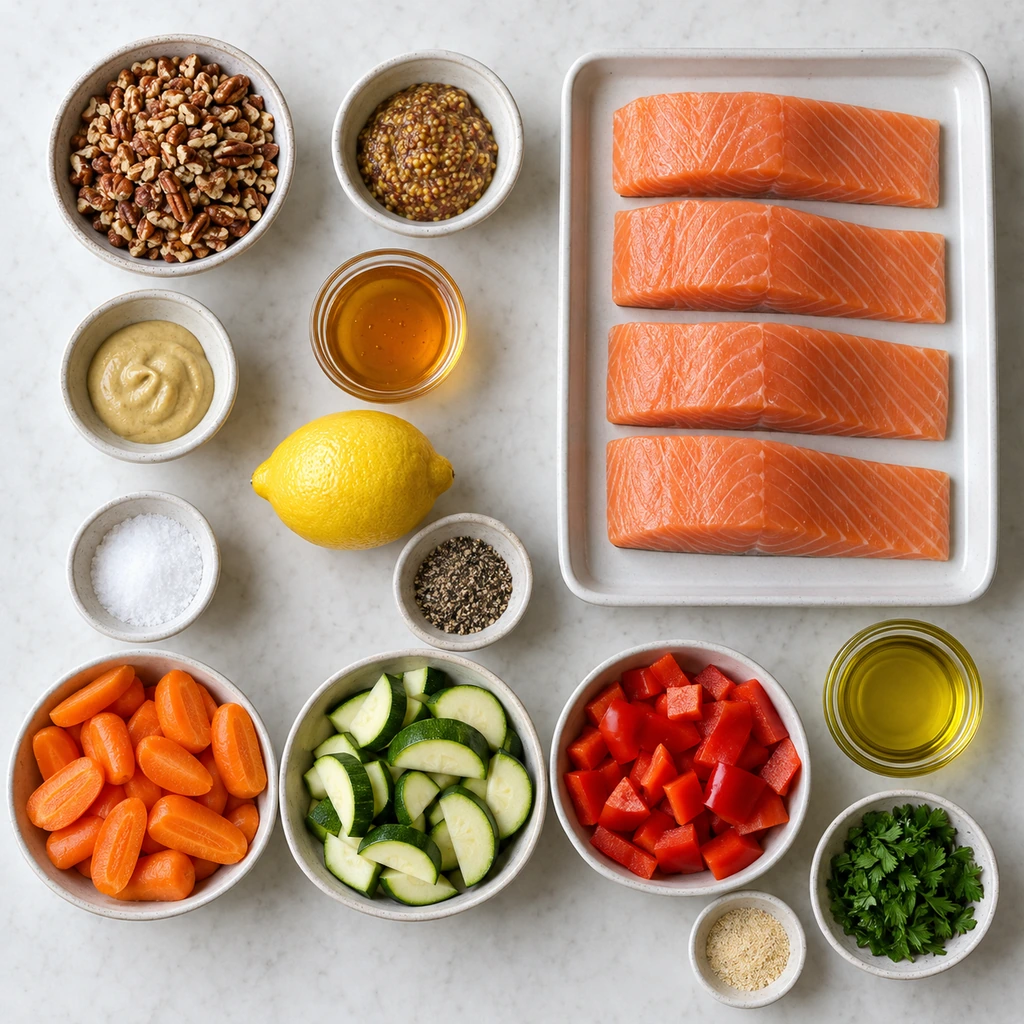
Choose salmon fillets of similar thickness so they finish together. Keep the raw fish on its own tray, wash produce before cutting, and use separate utensils or thoroughly cleaned equipment when moving between raw salmon and ready-to-eat ingredients.
- 4 skinless salmon fillets, about 6 ounces each
- 1 cup finely chopped raw pecans
- 1/4 cup whole-grain mustard
- 1 tablespoon Dijon mustard
- 2 tablespoons honey
- 1 medium lemon, zested and cut into 4 wedges
- 1 teaspoon fine salt, divided
- 1/2 teaspoon ground black pepper, divided
- 1 cup baby carrots, halved lengthwise
- 1 medium zucchini, cut into 1/2-inch half-moons
- 1 red bell pepper, cut into 1-inch pieces
- 1 tablespoon olive oil
- 1/2 teaspoon garlic powder
- 2 tablespoons chopped fresh parsley
Step-by-Step Instructions
1. Prepare the Oven and Vegetables
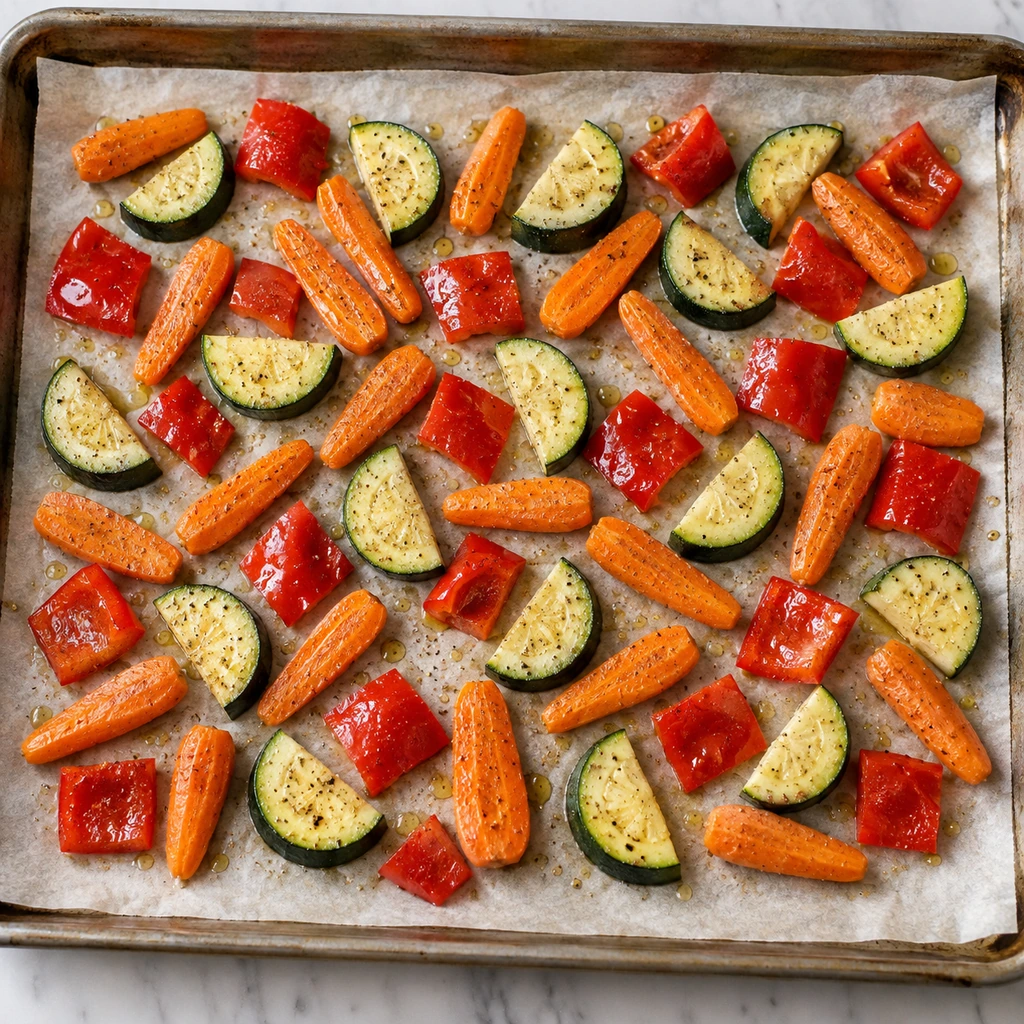
Heat the oven to 400°F (204°C) and line two rimmed baking sheets with parchment paper. On the first sheet, combine the carrots, zucchini, and red bell pepper. Drizzle with the olive oil and season with the garlic powder, 1/2 teaspoon salt, and 1/4 teaspoon black pepper. Toss until every piece has a light sheen, then spread the vegetables into one uncrowded layer. Place them in the oven and set a timer for 5 minutes.
2. Mix the Glaze and Pecan Crust
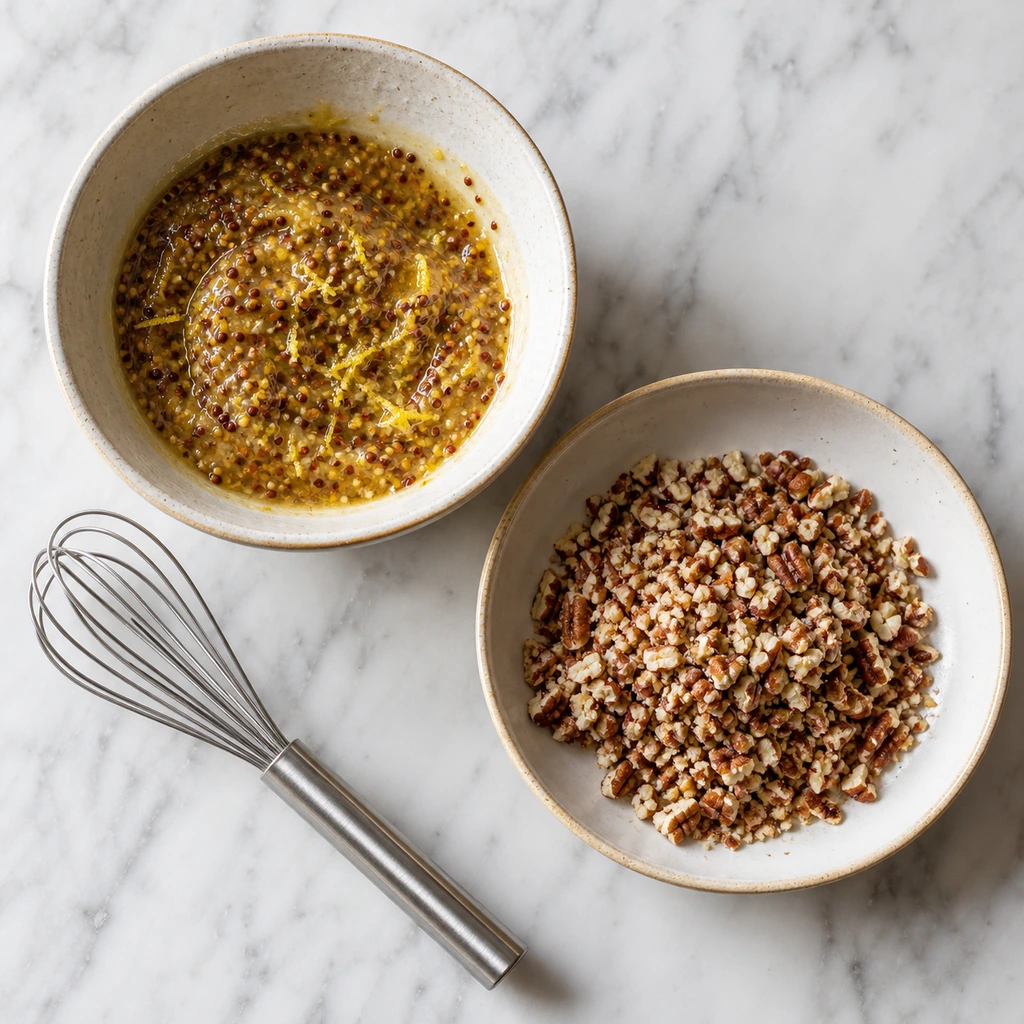
While the vegetables begin roasting, stir the whole-grain mustard, Dijon mustard, honey, and all the lemon zest in a small bowl until evenly blended. Put the finely chopped pecans in a separate shallow dish. The nuts should resemble coarse crumbs rather than powder; a few small pieces create texture, but large pieces fall away from the fish. Reserve the four lemon wedges for serving rather than adding their juice to the glaze.
3. Season and Coat the Salmon
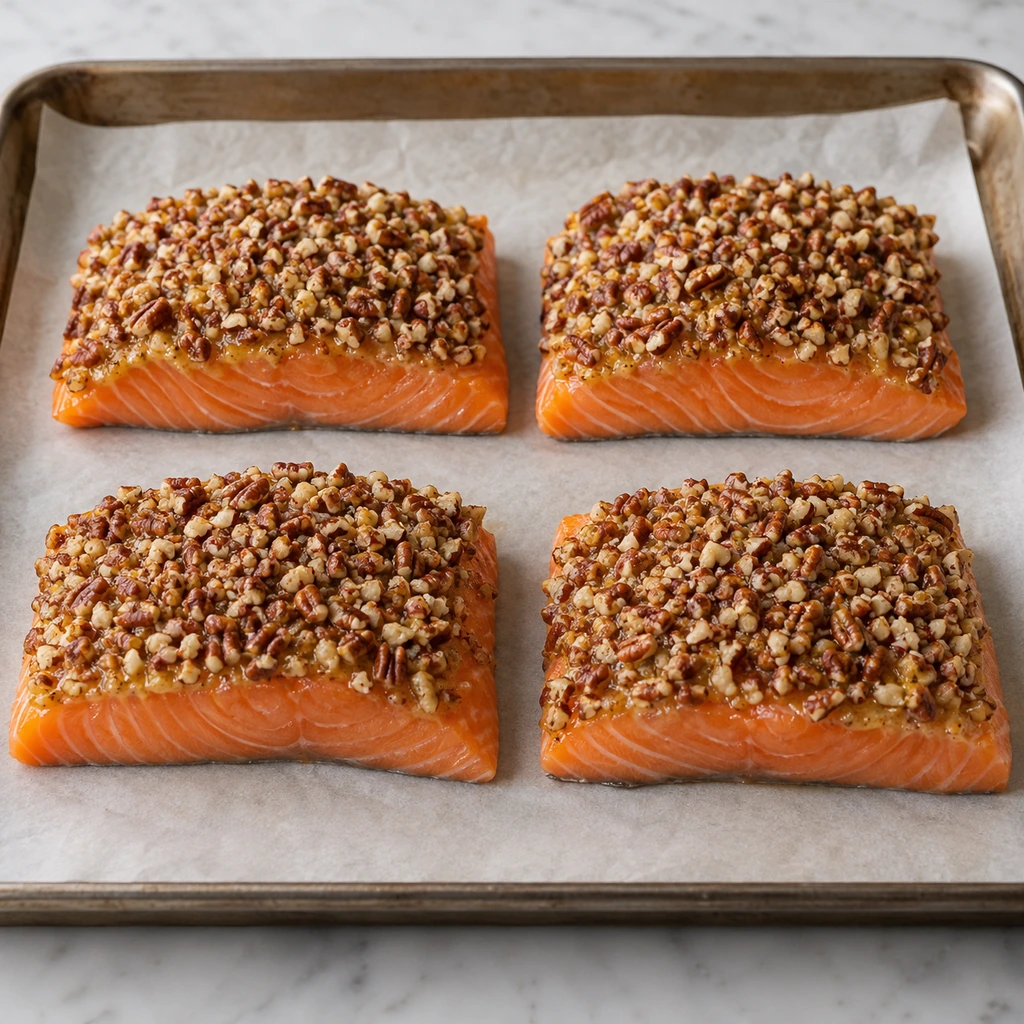
Pat the salmon dry with paper towels and arrange the fillets on the second lined baking sheet with space between them. Season the fish with the remaining 1/2 teaspoon salt and 1/4 teaspoon black pepper. Divide the mustard glaze evenly over the tops, spreading it to the edges without coating the underside. Spoon 1/4 cup chopped pecans onto each fillet and press gently so the crust adheres. Discard anything that has directly contacted the raw salmon.
4. Roast the Salmon and Vegetables
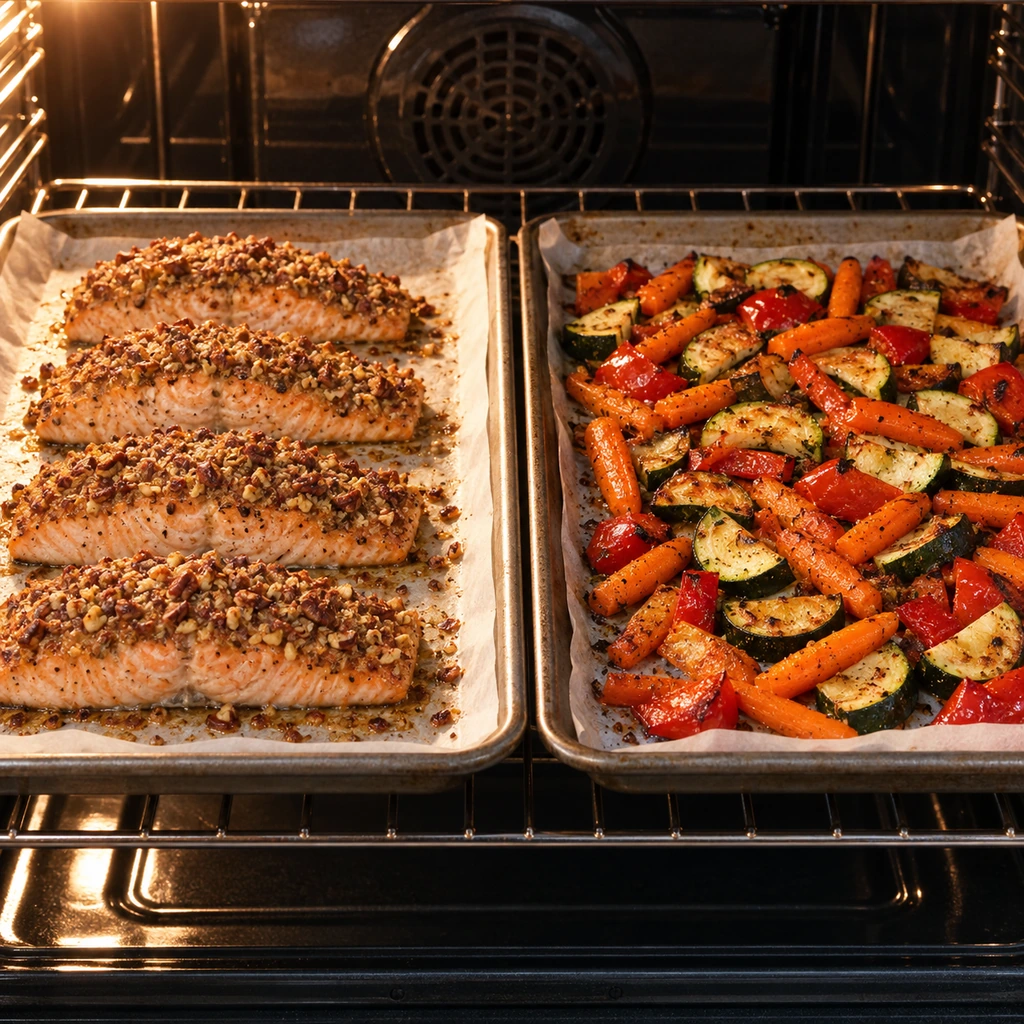
After the vegetables have roasted for 5 minutes, stir them and return their pan to the oven. Place the salmon pan on the other rack and roast both trays for 12–15 minutes. Rotate the pans if your oven browns unevenly, but avoid disturbing the pecan crust. The vegetables should become tender with browned edges, and the pecans should smell toasted and appear golden rather than dark. Begin checking thinner salmon fillets at 12 minutes.
5. Check Doneness, Rest, and Serve
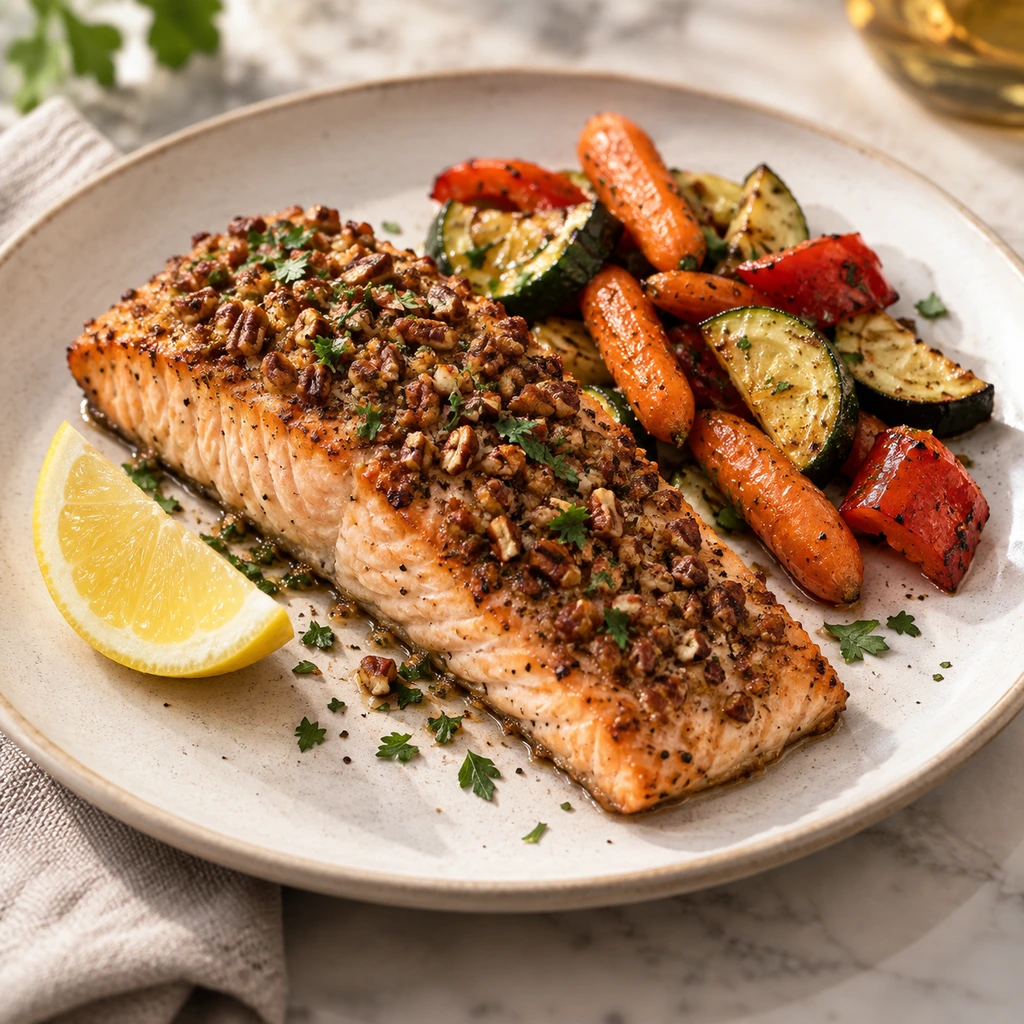
Insert an instant-read thermometer into the thickest part of each fillet without pushing through to the pan. For fully cooked salmon, confirm 145°F (63°C), then remove the fish and let it rest for 3 minutes. Divide the roasted vegetables among four plates and add one salmon fillet to each. Sprinkle exactly 1/2 tablespoon parsley over every serving and add one lemon wedge. Squeeze the lemon over the fish just before eating to brighten the toasted pecans and mustard.
Substitutions & Variations
Walnuts can replace pecans in the same quantity and produce a slightly earthier crust. Almonds also work when chopped finely, although their firmer texture is less delicate. Maple syrup may replace honey tablespoon for tablespoon. If whole-grain mustard is unavailable, use 1/4 cup additional Dijon; the glaze will be smoother and sharper but will still hold the nuts.
Asparagus, green beans, or small broccoli florets can replace the zucchini in equal volume because they cook in a similar window. Cherry tomatoes may replace the bell pepper, but add them when the salmon goes into the oven so they do not collapse. These alternatives change the ingredient list and should be treated as variations, not mixed into the core Recipe schema. For a mild herb note, thyme may replace parsley in half the quantity.
What to Serve With
The salmon and roasted vegetables make a complete meal on their own. For a larger appetite, add cooked quinoa, brown rice, or a slice of crusty bread to absorb the mustard-honey juices. A simple arugula salad with lemon vinaigrette gives the plate an extra fresh element without competing with the pecan crust.
For casual hosting, chop the vegetables and pecans up to one day ahead and refrigerate them in separate covered containers. Mix the glaze a few hours ahead, but keep it chilled and do not coat the salmon until the oven is hot. This prevents the nuts from softening and limits the time raw fish spends at room temperature.
Storage and Reheating
Refrigerate leftover salmon and vegetables in separate airtight containers within two hours and use them within 2 days. Reheat the salmon on a lined tray at 300°F (149°C) until the center reaches 165°F (74°C); gentle heat limits drying and protects the crust. Warm the vegetables on a separate tray. Freezing is possible for up to 1 month, but the pecan topping will lose some crispness after thawing.
Frequently Asked Questions
How do I keep the pecan crust from falling off?
Dry the salmon thoroughly, spread the sticky glaze in a thin complete layer, chop the pecans finely, and press rather than scatter them. Move the cooked fillets with a wide spatula and avoid turning them during baking.
Can I use salmon with the skin on?
Yes. Place each fillet skin-side down and coat only the flesh side. The skin helps protect the fish from the hot pan, although it will not become crisp in this baked preparation. Serve it attached or lift the cooked fish away from it with a spatula.
How can I tell when the salmon is cooked?
The most reliable method is an instant-read thermometer placed in the thickest section. This recipe uses 145°F (63°C) for fully cooked salmon. The flesh should also separate into moist flakes when pressed gently with a fork.