
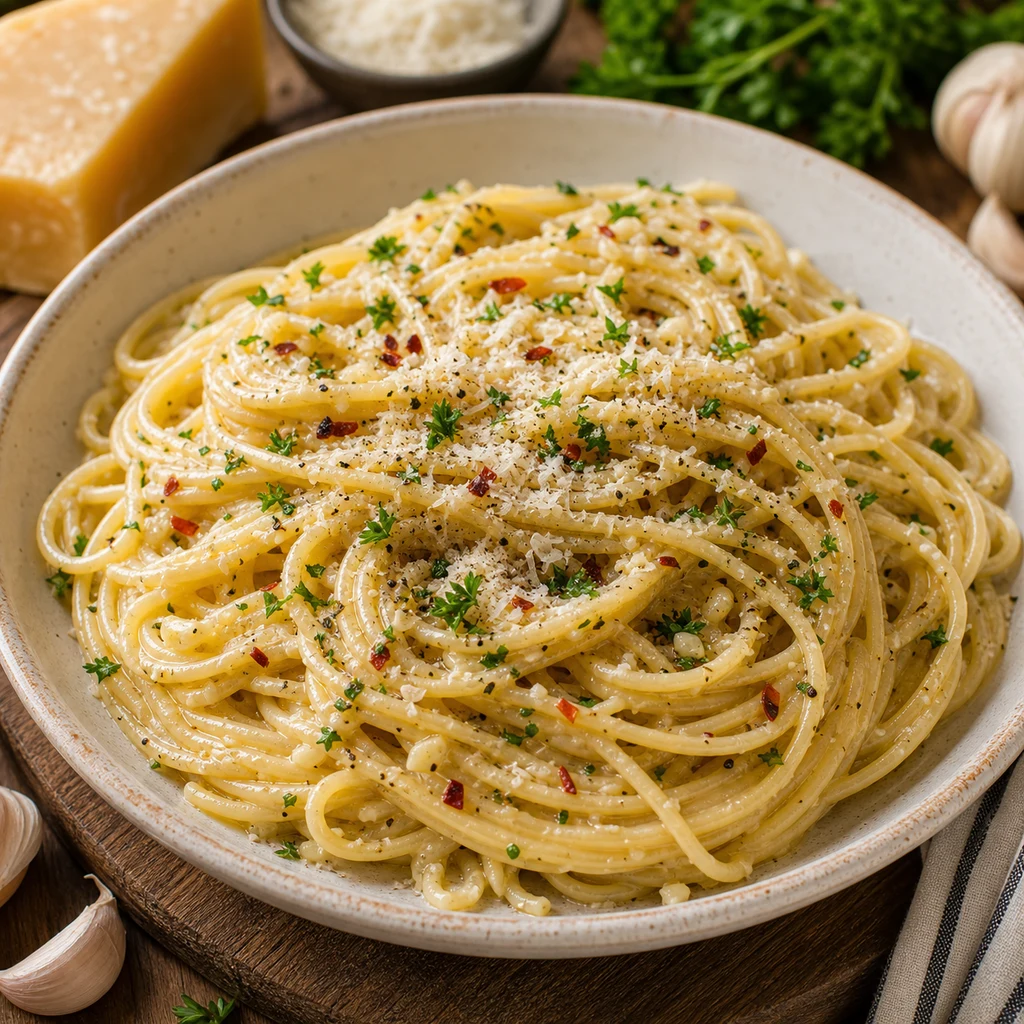
Parmesan Garlic Noodles Recipe is a fast, cozy pasta dish built from simple pantry ingredients: noodles, butter, garlic, Parmesan, parsley, pepper, and the pasta water people often forget to save. It is quick enough for a tired weeknight, but the texture can still feel silky and restaurant-like when the sauce is handled well.
RECIPE CARD
Parmesan Garlic Noodles Recipe
Timing and serving details are shown only when they are available in the original recipe.
Ingredients
- 8 ounces spaghetti, linguine, fettuccine, or another long pasta
- 4 tablespoons unsalted butter
- 4 cloves garlic, finely minced
- 1/4 to 1/2 teaspoon red pepper flakes, optional
- 1 cup reserved pasta water, divided
- 1/2 cup finely grated Parmesan cheese, plus more for serving
- 1/4 cup chopped fresh parsley
- Salt and black pepper to taste
- Optional lemon wedge for serving
Quick Method
Condensed overview. Use Full Instructions for the complete method, timing and doneness details.
- Pasta and Parmesan Notes: Long noodles are easiest to coat because they toss well in the skillet. Spaghetti keeps the dish light, while fettuccine feels a little richer.…
The secret is not heavy cream. The best version uses garlic butter, finely grated Parmesan, and starchy pasta water to create a light sauce that clings to the noodles. It should taste rich but not heavy, garlicky but not bitter, and cheesy without turning clumpy.
Why This Noodle Recipe Works
Parmesan garlic noodles work because they rely on timing. The pasta finishes just shy of soft, the garlic warms gently in butter, and the reserved pasta water helps the cheese melt into the sauce instead of sticking to the pan.
This method also gives you control. If the noodles look dry, add another splash of pasta water. If the sauce looks loose, toss a little longer over low heat. Those small adjustments matter more than adding extra butter or dumping in more cheese.
The recipe is also flexible without losing its identity. You can keep it plain as a side dish, add vegetables for a lighter dinner, or fold in protein for a fuller meal. As long as the garlic butter, Parmesan, and pasta water stay balanced, the noodles still taste like the same comforting dish.
Ingredients
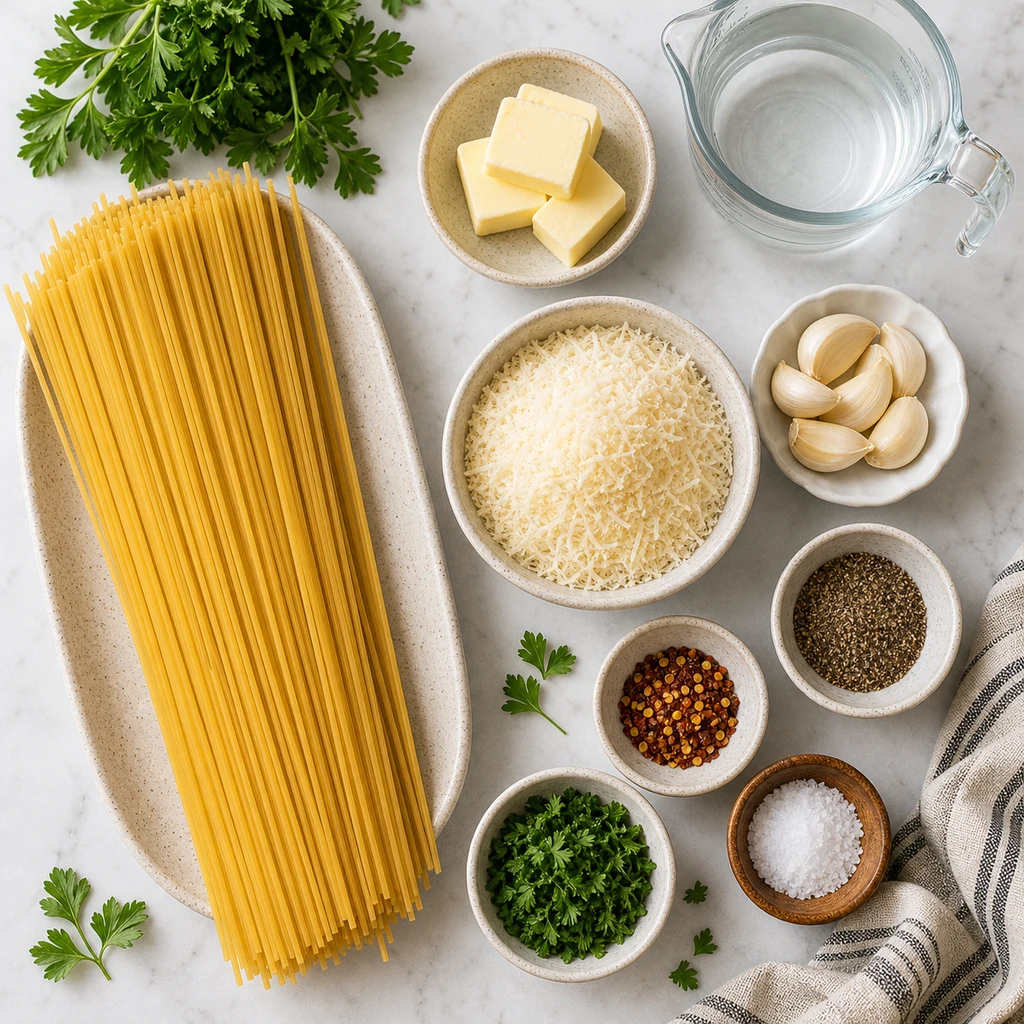
- 8 ounces spaghetti, linguine, fettuccine, or another long pasta
- 4 tablespoons unsalted butter
- 4 cloves garlic, finely minced
- 1/4 to 1/2 teaspoon red pepper flakes, optional
- 1 cup reserved pasta water, divided
- 1/2 cup finely grated Parmesan cheese, plus more for serving
- 1/4 cup chopped fresh parsley
- Salt and black pepper to taste
- Optional lemon wedge for serving
Pasta and Parmesan Notes
Long noodles are easiest to coat because they toss well in the skillet. Spaghetti keeps the dish light, while fettuccine feels a little richer. Short pasta can work, but the sauce may settle into the bowl instead of wrapping around each bite.
Use finely grated Parmesan rather than large shreds if possible. Fine cheese melts faster and blends more smoothly with pasta water. Pre-grated cheese can work in a pinch, but some brands contain anti-caking ingredients that make the sauce less silky.
Step 1: Cook the Noodles and Save Water
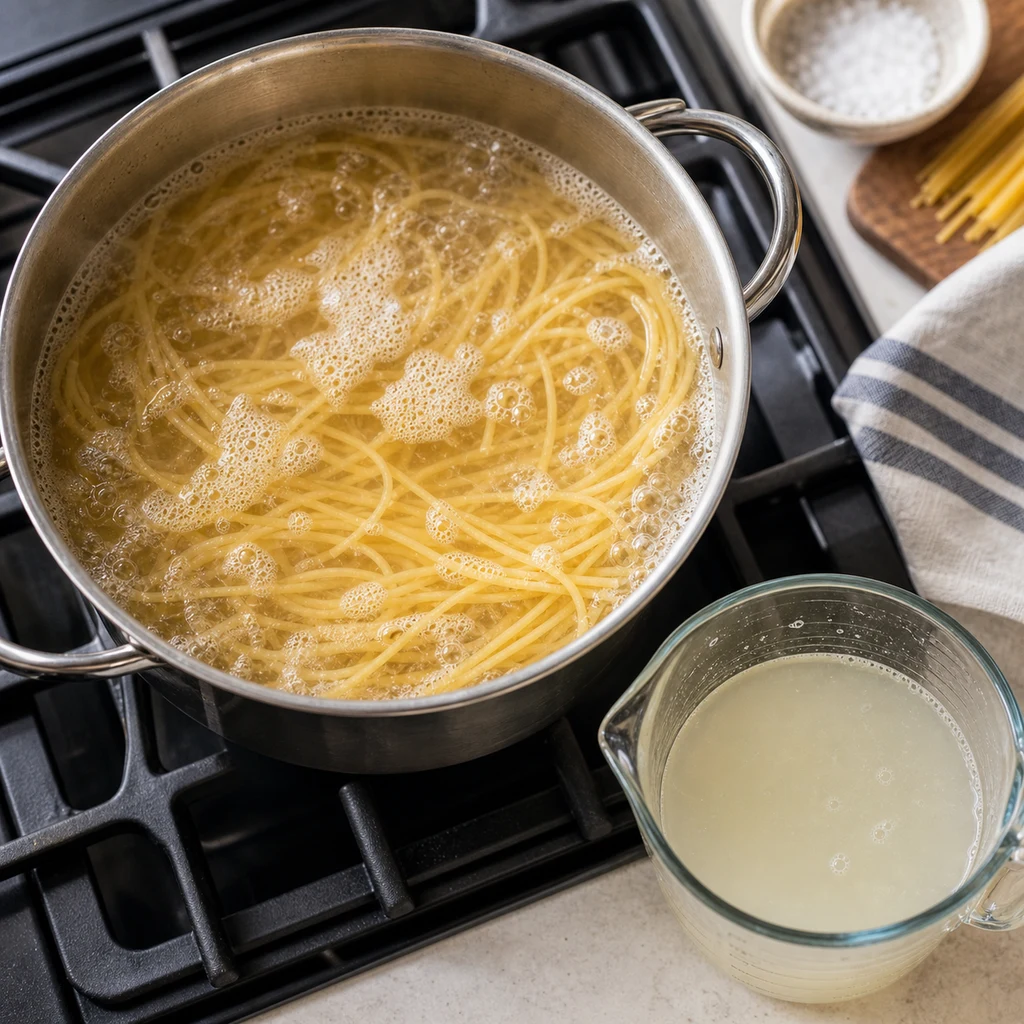
Bring a large pot of water to a boil and salt it well. Cook the noodles until al dente, then reserve at least 1 cup of cloudy pasta water before draining. Do not rinse the noodles, because the starch on the surface helps the sauce cling.
Start checking the pasta a minute before the package time. The noodles will finish in the skillet, so they should still have a little bite when drained. If they are already soft, the final toss can make them feel heavy.
Step 2: Make the Garlic Butter
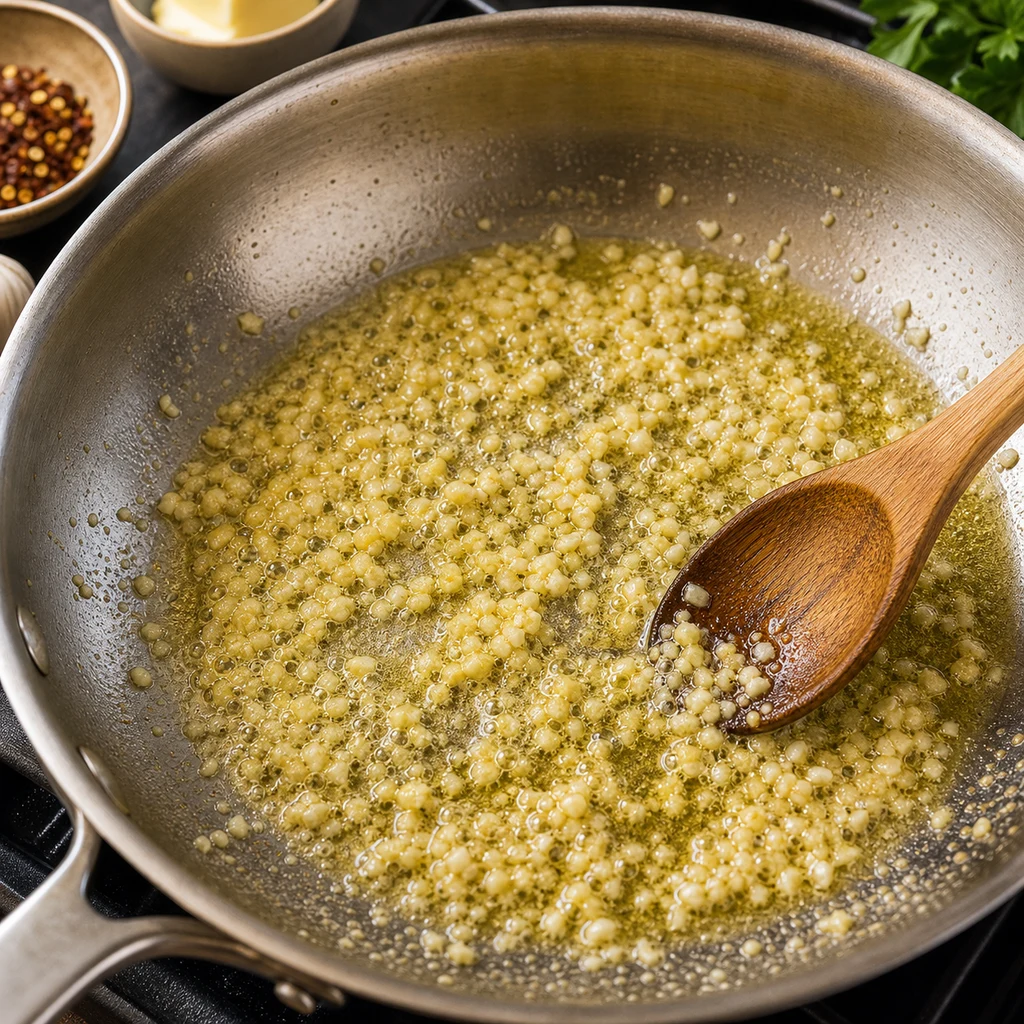
Melt the butter in a wide skillet over medium-low heat. Add the minced garlic and red pepper flakes, if using. Cook for 1 to 2 minutes, stirring often, until the garlic smells fragrant.
Keep the garlic pale. Deeply browned garlic can taste bitter and will overpower the Parmesan. If the skillet gets too hot, pull it off the heat for a moment before adding the noodles.
Step 3: Build the Parmesan Sauce
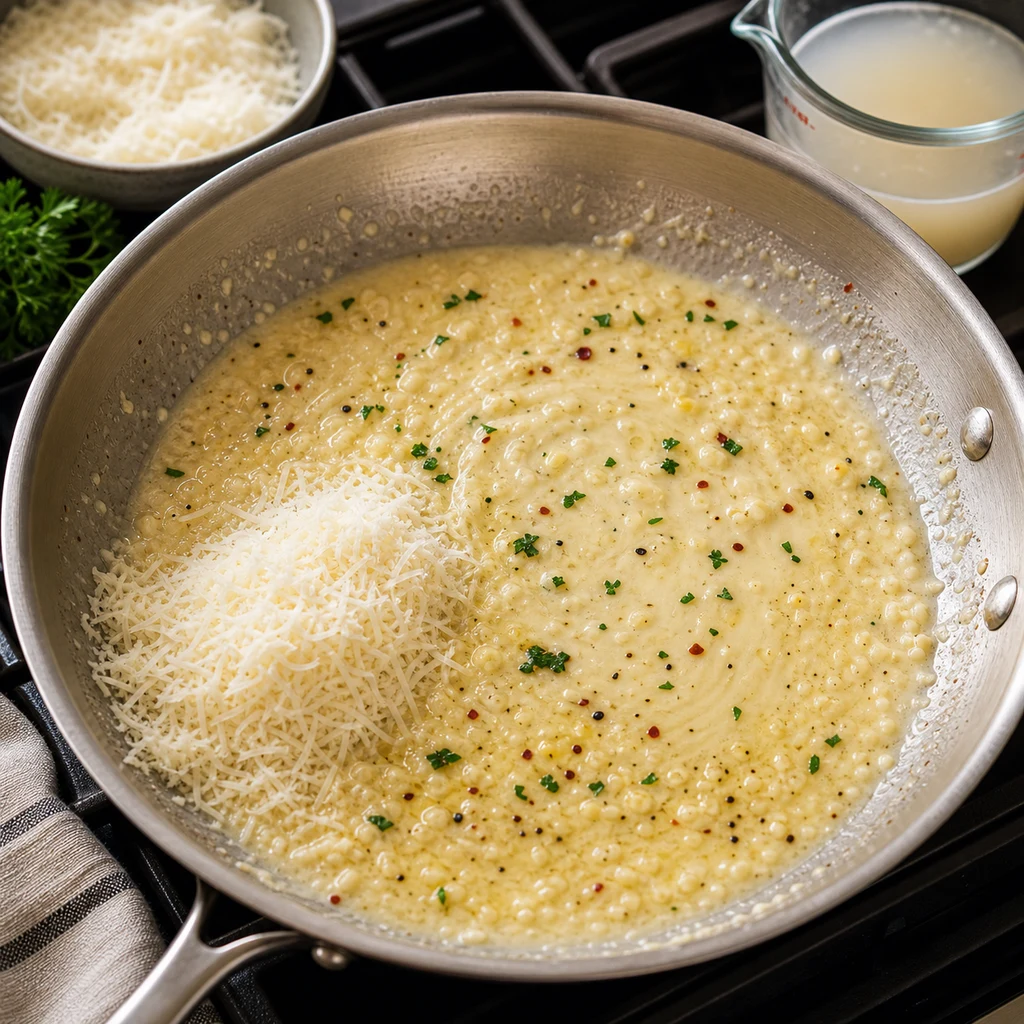
Add about 1/2 cup of reserved pasta water to the garlic butter and stir. Reduce the heat to low, then add Parmesan gradually while stirring. The sauce should look glossy and lightly creamy, not thick like Alfredo.
If the cheese starts to clump, the heat is probably too high or the cheese went in too quickly. Lower the heat and add another spoonful of pasta water. Gentle heat gives the sauce a much better chance of staying smooth.
It helps to think of the pasta water as part of the sauce, not a rescue ingredient. Add it in small splashes and watch how the butter and cheese loosen. The goal is a sauce that coats the spoon lightly and still moves when the pan is tilted.
Step 4: Toss the Noodles
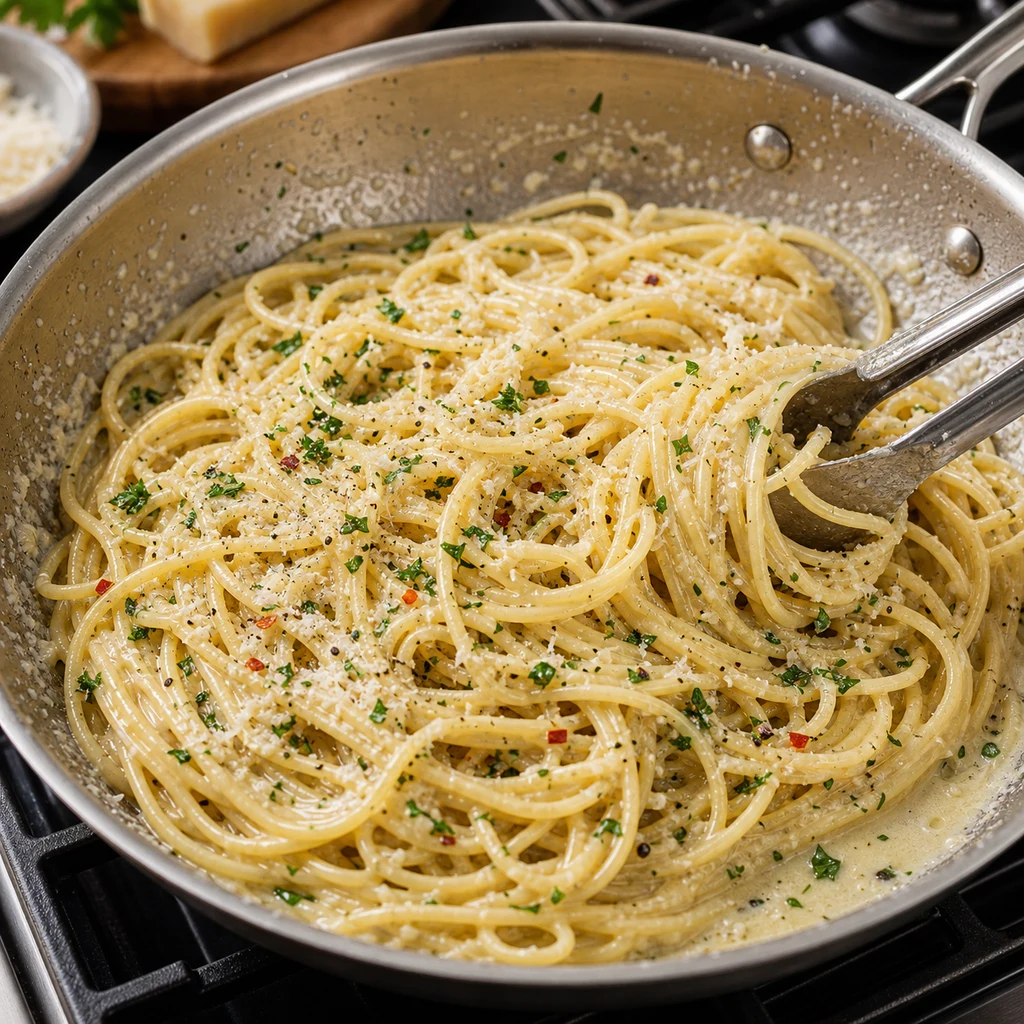
Add the drained noodles to the skillet and toss with tongs until the sauce coats every strand. Add more pasta water a little at a time as needed. Finish with parsley, black pepper, and more Parmesan if desired.
The noodles should move easily in the pan. If they drag or clump, add pasta water. If the bottom of the pan looks watery, keep tossing for another minute so the starch and cheese tighten into a light sauce.
Serve the Noodles
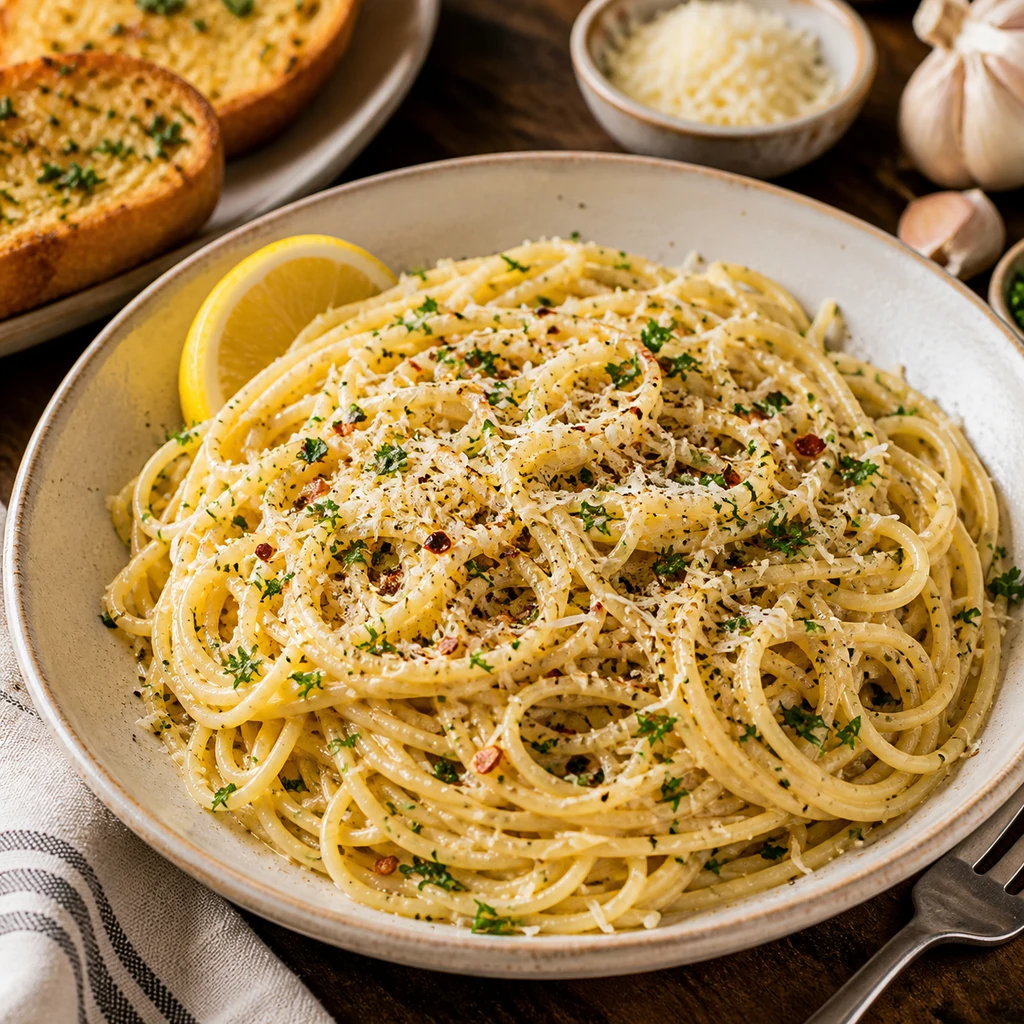
Serve Parmesan garlic noodles right away while the sauce is glossy. Add extra Parmesan, parsley, black pepper, red pepper flakes, or a small squeeze of lemon at the table.
These noodles can be a main dish with a salad, or a side for chicken, shrimp, roasted vegetables, or garlic bread. Keep the sides simple so the garlic and Parmesan remain the focus.
Add-Ins and Variations
For protein, add grilled chicken, shrimp, salmon, or a soft fried egg. For vegetables, stir in spinach at the end, or serve with roasted broccoli, asparagus, peas, mushrooms, or cherry tomatoes.
If you want a brighter flavor, add lemon zest with the parsley. If you want more heat, increase the red pepper flakes slightly. For a richer version, add one extra tablespoon of butter at the end after turning off the heat.
When adding cooked protein, warm it separately or fold it in at the very end. Long reheating in the Parmesan sauce can make chicken dry or shrimp tough. Vegetables with a lot of water, such as mushrooms or zucchini, should be cooked first so they do not thin the sauce.
Storage and Reheating
Store leftovers in an airtight container in the refrigerator for up to 3 days. The noodles will absorb sauce as they sit, so they need moisture when reheated.
Warm leftovers in a skillet with a splash of water or milk, tossing gently until the sauce loosens. The microwave works too, but use short intervals and stir between them so the cheese does not tighten too much.
If you are packing the noodles for lunch, add a small extra spoonful of pasta water, milk, or broth before chilling. That little bit of moisture makes reheating easier and keeps the noodles from turning into one firm clump.
Tips for Silky Parmesan Garlic Noodles
- Save pasta water before draining the noodles.
- Cook garlic gently so it does not burn.
- Add Parmesan gradually over low heat.
- Use finely grated cheese for the smoothest sauce.
- Toss with pasta water until the noodles look glossy.
- Serve right away for the best texture.
More Easy Pasta Ideas
For more pasta and noodle dinners, try Shrimp Scampi Recipe, Quick and Easy Ramen Carbonara, Easy Lo Mein Recipe, or browse more Food & Drink recipes.
Parmesan Garlic Noodles Recipe is simple, but the details are what make it work: save the pasta water, protect the garlic, add cheese slowly, and toss until the sauce turns silky.