
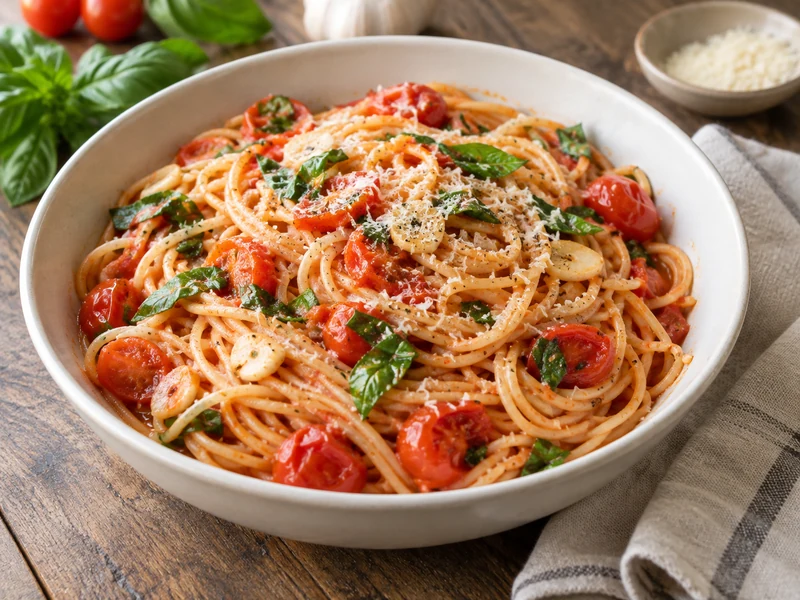
This one-pot tomato basil pasta turns a short list of familiar ingredients into a fresh, satisfying dinner with almost no cleanup. Dry spaghetti cooks directly with sweet cherry tomatoes, sliced garlic, olive oil, and vegetable broth, so the starch that normally disappears down the drain stays in the pan and helps create a glossy sauce.
RECIPE CARD
One-Pot Tomato Basil Pasta Recipe
Ingredients
- 12 ounces spaghetti or linguine
- 2 tablespoons olive oil
- 4 garlic cloves, thinly sliced
- 1 pint cherry tomatoes, halved
- 1 teaspoon fine salt
- 1/2 teaspoon black pepper
- 1/2 teaspoon red pepper flakes, optional
- 4 1/2 cups low-sodium vegetable broth or water
- 1 cup fresh basil leaves, loosely packed and torn
- 1/2 cup finely grated Parmesan cheese
Quick Method
Condensed overview. Use Full Instructions for the complete method, timing and doneness details.
- Prepare the Tomatoes, Garlic, and Basil: Halve the cherry tomatoes, thinly slice the garlic, and tear the basil. Keep the basil separate and measure the remaining ingredients.
- Combine Everything Except the Basil and Parmesan: Place the dry pasta, tomatoes, garlic, olive oil, salt, black pepper, red pepper flakes, and broth in a wide, deep pan. Distribute the vegetables…
- Simmer and Stir Until the Pasta Is Al Dente: Bring to a boil, reduce to a steady simmer, and cook for 10–12 minutes, stirring every minute, until the pasta is al dente and…
- Finish with Basil and Parmesan: Remove from the heat, fold in the basil and half the Parmesan, rest for 2 minutes, then serve four portions topped with the remaining…
The method is simple, but the details matter: use a wide pan, stir more often as the liquid reduces, and add the basil only after the heat is off. In about 25 minutes, you will have tender pasta, softened tomatoes, and a light sauce that tastes bright rather than heavy. The recipe makes four servings and is best brought to the table as soon as the basil is folded in.
Why You’ll Love It
- One pan, less cleanup: The pasta and sauce cook together from start to finish.
- Fast but genuinely fresh: Cherry tomatoes, garlic, and basil provide bold flavor in 25 minutes.
- Easy to adjust: The base recipe welcomes seasonal vegetables or a different pasta shape.
Ingredients
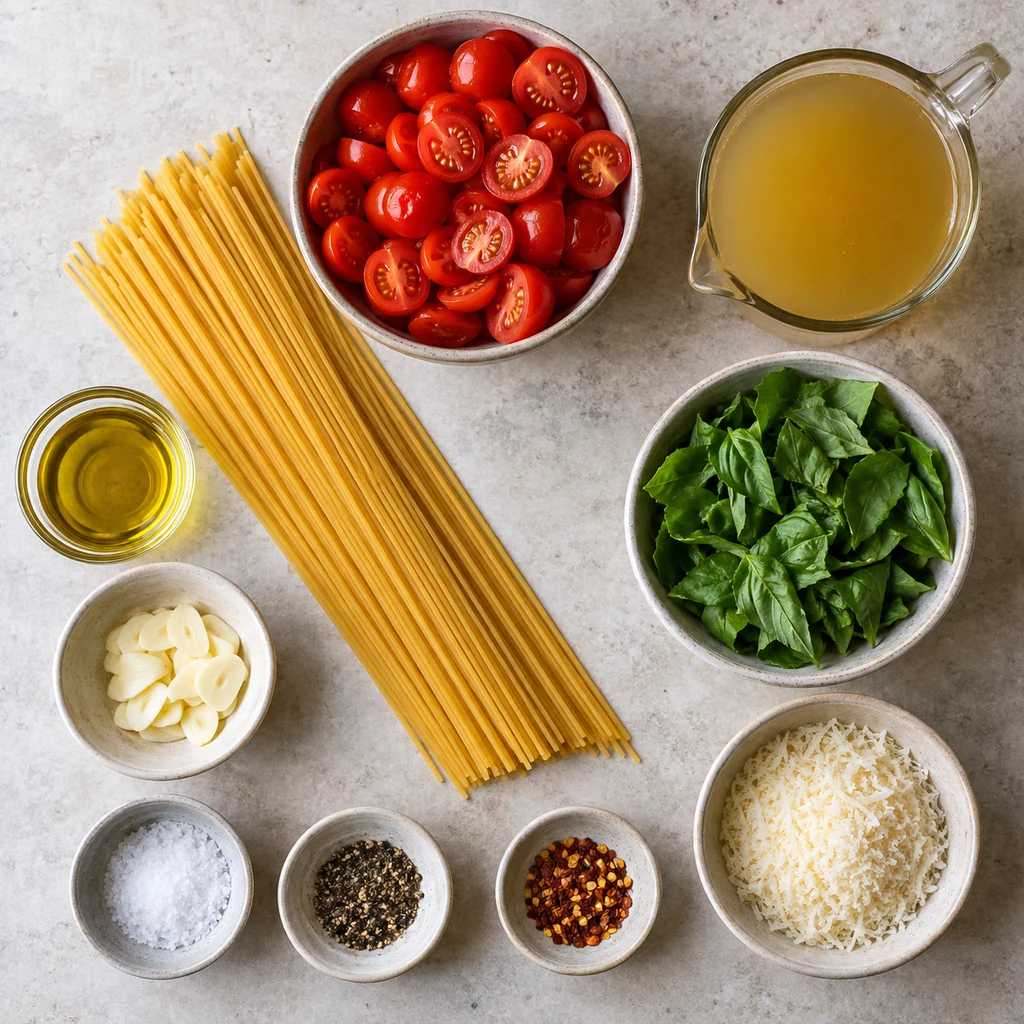
- 12 ounces spaghetti or linguine
- 2 tablespoons olive oil
- 4 garlic cloves, thinly sliced
- 1 pint cherry tomatoes, halved
- 1 teaspoon fine salt
- 1/2 teaspoon black pepper
- 1/2 teaspoon red pepper flakes, optional
- 4 1/2 cups low-sodium vegetable broth or water
- 1 cup fresh basil leaves, loosely packed and torn
- 1/2 cup finely grated Parmesan cheese
A wide, deep 12-inch skillet or sauté pan lets the spaghetti lie mostly flat and gives the liquid room to reduce. If your pan is narrower, break the spaghetti in half. Vegetable broth supplies more savory depth, while water produces a cleaner tomato flavor; both work. Keep hot water nearby in case your pasta absorbs liquid faster than expected.
Step-by-Step Instructions
Prepare the Tomatoes, Garlic, and Basil
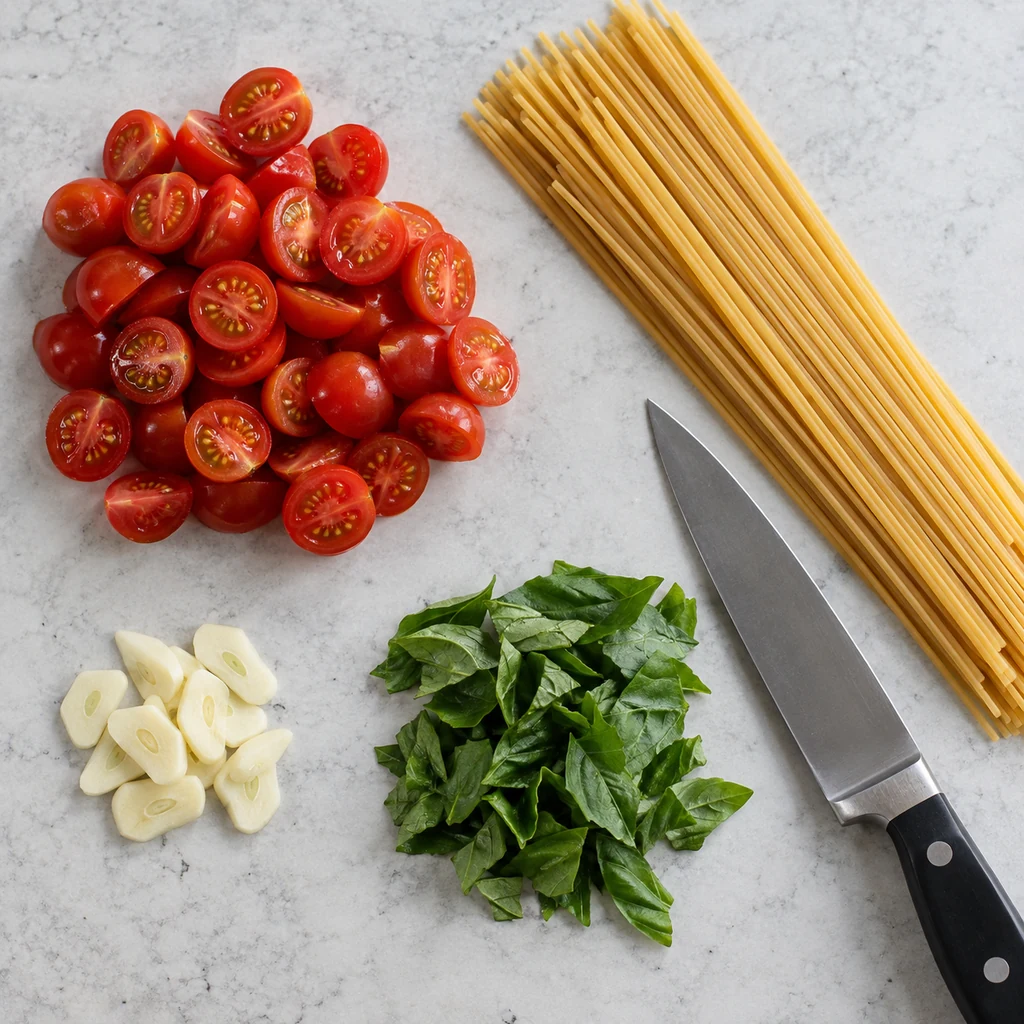
Halve the cherry tomatoes, slice the garlic thinly, and tear the basil into bite-size pieces. Keep the basil separate for the finish. Thin garlic slices soften with the tomatoes and are less likely to remain harsh. Set out the measured broth, seasonings, and Parmesan before turning on the burner. This preparation takes about 10 minutes and prevents delays later.
Combine Everything Except the Basil and Parmesan
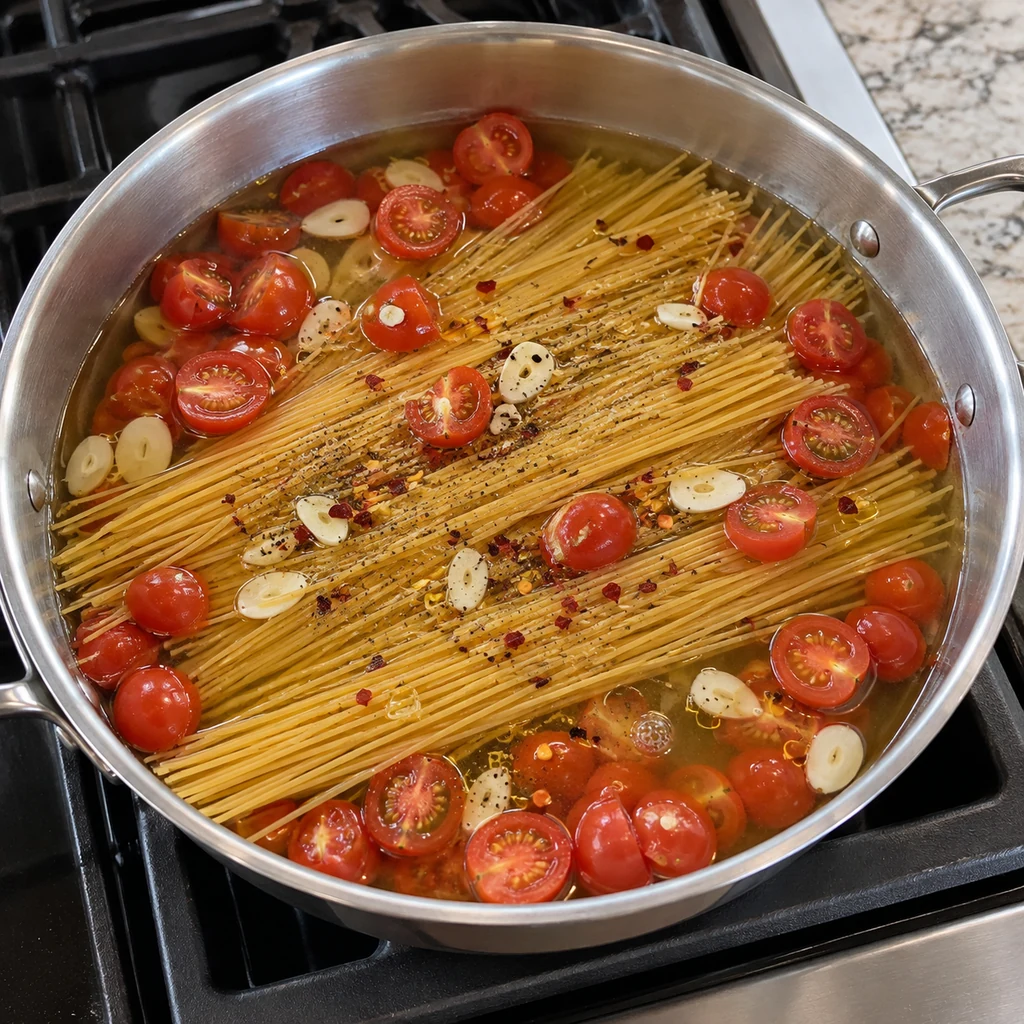
Place the dry spaghetti in the pan, then add the tomatoes, garlic, olive oil, salt, black pepper, and optional red pepper flakes. Pour in the broth or water and use tongs to distribute the vegetables around the pasta. The liquid may not cover every strand completely at first; it will settle as the spaghetti softens. Do not add the basil or Parmesan now, because prolonged boiling dulls basil and cheese can clump before the sauce has reduced.
Simmer and Stir Until the Pasta Is Al Dente
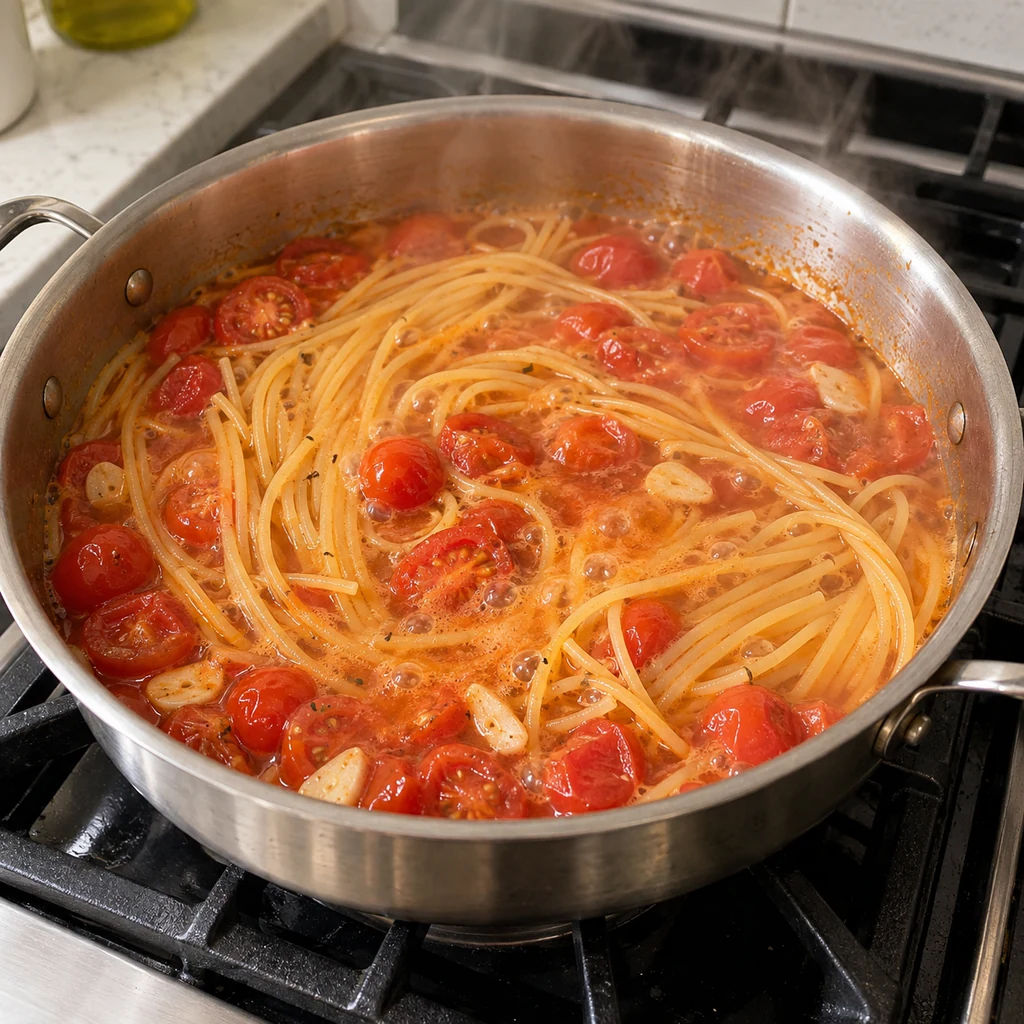
Bring the pan to a lively boil over medium-high heat, using tongs to press and turn the spaghetti as it becomes flexible. Reduce to a steady simmer and cook for 10–12 minutes, stirring every minute and separating any strands that stick together. The tomatoes should collapse around the edges, and the liquid should change from thin broth to a loose, glossy sauce. Begin tasting at 10 minutes. The pasta is ready when it is tender with a slight bite at the center, not chalky or crunchy.
If the pan looks dry before the pasta is ready, add hot water 1/4 cup at a time. If the noodles are tender but excess liquid remains, simmer for another minute while tossing continuously. Avoid walking away during the final few minutes: the starch concentration rises quickly and can make the bottom stick. Keep the simmer controlled rather than violently boiling, which can break the pasta and reduce the liquid before the noodles cook through.
Finish with Basil and Parmesan
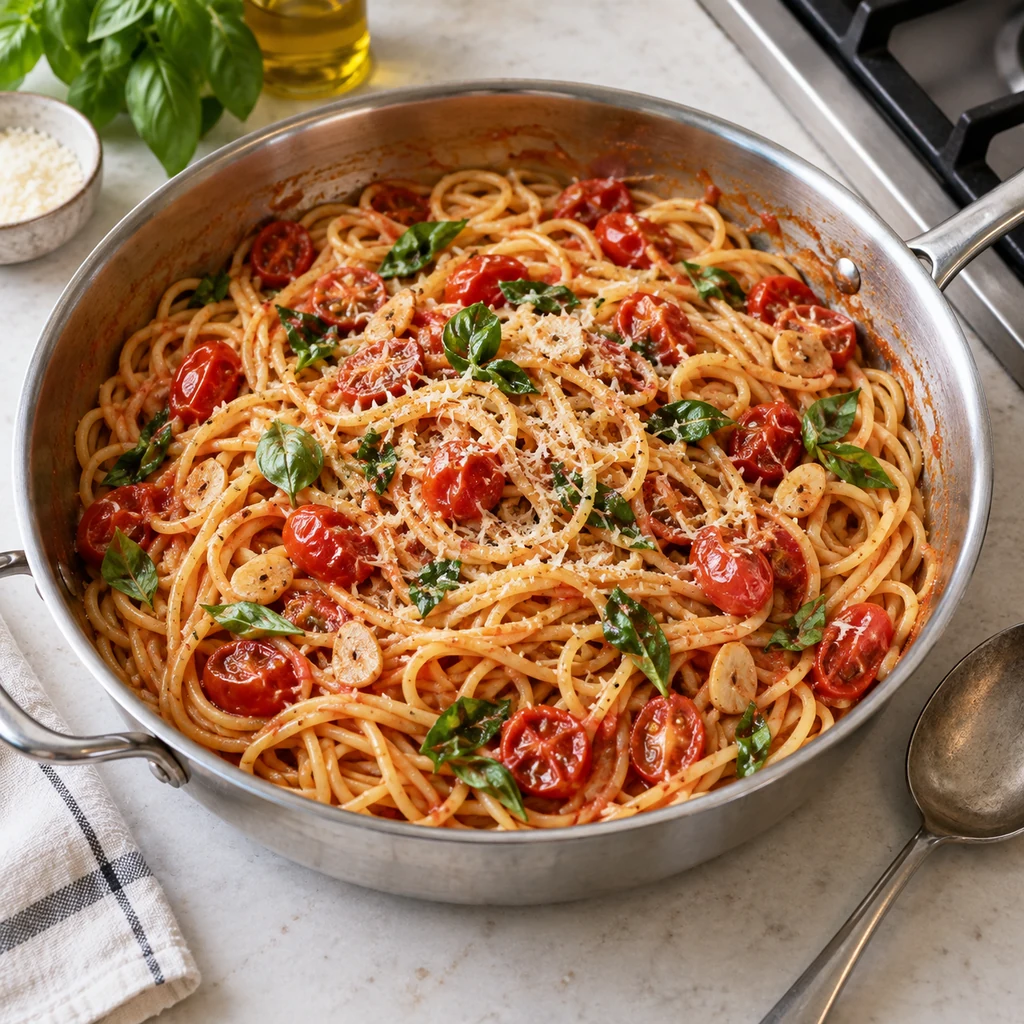
Remove the pan from the heat when a small amount of glossy sauce still pools beneath the pasta. Add the torn basil and half of the Parmesan, then toss until the cheese melts and the basil wilts slightly. Let the pasta rest for 2 minutes; the sauce will continue to thicken as it clings to the strands. Taste and adjust salt or pepper only after adding the cheese, which contributes its own saltiness. Divide among four bowls and top with the remaining Parmesan.
Substitutions & Variations
Linguine can replace spaghetti, although it may need an extra minute. Short pasta such as penne also works, but start with 4 cups of liquid and add more only as needed. For a gluten-free version, choose a sturdy corn-and-rice pasta and stir gently; those noodles can soften and break more quickly. Check the package early rather than relying only on the clock.
Add quick-cooking vegetables with care so the pan does not become crowded. Baby spinach can be folded in with the basil, while thin zucchini half-moons can go in during the final 4 minutes. A handful of drained white beans makes the meal more substantial and can be warmed during the last 3 minutes. Keep additions modest so there is enough liquid to cook the pasta evenly. For a dairy-free plate, omit the Parmesan and finish with a little extra olive oil.
What to Serve With
This pasta is complete enough for a weeknight main course, especially with a crisp green salad dressed with lemon or vinegar. Roasted broccoli, green beans, or asparagus bring color and a contrasting texture without competing with the tomato-basil flavor. Crusty bread is useful for catching the light sauce, although it is optional because the pasta already supplies plenty of starch.
Serve the pasta immediately for the silkiest texture. Leftovers can be refrigerated in a sealed container for up to 3 days. Reheat gently in a skillet with 1–2 tablespoons of water to loosen the sauce, tossing until thoroughly hot. The microwave also works in short intervals, but cover the bowl and stir between intervals so the tomatoes and noodles heat evenly. Freezing is not recommended because the pasta can become soft after thawing.
Frequently Asked Questions
Can I use canned tomatoes instead of cherry tomatoes?
Yes, but use one drained 14-ounce can of diced tomatoes so the total liquid stays balanced. Canned tomatoes create a more uniform sauce, while fresh cherry tomatoes retain sweet, juicy pieces. Avoid adding the entire can with its juice unless you reduce the broth by about 1/2 cup.
Why is my one-pot pasta sticky?
Sticky pasta usually needs more movement or a little more liquid. Stir every minute once the strands soften, scrape the bottom gently, and separate clumps with tongs. If the sauce tightens before the center is tender, add hot water 1/4 cup at a time. A wide pan also helps the noodles cook evenly.
How do I know when the sauce is ready?
Look for a small amount of glossy liquid that coats the spaghetti rather than running like broth. The sauce should still appear slightly loose when you turn off the heat because it thickens during the 2-minute rest. If the pan is completely dry, add a splash of hot water before folding in the basil and Parmesan.