
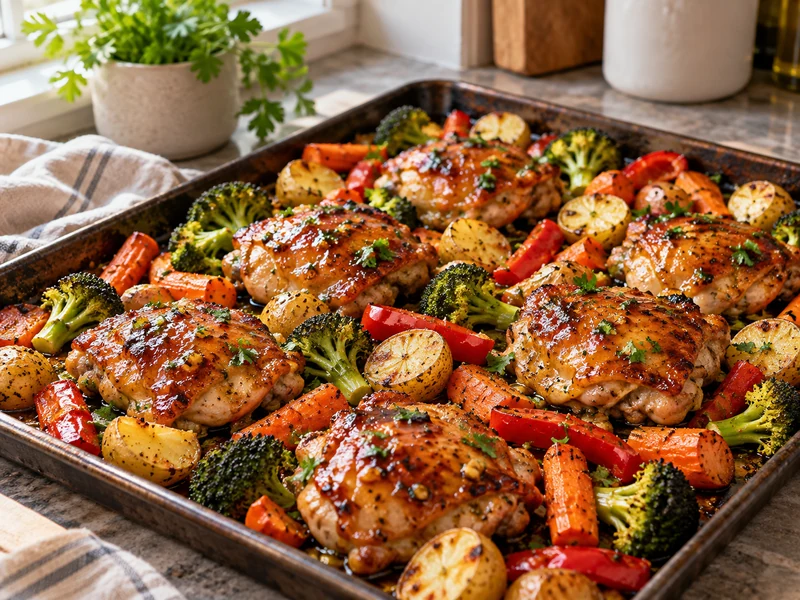
One-pan honey garlic chicken and veggies turns a short list of everyday ingredients into a complete dinner with juicy chicken, caramelized vegetables, and a glossy sweet-savory sauce. Everything finishes in one oven-safe skillet, so the recipe delivers plenty of flavor without leaving a sink full of dishes.
RECIPE CARD
One-Pan Honey Garlic Chicken and Veggies
Ingredients
- 1 1/2 pounds (680g) boneless skinless chicken thighs
- 1 pound (450g) baby potatoes, halved
- 2 medium carrots, cut into 1-inch pieces
- 2 cups broccoli florets
- 1 red bell pepper, cut into 1-inch pieces
- 2 tablespoons olive oil, divided
- 1/3 cup honey
- 1/4 cup low-sodium soy sauce
- 4 cloves garlic, minced
- 1 tablespoon Dijon mustard
- 1 tablespoon apple cider vinegar
- 2 teaspoons cornstarch
- 1/2 teaspoon fine salt
- 1/4 teaspoon black pepper
- 2 tablespoons chopped fresh parsley
Quick Method
Condensed overview. Use Full Instructions for the complete method, timing and doneness details.
- Prepare: Heat the oven to 400°F (200°C). Pat the chicken dry, season with salt and pepper, and cut all vegetables into evenly sized pieces.
- Mix the sauce: Whisk honey, soy sauce, garlic, Dijon mustard, apple cider vinegar, and cornstarch until smooth.
- Sear the chicken: Heat 1 tablespoon olive oil in a large oven-safe skillet over medium-high heat. Sear chicken for 3 to 4 minutes per side, then transfer…
- Start the vegetables: Add remaining oil, potatoes, and carrots to the skillet and cook for 5 minutes. Return the chicken and pour two-thirds of the sauce over…
- Roast: for 12 minutes. Add broccoli and bell pepper, drizzle with remaining sauce, and roast 8 to 12 minutes more.
- Check and serve: Cook until the chicken reaches 165°F (74°C) and potatoes are fork-tender. Rest 5 minutes, spoon over the glaze, garnish with parsley, and serve.
The method is straightforward but thoughtfully timed: brown the chicken for flavor, give the firm vegetables a head start, add the quick-cooking vegetables, and finish everything in the oven. If skillet dinners are your favorite kind of weeknight cooking, try our creamy Tuscan chicken skillet next.
Why You’ll Love It
- A complete meal: Protein, potatoes, and colorful vegetables cook together in one pan.
- Balanced flavor: Honey, soy sauce, garlic, Dijon, and vinegar create a glaze that is sweet, savory, and bright.
- Weeknight friendly: Simple prep and one-pan cleanup keep dinner practical without sacrificing texture.
Ingredients You’ll Need
Boneless, skinless chicken thighs stay moist while roasting and cook more evenly than very thick chicken breasts. Choose small baby potatoes and cut them in half so they become tender on schedule. Carrots need a similar head start, while broccoli and red bell pepper go in later to preserve their color and bite.
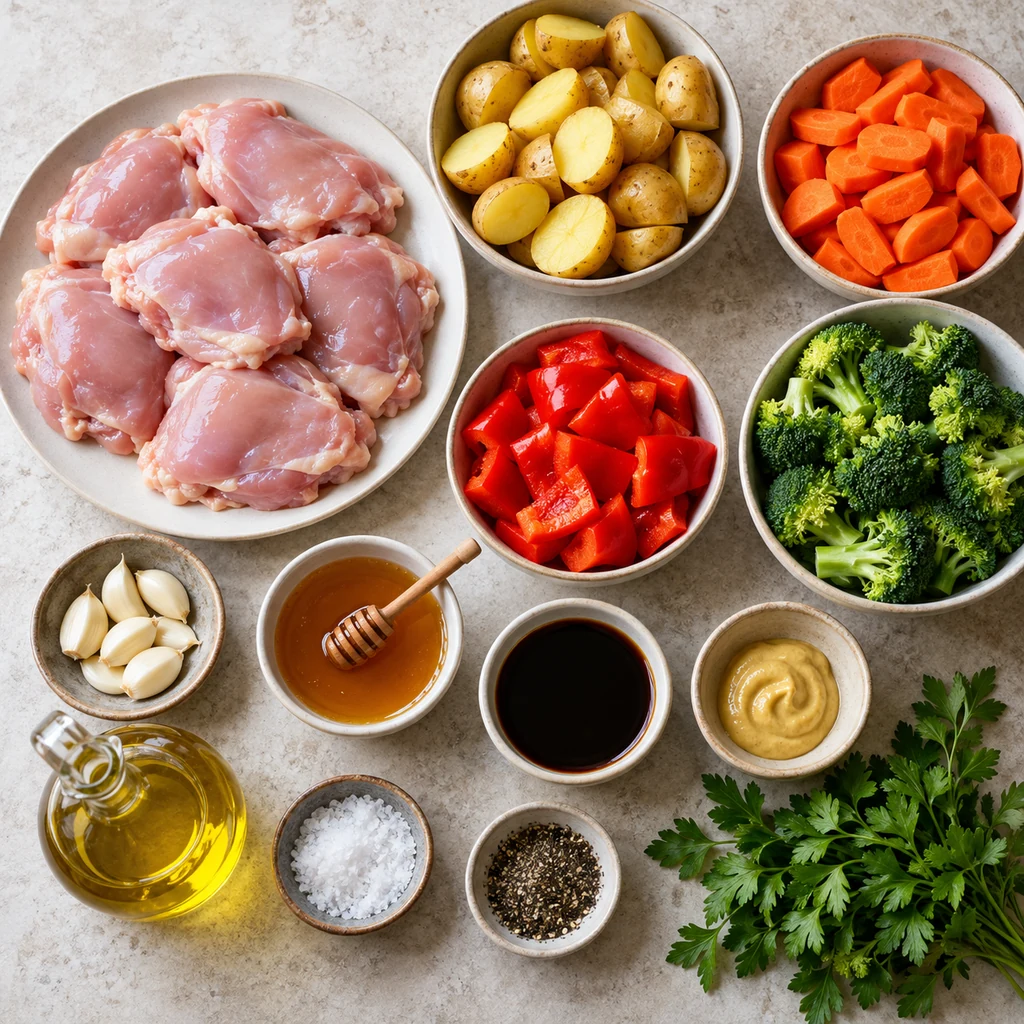
The sauce uses honey for sweetness and shine, low-sodium soy sauce for savory depth, fresh garlic for aroma, Dijon mustard for body, and apple cider vinegar for balance. Cornstarch helps the glaze cling to the chicken and vegetables. A final scattering of parsley adds freshness, but sliced green onions also work well.
How to Make One-Pan Honey Garlic Chicken and Veggies
1. Prepare the chicken and vegetables
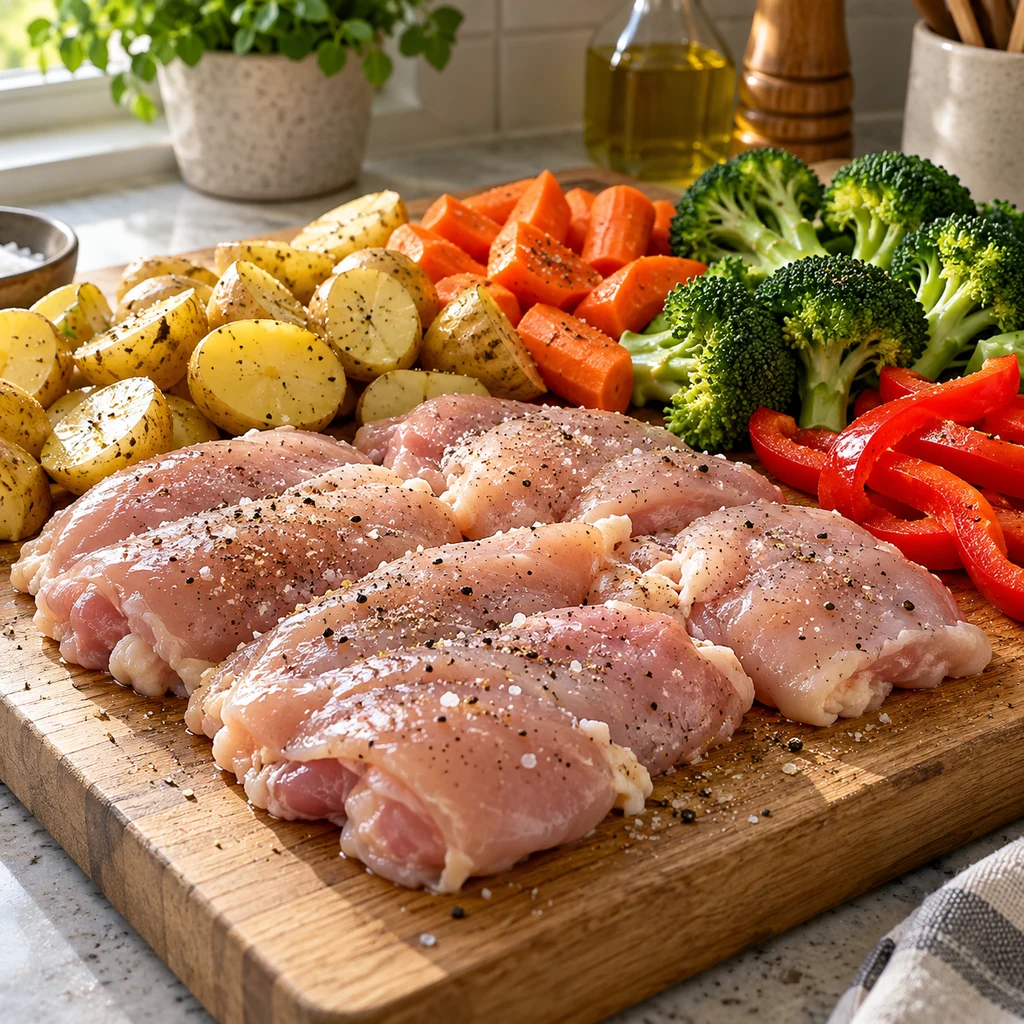
Heat the oven to 400°F (200°C). Pat the chicken thighs dry, then season both sides with salt and black pepper. Halve the baby potatoes, cut the carrots into small pieces, divide the broccoli into evenly sized florets, and slice the bell pepper. Similar-sized pieces cook more consistently and make the finished pan easier to serve.
2. Whisk the honey garlic sauce
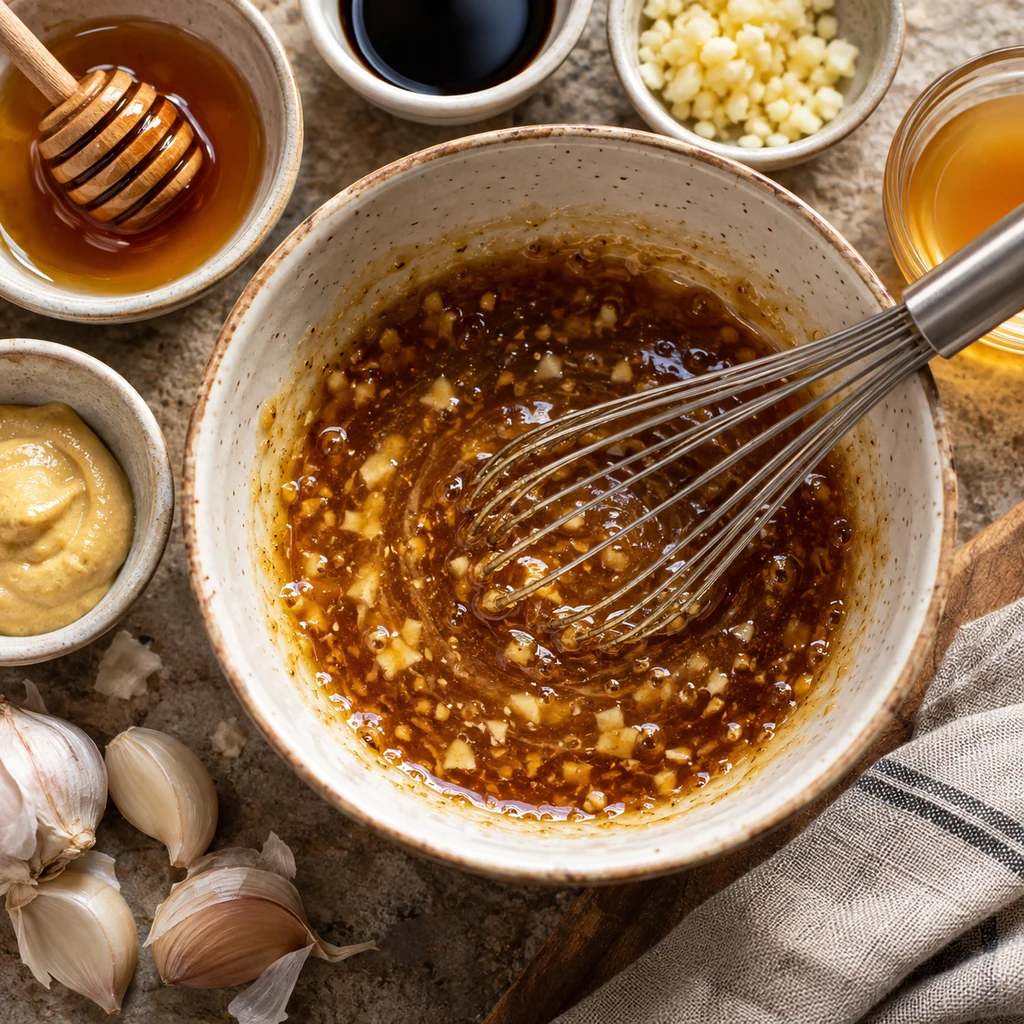
In a small bowl, whisk together honey, low-sodium soy sauce, minced garlic, Dijon mustard, apple cider vinegar, and cornstarch until completely smooth. Breaking up the cornstarch now prevents lumps later. Taste a tiny amount and adjust only if needed; the sauce should seem concentrated because it will season the whole pan.
3. Sear the chicken
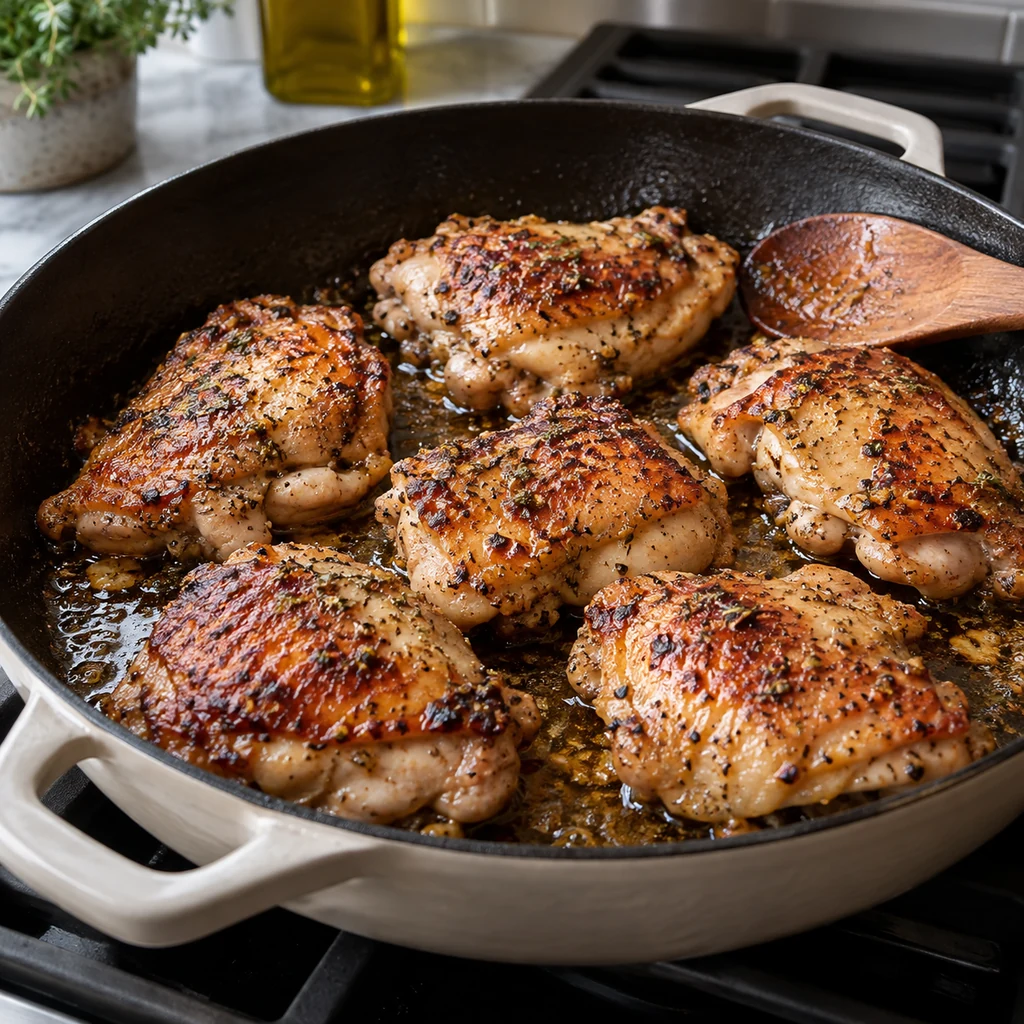
Heat one tablespoon of olive oil in a large oven-safe skillet over medium-high heat. Add the chicken in a single layer and cook for three to four minutes per side, until golden. It does not need to be cooked through yet. Transfer it to a clean plate while you start the vegetables.
4. Start the potatoes and carrots
Add the remaining olive oil, potatoes, and carrots to the same skillet. Toss them through the flavorful browned bits and cook for about five minutes. Return the chicken to the pan, pour about two-thirds of the sauce over everything, and turn the pieces gently so they are coated.
5. Add the quick-cooking vegetables
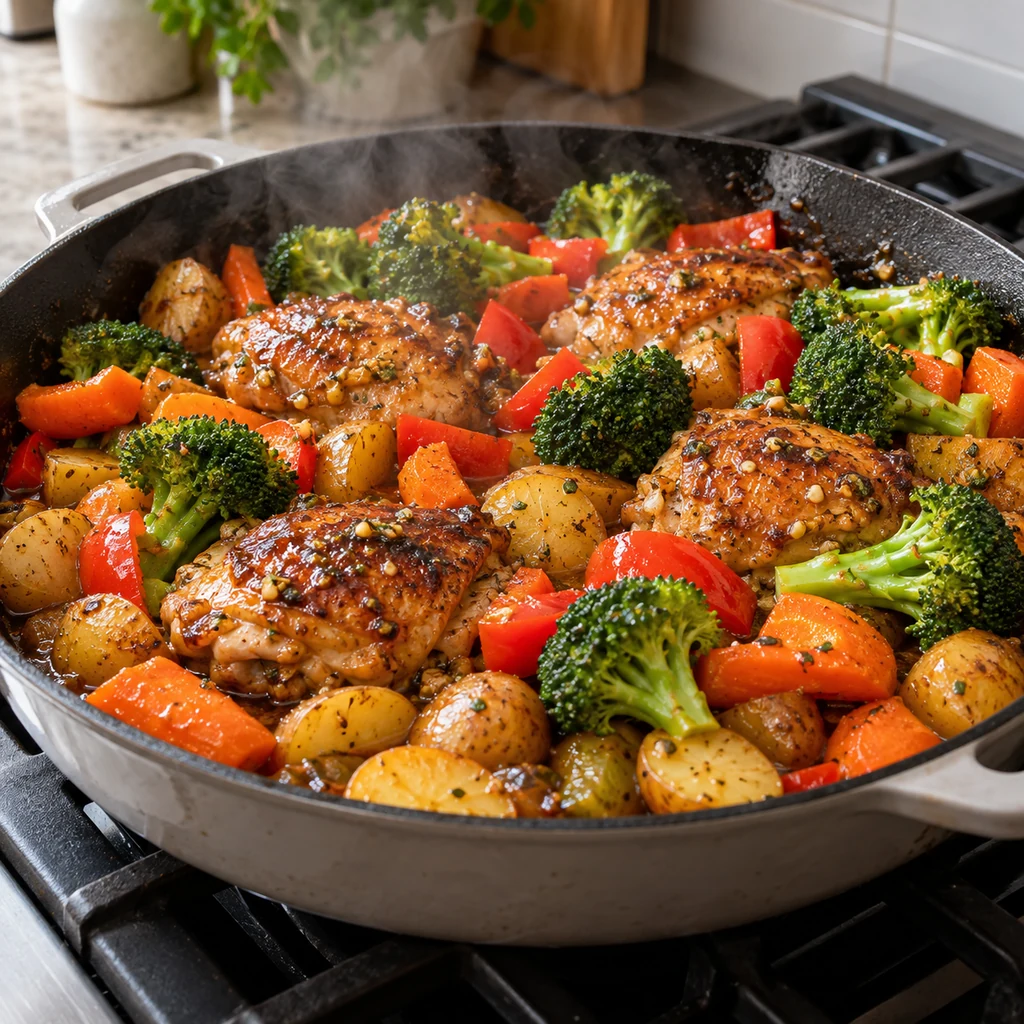
Roast the skillet for 12 minutes. Carefully remove it from the oven, add the broccoli and bell pepper, and drizzle over the remaining sauce. Stir the vegetables without disturbing the chicken too much, then return the pan to the oven for another 8 to 12 minutes.
6. Check doneness and serve
The chicken is ready when its thickest part reaches 165°F (74°C), and the potatoes should be easily pierced with a fork. If the chicken finishes first, move it to a plate and give the vegetables a few extra minutes. Rest the chicken for five minutes, spoon the thickened glaze over the pan, and garnish with parsley.
Tips for the Best Texture
Use an instant-read thermometer rather than judging chicken by color. Thighs remain juicy at the safe temperature, but extended roasting can still dry them out. Avoid crowding a small pan, because tightly packed ingredients steam instead of browning. A 12-inch oven-safe skillet gives everything useful surface contact.
Cut potatoes no larger than one inch across. If yours are bigger, quarter them or microwave the pieces for two minutes before adding them. Keep broccoli florets fairly large so they do not overcook. These timing details make the vegetables tender while retaining distinct textures.
Easy Variations
Swap carrots for sweet potato cubes, or use green beans in place of broccoli. Zucchini also works, but add it with the bell pepper because it cooks quickly. For gentle heat, whisk a pinch of red pepper flakes or a teaspoon of sriracha into the sauce. Tamari can replace soy sauce when a gluten-free option is required; always check every label.
Boneless chicken breasts can be used, though their thickness varies. Cut large breasts horizontally into thinner cutlets and begin checking them early. Bone-in thighs need more time and are best paired with par-cooked potatoes so every component finishes together.
Serving Suggestions
This dinner is complete on its own, but a crisp green salad or steamed rice can stretch it for extra guests. For another vegetable-forward side, serve smaller portions alongside zesty lemon orzo with roasted vegetables. When you want something cool and fresh, our grilled chicken and mango salad offers a bright contrast.
Storage and Reheating
Cool leftovers promptly and refrigerate them in a sealed container for up to four days. Reheat individual servings in the microwave at moderate power, or warm them covered in a 350°F (175°C) oven until the chicken reaches 165°F. Add a teaspoon of water before reheating if the glaze has become very thick.
For meal prep, cut the vegetables and mix the sauce up to one day ahead, then refrigerate them in separate containers. Do not leave raw chicken sitting in the cornstarch-thickened sauce overnight. The finished dish can be frozen, although broccoli softens after thawing; defrost in the refrigerator before reheating.
Frequently Asked Questions
Can I make this without an oven-safe skillet?
Yes. Sear the chicken and start the potatoes and carrots in a regular skillet, then transfer everything to a rimmed baking sheet or baking dish. Add the sauce and continue with the same roasting schedule.
Why is my honey garlic sauce too thin?
The sauce thickens as the cornstarch heats and as moisture evaporates. If it remains thin after the food is cooked, transfer the chicken and vegetables to a platter and simmer the sauce on the stovetop for one or two minutes.
Can I use frozen vegetables?
Fresh vegetables give the best browning and texture. Frozen broccoli can work without thawing, but it releases more water, so add it only for the final portion of roasting and expect a slightly thinner glaze.
Final Notes
Successful one-pan honey garlic chicken and veggies depends on good sequencing more than complicated technique. Brown the chicken, start the firm vegetables first, add tender vegetables later, and verify doneness with a thermometer. The result is juicy chicken, properly roasted vegetables, and a shiny honey garlic glaze in one dependable weeknight dinner.