
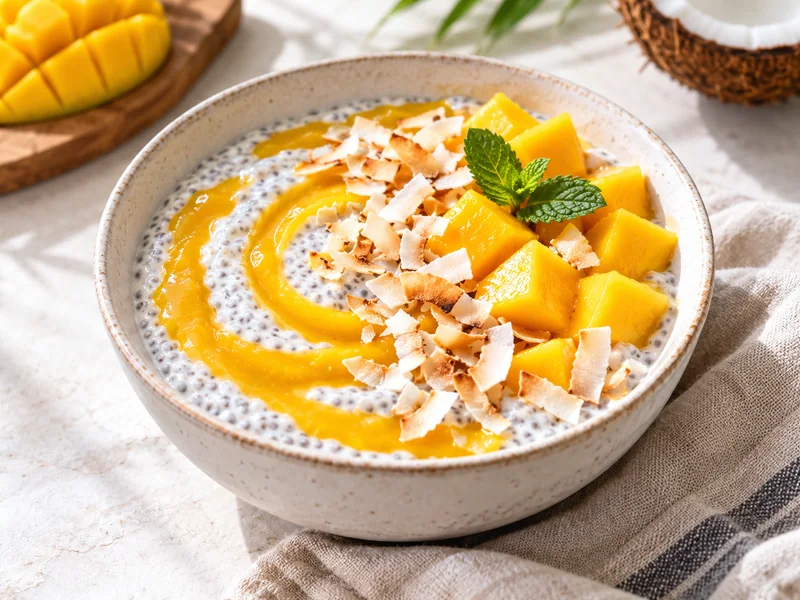
This mango coconut chia breakfast bowl combines creamy coconut chia pudding with a bright layer of fresh mango. It is cool, gently sweet, and filling enough for breakfast while still feeling light. Because the chia base thickens in the refrigerator, most of the work can be done the night before.
RECIPE CARD
Mango Coconut Chia Breakfast Bowl
Ingredients
- 1 cup canned full-fat unsweetened coconut milk
- 1/4 cup unsweetened oat milk
- 1/4 cup chia seeds
- 1 tablespoon pure maple syrup
- 1/2 teaspoon vanilla extract
- 1 pinch fine salt
- 1 large ripe mango, peeled and pitted
- 2 tablespoons unsweetened coconut flakes
Quick Method
Condensed overview. Use Full Instructions for the complete method, timing and doneness details.
- Whisk the chia base: Whisk coconut milk, oat milk, chia seeds, maple syrup, vanilla, and salt for about one minute until evenly combined.
- Rest and chill: Rest for 10 minutes, whisk again, cover, and refrigerate for at least 4 hours or overnight.
- Blend the mango: Reserve a few mango cubes for topping and blend the remaining mango until smooth.
- Layer the bowls: Divide half the chia pudding between two bowls, add mango puree, and top with the remaining pudding.
- Top and serve: Finish each bowl with reserved mango cubes and coconut flakes, then serve cold.
The recipe makes two servings and needs only about 15 minutes of active preparation. Allow at least four hours for chilling so the seeds can fully hydrate. Pure maple syrup keeps the bowl vegan, while a small amount of oat milk loosens full-fat coconut milk into a smooth base that is rich without becoming heavy.
Why You’ll Love It
- Easy to prepare ahead: Mix the chia base at night, then add the mango and toppings in the morning.
- Fresh tropical flavor: Ripe mango brings natural sweetness and a vivid contrast to creamy coconut.
- Simple vegan ingredients: The bowl uses plant-based milk, maple syrup, fruit, and chia seeds.
Ingredients
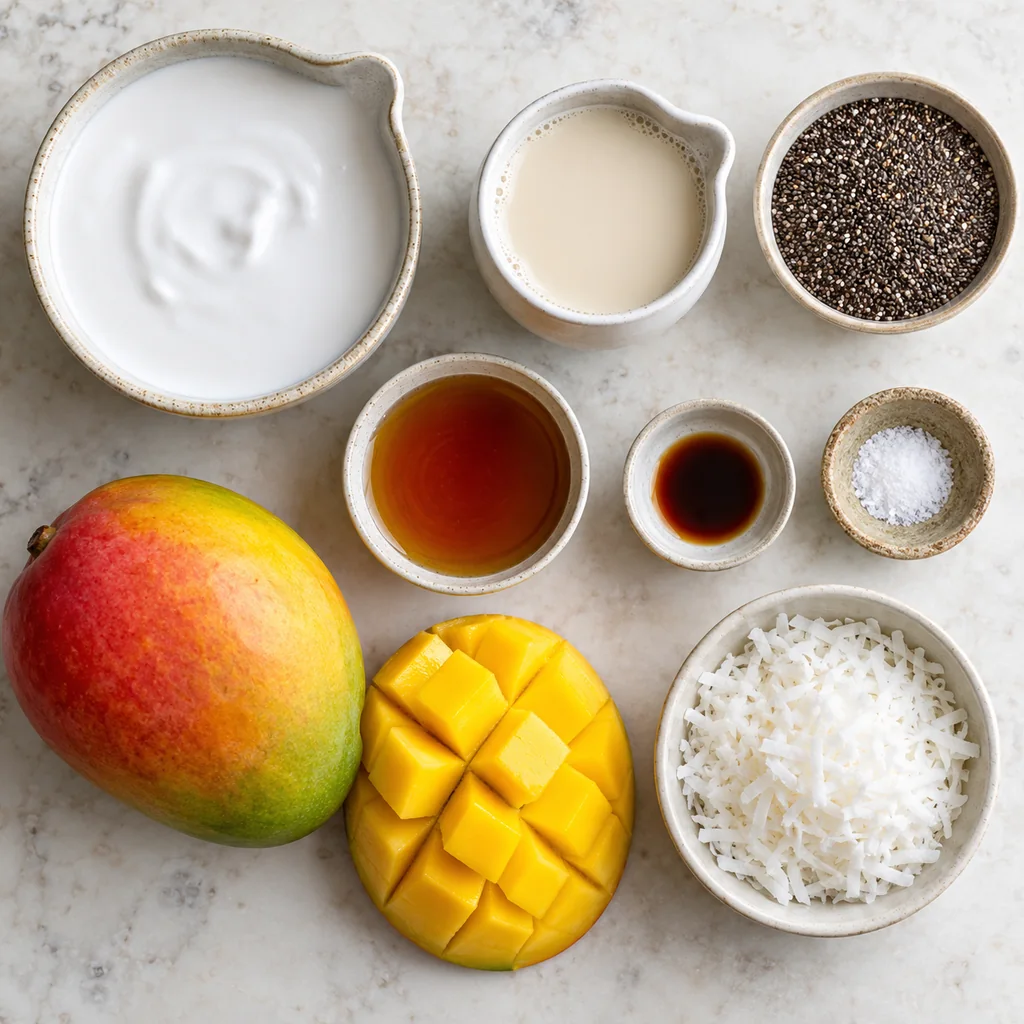
- 1 cup canned full-fat unsweetened coconut milk
- 1/4 cup unsweetened oat milk
- 1/4 cup chia seeds
- 1 tablespoon pure maple syrup
- 1/2 teaspoon vanilla extract
- 1 pinch fine salt
- 1 large ripe mango, peeled and pitted
- 2 tablespoons unsweetened coconut flakes
Full-fat coconut milk gives the pudding body, and oat milk makes it easier to whisk. Stir the coconut milk in its can first if the solids and liquid have separated. Black or white chia seeds work equally well. The mango should yield slightly when pressed and smell sweet near the stem; an underripe mango produces a fibrous, tart puree.
Step-by-Step Instructions
1. Whisk the chia base
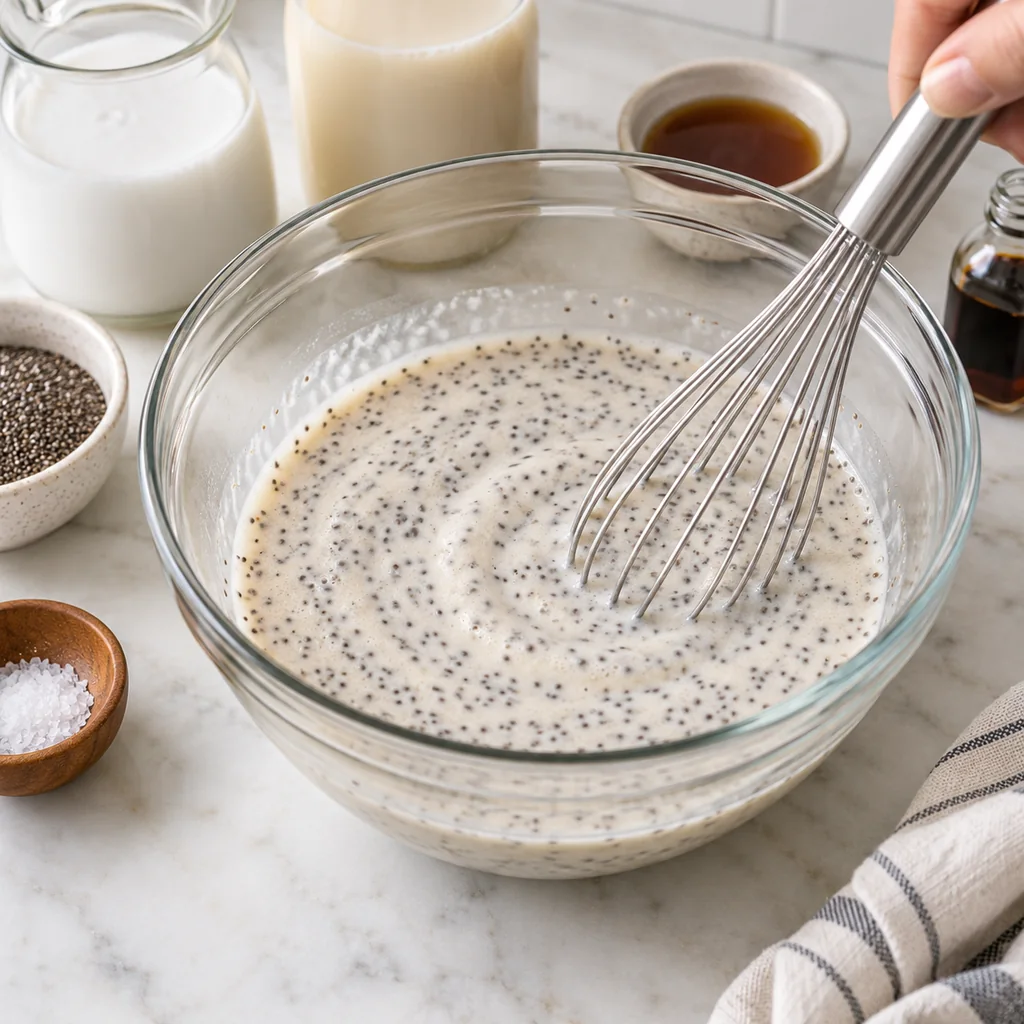
Add the coconut milk, oat milk, chia seeds, maple syrup, vanilla, and salt to a medium bowl or lidded container. Whisk for about one minute, scraping around the sides and bottom. The mixture will be fluid at this stage. Make sure there are no pockets of coconut cream and that the chia seeds are evenly dispersed rather than floating in clusters.
2. Rest, stir again, and chill
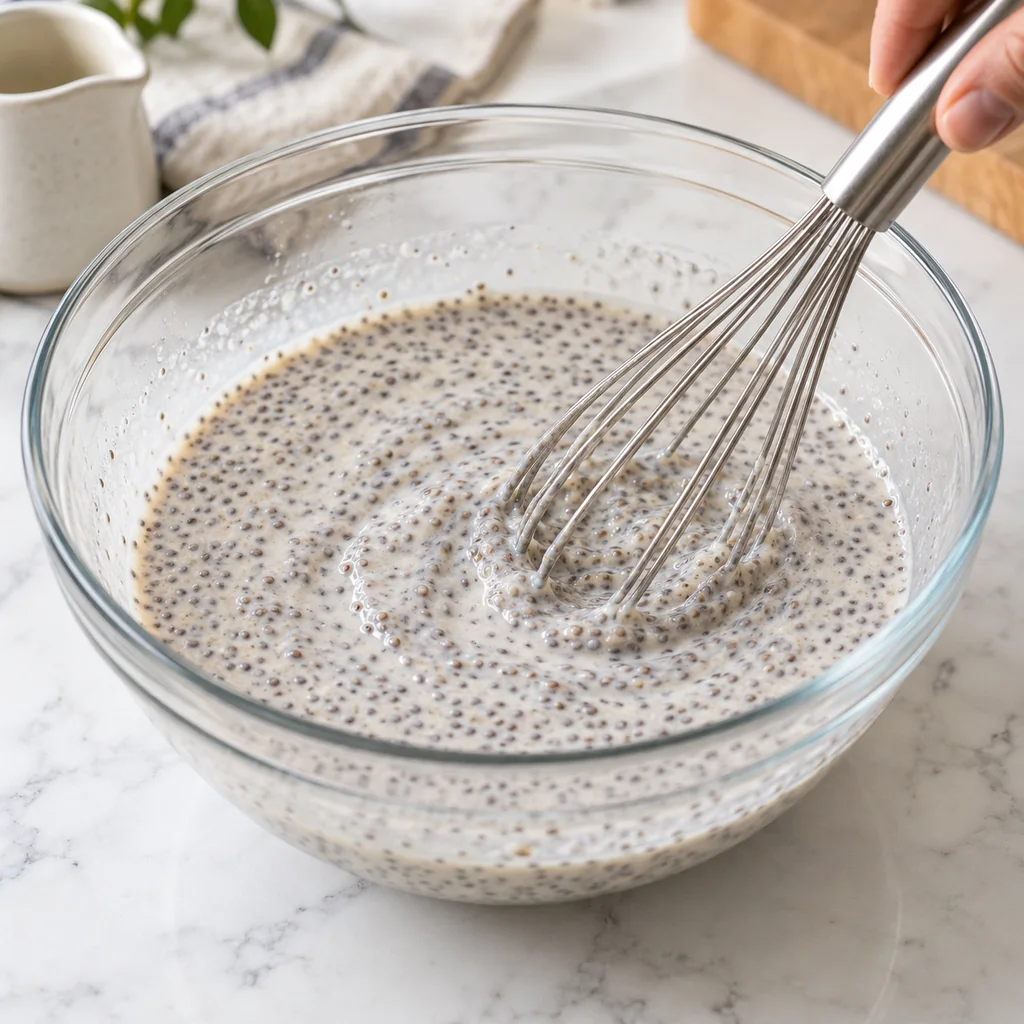
Let the mixture stand at room temperature for 10 minutes, then whisk it again. This second stir is important because chia seeds often settle or clump as they first absorb liquid. Cover and refrigerate for at least 4 hours or overnight. When ready, the pudding should hold soft spoon marks while remaining creamy. If it seems unusually firm, stir in oat milk one tablespoon at a time.
3. Blend the mango
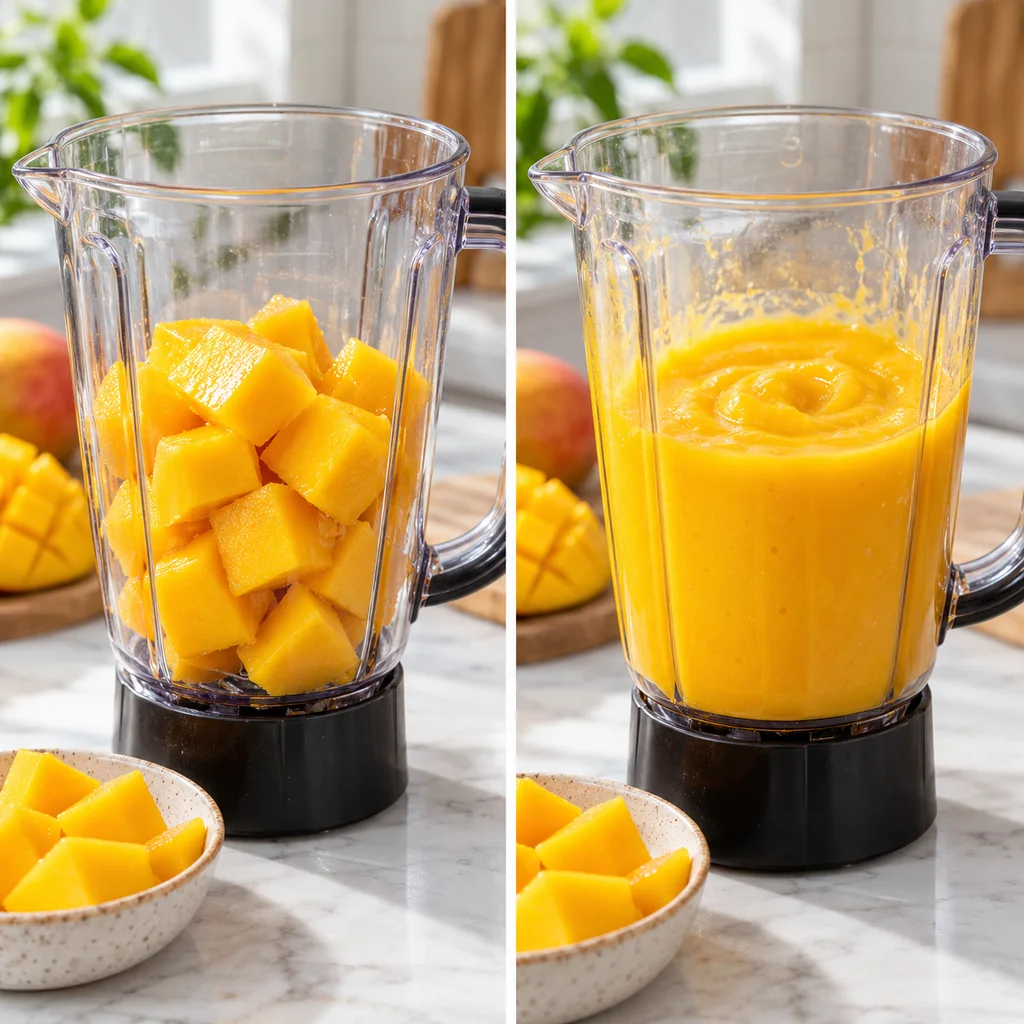
Cut the mango flesh away from the pit and set aside a small handful of neat cubes for the top. Place the remaining mango in a small blender or food processor and blend until smooth. Stop to scrape the container if necessary. A ripe mango should puree without added liquid; if the blades cannot catch, add one teaspoon of oat milk, but avoid thinning the fruit too much.
4. Divide and layer the bowls
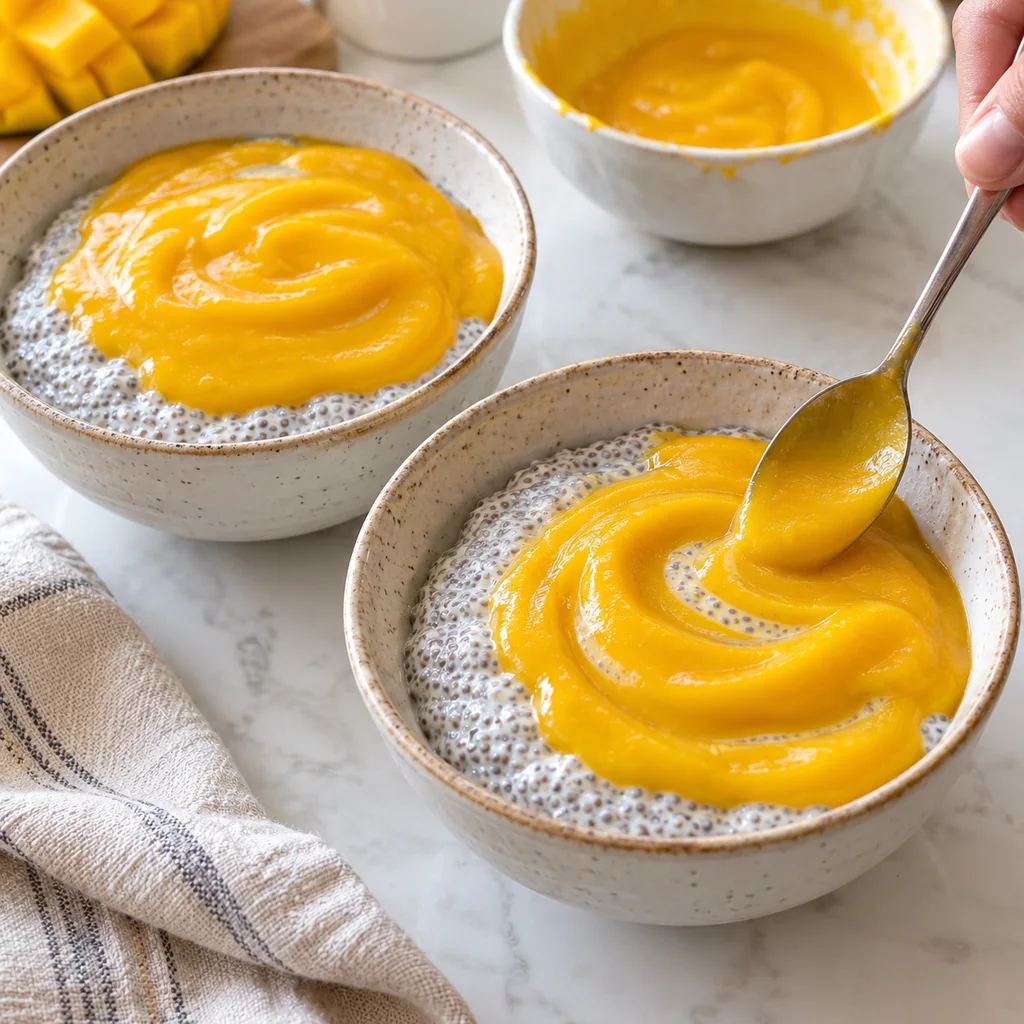
Stir the chilled chia pudding once more, then divide about half between two bowls. Spoon the mango puree over it and add the remaining pudding. You can leave the layers distinct or gently swirl them once or twice with a spoon. Dividing both components evenly ensures each serving has the same balance of creamy coconut and bright fruit.
5. Add the toppings and serve
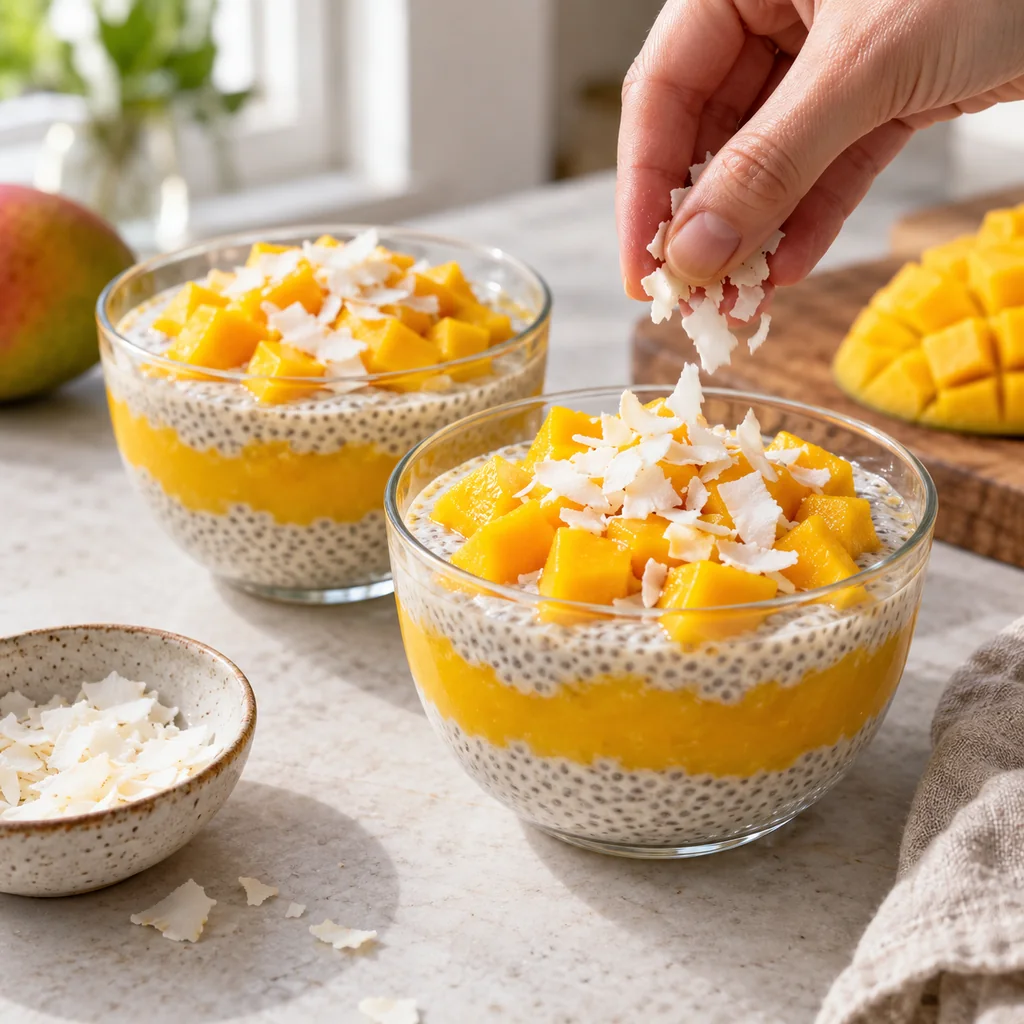
Top each bowl with the reserved mango cubes and one tablespoon of coconut flakes. Serve cold. For a softer texture, let the bowls stand at room temperature for 5 minutes before eating. If you enjoy this make-ahead format, the peach coconut chia pudding offers another fruit-forward variation.
How to Get the Best Texture
The liquid-to-seed ratio is designed for a spoonable breakfast bowl, but chia seeds continue absorbing moisture as they sit. Accurate measuring matters: scoop the seeds into a level measuring cup rather than estimating. The 10-minute rest and second whisk prevent dense clumps that stay dry in the center. If you prepare the pudding more than a day ahead, expect to add a splash of oat milk before serving.
For a perfectly smooth mango layer, use fruit without stringy fibers and blend it thoroughly. You can press the puree through a fine sieve if your mango is fibrous, though this is usually unnecessary. Keep the puree separate until assembly if you want sharply defined layers; swirl it into the pudding if you prefer the mango flavor distributed throughout.
Flavor Variations
Toasted coconut flakes add a deeper, nutty flavor, while untoasted flakes keep the bowl delicate. You may also add a little finely grated lime zest to the mango puree for brightness. Use zest rather than a large amount of juice, since extra liquid can make the fruit layer runny. For a frozen mango option with similarly clean flavors, try the mango lime sorbet.
If your mango is extremely sweet, reduce the maple syrup to two teaspoons. If it is tart, taste the puree separately and add a small drizzle of maple syrup only if needed. Avoid honey when serving the recipe as vegan. A few chopped macadamia nuts or pumpkin seeds can add crunch, but add them at the table so they do not soften during storage.
Make-Ahead and Storage
The coconut chia pudding can be refrigerated in a sealed container for up to 4 days. The mango puree is best used within 2 days, so store it separately when preparing several breakfasts. Assemble the bowls shortly before serving for the clearest layers and freshest toppings. If you assemble them in jars for transport, place the coconut flakes in a separate small container.
Do not freeze the assembled bowls. Freezing and thawing can make fresh mango watery and change the gel texture of hydrated chia seeds. For food safety and the best flavor, keep the pudding chilled and return unused portions to the refrigerator promptly. Stir well after storage and discard it if the aroma or appearance has changed.
Frequently Asked Questions
Can I use a different plant milk?
Yes. Unsweetened almond, soy, or cashew milk can replace the oat milk in the same quantity. Keep the canned full-fat coconut milk because it provides most of the richness and structure. Sweetened plant milk also works, but reduce the maple syrup and taste the mixture before chilling.
Why did my chia pudding clump?
Clumps usually form when the seeds are not whisked long enough or the mixture is not stirred after its first rest. Break them apart with a whisk, wait several minutes, and whisk again. If the pudding has already chilled, vigorous stirring and a small splash of oat milk will usually loosen it.
Can I make this without a blender?
Yes. Mash very ripe mango thoroughly with a fork or potato masher. The result will be more textured than a blended puree but will still taste fresh. Cut the fruit into small pieces first, and press it through a sieve after mashing if you want a smoother layer.