
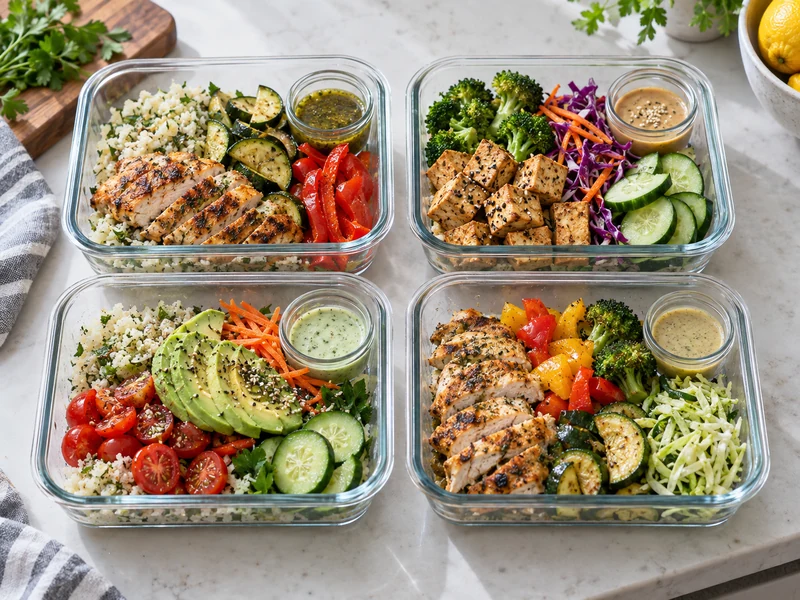
Low-carb meal prep bowls with veggies make weekday lunches easier without forcing every container to taste the same. This guide uses a shared set of roasted and fresh vegetables, two flexible protein choices, and cauliflower rice or shredded cabbage as lighter alternatives to grain-heavy bases. The result is a practical four-container plan rather than one rigid recipe.
The method is designed for variety: cook the components together, cool them properly, and assemble different combinations. “Low-carb” here is a relative description, not a nutritional calculation or medical claim. Exact carbohydrate needs vary, so check packaged ingredients and adjust portions if you follow a specific eating plan.
Why You’ll Love It
- One prep session, several combinations: The same vegetables can become four bowls with different textures and toppings.
- Fresh and roasted elements: Broccoli, zucchini, and peppers bring warmth while cucumber, cabbage, and tomatoes keep the bowls crisp.
- Easy to personalize: Chicken and tofu can be prepared side by side, and dressing stays separate until serving.
Shopping List and Equipment
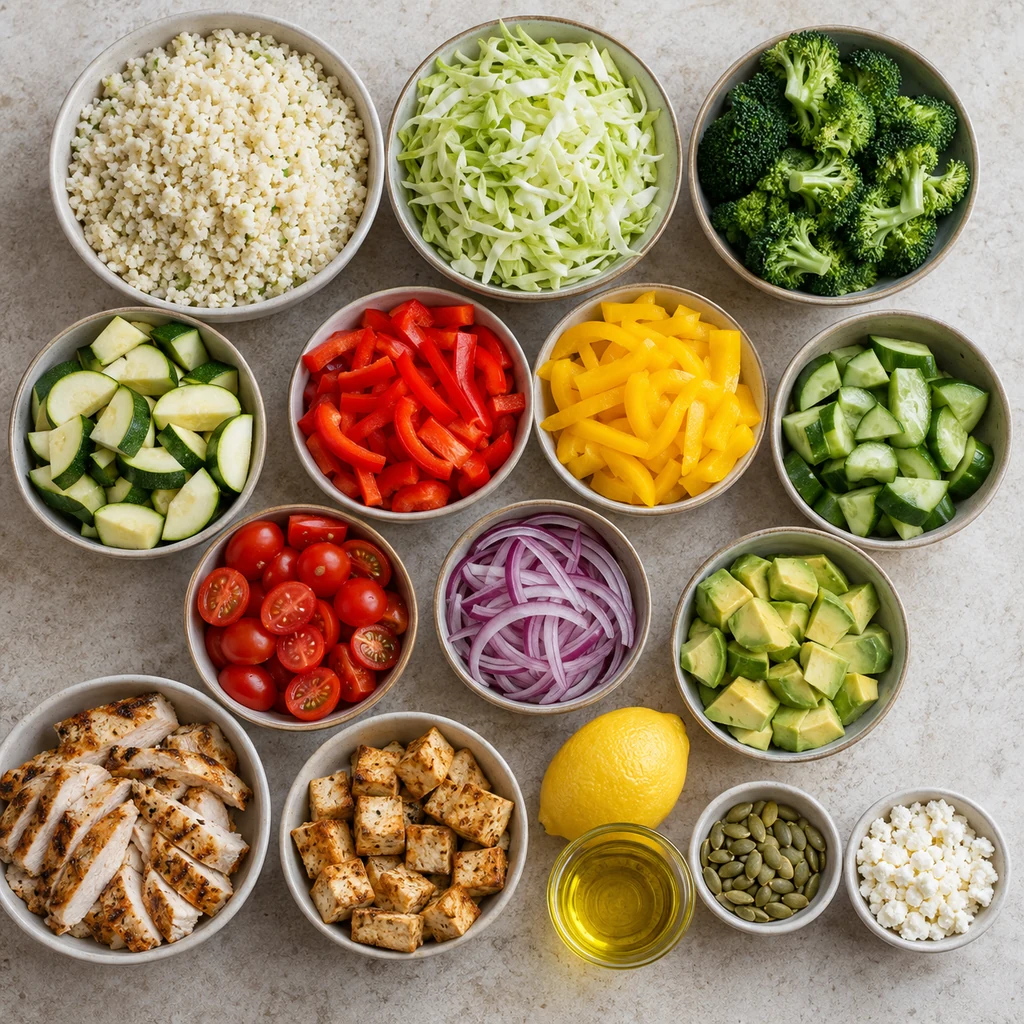
This is a component shopping list for four adaptable bowls, not a fixed single-recipe formula. Choose enough of each item for your preferred container size. Keeping the list focused prevents half-used ingredients from getting lost in the refrigerator.
- Cauliflower rice and finely shredded cabbage for the bases
- Broccoli florets, sliced zucchini, and red and yellow bell peppers for roasting
- Cucumber, cherry tomatoes, red onion, and avocado for fresh toppings
- Cooked grilled chicken breast and/or pan-seared firm tofu
- Lemon, olive oil, salt, black pepper, and dried herbs for simple seasoning
- Pumpkin seeds and crumbled feta for optional finishing texture
- A vinaigrette or tahini-style dressing, packed separately
- Four clean, lidded meal-prep containers plus four small dressing cups
Start with vegetables that are firm and unblemished. Use separate boards and utensils for raw chicken and produce, and cook poultry to a safe internal temperature. If you prefer tofu only, keep the remaining structure unchanged. Avocado is best added close to serving because it browns after cutting.
Step-by-Step Instructions
1. Wash, Dry, and Portion the Vegetables
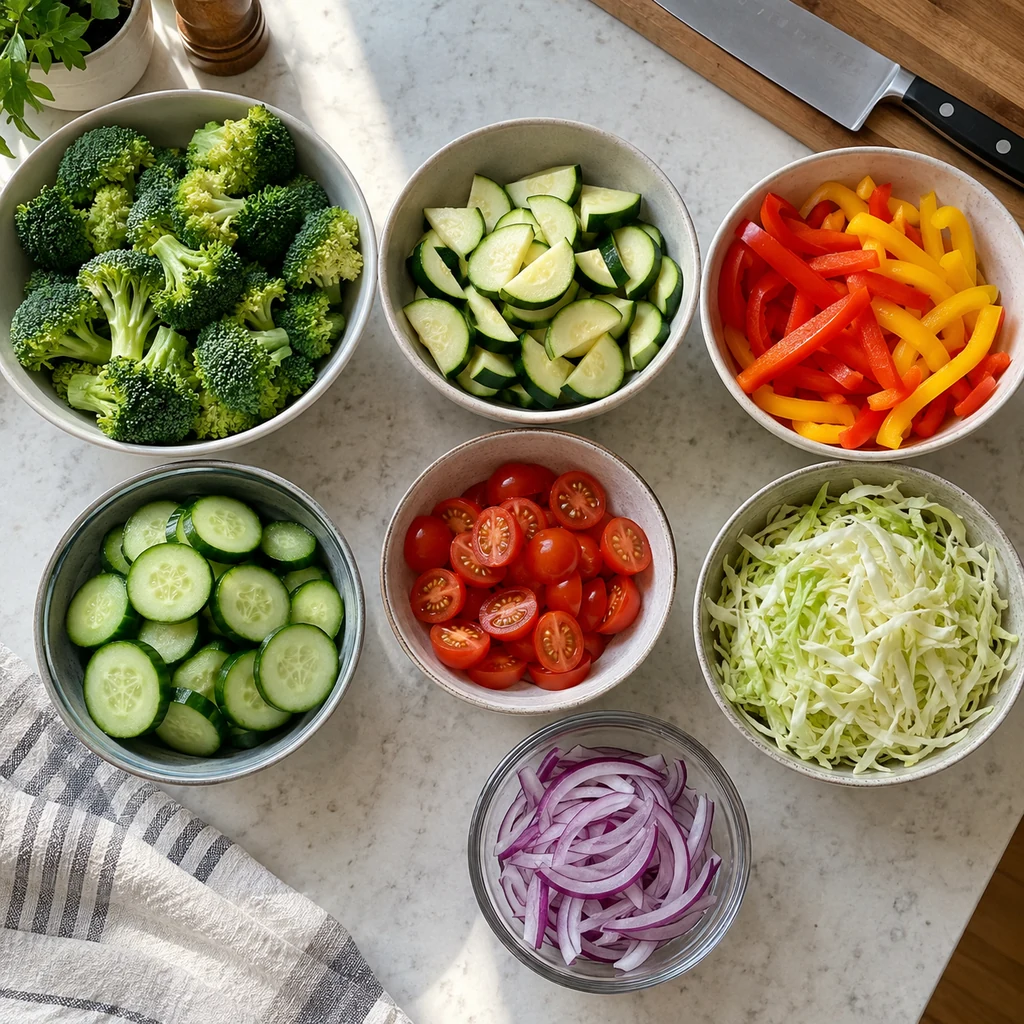
Wash the produce and dry it thoroughly. Cut broccoli into similar florets, slice zucchini into thick half-moons, and cut peppers into broad pieces so the roasting tray cooks evenly. Keep cucumber, tomatoes, cabbage, and red onion in separate bowls because they stay raw. Similar sizes matter more than perfect shapes: small scraps burn while very large pieces remain firm. Dry vegetables also roast more effectively than wet ones. Refrigerate the raw toppings while the hot components cook.
2. Roast the Broccoli, Zucchini, and Peppers
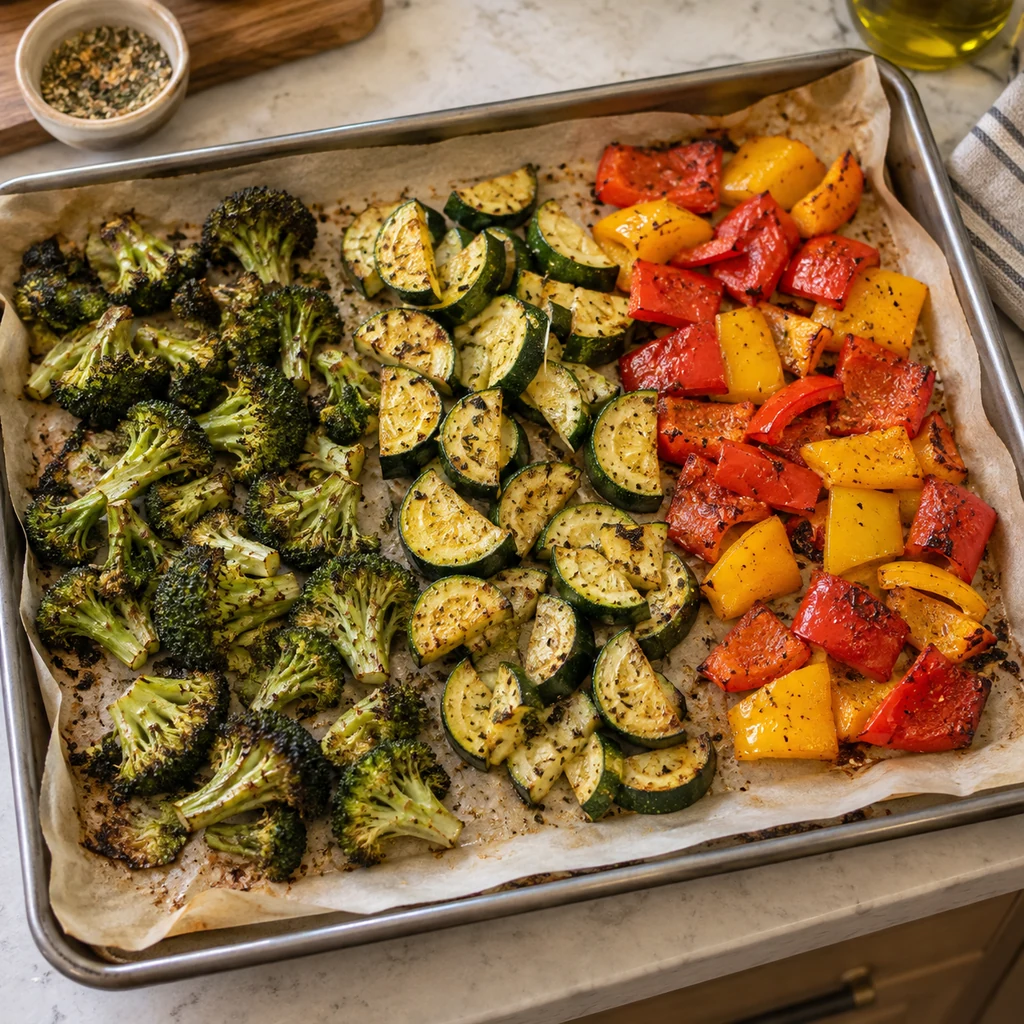
Arrange broccoli, zucchini, and peppers in distinct sections on a parchment-lined sheet pan. Add a light coating of olive oil, then season with salt, pepper, and dried herbs. Roast in a hot oven until the broccoli edges brown, the peppers soften, and the zucchini is tender without collapsing. Stir once if the pan has hot spots. Keeping sections separate lets you remove one vegetable early if it finishes before the others. Transfer everything to a wide plate so steam can escape and the vegetables do not become soggy.
3. Prepare the Bases and Protein Choices
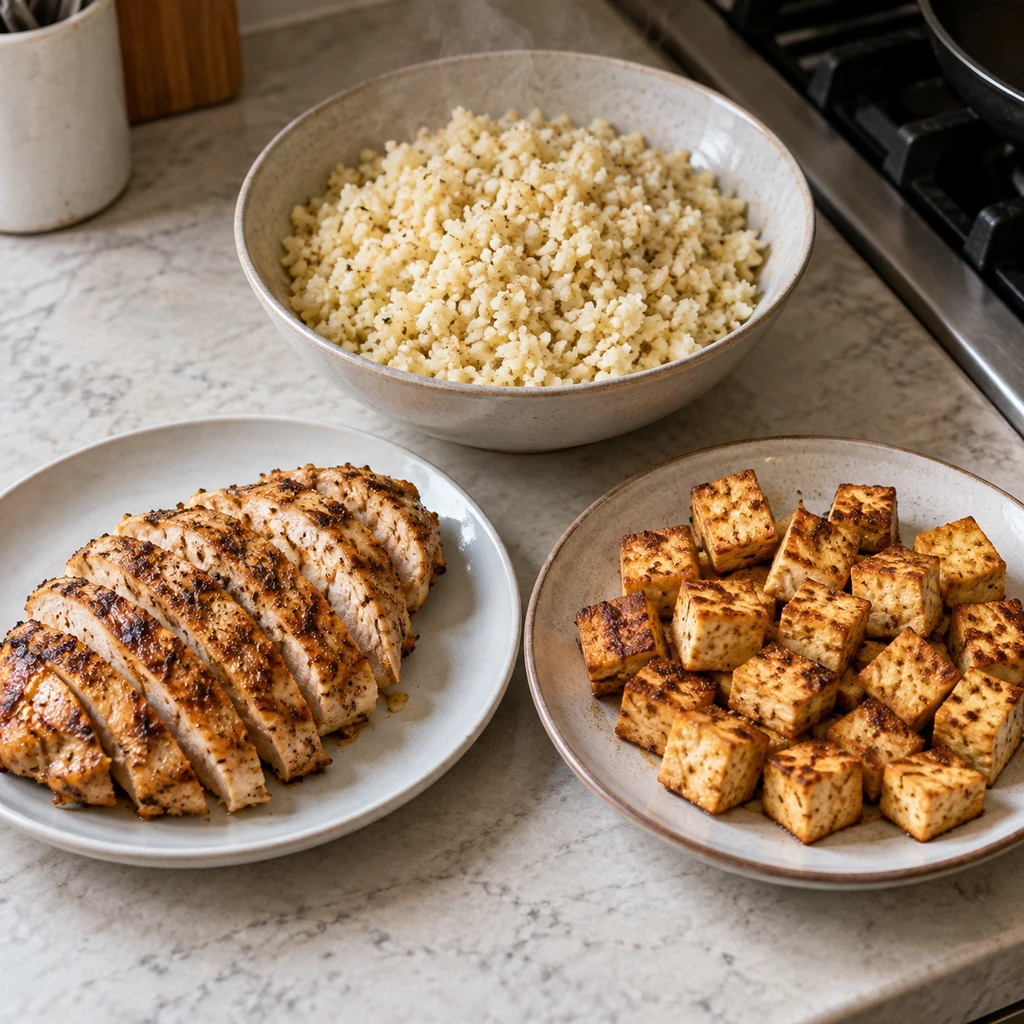
Sauté or steam cauliflower rice until tender but not watery, then spread it out briefly to cool. Leave shredded cabbage raw for a crunchier alternate base. Prepare chicken and tofu separately, seasoning both simply enough to work with different dressings. Chicken should be fully cooked before slicing; tofu should be dry on the surface and golden at the edges. Keeping the protein choices apart also makes it easier to build vegetarian containers without accidental mixing. Cool all cooked components before closing the lids.
4. Assemble Four Varied Bowls
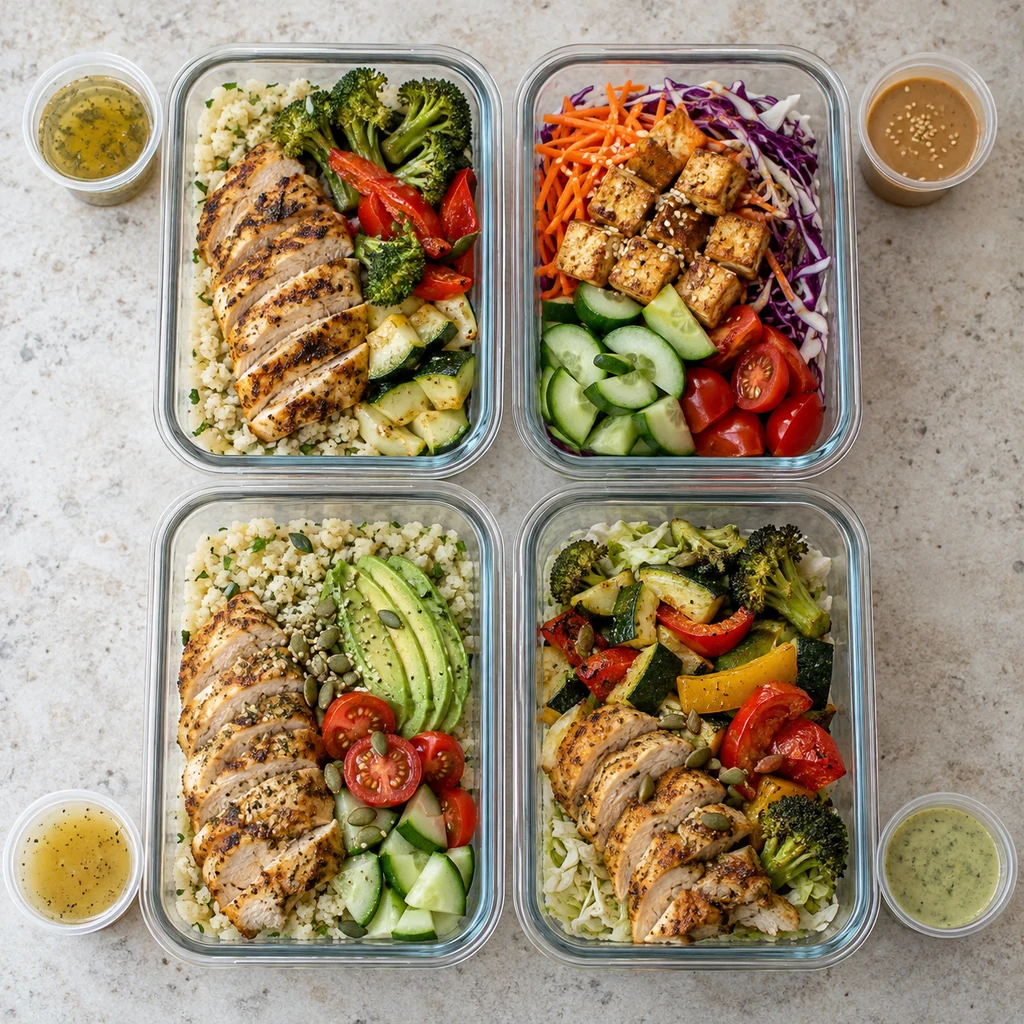
Divide cauliflower rice and cabbage among four containers, changing the proportions so each bowl feels different. Add a protein, then distribute the roasted vegetables. Fill remaining space with cucumber, tomatoes, and a small amount of red onion. Use pumpkin seeds or feta sparingly as a finish. Pack every dressing in its own sealed cup; pouring it on early softens the vegetables. Leave avocado out of containers intended for later in the week and add it just before eating. Close lids only when the cooked components are no longer steaming.
Substitutions & Variations
Use the framework—base, protein, cooked vegetables, fresh vegetables, and dressing—to make changes without losing balance. Replace cauliflower rice with lightly cooked zucchini noodles or more shredded cabbage. Swap broccoli for cauliflower florets, or use green beans when they are in season. Turkey, salmon, hard-boiled eggs, tempeh, or chickpeas can replace chicken or tofu, although chickpeas contain more carbohydrate than the vegetable bases.
For a dairy-free bowl, omit feta and add extra seeds. For a nut- or seed-free workplace, skip pumpkin seeds and use chopped herbs for freshness. Change the flavor direction with lemon-herb vinaigrette, yogurt dressing, or a thin tahini sauce, but read bottled-dressing labels if carbohydrate content matters to you. Avoid changing every component at once; a focused variation is easier to prep and easier to evaluate.
What to Serve With
These bowls are complete enough for a straightforward lunch, but a few small additions can suit different occasions. Serve lemon wedges or fresh herbs on the side for brightness. A cup of broth-based vegetable soup works well on a cold day, while sparkling water with citrus keeps a casual desk lunch simple. For family dinner, place the components on the table and let everyone assemble a bowl to taste.
If serving guests, offer dressing, feta, seeds, avocado, and herbs in separate dishes. This keeps the vegetables attractive and accommodates different preferences without building an entirely separate meal. Warm only the cooked components if desired; cucumber, tomatoes, cabbage, and avocado are better added after reheating.
Storage and Packing Tips
Use clean, airtight containers and refrigerate prepared food promptly. Store dressing separately and keep raw toppings away from warm vegetables until everything has cooled. For best texture, plan to eat the bowls over the next few days rather than treating meal prep as long-term storage. Follow the storage guidance for your chosen protein and discard food that has been left at unsafe temperatures or shows signs of spoilage.
Labeling containers by day helps you use the most delicate produce first. Eat bowls with avocado or very ripe tomatoes earlier; save sturdier cabbage, broccoli, and peppers for later. If a container will be reheated, remove the dressing cup and any fresh toppings first. A paper towel beneath very wet cucumber can help, but replacing it when damp is better than sealing excess moisture into the bowl.
Frequently Asked Questions
Are these bowls a single recipe?
No. This page is a meal-prep guide built around interchangeable components. The photographs show practical combinations, not a requirement to make every container identical. Choose one base and protein or mix the prepared options across four bowls.
How do I prevent watery meal-prep bowls?
Dry washed produce, avoid crowding the roasting tray, cool cooked food before sealing, and keep dressing separate. Cauliflower rice should be tender rather than wet. Tomatoes and cucumber can also release moisture, so add modest portions and keep them away from steaming components.
Can all four bowls be vegetarian?
Yes. Use pan-seared tofu or tempeh in every container and keep chicken out of the prep area. Add seeds or feta if they fit your preferences. The vegetable preparation and assembly method remain the same, so no other structural changes are needed.