
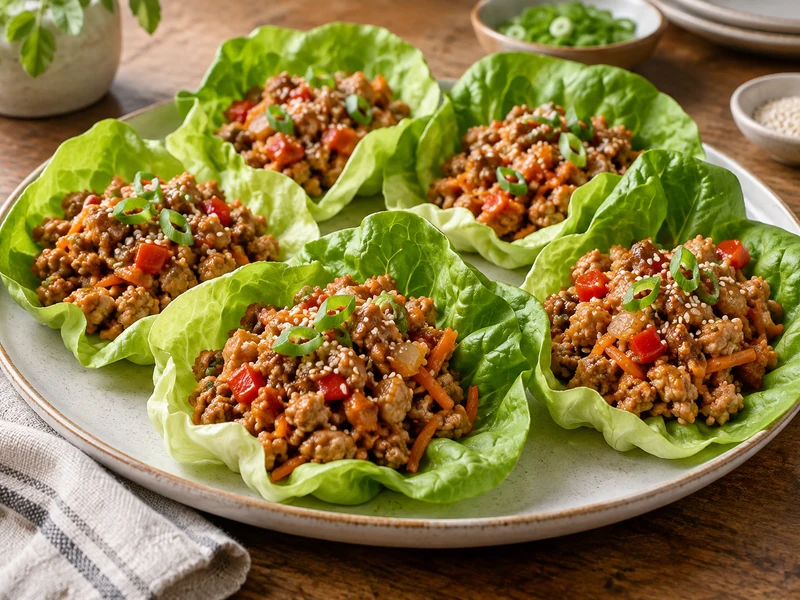
Chicken and veggie lettuce wraps deliver the contrast that makes a simple dinner memorable: warm, savory filling tucked into cool, crisp lettuce cups. Ground chicken cooks quickly with onion, garlic, ginger, carrots, and red bell pepper, while a light soy-sesame glaze brings the mixture together without hiding the vegetables.
RECIPE CARD
Lettuce Wraps with Chicken and Veggies
Ingredients
- 1 large head butter lettuce, 12 large leaves separated
- 1 pound ground chicken
- 1 tablespoon olive oil
- 1 small yellow onion, diced
- 2 garlic cloves, minced
- 1 teaspoon grated fresh ginger
- 1 cup shredded carrots
- 1 cup diced red bell pepper
- 2 tablespoons low-sodium soy sauce or tamari
- 1 teaspoon toasted sesame oil
- 1/4 teaspoon black pepper
- 2 tablespoons sliced green onions, optional
- 1 teaspoon sesame seeds, optional
Quick Method
Condensed overview. Use Full Instructions for the complete method, timing and doneness details.
- Prepare the Lettuce, Vegetables, and Sauce: Wash and thoroughly dry 12 lettuce leaves. Prepare the vegetables and aromatics, then combine the soy sauce, sesame oil, and black pepper.
- Brown the Chicken with the Aromatics: Cook the onion in olive oil for 2 minutes. Add the chicken and cook for 5–6 minutes, breaking it into crumbles. Add the garlic…
- Add the Vegetables and Soy-Sesame Sauce: Stir-fry the carrots and bell pepper with the cooked chicken for 3–4 minutes. Add the soy-sesame mixture, toss for 1 minute, then remove from…
- Fill the Lettuce Cups and Serve: Spoon about 1/4 cup of warm filling into each dry lettuce leaf. Add the optional green onions and sesame seeds, then serve immediately.
The recipe makes 12 wraps, enough for four servings, and comes together in about 30 minutes. Preparing the lettuce and vegetables before the skillet goes on the heat keeps the cooking stage calm and prevents the vegetables from softening too far. Serve the filling and lettuce separately if everyone prefers to assemble their own wraps at the table.
Why You’ll Love It
- Fast and practical: One skillet turns everyday ingredients into dinner in 30 minutes.
- Full of texture: Warm chicken and crisp vegetables contrast with cool butter lettuce.
- Easy to share: Arrange the components separately for a relaxed, build-your-own meal.
Ingredients
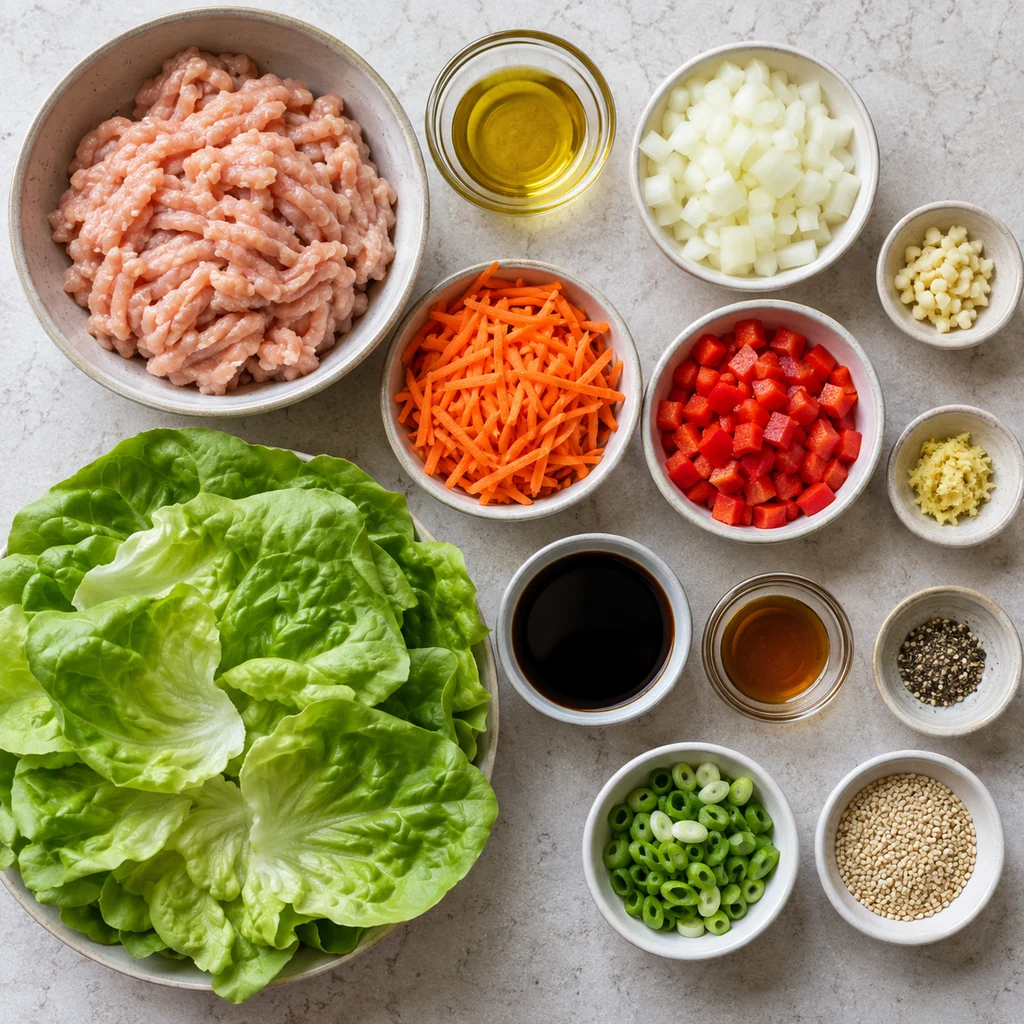
- 1 large head butter lettuce, 12 large leaves separated
- 1 pound ground chicken
- 1 tablespoon olive oil
- 1 small yellow onion, diced
- 2 garlic cloves, minced
- 1 teaspoon grated fresh ginger
- 1 cup shredded carrots
- 1 cup diced red bell pepper
- 2 tablespoons low-sodium soy sauce or tamari
- 1 teaspoon toasted sesame oil
- 1/4 teaspoon black pepper
- 2 tablespoons sliced green onions, optional
- 1 teaspoon sesame seeds, optional
Butter lettuce has flexible, cup-shaped leaves, but crisp inner iceberg leaves also work. Choose leaves without deep tears and keep smaller ones for doubling under fragile cups. Ground turkey can replace the chicken with the same temperature check. Tamari can replace soy sauce, but check the label rather than assuming every brand is gluten-free.
Step-by-Step Instructions
Prepare the Lettuce, Vegetables, and Sauce
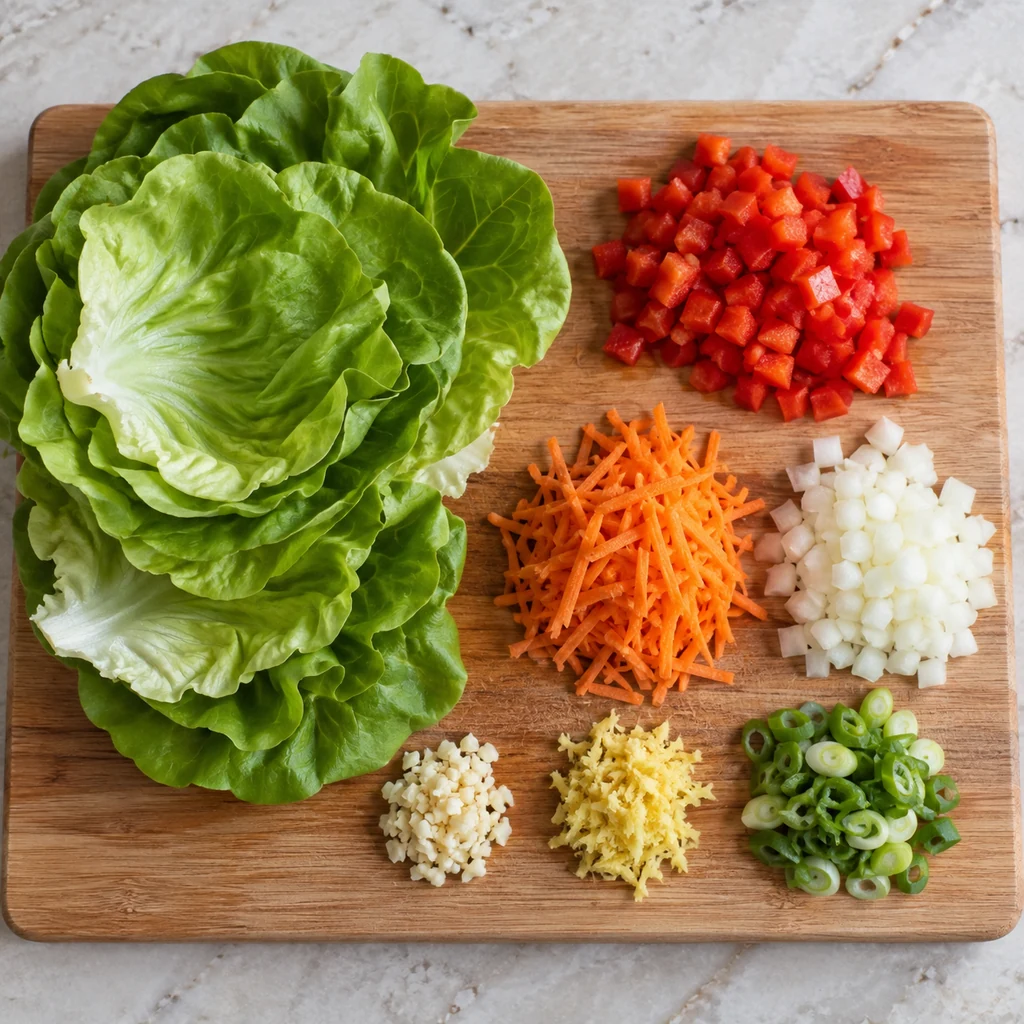
Separate 12 large lettuce leaves, rinse them under cool water, and dry them carefully. A salad spinner followed by a clean towel works well; wet leaves dilute the filling and make the wraps slippery. Dice the onion and bell pepper, mince the garlic, grate the ginger, and slice the optional green onions. Stir the soy sauce, sesame oil, and black pepper together in a small bowl. Keep raw chicken and its utensils away from the washed lettuce and ready-to-eat garnishes.
Brown the Chicken with the Aromatics
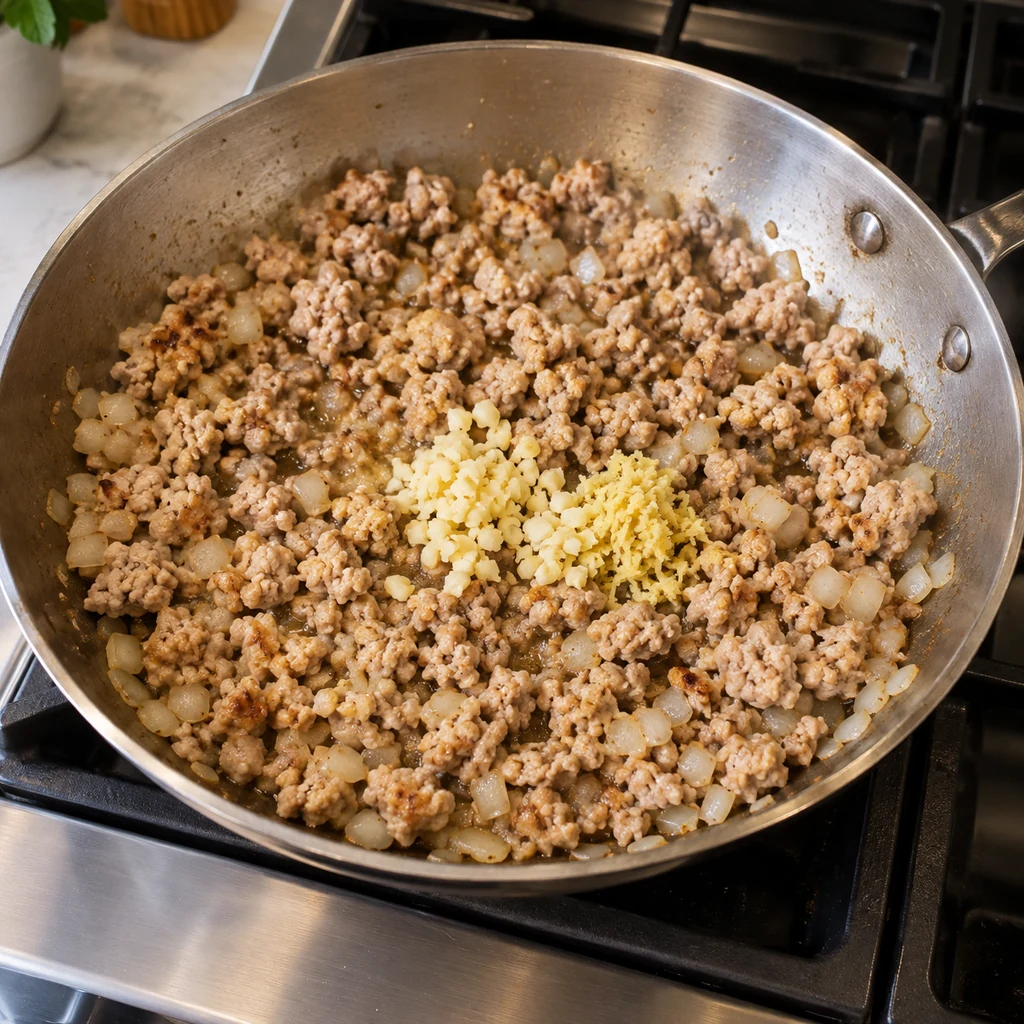
Heat the olive oil in a large skillet over medium-high heat. Add the onion and cook for 2 minutes, stirring until it begins to soften. Add the ground chicken and spread it across the hot surface. Leave it undisturbed for about 1 minute to encourage light browning, then break it into small crumbles with a wooden spoon. Cook for 5–6 minutes, stirring regularly. Add the garlic and ginger during the final minute so they become fragrant without scorching.
The chicken should no longer look pink, and released liquid should have mostly evaporated before the vegetables go in. Verify that the thickest crumbles reach 165°F (74°C) with an instant-read thermometer. If liquid remains, cook for another minute rather than draining the aromatics. Wash the thermometer probe after it touches undercooked meat.
Add the Vegetables and Soy-Sesame Sauce
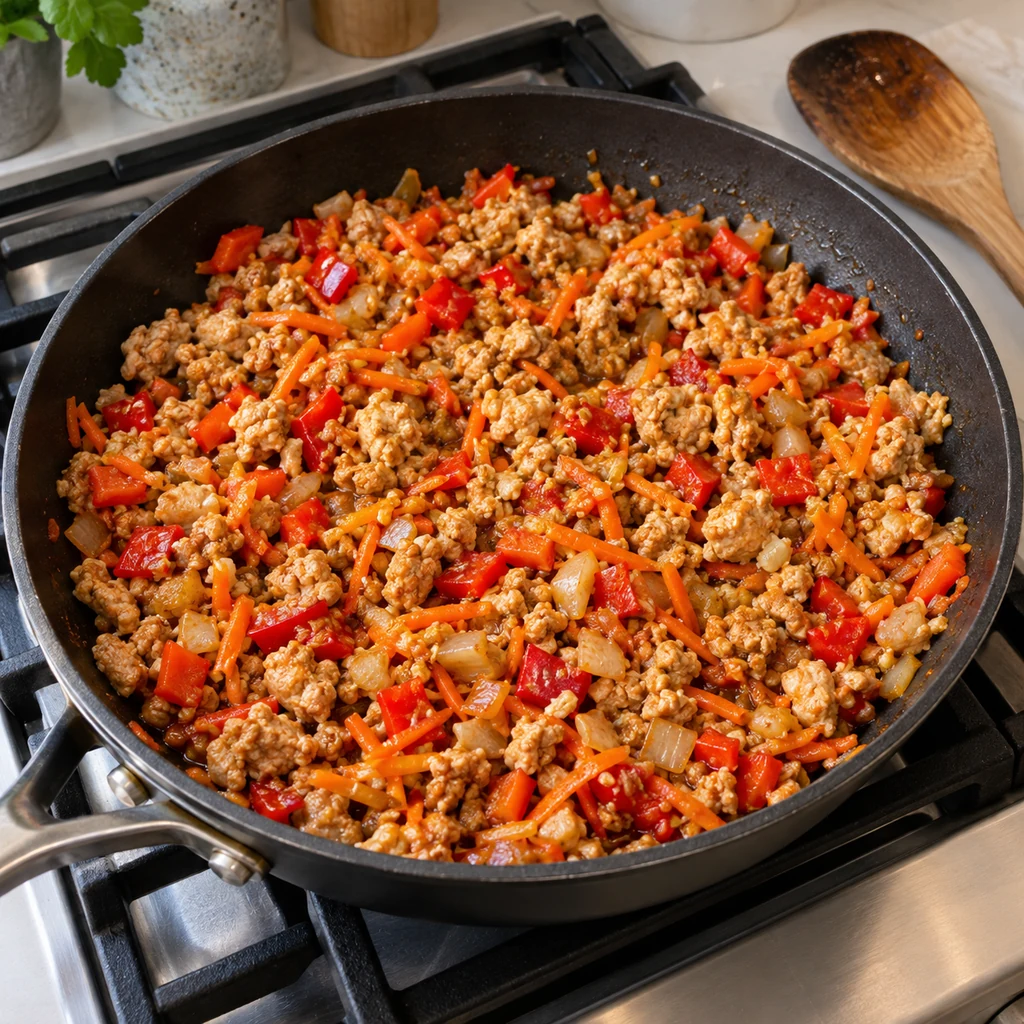
Add the shredded carrots and diced bell pepper to the cooked chicken. Stir-fry for 3–4 minutes, until the pepper brightens and the carrot softens slightly but still has a gentle bite. Pour in the soy-sesame mixture and toss for 1 minute, scraping the bottom of the skillet. The filling is ready when it looks moist and glossy without a puddle of thin sauce. Taste only after the chicken is fully cooked, then add a small splash of soy sauce if needed.
Remove the skillet from the heat and let the filling stand for 3 minutes. This brief rest keeps very hot juices from wilting the lettuce immediately and allows the glaze to settle around the chicken. If the mixture seems wet, return it to medium heat for 1 minute and stir continuously. Avoid cooking longer than necessary, since the vegetables should retain color and enough structure to contrast with the tender chicken.
Fill the Lettuce Cups and Serve
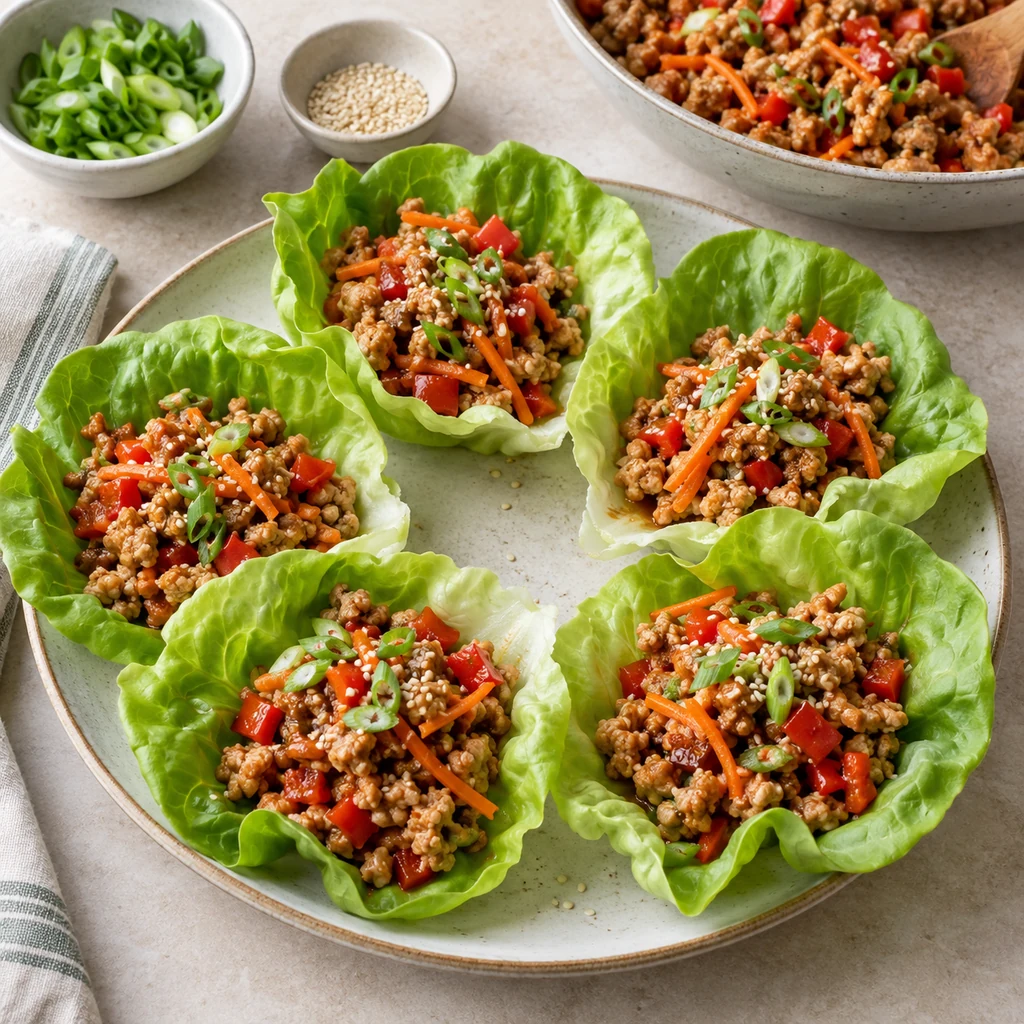
Arrange the dry lettuce leaves on a platter and spoon about 1/4 cup of warm filling into each one. Do not overfill: a modest portion makes the cups easier to fold and eat. Sprinkle with the optional green onions and sesame seeds. Serve immediately, or place the skillet filling and chilled leaves in separate dishes so each person can build a wrap. Double smaller leaves if they feel too delicate to support the filling.
Substitutions & Variations
Ground turkey can replace chicken; confirm the same 165°F (74°C) internal temperature. Finely crumbled extra-firm tofu also works. Press it first, brown it until the edges are golden, then add the aromatics and vegetables. For more heat, add red pepper flakes with the garlic or offer chili sauce at the table.
Use finely diced water chestnuts for extra crunch, adding them with the carrots and pepper. Chopped mushrooms can add savory depth, but cook them after the onion until their moisture evaporates before adding the chicken. Keep additions to about one extra cup so the measured sauce still coats the filling. If iceberg lettuce is used, choose the curved inner leaves; the broad outer leaves can be cut into cups or layered in pairs.
What to Serve With
These wraps pair well with steamed jasmine rice, brown rice, or a simple cucumber salad. Rice makes the meal more substantial without needing to go inside the lettuce cups. Edamame, lightly steamed green beans, or a clear vegetable soup also complement the ginger and sesame flavors. Offer lime wedges or a mild chili sauce on the side so diners can adjust brightness and heat for themselves.
Store filling and lettuce separately. Refrigerate the cooled chicken mixture in an airtight container for up to 3 days, and keep dry lettuce wrapped loosely with a paper towel. Reheat only the filling until thoroughly hot, then assemble with cold lettuce. Assembled wraps quickly soften. The filling can be frozen for up to 2 months; prepare fresh lettuce after thawing.
Frequently Asked Questions
How do I keep lettuce wraps from falling apart?
Choose broad, intact leaves and dry them completely. Add only about 1/4 cup filling to each cup, keeping it near the sturdy center rib. Small or torn leaves can be doubled to create a stronger base. Serve the filling warm rather than piping hot so the lettuce stays firm longer.
Can I make the chicken filling ahead?
Yes. Cook the filling, cool it promptly, and refrigerate it in a sealed container for up to 3 days. Reheat it until thoroughly hot, then rest it for 2–3 minutes before spooning it into cold, dry lettuce leaves. Prepare garnishes separately so they remain fresh.
Why is my chicken filling watery?
Ground chicken and vegetables release moisture as they cook. Let the chicken liquid evaporate before adding the carrots and pepper, use medium-high heat, and avoid crowding a small skillet. If liquid remains after the sauce is added, cook for another minute while stirring until the filling looks glossy rather than soupy.