
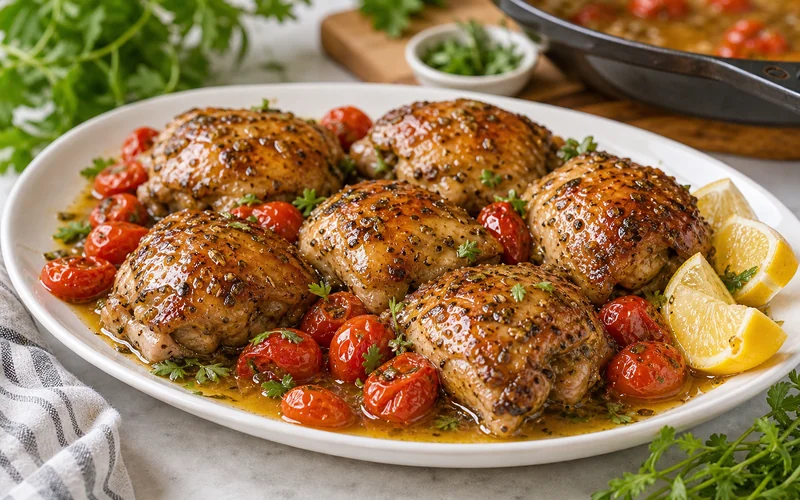
Italian Dressing Caramelized Chicken is the kind of dinner that proves a short ingredient list can still deliver big flavor. The dressing brings tang, herbs, garlic, oil, and seasoning in one pour, while a little sweetness helps the chicken brown into a glossy, savory glaze. It tastes bright and comforting at the same time, especially with rice, roasted potatoes, pasta, or crisp green beans.
The key is balance. Too much dressing can make the pan watery, and too much sugar can burn before the chicken cooks through. This guide walks through the best cut of chicken, how to get caramelized edges, what to serve with it, and how to store leftovers without losing the sauce.
Why This Italian Dressing Chicken Works
Italian dressing is a built-in marinade. It has acidity for tenderness, oil for browning, herbs for aroma, and salt for seasoning. When it hits a hot skillet, the liquid reduces and coats the chicken in a shiny glaze. Add a small amount of honey, brown sugar, or maple syrup and you get deeper color with a sweet-savory finish.
Chicken thighs are especially good here because they stay juicy while the sauce reduces. Boneless chicken breasts also work, but they need gentler timing so they do not dry out. If you love easy chicken dinners, this pairs naturally with simple sides or make-ahead lunches like high protein burrito bowls.
Ingredients and Smart Swaps
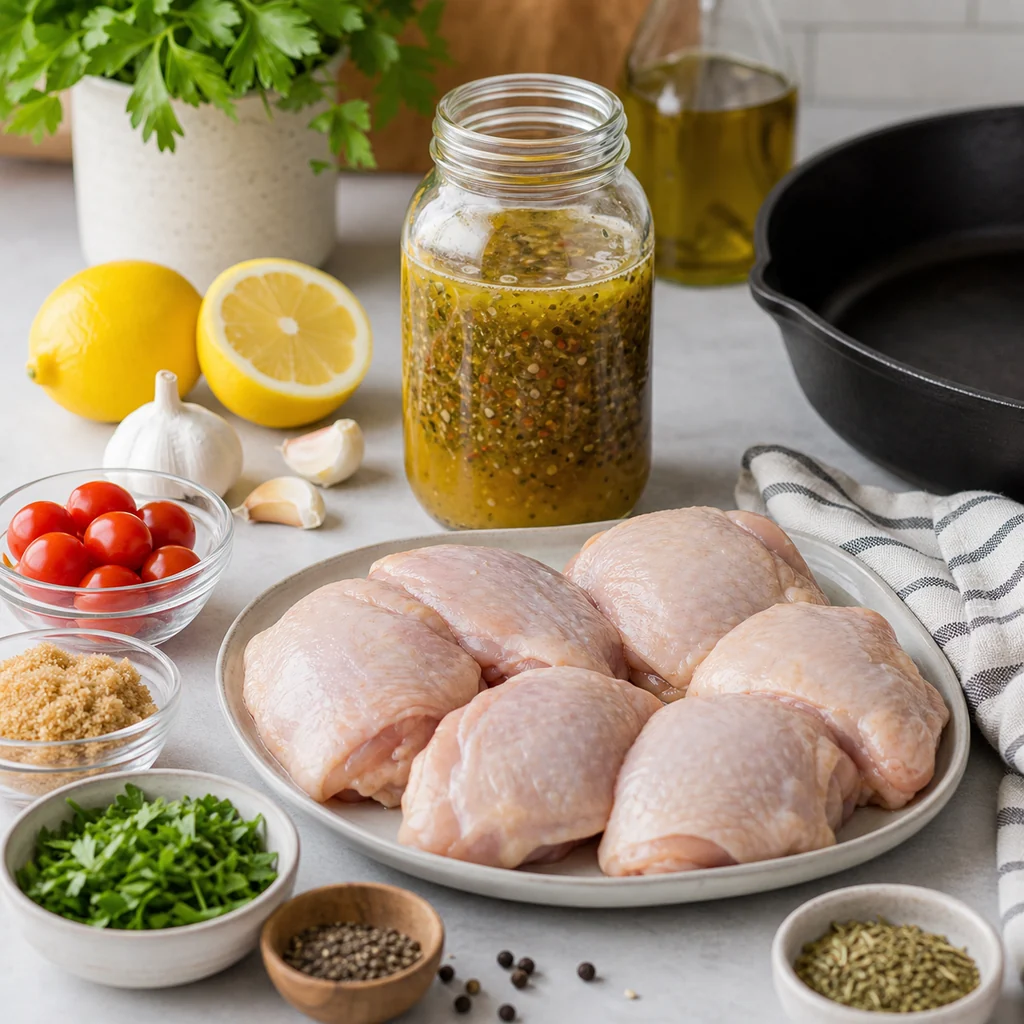
You do not need a long shopping list. Start with chicken, Italian dressing, a touch of sweetness, and a hot pan. From there, add vegetables or sides based on what you have.
- Chicken: boneless skinless thighs are the easiest option. Bone-in thighs need more time but have excellent flavor.
- Italian dressing: use a good bottled dressing or homemade dressing with olive oil, vinegar, garlic, oregano, basil, parsley, salt, and pepper.
- Sweetener: honey, brown sugar, or maple syrup helps the sauce reduce into a glaze.
- Garlic: fresh minced garlic gives the pan sauce more depth.
- Tomatoes: cherry tomatoes soften in the skillet and add brightness.
- Finishers: lemon juice, parsley, basil, red pepper flakes, or grated Parmesan.
If your dressing is already sweet, use less honey. If it is very salty, choose low-sodium sides and taste the sauce before adding extra salt.
How to Get Caramelized Chicken
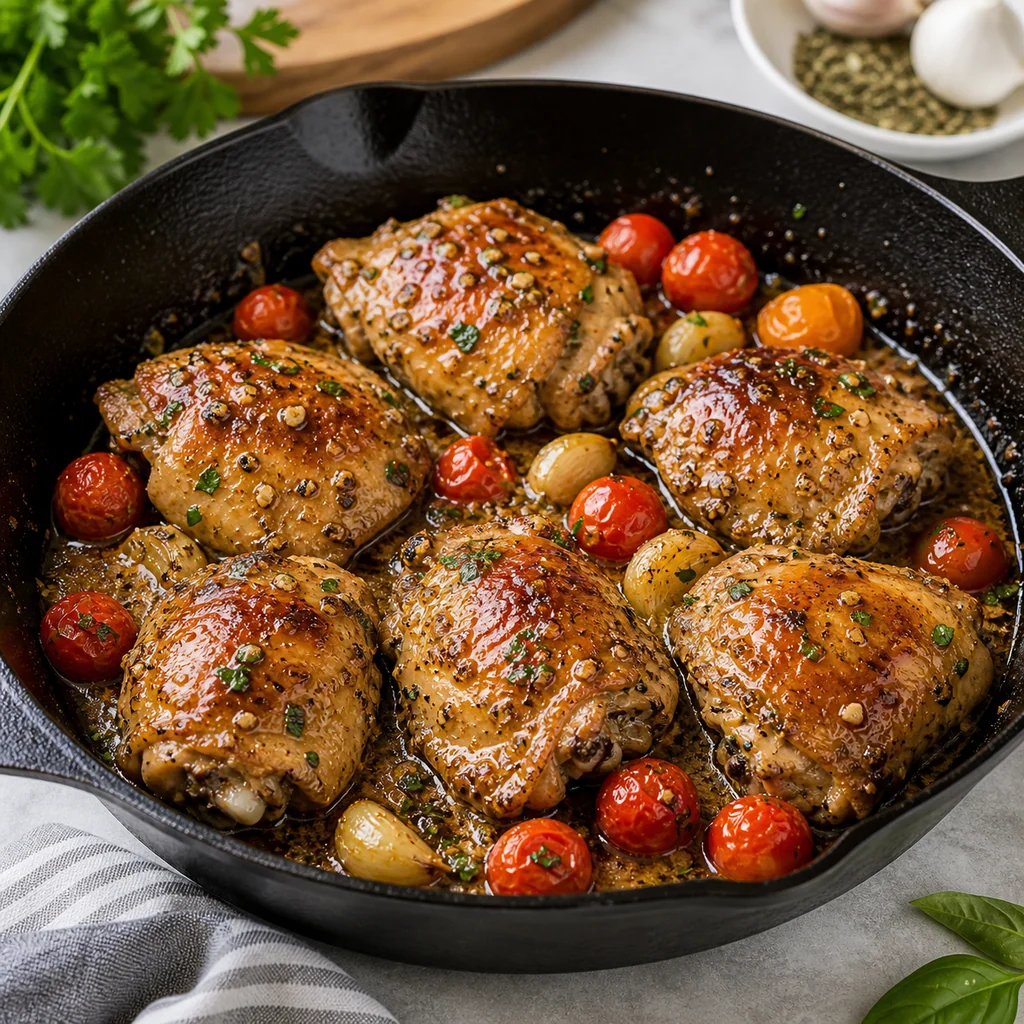
Pat the chicken dry before it goes into the pan. Moisture on the surface slows browning. Heat a large skillet over medium-high heat, add a little oil if needed, and sear the chicken until golden on both sides. Do not crowd the pan; if the pieces overlap, they steam instead of brown.
Once the chicken has color, lower the heat to medium and add Italian dressing, garlic, and a small spoonful of honey or brown sugar. Let the sauce bubble gently. Turn the chicken a few times so the glaze coats every side. The sauce should thicken, darken slightly, and look glossy rather than watery.
Use a thermometer for accuracy. Chicken should reach 165°F in the thickest part. If the sauce thickens before the chicken is done, add a splash of broth or water and keep cooking. If the chicken finishes before the sauce looks syrupy, move the chicken to a plate and reduce the sauce for another minute or two.
Serving Ideas for Italian Dressing Chicken
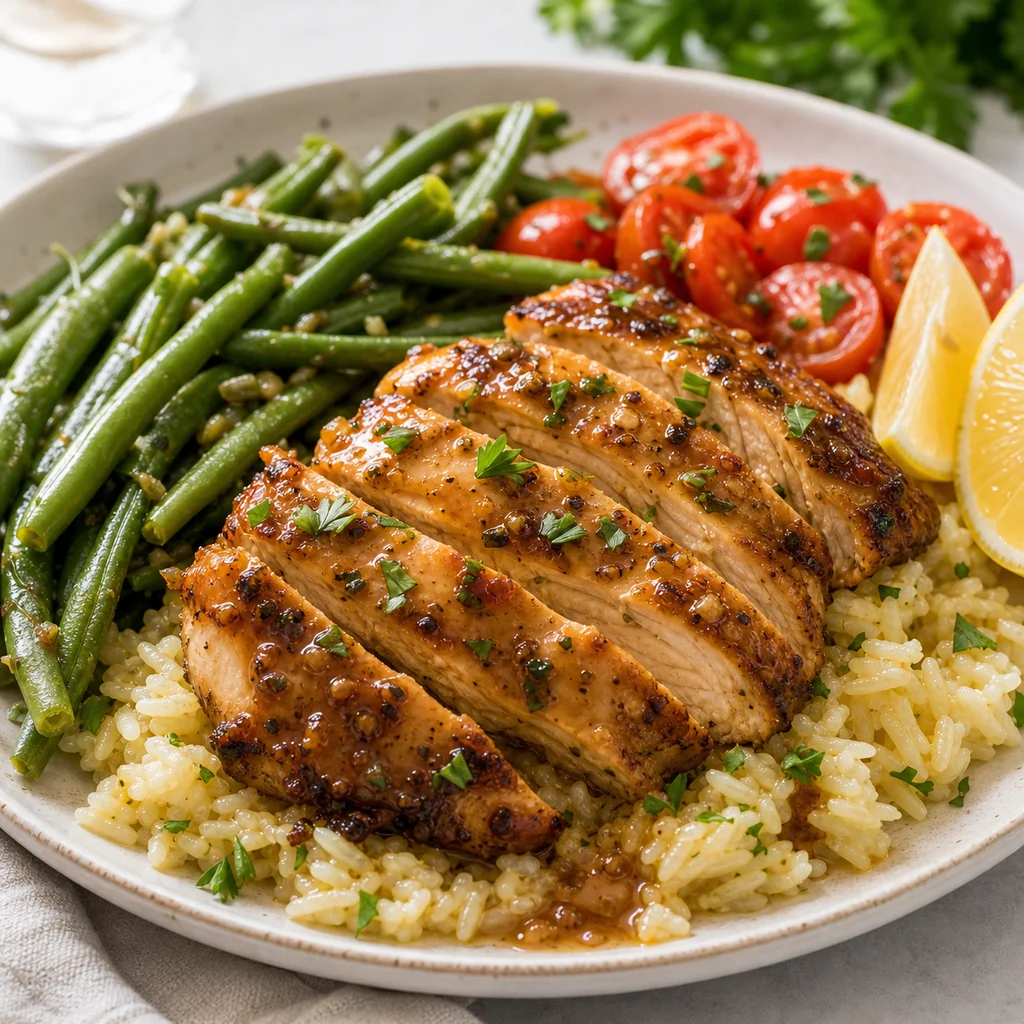
This chicken is flexible because the glaze is tangy, herby, and a little sweet. For a simple dinner, serve it with rice and green beans. For something cozier, add roasted potatoes or buttered noodles. For a lighter plate, slice the chicken over romaine, cucumbers, tomatoes, and a little extra dressing.
It also makes a strong sandwich filling. Slice the chicken, tuck it into toasted rolls, add provolone, and spoon a little warm sauce over the top. For a party-style dinner, serve it alongside lemon herb roasted potatoes and a crisp salad.
Meal Prep and Leftovers
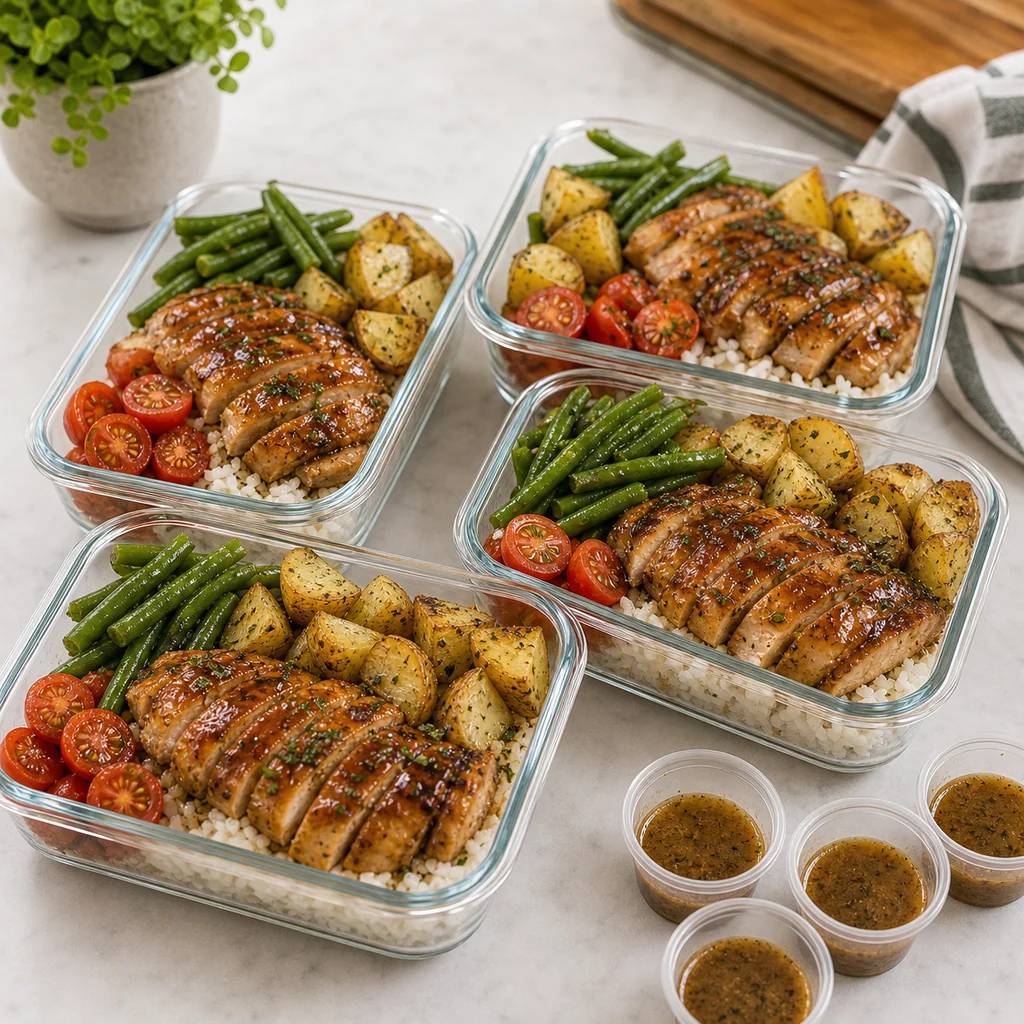
Italian Dressing Caramelized Chicken keeps well for three to four days in the refrigerator. Store the chicken with a spoonful of sauce so it stays moist. If you pack it for lunches, rice, potatoes, pasta, green beans, broccoli, zucchini, and tomatoes all reheat well beside it.
For freezing, cool the chicken first and pack it with sauce in airtight containers. Thaw overnight in the refrigerator. Reheat gently in a skillet with a splash of broth or water, or microwave in short intervals so the glaze does not dry out.
Mistakes to Avoid
The first mistake is using too much dressing. A flooded skillet prevents caramelization. Start with enough to coat the bottom of the pan, then add more only if needed. The second mistake is cooking over heat that is too high after the sweetener goes in. Sugar can darken quickly, so reduce the heat once the glaze starts bubbling.
Another common issue is skipping the resting time. Let the chicken sit for five minutes before slicing so the juices settle. If you cut it too soon, the meat can lose moisture and the plate gets watery.
Italian Dressing Caramelized Chicken Checklist
- Pat chicken dry before searing.
- Use a wide skillet so the chicken browns instead of steams.
- Start with moderate dressing, then reduce it into a glaze.
- Add honey or brown sugar lightly, especially if the dressing is sweet.
- Lower the heat once the sauce starts to thicken.
- Cook chicken to 165°F.
- Rest before slicing.
- Save extra pan sauce for serving or meal prep.
FAQ
Can I use chicken breasts?
Yes. Pound thick chicken breasts to an even thickness and watch the temperature closely. They cook faster than thighs and can dry out if left in the pan too long.
Can I bake Italian Dressing Caramelized Chicken?
Yes. Bake in a shallow dish at 400°F until the chicken reaches 165°F, then broil briefly to help the top brown. The skillet method gives a thicker glaze, but baking is hands-off.
Why did my sauce burn?
The heat was probably too high after the sweetener was added, or the pan got too dry. Lower the heat and add a splash of broth if the glaze thickens too quickly.
What can I use instead of Italian dressing?
Use olive oil, vinegar or lemon juice, garlic, oregano, basil, parsley, salt, pepper, and a small spoonful of honey. It gives the same tangy herb flavor without bottled dressing.
Final Thoughts
Italian Dressing Caramelized Chicken is fast enough for weeknights but flavorful enough for guests. Keep the pan hot for the initial sear, reduce the dressing into a glossy sauce, and finish with lemon or herbs. The result is juicy chicken with a sweet, tangy, herb-rich glaze that works with almost any side.