
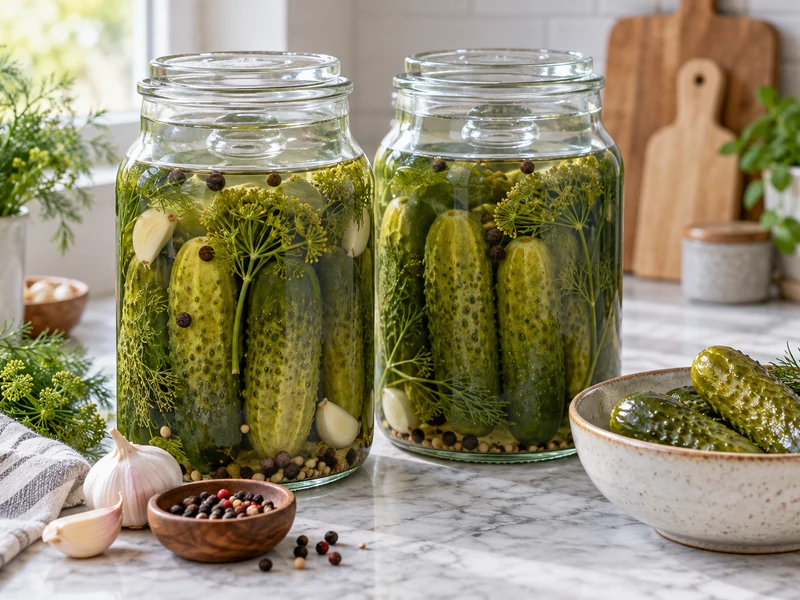
Homemade fermented pickles are crisp, pleasantly sour, and deeply savory without relying on a quick vinegar soak. The flavor develops as lactic-acid bacteria transform fresh cucumbers in a carefully measured brine. This small-batch method uses dependable proportions for a classic deli-style tang.
RECIPE CARD
How to Make Fermented Pickles at Home
Ingredients
- 2 pounds small, firm pickling cucumbers, about 3 to 4 inches long
- 4 cups water
- 1/4 cup canning or pickling salt
- 2 tablespoons vinegar labeled 5% acidity
- 1 tablespoon dill seed or 2 to 3 fresh dill heads
- 1 garlic clove, peeled, optional
- 1 dried red pepper, optional
- 1 teaspoon mixed pickling spice, optional
Quick Method
Condensed overview. Use Full Instructions for the complete method, timing and doneness details.
- Clean Equipment and Prepare the Cucumbers: Wash the fermentation vessel, weight, lid, utensils, and work surface with hot, soapy water, then rinse well. Rinse the cucumbers under cool running water…
- Mix the Tested Brine: Combine the water and canning or pickling salt in a nonreactive saucepan. Warm just enough to dissolve the salt, stirring until the liquid is…
- Pack the Fermentation Vessel: Place half the dill and any optional garlic, dried pepper, or pickling spice in the bottom of the vessel. Pack the cucumbers upright and…
- Add Brine and Keep Everything Submerged: Pour the cooled brine over the cucumbers until they are completely covered. Position the clean fermentation weight or fitted plate so every cucumber and…
- Ferment at the Correct Temperature: Ferment the covered vessel at 70 to 75°F for 3 to 4 weeks. Check it several times each week to confirm the cucumbers stay…
- Check, Refrigerate, and Serve: After the full fermentation period, taste one pickle with a clean utensil. It should smell pleasantly sour and feel firm rather than slippery. Transfer…
Fermentation rewards accuracy. Use firm pickling cucumbers, canning or pickling salt, vinegar labeled 5% acidity, clean equipment, and the stated temperature range. The cucumbers must remain below the brine throughout fermentation. This practical half-batch of tested dill-pickle proportions makes about two quarts for refrigerated storage.
Why You’ll Love It
- True fermented flavor: A slow, cool fermentation creates a rounded sourness that tastes more complex than a quick pickle.
- A manageable batch: Two pounds of cucumbers fit comfortably in a two-quart vessel without taking over the kitchen.
- Clear safety cues: Exact brine proportions, temperature guidance, and spoilage signs remove guesswork from the process.
Ingredients
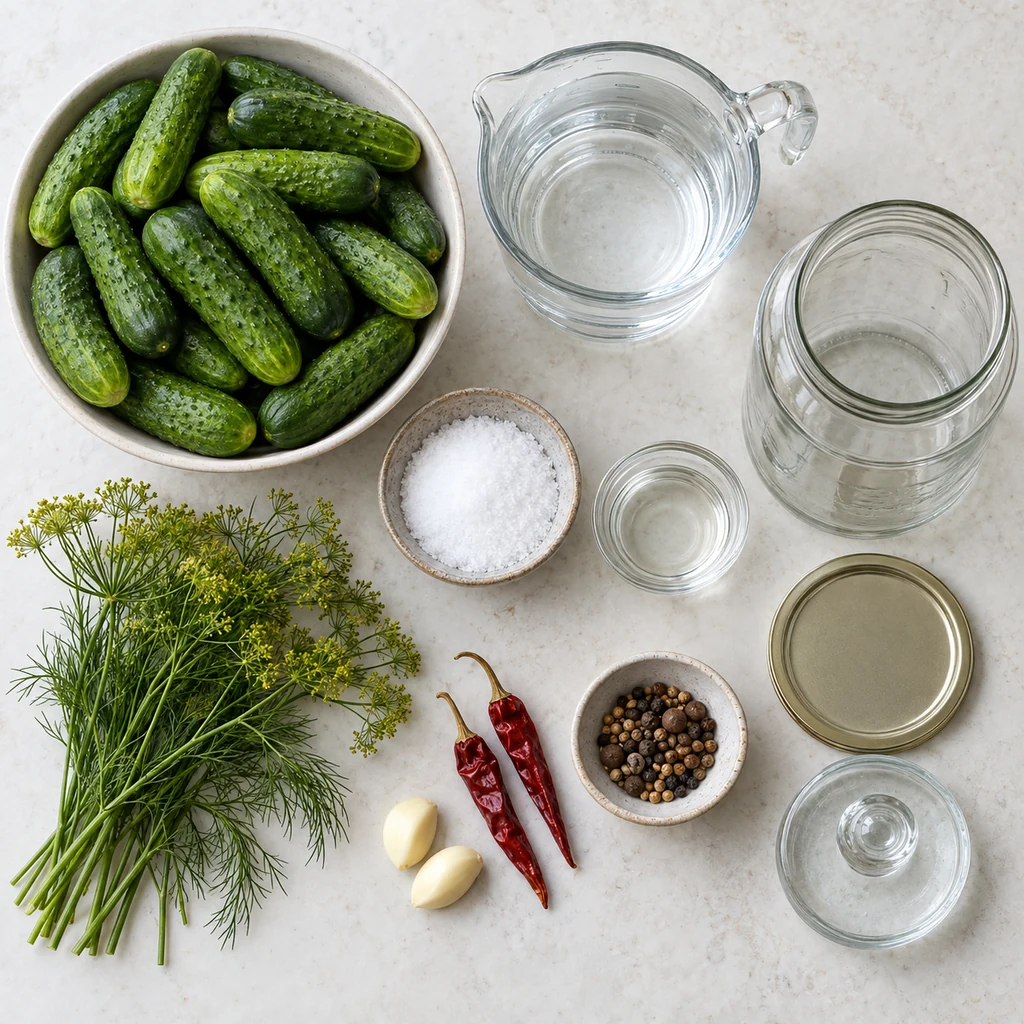
- 2 pounds small, firm pickling cucumbers, about 3 to 4 inches long
- 4 cups water
- 1/4 cup canning or pickling salt
- 2 tablespoons vinegar labeled 5% acidity
- 1 tablespoon dill seed or 2 to 3 fresh dill heads
- 1 garlic clove, peeled, optional
- 1 dried red pepper, optional
- 1 teaspoon mixed pickling spice, optional
You will also need a clean two-quart food-safe glass or crock fermentation vessel, a fermentation weight or small food-safe plate that fits inside, and a loose-fitting lid or fermentation lid. Avoid reactive metal containers and never use a vessel that previously held nonfood materials.
Step-by-Step Instructions
1. Clean Equipment and Prepare the Cucumbers
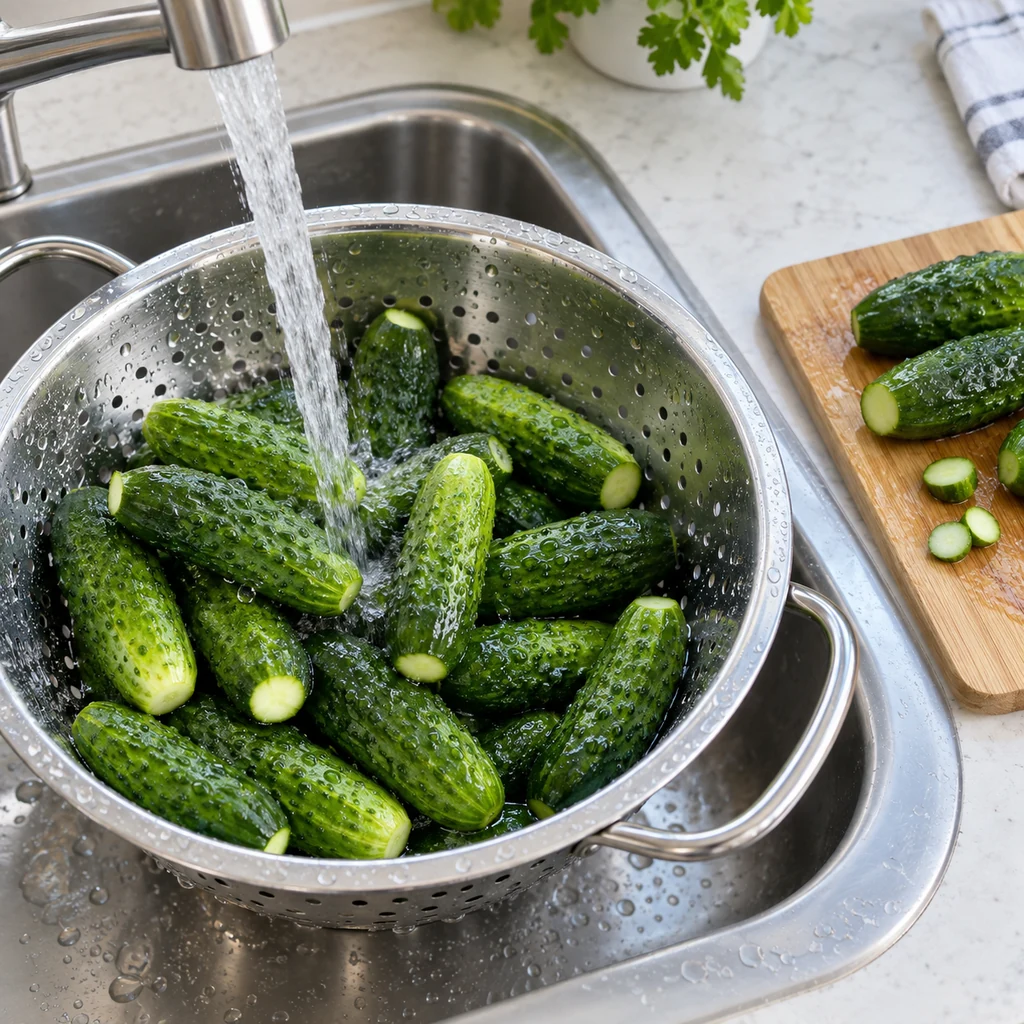
Wash the fermentation vessel, weight, lid, utensils, and work surface with hot, soapy water, then rinse well. Rinse the cucumbers under cool running water without using soap. Discard bruised, soft, or damaged cucumbers. Cut a 1/16-inch slice from the blossom end of each cucumber because enzymes concentrated there can soften pickles; leave the stem end intact if desired.
2. Mix the Tested Brine
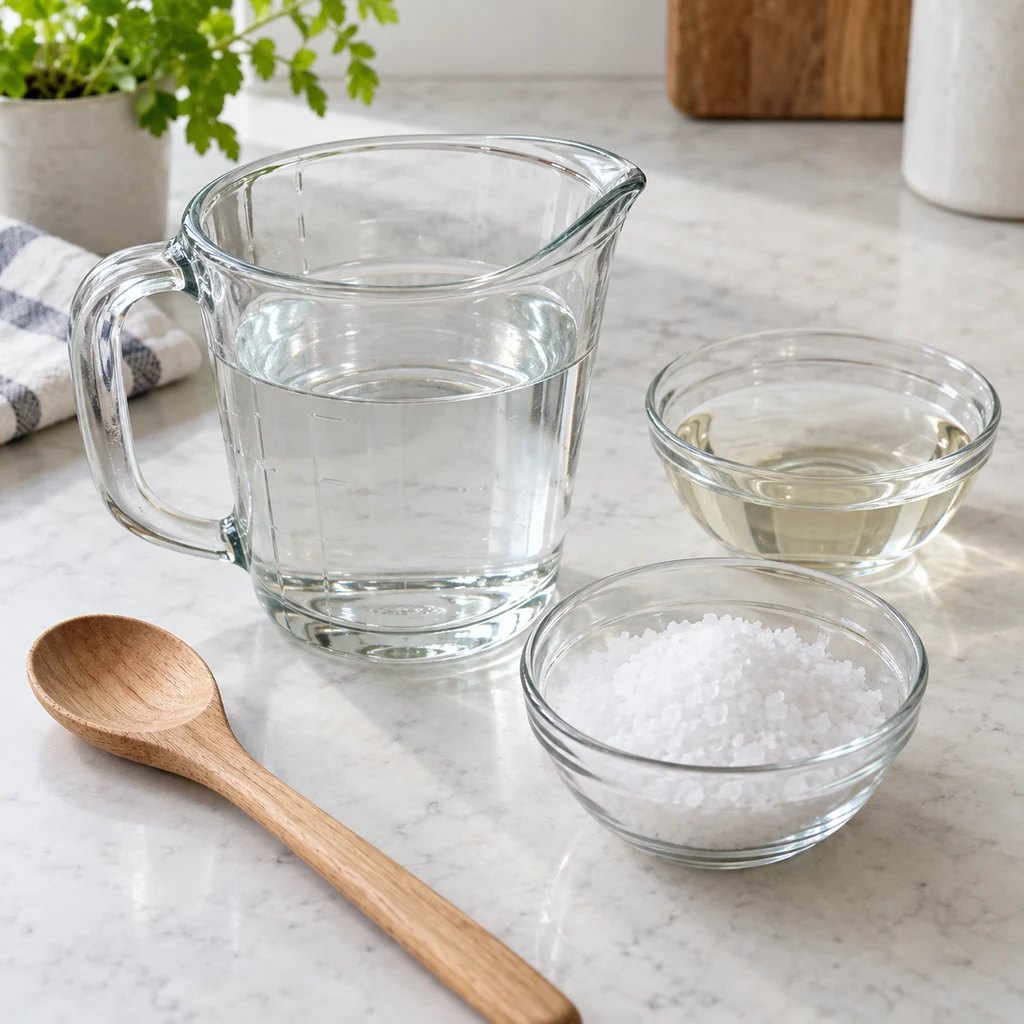
Combine the water and canning or pickling salt in a nonreactive saucepan. Warm just enough to dissolve the salt, stirring until the liquid is clear, then remove it from the heat and stir in the vinegar labeled 5% acidity. Let the brine cool to room temperature before pouring it over the cucumbers. Do not reduce the salt, dilute the vinegar, or estimate either measurement.
3. Pack the Fermentation Vessel
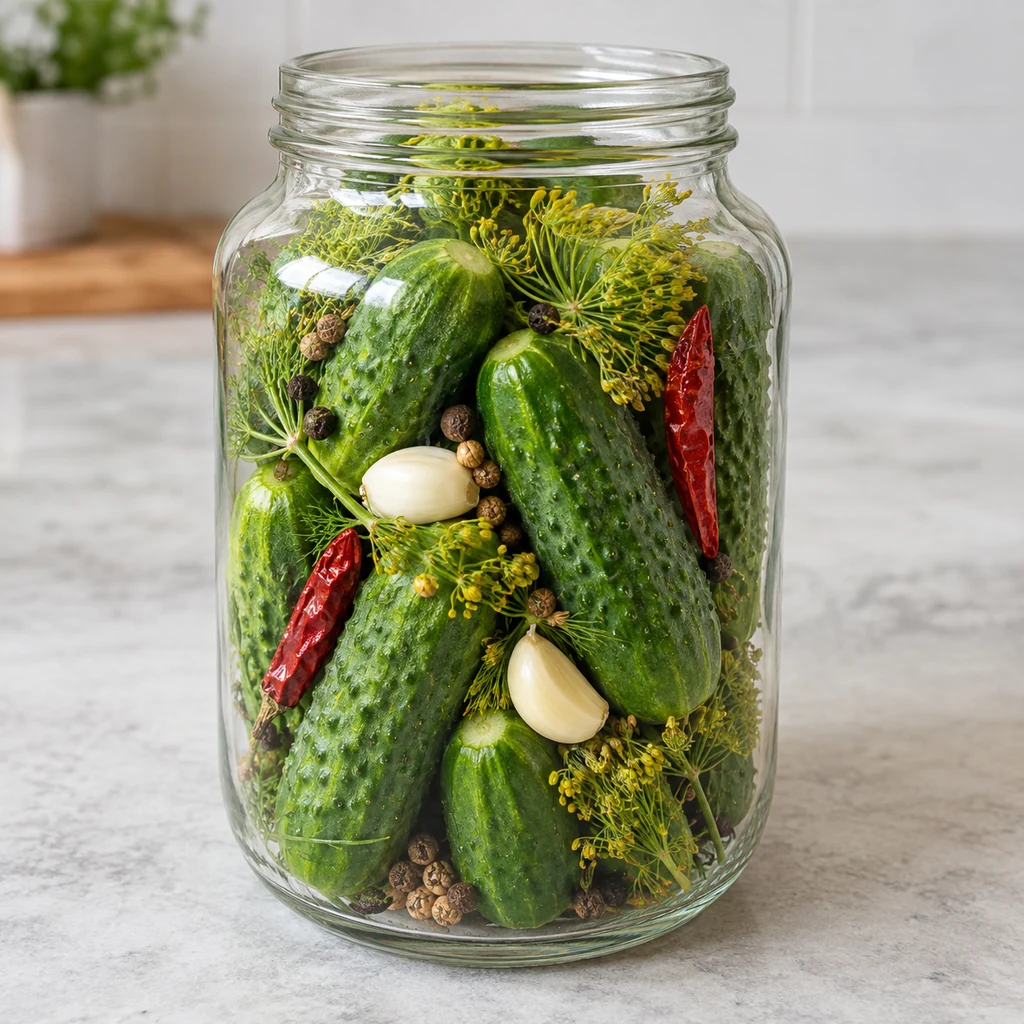
Place half the dill and any optional garlic, dried pepper, or pickling spice in the bottom of the vessel. Pack the cucumbers upright and snugly without crushing them, leaving enough headspace for brine and the weight. Tuck the remaining dill around the cucumbers. Keeping cucumbers similar in size helps them ferment at an even rate and retain a consistent texture.
4. Add Brine and Keep Everything Submerged
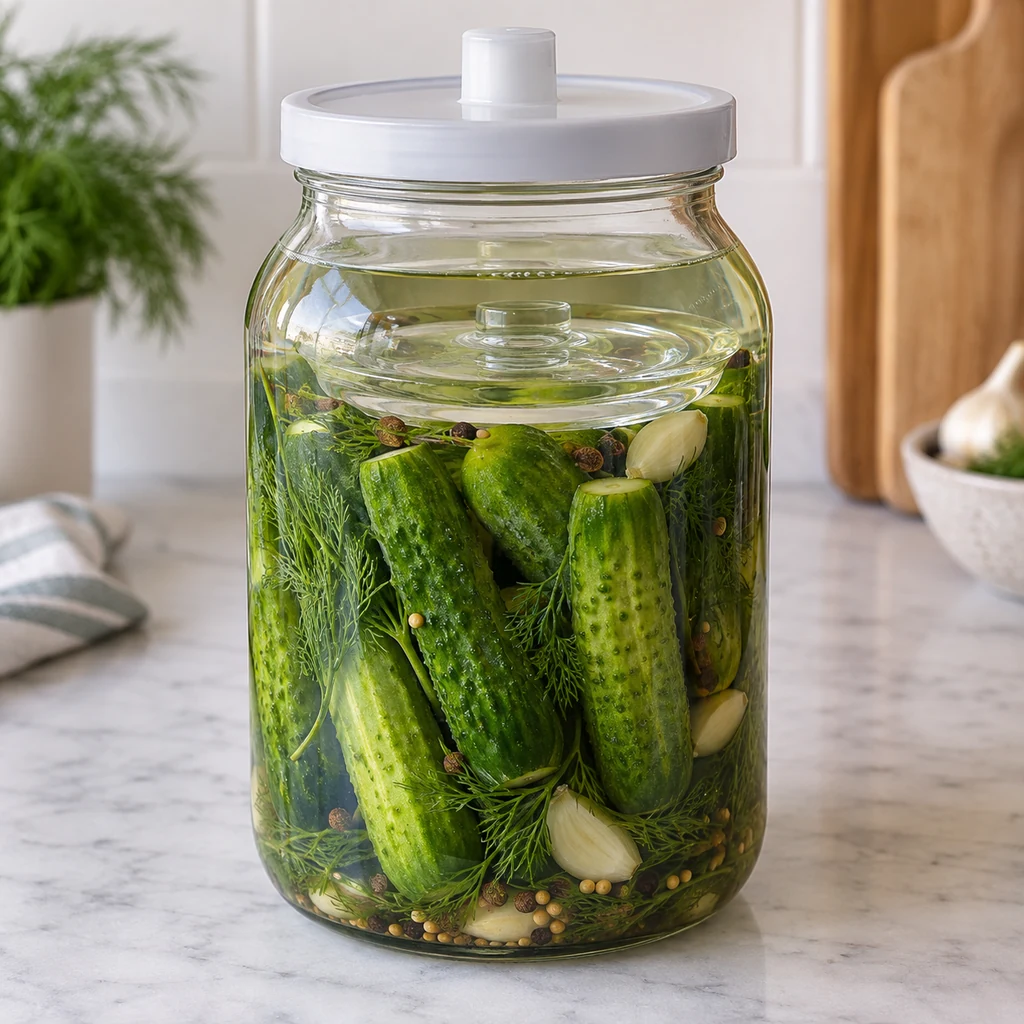
Pour the cooled brine over the cucumbers until they are completely covered. Position the clean fermentation weight or fitted plate so every cucumber and seasoning remains 1 to 2 inches below the brine. Cover the vessel with a fermentation lid or a loose-fitting lid that allows gas to escape. Place the vessel on a tray to catch possible overflow, out of direct sunlight.
5. Ferment at the Correct Temperature
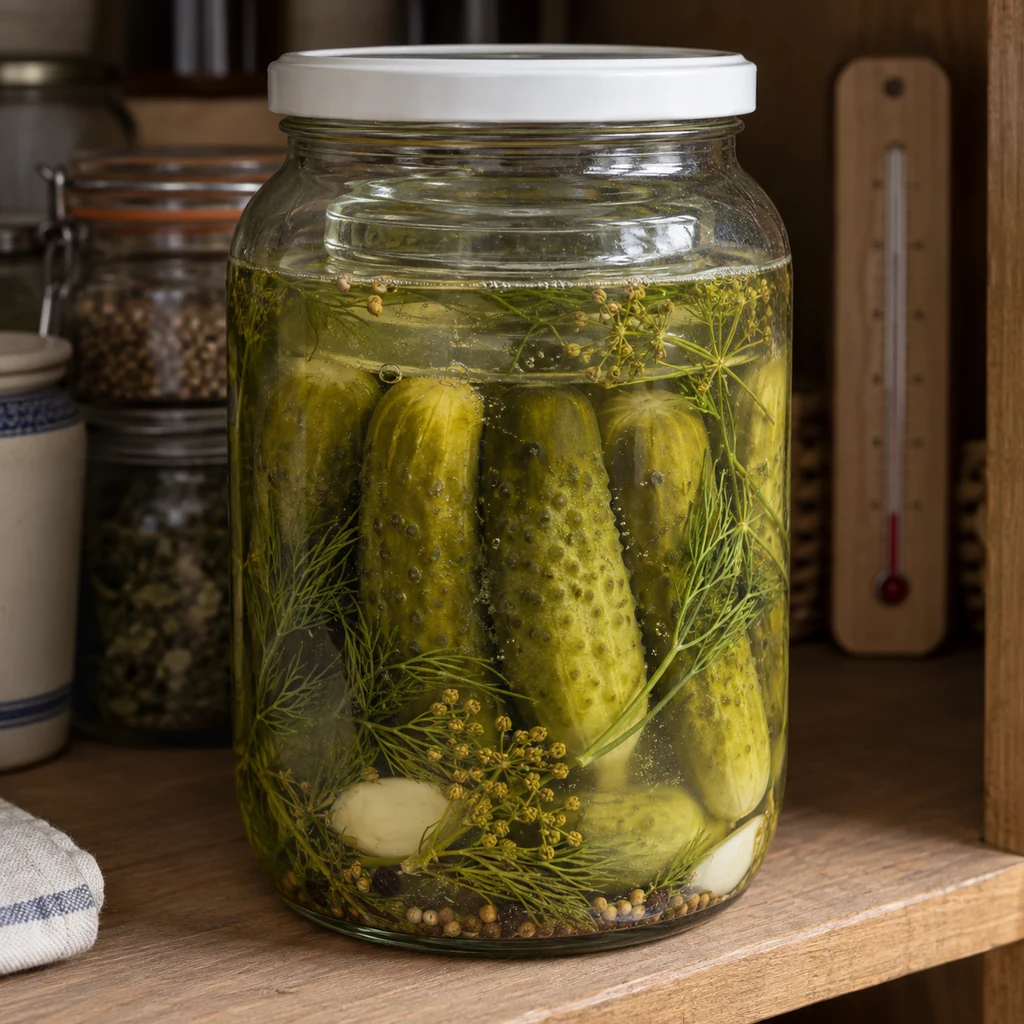
Ferment the covered vessel at 70 to 75°F for 3 to 4 weeks. Check it several times each week to confirm the cucumbers stay submerged and the room remains within range. Small bubbles, a clean sour aroma, cloudy brine, and sediment can be normal. Temperatures above 80°F can make pickles too soft, while temperatures from 55 to 65°F may extend fermentation to 5 to 6 weeks.
6. Check, Refrigerate, and Serve
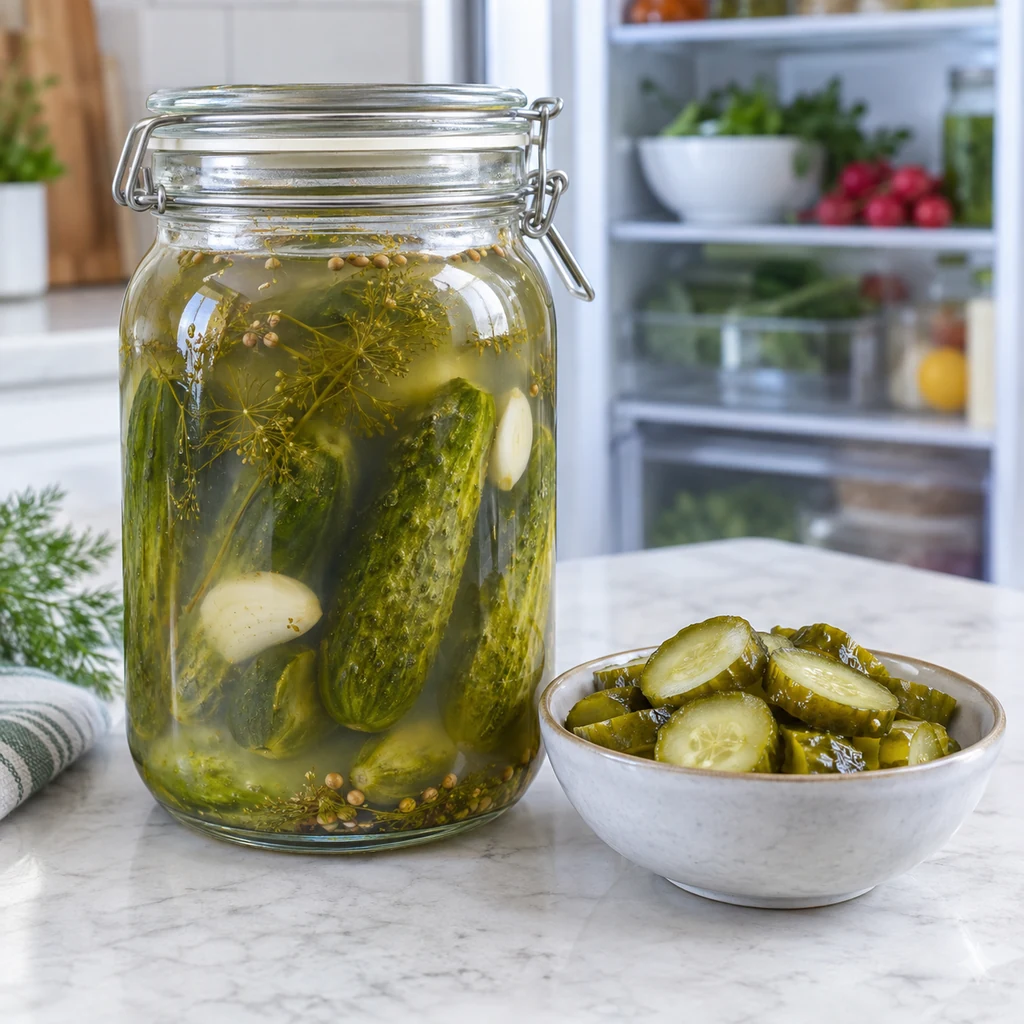
After the full fermentation period, taste one pickle with a clean utensil. It should smell pleasantly sour and feel firm rather than slippery. Transfer the pickles and brine to clean jars if needed, cover, and refrigerate promptly. If you see fuzzy mold, or notice soft or slimy pickles or an unpleasant odor, do not taste them; discard the entire batch. Refrigeration slows fermentation but does not make a spoiled batch safe.
How to Recognize a Healthy Fermentation
A healthy jar changes gradually. The brine often turns cloudy, tiny bubbles rise, and the cucumber color shifts from bright green toward olive. The aroma should be clean, salty, and increasingly sour. Sediment at the bottom is common. These observations do not replace correct measurements, full submersion, and temperature control.
Fuzzy growth in white, green, blue, black, or pink is not an acceptable variation. Neither are a rotten odor or slimy texture. When a batch shows those warning signs, discard it rather than trying to rescue individual pickles. Begin again with sound produce, sanitized equipment, fresh ingredients, and a cooler, more stable location.
Substitutions & Variations
Seasonings are the safe place to personalize this recipe. Use either 1 tablespoon dill seed or 2 to 3 fresh dill heads. The garlic, dried pepper, and mixed pickling spice are optional, so you can omit one or combine all three. For a warmer flavor, choose a pickling-spice blend with mustard seed and coriander; for gentle heat, keep the dried pepper whole.
Do not treat the brine as a flexible formula. Keep the cucumber, water, salt, and 5%-acidity vinegar quantities unchanged, and use canning or pickling salt rather than reduced-sodium salt substitutes. Table salt can cloud the brine and anti-caking ingredients may leave sediment. Waxed slicing cucumbers are also a poor substitute because the wax interferes with fermentation and their texture softens more readily.
What to Serve With
Serve these pickles cold alongside grilled burgers, pulled-pork sandwiches, roast chicken, or a casual cheese board. Chopped pickles add bright acidity to potato salad, egg salad, tuna salad, and homemade tartar sauce. Their briny crunch also balances rich foods such as grilled sausages, baked macaroni and cheese, or a pressed deli sandwich.
For a simple snack plate, cut a chilled pickle into spears and pair it with sharp cheddar, rye crackers, and fresh apple slices. Always use a clean fork or tongs when removing pickles from the jar, return the lid promptly, and keep the remaining pickles submerged in brine under continuous refrigeration.
Frequently Asked Questions
Is cloudy brine normal in fermented pickles?
Yes. Cloudy brine, bubbles, and pale sediment can be normal results of lactic-acid fermentation. The pickles should still smell clean and sour, remain submerged, and feel firm. Cloudiness does not excuse fuzzy mold, slime, or an unpleasant odor; those are reasons to discard the batch.
Why did my fermented pickles turn soft?
Softness can come from overripe cucumbers, failure to remove the blossom end, weak brine, warm fermentation, or cucumbers rising above the liquid. Start with very fresh pickling cucumbers, measure accurately, keep them submerged, and maintain 70 to 75°F whenever possible.
How long do fermented pickles keep in the refrigerator?
Fully fermented pickles can be refrigerated in their brine for several months when kept cold, covered, and submerged. Quality is best when the jar is handled cleanly. Check before each serving and discard the batch if the pickles become slimy or develop mold or an unpleasant odor.