
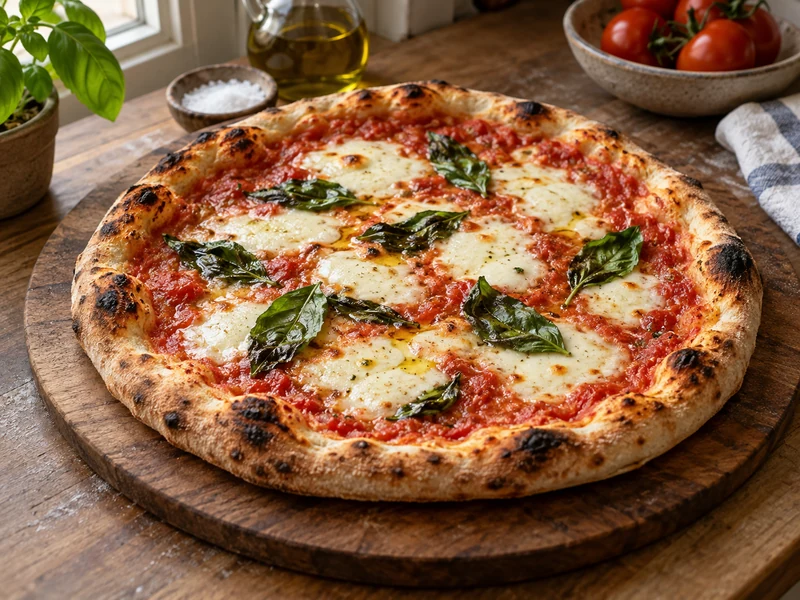
Homemade Margherita pizza is a study in contrast: a crisp, lightly blistered crust, bright tomato sauce, creamy mozzarella, and fresh basil added after baking. You do not need a wood-fired oven to enjoy those flavors at home. A thoroughly heated oven and a restrained layer of toppings make the biggest difference.
RECIPE CARD
Homemade Margherita Pizza Recipe
Ingredients
- Dough: 2¼ teaspoons active dry yeast
- Dough: 1 teaspoon sugar
- Dough: ¾ cup warm water, about 105–110°F (40–43°C)
- Dough: 2 cups all-purpose flour, plus a little for shaping
- Dough: 1 teaspoon salt
- Dough: 1 tablespoon olive oil
- Topping: ½ cup plain thick tomato sauce
- Topping: 200 g fresh mozzarella, sliced and patted dry
- Topping: a small handful of fresh basil leaves
- Finish: 1 tablespoon olive oil and a little salt, to taste
Quick Method
Condensed overview. Use Full Instructions for the complete method, timing and doneness details.
- Make the Dough: Bloom yeast and sugar in warm water for about 10 minutes. Mix with flour, salt, and olive oil. Knead 5–7 minutes until smooth, cover,…
- Preheat and Shape: Preheat a pizza stone or inverted sturdy baking sheet at 475°F (245°C) for about 30 minutes. Stretch risen dough into an 11- to 12-inch…
- Assemble the Pizza: Spread a thin layer of tomato sauce inside the rim. Distribute patted-dry fresh mozzarella evenly and season lightly with salt.
- Bake Until Golden: Slide the pizza and parchment onto the hot baking surface. Bake 10–12 minutes until the crust is golden and firm underneath and the cheese…
- Add Fresh Basil and Serve: Rest the baked pizza for 2 minutes, then scatter fresh basil on top, drizzle with olive oil, slice, and serve.
This simple yeast dough makes one generous thin pizza, enough for two main-course servings. Allow roughly an hour to rise; the pizza bakes in about 10–12 minutes. Have the sauce and cheese ready before shaping.
Why You’ll Love It
- The dough uses everyday pantry ingredients and needs only a short, simple knead.
- Tomato, mozzarella, and basil deliver plenty of flavor without a crowded topping list.
- You can bake it on a pizza stone or an ordinary sturdy baking sheet.
Ingredients
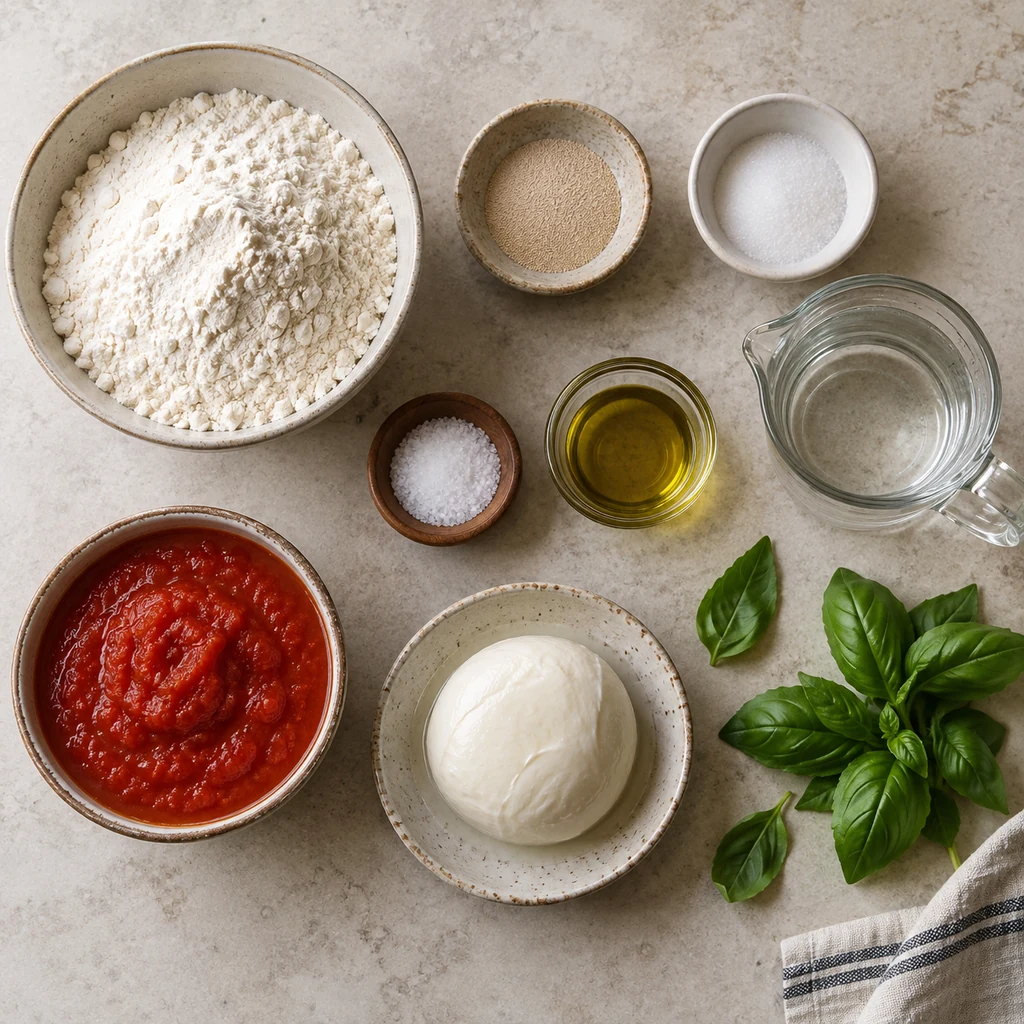
- Dough: 2¼ teaspoons active dry yeast
- Dough: 1 teaspoon sugar
- Dough: ¾ cup warm water, about 105–110°F (40–43°C)
- Dough: 2 cups all-purpose flour, plus a little for shaping
- Dough: 1 teaspoon salt
- Dough: 1 tablespoon olive oil
- Topping: ½ cup plain tomato sauce, preferably thick rather than watery
- Topping: 200 g fresh mozzarella, sliced and patted dry
- Topping: A small handful of fresh basil leaves
- Finish: 1 tablespoon olive oil and a little salt, to taste
Use a plain tomato sauce; heavily seasoned pasta sauce can overwhelm this pizza. Fresh mozzarella carries moisture, so drain it and blot the slices to help prevent a soggy center. If the sauce is thin, spoon off excess liquid. Keep basil separate until the pizza leaves the oven.
Step-by-Step Instructions
1. Make the Dough
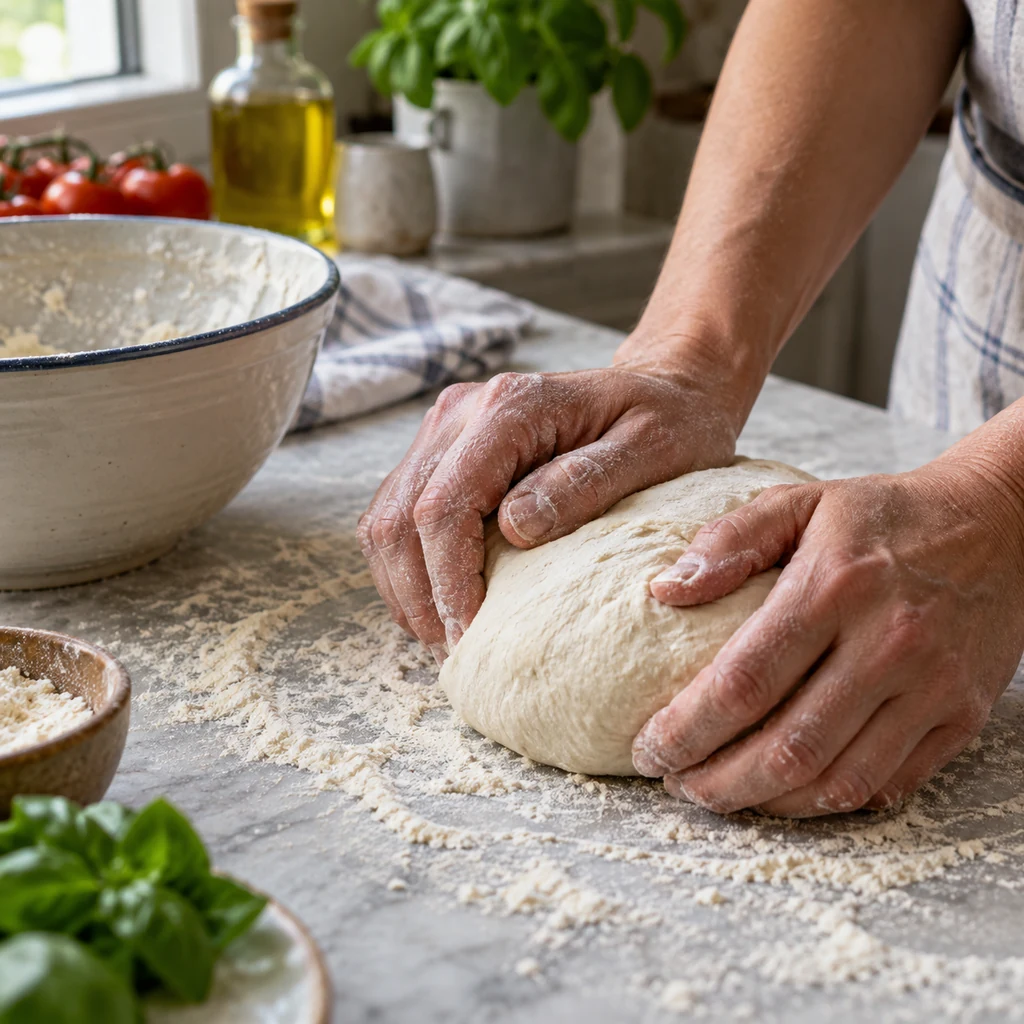
Stir the yeast and sugar into the warm water and leave for about 10 minutes, until the surface looks foamy. If nothing happens, the yeast may be old or the water may have been too hot; start with fresh yeast rather than hoping the dough will rise later. Add the flour, salt, and tablespoon of olive oil. Stir until shaggy, then knead on a lightly floured surface for 5–7 minutes, until smooth and elastic. Add only enough extra flour to keep it manageable; a slightly tacky dough produces a more tender crust. Place in a lightly oiled bowl, cover, and let rise in a warm spot for about one hour, or until doubled.
2. Preheat and Shape
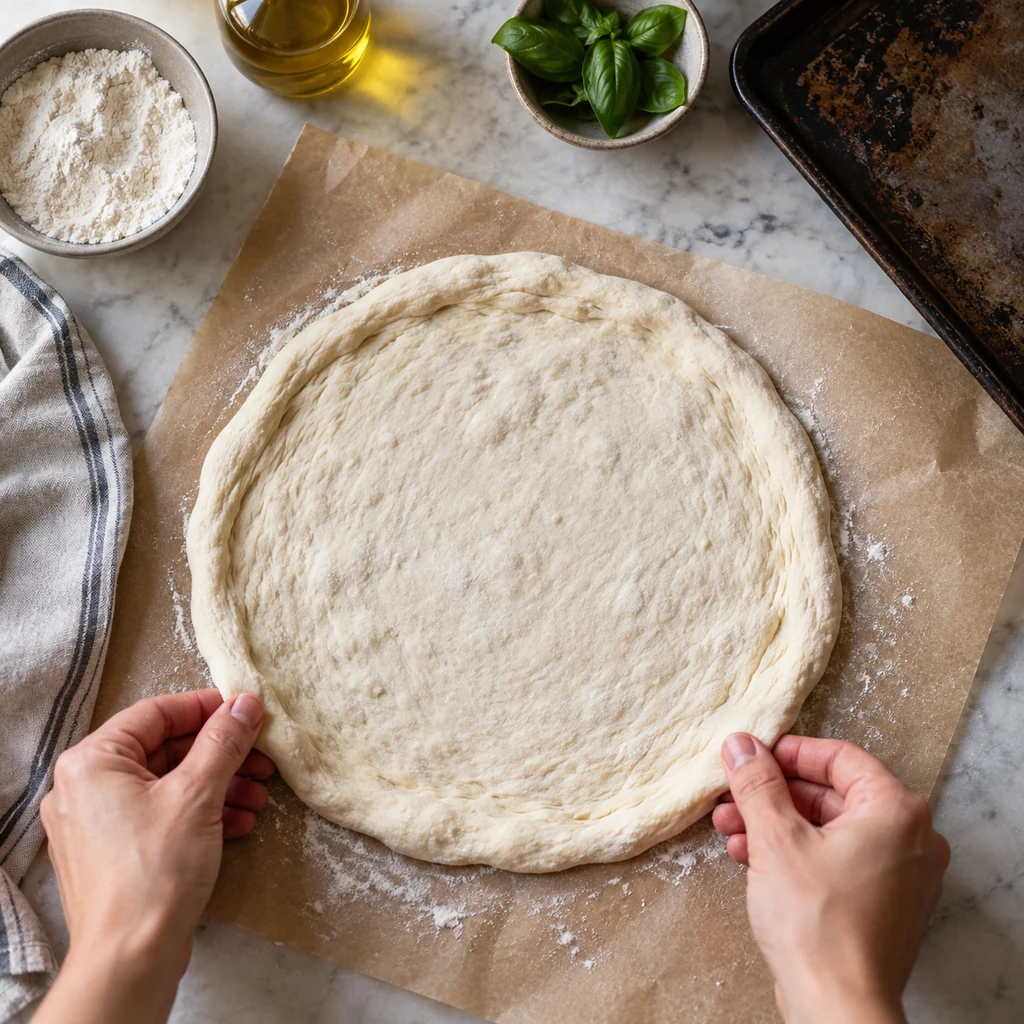
About 30 minutes before baking, set a pizza stone on the middle rack or place a sturdy baking sheet upside down in the oven. Preheat to 475°F (245°C) so the baking surface becomes thoroughly hot. Punch down the risen dough gently and put it on a lightly floured sheet of parchment. Use your fingertips to press from the center outward, leaving a slightly thicker rim, then stretch into a roughly 11- to 12-inch circle. If it springs back, let it rest five minutes and continue. Do not force an exact circle; even thickness through the middle matters more than perfect symmetry.
3. Assemble the Pizza
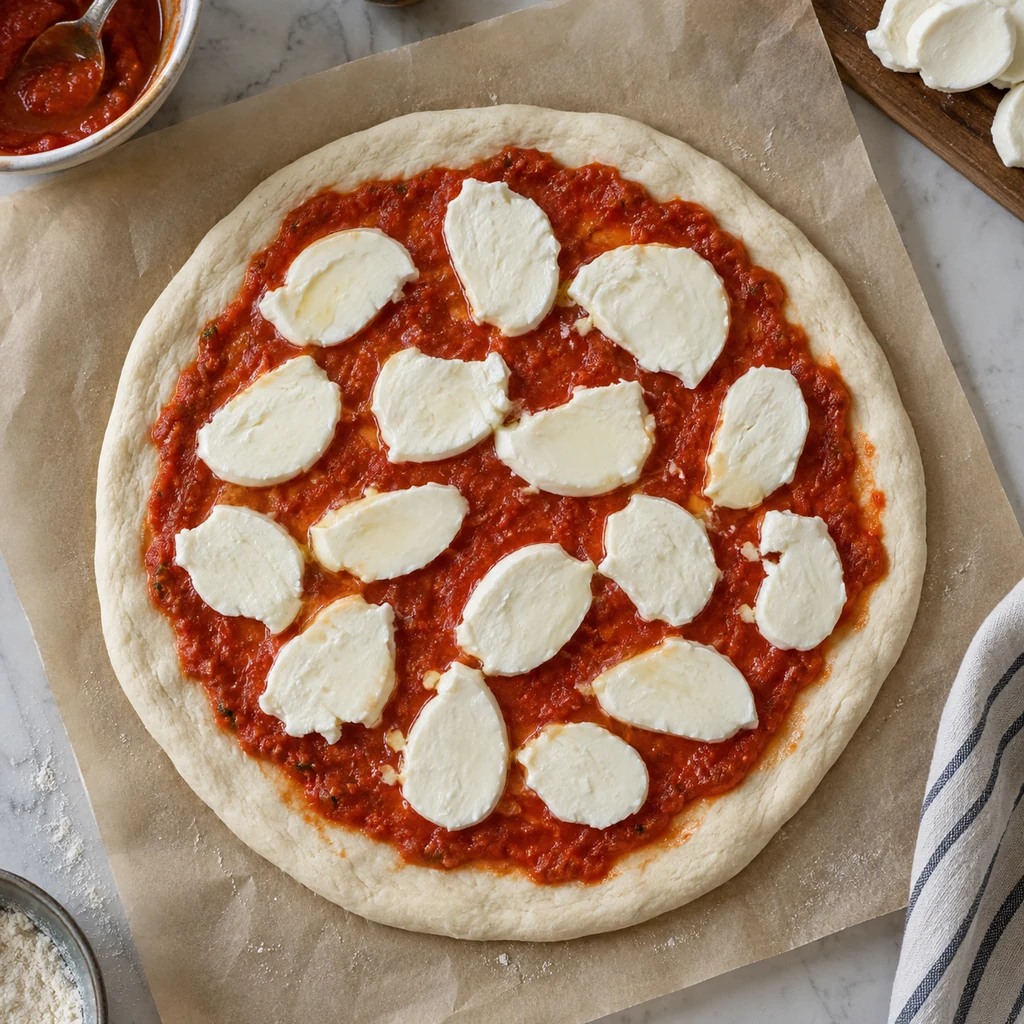
Spread the half cup of sauce in a thin, even layer, leaving the raised edge uncovered. Distribute the drained mozzarella slices across the sauce with a little red space visible between them. Sprinkle on a modest pinch of salt if the sauce and cheese need it. Resist adding extra sauce or a solid blanket of cheese: both release moisture that can keep the middle pale and soft. Check that the pizza can slide easily with its parchment onto a peel, rimless tray, or the back of another baking sheet. Assemble only when the oven is ready, rather than letting the topped dough sit.
4. Bake Until Golden
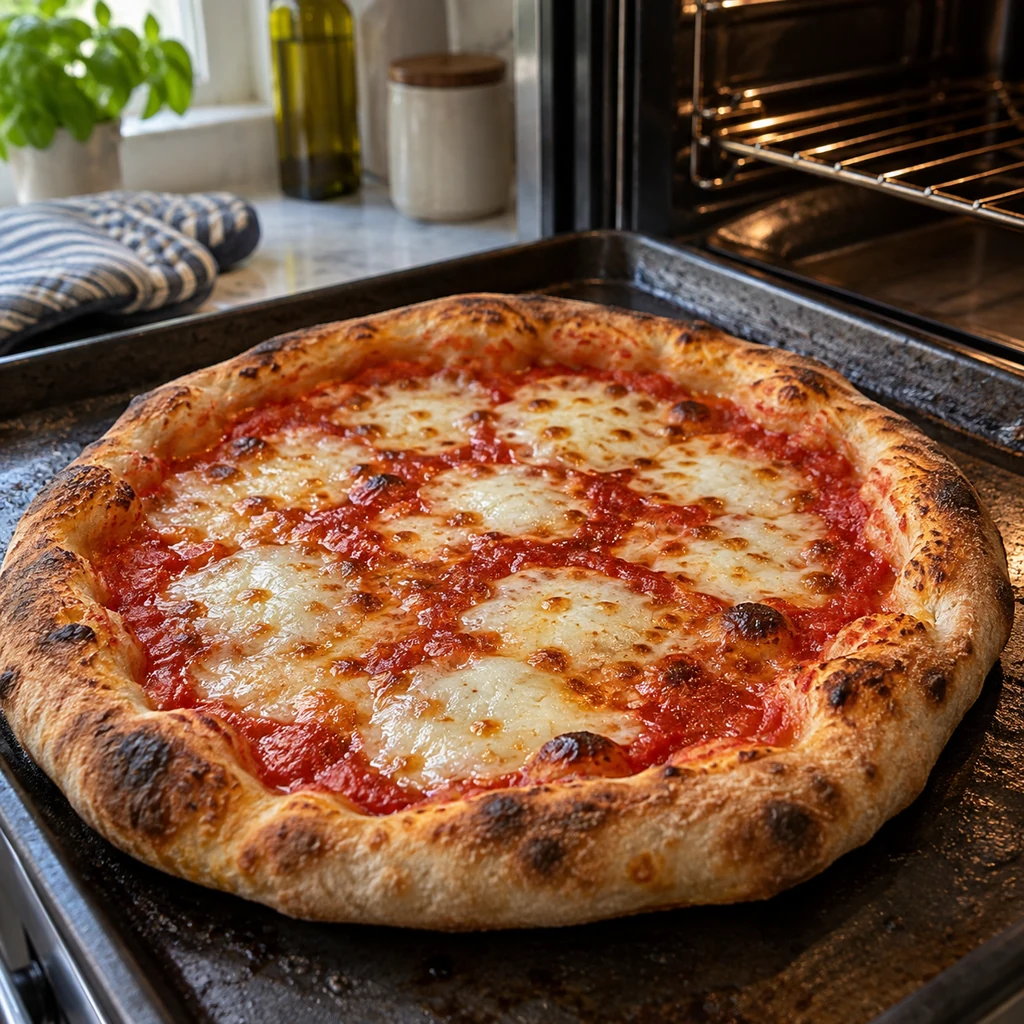
Carefully slide the pizza, still on its parchment, onto the hot stone or inverted baking sheet. Bake for 10–12 minutes, checking near the end. The rim should be golden with a few darker spots, the base should feel firm when lifted at an edge, and the mozzarella should be bubbling. Ovens and baking surfaces vary, so use those visual cues rather than the clock alone. If the top colors before the base crisps, move the pizza to a lower rack for the final minute or two. Keep hands clear of the hot pan and use a peel or sturdy tray to remove the pizza.
5. Add Fresh Basil and Serve
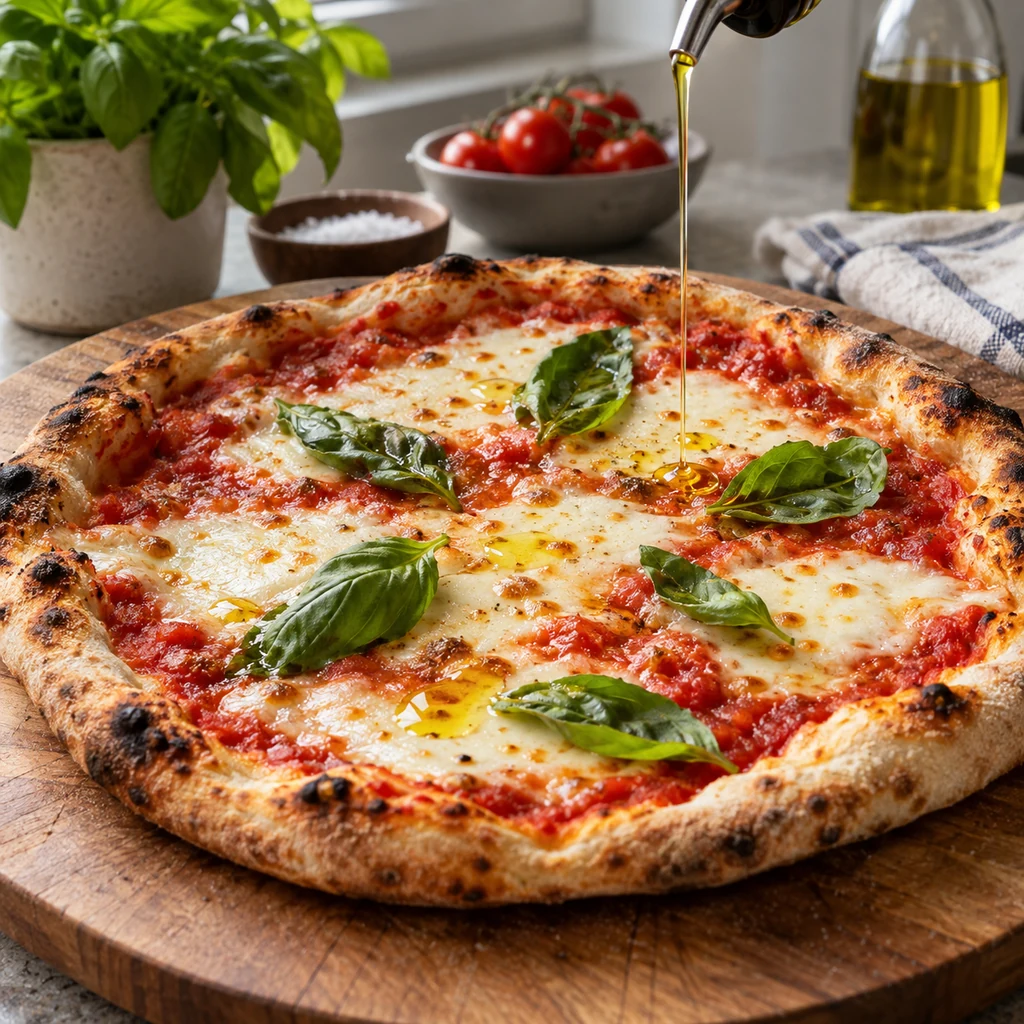
Transfer the pizza to a board and let it stand for two minutes. Scatter fresh basil leaves over the hot cheese and drizzle with the remaining tablespoon of olive oil. The warmth gently releases the basil’s fragrance without drying it in the oven. Slice with a pizza wheel or a large sharp knife and serve immediately while the crust is at its crispest. If any large pools of moisture remain on top, dab them carefully before slicing. A short rest also keeps the melted cheese from sliding off each wedge.
Substitutions & Variations
Bread flour can replace all-purpose flour for a chewier crust, though it may need a splash more water. Low-moisture mozzarella browns more readily and makes a less delicate pizza; use it if that is what you have, but keep the amount moderate. Crushed canned tomatoes, drained well and lightly salted, can replace prepared tomato sauce. If you prefer a stronger tomato flavor, add a small pinch of dried oregano to the sauce rather than piling on more of it.
For a faster weeknight variation, a purchased pizza dough can replace the homemade dough; follow its package directions for resting and shaping. The tomato-mozzarella-basil topping method stays the same. If you are looking for another quick pizza format, these quick tortilla pizzas use a different, much thinner base. They are a separate shortcut, not a substitute for the airy yeast crust in this recipe.
What to Serve With
A green salad with a sharp vinaigrette cuts through the richness of the cheese and makes two slices feel like a complete meal. For a more substantial shared table, serve smaller wedges alongside the pear, pomegranate, and spinach salad; its fruit and acidity contrast nicely with the savory tomato. Sparkling water with lemon is a simple drink pairing that does not compete with the basil.
Margherita pizza is best straight from the oven. Refrigerate leftover slices covered, then reheat in a dry skillet over medium-low heat until the base is crisp and the cheese warms through. Cover briefly to melt the cheese, then uncover to release steam. The microwave softens the crust. Add fresh basil after reheating if needed.
Frequently Asked Questions
Why is my Margherita pizza soggy in the middle?
The usual causes are a cool baking surface, watery sauce, or mozzarella that was not drained. Preheat the stone or sheet thoroughly, use only a thin half cup of thick sauce, and blot the cheese. Stretch the center thin and bake until the base feels firm.
Can I make the dough ahead of time?
Yes. After kneading, cover the dough and refrigerate it overnight instead of leaving it for the one-hour room-temperature rise. Bring it toward room temperature before stretching so it relaxes. Allow extra time because cold dough is harder to shape and rises more slowly.
When should I add the basil?
Add the fresh leaves after baking, while the pizza is still hot. They will soften slightly and release their aroma without turning dark and brittle in the oven. If you like a stronger basil note, tear a few extra leaves over individual slices just before eating.