
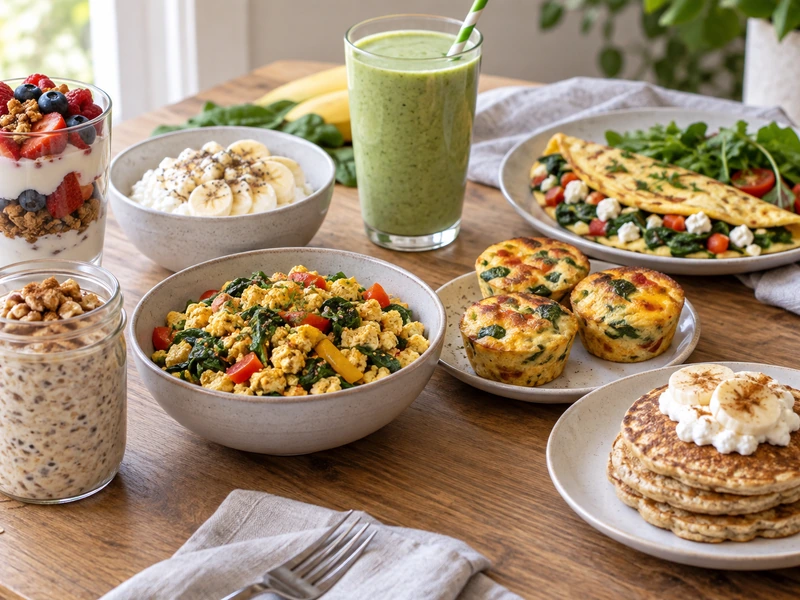
A high-protein breakfast can be quick and realistic on a weekday. Begin with a clearly labeled protein-rich base, then add fruit, vegetables, whole grains, or healthy fats for balance. These eight flexible combinations include cold, warm, portable, and blender options.
Protein varies by brand, serving size, and substitution. Read the Nutrition Facts panel on packaged ingredients instead of relying on a universal number. Hunger and nutrition needs also differ; these ideas are practical inspiration, not a promise that everyone will feel full for the same time.
Why You’ll Love It
- Eight distinct choices: Sweet, savory, vegetarian, make-ahead, and portable breakfasts are all represented.
- Flexible protein bases: Eggs, dairy, soy, seeds, nut butter, and optional protein powder make the guide adaptable.
- Clear portions: Each idea uses concrete amounts while reminding you to verify packaged-food labels.
Ingredients
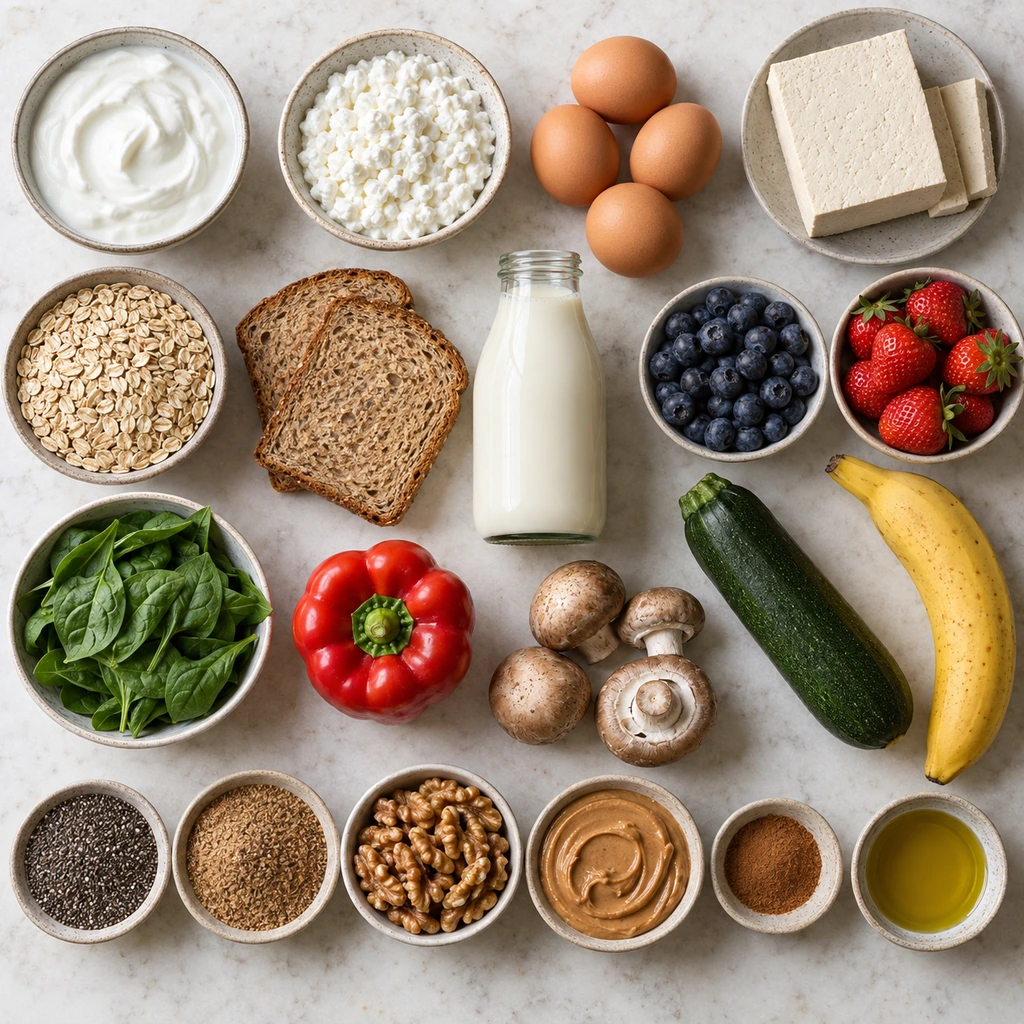
You do not need every item at once. Select the ingredients for one breakfast idea and scale only that combination. Keep perishable foods refrigerated until preparation.
- Plain Greek yogurt or cottage cheese
- Eggs, cooked lean turkey, or firm tofu
- Rolled oats, whole-grain bread, or low-sugar granola
- Dairy milk or unsweetened fortified soy milk
- Berries, banana, bell pepper, mushrooms, spinach, or zucchini
- Chia seeds, ground flaxseed, nuts, or natural nut butter
- Optional protein powder with a complete, readable ingredient and nutrition label
- Cinnamon, vanilla, herbs, black pepper, and olive oil for flavor
8 High-Protein Breakfast Ideas
1. Greek Yogurt Berry Parfait
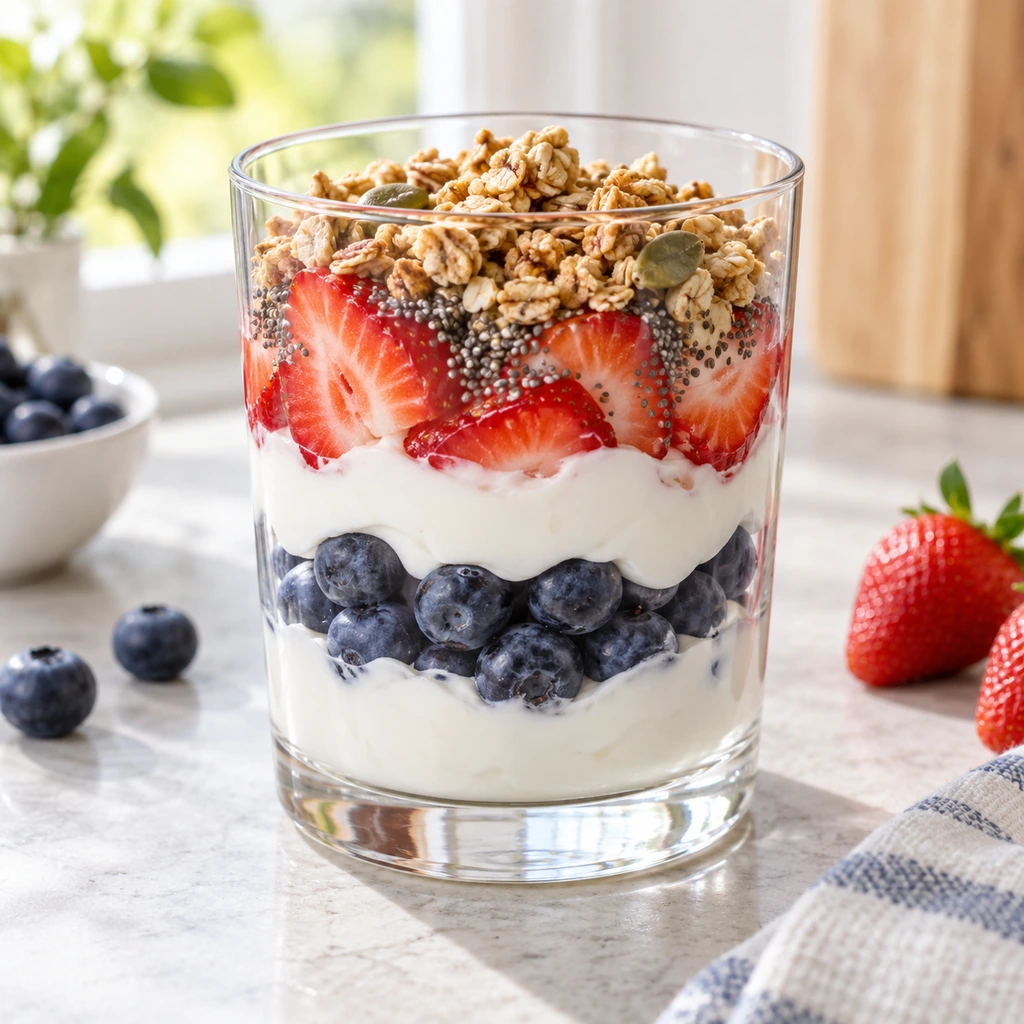
Spoon 1 cup plain Greek yogurt into a bowl or jar. Layer in 1/2 cup mixed berries, 1 tablespoon chia seeds, and 2 tablespoons low-sugar granola. The yogurt supplies the main protein, while berries and seeds add contrast and fiber. Compare yogurt labels because products differ. Assemble just before eating for crisp granola, or pack it separately for an overnight jar.
2. Cottage Cheese Banana Bowl
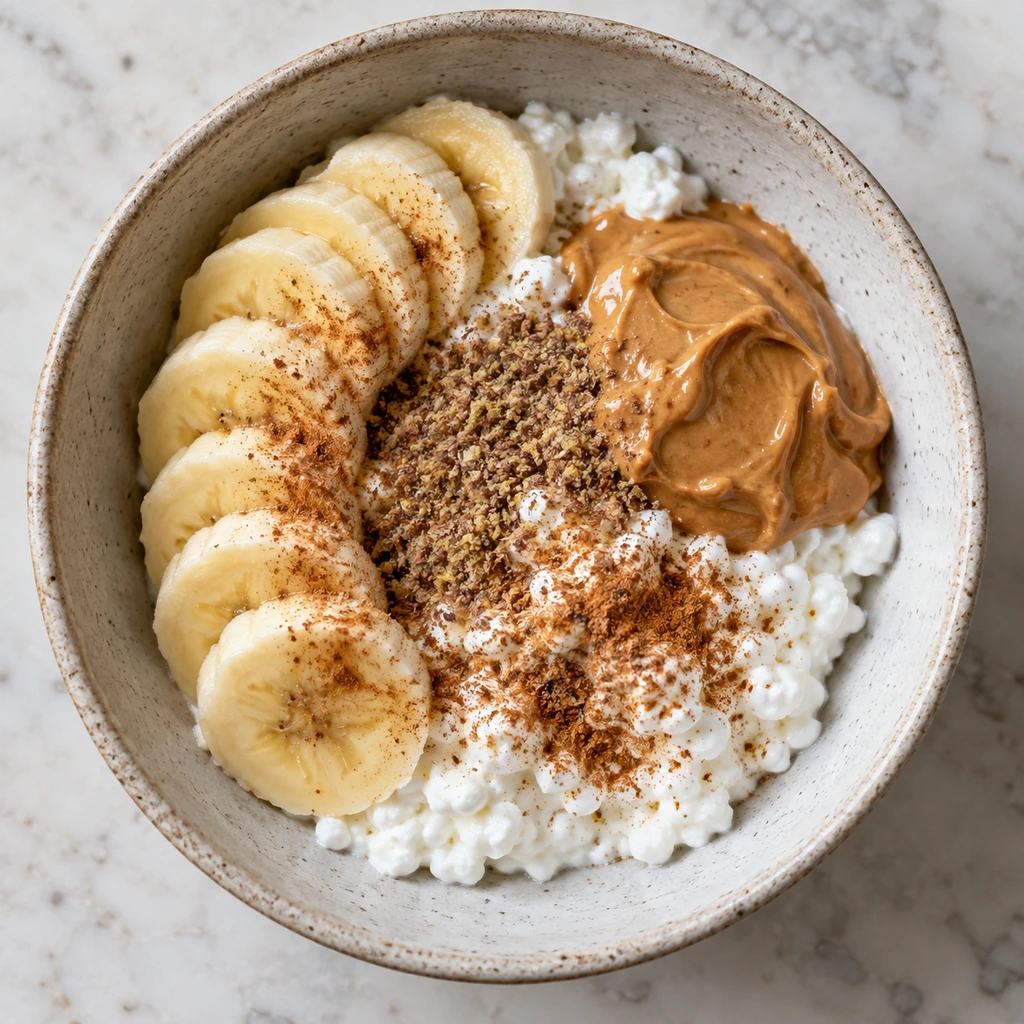
Add 1 cup cottage cheese to a bowl and top with 1/2 sliced banana, 1 tablespoon natural peanut butter, 1 teaspoon ground flaxseed, and cinnamon. Stir only partway to retain texture. Choose a product whose sodium level fits your preferences and check its protein label. If the curds seem dry, loosen them with a tablespoon of milk.
3. Banana Protein Smoothie
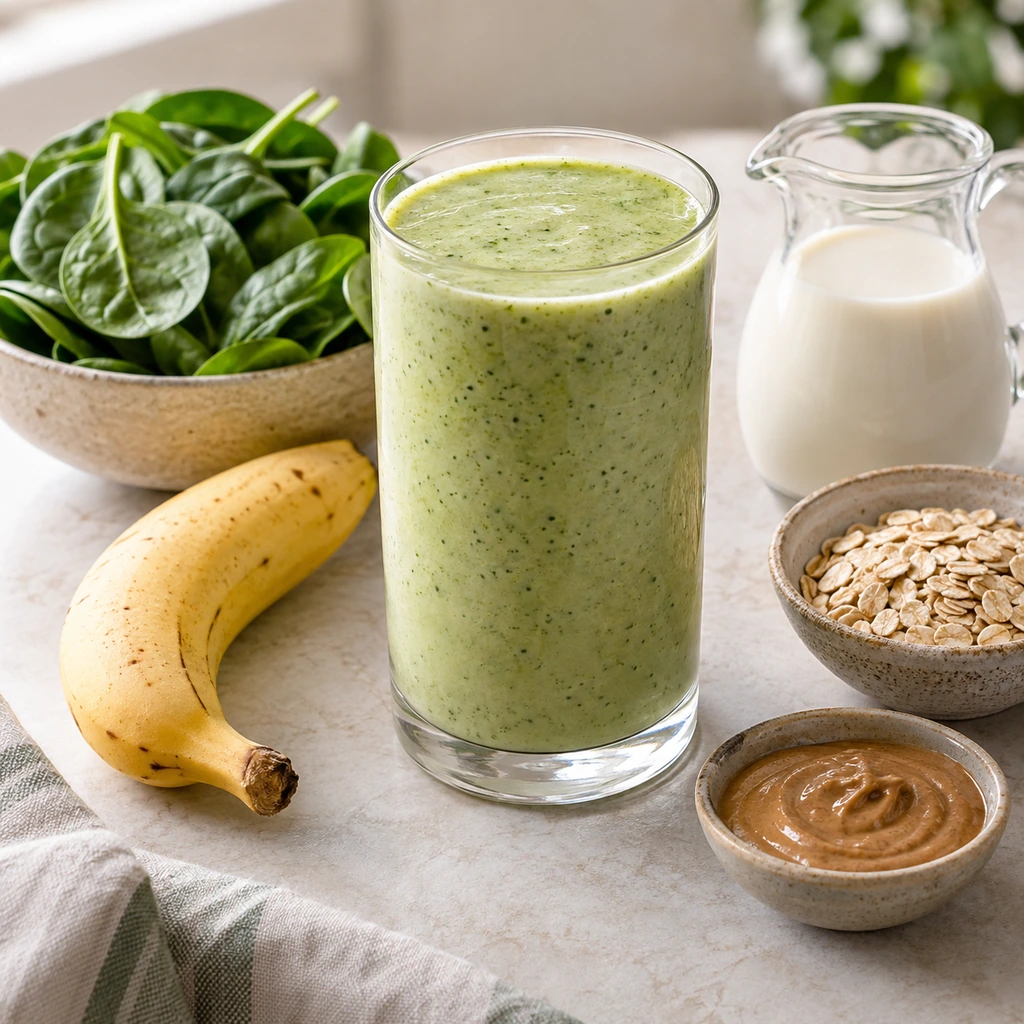
Blend 1 cup unsweetened fortified soy milk, 1 small banana, 1 packed cup spinach, 2 tablespoons rolled oats, and 1 tablespoon nut butter. Add one measured serving of protein powder only if appropriate for your needs; follow its directions. Blend until smooth and drink promptly. For a colder texture, use frozen banana instead of excess ice.
4. Vegetable and Feta Omelet
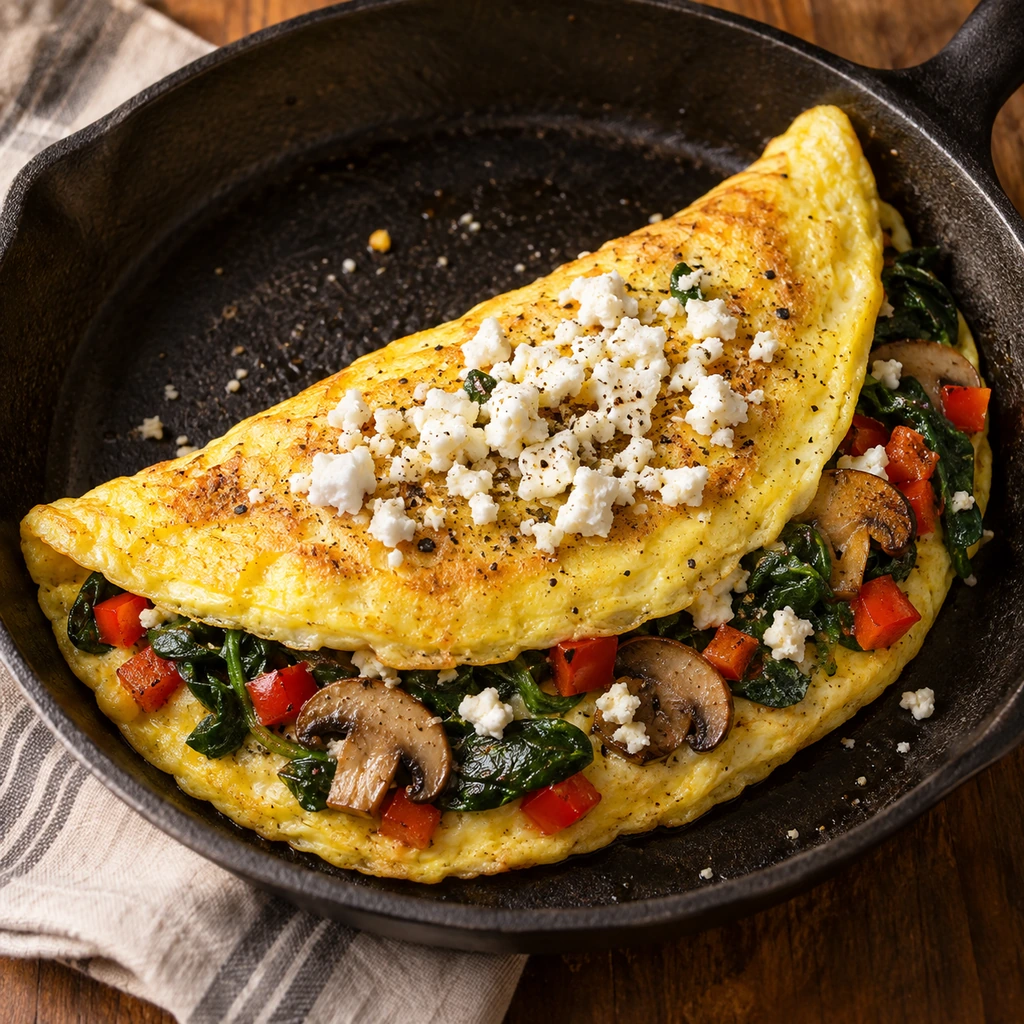
Cook 1/2 cup chopped mushrooms and bell pepper in 1 teaspoon olive oil until softened, then add 1 cup spinach and let it wilt. Pour in 2 beaten eggs, reduce the heat, and cook until the egg is fully set. Sprinkle with 2 tablespoons feta and fold. Pairing eggs with vegetables produces a substantial plate without depending on processed breakfast meat. If you meal-prep the vegetables, cool and refrigerate them promptly in a covered container.
5. Protein Overnight Oats
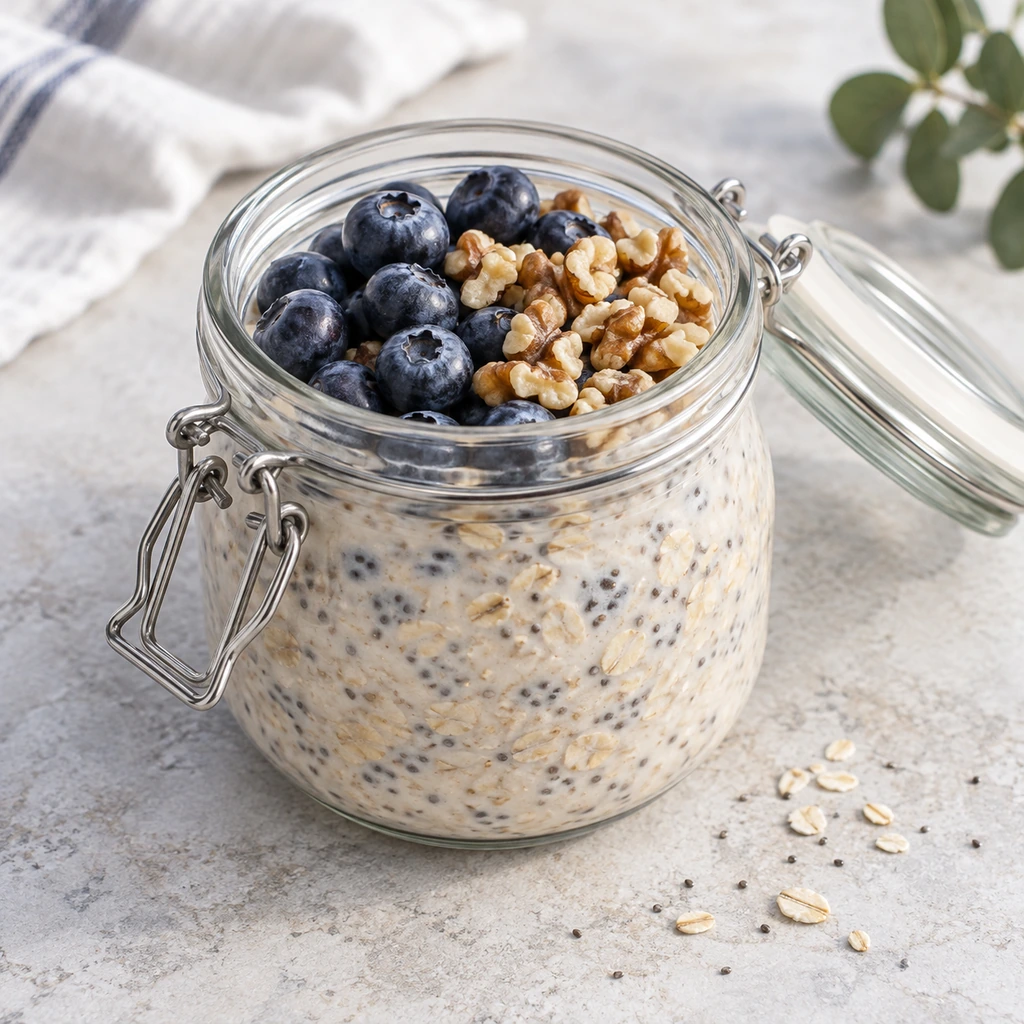
In a lidded jar, mix 1/2 cup rolled oats, 1/2 cup plain Greek yogurt, 1/2 cup milk or fortified soy milk, and 1 tablespoon chia seeds. Refrigerate overnight, then add 1/2 cup berries and 1 tablespoon chopped walnuts. Adjust thickness with a splash of milk in the morning. Keep the jar cold and use it within two days. Protein depends primarily on the chosen yogurt and milk, so calculate it from those labels if tracking matters.
6. Tofu and Vegetable Scramble
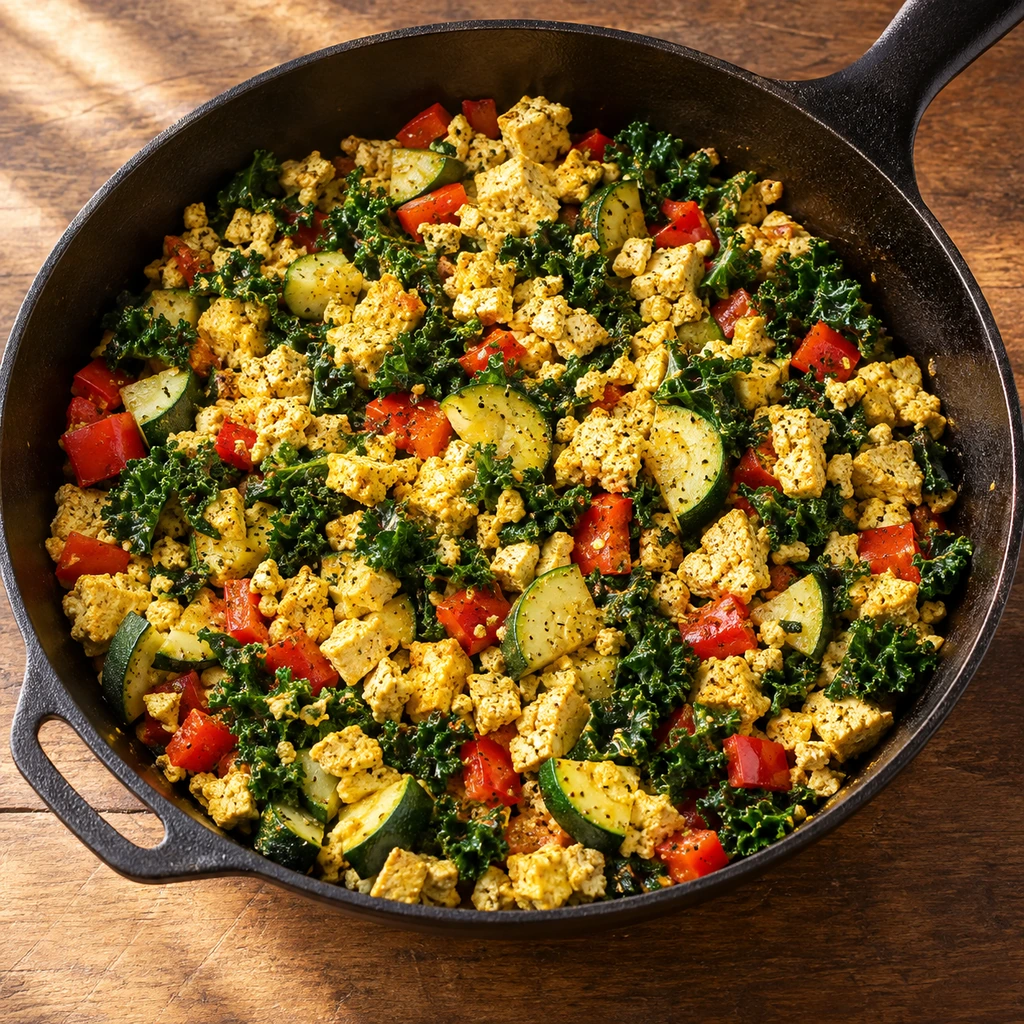
Pat 6 ounces firm tofu dry and crumble it into a skillet with 1 teaspoon olive oil. Add 1 cup chopped zucchini, kale, and bell pepper, then season with turmeric, garlic powder, and black pepper. Cook until the vegetables are tender and excess moisture has evaporated. Choose tofu labeled with the protein amount you want per serving. Serve immediately, or cool and refrigerate the scramble for a quick reheatable breakfast the next day.
7. Turkey and Vegetable Egg Muffins
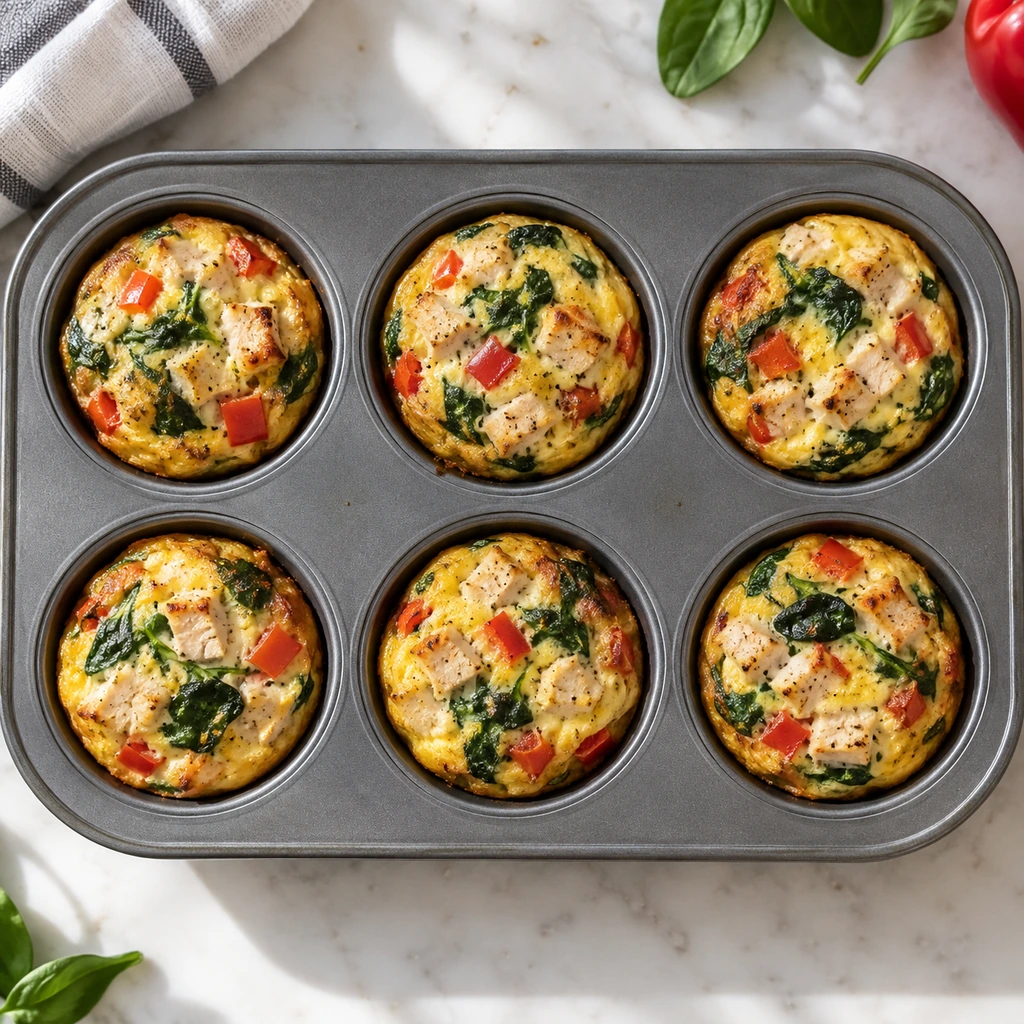
Whisk 6 eggs with black pepper, then fold in 1/2 cup finely chopped cooked lean turkey, 1/2 cup spinach, and 1/4 cup bell pepper. Divide among six lightly oiled muffin cups and bake at 350°F (177°C) until the centers are completely set, about 18–22 minutes. Cool briefly before removing. Refrigerate within two hours and use within three days. One serving can be two muffins alongside fruit or whole-grain toast.
8. Cottage Cheese Oat Pancakes
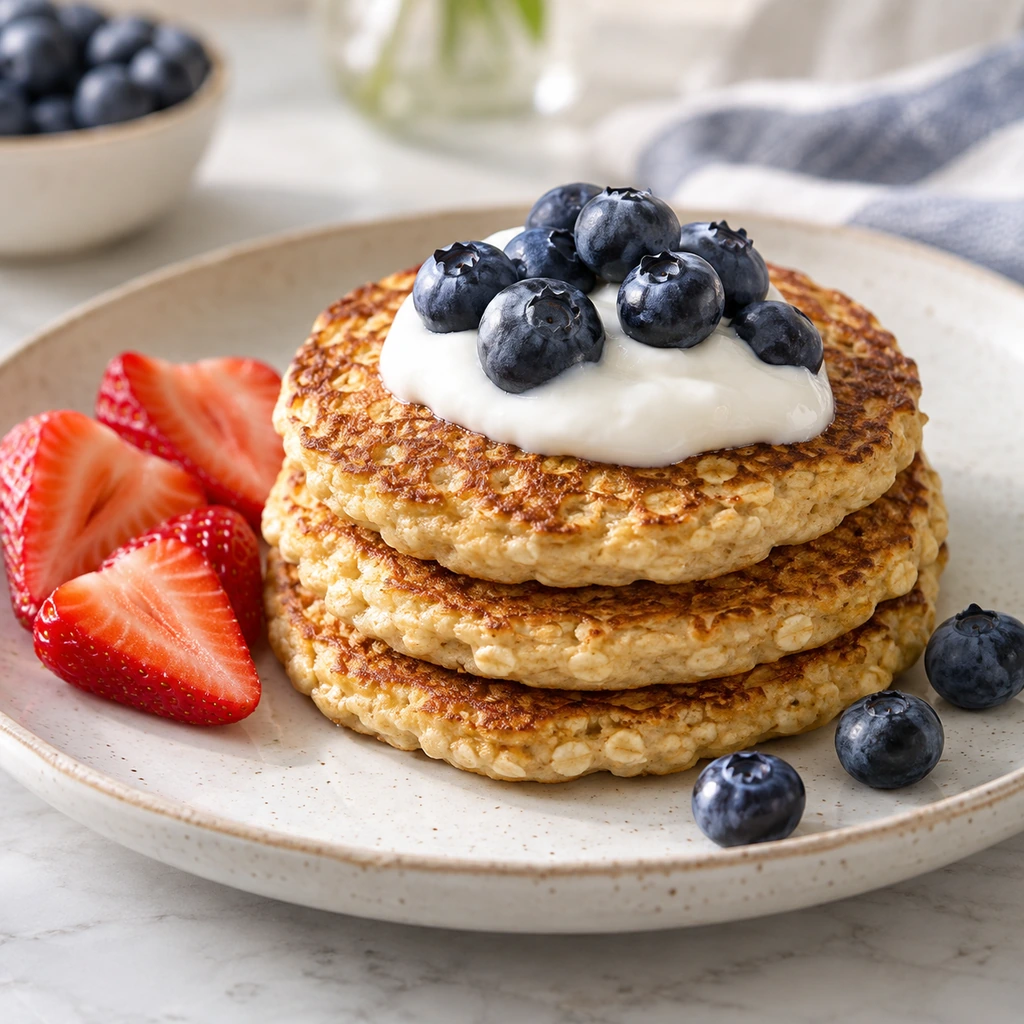
Blend 1 cup cottage cheese, 1 cup rolled oats, 2 eggs, 1/2 teaspoon baking powder, and cinnamon until mostly smooth. Cook small pancakes on a lightly oiled skillet over medium-low heat, flipping when the edges look set and the underside is golden. Make eight pancakes and serve two or three with plain Greek yogurt and berries. Smaller rounds cook through more reliably than oversized pancakes and are easier to freeze in single portions.
Substitutions & Variations
Use lactose-free dairy when needed, or choose a fortified soy alternative with a comparable label. Replace peanut butter with almond, cashew, or sunflower seed butter. Swap berries for apple, pear, or peaches; replace spinach with kale; and use quick-cooking vegetables in the omelet or scramble. If avoiding protein powder, use labeled Greek yogurt or fortified soy milk. Recheck nutritional totals after substitutions.
What to Serve With
Most ideas already combine several food groups. Add whole fruit for portability, whole-grain toast for energy, or cucumber and tomatoes beside savory breakfasts. Water is the simplest hydration choice. Do not automatically add several protein extras; individual needs vary. Anyone managing kidney disease, food allergies, diabetes, or another nutrition-sensitive condition should follow their qualified clinician’s advice.
Frequently Asked Questions
How do I know how much protein is in my breakfast?
Add the protein listed for the exact serving of each packaged ingredient you use. For unpackaged foods, a reputable nutrient database can provide a general estimate, but portions and products still vary.
Which breakfasts are best for meal prep?
Overnight oats, egg muffins, and cooked tofu scramble are the easiest make-ahead choices. Keep them refrigerated in covered containers, observe the storage times above, and transport them with an ice pack when they cannot stay cold.
Do I need protein powder?
No. Eggs, dairy, fortified soy foods, tofu, nuts, seeds, and other foods can contribute protein. Protein powder is optional and should be chosen according to its label and your personal dietary needs.