
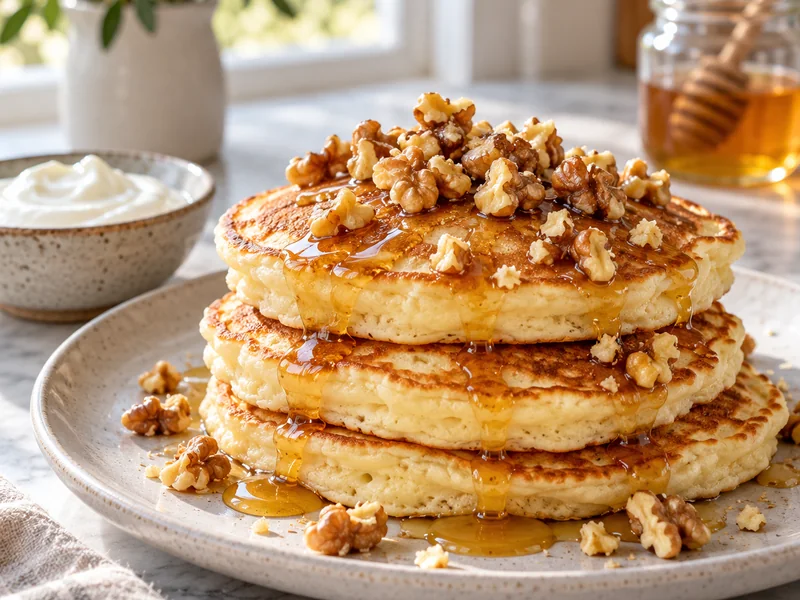
Greek yogurt pancakes are a lovely way to make a familiar breakfast feel a little more substantial. Yogurt gives the batter a gentle tang and tender texture, while honey adds a soft sweetness that does not overpower the walnuts. The result is a stack with golden edges, fluffy centers, and just enough crunch on top.
RECIPE CARD
Greek Yogurt Pancakes with Honey and Walnuts
Ingredients
- 1 cup all-purpose flour
- 1/2 cup plain Greek yogurt
- 1/2 cup milk
- 1 large egg
- 2 tablespoons honey, plus more for serving
- 1 1/2 teaspoons baking powder
- 1/4 teaspoon baking soda
- 1/4 teaspoon fine salt
- 1/2 teaspoon vanilla extract
- 1/4 cup chopped walnuts
- 1 tablespoon butter or neutral oil, for the skillet
Quick Method
Condensed overview. Use Full Instructions for the complete method, timing and doneness details.
- Mix the dry ingredients: In a medium bowl, whisk the flour, baking powder, baking soda, and salt until evenly combined. Breaking up any visible flour lumps now helps…
- Combine the wet ingredients: In a second bowl, whisk the Greek yogurt, milk, egg, 2 tablespoons of honey, and vanilla. At first the yogurt may look streaky, so…
- Fold the batter gently: Pour the wet mixture into the dry mixture. Fold with a spatula just until no large pockets of dry flour remain. A few small…
- Warm the skillet: Place a nonstick skillet or griddle over medium heat and add a little of the butter or oil. Spread it into a thin film;…
- Cook until bubbles appear: Spoon about 1/4 cup batter per pancake into the skillet, leaving space to slide in a spatula. Cook for roughly two to three minutes…
- Flip and finish cooking: Slide a thin spatula fully beneath each pancake and flip it once in a confident motion. Cook the second side for another one to…
- Add honey and walnuts: Stack the warm pancakes and scatter the chopped walnuts over the top. Drizzle with honey just before serving so the nuts stay pleasantly crisp.…
This recipe uses everyday pantry ingredients and one skillet. The key is to combine the batter gently and give each pancake time to set before flipping. Follow the visual steps below from mixing the dry ingredients to serving, and you can make a warm breakfast without complicated equipment or a long wait.
Why You’ll Love It
- Tender texture: Greek yogurt keeps the pancakes moist, and the baking powder helps them rise.
- Balanced topping: A modest drizzle of honey and chopped walnuts adds sweetness and crunch without hiding the pancakes.
- Simple method: Separate wet and dry mixing makes it easier to avoid a tough, overworked batter.
Ingredients
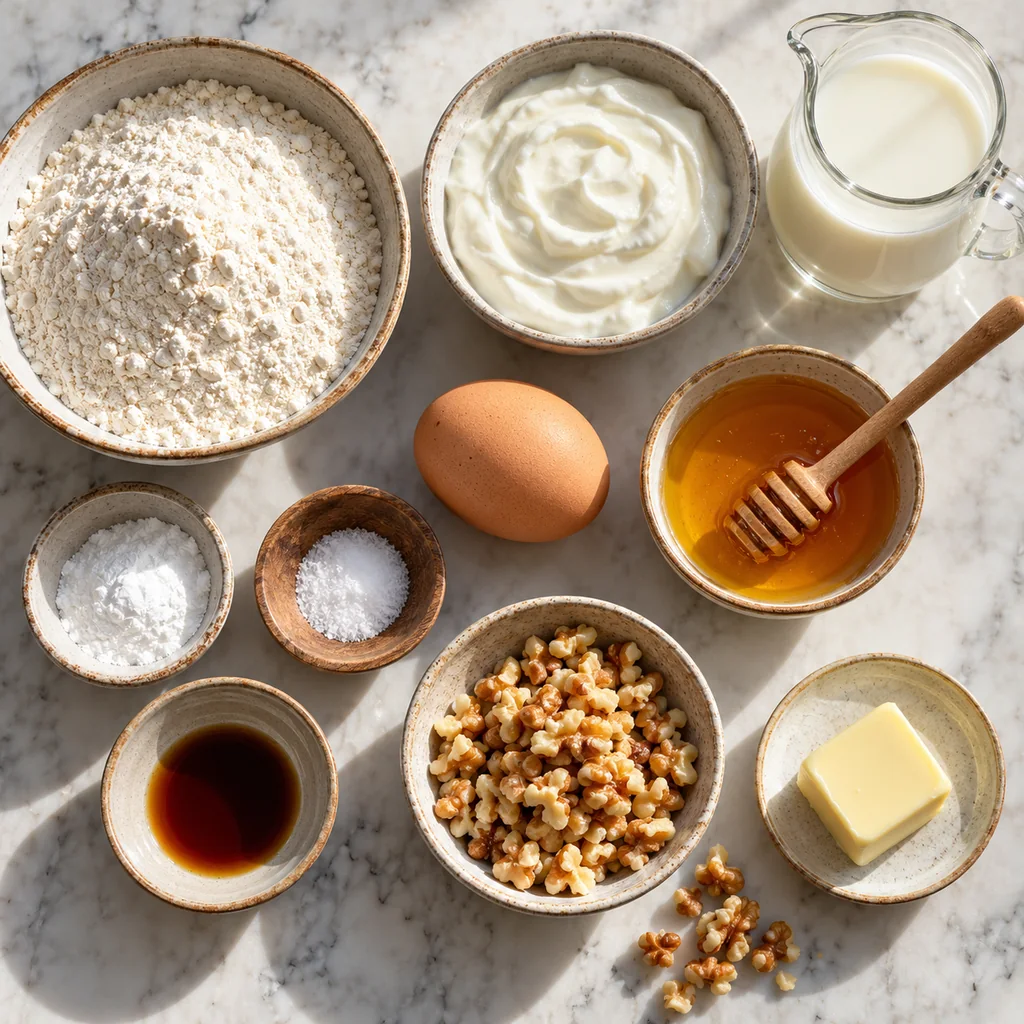
- 1 cup all-purpose flour
- 1/2 cup plain Greek yogurt
- 1/2 cup milk
- 1 large egg
- 2 tablespoons honey, plus more for serving
- 1 1/2 teaspoons baking powder
- 1/4 teaspoon baking soda
- 1/4 teaspoon fine salt
- 1/2 teaspoon vanilla extract
- 1/4 cup chopped walnuts
- 1 tablespoon butter or neutral oil, for the skillet
Use plain, unsweetened Greek yogurt so the honey controls the sweetness. Regular milk works well; add a small splash more only if your yogurt is exceptionally thick and the batter cannot be scooped. Measure the flour by spooning it into the cup and leveling it, since packing it down can make the pancakes dense. The walnuts are a finishing ingredient, so keep them out of the batter unless you prefer a softer crunch.
Step-by-Step Instructions
Step 1: Mix the dry ingredients
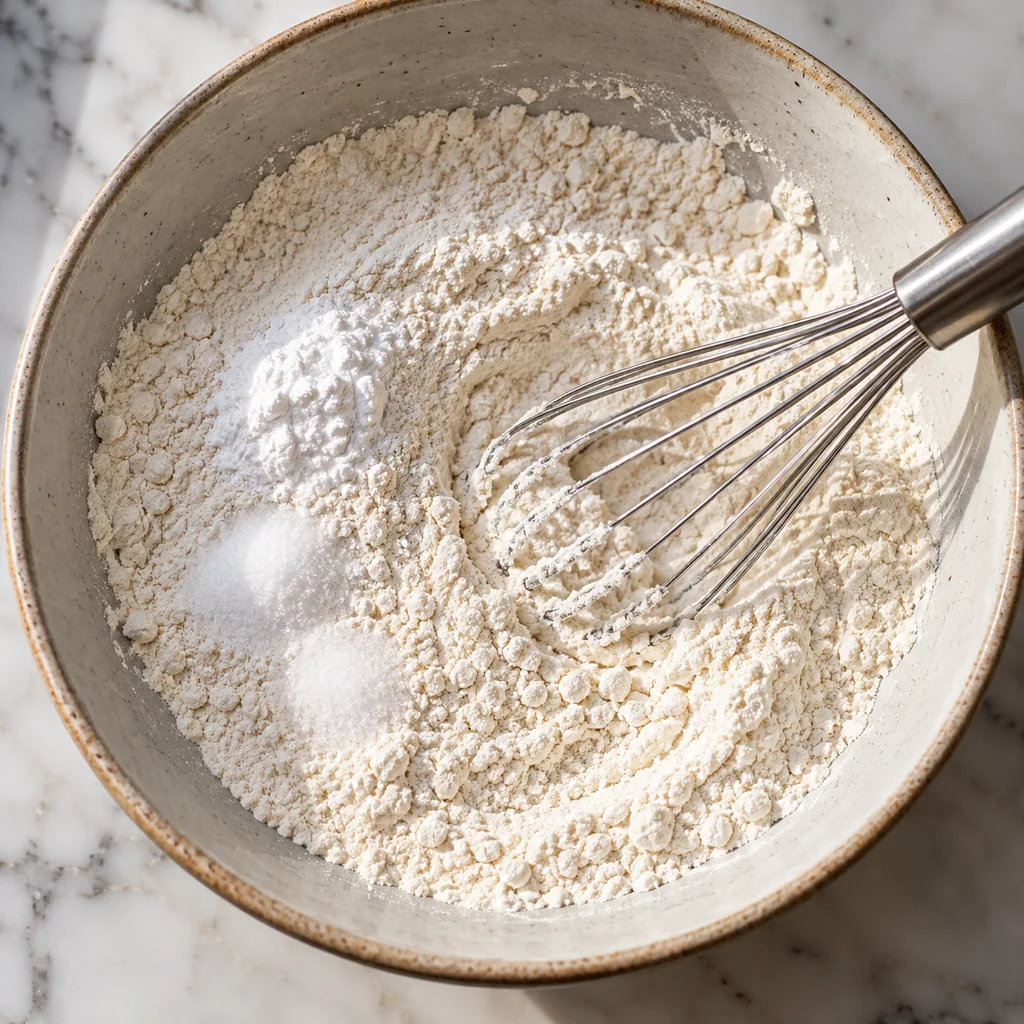
In a medium bowl, whisk the flour, baking powder, baking soda, and salt until evenly combined. Breaking up any visible flour lumps now helps the leaveners spread through the whole batch. Keep this bowl dry and set it aside while you prepare the yogurt mixture. A brief whisk is enough; there is no need to sift unless the flour is particularly clumpy.
Step 2: Combine the wet ingredients
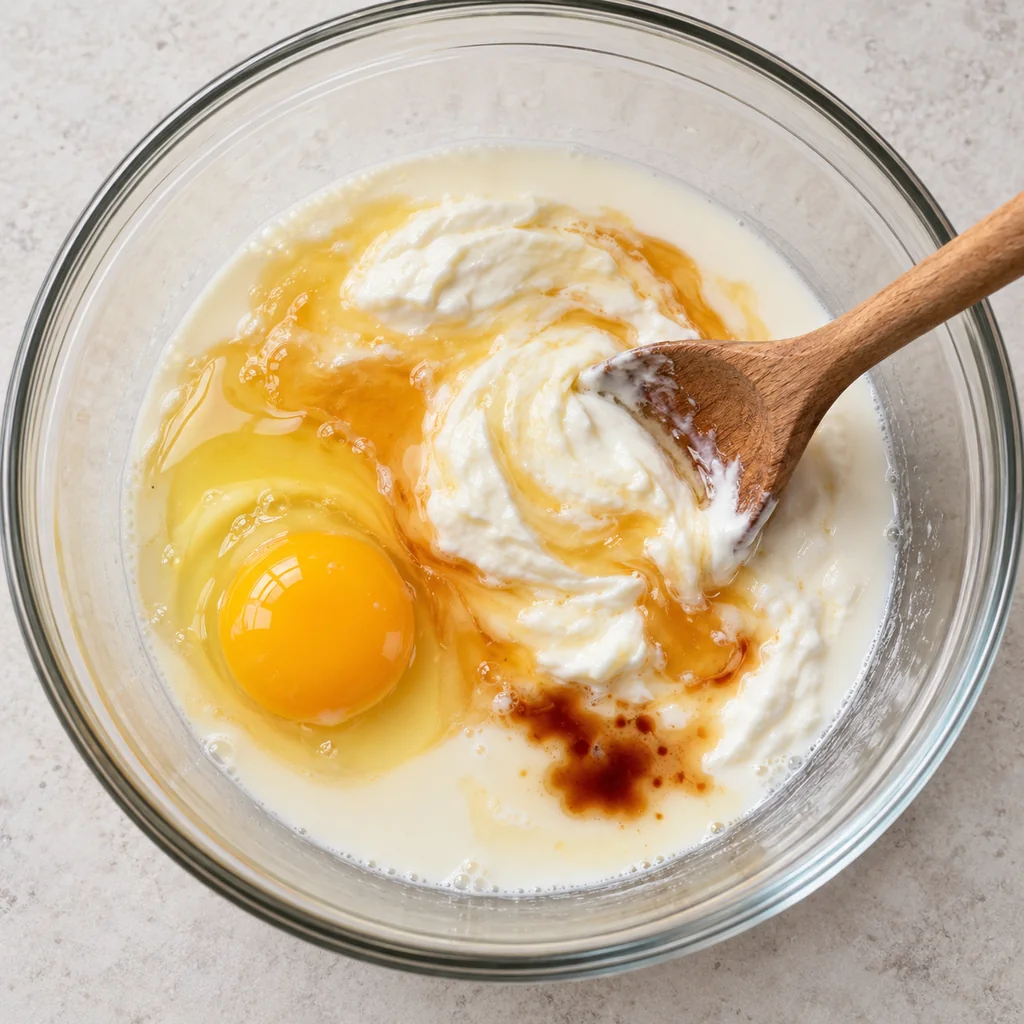
In a second bowl, whisk the Greek yogurt, milk, egg, 2 tablespoons of honey, and vanilla. At first the yogurt may look streaky, so continue until the egg is fully broken up and the liquid is mostly smooth. Small yogurt flecks are fine. Mixing these ingredients before adding flour makes it easier to stop stirring the final batter at the right moment.
Step 3: Fold the batter gently
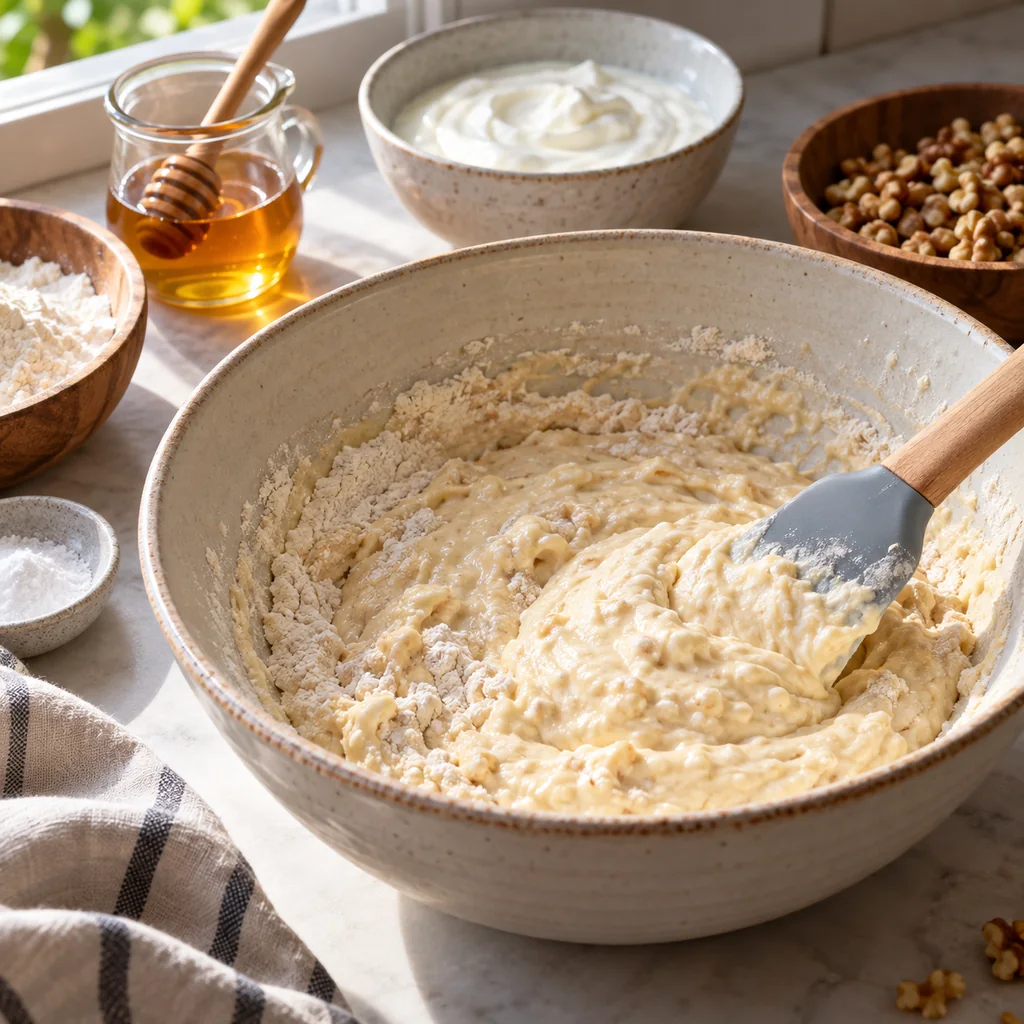
Pour the wet mixture into the dry mixture. Fold with a spatula just until no large pockets of dry flour remain. A few small lumps are desirable: beating the batter until perfectly smooth can produce chewy pancakes. Let it stand for about five minutes while the skillet heats. The batter should be thick but scoopable and slowly spread when dropped from a spoon.
Step 4: Warm the skillet
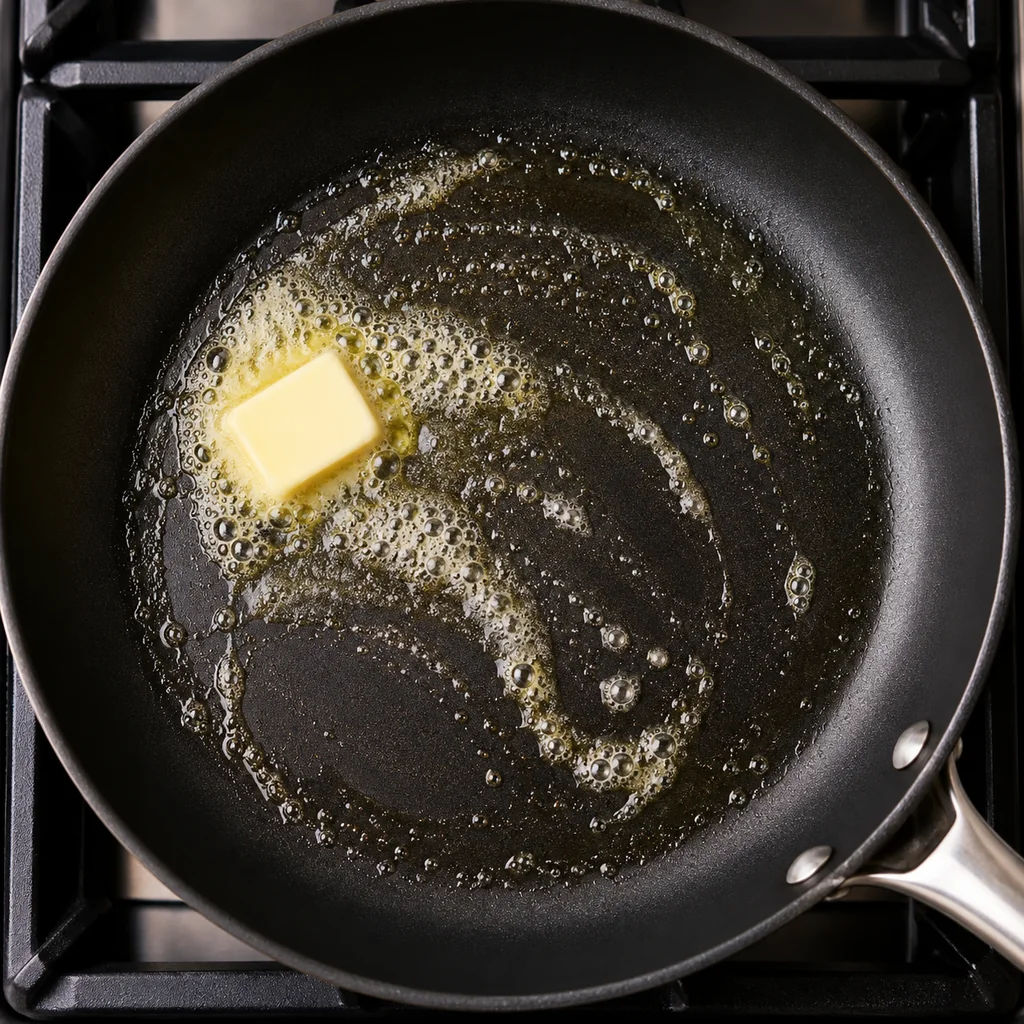
Place a nonstick skillet or griddle over medium heat and add a little of the butter or oil. Spread it into a thin film; a puddle of fat can make unevenly browned edges. Test the heat with a tiny dab of batter. It should sizzle softly, not scorch immediately. If the pan smokes, turn the heat down and let it settle before cooking the first pancake.
Step 5: Cook until bubbles appear
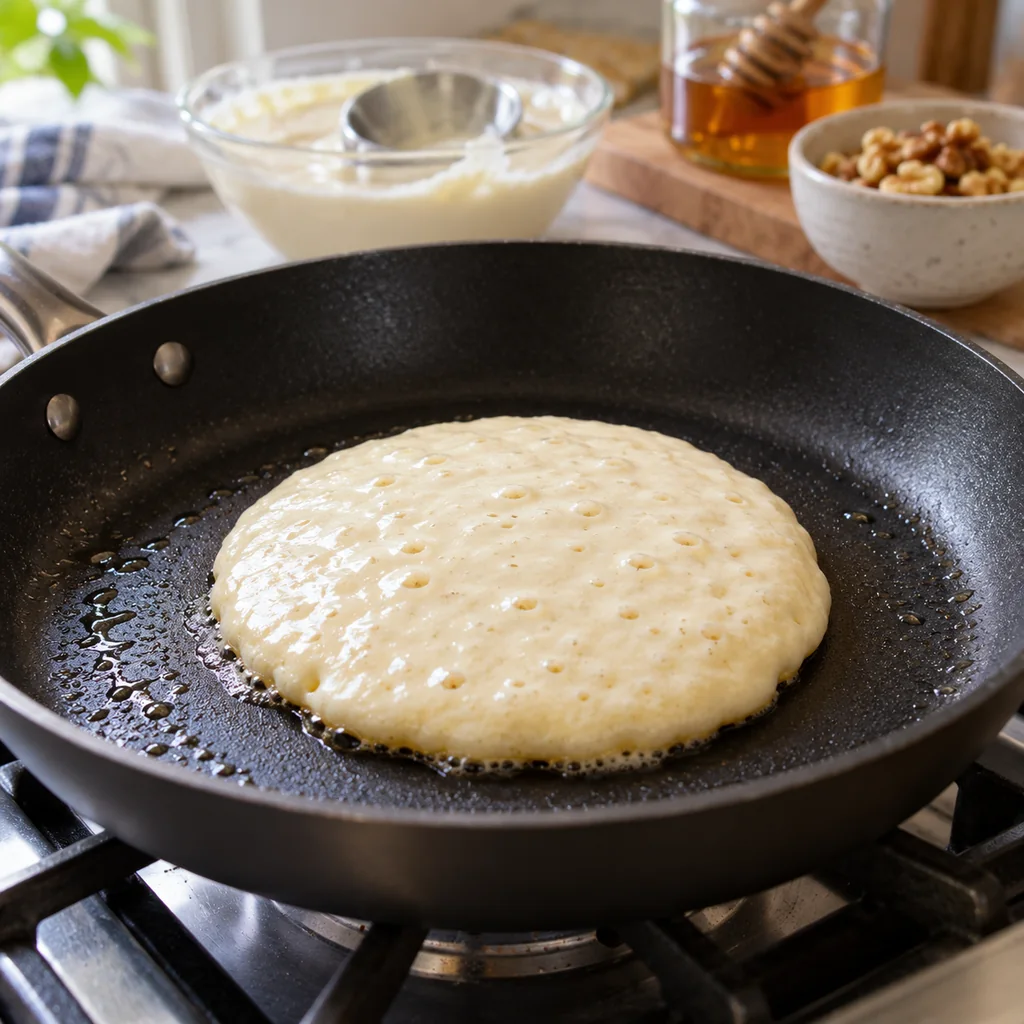
Spoon about 1/4 cup batter per pancake into the skillet, leaving space to slide in a spatula. Cook for roughly two to three minutes on the first side. Watch the surface rather than the clock alone: small bubbles should appear and the edges should begin to look set. If the underside darkens before those signs appear, lower the heat. Cook in batches instead of crowding the pan.
Step 6: Flip and finish cooking
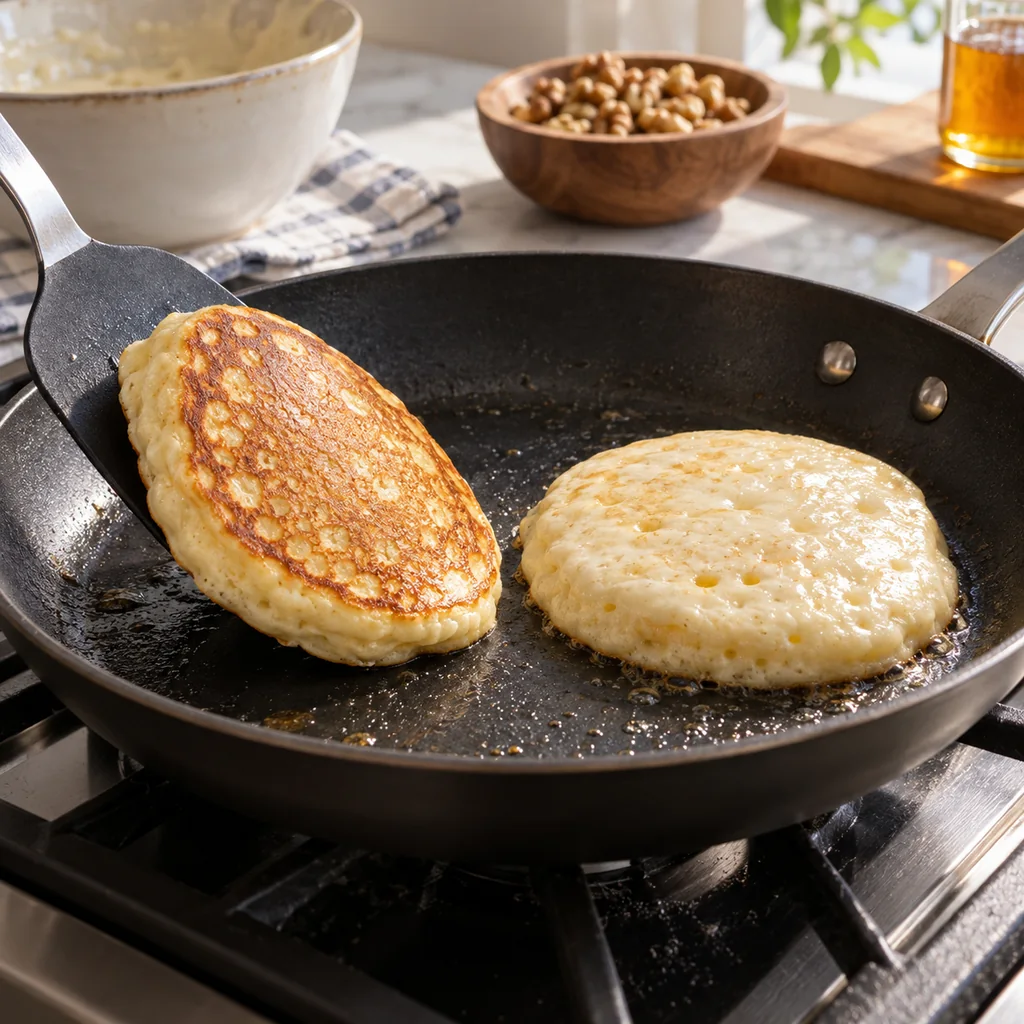
Slide a thin spatula fully beneath each pancake and flip it once in a confident motion. Cook the second side for another one to two minutes, until golden and the center is set. If you are unsure, split one test pancake: it should have a soft, cooked crumb with no wet batter. Transfer finished pancakes to a plate, and repeat with the remaining batter, adding a light coat of butter as needed.
Step 7: Add honey and walnuts
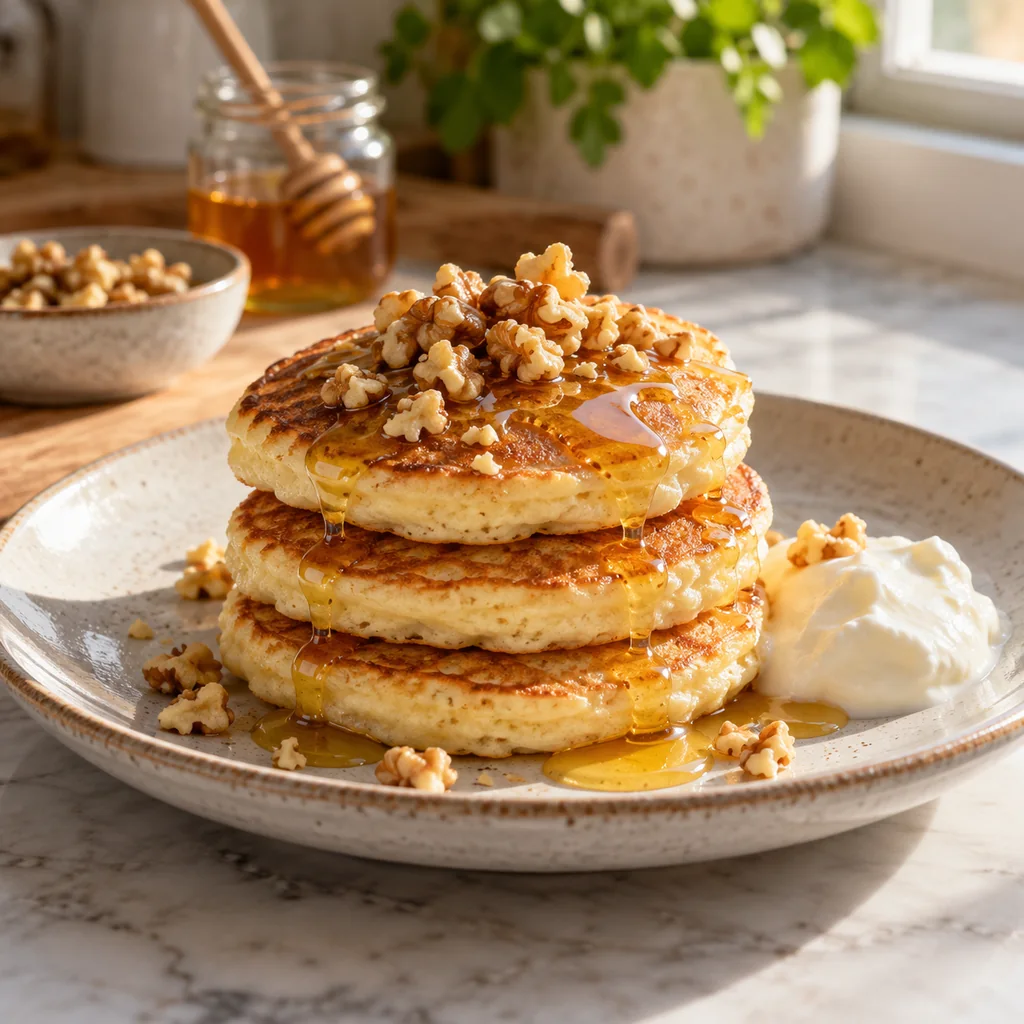
Stack the warm pancakes and scatter the chopped walnuts over the top. Drizzle with honey just before serving so the nuts stay pleasantly crisp. Taste one pancake first; the batter already contains honey, so a light finish may be enough. Serve immediately while the centers are warm and fluffy. If making several batches, keep earlier pancakes loosely covered on a warm plate rather than piling them in a steamy stack.
Substitutions & Variations
For a different texture, replace half of the all-purpose flour with whole wheat flour and add an extra splash of milk if the batter becomes too stiff. Chopped pecans can stand in for walnuts. If you avoid nuts, try sliced fruit or toasted pumpkin seeds instead, taking care with any allergies in your household. Maple syrup can replace the honey in both batter and topping, though the flavor will change. A pinch of cinnamon is pleasant with the yogurt and walnuts.
Use a neutral oil in the skillet if you prefer to cook without butter. If the first pancake spreads too quickly, rest the batter a few more minutes before adding more flour; flour hydrates as it stands. If it barely spreads at all, fold in milk a teaspoon at a time. Aim for pancakes that are easy to turn and thick enough to hold a tender center.
What to Serve With
Fresh berries or orange segments bring a bright contrast to the honey. For a larger brunch table, pair this stack with a fresh berry and Greek yogurt parfait. If guests like a choice of pancakes, make a second plate of blueberry pancakes with maple syrup. Coffee, black tea, or a glass of milk also works well alongside the walnuts.
Frequently Asked Questions
Can I make the batter ahead?
For the fluffiest result, cook this batter soon after mixing because the leaveners start working when wet. You can measure the dry ingredients and mix the wet ingredients separately the night before, refrigerate the wet bowl, then combine them shortly before breakfast. Stir the wet mixture once more before folding it into the flour.
How do I keep the pancakes from burning?
Keep the skillet at medium or slightly lower heat and use only a thin coating of fat. If the first side turns dark before bubbles form, give the pan a minute to cool. Adjust the heat between batches because a skillet can grow hotter as it sits on the burner. A broad spatula helps you turn the pancakes without tearing their soft centers.
Can I save leftovers?
Yes. Let the cooked pancakes cool, then refrigerate them in a covered container for up to three days. Reheat in a dry skillet or toaster until warmed through, and add the honey and walnuts afterward. For longer storage, freeze cooled pancakes with parchment between them so you can remove only the number you need. Reheat from frozen until hot in the center.