
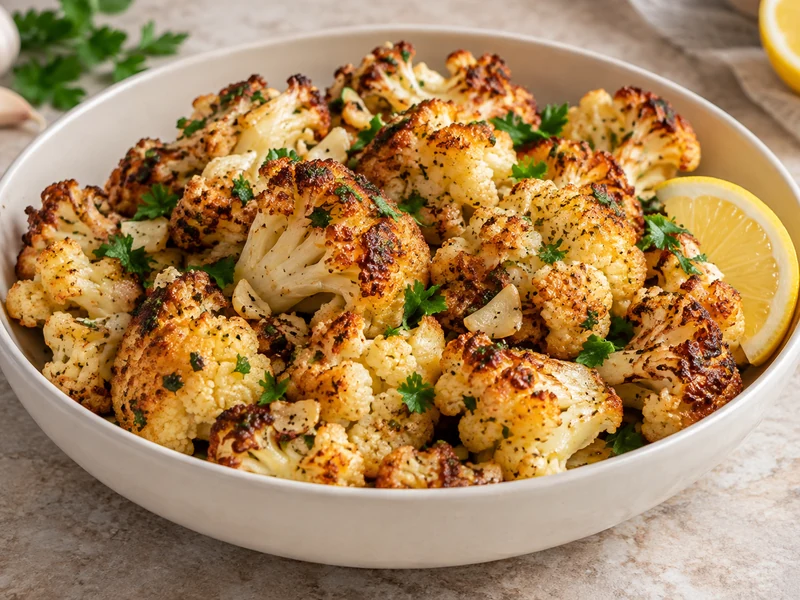
Garlic roasted cauliflower turns one everyday vegetable into a deeply savory side with crisp browned edges and a tender center. The key is not a complicated seasoning blend; it is controlling moisture, giving the florets enough room, and adding fresh garlic late enough that it becomes fragrant without scorching. This method produces dependable color and texture in a standard home oven.
RECIPE CARD
Garlic Roasted Cauliflower Recipe
Ingredients
- 1 large head cauliflower (about 2 pounds), cut into 1 1/2-inch florets
- 3 tablespoons extra-virgin olive oil
- 4 medium garlic cloves, finely minced
- 1/2 teaspoon fine sea salt
- 1/4 teaspoon ground black pepper
- 1/4 teaspoon red pepper flakes, optional
- 2 tablespoons chopped fresh flat-leaf parsley, optional
- 1 lemon, cut into wedges, optional
Quick Method
Condensed overview. Use Full Instructions for the complete method, timing and doneness details.
- Preheat the Oven and Prepare the Pan: Preheat the oven to 425°F (220°C) with a rack in the upper-middle position. Line one large rimmed baking sheet with parchment paper. Let the…
- Cut, Wash, and Dry the Cauliflower: Remove the outer leaves and thick base, then cut the cauliflower into florets about 1 1/2 inches wide. Split very large pieces through the…
- Coat and Season Evenly: Place the dry florets in a large bowl. Add the olive oil, sea salt, black pepper, and red pepper flakes if using. Toss with…
- Roast, Turn, and Add the Garlic: Spread the cauliflower across the prepared pan in one layer, placing several flat cut sides against the parchment. Roast for 15 minutes. Remove the…
- Finish and Serve: Let the cauliflower stand on the pan for 2 minutes so the browned surfaces release cleanly. Transfer it to a warm serving dish, including…
The recipe is designed for busy dinners but polished enough for casual hosting. It uses one sheet pan, eight straightforward ingredients, and a five-step method that makes doneness easy to judge. Serve the cauliflower beside a main dish, fold it into a grain bowl, or set it out with lemon wedges as a warm vegetable appetizer.
Why You’ll Love It
- Deep flavor with simple ingredients: Olive oil, fresh garlic, salt, and pepper let the cauliflower remain the focus.
- Reliable caramelized edges: Thorough drying and generous pan spacing encourage browning instead of steaming.
- Flexible serving options: The finished florets work as a side, bowl topping, snack, or vegetarian plate component.
Ingredients
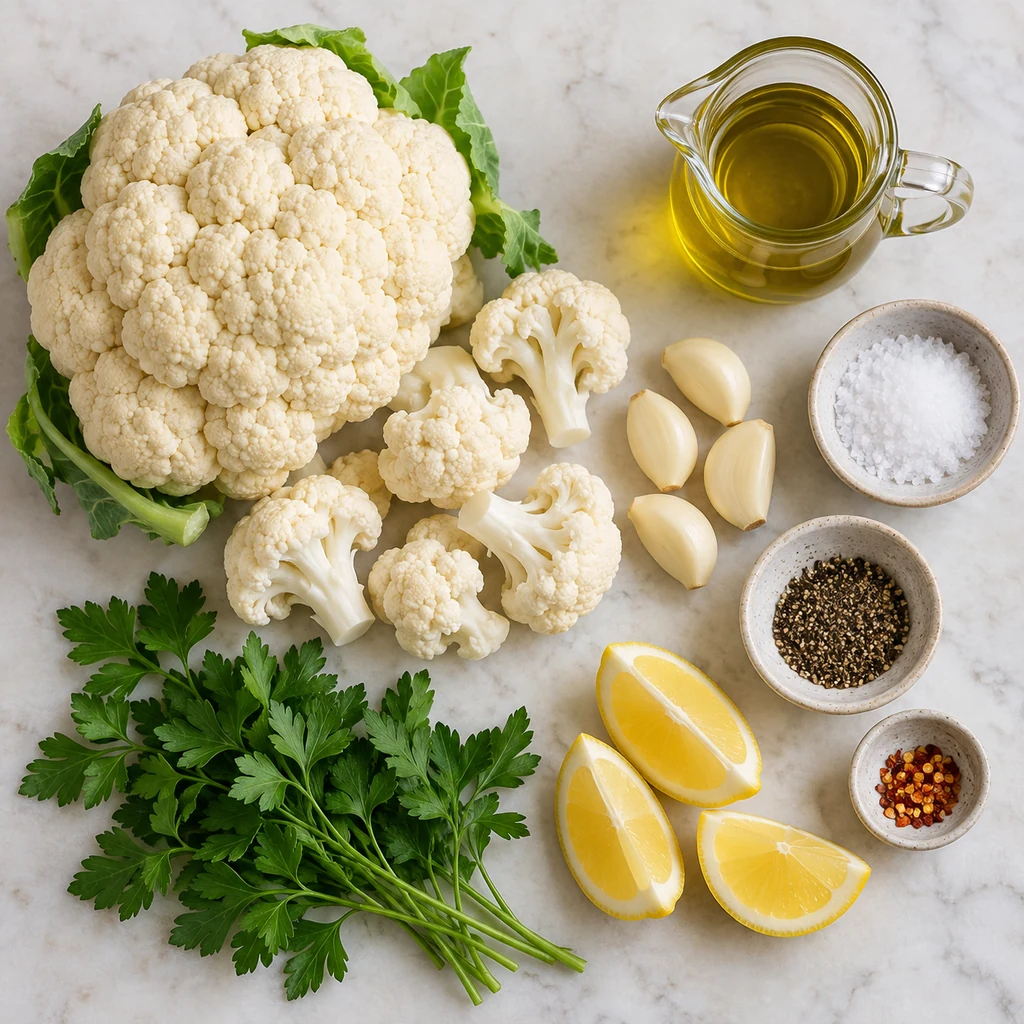
- 1 large head cauliflower (about 2 pounds), cut into 1 1/2-inch florets
- 3 tablespoons extra-virgin olive oil
- 4 medium garlic cloves, finely minced
- 1/2 teaspoon fine sea salt
- 1/4 teaspoon ground black pepper
- 1/4 teaspoon red pepper flakes, optional
- 2 tablespoons chopped fresh flat-leaf parsley, optional
- 1 lemon, cut into wedges, optional
You will also need one large rimmed baking sheet, parchment paper, a large mixing bowl, a sharp chef’s knife, a cutting board, clean absorbent kitchen towels, and a wide turner. Use the largest pan that fits your oven so the florets can sit in a single uncrowded layer.
Step-by-Step Instructions
1. Preheat the Oven and Prepare the Pan
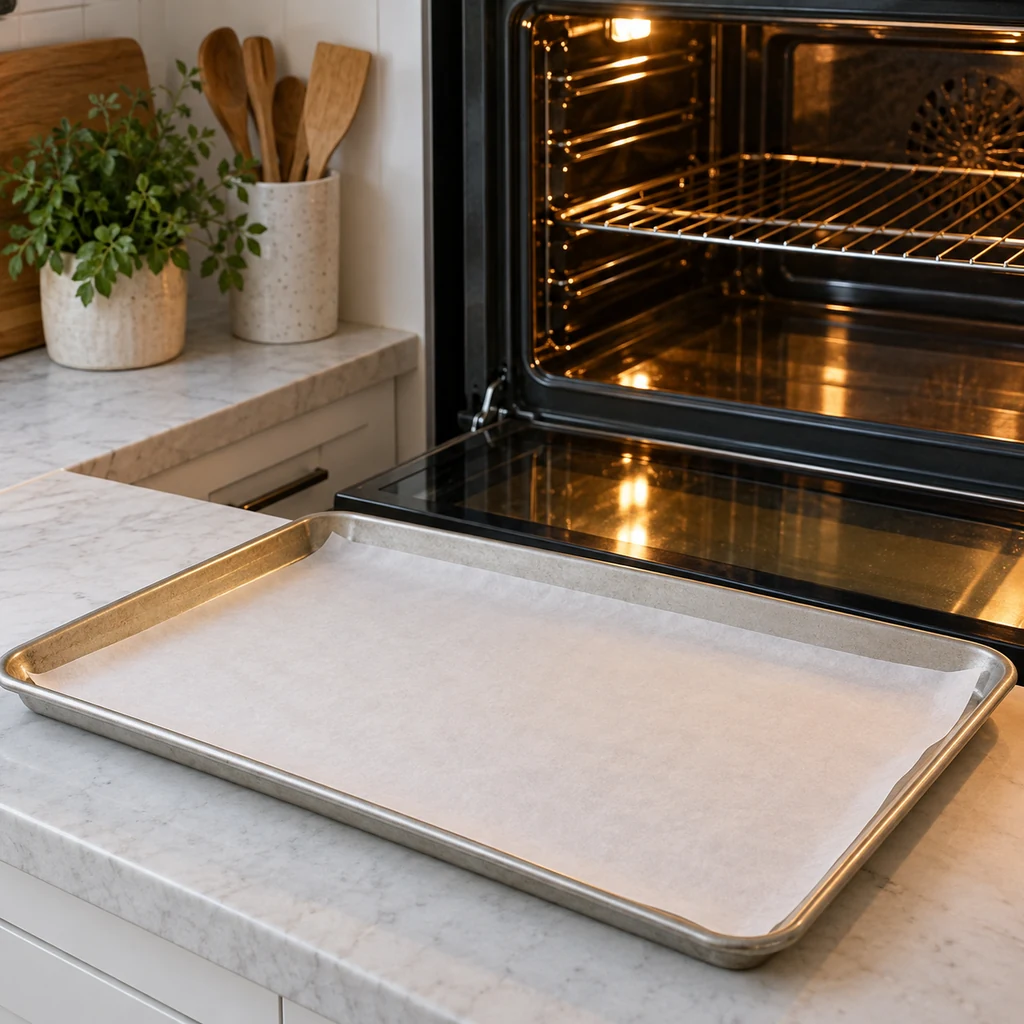
Preheat the oven to 425°F (220°C) with a rack in the upper-middle position. Line one large rimmed baking sheet with parchment paper. Let the oven heat fully before the cauliflower goes in; placing the pan into a cool oven delays browning and gives the vegetable more time to release steam.
2. Cut, Wash, and Dry the Cauliflower
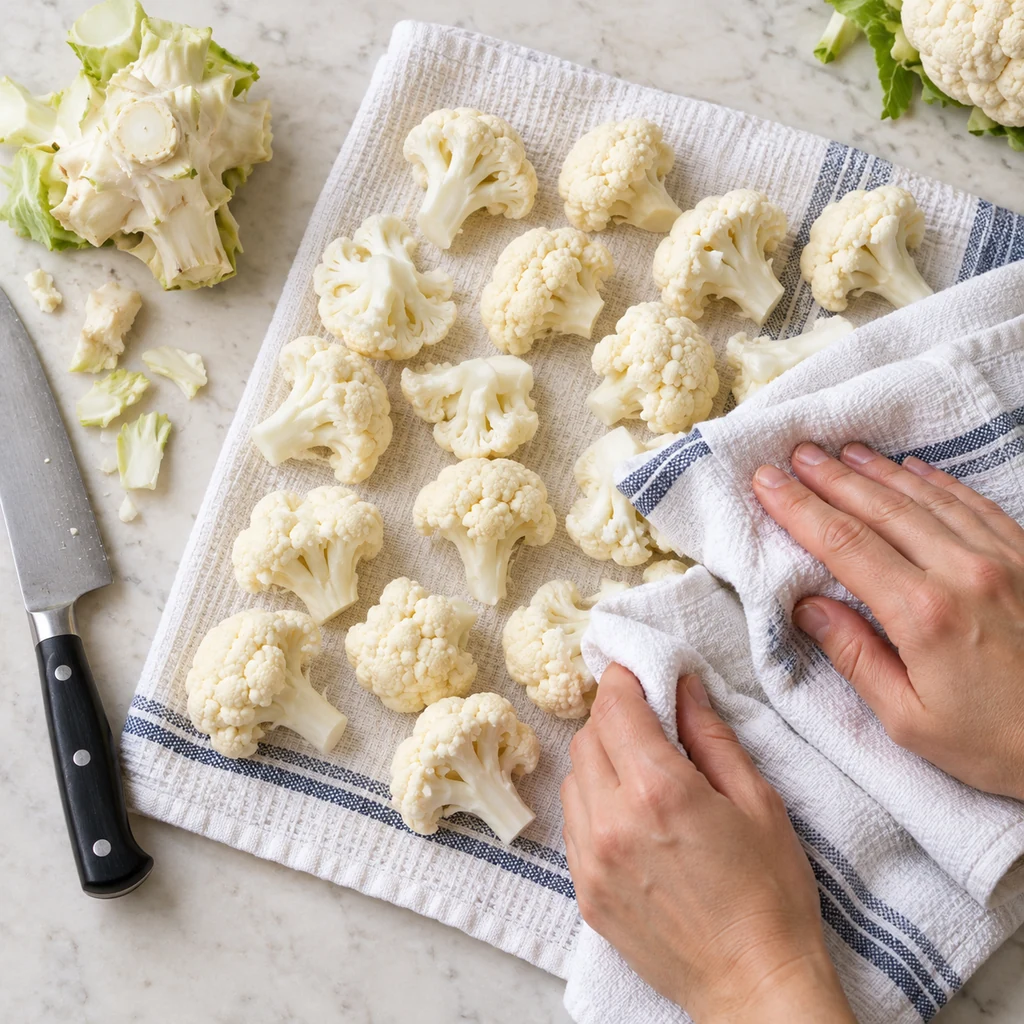
Remove the outer leaves and thick base, then cut the cauliflower into florets about 1 1/2 inches wide. Split very large pieces through the stem so the tops stay intact. Rinse briefly, drain well, and press the florets between clean kitchen towels until every surface feels dry. Wet florets steam on the pan and remain pale.
3. Coat and Season Evenly
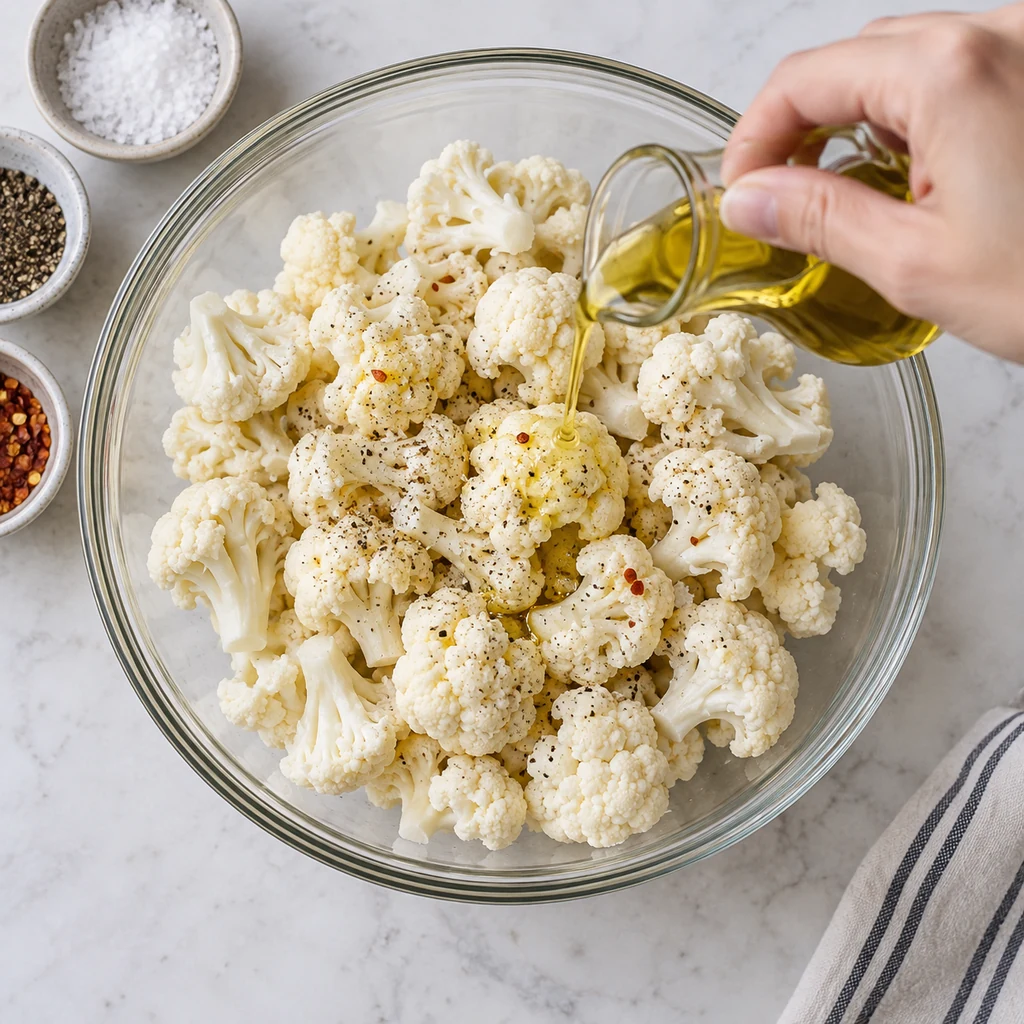
Place the dry florets in a large bowl. Add the olive oil, sea salt, black pepper, and red pepper flakes if using. Toss with your hands or a large spoon until the oil forms a thin sheen over the crowns and stems. Reserve all of the minced garlic for the halfway point so it does not burn during the hottest part of roasting.
4. Roast, Turn, and Add the Garlic
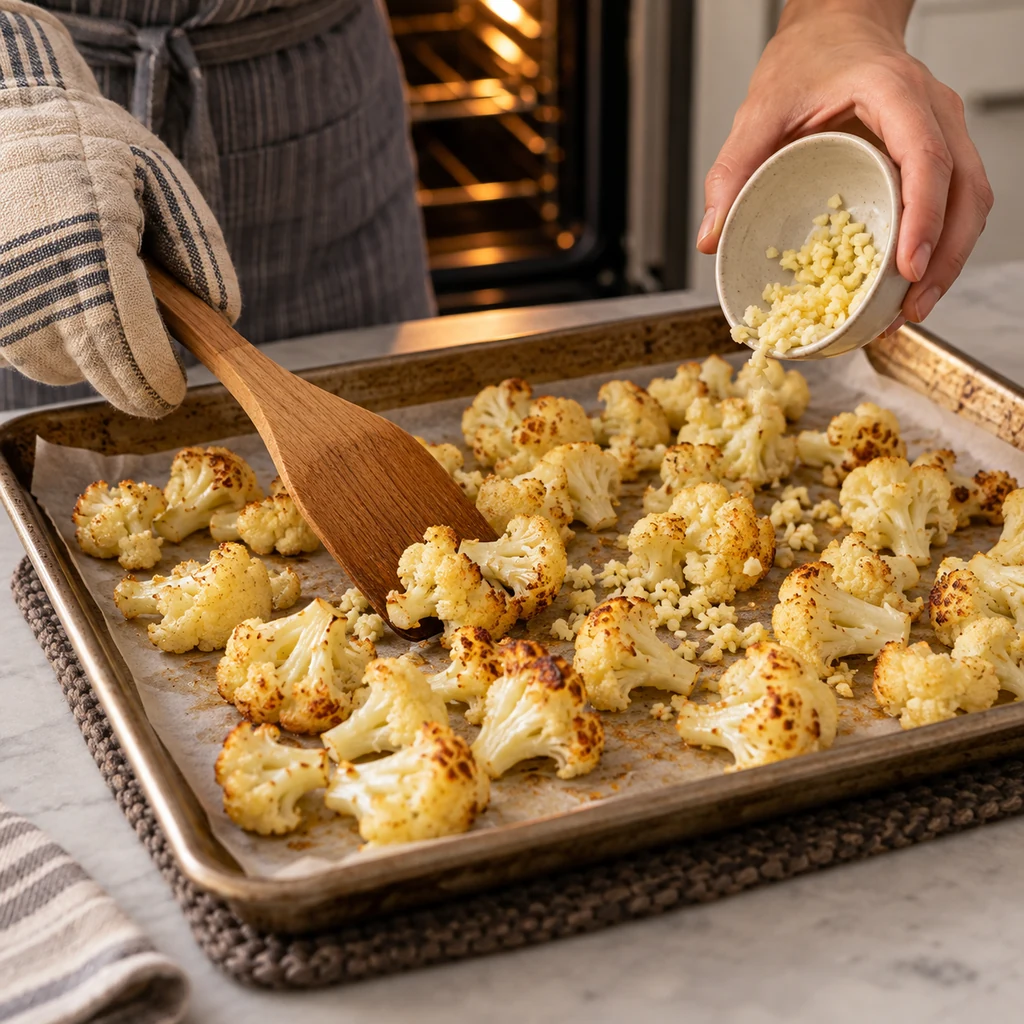
Spread the cauliflower across the prepared pan in one layer, placing several flat cut sides against the parchment. Roast for 15 minutes. Remove the pan carefully, turn the florets with a wide turner, and scatter the minced garlic evenly around them. Return the pan to the oven for 10 to 15 minutes, until the edges are deep golden and the stems are tender when pierced.
5. Finish and Serve
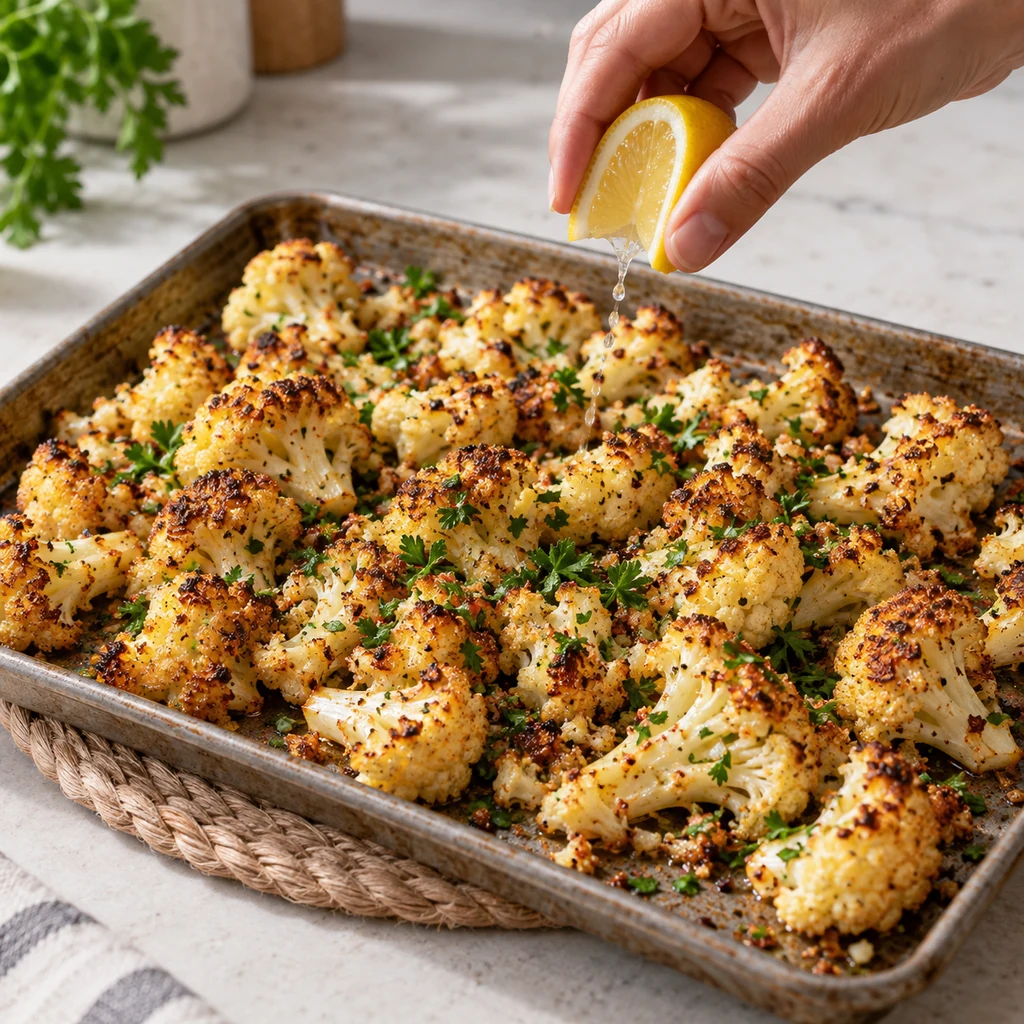
Let the cauliflower stand on the pan for 2 minutes so the browned surfaces release cleanly. Transfer it to a warm serving dish, including the toasted garlic pieces. Sprinkle with parsley and squeeze over one or two lemon wedges if desired. Taste before adding more salt, then serve while the edges are still crisp and the centers are hot.
How to Get Crisp, Golden Edges
Pan space is the most important variable. When florets touch or overlap, moisture becomes trapped and the cauliflower softens before it browns. If your baking sheet is small, divide the recipe between two pans and rotate their rack positions halfway through. Crowding one pan to avoid washing a second one will noticeably change the texture.
Size matters as well. Tiny crumbs can burn before large stems become tender, so keep loose bits off the pan and aim for similar 1 1/2-inch pieces. A few dark brown points are desirable, but black garlic or completely charred crowns indicate that the pan stayed in too long. Begin checking at 25 minutes because ovens vary.
Substitutions & Variations
Avocado oil can replace olive oil in the same quantity. For a milder garlic flavor, use three cloves; for more heat, increase the red pepper flakes to 1/2 teaspoon. Smoked paprika or ground cumin can be added at the seasoning stage, but limit either one to 1/2 teaspoon so it supports rather than overwhelms the roasted vegetable.
For a Parmesan variation, sprinkle 1/3 cup finely grated Parmesan over the florets when the garlic is added, then omit any extra finishing salt. For a dairy-free nutty finish, add one tablespoon of toasted sesame seeds after roasting. Frozen cauliflower is not recommended here because its released water prevents the same caramelized exterior.
What to Serve With
Garlic roasted cauliflower pairs naturally with roast chicken, baked salmon, grilled steak, lentil patties, or a simple pot of beans. It also brings savory contrast to rice, quinoa, couscous, and creamy polenta. For a casual meatless dinner, serve it with hummus, warm flatbread, sliced cucumber, and a tomato salad.
If the cauliflower is part of a holiday spread, balance its toasted flavor with something fresh or acidic, such as a leafy salad or lemony green beans. Keep sauces on the side rather than pouring them over the pan; a wet sauce quickly softens the crisp edges that the roasting method creates.
Storage and Reheating
Cool leftovers completely, then refrigerate them in a shallow airtight container for up to three days. Reheat the florets on a dry baking sheet at 400°F (205°C) for 6 to 8 minutes, or use an air fryer at 375°F (190°C) for 3 to 5 minutes. A microwave warms the cauliflower but does not restore crispness. Freezing is not ideal because thawed florets become soft.
Frequently Asked Questions
Why did my roasted cauliflower turn out soggy?
Excess water or an overcrowded pan is usually responsible. Dry the washed florets thoroughly, use a large sheet pan, and keep every piece in one layer. Also wait for the oven to reach the full temperature before roasting.
Can I prepare the cauliflower ahead?
Yes. Cut, wash, and dry the florets up to one day ahead, then refrigerate them in a towel-lined airtight container. Wait to add oil and seasoning until the oven is heating so salt does not draw water onto the surface.
How do I know when roasted cauliflower is done?
The crowns should have deep golden points, the flat sides should be caramelized, and a small knife should slide through the stems with light resistance. Tender does not mean mushy; remove the pan while the florets still hold their shape.