
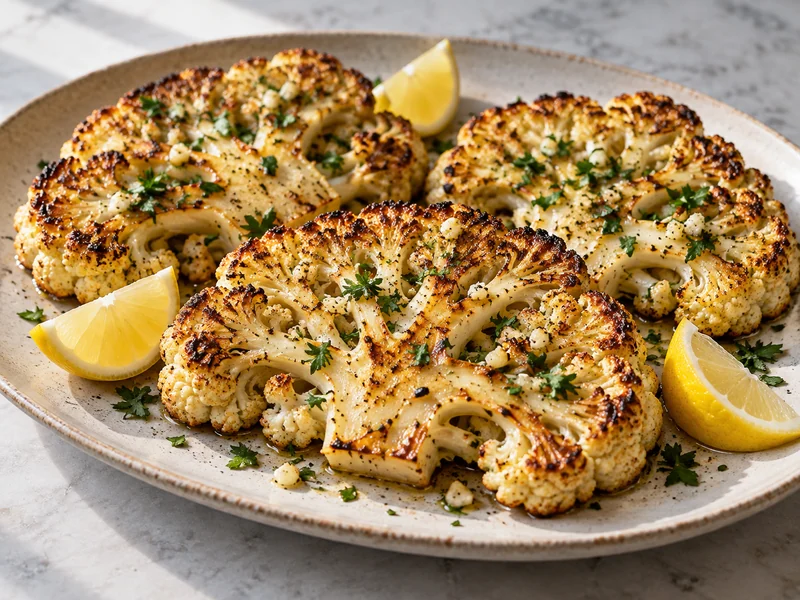
Garlic lemon roasted cauliflower steaks turn one sturdy head of cauliflower into a simple oven dish with crisp, browned edges and a tender center. A quick mixture of olive oil, fresh garlic, lemon zest, juice, and oregano reaches into the florets as they roast. The result is bright and savory without a heavy coating or a long ingredient list.
RECIPE CARD
Garlic Lemon Roasted Cauliflower Steaks
Ingredients
- 1 large head cauliflower, about 2 pounds (900 g), leaves removed
- 3 tablespoons olive oil
- 3 garlic cloves, finely minced
- Finely grated zest and 2 tablespoons juice from 1 lemon
- 1 teaspoon dried oregano
- 1/2 teaspoon fine salt
- 1/4 teaspoon freshly ground black pepper
- 2 tablespoons chopped flat-leaf parsley, for serving
- 1 additional lemon, cut into wedges, for serving
Quick Method
Condensed overview. Use Full Instructions for the complete method, timing and doneness details.
- Cut the Cauliflower Steaks: Heat the oven to 400°F (200°C) and line a large rimmed baking sheet with parchment. Trim the stem just enough to create a stable…
- Mix the Garlic-Lemon Oil: In a small bowl, stir together the olive oil, minced garlic, zest and 2 tablespoons juice from the first lemon, dried oregano, salt, and…
- Coat and Arrange the Slices: Place the cauliflower steaks in a single layer on the lined sheet with a little space between them. Brush the upper sides with about…
- Roast Until Browned and Tender: Roast on the middle rack for 25 to 30 minutes. About halfway through, turn the steaks carefully with a wide spatula and rotate the…
- Add Parsley and Serve: Let the tray stand for two minutes so the slices are easier to lift. Slide a broad spatula under each core and move the…
Plan on about 15 minutes to prepare the cauliflower and 25 to 30 minutes in a 400°F (200°C) oven. A large head usually gives two or three intact center slices; roast any smaller side pieces on the same tray rather than throwing them away. Serve the steaks as a vegetable-forward main with a substantial side, or split them among more people as a side dish.
Why You’ll Love It
- Golden edges: High, steady oven heat browns the exposed florets while the thick core softens.
- Fresh finish: Lemon zest flavors the roasting oil, while a wedge at the table adds brightness exactly where you want it.
- Little waste: Loose florets roast alongside the intact slices and make excellent crisp bites.
Ingredients
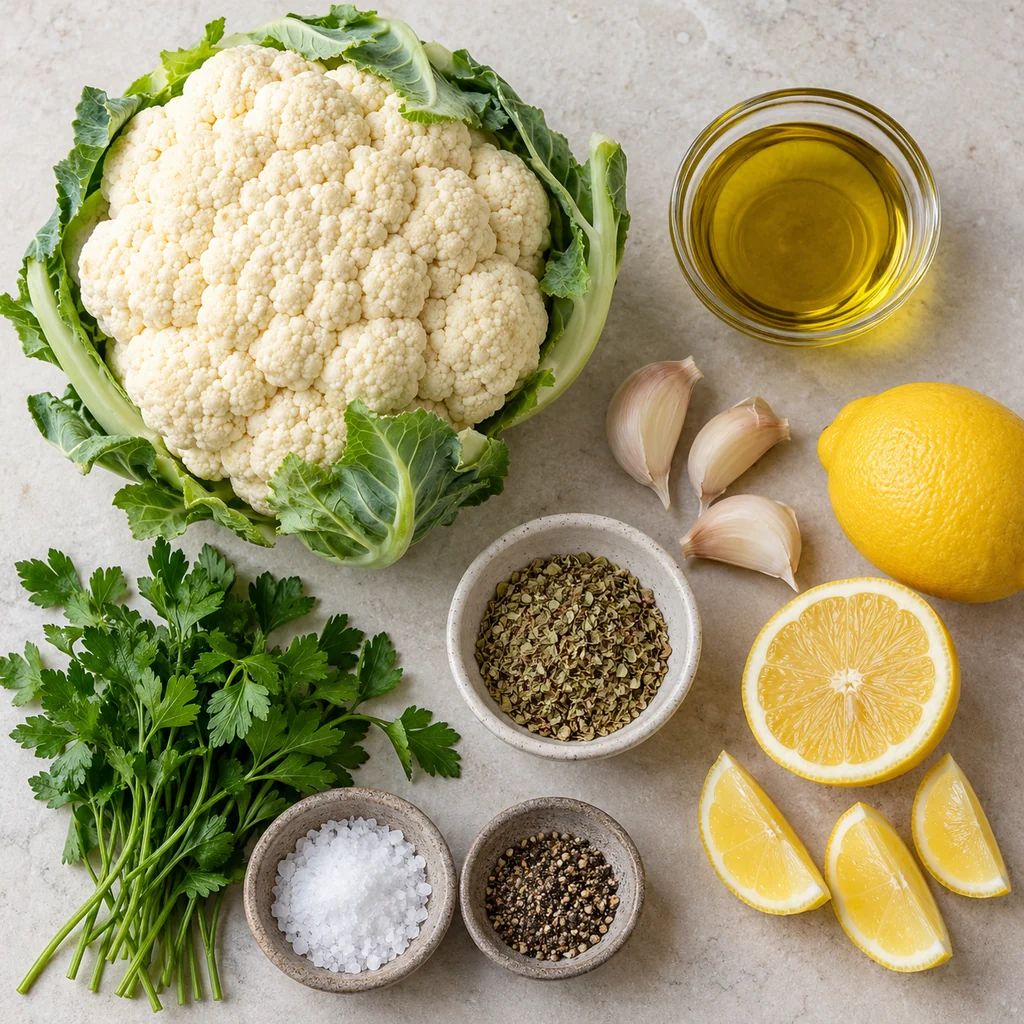
- 1 large head cauliflower, about 2 pounds (900 g), leaves removed
- 3 tablespoons olive oil
- 3 garlic cloves, finely minced
- Finely grated zest and 2 tablespoons juice from 1 lemon
- 1 teaspoon dried oregano
- 1/2 teaspoon fine salt
- 1/4 teaspoon freshly ground black pepper
- 2 tablespoons chopped flat-leaf parsley, for serving
- 1 additional lemon, cut into wedges, for serving
Choose a compact head with a firm core and tightly packed florets. The core holds each steak together, so avoid cutting it away before you slice. A small head may produce only two full steaks; roast the remaining pieces too.
Finely mince the garlic so large pieces do not burn. Measure the lemon juice; too much liquid can make the cauliflower steam rather than brown. Keep the parsley and serving wedges separate so they stay fresh.
Step-by-Step Instructions
Step 1: Cut the Cauliflower Steaks
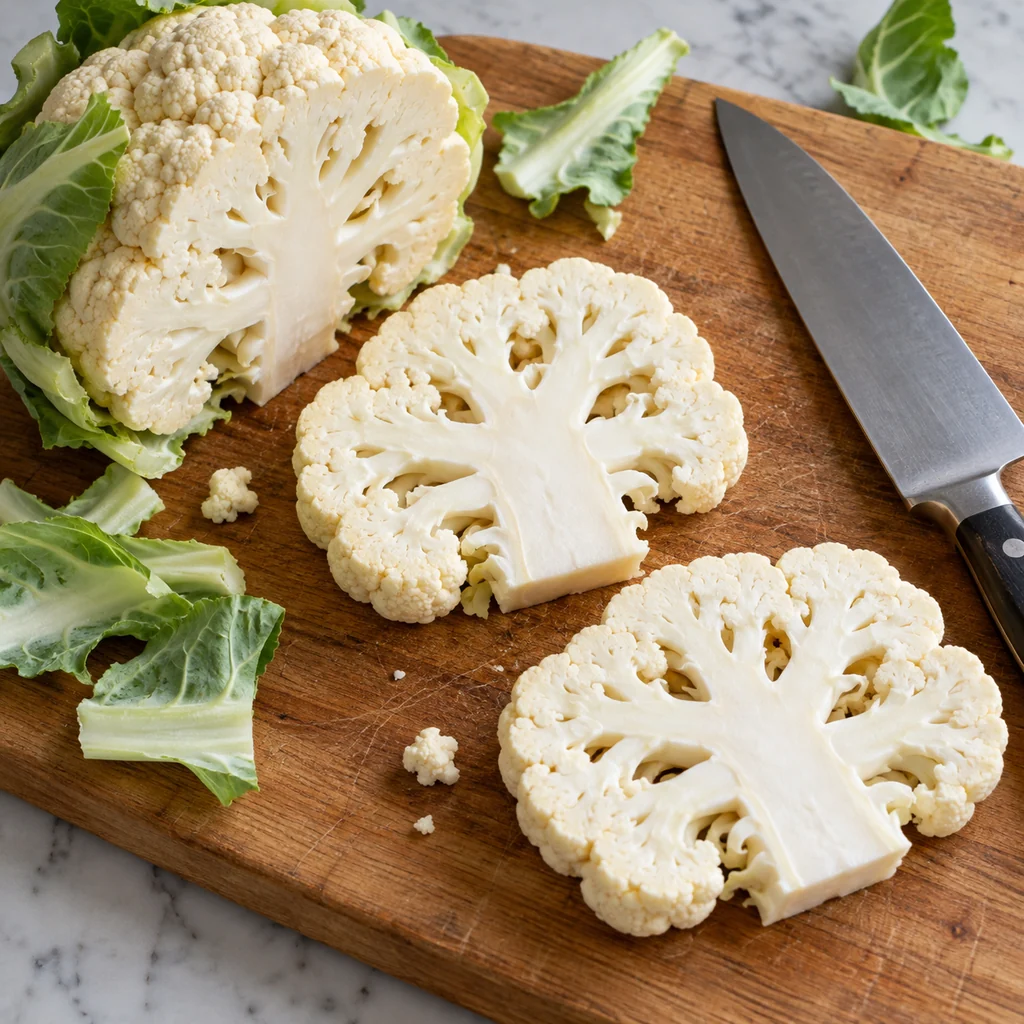
Heat the oven to 400°F (200°C) and line a large rimmed baking sheet with parchment. Trim the stem just enough to create a stable base, leaving the center core intact. Stand the head upright and cut straight down through the middle, then cut 1-inch-thick (2.5 cm) slabs from the center. Transfer them carefully with a wide spatula. Set aside loose florets and thick side pieces; they can share the tray, but tiny crumbs are best saved for another use. Pat wet surfaces dry so the oil will cling and the edges can brown.
Step 2: Mix the Garlic-Lemon Oil
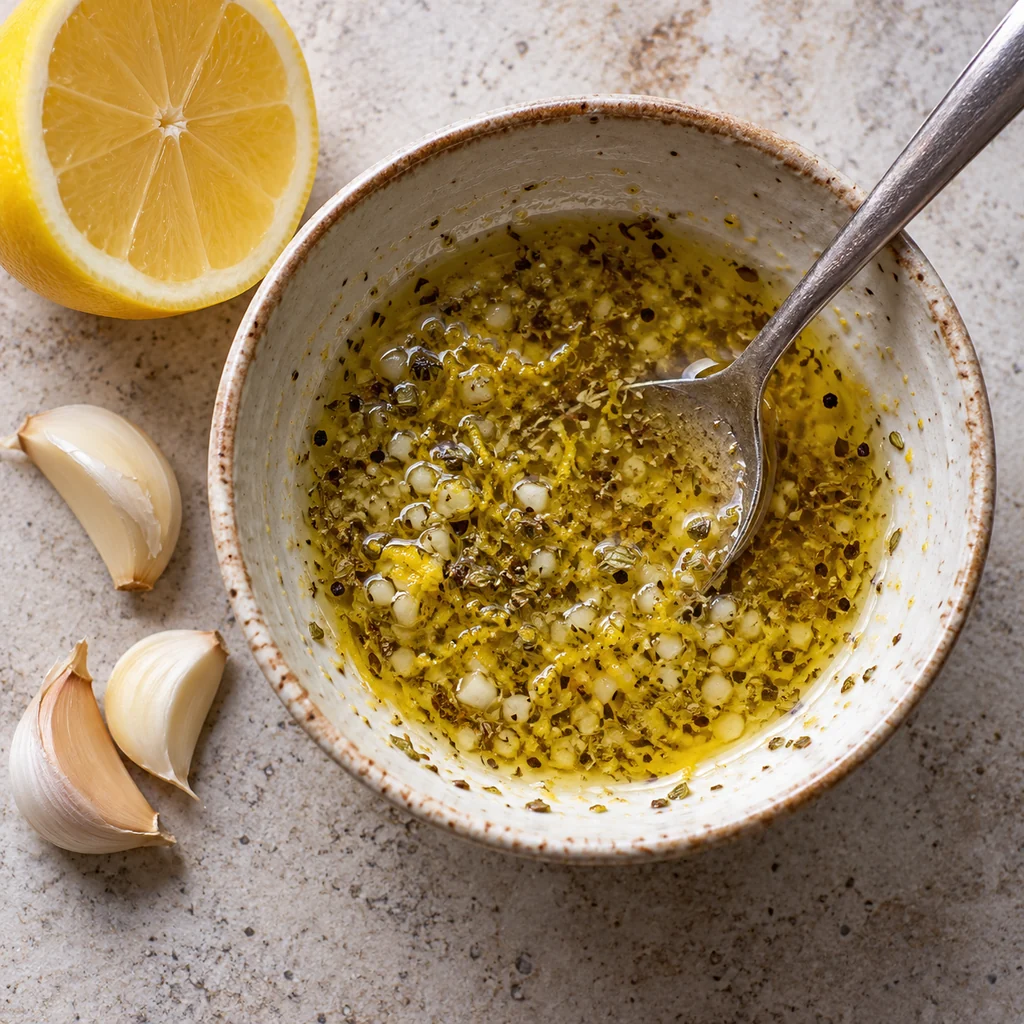
In a small bowl, stir together the olive oil, minced garlic, zest and 2 tablespoons juice from the first lemon, dried oregano, salt, and black pepper. The mixture will look loose and slightly separated; that is normal. Stir it again just before each brushing so the garlic and zest do not all settle at the bottom. Taste a drop of the oil and adjust the seasoning if needed. Keep the second lemon for serving rather than adding its juice to the tray.
Step 3: Coat and Arrange the Slices
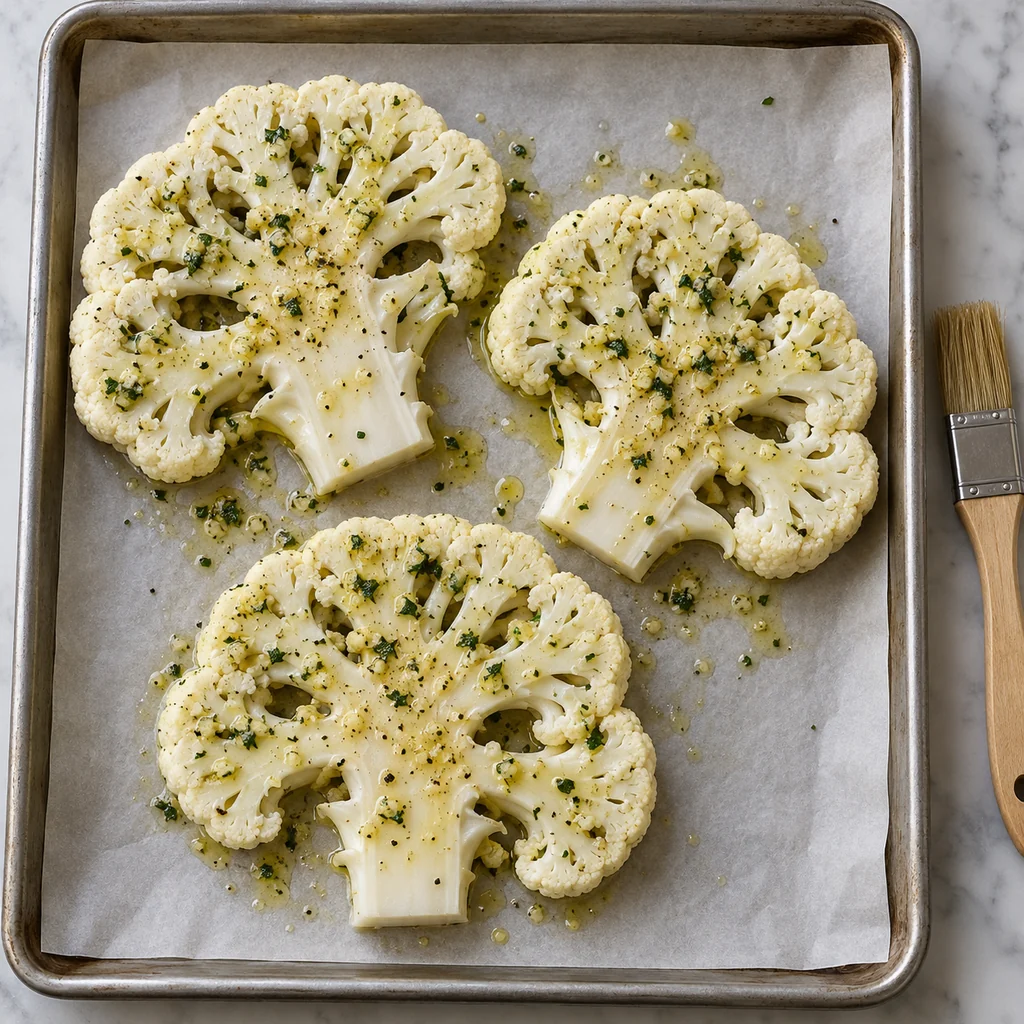
Place the cauliflower steaks in a single layer on the lined sheet with a little space between them. Brush the upper sides with about half the garlic-lemon oil, working it gently into the florets. Turn each slice with a wide spatula and brush the other side. Toss larger loose florets with any remaining mixture and tuck them into open spaces without crowding the pan. If the tray is packed, use a second sheet; piled-up pieces trap moisture and stay pale. Position the best-looking face upward before the tray goes into the oven.
Step 4: Roast Until Browned and Tender
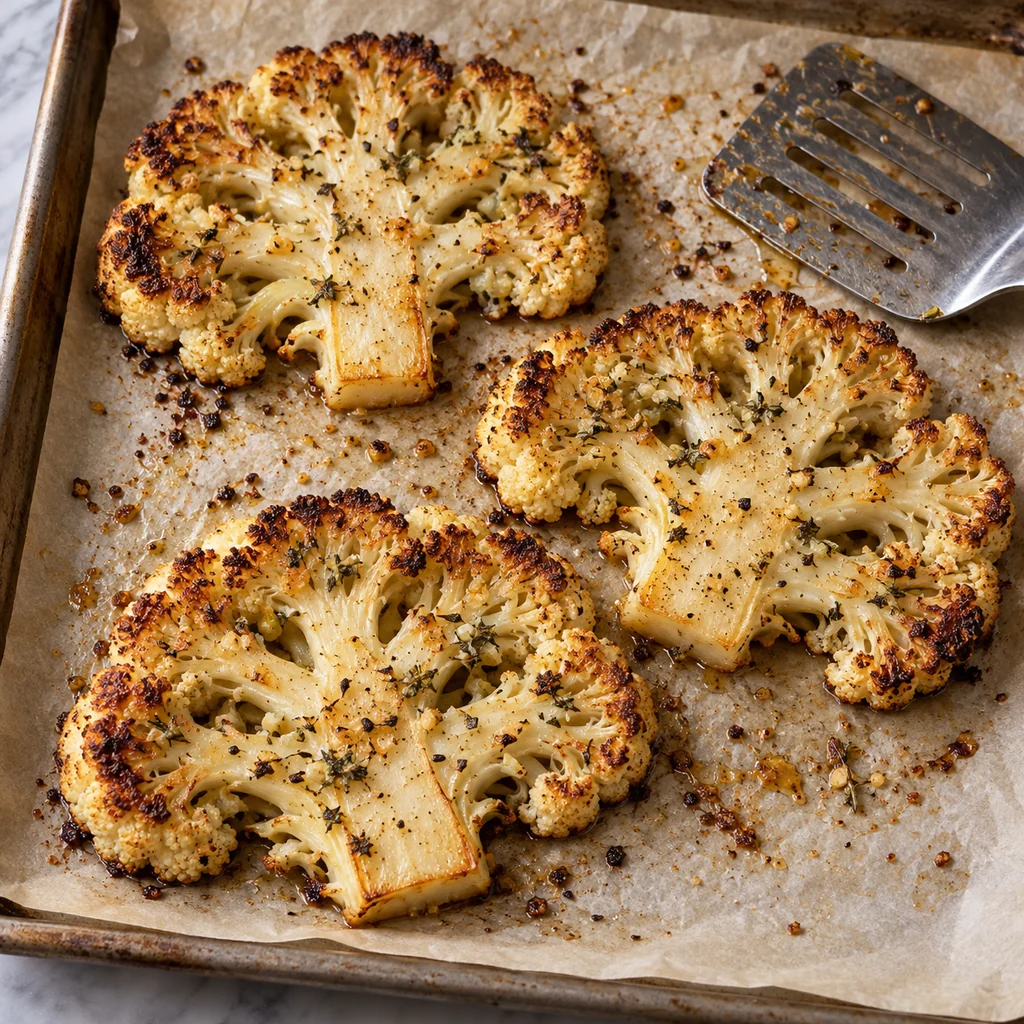
Roast on the middle rack for 25 to 30 minutes. About halfway through, turn the steaks carefully with a wide spatula and rotate the tray. Small loose florets may finish early; remove them when golden so they do not burn. At the end, the thick core should give easily to the tip of a knife and the floret edges should be deep golden brown. If the center is still firm, roast for another three to five minutes and check again. Avoid leaving the tray under a broiler unattended, since the minced garlic can darken quickly.
Step 5: Add Parsley and Serve
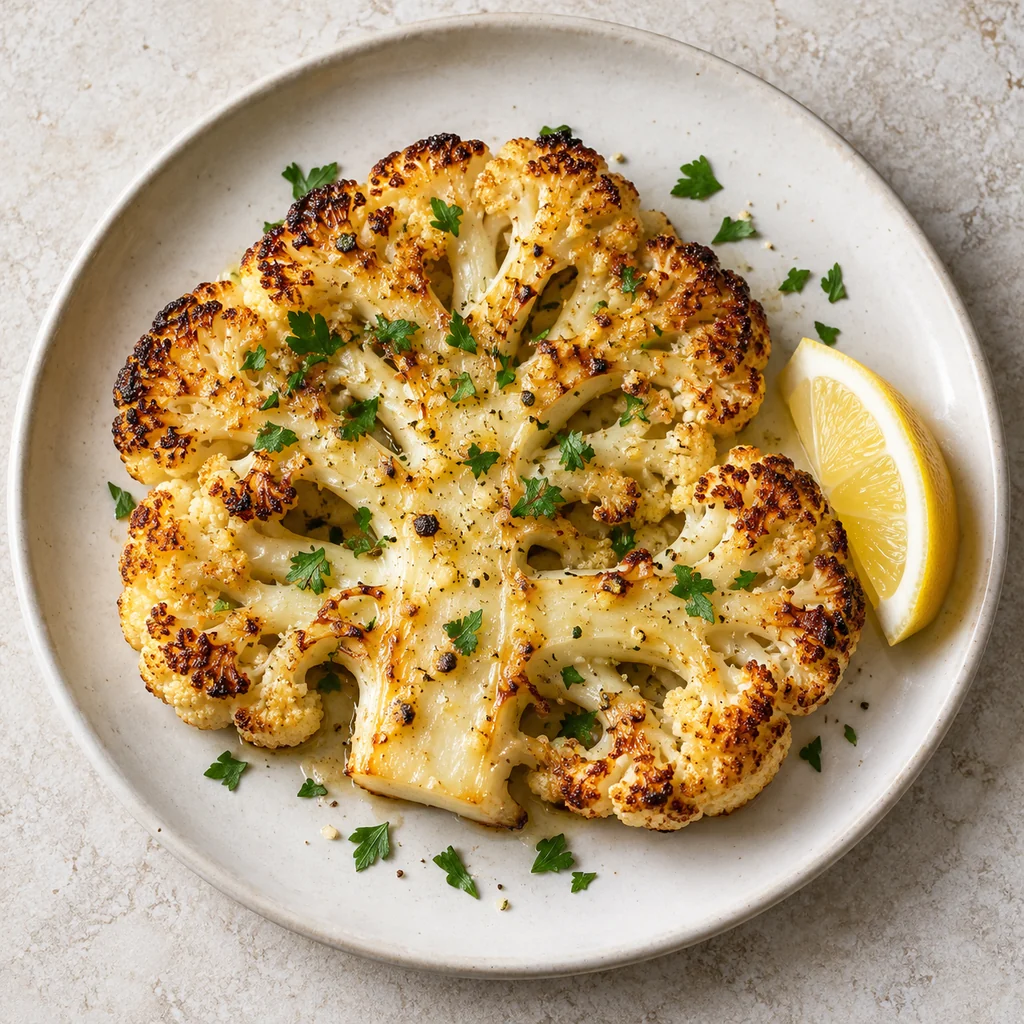
Let the tray stand for two minutes so the slices are easier to lift. Slide a broad spatula under each core and move the steaks to plates without pulling the florets apart. Scatter the chopped parsley over the top and serve with wedges from the second lemon. Squeeze on the lemon just before eating; adding it too early softens the crisp edges. Divide the roasted loose florets among the plates. This makes about three modest servings, depending on how many full center slices your cauliflower yields.
Substitutions & Variations
Thyme can replace the oregano in the same quantity for a different herb note. For gentle heat, add a pinch of red pepper flakes to the garlic oil. If you prefer a richer finish and do not need a dairy-free dish, grate a little Parmesan over the hot steaks after roasting; keep it off the tray during the main cook so the cheese does not scorch. For a softer citrus note, use less lemon juice in the coating and offer extra wedges at the table. Frozen cauliflower is unsuitable for intact steaks because it will not hold a clean cross-section after thawing.
What to Serve With
These steaks pair well with cooked lentils, warm grains, or a bean salad when you want a filling meatless plate. As a side, they work beside roast chicken or fish because the lemon and parsley cut through richer flavors. For a different cauliflower-centered dinner, try our roasted cauliflower tacos with lime crema. If you want a cheesier oven version another day, see garlic Parmesan roasted cauliflower. Keep any sauce on the side if you want the roasted edges to remain crisp.
Frequently Asked Questions
How do I keep cauliflower steaks from falling apart?
Cut thick slabs through the center core and keep that core attached to each slice. Lift and flip with a wide spatula rather than tongs. Some outer florets will still come loose; roast them on the tray and serve them alongside the steaks.
Can I prepare them ahead?
You can cut the cauliflower and mix the garlic-lemon oil a few hours ahead, then refrigerate them separately. Brush just before roasting. Cooked steaks are best served promptly, but leftovers can be refrigerated in a covered container for up to three days and reheated on a baking sheet at 400°F (200°C) until hot.
Why are my cauliflower steaks soft instead of browned?
Excess moisture or a crowded tray is usually the cause. Dry the cut surfaces, spread pieces into one layer, and use a second pan if necessary. Roast until the core is tender and the edges are visibly golden; oven timing varies with the thickness of the slices.